Buyer Fit Snapshot
| Best fit | Branded Packaging for Premium Products projects where brand print, material claims, artwork control, MOQ, and repeat-order consistency need to be specified before quoting. |
|---|---|
| Quote inputs | Share finished size, material target, print colors, finish, packing count, annual reorder estimate, ship-to region, and any compliance wording. |
| Proofing check | Approve dieline scale, logo placement, barcode or warning zones, color tolerance, closure strength, and carton packing before bulk production. |
| Main risk | Vague material claims, crowded artwork, missing packing details, or unclear freight terms can make a low unit price expensive after revisions. |
Fast answer: Branded Packaging for Premium Products: Quote Scope, Sample Proof, MOQ, and Lead Time should be specified like a repeatable production item. The safest quote records material, print method, finish, artwork proof, packing count, and reorder notes in one written spec.
Production checks before approval
Compare the actual filled-product size with the drawing, then confirm tolerance on folds, seals, hang holes, label areas, and retail display edges. Reserve space for logos, QR codes, warning copy, and material claims before decorative graphics fill the panel.
Quote comparison points
Review material grade, print process, finish, sampling route, tooling charges, carton quantity, and freight assumptions side by side. A quote is only useful when the supplier can repeat the same color, closure quality, and packing count on the next order.
Two serum bottles can come off the same line and end up with wildly different price expectations. Same formula. Same fill weight. Different story. That gap usually comes from branded packaging for premium products. Before a buyer reads the ingredient list or compares specs, the package has already done some heavy lifting. It has signaled value, care, and whether the brand knows what it is doing.
That matters across beauty, wellness, specialty food, candles, fragrance, accessories, and higher-end gifts. In those categories, the box is not decoration. It is part of the product. It affects margin, shelf appeal, shipping risk, and the first impression a customer forms in about five seconds. Maybe less if they are in a rush, which, frankly, they usually are.
Custom Logo Things works with brands that care about the details because premium packaging is a detail business. Branded packaging for premium products is not a pile of pretty pieces thrown together at the last minute. It is a system. Structure, board, graphics, finish, inserts, and pack-out logic all have to pull in the same direction. The best brands think like operators. They ask how the package will travel, stack, open, photograph, and store. Then they build around those answers.
What Branded Packaging for Premium Products Means
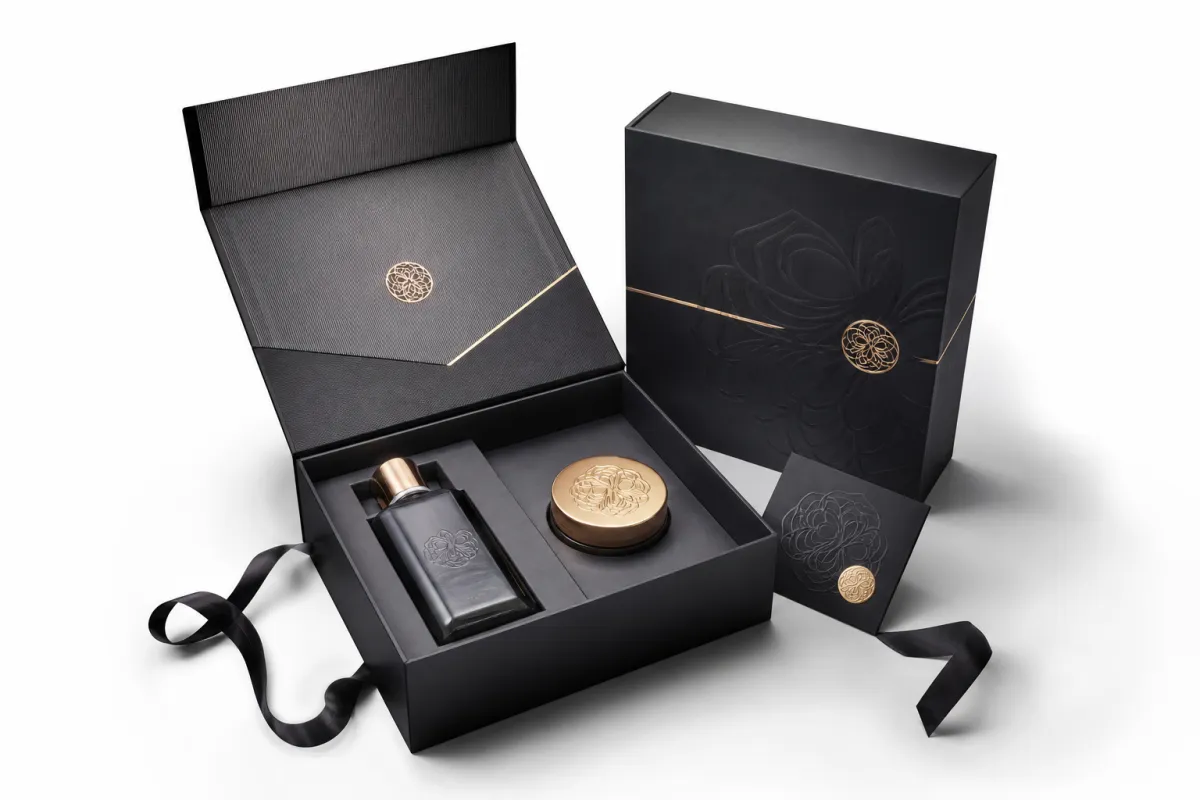
Branded packaging for premium products is the coordinated use of structure, materials, graphics, and finishing to signal value while still protecting the product and supporting distribution. That sounds tidy on paper. In real life, it takes judgment. The package has to feel precise, not crowded. A rigid box with a soft-touch wrap. A restrained palette. A closure that opens cleanly. An insert that holds the item without rattling around like loose change. When those choices line up, the package starts working like a silent salesperson.
Put two identical products side by side. One ships in a plain carton with cheap filler and a generic label. The other arrives in custom printed boxes with a snug fit, tactile finish, and a deliberate opening sequence. The product itself may be the same, but the risk feels different. Buyers read the package as a signal of quality control. That reaction is especially strong in categories where the customer cannot fully judge the item before purchase. Good branded packaging for premium products reduces that hesitation.
It also helps justify price. A premium product needs packaging that supports the price without screaming about it. Too much decoration can feel desperate. A box that looks expensive but feels flimsy is worse. The best premium packaging feels calm, intentional, and believable. It does not need to look luxurious in every possible way. It needs to feel credible.
"The package should answer the customer's first question before they ask it: did this brand think carefully about what I am paying for?"
That is the real test. Branded packaging for premium products is not only about shelf impact. It is about building a packaging system that supports margin, recall, gifting, and repeat purchase. It also has to fit the channel. Retail Packaging Needs visual clarity from a few feet away. Ecommerce packaging needs enough strength to survive transit. DTC packaging needs a memorable reveal, but that reveal still has to survive vibration, compression, and the lovely chaos of real shipping lanes. Good packaging bridges those jobs instead of pretending one format can do everything.
One more thing gets missed a lot: premium packaging is usually not just one box. It is a sequence. Outer shipper. Retail-facing carton. Insert or tray. Tissue, wrap, sleeve, card, or seal. When the sequence is designed well, the unboxing feels easy and deliberate. When it is not, the experience feels improvised. That difference is bigger than most teams expect, which is why branded packaging for premium products can influence buying decisions before the product is even touched.
If you want to compare structural options, see our Custom Packaging Products page and look at how different formats support different price points.
How Branded Packaging for Premium Products Works
Branded packaging for premium products works in layers. The outer layer creates the first impression. The opening moment builds expectation. The internal structure protects the product. The final reveal tells the customer whether the brand kept its promise. People do not experience premium packaging as a single object. They move through it. Each step either reinforces or weakens the one before it.
Start on the outside. Color, typography, logo placement, and finish all matter here, but not equally. A box can have strong printing and still feel cheap if the board is flimsy or the closure is sloppy. It can also feel premium with almost no graphics if the texture, weight, and fit are right. That is why branded packaging for premium products is less about stacking effects and more about making every cue point in the same direction. Matte, gloss, foil, embossing, debossing, spot UV, and uncoated stocks each send a different signal. Mix them badly and the whole thing turns noisy.
Then comes the opening moment. This is where good package branding earns its keep. A strong seal, a clean tuck, a ribbon pull, a magnetic closure, or a lift-off lid can turn routine handling into a deliberate reveal. For premium goods, that reveal often persuades more than the outside copy. Why? Because the customer is now interacting with the package, not just looking at it. Branded packaging for premium products uses that moment to lower uncertainty and increase perceived care.
Internal protection matters just as much. A premium box that lets the product move around is not premium. It is expensive decoration wrapped around a problem. Inserts need to hold the item firmly, but not so tightly that removal becomes annoying. For glass, metal, ceramics, or high-end accessories, insert design can be the difference between damage and durability. In practice, branded packaging for premium products should balance fit, friction, and ease of access. That balance protects both the product and the customer experience.
Channel planning has no shortcut. Retail packaging needs shelf readability and case-pack efficiency. Ecommerce packaging needs drop performance and dimensional discipline so freight does not chew through the margin. DTC packaging needs a strong unboxing arc while staying within shipping constraints. Smart brands build a family of packages that share the same visual language across channels instead of forcing one format to do every job badly. That is where branded packaging for premium products becomes a system instead of a one-off.
There is also a psychological effect that shows up across categories. A thoughtful package raises confidence that the product inside was manufactured, inspected, and handled with similar care. That matters for gifts, wellness, beauty, and specialty food, where trust and presentation are tangled together. Branded packaging for premium products works because it lowers perceived risk. Buyers feel they are not just buying an item. They are buying a branded experience that has been thought through.
From a standards perspective, transit testing should not sit on the sidelines. The packaging industry uses methods such as ISTA transit testing and ASTM-style distribution simulation to check whether a structure can survive vibration, drop, and compression exposure. If a package is supposed to perform in retail and ecommerce, it should be tested like it means it. FSC-certified paperboard can also matter when sustainability claims are part of the value proposition, especially for brands that want the material story to support the premium story. That is another place where branded packaging for premium products can signal care without overexplaining itself.
Put simply, the package does not just hold the product. It translates the product into a commercial experience. That is why branded packaging for premium products is often the quiet reason a customer feels comfortable paying more.
Cost Factors and Pricing Ranges
Cost is where many teams get surprised. Branded packaging for premium products can look simple from the outside, but the price changes fast once structure, materials, and finishing details enter the conversation. Material choice is the first driver. So is box style. Then come print coverage, insert complexity, coating selection, and order quantity. A small change in one variable can move the project from sensible to expensive in a hurry.
Rigid boxes usually sit at the higher end because they use thicker board, more handwork, and more detailed assembly. Folding cartons are often more economical at scale, especially if the structure is simple and the print strategy stays disciplined. Sleeve-and-tray combinations sit somewhere in the middle. Mailer-style premium packaging can be cost-effective for DTC brands, but once you add special inserts, custom closures, or heavy print coverage, the numbers climb. The point is not that one format is always best. The point is that branded packaging for premium products should be priced based on total experience, not just unit cost.
| Packaging option | Typical use | Approx. unit cost range | Value signal |
|---|---|---|---|
| Folding carton with premium print | Beauty, wellness, small accessories | $0.18-$0.45 at 5,000+ units | Efficient, polished, scalable |
| Sleeve and tray set | Gift sets, specialty food, layered presentation | $0.35-$0.90 | More dimensional, good for storytelling |
| Rigid setup box with insert | High-ticket gifts, fragrance, premium electronics accessories | $1.20-$3.50+ | Strong perceived value, premium hand feel |
| Premium mailer with interior print | DTC, subscription, lightweight ecommerce | $0.80-$2.25 | Balanced shipping performance and unboxing |
Those numbers are directional. Artwork complexity, material sourcing, and lead time can shift the actual quote. A low-cost structure can also become expensive if it triggers damage, returns, or overpackaging in the fulfillment center. In other words, branded packaging for premium products should be evaluated on landed cost and brand impact together. The cheapest carton is not cheap if it fails during transit or erodes the premium story.
Here are the most common cost drivers to watch:
- Material grade: board weight, rigidity, coating quality, and paper wrap selection all matter.
- Print method: digital, offset, flexo, and foil applications each behave differently at scale.
- Finishing: soft-touch lamination, matte AQ, embossing, debossing, and metallic accents add cost.
- Structure: custom dielines, crash-lock bottoms, magnetic closures, and multi-part assemblies increase complexity.
- Inserts: molded pulp, EVA foam, chipboard, and custom paperboard trays all price differently.
- Volume: larger quantities generally lower the unit price, but setup and tooling still sit upfront.
There are also hidden costs that brands often underestimate. Freight can punish oversized packaging. Warehousing gets tighter when cartons are bulky. Quality control sampling takes time. Over-specifying finishes can create long approval cycles and higher waste. If a structure is overbuilt for the product, shipping costs climb for no good reason. From a packaging buyer's perspective, the question is not "what looks best?" It is "what looks best and performs within the actual economics of the line?" That is the discipline behind branded packaging for premium products.
For example, a beauty brand might spend slightly more on a rigid outer box, then cut breakage and gift-wrap labor enough to improve the total economics. A specialty food brand may choose a premium folding carton because it gives the right shelf presence without forcing the freight bill into uncomfortable territory. A luxury accessory brand may split the difference with a sleeve, tray, and insert, creating a richer opening moment than a plain carton while staying inside the margin model. These are not theoretical tradeoffs. They show up on every quote. That is why branded packaging for premium products should always be assessed in context.
If you want to see what a broad packaging range looks like before you brief a supplier, review our Case Studies and compare how different structures support different brands.
Production Process and Timeline
The production path for branded packaging for premium products usually starts with a brief, not with artwork. That brief should define product dimensions, weight, fragility, channel, target audience, budget, and launch date. Once the packaging team understands those inputs, the project can move into structural design and material selection. Skip that step, and the schedule almost always pays for it later.
A typical workflow looks like this:
- Discovery and scoping
- Structural concept development
- Dieline and artwork preparation
- Prototype or sample review
- Proof approval and color sign-off
- Production scheduling
- Manufacturing and finishing
- Inspection, packing, and shipment
That sequence sounds ordinary. The timing usually is not. Simple printed cartons can move faster, especially if the artwork is ready and the structure is standard. Custom rigid packaging takes longer because there are more moving parts: board wrap, insert fit, closure tolerances, and finishing consistency. For many premium projects, a practical timeline from brief to delivery is often 3 to 6 weeks, and sometimes longer if the design is complex or the supply chain is tight. Branded packaging for premium products rewards early planning because the first decisions are the most expensive to change later.
The delays are usually familiar:
- Missing dimensions: the product measurements are incomplete or the final sample has not been locked.
- Late revisions: artwork changes arrive after the proof stage.
- Too many finish choices: teams request multiple coatings, foils, and textures without narrowing the target effect.
- Structural changes after approval: the dieline shifts once the proof is already in motion.
- Color uncertainty: no one has defined the reference point for the print team.
That last point matters more than many people realize. Color consistency is not just a graphic issue; it is a brand trust issue. If a premium package changes appearance from batch to batch, customers notice. A controlled proofing process, clear brand standards, and accurate prepress checks reduce that risk. Good branded packaging for premium products should look intentional on the first run and the fifth run, not only in the mockup deck.
Another operational issue is fit. Inserts need tolerances that account for real manufacturing variation. A bottle that is too snug can crush a label or slow down packing. A tray that is too loose can allow movement, which increases damage risk and makes the package feel unfinished. That is why prototype testing is worth the extra cycle. A physical sample exposes problems that digital previews hide. In practical terms, the box has to work in the hands of a packer, a shipper, and a customer. If it only works in a presentation file, branded packaging for premium products has not been fully designed.
Transit testing also deserves a place in the schedule. ISTA-style procedures help reveal whether a package can survive vibration, drop, and compression exposure. For premium packaging, this is not overkill. It is due diligence. A brand that sells at a premium price can ill afford to discover damage after launch. That kind of failure costs more than the packaging savings ever did. When the package is meant to carry a premium promise, the production process should verify that promise under real stress.
The most reliable launches leave time for revision without panic. That means aligning inventory planning with package lead times, not treating packaging as a last-minute line item. It also means deciding which details are fixed and which ones are flexible. Once the dieline and board spec are locked, later changes ripple through cost, Timing, and Fit. The brands that handle branded packaging for premium products well usually have one thing in common: they respect the calendar. That sounds boring. It is also how projects stay alive.
Common Mistakes That Weaken Premium Packaging
The biggest mistake is designing for style alone. Branded packaging for premium products has to do more than look attractive in a mockup. If it ships poorly, opens awkwardly, or creates labor friction at fulfillment, the package can hurt the brand faster than a plain carton ever would. A premium package that arrives dented or crushed sends a louder message than any foil stamp can fix.
Visual clutter is another common problem. Too many finishes. Too many fonts. Too many claims. Too many focal points. The result feels busy instead of premium. Strong packaging design usually benefits from restraint. One hero detail is often more memorable than five competing ones. A tactile board choice, a well-placed logo, or a clean closure can do more for package branding than a crowded surface ever could. Branded packaging for premium products tends to perform best when the hierarchy is obvious at a glance.
Then there is the mismatch problem. A minimalist product inside an over-decorated box creates a credibility gap. A high-end item in a flimsy structure creates the opposite problem: the product may be good, but the presentation suggests otherwise. Buyers do not always say that out loud, yet they feel it. Premium packaging has to match the promised position. If the item is meant to feel refined, the package should not feel noisy. If the product is positioned as high-value, the box should not feel disposable after one opening. That is a basic rule of branded packaging for premium products.
Operational mistakes can be just as damaging as visual ones. Common examples include:
- Ignoring actual box fit and relying on estimated dimensions.
- Forgetting insert tolerances for labels, caps, or closures.
- Underestimating SKU variation across size or fragrance families.
- Skipping transit simulation before launch.
- Failing to test how the package performs in the pack-out line.
These mistakes are rarely glamorous, but they are expensive. A package that slows down packing labor can cost more over time than a fancier insert ever saved. A box that does not account for slight product variation can force hand adjustments in fulfillment. A package that passes a photo shoot but fails a shipping test can create returns, negative reviews, and replacement orders. That is why branded packaging for premium products should be judged by both presentation and process.
Inconsistency is another long-term cost. If the unboxing experience shifts from batch to batch, customers notice. The first order might feel luxurious, while the next one feels rushed or different. Premium buyers tend to compare experiences, sometimes unconsciously, and inconsistency erodes trust quickly. Brands often focus on the front of the box, but the inside matters too. Tissue placement, seal behavior, insert fit, and printed instructions all shape the final impression. A package is a system, not a snapshot.
There is also a sustainability trap. Some brands add excess material to signal care, but the result is waste without added value. Others strip material too far and lose structure, protection, or tactile quality. The better answer is not automatically "less" or "more." It is better-fit packaging that protects the product, supports the brand, and avoids unnecessary mass. FSC-certified paperboard, right-sized cartons, and efficient pack-out logic can support that goal. Branded packaging for premium products should feel considered, not inflated.
Finally, do not ignore the data. Damage rates, return reasons, customer photos, and unboxing reviews are all telling you something. If a design creates repeated complaints about opening difficulty, crushed corners, or insert friction, that is not anecdotal noise. That is product packaging feedback. The smartest brands treat packaging as a living part of the offer and improve it accordingly.
Expert Tips for Smarter Brand-Building
My strongest advice is simple: pick one memorable detail and let it carry the story. Branded packaging for premium products usually gets stronger when one tactile or visual element does the heavy lifting. That could be a soft-touch exterior, a crisp uncoated stock, a magnetic closure, an embossed mark, or a signature insert color. One good move beats a stack of average ones.
Material choice should match brand position, not fashion. Soft-touch coatings feel modern and refined, but they are not right for every category. Uncoated natural stocks can communicate honesty and craft, but they may not suit a luxury beauty launch that needs sharper polish. Rigid board creates a sturdy, gift-ready feel. Metallic accents can heighten ceremony. Branded packaging for premium products works best when the tactile language agrees with the product's price point and audience expectations.
Think in tiers. Hero SKUs, gift sets, refills, and limited editions do not need the same packaging, but they should feel related. Build a hierarchy across the line so the brand looks consistent without becoming repetitive. A premium body care brand might use a rigid box for a gift set, a folding carton for the core SKU, and a clean refill pouch for replenishment. The family resemblance matters more than identical structures. That is how branded packaging for premium products supports both recognition and flexibility.
Before full production, check three things carefully:
- Prepress: verify die lines, bleeds, font outlines, and image resolution.
- Structure: test the fit, opening force, and pack-out logic with real samples.
- Shipping: confirm the box survives the actual route, not just the design intent.
These checks sound ordinary, but they catch expensive errors. A file that looks fine on screen can fail in print. A sample that feels good in one hand can be awkward in a fulfillment environment. A package that looks elegant on a studio table can crush under stacked freight. That is why the best branded packaging for premium products projects spend time on prototypes. It is cheaper to adjust a sample than to replace a flawed production run.
Use customer data as a design tool. Unboxing photos show what customers notice first. Review text reveals what they remember. Damage complaints expose weak points in the structure. Reorder behavior can show whether the package supports the premium position or quietly undermines it. Branded packaging for premium products gets better when the brand treats feedback as part of the process, not as a separate customer service issue.
One more point, and it matters more than most teams admit: packability is a brand attribute. If the package takes too long to assemble, requires too much hand labor, or creates constant alignment issues, those problems eventually show up in quality. The premium promise gets diluted by operational strain. A strong packaging design makes the product easier to present, store, and repurchase. That is a practical win and a brand win at the same time.
For teams comparing formats, it helps to think beyond the first quote. Ask how branded packaging for premium products will behave at 500 units, 5,000 units, and the next reorder. Ask whether the structure is easy to replenish. Ask whether the print and finishing specs can be repeated without quality drift. Those questions sound unglamorous, but they are exactly what separates a polished launch from a pretty prototype.
Next Steps: Turn the Idea Into a Packaging Brief
If you are planning branded packaging for premium products, start with an audit instead of a mood board. Measure the current package against four tests: shelf impact, shipping performance, unboxing experience, and storage efficiency. If one of those areas fails, that is the place to start. If all four pass, the opportunity may be to refine instead of rebuild. Either way, the decision gets clearer once the package is judged as a system.
Then build a one-page brief. Keep it practical. Include product dimensions, weight, fragility, audience, target price point, shipping method, finish preferences, quantity, and launch timing. The more specific the brief, the fewer expensive revisions show up later. Vendors can quote more accurately, recommend better materials, and flag risks earlier. A weak brief produces generic proposals. A strong brief produces useful packaging design options. That is true for branded packaging for premium products whether the goal is retail packaging, ecommerce packaging, or gift-ready presentation.
When reviewing concepts, compare them on more than appearance. Ask how each option affects protection, fulfillment speed, perceived value, and landed cost. Ask whether the structure supports repeat orders. Ask whether the insert can tolerate slight product variation. Ask whether the finish will hold up during handling. These are the questions that matter once the product is in market. For many brands, branded packaging for premium products is not about choosing the fanciest option. It is about choosing the option that keeps the promise intact.
If you want a practical route forward, a small pilot is often enough. Run a limited batch. Measure damage rates. Review customer comments. Track return reasons. Compare replenishment behavior. If the packaging helps the product sell at a premium and holds up in use, you have evidence. If it does not, you have a clean list of what to fix. That is a far better place to be than guessing from renderings alone.
For brands that need more than a concept, our Custom Packaging Products and Case Studies pages are a solid starting point for narrowing the right structure, finish, and fit.
Branded packaging for premium products works best when it is engineered, not improvised. Define the experience you want, then build the box around it. Do that well, and the packaging becomes part of the reason the customer believes the price is justified. The practical takeaway is simple: lock the structure, test it in the real channel, and only then spend money on decoration. Anything else is just pretty guesswork.
How does branded packaging for premium products justify a higher price?
It raises perceived value through structure, texture, print quality, and the opening experience before the customer fully evaluates the product itself. It also reduces hesitation by signaling care and consistency. For many premium brands, branded packaging for premium products supports repeat purchase, gifting, and better review sentiment, which can help the price feel more defensible.
What materials work best for branded packaging for premium products?
Rigid board, coated paperboard, specialty wraps, and high-quality folding carton stocks are common choices, but the best option depends on weight, fragility, channel, and the tactile signal the brand wants to send. The material should protect first and brand second. That balance is what makes branded packaging for premium products feel credible instead of decorative.
How much does branded packaging for premium products usually cost?
Cost depends on size, finish complexity, material grade, quantity, inserts, and whether the structure is custom. Folding cartons can start in the low cents at scale, while rigid boxes with inserts can run well above a dollar per unit. The right way to judge branded packaging for premium products is by total landed cost, not unit price alone, because freight, labor, and damage risk can change the real number quickly.
How long does a branded packaging for premium products project take?
Simple projects can move quickly, but custom premium packaging usually needs time for structure development, prototypes, proofing, production, and inspection. The schedule stretches if artwork is late, the structure is new, or the finish stack needs sampling. Planning early matters because branded packaging for premium products often has to arrive before the inventory launch, not after it.
What should be in a packaging brief for premium products?
Include product dimensions, weight, fragility, shipping method, target audience, price point, material preferences, finish ideas, quantity, and launch deadline. Add any brand rules that matter, such as logo spacing or approved colors. The stronger the brief, the easier it is to develop branded packaging for premium products that looks right, fits right, and moves through production without avoidable delays.


