Buyer Fit Snapshot
| Best fit | Branded Packaging Stickers for Boxes projects where brand print, material claims, artwork control, MOQ, and repeat-order consistency need to be specified before quoting. |
|---|---|
| Quote inputs | Share finished size, material target, print colors, finish, packing count, annual reorder estimate, ship-to region, and any compliance wording. |
| Proofing check | Approve dieline scale, logo placement, barcode or warning zones, color tolerance, closure strength, and carton packing before bulk production. |
| Main risk | Vague material claims, crowded artwork, missing packing details, or unclear freight terms can make a low unit price expensive after revisions. |
Fast answer: Branded Packaging Stickers for Boxes: Material, Adhesive, Artwork, and MOQ should be specified like a repeatable production item. The safest quote records material, print method, finish, artwork proof, packing count, and reorder notes in one written spec.
Production checks before approval
Compare the actual filled-product size with the drawing, then confirm tolerance on folds, seals, hang holes, label areas, and retail display edges. Reserve space for logos, QR codes, warning copy, and material claims before decorative graphics fill the panel.
Quote comparison points
Review material grade, print process, finish, sampling route, tooling charges, carton quantity, and freight assumptions side by side. A quote is only useful when the supplier can repeat the same color, closure quality, and packing count on the next order.
Branded packaging stickers for boxes can do a surprising amount of work for a very small piece of material. On a busy packing table, a plain corrugated shipper still feels considered and professional when a well-printed sticker seals the flap, carries the logo, and gives the carton a clear point of identity. That is the practical appeal of branded packaging Stickers for Boxes: they add package branding, improve the unboxing moment, and support product packaging consistency without forcing a switch to custom printed boxes. For a lot of teams, that balance is exactly what keeps the packaging program moving without turning every refresh into a major project.
For a lot of businesses, branded packaging stickers for boxes sit in the middle ground between plain utility and fully custom retail packaging. They are simple adhesive labels used on shipping cartons, mailers, and product boxes, yet the value reaches far beyond the print itself. A good sticker can show the brand, signal tamper evidence, identify a SKU, and make the box feel deliberate from first touch. If you are building out Custom Packaging Products or planning a label refresh, this is the kind of decision that can improve daily packing flow as much as it improves appearance. It is also one of those choices that can quietly make a brand feel more organized than the budget line suggests.
In practice, the right sticker choice depends on the box surface, the handling environment, and how much stress the carton will see during transit. The same design that looks perfect on a smooth coated box can behave very differently on recycled kraft with fiber lift, or on a carton that spends time in a cold dock before entering a warm delivery route. That is where a little materials knowledge pays off. The goal here is to make branded packaging stickers for boxes easier to specify, easier to quote, and easier to use without wasting budget on a finish or adhesive that does not fit the job. A lot of packaging frustration comes from that one mismatch, and it is avoidable if the spec gets treated with a little respect.
Branded Packaging Stickers for Boxes: Why They Stand Out
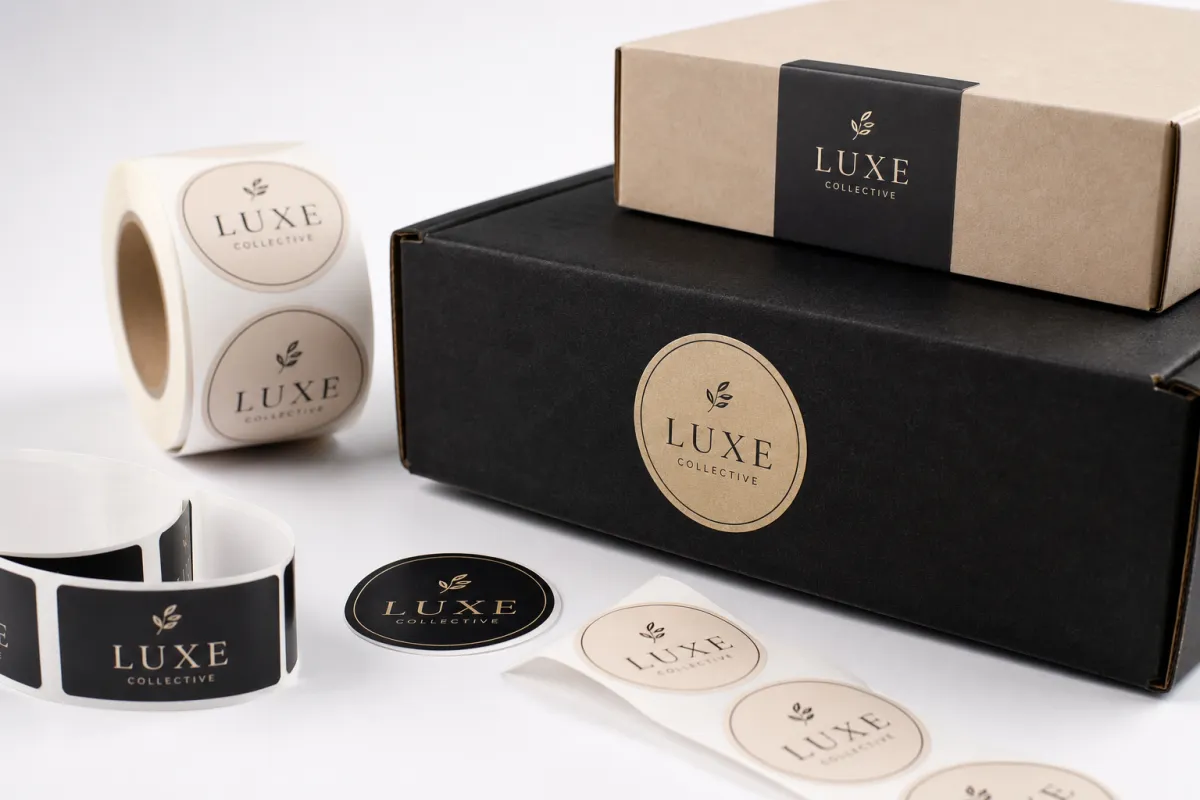
Branded packaging stickers for boxes stand out because they solve several packaging problems at once. A single sticker can close a flap, reinforce a closure, call out a promotion, and keep the carton visually tied to the brand. That is useful for operations teams, because it means the business can create a stronger presentation without redesigning the whole box structure or committing to a new print run of custom printed boxes. In other words, the sticker is carrying more weight than it first appears to.
From a packaging buyer's point of view, branded packaging stickers for boxes are attractive because they are flexible. You can use them on shipping cartons, mailers, subscription boxes, retail-ready cartons, and even secondary packs that need a little more identity. They also work well across multiple SKUs, which is a major reason they show up in branded packaging programs for e-commerce, food service, cosmetics, apparel, and small consumer goods. One sticker format can often support many product lines, and that makes planning a lot less fussy.
There is also a hidden operational benefit. Branded packaging stickers for boxes make the packing line more consistent, even when the underlying carton is basic kraft or stock white board. That consistency matters. If a box is packed by hand, a sticker gives the team a quick visual cue that the box is complete, sealed, and ready to move. If the business ships in bursts, the sticker can also be the easiest way to standardize package branding during a busy week without changing the carton inventory. I have seen small teams get a noticeable lift in presentation just from tightening up the closure area, and it is kind of amazing how fast that effect shows up.
Honestly, I think a lot of teams underestimate how much perception is built by the closure area of a box. The closure is where the customer first sees whether the package feels tidy or rushed. A crisp logo sticker or a branded seal on that top panel often does more for retail packaging perception than a larger design element that only shows once the box is fully opened. That is why branded packaging stickers for boxes are not just decorative. They are a small-format tool for making product packaging feel finished, and the customer usually notices that even if they cannot name why.
"A plain box is never really plain once the closure is branded. That one small decision tells the customer somebody cared about how the parcel left the building."
When the sticker is well chosen, it also protects the brand from inconsistency. Different box suppliers, different board colors, and different print lots can all vary slightly. Branded packaging stickers for boxes help keep the look stable across those changes, which is especially useful for seasonal runs, co-packed products, and businesses that are still refining their packaging design. That kind of visual steadiness matters more than people think, because customers tend to remember the overall impression long before they remember the exact structure of the carton.
How Branded Packaging Stickers for Boxes Work in Packing
In a packing line, branded packaging stickers for boxes can be dispensed by hand, peeled from sheets, or applied from rolls with a label dispenser. Format matters more than most people realize. A hand-applied sheet is fine for low-volume packing or sample shipments, while a roll format is usually better when the team needs speed and repeatability. For higher-volume programs, roll-fed stickers can cut down handling time and make application more consistent. That difference sounds minor on paper, but on a real line it can change how fast boxes move through the last mile of packing.
Placement matters just as much as format. Many brands place branded packaging stickers for boxes across the top closure seam, where the sticker helps keep the box closed and visibly marks the package as branded. Others use side-panel placement for larger artwork or handling messages. In retail packaging, a front-facing label can carry logo, product name, QR code, or campaign art. On shipping cartons, the sticker is often placed where it will survive sorting and still be seen when the package reaches the recipient. If the box is going to be stacked, slid, or rubbed against other cartons, placement really can make or break the final look.
There are several jobs a sticker can perform in one pass:
- Branding: adds the logo, colors, and brand name to a plain carton.
- Closure support: helps seal a flap or reinforce the opening.
- Identification: notes SKU, lot number, or product family.
- Messaging: highlights fragile handling, recycle instructions, or a promo code.
- Consistency: keeps different carton suppliers looking aligned.
Surface compatibility is where many projects succeed or fail. A smooth coated board usually gives excellent adhesion, while recycled kraft can be more variable because the fibers are open and the surface can be dusty or lightly textured. Branded packaging stickers for boxes also need to be matched to temperature and handling conditions. A box going into cold storage, for example, needs a different adhesive approach than a carton stored in a dry office and shipped locally. That is why a sample test on the actual box is worth more than a guess based on a catalog description. I have watched more than one good-looking label peel early simply because the carton surface had more texture than the mockup implied.
For shipping through parcel networks, it makes sense to think about the package as a handled object rather than a display piece. Vibration, compression, moisture swings, and abrasion all affect whether the sticker stays flat and readable. If you are building a larger shipping program, it is worth reviewing distribution testing guidance from the International Safe Transit Association and thinking about how the box behaves under real transport stress, not just on the workbench. That is the difference between a label that looks good in staging and one that still looks good after a long ride.
Key Factors That Shape Quality and Durability
Quality in branded packaging stickers for boxes starts with material choice. Paper, BOPP, vinyl, and specialty stocks each behave differently, and the differences show up quickly once the carton enters a real warehouse or shipping lane. Paper labels are a solid fit for dry, low-abrasion use and can feel very natural on kraft-style packaging. BOPP gives better moisture resistance and scuff resistance, which makes it useful for shipments that travel farther or get handled more often. Vinyl is tougher still, though it is not always necessary unless the application has more demanding environmental exposure. The right choice usually depends less on how the sticker looks in a proof and more on what the box is actually going to live through.
Finish changes appearance and readability. Matte is usually the easiest on the eyes and gives a softer, less reflective look that suits earthy brand systems and understated product packaging. Gloss adds punch and color density, which can be useful for highly saturated logos or promotional artwork. Soft-touch feels premium, but it should be chosen carefully because the tactile appeal needs to be balanced against scratch resistance. Uncoated stocks can print beautifully, yet they may show smudging or edge wear sooner than a coated option. A finish is never just a style decision; it changes how the label survives handling, which is why a sample is worth more than a pretty render.
Adhesive selection is just as important as the face stock. A permanent adhesive is the most common choice for branded packaging stickers for boxes because it is intended to stay put. Removable adhesives make sense when the sticker is temporary, such as a campaign label or a label that should not tear the carton. Freezer-safe adhesives are used for cold-chain or refrigerated products, and aggressive adhesives are often chosen for rougher surfaces, recycled board, or cartons that need a very strong initial tack. The wrong adhesive is one of the easiest ways to turn a good design into a production headache. It is also one of the easiest mistakes to avoid if the buyer asks about the actual storage and shipping conditions up front.
Print details matter more than people expect. Fine type, small legal text, and thin logo strokes can break down if the art is not prepared correctly. Color accuracy also matters, especially when branded packaging stickers for boxes are being used to mirror a larger packaging design system. A label that is too dark, too dull, or slightly off-brand can stand out in the wrong way. If your artwork includes gradients, small QR codes, or detailed line work, ask for a proof that shows the smallest readable element clearly. Tiny features are usually where an otherwise good design gets tripped up.
Environmental and handling factors deserve their own check. Warehouse dust can interfere with adhesion. Stack pressure can lift edges if the label is too thin or the adhesive is not suitable. Long transit times increase the chance of rub, corner wear, and moisture exposure. Even the orientation of the sticker on the box matters if it will sit under tape, stretch wrap, or another carton. I have seen simple label choices hold up beautifully on one route and fail on another just because the carton spent a night in a damp transfer area. That sort of variation is exactly why a test run on the real packaging is not optional if the order matters.
For buyers focused on sustainability, paper-based options can be paired with recycled box stocks, and FSC-certified paper can support sourcing goals when the brand wants stronger documentation. If you need recycling guidance for packaging decisions, the EPA recycling resource is a useful starting point for understanding how material choices affect end-of-life handling. That does not replace a packaging spec review, but it gives useful context. The honest answer is that sustainability is never just one material choice; it is the full combination of stock, adhesive, print coverage, and how the carton is used after purchase.
| Material | Best Use | Typical Strengths | Typical Unit Cost Range |
|---|---|---|---|
| Paper | Dry shipping, kraft cartons, light retail packaging | Natural look, easy print, good for short runs | $0.04-$0.10 each at 5,000 units |
| BOPP | Parcel shipping, moisture exposure, higher scuff risk | Water resistance, durability, clean print surface | $0.06-$0.14 each at 5,000 units |
| Vinyl | Heavier-duty use, long transit, rough handling | Strong durability, good tear resistance | $0.08-$0.18 each at 5,000 units |
| Specialty stock | Premium branding, texture-driven packaging design | Distinct feel, standout presentation | $0.10-$0.22 each at 5,000 units |
Those numbers are only planning ranges, and they move with size, color count, finish, and quantity. Still, they give a useful baseline for branded packaging stickers for boxes when a team is deciding whether the label should be a simple utility item or a higher-end part of the package branding system. Used well, that little sticker can sit comfortably between function and presentation instead of forcing the business to choose one or the other.
Branded Packaging Stickers for Boxes Cost: Pricing, MOQ, and Quotes
Branded packaging stickers for boxes cost less than many people expect, but the price is shaped by several real production variables. Quantity is usually the biggest one. A 1,000-piece run often carries a higher per-unit cost than a 10,000-piece order because setup, proofing, and press time are spread over fewer labels. Size also matters; a larger sticker uses more material and may limit how many units can fit on a press sheet or roll.
Shape can change the economics too. A simple rectangle is usually easier and cheaper to produce than a custom die-cut shape with tight corners or a complex outline. Number of print colors matters, as does whether the design uses full bleed coverage, spot white, metallic effects, or a premium finish. If you are comparing branded packaging stickers for boxes across vendors, make sure you are comparing the same size, same stock, same adhesive, and same finishing method. Otherwise the quotes will not be truly comparable. A cheap-looking quote can get expensive fast if the spec details are not lined up.
MOQ, or minimum order quantity, is a practical rather than emotional concept. It is the point where production becomes efficient enough to justify the run. Small orders are possible, but they often cost more per sticker because the press setup does not shrink just because the quantity is lower. That is why first-time buyers sometimes feel sticker pricing is uneven. They are seeing the fixed production work show up more clearly on a small run. Once that is understood, the pricing starts to make a lot more sense.
Here is the simplest way to think about budget:
- Unit cost is what each sticker costs in the final order.
- Total order value is what the purchase requires up front.
- Delivered cost includes shipping, proofs, and any setup or die charges.
If the program is tied to a launch, subscription cycle, or holiday shipping window, the lower unit price is not always the best deal. A slightly more premium sticker can be worth it if it reduces box damage, improves first impressions, or replaces a larger packaging change that would be much more expensive. That is common in branded packaging work, where the sticker is doing the job of a much bigger design investment. The budget question is usually not “What is the cheapest label?” but “Which spec gives the best result for the least operational friction?”
The table below gives a practical comparison of common order approaches for branded packaging stickers for boxes.
| Order Type | Best For | Typical MOQ | Typical Lead Time | Pricing Pattern |
|---|---|---|---|---|
| Sheeted labels | Small teams, manual packing | 250-1,000 pieces | 7-12 business days | Higher unit cost, lower setup complexity |
| Roll labels | Faster packing, repeat programs | 1,000-5,000 pieces | 10-15 business days | Balanced cost and handling speed |
| Custom die-cut run | Distinct shape, stronger brand look | 2,500-10,000 pieces | 12-18 business days | Higher setup, better visual impact |
| Premium stock run | Retail packaging, higher perceived value | 5,000+ pieces | 15-20 business days | Higher material cost, better finish and feel |
For teams that want to compare broader packaging options, it helps to review Custom Labels & Tags alongside box and mailer formats so the sticker decision fits the full system instead of living as a one-off purchase. If you need a broader benchmark, the case examples on Case Studies can also show how branded packaging stickers for boxes fit into real packing programs. That kind of comparison is useful because the cheapest line item is not always the cheapest outcome.
Production Process and Timeline: From File to Delivery
Branded packaging stickers for boxes usually move through a fairly standard production sequence, but the details in each step matter. It starts with artwork review, where the vendor checks resolution, bleed, die lines, and whether the design is actually usable at the requested size. After that comes proof approval, which is the best time to catch spelling issues, alignment problems, and any mismatch between the intended color and the printed color. Once proofing is signed off, the order moves into material selection, printing, finishing, cutting, packing, and shipment. The process is straightforward, but it can still get tangled if the file is not ready.
Most delays happen before the press ever runs. A file with missing bleed, low-resolution art, or unclear trim marks can add days because it has to be corrected and rechecked. Color matching is another common cause of timeline drift. If the brand has a specific Pantone target or expects a very particular logo tone, it is better to settle that early rather than after the first print sample comes back. Even a simple size change can slow the job because it may trigger a new die, a new layout, or a revised proof. That is the kind of thing people often underestimate until they are waiting on the carton stack to arrive.
Realistic lead times vary with order complexity. A simple branded packaging stickers for boxes run with standard paper stock and a clean rectangle format can move quickly, often in a little over a week after proof approval. Custom die-cut shapes, specialty finishes, and heavier adhesives tend to extend the schedule. Larger repeat runs can also take longer because packing, finishing, and freight coordination take more time. If a project must hit a launch date, build in extra room. A buyer who plans around ideal timing instead of actual timing usually ends up paying for rush handling.
For brands that ship in seasonal waves, inventory planning is part of the production plan. If the holiday rush or a promotional release is only two weeks away, branded packaging stickers for boxes are already behind schedule unless the artwork is finished and the order is placed. The better habit is to align sticker reorders with the next production cycle, not the day the last box is sitting on the shelf. That is much less glamorous than a last-minute scramble, but it is a lot kinder to the packing team.
Getting the file side right makes a real difference. Send clean vector logos when possible. Keep copy short enough to stay readable. Make sure any QR code has enough quiet space around it. If a sticker must align with a specific flap or seam on the box, include those measurements in the spec so the printer can size the art properly. Good prep shortens the back-and-forth, and that often matters more than trying to squeeze another cent out of the unit price. A well-prepared file saves more money than a lot of people realize.
One useful habit is to treat branded packaging stickers for boxes like a small production item with a real spec sheet, not like a casual design add-on. That mindset keeps the order grounded in the actual box, the actual line, and the actual ship route. It also reduces the chance that packaging design decisions are made too far away from the way the carton is really used. Once the team starts thinking that way, fewer surprises show up at the packing table.
Step-by-Step Guide to Ordering Box Stickers
The simplest way to order branded packaging stickers for boxes is to start with the carton itself. Identify the box material, whether it is kraft, white corrugate, recycled board, or a coated retail box. Note the storage conditions too. A carton held in dry indoor storage is a different project from a carton that will sit in a chilled room or travel through humid transit. Then decide whether the sticker must seal the box, identify the product, or simply brand the package. Getting that decision clear early keeps the rest of the spec from wandering.
Next, choose size and shape based on the real application area. A sticker that is too small can disappear on a large carton, while a sticker that is too large can wrinkle over a flap or interfere with tape. For branded packaging stickers for boxes, the artwork should be readable from a short distance but still clear when the package is held in hand. The best shape is usually the one that supports the layout, not the one that looks most complicated in a mockup. Fancy contours are fine if they earn their keep, but they should not be added just to feel premium.
Artwork preparation is where many projects either gain momentum or lose it. Use high-resolution logos, leave room for bleed, and build the design with enough contrast that it still reads under warehouse lighting. If the sticker is meant to sit slightly off-center or over a closure seam, design for that reality. A label that only looks good when applied perfectly will not age well in a live packing operation. The goal is not a perfect render; it is a sticker that holds up in the messy middle of actual use.
Before full production, ask for a proof or sample. That step is worth the time, especially for branded packaging Stickers for Boxes That need to match a signature color or bond to a specific carton finish. If your boxes are kraft, test on kraft. If they are coated, test on coated. Paper and adhesive often behave differently than they do on a screen, and a physical test catches that immediately. If you skip this, you are basically hoping the real-world result behaves like the mockup, and that is a gamble I would not take.
Here is a practical ordering sequence:
- Confirm the box type, finish, and handling conditions.
- Decide whether the sticker is for branding, sealing, or both.
- Choose a size, shape, material, and finish.
- Prepare artwork with correct bleed and readable text.
- Review proof, sample, or press check if needed.
- Place the order with enough time for delivery and reorders.
Finally, build a reorder plan. Branded packaging stickers for boxes should not run out in the middle of a shipping cycle. If the business ships by week or by campaign, keep enough inventory to cover one more cycle than you think you need. That buffer is useful when freight is late, orders spike, or the packaging team needs to adjust a file before reordering. If the project is part of a broader packaging refresh, that is also the moment to review whether the sticker should be paired with other Custom Packaging Products for a more cohesive presentation. A little planning here saves a lot of scrambling later.
Common Mistakes and Expert Tips for Better Results
The most common mistake with branded packaging stickers for boxes is choosing the wrong adhesive for the carton surface. A sticker that performs well on smooth stock may lift on dusty recycled kraft, and a label that looks fine in a warm office may behave very differently in cold storage. The second common mistake is ordering the wrong size. Teams often approve artwork on a screen and only later discover that the logo is too small, the copy is too dense, or the sticker overwhelms the box closure. That sort of mismatch is annoying, but it is also preventable.
Another frequent problem is designing for appearance instead of handling. A label can look elegant in a mockup and still fail if the box is compressed, stacked, or rubbed in transit. The same is true for detail level. Fine typography, thin outlines, and tiny QR codes are easy to admire in digital proofing, but they can disappear once the sticker is printed and applied by hand under normal packing conditions. Branded packaging stickers for boxes work best when the layout is simple enough to survive real-world use. That does not mean plain; it means deliberate.
There are a few expert habits that improve results quickly:
- Keep contrast high: dark art on a light field, or clear contrast on kraft, helps the sticker read from a distance.
- Leave edge breathing room: artwork that sits too close to the trim can look cramped or expose alignment issues.
- Test on the actual box: this is the fastest way to find adhesion or scuff problems before a larger order.
- Match the use case: a sealing sticker, a shipping sticker, and a retail sticker do not need the same spec.
- Plan the reorder early: it is cheaper to avoid a rush than to recover from one.
If you want a more polished result, simplify the sticker until every element has a job. Good packaging design does not mean cramming the face with graphics; it means making the brand readable, the closure tidy, and the box useful. That is why branded packaging stickers for boxes often outperform more expensive changes. They are easy to adapt, easy to restock, and easy to tune when the box program changes. Plus, they let the brand stay flexible without starting from scratch every time the packaging needs a small update.
For brands that care about documented sourcing or long-term packaging sustainability, it helps to think beyond the sticker alone. FSC-certified paper can support sourcing goals, and the choice of adhesive and face stock can influence how the carton is treated after use. If a team is trying to reduce waste or improve material consistency across product packaging, the sticker spec should be part of the larger packaging strategy rather than an isolated decision. That is the sort of detail that separates a decent packaging program from one that feels thought through.
My practical advice is simple: audit the current box, define the sticker's job, request samples, and compare a few material choices before ordering at scale. That is the most reliable way to make branded packaging stickers for boxes feel intentional instead of improvised. And if the project grows into a broader packaging refresh, the same thinking can guide everything from mailers to branded seals to the rest of the box program. Start with the carton, not the mockup, and the results usually get better fast.
That is usually where the real value shows up. Branded packaging stickers for boxes are small, but they touch production speed, customer perception, and repeat ordering discipline all at once. If the spec is right, they become one of the easiest ways to improve package branding without changing the box structure, the packing line, or the budget in a dramatic way. The best next move is to match the sticker to the actual box, the actual route, and the actual handling conditions before placing the order.
FAQ
What are branded packaging stickers for boxes used for besides branding?
They can seal closures, identify SKUs, call out fragile handling, and support promotions or seasonal campaigns. They also make a low-cost upgrade possible without changing the box structure itself, which is why branded packaging stickers for boxes are so common in shipping and retail packaging. In a lot of packing rooms, they end up doing three jobs at once and still cost less than a box redesign.
What material is best for branded packaging stickers for boxes?
Paper works well for dry, low-abrasion use and often pairs nicely with kraft packaging. BOPP or vinyl is better when moisture, scuffing, or longer transit times are a concern. The best choice depends on the box finish, the shipping route, and whether the sticker needs to stay pristine. If the carton is likely to see rough handling, I would lean toward a tougher stock before I’d lean toward a prettier one.
How many branded packaging stickers for boxes should I order first?
A first order should be large enough to cover one replenishment cycle, but not so large that artwork or branding changes become expensive. If you are testing size or adhesive, start smaller and evaluate the real packing performance before scaling up. For recurring programs, ask for a quantity that lowers unit cost while still matching forecasted box volume. That keeps the budget sensible and leaves room for adjustments if the packing process changes.
Are branded packaging stickers for boxes cheaper than printed boxes?
Usually yes, especially when you want strong brand impact without committing to custom printed boxes. Stickers are often more flexible for smaller runs, multi-SKU programs, or seasonal changes. Printed boxes can make sense at scale, but branded packaging stickers for boxes are often the faster and more affordable entry point. They are also easier to update when the brand needs a fresh look without replacing the whole inventory.
How long do branded packaging stickers for boxes take to produce?
Simple runs can move quickly, but timing depends on proof approval, material choice, and order size. Custom shapes, specialty finishes, or detailed color matching usually add time. The safest approach is to build in lead time before a launch or a seasonal shipping surge. If the project is time-sensitive, it is better to place the order early than to hope a rush job will behave nicely.

