Buyer Fit Snapshot
| Best fit | Branded Padded Mailers for Bakery Packaging Quotes projects where brand print, material claims, artwork control, MOQ, and repeat-order consistency need to be specified before quoting. |
|---|---|
| Quote inputs | Share finished size, material target, print colors, finish, packing count, annual reorder estimate, ship-to region, and any compliance wording. |
| Proofing check | Approve dieline scale, logo placement, barcode or warning zones, color tolerance, closure strength, and carton packing before bulk production. |
| Main risk | Vague material claims, crowded artwork, missing packing details, or unclear freight terms can make a low unit price expensive after revisions. |
Fast answer: Branded Padded Mailers for Bakery Packaging Quotes should be specified like a repeatable production item. The safest quote records material, print method, finish, artwork proof, packing count, and reorder notes in one written spec.
Production checks before approval
Compare the actual filled-product size with the drawing, then confirm tolerance on folds, seals, hang holes, label areas, and retail display edges. Reserve space for logos, QR codes, warning copy, and material claims before decorative graphics fill the panel.
Quote comparison points
Review material grade, print process, finish, sampling route, tooling charges, carton quantity, and freight assumptions side by side. A quote is only useful when the supplier can repeat the same color, closure quality, and packing count on the next order.
If you are building a branded Padded Mailers for Bakery Packaging supplier quote checklist, start with the shipping problem, not the artwork. A pretty mailer that collapses in transit is still a bad package. The damage is usually ordinary, which is why teams miss it early. Scuffed corners. Dented edges. Moisture creep. Weak seals. A pack that looked clean leaving the warehouse and looks tired by the time it lands on a doorstep. That is how refunds start. That is how repeat orders quietly disappear.
The quote matters more than the headline price. A real quote shows whether the supplier understands product packaging, retail packaging, and package branding as one job instead of three separate ones. The right mailer can protect light bakery items, support seasonal launches, and keep branded packaging consistent from one reorder to the next. The wrong one can make a premium product feel like an afterthought someone rushed out before lunch.
Bakery buyers run into the same trap over and over: they compare a low unit price against a stronger spec without normalizing the details. That is how "cheap" becomes expensive. The better approach is simple. Define the product, define the route, define the presentation goal, then ask suppliers to quote against the same assumptions. Anything less is just number theater.
Why Bakery Orders Fail Without the Right Mailer
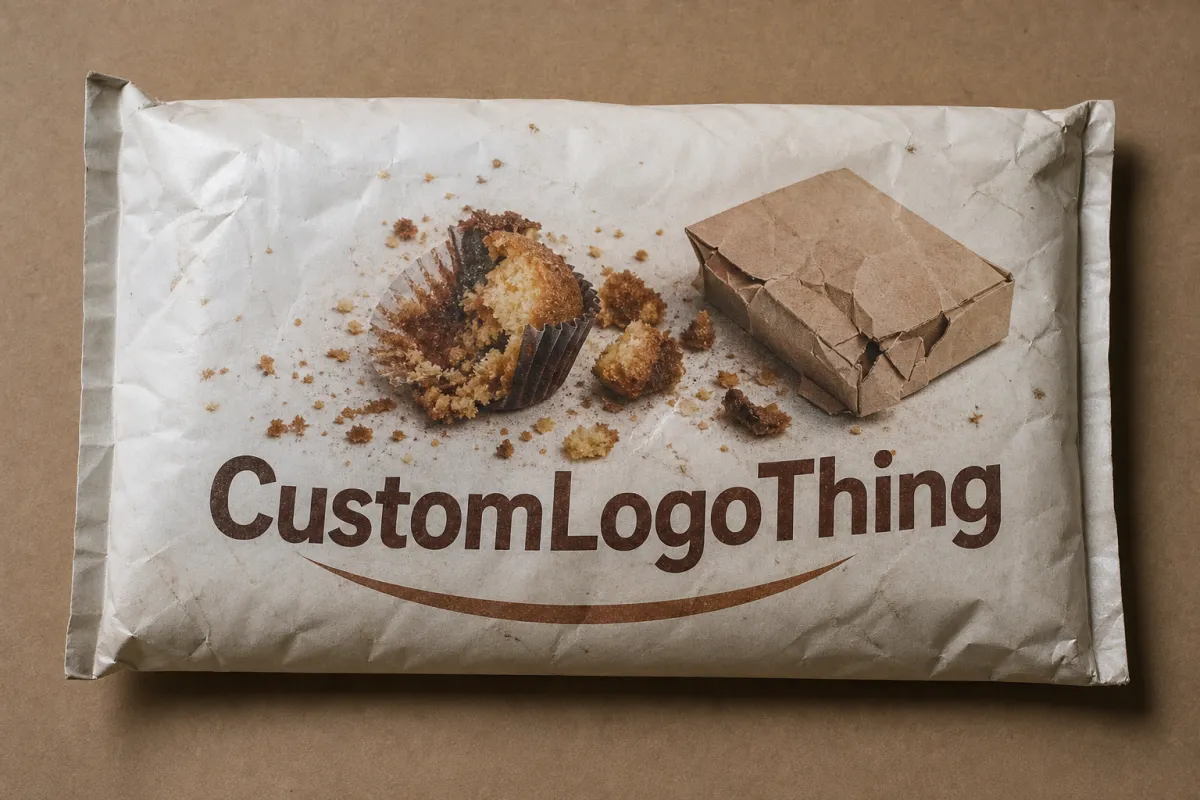
Bakery shipments fail in dull, expensive ways. A cookie box may survive the route and still arrive with rubbed edges, a cloudy surface, or a shifted insert that makes the entire pack look off. Dry treats can stay intact and still disappoint if the outer mailer is dented or the closure split during handling. Procurement teams often call those cosmetic problems. Finance teams know better. They are margin problems.
Branded Padded Mailers help reduce that risk for lighter bakery orders that do not need a full corrugated shipper. Sample kits, dry cookie assortments, gift card mailers, add-on merch, and subscription inserts are all fair game. Those products often do not justify a custom carton, but they still need protection against parcel sorting, local delivery, and the usual abuse that happens before the package reaches the front door. A padded mailer is a practical middle ground when an envelope is too thin and a full box is too much.
Start the quote request with the shipment profile, not the design file. Ask what is being shipped, how far it travels, which carriers handle it, and what temperature range it will see. A bakery mailer for local handoff is not the same thing as one that moves through national parcel networks. Local delivery can prioritize presentation and package branding. Long-distance shipping usually needs stronger closure integrity, more padding, and better tolerance for humidity swings.
The cheapest option is often the one that creates the highest hidden cost. A mailer that saves a few cents but drives 2% more replacements can wipe out the savings fast. If an order averages $18 and the replacement cost lands at $9.50 once labor and re-ship charges are counted, the math stops being theoretical. Better buyers ask for defect assumptions, not just unit pricing. That saves arguments later.
The cheapest mailer is often the one that creates the most re-shipments. A low quote only matters if the product arrives in a sellable state.
Presentation matters too. Bakery brands sell a lot of gifting, limited runs, and repeat subscription orders. A clean branded mailer makes a small product feel deliberate. A plain one makes the same product feel like a shipping afterthought. That difference is not subtle to the customer, even if the spreadsheet pretends it is.
What Branded Padded Mailers Actually Include
A branded padded mailer usually has four parts: the outer face material, the protective padding, the closure system, and the printable surface. The outer layer may be kraft paper, polyethylene film, or a laminated structure built for better tear resistance and ink adhesion. The padding may be bubble, paper-based cushioning, or a light foam layer depending on the product and the route. The closure is often a peel-and-seal strip, though some jobs call for tamper-evident or reinforced closures. Branding lives on the printable face, where logos, flavor cues, QR codes, campaign copy, and seasonal graphics can all do their job.
For bakery use, the best format depends on the product, not the calendar. Cookies, brittle, dry pastries, tea biscuits, and sample assortments usually fit well. Gift card holders, inserts, and small retail add-ons do too. Fragile items, especially frosted products or anything with a soft garnish, may need an inner tray or a secondary wrap. In that setup, the mailer is the outer shell, not the entire protection plan.
That difference matters because decorative packaging and working packaging are not the same thing. Decorative packaging sells the mood. Working packaging keeps the product usable. The best bakery mailers do both, but the order should stay clear: protection first, branding second. If the structure cannot survive compression, the print does not rescue it.
For some brands, the mailer is the only visible piece of the shipment. Opening experience matters more than people like to admit. A customer who sees a crisp logo, a consistent color block, and a tight closure reads the brand as organized. A customer who sees a wrinkled outer layer or a mailer that is obviously oversized reads the brand as cheap. That perception affects repeat orders.
If you are comparing formats across a broader line, review Custom Packaging Products before narrowing to one construction. Some bakery programs work better with mailers, while others need Custom Poly Mailers for moisture resistance or a different pack profile. The right choice usually comes down to product weight, print goal, and transit exposure.
One more thing: package branding is strongest when the exterior and the product story match. A rustic sourdough subscription and a glossy seasonal dessert launch should not wear the same visual language by default. The outer mailer should reinforce the same design logic as the insert, label, or internal wrap. If it does not, the shipment feels assembled instead of designed.
Size, Material, and Print Specifications to Confirm
Every quote should confirm the same core measurements. Internal usable size comes first, because that is the real fit dimension. External size matters next, because it affects freight, carton packing, and shelf footprint. Closure overlap is the third variable, and it gets ignored more often than it should. Too short, and the seal can fail under pressure. Too long, and you waste material while warping the package shape. The final question is whether the mailer needs room for tissue, inserts, a protective inner sleeve, or a folded product label.
Material choice changes both appearance and function. Kraft face stock gives a natural look and usually prints well for one- and two-color branding. Poly outer layers are usually better for moisture resistance and a cleaner, more modern appearance. Laminated surfaces support richer graphics and more stable color reproduction, especially when the design uses gradients or high-contrast photography. Padded constructions can use bubble or paper-based cushioning, and the right option depends on how much shock absorption the bakery item really needs. For example, some premium jobs use a 350gsm C1S artboard face laminated over an 18g bubble layer for a firmer hand feel and cleaner print, while lighter mailers may use 120gsm kraft with a 3mm paper pad to keep cost down.
Print specifications deserve the same attention. The number of colors changes setup cost. Coverage area changes ink use and visual impact. Registration tolerance decides whether the logo stays crisp from lot to lot. Matte, soft-touch, foil accents, and spot finishes all add cost and can stretch production time. Ask whether the supplier prints one side only or can print front and back. A two-sided job is not always necessary, but when the back panel carries reuse instructions or a promo code, it can earn its keep.
Performance details are easy to miss because they do not show up in a mockup. Ask about tear resistance, seal strength, and moisture exposure. A bakery mailer for short local routes may not need the same barrier properties as one going through multiple hubs and climate zones. If the route includes long dwell times, temperature swings, or condensation risk, the material should reflect that. Small environmental changes matter more than most non-operators expect. A spec sheet that mentions 50-60N seal strength or a 24-hour humidity tolerance is more useful than a vague promise about "good quality."
Standards matter too. Industry references from the International Safe Transit Association help frame transit testing expectations, while the Forest Stewardship Council matters if your paper-based packaging claims need a recognized sourcing standard. For broader packaging education and terminology, the Institute of Packaging Professionals is a useful reference point. The exact protocol depends on the shipment, but asking a supplier what they test against is a practical filter.
- Confirm internal size: use the actual product plus any inserts, wraps, or dividers.
- Confirm outer dimensions: check carton loading, pallet counts, and shipping cost impact.
- Confirm closure overlap: make sure the seal stays stable after loading and handling.
- Confirm print method: flexographic, digital, rotogravure, or offset-laminated builds all affect cost and detail.
- Confirm finish: matte, gloss, soft-touch, or uncoated changes the feel and durability.
Branded Padded Mailers for Bakery Packaging Supplier Quote Checklist
If you want a useful supplier quote, you need a clean comparison structure. The phrase branded Padded Mailers for Bakery Packaging supplier quote checklist should do more than feed a search engine. It should act like the worksheet that keeps one supplier from quoting a premium laminated build while another quotes a basic kraft version and both pretend the numbers mean the same thing. That kind of mismatch creates fake savings and bad decisions.
Below is a simple comparison frame that works well for bakery mailers. It keeps the focus on the variables that actually move price and performance. Most suppliers quote faster if you send the same data in the same format every time. Convenient, that.
| Option | Typical MOQ | Typical Unit Price | Best For | Main Watch-Out |
|---|---|---|---|---|
| Kraft padded mailer with 1-color logo | 3,000-5,000 units | $0.18-$0.34 | Simple bakery shipments, inserts, sample packs | Limited moisture resistance and less vivid print |
| Poly or film-faced padded mailer with 2-color print | 5,000-10,000 units | $0.27-$0.49 | Repeat orders, retail add-ons, cleaner shelf presentation | Higher setup expectations and tighter color matching |
| Laminated custom padded mailer with full coverage print | 10,000+ units | $0.42-$0.88 | Seasonal launches, premium gifting, strong brand presentation | More cash tied up in inventory and more detailed approvals |
| Paper-based padded mailer with specialty finish | 5,000-10,000 units | $0.31-$0.64 | Eco-positioned bakery lines and responsible sourcing claims | Finish choice can raise cost and demand stricter handling |
Those numbers are planning ranges, not fixed market quotes. For a run of 5,000 pieces, a basic kraft mailer might land around $0.15-$0.24 per unit if the size is standard and the artwork is light. The same order can move to $0.30-$0.55 per unit if you add full bleed print, heavier padding, or a custom size. A 10,000-piece reorder often pulls the unit cost down, but only if the supplier is not rebuilding the spec from scratch.
Ask every supplier to break the quote into line items. The unit price matters, but so do setup charges, plate or cylinder fees, sampling cost, proofing cost, freight, and any VAT, duty, or tax treatment. If one quote includes shipping and another leaves it out, the comparison is already crooked. The same problem shows up with samples. Some suppliers include a production sample, some bill it separately and credit it back later, and some treat it as a pure extra. Know which bucket you are buying.
Do not compare quotes unless the assumptions match. Same size. Same material. Same print method. Same delivery terms. Same payment terms. Same packing configuration. Same tolerance for color matching. Anything less gives you a spreadsheet that looks precise and still tells you the wrong story.
Negotiation can stay practical without turning messy. Ask whether the supplier can support split shipments for seasonal bakery drops, hold inventory for repeat orders, or lock a reorder price for a defined period. If your bakery launches new fillings or seasonal flavors on a schedule, inventory flexibility can matter more than shaving a few cents from the unit cost. That matters even more if the mailer sits inside a larger branded packaging system and needs to match labels, inserts, and retail packaging.
Useful quote questions often include these:
- What is the exact finished size, and what tolerance do you hold?
- What material construction is being quoted, and what padding format is inside?
- How many print colors are included, and is the back side printable?
- What is the sample cost, and how long does sample approval take?
- What freight terms are included, and from which origin?
- Can you confirm reorder pricing and expected lead time for repeat bakery runs?
Process, Timeline, and Production Steps
A reliable mailer order moves through a clear sequence: request, specification review, artwork prep, proofing, sampling, approval, production, quality check, packing, and dispatch. That sounds basic because it is basic. The delays come from the same three gaps over and over: incomplete specs, unclear artwork files, and slow approvals. The supplier is not the only variable. The buyer controls a surprising amount of the timeline.
Lead time should always be split into at least three parts. Artwork turnaround is the first. If the design team still needs to adjust barcode placement, color references, or seasonal messaging, that time should sit on the schedule in plain view. Physical sampling is the second. A sample that looks right on screen may expose a registration issue, a shade shift, or a size problem once the mailer is folded and sealed. Manufacturing is the third, and that is where material sourcing and line capacity matter most.
A good supplier quote should show milestones, not a vague delivery guess. If a bakery launch date is fixed, ask for the production calendar before artwork is finalized. A supplier that can tell you when proof approval locks the schedule is usually more dependable than one that promises a quick dispatch without naming the decision points. In this category, the date that matters is the date the last approval lands.
Delays usually come from predictable places. Missing dielines create artwork revisions. Weak color references create proof loops that never seem to end. Last-minute design changes after proof approval can force a restart. Freight can become a problem too if the order is complete but routing was never pinned down. A buyer can cut most of that risk by giving the supplier a complete brief at the start and refusing to approve a quote that leaves major variables undefined.
For many bakery programs, a realistic plan looks like this:
- Artwork prep: 1-3 business days if files are ready, longer if logo cleanup is needed.
- Sampling: often 5-10 business days, depending on the structure and print complexity.
- Production: commonly 10-20 business days after sample sign-off for standard jobs, or often 12-15 business days from proof approval for simpler repeat runs.
- Freight: a few days by domestic ground, longer for cross-border or consolidated shipments.
Those ranges are planning anchors, not promises. The right supplier should be able to explain where your order fits inside them and what could move the schedule. That kind of clarity is one of the strongest signs you are dealing with a packaging partner, not just a printer with a sales script.
Why Work With a Bakery Packaging Supplier
A bakery packaging supplier brings more than manufacturing capacity. The real value is category knowledge. Bakery mailers have to balance appearance, product protection, and repeatability while still fitting a food-adjacent business model that can be seasonal, promotional, and sensitive to spoilage risk. A general supplier may be able to make a mailer. A specialist is more likely to know why a specific closure, stock weight, or print layout works better for a bakery program.
That knowledge cuts waste. An experienced supplier may recommend a different size so the product does not shift in transit, or a different print strategy so the logo stays sharp on the chosen material. They may suggest a closure that tolerates more handling, or a face stock that fits your color palette better. Small choices, yes. Taken together, they can change the quality of the final shipment.
Quality control matters just as much. Ask whether the supplier checks color consistency, seal strength, print alignment, and carton packing before the order leaves the facility. A bakery launch is not the place to discover that the logo drifts half a centimeter, the seal is too weak, or the mailers were packed in a way that causes edge damage. If the supplier already understands those inspection points, the risk drops.
Communication depth matters too. A supplier who keeps reorder history, notes prior approvals, and documents changes can cut down on repeated corrections. That helps with seasonal bakery promotions, where packaging design changes a little every few months but the core format stays the same. Faster reorders are not magic. They come from fewer missed specs.
There is a commercial upside here as well. When the supplier understands your line, they can help standardize the packaging program. That makes budgeting easier, shortens approval cycles, and improves the consistency of the product packaging across channels. The brand feels more organized, and the purchasing team gets fewer surprises.
If you want a practical sign of supplier capability, review published project examples in Case Studies. Do not get distracted by polished copy. Look for repeat order support, matching color across runs, and realistic lead time handling. Those details say more than a glossy mockup ever will.
Next Steps Before You Request Quotes
Before you send RFQs, gather the basic facts. Exact package dimensions. Product weight. Artwork files. Brand colors. Delivery address. Desired quantity. Launch date. If the product includes fragile elements, say that plainly. A supplier can only quote well if the brief is specific enough to remove guesswork.
Build a side-by-side comparison sheet for at least two or three suppliers. Keep the columns consistent: material, size, print method, MOQ, setup cost, unit cost, freight, sample cost, and lead time. Once those numbers sit on the same page, the weak quotes get exposed fast. A lower unit price that hides expensive freight or a long approval cycle is not actually a lower total cost. It is a trick with nicer formatting.
Ask a few final questions before you approve the order. Can the supplier send a sample? What are the payment terms? How are reorders handled? What shipping method will they use? How many business days after proof approval does production really start? Those questions sound basic, which is exactly why they get skipped. They reveal whether the supplier has an organized process or just an optimistic promise.
If you are still choosing between formats, compare your bakery mailer plan with broader branded packaging options and then narrow the scope. A launch run, a test run, and a repeat production batch do not need the same quote structure. A test order can prioritize flexibility. A launch run may prioritize speed and presentation. A repeat batch should focus on consistency and inventory control.
The practical takeaway is simple: send suppliers one clean brief, then compare only like-for-like quotes. If the size, material, print method, sample path, and freight terms are not identical, the lowest number is usually lying by omission. Lock the spec first. Then buy the mailer that protects the product and still looks like your brand meant it.
Frequently Asked Questions
What should a branded padded mailers for bakery packaging quote include?
It should list the exact finished size, material type, padding style, and print details. It should also show MOQ, unit cost, setup charges, sample cost, freight, tax terms, and the estimated production lead time with the shipping window. If any of those items are missing, the quote is not ready for comparison.
Can branded padded mailers protect delicate bakery items?
Yes, for lighter bakery shipments like cookies, dry treats, and branded inserts. For frosted or fragile items, the mailer usually works best with an inner tray, wrap, or secondary protective layer. Ask the supplier to confirm compression and moisture resistance for your route before you place the order.
How do I compare pricing from different mailer suppliers?
Compare identical specs only: same size, same material, same print method, and same delivery terms. Separate one-time charges from recurring unit cost so the real order price is visible. Also check whether freight, sampling, and approval revisions are included or billed separately.
What MOQ is typical for bakery branded padded mailers?
MOQ depends on print method, materials, and whether the job uses custom tooling. Smaller runs are often available, but the unit cost usually rises as the order drops. Ask for alternate pricing tiers so you can compare test runs against reorder volumes and see where the breakpoints actually sit.
How long does a custom bakery mailer order usually take?
Timeline depends on artwork approval, sample sign-off, production, and freight method. The fastest way to avoid delays is to send complete specs and final artwork up front. A good supplier should give clear milestones, not just a vague delivery estimate. For many standard repeat jobs, production often lands around 12-15 business days from proof approval, with sampling and freight added on top.


