Buyer Fit Snapshot
| Best fit | Custom Padded Mailers for Bakery Packaging Costs Breakdown projects where brand print, material claims, artwork control, MOQ, and repeat-order consistency need to be specified before quoting. |
|---|---|
| Quote inputs | Share finished size, material target, print colors, finish, packing count, annual reorder estimate, ship-to region, and any compliance wording. |
| Proofing check | Approve dieline scale, logo placement, barcode or warning zones, color tolerance, closure strength, and carton packing before bulk production. |
| Main risk | Vague material claims, crowded artwork, missing packing details, or unclear freight terms can make a low unit price expensive after revisions. |
Fast answer: Custom Padded Mailers for Bakery Packaging Costs Breakdown should be specified like a repeatable production item. The safest quote records material, print method, finish, artwork proof, packing count, and reorder notes in one written spec.
Production checks before approval
Compare the actual filled-product size with the drawing, then confirm tolerance on folds, seals, hang holes, label areas, and retail display edges. Reserve space for logos, QR codes, warning copy, and material claims before decorative graphics fill the panel.
Quote comparison points
Review material grade, print process, finish, sampling route, tooling charges, carton quantity, and freight assumptions side by side. A quote is only useful when the supplier can repeat the same color, closure quality, and packing count on the next order.
If you are comparing custom Padded Mailers for Bakery Packaging unit cost breakdown numbers, do not start with sticker price. That is the trap. The cheapest line item on a quote can become the most expensive choice once you count damaged macarons, dented cookie tins, replacement shipments, and the customer service time that follows. Bakery packaging lives or dies on unit economics: protection, shipping weight, presentation, and how many problems the mailer prevents before they become refunds.
That is the real job here. Not fluff. Not vague premium claims with a straight face. Just a clear look at what Custom Padded Mailers cost, what moves the quote, what MOQ to expect, and where bakery brands can trim spend without making the package feel cheap. From a packaging buyer’s point of view, that is the part that matters.
Why Bakery Brands Overpay on Padded Mailers
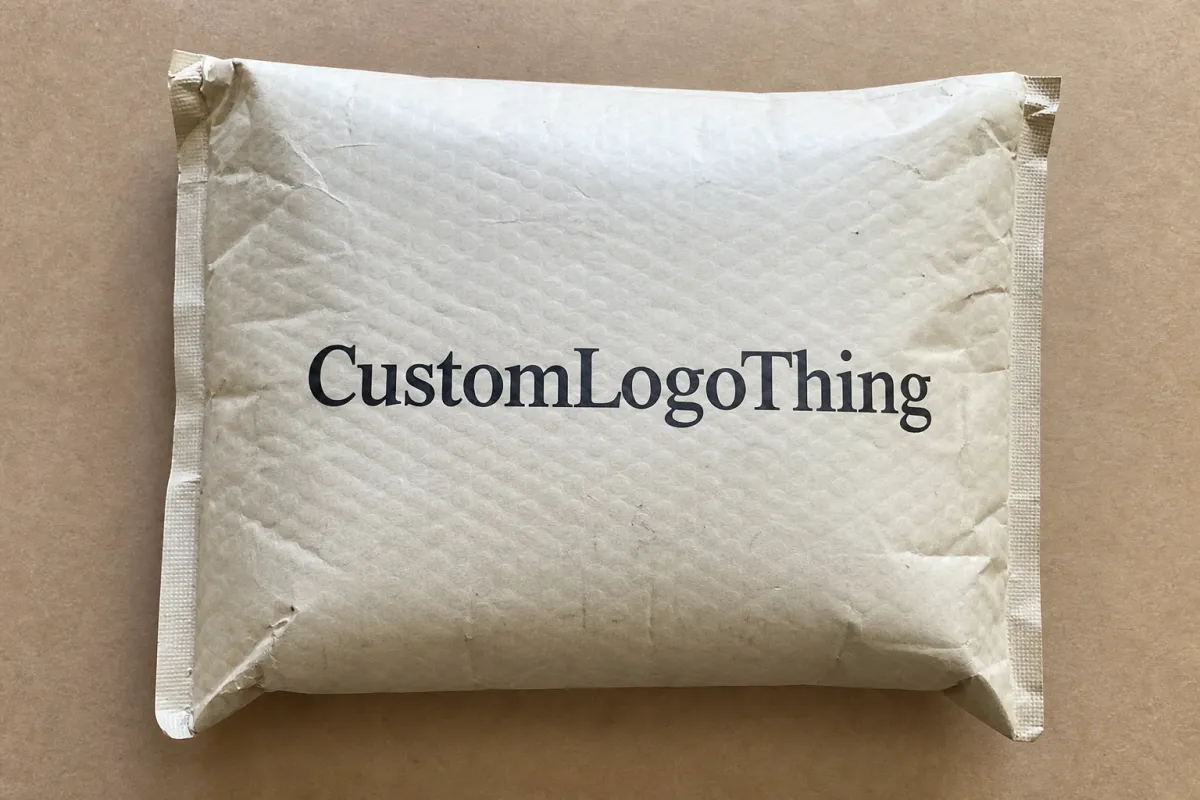
Bakery brands overpay in the same boring way they overpay everywhere else: they buy the wrong format, then try to fix it with more filler, thicker cartons, or extra labor. That looks inexpensive at first. Then the damage rate shows up. So does the freight bill. Then the returns team starts maintaining a second spreadsheet nobody wants to open.
A padded mailer is not just a branding move. For the right bakery product, it is a practical piece of product packaging. It can cut down on dunnage, keep shipping weight lower, and protect lightly fragile items better than a roomy carton with empty space rattling around inside. A flat cookie set, a pastry sleeve, a brownie sampler, or a gift box with clean edges often ships more efficiently in a mailer than in an oversized printed box with extra inserts. That matters because shipping costs keep climbing, and every extra ounce gets multiplied across volume.
The mistake is assuming the lowest quoted unit price equals the lowest real cost. It usually does not. A mailer that saves $0.04 per unit but raises the damage rate by 1% is not cheaper. On 10,000 orders, that can mean 100 more problem shipments. If each damaged order costs $8 to $18 in replacement product, labor, and freight, the cheap mailer starts looking expensive fast. No mystery there. Just unit math.
Another common mistake is overbuilding the spec. Some brands jump straight to heavy material, full-bleed print, fancy finishes, and oversized dimensions because they want the package to look premium. Fine. But if the customer only sees the mailer for five seconds before opening it, the better spend is often a clean logo, a solid seal, and the right fit. Better branded packaging is not always more decoration. Sometimes it is better decisions.
Practical buyer rule: if the mailer cannot survive the route, the prettiest print in the world will not save it. The package either protects the order or it does not.
For bakeries selling direct to consumer, the real benchmark is not "Did the mailer look nice on a sample?" It is "Did the customer receive the product intact, on time, and in a package that felt worth opening?" That is the standard. Anything less and the savings are fake.
Custom Padded Mailers for Bakery Packaging: Product Details That Matter
A custom padded mailer is really three decisions stacked into one product: the face material, the cushioning layer, and the closure system. Change any one of them and the quote changes. Change two and the price moves quickly. That is why buyers need to know the structure before they ask for pricing. Guessing wastes time on both sides.
The outer face can be kraft paper, coated paper, or a poly film. Kraft gives a natural, retail-friendly look and works well for bakery brands that want a cleaner, more organic visual language. Poly tends to resist moisture better and can fit routes that are rough or products that need more protection from humidity. The padding layer might be air-cell, paper padding, bubble lining, or a molded cushioning structure depending on how the factory builds the mailer. Each version changes weight, print appearance, and cost.
Seal style matters more than some buyers expect. Peel-and-seal closures are common because they are fast and clean. Tamper-evident strips can add customer confidence for retail packaging and food-adjacent shipments. Some mailers use a flap that closes with adhesive, while others use a tuck style for secondary packaging. For bakery shipments, the right closure is usually the one that stays shut during transit without turning the unboxing into a wrestling match.
These mailers work best for flat or compact bakery items: cookie packs, biscuit sleeves, brownie bars, laminated pastry sets, sampler boxes, small gift kits, and secondary packaging around a rigid inner box. They are not the right answer for everything. If the product is tall, delicate, frosted, or crush-sensitive, a stronger outer carton may be the better call. Sometimes Custom Poly Mailers are enough if cushioning is not the priority. Other times custom printed boxes are the real answer because the product needs rigid walls, not a padded envelope.
Branding options should match the buying goal. A one-color logo on kraft can feel honest and premium without forcing the cost up. Full-bleed print can build stronger package branding, but it adds setup complexity and may require tighter color control. Matte finishes usually look quieter and more food-friendly. Gloss can pop harder in retail environments, though it also shows scuffs faster. The tradeoff is simple: if the mailer is mostly shipped and rarely handled in-store, utility should win. If it sits on a shelf or shows up in unboxing content, visual finish matters more.
For bakery brands, the best spec is usually the one that balances presentation and protection without making the build fussy. More parts do not always make the package better. Sometimes they just make it pricier.
There is one more detail worth calling out: if the product needs a rigid insert or a premium presentation card, many programs pair the mailer with a 350gsm C1S artboard insert or sleeve card. That keeps the package from sagging, improves print sharpness, and helps the mailer feel more intentional without jumping all the way to a full rigid box.
Custom Padded Mailers for Bakery Packaging Unit Cost Breakdown
The unit cost breakdown starts with five variables: size, material weight, padding type, print coverage, and order quantity. Add closure style and freight, and you have the main drivers. Everything else sits in the background. A buyer who understands those levers can spot a fair quote in seconds and can also see where a supplier is padding the margin with vague language instead of data.
Typical MOQ depends on the structure. For a standard-size custom mailer with straightforward one- or two-color printing, many factories can work in the 3,000 to 5,000 piece range. If the build uses a custom shape, specialty padding, metalized film, soft-touch finish, or higher color count, the MOQ often moves up to 5,000 to 10,000 pieces. That is not a hard law. It is just how setup cost and material efficiency usually behave.
For a realistic benchmark, a simple kraft padded mailer for bakery shipping often lands around $0.15-$0.24 per unit for 5,000 pieces, depending on size and print coverage. A mid-tier printed option with better padding or a larger format is more often in the $0.22-$0.38 range at that same quantity. Premium builds with heavier print coverage, specialty finishes, or upgraded cushioning usually sit higher, often $0.34-$0.62 per unit. Those numbers shift with size and artwork coverage, and they move down when the order climbs to 10,000 pieces or more.
Here is the clean way to read a quote:
- Unit price: the per-piece price at the stated quantity.
- Setup or plate fees: one-time charges for print preparation.
- Sample cost: prototype or pre-production sample charges, if any.
- Freight: shipping from factory to warehouse, quoted separately or included.
- Carton packing: if the supplier charges for master cartons, palletizing, or export packing.
If those items are bundled into one opaque number, the quote is not really a quote. It is a guess wearing branding.
| Option | Typical MOQ | Approx. Unit Price | Best For | Main Tradeoff |
|---|---|---|---|---|
| Plain kraft padded mailer with one-color logo | 3,000-5,000 | $0.15-$0.24 | Cookie sets, bar packs, lightweight gift orders | Simple look, limited premium effect |
| Custom printed mailer with standard cushioning | 5,000-8,000 | $0.22-$0.38 | Longer shipping routes, more fragile flat packs | Better protection, higher material cost |
| Full-bleed printed premium mailer | 5,000-10,000 | $0.34-$0.62 | Retail packaging, gift launches, subscription programs | Higher setup, tighter color control needed |
| Special finish mailer with matte or soft-touch face | 8,000+ | $0.48-$0.85 | High-value bakery drops, seasonal gifting | Premium feel, less forgiving on price |
Those ranges are practical, not magical. Size can move a quote by more than print color count in some cases, especially if the larger format pushes the factory into more material waste. A small increase in dimensions can add a surprising amount of paper or film across thousands of units. That is why "just make it a little bigger" is usually a bad pricing strategy.
There is also a scaling effect that buyers should respect. A 5,000-piece run may land at $0.21 per unit, while 10,000 pieces might drop to $0.17 or $0.18 if the spec stays stable. That is a real savings, but only if the bakery actually uses the volume before the branding changes or a new size becomes necessary. Overbuying to chase a lower unit price is not smart if the finished goods sit in storage for a year.
From a unit cost perspective, the biggest hidden cost is not the mailer itself. It is mismatched inventory. A brand that keeps revising artwork, switching box sizes, or changing shipping strategy every few months burns money on obsolete packaging. Consistency lowers packaging design friction. It also makes reorders faster, which matters more than people admit.
Ask for this on every quote: material spec, print method, closure type, MOQ, lead time, sample terms, and freight assumptions. If one of those is missing, the comparison is not clean.
Specifications That Change Protection, Print, and Cost
Inside size is the first spec to get right. Not exterior size. Inside size. That sounds obvious until a buyer approves a mailer that is technically large enough on paper but leaves the product floating around in transit. Oversized mailers waste material and increase movement. Undersized mailers crush product edges or make sealing sloppy. Neither outcome is acceptable.
Ask for the exact fields below on the spec sheet:
- Inside dimensions: the usable space after padding and fold allowances.
- Face material weight: gsm for paper-based builds or film gauge for poly builds.
- Padding type: bubble, paper pad, air-cell, or laminated cushioning.
- Seal strength: adhesive performance and closure reliability.
- Tear resistance: especially important for courier handling.
- Print area: the usable surface for logo, pattern, or brand copy.
For bakery products, the face material also affects how the mailer feels in the customer’s hand. A clean kraft finish can support an artisanal position. A smoother coated stock can feel more refined for a premium gift set. A tactile finish matters less for commodity shipping and more for branded packaging that sticks in the customer’s memory after opening. That is part of package branding, and it is worth paying for only if the market supports it.
Protection expectations should stay realistic. A padded mailer can protect flat bakery items, but it is not a vault. It does a good job when the product is already packed in a rigid inner carton or protective sleeve. It is less effective if the contents are loose, oddly shaped, or highly decorative. If the shipment needs serious drop-test performance, use the mailer only after a transit test and compare it with rigid outer formats. For any program shipping across multiple carriers or long zones, review ISTA test standards so the package spec is grounded in actual handling expectations, not hope.
A lot of bakery buyers also miss how print method changes the finished result. Flexographic print can be cost-effective for straightforward branding and repeat runs. Offset or higher-fidelity processes may make more sense when the artwork uses fine type, photography, or full-panel graphics. The more coverage you ask for, the more you need to care about registration and color tolerance. A small logo on one corner is cheaper and easier to hold consistently than a full wrap with gradients and tiny copy.
Concrete material choices matter too. A common mailer build might use a 60gsm kraft outer face with a 2.5-3mm bubble lining for lightweight bakery orders. A sturdier version might move to a 90gsm coated paper face with paper-based cushioning. For rigid presentation support, a 350gsm C1S artboard insert can sit inside the mailer or inside the primary bakery box to hold shape. Those specs are not flashy, but they are the ones that change cost and performance in the real world.
Compliance and claims matter too. If a bakery package uses recycled content, FSC-certified paper, or a specific fiber source, the supplier should be able to support that claim properly. For sourcing claims, the FSC framework is the cleaner route because it ties the paper supply chain back to certification requirements. If the supplier cannot explain what the claim means, do not put it on the artwork. That is how small marketing choices turn into expensive corrections later.
One more practical point: print coverage changes more than color count alone. A single-color logo in a small area usually costs less than a full-panel design, even if the ink is cheap. Why? Because the larger print area often demands tighter registration, more handling, and more attention during production. More surface equals more opportunity for waste. Simple math again.
And yes, the smallest spec change can swing unit price fast. Switching from a standard kraft face to a coated premium face, or from light padding to reinforced cushioning, may alter the price more than adding a second print color. Buyers who know that save themselves from bad surprises.
Process, Timeline, and Lead Time for Production
The production process should be boring in the best way. Inquiry, quote, proof, sample, production, inspection, ship. No drama. No mystery. No vague answers for basic details. If the supplier cannot move through those steps cleanly, the order will probably be more painful than it needs to be.
A realistic timeline for custom padded mailers is often 12 to 15 business days from proof approval for standard specs, assuming the quantity is normal and the artwork is straightforward. If the order needs special materials, complex color matching, or a custom size that requires more setup, 15 to 20 business days is a safer expectation. Sample approval usually adds 3 to 7 business days before mass production starts. Add ocean freight and the calendar gets even less forgiving. That is why lead time should always be measured from proof approval and deposit, not from the first email. Buyers keep forgetting that part. Suppliers do not.
A decent process looks like this:
- Send dimensions, art, target quantity, and use case.
- Receive a quote with clear spec assumptions.
- Review digital proof or dieline layout.
- Approve a sample if the project is new or fragile.
- Confirm production, inspection, and packout details.
- Track shipment and plan inventory for the next reorder window.
What slows everything down? Unclear artwork, missing size data, vague print requirements, and unrealistic deadlines. Rush shipping also eats margin faster than most bakery owners expect. If the packaging is for a seasonal launch or holiday gift line, the smart move is to lock the spec early and leave room for a correction round. That is not overcautious. That is just how packaging works.
Factories with decent process discipline usually send milestone updates, not panic messages. They confirm the spec, show the proof, flag any concern before mass production, and inspect the finished mailers before shipment. That is the difference between a controlled order and a surprise. Buyers do not need constant chatter. They need accurate checkpoints.
For bakeries with repeat volume, planning inventory is just as important as approving the design. If a holiday promo uses a special mailer, the reorder window should open before the old stock is gone, not after. Packaging should support the launch calendar, not set it back a month. That sounds obvious, yet it is where many branded packaging programs fall apart.
If you are also planning Custom Packaging Products for other SKUs, keep the timeline aligned across the full range. A bakery that ships cookies in mailers and gift sets in rigid cartons should not have two separate, disconnected schedules. One missed approval can slow the whole packaging program.
For ocean freight, it helps to think in broader windows. A production run might finish in 12-15 business days, then port handling and transit can add another 18-35 days depending on route and service level. Air freight moves faster, but it rarely helps the unit cost breakdown. If you need the shipment for a launch date, build that calendar backward and do not pretend the packaging will appear early just because the team needs it urgently.
Why Choose Us for Bakery Mailer Production
The value in bakery mailer production is not just making a custom shell and calling it done. The value is helping the brand Buy the Right structure at the right volume without paying for unnecessary features. That sounds plain. It should. Packaging is a cost center until it starts protecting margin and improving repeat purchase rates. Then it becomes part of the product.
For bakery buyers, the best partner is one that knows when a padded mailer makes sense and when it does not. If the shipment needs more crush resistance, we should say so. If a lighter spec will still protect the product, we should say that too. That kind of honesty saves money. It also keeps the packaging design aligned with the actual product instead of somebody’s wish list.
Here is where a practical supplier helps:
- Right-sizing: tighter dimensions lower material waste and reduce movement inside the pack.
- Spec simplification: fewer unnecessary print effects keep the unit cost under control.
- Sample support: fit tests catch problems before a full run starts.
- Repeat consistency: reorders match the previous batch instead of drifting in color or structure.
- Clear quoting: no hidden guessing around freight, setup, or carton charges.
That matters even more for bakery brands that sell seasonally. A line that sells well in gift season may need slightly different retail packaging than the everyday line. If the factory understands those shifts, it can help split the range into sensible tiers instead of forcing one expensive spec across everything. That is how brands keep control of unit cost without flattening the look of the line.
We also see a lot of buyers comparing mailers against more expensive alternatives they do not actually need. Sometimes the better answer is a well-built mailer. Sometimes the product needs a rigid box. The point is not to force a format. The point is to make the packaging support the product. If you are weighing mailers against other structures, compare with Custom Poly Mailers for lighter shipment needs, or stay with padded mailers where cushioning is genuinely useful.
Direct communication also saves money. Fast quoting is nice. Accurate quoting is better. A buyer should be able to send product dimensions, print files, and a target annual volume, then get a clean breakdown instead of a vague best price response. That is not a luxury. It is the minimum standard for serious branded packaging work.
For bakery packaging programs, the goal is simple: help the brand get a package that looks right, ships right, and costs what it should. Not inflated. Not underbuilt. Just correct. That is the difference between packaging that sells and packaging that becomes a recurring headache.
Next Steps: Request the Right Quote and Spec Sheet
If you want a useful quote, send the right inputs the first time. Do not make the supplier guess the product size or the print intent. That is how quotes become useless. Give them the information below and the unit cost conversation gets much cleaner:
- Product dimensions: include the actual packed size, not just the raw product.
- Target quantity: be honest about the first run and the likely reorder volume.
- Artwork file: logo, color references, and print placement notes.
- Closure preference: peel-and-seal, tamper-evident, or other.
- Shipping destination: freight assumptions depend on where it is going.
- Protection concern: note whether the product is fragile, greasy, temperature-sensitive, or gift-ready.
Ask for a sample or proof before committing to mass production. That is especially true for bakery items with unusual shapes, fragile toppings, or premium retail packaging expectations. A fit test costs far less than a warehouse full of mailers that are technically correct and practically wrong. Nothing ruins a launch like discovering the package is half an inch off after production is finished.
Compare quotes only on the same spec sheet. Same size. Same material. Same print method. Same freight assumptions. Otherwise the comparison is garbage. One supplier may quote a lighter face stock, another may include freight, and a third may hide setup charges in the unit price. Those numbers are not comparable until the assumptions are visible.
It also helps to plan timing against actual demand, not optimism. If the bakery launches a seasonal gift box in a six-week window, the packaging should land before production starts, not after the marketing team has already scheduled the campaign. Reorders should be placed while there is still inventory left. That is just inventory discipline, and it saves a lot of ugly phone calls.
Use this breakdown to request a real Custom Padded Mailers for Bakery packaging unit cost breakdown before you place the order. If the supplier can show the spec, the MOQ, the setup fees, the sample terms, and the freight assumptions in plain language, you are looking at a quote worth reviewing. If not, keep moving. There are too many ways to waste money in packaging already.
Takeaway: build the quote around the packed product size, the true handling risk, and the shipping lane. If those three pieces are not clear, the unit price is not meaningful yet. Get the spec sheet right first, then compare suppliers on the same assumptions.
Frequently Asked Questions
What affects the unit cost of custom padded mailers for bakery packaging the most?
Quantity is usually the biggest lever, followed by size, material weight, print coverage, and padding type. Freight, setup charges, and sample costs can distort the real unit cost if they are not listed separately. A simpler spec with fewer colors and a standard closure usually comes in lower. For example, a 5,000-piece run of a basic kraft mailer can sit around $0.15-$0.24 per unit, while fuller coverage or premium finishes push the number up.
What MOQ should I expect for custom bakery padded mailers?
Most custom runs start around 3,000 to 5,000 pieces for standard sizes and straightforward print, then rise for special materials or complex structures. If a supplier will not state the MOQ clearly, treat that as a warning sign. Ask whether the MOQ applies per size, per artwork version, or per material spec. Some premium builds with soft-touch or specialty padding move closer to 8,000 pieces or more.
How do I choose the right size for bakery shipments?
Measure the product plus any inner packaging, then add just enough room for the cushion layer and a clean seal. Avoid oversizing; extra space increases cost and can reduce protection if the product shifts during transit. A sample fit test is the fastest way to catch sizing mistakes before production. If the packed item includes an insert or stiffener, account for that too, especially with a 350gsm C1S artboard support card.
Can padded mailers protect fragile bakery items safely?
They work well for many lightly fragile items like cookies, bars, pastry sleeves, and gift sets. For highly fragile or heavily decorated items, test the mailer with transit samples before committing. Protection depends on the full packout, not the mailer alone. A padded mailer with a rigid inner box or sleeve usually performs better than a loose product sitting inside a larger envelope.
What do I need to request an accurate quote for bakery mailers?
Send dimensions, material preference, print details, estimated annual volume, and delivery destination. Include product photos or a sample pack if the item shape is unusual. The more complete the spec, the cleaner the unit cost breakdown will be. If you already know the target shipping route, add that too, because domestic and export freight assumptions are not the same.

