Branded Padded Mailers reorder planning is really a control exercise. The right package lowers damage claims, keeps pick-and-pack moving, and prevents the embarrassing moment when the last carton disappears just as a promotion starts to work. A branded Padded Mailers for Ecommerce fulfillment reorder planning guide has to do more than sell the idea of custom packaging. It needs to help a team choose the right construction, set a realistic reorder point, and keep the next purchase aligned with the last approved sample.
The operational stakes are not small. A mailer that saves two cents but opens in transit can erase the savings with one refund, one replacement shipment, and one customer complaint. The same is true in reverse: overbuilt packaging can protect the item but slow down the line, raise postage, and trap cash in inventory that sits too long. Good planning lives in that middle ground where protection, labor, and cash flow are all considered at once.
The best programs start with facts, not branding language. What is the actual damage rate? How many units do you ship per week? What is the normal lead time after proof approval? How many days of safety stock do you need before peak season turns the order curve into a slope? Those are the questions that make a reorder plan usable.
The cheapest mailer is not the one with the lowest quote. It is the one that does not create a second shipment.
Why branded padded mailers for ecommerce fulfillment reduce damage claims
Most damage does not come from one dramatic event. It comes from a series of small failures: the product shifts inside the pack, the closure loses grip, the corner of a box punches through the padding, or the mailer gets crushed just enough to compromise the contents. In fulfillment, those small failures are expensive because they multiply. One weak package can become a reship, a refund, a support ticket, and a poor review.
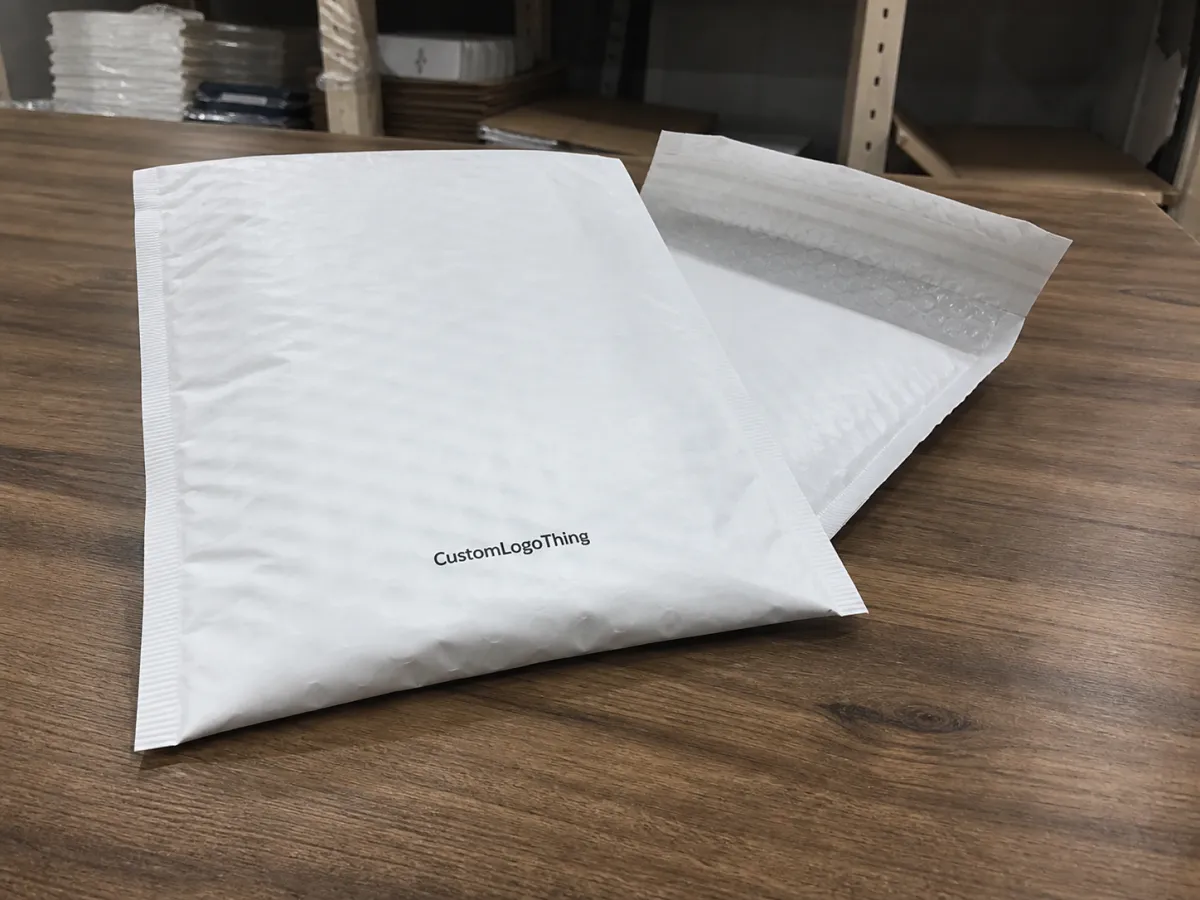
Branded padded mailers help in two ways. First, they let you fit the product more precisely than a generic outer carton plus loose filler. Less movement means less abrasion, fewer edge impacts, and less chance that a fragile item works loose in transit. Second, the branded surface gives the parcel a consistent finished look without adding separate labels, stickers, or inserts to every order. That reduces touch time at pack-out, which matters more than many teams expect.
There is also a practical psychology to packaging consistency. When the mailer size, closure, and print stay stable, warehouse staff make fewer mistakes because the pack-out steps become automatic. The opposite is true too: if every reorder changes dimension, finish, or adhesive behavior, the line slows down while workers relearn the same package in a slightly different form.
Damage claims are often easiest to reduce by looking at the least glamorous part of the mailer: fit. A flat apparel order can ride in a lighter mailer than a boxed cosmetic set. A sharp-edged accessory may need more padding at the corners than the center. A rigid item can tolerate a thinner shell if the closure is strong and the inside dimensions are right. That is why the first useful question is rarely “How branded should it be?” It is “What failure mode are we trying to stop?”
For teams that ship across multiple carriers or across mixed parcel networks, the packaging has to survive more than one type of rough handling. Conveyor abrasion, pressure stacking, and repeated drops are common enough that a package should be tested against them, not assumed to pass. A simple reference like ISTA is more useful than guessing because it forces the conversation toward measurable conditions instead of marketing claims.
Mailer construction and print choices that survive shipping abuse
Construction is where many reorder decisions go wrong. The outside layer, the padding, the closure, and the print method all affect performance. Common outer materials include kraft paper, poly film, and recycled-content blends. Inside, the cushioning may be bubble, paper padding, or a lighter fiber layer. Each option solves a different problem, and none of them is universally best.
Kraft paper mailers tend to feel more premium and can be easier to recycle in some streams, but they are less forgiving if the product has a pointed edge or if the package sees a lot of moisture. Poly mailers resist tears and moisture better, though they can show scuffs if the print is too dense or the finish is too glossy. Recycled-content structures can be a good middle path, but they need to be checked carefully for stiffness and seal performance, because not every recycled blend behaves the same once it reaches production scale.
Inside, bubble padding still has a place. A common 3/16-inch bubble layer is enough for many lightweight items, but it is not a cure-all. Flat bubble can crush under pressure, and some products need paper padding or a denser cushioned liner to keep corners from touching the outer wall. Paper-based cushioning can be a smarter choice for certain brands, but it can also add thickness and change the pack-out feel. If the item is unusually delicate, ask for a sample loaded with the actual product, not an empty shell tested by hand.
Closure behavior deserves more scrutiny than it usually gets. A peel-and-seal strip works for standard ecommerce parcels if the adhesive is applied cleanly and the surface is free from dust. For heavier contents, longer routes, or return-prone products, a wider seal or double-seal option can be worth the added cost. The point is not to buy the strongest adhesive on paper. The point is to make sure the seal survives the temperature range, handling pattern, and dwell time of the actual order flow.
Print choice matters too. A high-gloss finish can look sharp on a proof and then show scratches after one pass through a conveyor system. Matte and soft-touch finishes usually hide handling marks better, while large areas of dark ink can make scuffs more obvious. If the artwork has tight registration or fine lines, ask what print method is being used. Flexographic print is often economical for repeat volumes; digital may be better for shorter runs or frequent design changes. Either way, ask for a post-abrasion visual check, because some designs look better before they are shipped than after they are delivered.
Material documentation is not a formality. If the mailer includes paper components or recycled fiber, ask for chain-of-custody paperwork when it matters to your procurement process. If a claim cannot be backed up, treat it as a claim, not a specification. Buyers who skip this step sometimes discover too late that the package was described one way and produced another.
Useful checks during sampling include seal adhesion, print rub resistance, finish quality, and the way the mailer behaves after a few compression cycles. A sample that passes one drop may still fail when stacked, twisted, or dragged. That is why a physical sample is more trustworthy than a mockup. A mockup can show color. It cannot show how the adhesive behaves after a cold night in a warehouse.
Size, seal, and protection specs to lock in reorder accuracy
Spec accuracy is what keeps a reorder from drifting. Start with the packed product dimensions, not the bare SKU. A retail carton, insert card, sleeve, or inner wrap changes the measurement enough to matter. Then add room for insertion and closure. Too tight and the line slows down. Too loose and the product moves around inside the mailer, which is exactly the movement the padding is supposed to stop.
For flat goods, a little clearance is enough. For thicker or irregular items, the fit should be tested with real product units because caliper measurements alone can hide the corners and edges that cause problems in transit. If the closure overlaps poorly, the adhesive may hold in a cool room and fail after a hot truck ride. If the mailer opens too easily during pack-out, that is a signal the overlap or seal pressure is wrong before the parcel ever leaves the building.
These checkpoints catch most sizing errors:
- Packed dimensions: measure the item in its final shipping state, including inserts, sleeves, and any retail carton.
- Internal clearance: leave enough space for easy loading, but not so much that the contents shift from side to side.
- Seal allowance: confirm the adhesive has enough overlap to bond across the full width of the closure zone.
- Mailer caliper: verify thickness if you are close to a postage band or need to protect a sharp edge.
- Transit fit: test the same sample after compression, not just on a tabletop.
Gusseted formats can help if the product is unusually thick, but a gusset should solve a fit issue rather than create a larger one. Bigger mailers are not automatically better. They can increase material use, raise freight cost, and make the package look loose and underfilled. The same criticism applies to overpadding. Extra cushioning only helps if the closure and side walls stay intact.
For repeated purchases, keep the approved dimensions fixed and treat any change as a new spec, not a casual update. A different artwork file should not quietly produce a different mailer size. The reorder record should show the same finished dimensions, substrate, adhesive, finish, and print details every time. That kind of discipline sounds tedious until a supplier ships a slightly wider run and the entire fulfillment team spends a week adjusting pack-out behavior.
Pricing, MOQ, and unit cost tradeoffs for repeat purchases
The budget side of a branded padded mailers for ecommerce fulfillment reorder planning guide looks simple until freight, setup, and inventory carry cost enter the picture. Unit price moves with size, material, print coverage, finish, and quantity. MOQ is not just a factory rule. It is part of the tradeoff between paying more per unit and holding more stock than you may want.
A useful way to think about cost is not “What is the lowest price?” but “What is the cheapest stable supply path?” A lower unit cost can become expensive if it forces a rushed reprint, a split shipment, or premium freight because the reorder was placed too late. The reverse happens too: a slightly higher MOQ can reduce the number of purchase orders, simplify production scheduling, and protect the warehouse from emergency replenishment.
Typical ranges vary by construction, but these are realistic planning numbers for repeat orders:
| Option | Typical MOQ | Unit Price Range | Lead Time | Best Use |
|---|---|---|---|---|
| Stock padded mailers with label or sticker branding | 500-1,000 | $0.12-$0.22 | 3-7 business days | Testing, short runs, seasonal bridges |
| Semi-custom printed mailers | 2,000-5,000 | $0.18-$0.34 | 10-15 business days | Steady ecommerce fulfillment with repeat artwork |
| Fully custom size and print | 5,000+ | $0.24-$0.52 | 15-25 business days | High-volume programs with locked specs |
Those ranges are not a promise. Smaller orders tend to pay more per unit because setup is spread over fewer pieces. Heavier print coverage, specialty finishes, and custom sizes can also shift pricing upward. If the quote looks unusually cheap, ask what is missing. Sometimes the missing item is freight. Sometimes it is the coating. Sometimes it is the quality check that should have been included.
There are hidden costs that do not always show up line by line. One of them is storage. If a shipment arrives too early and fills a valuable section of the warehouse, that space has a cost. Another is obsolescence. Packaging tied to seasonal artwork or a fast-moving promotion can become dead stock if the product changes before the mailers are used. The right reorder quantity should be tied to forecasted draw, not just to the best-looking price break.
For teams with stable demand, the math usually favors a planned repeat buy over a series of reactive small orders. For volatile demand, a smaller run with a tighter replenishment rhythm may be better, even if the unit cost is slightly higher. The cheap answer is not always the smart one once cash, storage, and service levels are included.
Process, timeline, and lead time from proof to production
Lead time gets longer when input quality gets weaker. That sounds obvious, but many order delays are caused by missing dimensions, unclear artwork, late proof approval, or a changed spec that never got documented. A clean order usually follows a predictable path: inquiry, spec review, artwork setup, proof approval, production, inspection, and freight booking. If any of those steps stalls, the shipment slips.
Reasonable planning ranges for repeat programs are usually predictable:
- Stock-based runs: often 3-7 business days before freight, sometimes faster if the item is already in inventory.
- Repeat custom printed orders: often 10-18 business days depending on the print method and production queue.
- First-time custom size plus print: often 15-25 business days, especially if sampling or artwork revision is required.
- Rush work: possible on some programs, but the tradeoff is higher cost and fewer material choices.
The proof stage is where a lot of avoidable mistakes show up. A PDF can hide scale problems, subtle color shifts, and weak contrast on the substrate. A physical sample can reveal those issues immediately. It also shows whether the mailer feels flimsy when handled by a picker or too stiff to fold cleanly under production pressure. If the sample comes from a different construction than the production run, treat it cautiously. One good sample does not guarantee batch consistency.
Good planning includes buffer time for the things no one wants to think about: carrier delays, artwork revisions, packaging approvals, and the one week when everyone is suddenly out of office. If the mailers are needed for a launch or a seasonal spike, the reorder should be placed before the forecast turns into a shortage. In practice, that means watching the burn rate weekly and not waiting for the pallet count to hit zero before opening the next order.
A useful rule is to separate the production lead time from the transit time. A mailer that ships in two weeks can still miss the deadline if ocean freight, cross-dock delays, or a missed delivery appointment get ignored. The order schedule should show the full path from production start to usable inventory on the floor, not just the factory estimate.
What to compare before you place a reorder with any supplier
Repeat orders are where supplier discipline shows up. A quote can look strong and still hide inconsistency if the supplier cannot reproduce the last approved run. Before you place the next order, compare the basic production facts, not just the price. Spec fidelity matters more than sales language.
These checks are worth asking for on every reorder:
- Spec consistency: confirm the approved dimensions, substrate, padding type, closure type, and print method are unchanged.
- Quality control: ask how defects are measured, how many units are checked, and what happens when an out-of-spec lot is found.
- Retained sample: keep a master sample or prior approved unit for side-by-side comparison on future runs.
- Seal performance: request evidence of adhesion or closure testing, especially if temperature swings are part of the shipping route.
- Transit packing: check how cartons are palletized, protected, and labeled before they leave production.
- Communication speed: measure how quickly the supplier answers detailed questions before the order is placed.
Most reorder problems are boring, not dramatic. A print file is opened from the wrong version. A material substitution is made without clear notice. A closure strip is a little shorter than the last run. Each change by itself looks minor, but together they can produce a different user experience and a different failure rate. That is why documented approval matters more than memory.
Request the same quotation format each time. It makes differences visible. If one supplier quotes a wider mailer, a heavier liner, or a different finish, the change should stand out on paper. If the quote is vague, the risk is usually hidden in the detail that was left off. Buyers often think they are comparing prices when they are really comparing incomplete descriptions.
For high-volume programs, it also helps to compare defect handling. Does the supplier rework, replace, or credit out-of-spec material? How quickly? Are damage photos required? Is there a documented threshold for seal failure, print smearing, or dimensional drift? These are not glamorous questions, but they are the ones that determine whether a reorder stays routine.
Next steps for your next fulfillment cycle and stock plan
Start with actual usage, not guesswork. Pull the last three months of mailer consumption and calculate average weekly draw. Then adjust for known spikes: seasonal promotions, marketplace events, influencer traffic, subscription renewals, or any launch that historically changes order volume. That gives you a base forecast that is far more useful than a rough estimate from memory.
Next, add a safety stock layer based on lead time and volatility. A stable program with a short replenishment cycle can carry less cushion than a fast-growing product with inconsistent demand. If the mailer supports a best-selling SKU, the buffer should be more generous. If the packaging is tied to a limited campaign, the reorder window should be shorter and the spec should remain fixed for the life of that campaign.
Before requesting quotes, gather the following in one place: packed dimensions, artwork files, preferred closure, target quantity, expected ship date, material preferences, and any compliance or recycling requirements. The cleaner the input, the cleaner the quote. More important, it lets you see whether a proposed run matches the previous one or quietly changes the package in ways that will matter later.
Then lock the approval path. Confirm the spec, approve the proof, reserve production time, and set the next reorder threshold before inventory gets thin. That simple discipline keeps the replenishment cycle calm. It is not flashy, but it is what prevents the warehouse from spending a morning counting pallets and calling for a rush shipment that could have been avoided.
Handled this way, branded padded mailers become a managed supply item rather than a recurring fire drill. The package protects the product, the schedule protects the warehouse, and the reorder plan protects cash. Those three goals usually point in the same direction when the spec is clear and the next buy is planned before the current stock gets uncomfortable.
How do I calculate reorder points for branded padded mailers?
Use average weekly usage multiplied by lead time, then add a safety buffer for demand spikes and production slippage. Recheck the number after a launch, a seasonal spike, or any packaging change that affects pack-out speed. A reorder point should be low enough to avoid overstock and high enough to keep the line running if a shipment arrives late.
What specs matter most when comparing custom padded mailers?
Focus first on finished size, closure strength, padding type, and print durability. Finish and artwork matter, but they should not outrank the basics that keep the product protected. Ask for the exact same spec sheet on the next order so small changes do not creep in unnoticed.
How do MOQ and unit cost affect repeat mailer orders?
Lower MOQ helps with testing and smaller programs, but unit cost usually drops as quantity rises. The best choice depends on storage space, cash flow, and how predictable your demand is. A slightly larger order can be cheaper overall if it reduces rush fees, split shipments, and emergency freight.
What is a realistic lead time for branded padded mailers?
Plan for shorter timelines on stock-based orders and longer timelines for fully custom runs. Proof approval, print method, material availability, and freight all affect the total schedule. For repeat custom work, many teams should expect roughly two to three weeks from approval to arrival, with extra time for first-time specs.
How can I avoid running out during peak ecommerce periods?
Forecast early, add safety stock, and place the reorder before demand climbs. Keep one approved spec, one retained sample, and one documented approval trail so the next order can move quickly. The keyword here is planning: branded padded mailers for ecommerce fulfillment reorder planning guide decisions only work if the schedule is built before the inventory gets thin.