Order Custom Padded Mailers for Ecommerce Reorders
If your pack room is moving well, the wrong reorder can still slow the whole line down. A Custom Padded Mailers for ecommerce fulfillment reorder planning guide is really about protecting that rhythm: the right closure, the right liner, the right print, and the right inventory timing so your team does not lose seconds on every carton or start paying for avoidable damage claims. A first run can look perfect on a sample bench, then behave differently once the packing team is opening hundreds of units a day and pallets have to nest the same way again.
That small variation has real cost. A slightly stiffer seal can add a few seconds at pack-out. A thickness change can alter pallet count and freight. A mailer that no longer fits the approved product range can push a fulfillment team into hand-filling or overstuffing, which is where returns and rework usually begin. The buyers who stay ahead of those problems think in terms of reorder rhythm, not just the next purchase order.
For branded packaging programs, the mailer should do three jobs at once: protect the item, keep labor predictable, and preserve the look of the package brand. That matters whether the line is shipping soft goods, accessories, or a mixed-SKU ecommerce kit that has to arrive presentable and intact.
Why custom padded mailers for ecommerce fulfillment reorder planning guide matters
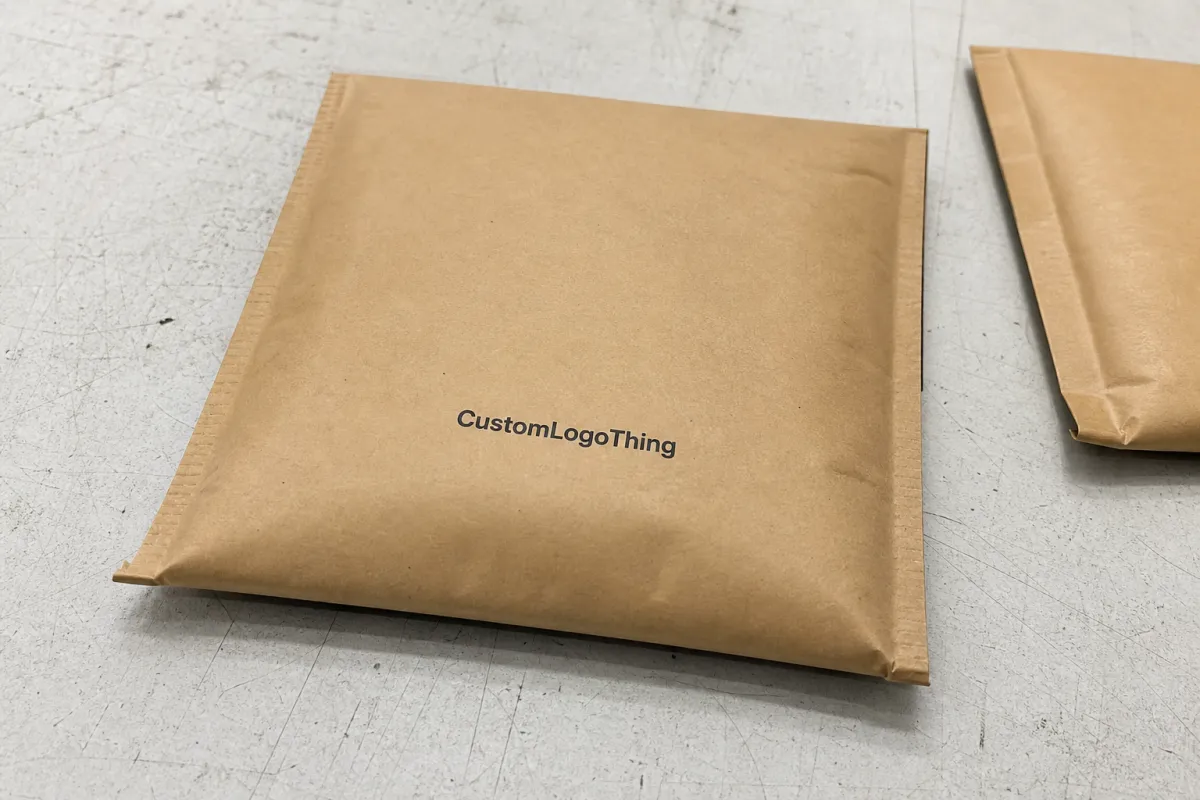
Most reorder trouble starts with a good-looking sample that never gets translated into a working production record. The first order may have been approved with plenty of buffer, but the second order has to fit real-world timing, actual freight lanes, and whatever demand the business is seeing now. That is why the Custom Padded Mailers for ecommerce fulfillment reorder planning guide conversation should begin with usage, not just artwork.
In practice, a buyer should ask three questions before approving a repeat run: did the product mix change, did the fulfillment process change, and did the supply window change? If the answer is yes to any of those, the previous mailer may still print correctly but no longer pack correctly. That is where a specification sheet earns its keep.
There is also a quiet cost to drift. If the mailer nests differently, you may lose master carton count. If the seal is harder to close, the line may need more labor. If the exterior changes from paper-faced stock to a smoother film surface, the whole package may look and feel different enough that customer service notices it before the warehouse does.
For buyers comparing formats, it helps to review the broader assortment in Custom Packaging Products alongside the shipping mailer itself. In some programs, a mailer is the right fit; in others, the package mix also includes Custom Poly Mailers or other product packaging components that keep fulfillment consistent across channels.
From a materials and testing standpoint, it is smart to reference recognized standards instead of relying on guesswork. Organizations like ISTA provide common language around transit testing, and paper-based sourcing claims can be aligned with FSC when the brand has sustainability requirements. That does not make every mailer identical, but it does make the approval process clearer.
Choose the mailer build that matches your products and packing line
Start with the item, not the mailer catalog. Lightweight apparel needs a very different build than a boxed accessory or a fragile component with sharp edges. If the product is soft and compressible, a lighter padded construction may be enough. If the item has corners, breakables, or a higher damage risk, the liner and cushion structure deserve more attention.
Paper-faced padded mailers are a common choice for brands that want a cleaner retail presentation and a more recyclable-looking exterior. Poly-faced mailers can offer better moisture resistance and a slicker outer surface, which matters if the shipment moves through damp docks or long carrier networks. Bubble padded structures add another layer of impact protection, though the final feel depends on bubble size, seal construction, and total caliper.
| Mailer build | Best fit | Protection profile | Typical unit cost signal |
|---|---|---|---|
| Paper-faced padded mailer | Apparel, light accessories, branded retail packaging | Good for scuff control and a clean look | $0.18-$0.30 at 5,000 pieces, depending on print coverage |
| Poly padded mailer | Moisture-sensitive items, high-volume ecommerce orders | Better resistance to tears and damp handling | $0.20-$0.34 at 5,000 pieces, depending on size and seal |
| Bubble padded mailer | Fragile accessories, boxed goods, mixed-SKU kits | Stronger cushioning for transit movement | $0.22-$0.38 at 5,000 pieces, depending on liner and print |
The opening style matters too. A wide-mouth opening can speed pack-out, especially on manual lines. A stronger adhesive strip helps prevent pop-opens in transit, but it should still release cleanly enough that the packing team is not fighting the closure every few seconds. Tear strip placement can help the customer experience, although it has to be checked against your print area and your actual fold line.
If the fulfillment operation uses semi-automated equipment or batch picking, the mailer should be tested against the packing motion, not just the product dimensions. A good fit on paper can still fail in a real line if the mailer sticks to itself, catches on rollers, or forces the operator to reshape the product to make it close.
This is also where packaging design affects performance. A brand may want a large print panel for package branding, but if the design crowds the adhesive zone or creates a slippery surface where the seal needs grip, the visual gain can come with a labor penalty.
Size, thickness, and finish details that keep repeat orders consistent
Inside dimensions should drive the spec. Outer face size can be useful for general discussion, but the team packing the product cares about the usable interior, the throat opening, and how much room is left after the closure overlaps. If the inside width is off by even a small amount, the team may need to adjust the fold or replace the insert strategy.
Thickness also deserves a hard look. Caliper, ply count, and fill behavior influence how the mailer sits on the bench and how it stacks in finished cartons. A mailer that looks substantial in a photo may collapse too easily once the product is inside, while an overly stiff one may be harder to close and more expensive to ship. Repeat orders work best when the approved spec records both measured size and the expected feel of the finished unit.
Finish details matter more than many buyers expect. If the mailer carries a logo, color matching should be documented with a reference file or print target. If barcodes, shipping labels, or compliance marks need to stay readable, the background texture and ink coverage should be reviewed together. Gloss, matte, and paper texture all change how the printed surface behaves under label adhesive and warehouse lighting.
For brands that also use custom printed boxes or display-driven retail packaging, the same approval discipline should carry through the full line. That way the mailer does not feel like an unrelated object that happened to get printed with the same logo. It becomes part of the larger package system.
A master spec sheet should capture the final approved version: inside dimensions, material construction, seal type, tear strip location, print colors, finish, and any special notes about pack-out orientation. If that sheet is current, the next reorder is much less likely to wander off spec.
Pricing, MOQ, and quote inputs that change unit cost
Unit cost is never just one number. Order quantity, substrate choice, print complexity, mailer size, and production setup all move the price. A simple one-color run on a standard size will usually price better than a large-format build with multiple print sides, a custom seal, and a specialty liner. That is normal, and it is why quote accuracy depends on complete inputs.
MOQ has a direct effect on cost because setup is spread over more pieces. Many buyers stop at the first acceptable tier, then come back too early and pay a higher per-unit price on the next reorder. If the budget allows, it is often worth comparing the current tier with the next one up before issuing the order. The slightly larger buy can sometimes lower landed cost enough to offset storage for a few extra weeks.
| Order tier | Typical pricing effect | Buyer tradeoff |
|---|---|---|
| Lower MOQ | Higher unit cost because setup is spread across fewer pieces | Useful for trials, new launches, or uncertain demand |
| Mid-tier reorder | Often better unit economics and steadier supply | Fits established ecommerce fulfillment rhythms |
| Higher volume run | Best cost per piece, but more inventory on hand | Needs enough storage and forecast confidence |
Freight and storage belong in the same conversation as the quoted unit price. A palletized order may ship economically, but if the finished cartons need a climate-controlled room or extra floor space, the real cost changes. Buyers should also ask whether the quote is based on dock delivery, carrier terminal pickup, or direct-to-warehouse service, because that detail changes the final landed number more than many teams expect.
Give the quoting team the target quantity, exact inside dimensions, artwork files, ship-to location, and any special finish requirements. If the mailer needs an inside print, a high-tack seal, a tear strip, or a special insert zone, list that up front. It shortens the back-and-forth and keeps the first quote closer to the final order.
If recurring volume is the norm, the Wholesale Programs page can help frame larger reorder planning across multiple packaging items, especially if the business wants the same purchasing rhythm for mailers and other branded packaging components.
Production process, proofing, and lead time checkpoints
A clean production process usually follows the same sequence: request for quote, artwork review, proof approval, production release, manufacturing, packing, and shipment. The exact timing depends on the mailer structure and the factory queue, but the buyer should know where the delays usually appear. In my experience, most of them come from approval gaps, not the press itself.
Artwork changes are the biggest time sink. A revised logo lockup, a moved barcode, or a changed print area can trigger a new proof cycle. Size revisions do the same thing, and a material substitution often requires another round of confirmation because the line setup and final appearance may no longer match the earlier sample.
A realistic planning window for a repeat run is often 12-15 business days from proof approval for production, then additional transit time based on the delivery lane. If the order is moving by ocean or into a long domestic freight route, the buffer should be larger. Replenishment should not wait until the last carton is opened.
A reorder should not start with, “Can we make the art fit?” It should start with, “Does the approved spec still match the way we ship today?”
That mindset matters even more during seasonal spikes, campaign launches, or marketplace pushes. If volume jumps 20% to 30% over the baseline, a perfectly acceptable order quantity from last quarter can run short before the next shipment arrives. A smart reorder plan keeps a safety buffer that covers proofing, queue time, and transit, not just the print run.
For brands that want extra confidence, ask whether the supplier can provide a pre-production sample or a pack-out reference before the full run starts. It is a small step, but it can save a costly reprint when the first finished cartons show a seal issue or a color shift.
How a packaging partner keeps repeat orders on spec and on schedule
The best packaging partner is not just taking an order; they are carrying forward the approved record. That means keeping the spec sheet, dieline or layout, artwork files, prior order notes, and proof history in a place where the next buyer or account manager can find them quickly. That stored history reduces the chance that a repeat run becomes a new development project.
Repeat-order support should include a direct check on the same dimensions, same material construction, and same print placement before production begins. If the customer says the mailer must remain compatible with a specific carton insert, the partner should verify that condition instead of assuming the previous setup still works. Small checks at this stage prevent bigger mistakes in the dock.
Practical quality steps also help. Incoming material checks confirm the base stock before printing. Print verification catches color drift, registration issues, and missing copy. Pack-out samples show whether the finished mailer still folds and seals the way the fulfillment team expects. Those checks are not extra ceremony; they are the reason repeat runs stay repeatable.
That same discipline should apply to every related item in the packaging line. Whether the buyer is ordering mailers, inserts, or complementary product packaging materials, the partner should help document what changed and what did not. Good documentation keeps customers from paying for avoidable rework or rush freight.
For teams that reorder often, a useful partner also helps compare options instead of forcing a single format. If the shipping profile changes, the team may need to revisit Custom Poly Mailers, adjust the print spec, or expand the assortment through Custom Packaging Products so the packaging system stays aligned with the actual order mix.
Common reorder mistakes that raise cost or create delays
The most common mistake is waiting too long. Buyers often know the reorder is coming, but they wait until the stockroom is nearly empty before requesting the next quote. That leaves no room for proof corrections, no room for freight delays, and no room for demand that runs above forecast.
Another expensive habit is changing too many variables at once. If the size changes, the print changes, and the adhesive changes, the order may need a fresh proof and a new lead time. A small edit can be harmless; three edits at the same time usually trigger a new approval cycle and more back-and-forth than anyone planned.
Teams also forget to confirm whether the mailer must fit a single SKU or several product variations. That sounds simple, but it changes the usable interior space and the tolerance on the closure. A mailer sized around one bestselling item may fail once a larger seasonal item gets added to the same fulfillment flow.
Use a short checklist before the next purchase order goes out:
- Confirm inside dimensions, not just the outer face size.
- Review the current approved artwork and print placement.
- Check quantity against forecast, not just current stock.
- Verify the ship-to address and delivery window.
- Note any changes to seal type, tear strip, or finish.
That list sounds basic, but basic is exactly where most reorder delays begin. If a fulfillment team is also managing other package branding work, the same checklist should be used across mailers, inserts, and any companion retail packaging pieces. Consistency saves time.
For buyers who want a cleaner process, the FAQ page can be a useful internal reference before the reorder request is sent. It helps gather answers before the approval clock starts.
Next steps to request your next mailer reorder quote
Before you Request a Quote, gather the current inside dimensions, target quantity, approved artwork files, desired delivery window, and any material or finish requirements. If the previous run had a special seal, tear strip, or print on the inside panel, include that detail as well. The more complete the request, the faster the pricing comes back and the fewer assumptions the production team has to make.
Next, compare the reorder against actual stock and next-month sales expectations. If the plan is built around a promotion, subscription push, or marketplace launch, the replacement order should land before the inventory cushion disappears. That is the point where a reorder turns from planned buying into emergency buying, and emergency buying usually costs more.
It also helps to ask for a sample review, a spec confirmation, and a realistic timeline in the same conversation. Those three answers tell you whether the order is a straight repeat or whether a small revision will add proof time. Buyers who ask those questions early usually avoid the worst surprises later.
For brands that want the mailer to sit cleanly inside a broader packaging design system, this is the moment to lock the visual and structural details together. The mailer should support the item, the warehouse, and the customer experience without creating extra work for any one of them.
The most practical Custom Padded Mailers for ecommerce fulfillment reorder planning guide is simple: lock the spec, forecast the draw, confirm the proof, and place the next order before the safety stock gets thin. That is the difference between a steady packing line and one that is always reacting.
How far ahead should I reorder custom padded mailers for ecommerce fulfillment?
Start before you reach the last production buffer. Proofing, queue time, and freight can all affect arrival, so the safest plan is to reorder while you still have enough stock to absorb a delay. If sales rise during a promotion or seasonal period, build in extra time so the next run arrives before the inventory cushion gets tight.
What details should I confirm before requesting a quote for custom padded mailers?
Provide inside dimensions, quantity target, artwork files, material preference, and the ship-to location. If the mailer has a tear strip, high-tack seal, inside print, or special finish, list those upfront. That gives the quoting team enough information to price the job accurately and reduces revision loops.
How does MOQ affect custom padded mailer pricing?
Higher quantities usually lower unit cost because setup and production time are spread across more pieces. If you are near the next tier, ask for pricing at both levels so you can compare landed cost, not just the printed unit price. Sometimes the larger order is the better buy once freight and storage are considered.
Will the same padded mailer spec reorder exactly the same way every time?
It can, if the approved size, material, print layout, and closure style are documented and reused on each run. Keep a master spec sheet and prior proof on file so any change is deliberate. That is the simplest way to keep repeat runs aligned with the original approval.
What is the easiest way to avoid delays on a repeat padded mailer order?
Send complete artwork and final specs with the reorder request, then approve the proof quickly once it is issued. Ask for a timeline that includes production and transit so your replenishment schedule is based on the real delivery window. That keeps the reorder process moving before stock gets too low.

