Buyer Fit Snapshot
| Best fit | Branded Shipper Boxes for Ecommerce projects where brand print, material claims, artwork control, MOQ, and repeat-order consistency need to be specified before quoting. |
|---|---|
| Quote inputs | Share finished size, material target, print colors, finish, packing count, annual reorder estimate, ship-to region, and any compliance wording. |
| Proofing check | Approve dieline scale, logo placement, barcode or warning zones, color tolerance, closure strength, and carton packing before bulk production. |
| Main risk | Vague material claims, crowded artwork, missing packing details, or unclear freight terms can make a low unit price expensive after revisions. |
Fast answer: Branded Shipper Boxes for Ecommerce: Design, Cost, Use should be specified like a repeatable production item. The safest quote records material, print method, finish, artwork proof, packing count, and reorder notes in one written spec.
Production checks before approval
Compare the actual filled-product size with the drawing, then confirm tolerance on folds, seals, hang holes, label areas, and retail display edges. Reserve space for logos, QR codes, warning copy, and material claims before decorative graphics fill the panel.
Quote comparison points
Review material grade, print process, finish, sampling route, tooling charges, carton quantity, and freight assumptions side by side. A quote is only useful when the supplier can repeat the same color, closure quality, and packing count on the next order.
Branded Shipper Boxes for Ecommerce: Design, Cost, Use
Branded shipper boxes for ecommerce are often the first brand moment a customer notices, not the website. The parcel lands on the doorstep, the tape gets cut, and the carton has to carry both the product and the promise attached to it. If the outside looks deliberate, branded shipper boxes for ecommerce can make a routine order feel considered before the product even appears.
I have seen boxes that were technically strong, structurally sound, and still disappointing because they looked like nobody had made a decision. I have also seen simple cartons with one-color print feel more premium than glossy packaging that tried too hard. The difference is rarely budget alone. It is usually discipline.
Think of branded shipper boxes for ecommerce as a sales tool with a structural job, not decorative packaging fluff. They need to protect the order, survive parcel handling, and still look like someone cared about the details instead of just slapping a logo onto cardboard and hoping for the best.
For brands comparing Custom Packaging Products, the smartest starting point is usually not the fanciest print. It is the box that fits the packed product cleanly, ships safely, and gives you enough print surface to signal quality without turning the carton into a billboard with commitment issues.
Pretty packaging that arrives crushed is not premium. It is just expensive cardboard with ambition.
What branded shipper boxes for ecommerce really do
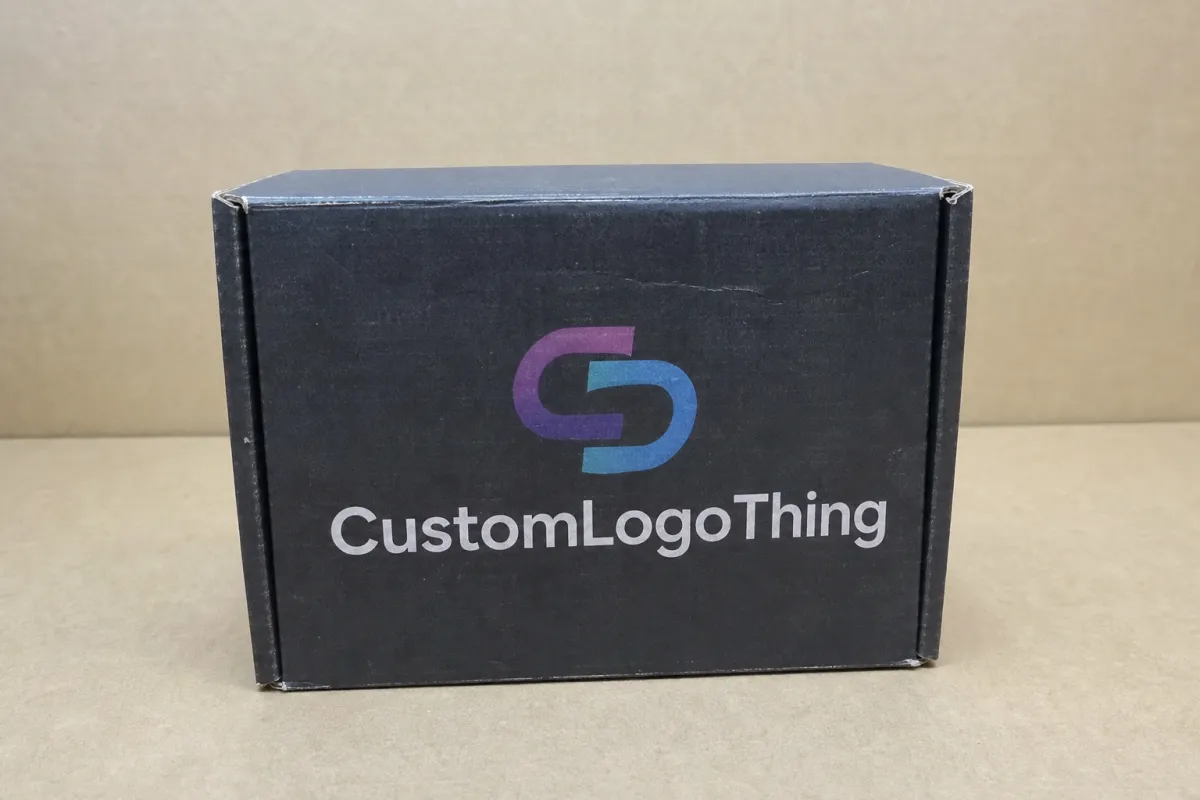
Branded shipper boxes for ecommerce do two jobs at once, and the good ones do both without pretending one matters more than the other. First, they protect the contents during transit. Second, they communicate brand value at the warehouse, in the truck, on the porch, and during the unboxing moment. That sounds obvious until you watch how many companies still treat the outer box like a blank afterthought.
In practical terms, branded shipper boxes for ecommerce are the outer Corrugated Shipping Boxes that carry the product from fulfillment to the customer. They are usually made from single-wall corrugated board for lighter parcels, or heavier board grades for denser products, fragile items, or longer routes with rough handling. A clean logo, a repeat pattern, a bold color block, or even a short message on the flap can do serious work without adding much cost.
Plain brown boxes are not the enemy. They are just neutral. Neutral works well enough if you are shipping printer paper or replacement screws. Once a product sits in a premium price band, a generic carton can pull the perceived value down a notch or two. I see this constantly with beauty, apparel, specialty food, candles, and small electronics. The product may be excellent, but the packaging says, “We stopped caring at the finish line.”
Branded shipper boxes for ecommerce help close that gap. A mid-priced item can feel more deliberate in a branded carton. A premium product can feel more complete. Even a simple DTC reorder can feel less disposable if the box is neat, sturdy, and visibly on-brand.
There is a warehouse reality that gets ignored in too many packaging conversations. Branded shipper boxes for ecommerce are part of the pack-out system. They have to be easy to store, quick to form, and predictable to close. A gorgeous design that adds even one extra minute per order will lose to the fulfillment clock, every time. Good packaging respects the customer and the packer.
From a packaging buyer’s point of view, the box is not decoration. It is part of the product experience, part of the logistics budget, and part of the brand story. That is a lot to ask from corrugated board, which is exactly why the design needs to be sharp.
How branded shipper boxes for ecommerce work in the unboxing flow
Branded shipper boxes for ecommerce only work if they behave well across the entire handoff chain. The customer never sees the packaging in a vacuum. They see it after pack-out, after transit, after stacking, after vibration, and after the courier has done whatever mysterious things couriers do to parcels between scan points.
The flow usually looks like this: the fulfillment team forms the carton, places the product and any inserts, closes the flaps or seals the tear strip, and moves the box into the shipping lane. Then the box gets stacked, sorted, loaded, delivered, and finally opened. A successful design has to survive every step and still look polished at the end.
That means the outer print cannot fight the structure. If the closure is awkward, the branding gets annoying. If the carton is too large, the product rattles and the unboxing feels sloppy. If the board is too weak, the box arrives dented and the customer starts the experience with a repair job. None of that feels premium.
Branded shipper boxes for ecommerce usually work best when the unboxing story stays simple: one strong logo placement, a clean interior, and maybe one small surprise inside the top flap. That surprise can be a repeat pattern, a thank-you line, a short QR code to setup instructions, or a small message that matches the brand voice. You do not need to write a novel on the inside of the box. The box is not a pamphlet with delusions of grandeur.
The closure style matters too. Regular slotted cartons are efficient and widely used. Roll end tuck top styles can create a cleaner reveal. Crash-lock bottoms speed up assembly. Tear strips improve the opening moment and reduce knife damage. The best choice depends on product weight, pack rate, and how much drama you want at the doorstep. A little drama is fine. A box that takes two hands and a prayer is not.
Branded shipper boxes for ecommerce also need to coordinate with the rest of the packing system. Inserts, tissue, void fill, and protective wraps all affect the reveal. If the product is already secured by foam or a molded insert, the outer print can stay restrained. If the product floats inside the carton, the visual design will not save it from sounding like a maraca in transit.
For brands comparing Case Studies, the common thread is simple: the box works best when structure, print, and fulfillment all agree on the same story. Cheap-looking packaging usually comes from one of two mistakes. Either the box is too generic, or the box is too busy. Both are fixable.
Design factors that make the box feel premium, not busy
Designing branded shipper boxes for ecommerce is mostly an exercise in restraint. The strongest boxes usually have one visual idea and enough breathing room to let it land. A centered logo, a bold side panel, or a repeating pattern can look stronger than a carton stuffed with taglines, icons, QR codes, three fonts, and a very earnest mission statement.
Hierarchy comes first. What should the eye land on first? Usually it is the logo, then the brand color, then a short line of copy. After that, everything else has to earn its place. If every surface tries to be the main character, the box starts reading like a crowded trade show booth.
Color choice matters more than most buyers expect. Kraft corrugated gives a natural, earthy feel, but it mutes bright colors and can shift warm tones. White liner board supports cleaner color reproduction and sharper graphics. Coated surfaces can help print details read better, but they also change the tactile feel. If your brand leans minimalist and calm, kraft with one-color ink can be enough. If you need more polish, white board with controlled color coverage usually prints better.
Printing method affects the result too. Flexographic printing is common for larger production runs and simple graphics. Digital printing can make sense for shorter runs, versioning, or faster turnarounds. Litho-lam can deliver a richer surface for premium presentation, though it tends to make more sense when the order size and budget justify it. There is no trick here. Each method has a price, a look, and a point where the math stops working.
Finishing should be used carefully. Matte coatings can feel refined. Spot varnish can highlight a logo or pattern. Interior printing can create a nice reveal. Stack on too many effects and you get packaging that is trying to impress people who are already holding a box. That is rarely useful. Branded shipper boxes for ecommerce should feel deliberate, not theatrical.
It also helps to match the box style to the product category. Apparel can handle more minimal branding. Beauty and skincare often benefit from precise color and a cleaner inside reveal. Home goods and subscription products can use stronger graphics or a repeated pattern. Food and beverage boxes need to balance appetite appeal with transit durability. A carton that looks right for a candle brand may look off for a power adapter. Same board. Different conversation.
Here is the practical filter I use: if removing one graphic element makes the box stronger, that element probably should not be there. The best branded shipper boxes for ecommerce use negative space on purpose. They leave room for the product experience to breathe.
If you want to sanity-check the structural side, look at parcel testing standards like ISTA. If responsible sourcing matters, the Forest Stewardship Council is the clearest shorthand for verified fiber claims instead of vague green marketing language.
Cost, pricing, and MOQ for branded shipper boxes
Cost is where branded shipper boxes for ecommerce get real fast. You are not just buying cardboard. You are buying size, board grade, print coverage, tooling, setup, freight, and the privilege of not disappointing customers at the doorstep. The unit price can swing a lot depending on what you ask the box to do.
The main cost drivers are easy to name, even if they are not always easy to control. Larger boxes use more board. Heavier board grades cost more than lighter ones. More print colors mean more setup. Coatings and specialty finishes add expense. Custom inserts raise both material and labor. Order quantity matters too, because the fixed setup costs get spread over more units as volume rises.
MOQ stands for minimum order quantity. In plain English, it is the smallest run a manufacturer is willing to produce at that spec and price point. With branded shipper boxes for ecommerce, MOQ often determines whether a brand should use a stock size, a custom size, or a hybrid approach where the structure is standard but the print is custom. That hybrid route is often the sweet spot for growing brands that want identity without locking cash into a massive run.
As a rough buying guide, here is how the economics usually shake out. Short runs cost more per unit because setup is spread across fewer boxes. Larger runs can bring the unit cost down, but now you need storage space, cash flow, and demand confidence. There is no free lunch. There is only a spreadsheet with better or worse consequences.
| Option | Typical MOQ | Indicative unit cost | Best fit | Watch-out |
|---|---|---|---|---|
| Plain kraft shipper with label | 500-1,000 | $0.42-$0.68 | Testing a new SKU or keeping fulfillment simple | Least brand impact and limited visual polish |
| One-color flexo printed carton | 1,000-3,000 | $0.55-$0.88 | Brands that want clean identity at sensible volume | Artwork needs to stay simple for the best result |
| Digital printed short run | 250-1,000 | $0.95-$1.65 | Launches, limited editions, or versioned packaging | Higher unit price, especially on larger cartons |
| Litho-laminated premium shipper | 1,000-5,000+ | $1.25-$2.10 | Higher-end presentation and strong shelf-to-door consistency | Costs more and may need more lead time |
Those ranges are directional, not a quote. Box size, board grade, print coverage, freight, and whether you need custom inserts can move the number quickly. Still, they are useful because they show the real tradeoff: paying a little more per unit can save you from damage claims, replacement shipments, and review complaints that cost more than the packaging ever would.
For branded shipper boxes for ecommerce, I usually recommend buyers ask for these line items in writing:
- Box dimensions and board grade
- Print method and number of colors
- Tooling or plate charges
- Sample and proof fees
- Freight terms and delivery window
- Insert pricing if the kit includes protection or product holding
The best packaging quote is the one that tells you where the price comes from. If a supplier gives you a single number with no explanation, you are not getting a quote. You are getting a guessing game with invoices attached.
Production process and timeline: from quote to dock
Branded shipper boxes for ecommerce move through a fairly standard production path, and most delays come from the same handful of places. If you understand the sequence, you can avoid the classic mistake of promising a launch date before the packaging schedule is even real.
The process usually starts with a brief. That means dimensions, product weight, ship method, print goal, quantity, and target delivery date. Then comes the quote. After that, the supplier confirms the dieline or structural drawing, artwork gets placed, and proofs go back and forth until everyone agrees the box is worth printing. Sampling may happen before production, especially if the size or closure is custom.
Here is a practical timing range for branded shipper boxes for ecommerce:
- Quote turnaround: 1-3 business days
- Dieline confirmation: 1-2 business days if dimensions are clear
- Artwork setup and prepress: 1-3 business days
- Digital proof review: usually 1 business day
- Physical sample: often 5-10 business days
- Production: 10-20 business days depending on method and volume
- Freight: 3-7 business days domestically, longer if the route is less friendly
Those numbers are realistic, but they are not guaranteed. A simple one-color carton can move quickly. A complex, litho-laminated run with inserts and a custom closure can take longer, especially if the artwork keeps changing or the dimensions are not locked early.
The bottlenecks are predictable. Unclear product dimensions lead to bad dielines. Late artwork changes delay plates or digital setup. Color approvals slow down production when different people are looking at different screens and pretending that is a color standard. Sample revisions can restart the timeline entirely. Branded shipper boxes for ecommerce are not hard to produce, but they do demand discipline.
That is why I prefer a two-step validation process. First, review a structural sample with no print. Make sure the fit, closure, and stackability are right. Then approve a printed sample or proof. A digital proof tells you layout. A physical sample tells you how the box behaves, which is usually the part that gets people into trouble.
Lead time should also be tied to business reality. If a product launch depends on packaging arriving in the same week as inventory, the schedule is too tight. If promotional seasons matter, build the packaging lead time into the marketing calendar instead of hoping the box shows up on a lucky Tuesday. Branded shipper boxes for ecommerce should be planned like inventory, not like a design hobby.
One more operational point: ask how the cartons ship to you. Flat-packed boxes are efficient, but they still need space. If your warehouse can barely hold another pallet, the cheapest unit price may not be the smartest choice. The dock matters. The spreadsheet does not live there.
Common mistakes when ordering branded shipper boxes for ecommerce
Most bad packaging orders do not fail because the brand had terrible taste. They fail because someone guessed instead of measuring. Branded shipper boxes for ecommerce punish guesswork faster than almost any other packaging format.
The biggest mistake is sizing the box to the product photo instead of the packed product. A phone case in a studio shot looks tiny. Add an insert, tissue, a thank-you card, a charging cable, and protective clearance, and now the box needs different proportions. If the product rattles, shifts, or arrives with crushed corners, the box has already lost. Measure the real packed unit, not the dream version.
Another common problem is overdesign. Too many colors, too much copy, too many icons, too many finishes. The carton starts to look noisy, and the cost climbs for the privilege. Good branded shipper boxes for ecommerce rarely need more than one strong visual idea and a controlled use of white space. Anything else should earn its place on the sheet.
Durability gets ignored too often. A box can look beautiful on a table and fail badly in a drop test. Parcel carriers do not care about your mood board. If the box is going into a network with stacking, vibration, and corner impact, it needs to be designed for that reality. Branded shipper boxes for ecommerce should be tested, not just admired.
Operational mistakes can be just as expensive. A carton that stacks badly slows down the warehouse. A box that takes too long to assemble kills pack rate. A structure that eats up too much storage space creates an invisible labor cost. Sometimes the packaging problem is not the print. It is the fact that the box is annoying to handle six hundred times a day.
Color is another trap. Teams approve artwork on screen, assume the print will match, and then wonder why the kraft board looks warmer or the blue has gone dull. Corrugated material changes how ink behaves. That is normal. It is not a disaster. But if nobody checks proofs on the actual substrate, branded shipper boxes for ecommerce can land a little off and nobody will know why until the boxes are already in circulation.
A few guardrails help:
- Lock the packed dimensions before you ask for a quote
- Request both a dieline and a sample
- Limit finishes unless they improve the look or protect the print
- Confirm assembly time with the fulfillment team
- Test a box under real shipping conditions before full rollout
Honestly, the fastest way to make branded shipper boxes for ecommerce feel cheap is to design them as if the warehouse does not exist. The warehouse always exists. So does the carrier, the customer, and gravity.
Expert tips and next steps for a smarter rollout
If you are starting from zero, do not try to convert every SKU at once. Start with one hero product, one box size, and one print treatment. That approach keeps risk controlled and gives you useful data instead of a full warehouse of packaging you hope will work out. Branded shipper boxes for ecommerce are much easier to improve when you have a clean baseline.
I would also separate structural testing from branding approval. First, get the dimensions and board spec right. Then check print alignment, color, and messaging. A box that fits badly with perfect artwork is still a bad box. A box that fits well with simple print can be an excellent one. The structure does the heavy lifting.
Order in stages if you can. A structural sample first. Then a printed sample. Then a small production batch sent through actual transit lanes. That third step matters more than people think. Real transit exposes problems that studio lighting hides. Corner crush, scuffing, tape failure, and closure fatigue show up quickly if the design is weak.
After launch, track numbers instead of vibes. Damage rate. Assembly time. Customer photos. Repeat order rate. Return comments related to packaging. Those are the metrics that tell you whether branded shipper boxes for ecommerce are earning their keep. If the packaging looks better but the business results stay flat, you may have bought a prettier box, not a better one.
Here is the clean rollout sequence I usually recommend:
- Choose the SKU with the most reliable demand
- Define the packed dimensions and protection needs
- Pick the board grade based on weight and carrier risk
- Approve the dieline and closure style
- Limit the design to one strong visual system
- Test samples in transit before ordering volume
- Scale only after the numbers make sense
Branded shipper boxes for ecommerce make the most sense on products that already sell well, have enough margin to support a small packaging upgrade, and ship often enough to justify the setup cost. That is the honest version. Not every product needs a custom carton. Some products are perfectly fine in a plain shipper with a high-quality label. There is no moral award for spending more on packaging than the margin can support.
If you want help comparing formats, our Custom Packaging Products page is a good place to start, and the examples in our Case Studies section show how different packaging choices change the customer experience in ways that are easy to miss on a spec sheet.
What are branded shipper boxes for ecommerce, and how are they different from mailer boxes?
Branded shipper boxes for ecommerce are outer corrugated shipping boxes designed to protect the product and show off the brand during delivery. Mailer boxes are usually smaller self-mailing styles; shipper boxes are the bigger workhorses used for carton shipping and higher protection needs. If the product needs stronger stacking, bigger void fill, or a more premium outer presentation, branded shipper boxes for ecommerce usually make more sense.
Are branded shipper boxes for ecommerce worth the cost for a small brand?
Yes, if the box improves repeat purchases, reduces damage, or makes the product feel more premium without adding chaos to fulfillment. Small brands should start with a limited run on their best-selling SKU instead of converting every product at once. The math is simple: if branded shipper boxes for ecommerce lift retention, referrals, or perceived value, they can pay for themselves faster than a flashy ad campaign.
How do I choose the right size for branded shipper boxes for ecommerce?
Measure the packed product, not the product alone, and include inserts, tissue, cushions, or accessory packs. Leave just enough clearance for protection, but not so much that the item rattles around and wastes material. Ask for a dieline or sample before ordering volume, because branded shipper Boxes for Ecommerce That look right on paper can still be wrong in practice.
What affects the lead time for branded shipper boxes for ecommerce?
Artwork readiness, proof approvals, sampling, print method, quantity, and freight all affect the schedule. Custom sizes and complex finishes usually take longer than a simple one-color print on a standard structure. The fastest jobs are the ones where the buyer approves dimensions and artwork quickly and does not keep changing the brief, which sounds basic because it is.
Can branded shipper boxes for ecommerce be recyclable and still look premium?
Yes, premium does not have to mean plastic lamination or heavy coatings; clean print and smart structure can do the heavy lifting. Use recyclable board, limit mixed materials, and keep finishes practical so the box still feels polished without becoming wasteful. A well-designed recyclable box often looks more credible than an over-finished one that tries too hard. That is especially true for branded shipper boxes for ecommerce that rely on a clean unboxing moment instead of flashy extras.
Branded shipper boxes for ecommerce are worth doing carefully, not loudly. Get the structure right, keep the design disciplined, and use the box to support the product instead of distracting from it. The most useful takeaway is also the least glamorous one: measure the packed unit, test the carton in real transit, and let the box earn its place through performance, not decoration.