Buyer Fit Snapshot
| Best fit | laminated kraft boxes for ecommerce sell for packaging buyers comparing material specs, print proof, MOQ, unit cost, freight, and repeat-order risk where brand print, material, artwork control, and repeat-order consistency matter. |
|---|---|
| Quote inputs | Share finished size, material target, print colors, finish, packing count, annual reorder estimate, and delivery region. |
| Proofing check | Approve dieline scale, logo placement, barcode or warning zones, color tolerance, and any recyclable or compostable wording before bulk production. |
| Main risk | Vague material claims, crowded artwork, or missing packing details can create delays even when the unit price looks attractive. |
Fast answer: Laminated Kraft Boxes for Ecommerce Sell: Claims, Protection, MOQ, and Cost should be specified like a repeatable production item. The safest quote includes material, print method, finish, artwork proof, carton packing, and reorder notes in one written spec.
What to confirm before approving the packaging proof
Check the product dimensions against the actual filled item, not only the sales mockup. Ask for tolerance on folds, seals, hang holes, label areas, and retail display edges. If the package carries a logo, QR code, warning copy, or legal claim, reserve that space before decorative graphics fill the panel.
How to compare quotes without losing quality
Compare board or film grade, print process, finish, sampling route, tooling charges, carton quantity, and freight assumptions side by side. A lower quote is only useful if the supplier can repeat the same color, closure quality, and packing count on the next order.
Laminated Kraft Boxes for Ecommerce That Actually Sell
Laminated kraft boxes for ecommerce can look premium without turning into fragile little showpieces that panic at the first scrape. That balance matters. A clean surface, sharper print, and better scuff resistance can do more for perceived value than another round of ad spend with a fancy dashboard and no sales lift.
Used well, these boxes do the job without acting precious. They keep the natural-paper feel buyers like, then add the protection real parcel handling demands. Used badly, they become overpriced brown boxes with a shiny coat and zero personality. Packaging punishes guesswork. Fast.
There is one small but useful distinction here: people use “laminated kraft boxes” to describe a few different builds. Some are kraft-faced paperboard with a printed wrap and a film finish. Others are kraft board with a laminated exterior layer. The exact construction changes print quality, cost, recycling options, and crush performance, so it is worth getting the spec in writing before anyone starts talking about samples like they are already final.
Why laminated kraft boxes for ecommerce punch above their weight
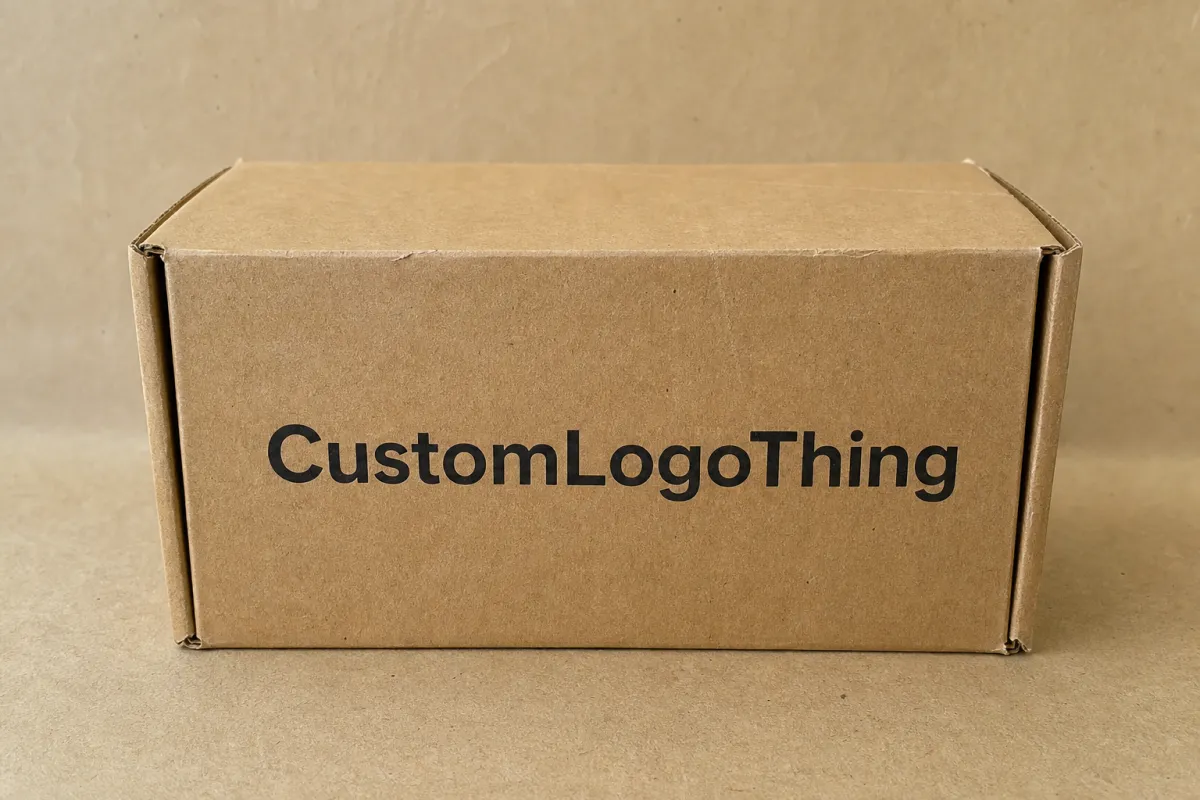
Plain kraft has an honest, stripped-back look that still works for plenty of brands. Buyers see the fibers, the warm tone, the paper texture, and they know what they are getting. Laminated kraft boxes for ecommerce keep that base, then tighten the presentation. The print comes out cleaner. The surface takes less abuse. The box holds its nerve when it gets stacked, tossed, and dragged through fulfillment like it owes somebody money.
The real advantage is consistency. Not glamour. Consistency. A kraft carton with a laminate layer can ship with fewer visible scuffs, keep graphics readable longer, and hold the unboxing experience together after a rough ride through a carrier network that treats packaging like a contact sport. If the customer photographs the box, finish matters. If the box sits on a shelf after delivery, finish matters again. Same box. Same pressure.
That consistency matters most for products where the package is part of the product story. Think subscription kits, DTC apparel, beauty, accessories, candles, and gift-ready ecommerce orders. In those categories, the box is not just a container. It is the first physical proof that the brand knows what it is doing. If the exterior arrives marked up, dull, or warped, the experience starts on the wrong foot before the customer has even touched the product.
The basic build is simple: kraft board or kraft-faced paperboard, printed graphics, then a protective film or coating on the exterior. That surface changes the look and the hand feel. Depending on the finish, it can read glossy and vivid, matte and quiet, or somewhere in the middle. The point is to keep the natural vibe while avoiding the dusty, scuffed look uncoated kraft picks up when life gets real.
That is also where laminated kraft boxes for ecommerce land in the practical zone. Bare kraft is cheaper, but it can look tired fast. Folding cartons are efficient for some products, but not always strong enough or premium enough. Rigid boxes look excellent, then punish you in storage and shipping. Laminated kraft boxes sit between those extremes: upgraded appearance, better handling, manageable cost. Nothing mystical. Just the right compromise for a lot of online brands.
From the buyer’s side, the question is blunt: do you want the box to feel special without acting like a luxury tombstone in freight? If yes, laminated kraft is usually the sweet spot. It gives ecommerce teams a box that can photograph well, stack well, and ship without needing its own security detail.
| Box type | Typical unit cost range | Look and feel | Durability | Best use |
|---|---|---|---|---|
| Plain kraft folding carton | $0.14-$0.32 | Natural, simple, matte by nature | Moderate | Light products, low-touch packaging, budget-sensitive lines |
| Laminated kraft folding carton | $0.22-$0.58 | Natural base with cleaner print and better finish control | Moderate to good | Subscription, apparel, beauty, accessories, giftable ecommerce |
| Rigid setup box | $0.95-$2.80 | Premium, heavy, gift-like | Good to excellent | Luxury sets, high-AOV products, keepsake packaging |
A good ecommerce box has three jobs: protect the product, present the brand, and survive the trip. If it only does one of those, it is overpriced cardboard with confidence issues.
How the lamination process works on kraft board
The production stack is not complicated, even if some suppliers pitch it like alchemy. Board selection comes first. That might be kraft liner, coated board with a kraft wrap, or another paperboard build depending on the structure. Then the graphics get printed. After that, a laminate film is applied to the outside surface, usually after printing and before die cutting or folding, depending on the box style and factory workflow.
The laminate layer does the heavy lifting. It seals the printed surface, changes the tactile feel, and protects against abrasion. If the box slides around in a shipper, gets handled by warehouse staff, or stacks under other cartons, that surface layer can be the difference between a box that still looks intentional and one that looks like it spent the weekend on a loading dock.
Three finishes come up most often:
- Gloss - Bright, reflective, and good for color pop. It can make graphics look sharper, but fingerprints and glare show more easily.
- Matte - Softer, quieter, and often the most balanced option. It cuts glare and usually feels more premium than gloss for understated brands.
- Soft-touch - Velvety and high-end in the hand. It costs more and can wear at edges faster than standard matte, so it fits best where tactile feel justifies the spend.
Each finish behaves differently in the real world. Gloss keeps saturated colors punchy and can give artwork more contrast. Matte is friendlier for photography because it reduces reflections. Soft-touch feels expensive the second someone picks up the box, which is why beauty, gifting, and limited-edition lines keep reaching for it. It also costs more. Shocking. A premium finish is still a premium finish, even when the invoice tries to stay calm.
The biggest operational upside is rub resistance. Ink on uncoated kraft scuffs easily, especially on high-contrast artwork. Lamination reduces that risk. It also helps with moisture handling. Not waterproof, not magic, just better. If a box brushes against a damp tote, sits on a humid warehouse pallet, or gets dragged through bad weather, a laminated surface gives you a better chance of keeping the print readable and the box presentable.
There is a tradeoff, and pretending otherwise is pointless. Lamination can soften the raw-paper character some brands want. If your identity depends on visible fibers, recycled texture, and a completely uncoated feel, a laminate may move the box away from that story. That does not make it wrong. It just means the finish has to match the brand position instead of being chosen because the sample looked nice under showroom lights.
Recycling is another place where honesty matters. A paper box with a plastic film is not the same thing as an uncoated paper box, and local recycling rules vary. Some laminate films make recovery harder. Some water-based coatings are easier to process. If sustainability claims are part of the package story, ask the supplier exactly how the structure is meant to be disposed of and whether the claim matches the actual build, not just the marketing copy.
For paper sourcing, recycled content, and responsible fiber choices, many brands check standards and certifications through organizations such as FSC. That does not solve every packaging question, but it gives you a more credible starting point than vague supplier claims printed in cheerful fonts.
Cost, pricing, and MOQ for laminated kraft boxes for ecommerce
Packaging budgets drift into fantasy faster than most teams expect. A sample looks affordable. The first quote looks fine. Then freight, inserts, tooling, and setup charges show up like they were never invited and somehow still brought dessert. Laminated kraft boxes for ecommerce can stay cost-effective, but only if you price them as a full system, not as a single line item.
The main cost drivers are predictable:
- Box size - Larger boxes use more board, more print area, and more freight space.
- Board thickness - Heavier products need stronger board, which raises material cost.
- Print coverage - Full-coverage artwork costs more than simple one-color or limited-panel print.
- Laminate type - Matte is usually moderate; soft-touch usually costs more.
- Inserts - Paperboard, molded pulp, foam, or custom die-cut inserts all add cost.
- Artwork complexity - Multiple passes, white ink, spot color work, or special effects raise setup time.
MOQ changes the math fast. Lower quantities usually mean a higher unit price because setup costs get spread across fewer boxes. Bigger runs reduce the per-box burden, but only if the inventory will actually move instead of becoming a wall of cartons in the back room. Ordering 20,000 boxes to shave a few cents off each unit can cost more in storage and cash flow than it saves on paper. That is not efficiency. That is packaging optimism.
For many custom runs, a practical range looks like this: 500 to 1,000 units for prototypes or small launches, 2,000 to 5,000 units for early-stage ecommerce brands testing scale, and 10,000+ for established products with steady demand. Not every supplier offers the same floor, and not every box style behaves the same, but those numbers are a solid anchor for the conversation.
Use a quote framework that forces clarity. Ask every supplier to break out:
- Tooling or die costs
- Printing cost
- Lamination cost
- Inserts and special components
- Freight and packaging for shipment
- Any proofing or sampling charges
That makes comparison much cleaner. A low unit price with high freight is not a win. A quote that hides insert cost is not a win. A “cheap” sample that leaves lamination vague is not a win either. Compare like with like, not like with whatever accounting happened to toss in the same spreadsheet.
Hidden budget traps show up all the time. Oversized boxes waste board and freight space. Too many SKUs make reorders annoying. Premium finishes on every product line add cost where a standard matte finish would have done the job. Freight from a distant supplier can erase the savings from a unit price that looked impressive in an email. The quote is never the whole quote. It just wants you to think that.
If you are sorting through options, it helps to review a supplier’s catalog of Custom Packaging Products and use that as a reference point before you request a quote. Even if you need a custom structure, that baseline makes it easier to judge realistic material and finish choices.
One more thing that buyers often miss: unit price is only useful if the box performs at the same quantity you actually plan to order again. A carton that looks cheap at 10,000 units may be a poor fit if the brand can only reorder 2,000 at a time. Match the spec to your cash cycle, not to the number that looks best on a spreadsheet.
Production steps and timeline for laminated kraft boxes
Once the structure is approved, the workflow is standard enough to be boring, which is exactly why it causes problems when people rush it. A reliable timeline starts with a clean dieline and ends with a controlled handoff to shipping. The trouble usually appears in the middle, where someone decides the logo should be slightly larger or the insert should be “close enough.”
Typical production steps look like this:
- Dieline approval - The box dimensions, folds, closures, and insert fit are confirmed.
- Artwork setup - Files are placed on the dieline with bleed, safe zones, and print notes.
- Prepress review - Colors, barcodes, fonts, and line weights are checked.
- Proofing - A digital proof or physical sample is reviewed and approved.
- Printing - The graphics are printed onto the board or wrap.
- Lamination - The protective finish is applied to the exterior surface.
- Die cutting and creasing - The printed sheets are cut to shape and scored.
- Gluing and assembly - If the style requires it, the box is folded and glued.
- Packing and shipment - Finished cartons are counted, packed, and sent out.
Simple runs can move fairly quickly after proof approval. More complex boxes, structural changes, custom inserts, or specialty finishes add time fast. A clean project might be ready in a couple of weeks after approval. A layered job can take longer, especially when sampling or revisions get involved. If a brand is preparing for a launch, do not cut it close. Packaging delays have a weird habit of becoming launch delays.
The biggest slowdown points are usually dull, which makes them dangerous. Late artwork changes. Missing bleeds. A barcode that will not scan cleanly. A dieline with unclear fold logic. Someone deciding the logo should be “a little larger” after the proof is already approved. These are not dramatic disasters. They are preventable delays that quietly eat the schedule.
Lock the dimensions before design starts. Send final artwork in vector format. Outline the fonts. Keep critical text inside the safe zone. If the box includes an insert, verify the insert dimensions against the product itself, not against a hopeful estimate. Guessing is how you end up with a box that fits perfectly around regret.
For shipping performance, some brands ask for transit testing that aligns with common parcel standards. The International Safe Transit Association publishes widely used packaging test protocols, and that is worth checking if the box will move through drops, vibration, and stacking before it reaches the customer.
A smoother ordering process comes from repeating the same checks every time. Confirm the closure style. Confirm the finish. Confirm the insert fit. Confirm the shipping carton count. Then confirm it again. Repetition feels tedious until a production mistake costs real money. Then it just feels smart.
Key factors that decide performance on shelf and in transit
A beautiful box that collapses in transit is not a good box. A durable box that looks cheap is also not a good box. The real job is to balance structure, print, and handling so the package performs from warehouse to doorstep and still looks respectable when the customer opens it.
Board strength comes first. A lightweight accessory needs different support than a glass bottle or a heavy skincare set. If the board is too thin, the box bows, dents, or crushes at the corners. If it is too thick, the box may cost more than needed and become harder to fold cleanly. The right choice depends on product weight, shipping method, and whether the box rides inside another mailer or stands alone.
Shipping reality is less polite than design mockups. Boxes get stacked. They rub. They slide across warehouse tables. Labels get slapped on top. Tape edges scrape surfaces. A laminate layer helps the box survive repeated handling, but it cannot fix underbuilt structure. If the product needs to survive parcel abuse, think beyond appearance and ask for sample testing under realistic conditions.
Brand fit matters too. Some products look better with more saturated print coverage and a cleaner surface. Others need a restrained kraft look with a small logo and minimal graphics. Both can work. The mistake is choosing the finish first and the brand story second. If the product is technical or functional, a cleaner matte finish may look more trustworthy. If it is beauty or gifting, a richer surface often sells better.
Retail and shelf behavior matter even for ecommerce brands that never planned to think about retail. Boxes get stored at home, photographed, stacked on vanities, and reused for returns or gifting. A design that only works from one angle under studio lighting is not a finished package. It is a render with commitment issues.
Pay attention to the details that make a box usable in real life:
- Closure style - tuck end, mailer, sleeve, or rigid-style setup each behaves differently.
- Insert use - a paperboard insert can reduce movement and improve presentation.
- Interior print - useful for branding, instructions, or opening messages.
- Barcode placement - keep it accessible and readable after lamination.
- Return handling - a box that opens and closes repeatedly needs more structural tolerance.
If your team expects repeated opening, returns, or retail repacking, the spec changes. A box that only needs one clean unboxing can be designed differently from one that will be handled multiple times. I have seen brands overbuild for a one-time moment and underbuild for a product that will be opened, repacked, and shipped again. Both are expensive mistakes. Neither one is subtle.
There is also a presentation detail people skip until it becomes a problem: how the box reads on camera. Matte and soft-touch reduce glare, which helps for product photography and user-generated content. Gloss can look sharper under some lighting, but it can also throw reflections across the logo. If social content matters, ask for samples under the same lighting your customers will probably use. That is the fastest way to avoid a finish that looks great in theory and awkward on an iPhone.
And if the brand story leans “natural,” do not assume the raw look alone will carry it. A kraft texture plus a poor print job just looks unfinished. A kraft texture plus clean registration, controlled gloss, and the right contrast looks intentional. The difference is not subtle to customers who actually open boxes for a living. They notice. They always notice.
Common mistakes with laminated kraft boxes for ecommerce
The first mistake is choosing a finish because it looks good on a sample board and forgetting that the sample is not the whole system. I have seen brands pick glossy laminate for a natural-brand identity, then discover that fingerprints, edge shine, and camera glare make the box look busier than intended. The finish should support the product story, not argue with it.
The second mistake is ignoring print setup on kraft. Kraft is not a white canvas. Colors behave differently on it than they do on coated white board. If the design relies on bright pastels, crisp whites, or subtle gradients, the artwork may need a white underbase or a revised color plan. Without that adjustment, logos can disappear into the board tone or shift too warm and muddy.
The third mistake is structural optimism. A box might look gorgeous and still fail in transit because the board is under-specified, the fit is loose, or the product moves around too much inside. That is especially common with fragile or heavier items. A pretty carton is not a packaging strategy. It is just a pretty carton.
The fourth mistake is skipping the insert. For products that can shift, tip, or rub, an insert is often the difference between a good unboxing and a damaged return. Paperboard inserts are usually more economical than foam, and molded pulp can work well when the product shape allows it. The insert cost is easy to resent and easy to justify after the first breakage report lands in your inbox.
The fifth mistake is chasing the lowest quote without checking lamination quality or overall terms. A low number can hide weak board, poor finish quality, or freight that turns the deal upside down. Some suppliers quote a price that looks attractive until you see the minimum order, the lead time, or the shipping method. Then the “saving” starts evaporating in real time.
The sixth mistake is assuming all laminate options are equally suitable for your recycling claim. They are not. Some films are better for appearance than recovery. Some coatings are easier to live with operationally. If your brand talks about sustainability, the packaging spec should match that message closely enough to survive a basic fact check. Packaging copy is easy. Packaging truth is harder.
Common mistakes are avoidable if the sample review is disciplined. Do not just hold the box and nod. Rub the corners. Stack two or three samples. Look at the print under warehouse lighting. Check whether the barcodes scan. Open and close the box a few times. Bend the flap where the customer will touch it. Real packaging feedback comes from annoying little details, not from a single polished photo.
If you are comparing suppliers, ask for the exact board spec, finish spec, and proof format. If the vendor cannot explain those in plain language, that is a signal. Not a subtle one. A box should not require a translation service.
Expert tips and next steps before you place the order
Order samples. Better yet, order a short pre-production proof if the timeline allows it. That is the cleanest way to judge color, surface feel, fold performance, and scuff resistance before you commit to a full run. A few sample units cost less than reprinting thousands of boxes that miss the mark.
Standardize box sizes where you can. If three products can fit into one well-designed size with different inserts, you save on tooling, simplify replenishment, and reduce the headache of managing too many SKUs. Brands often want a unique box for every item because it feels premium. In practice, too many sizes just create inventory clutter and reorder friction.
Check the boring details. They are never boring after a mistake.
- Barcode placement and scan contrast
- Bleed and safe zone margins
- Insert dimensions and product clearance
- Closure fit after lamination
- Shipping carton count and packout method
- Whether the box stacks cleanly in fulfillment
If sustainability claims matter to your brand, ask for documentation instead of marketing language. FSC certification, recycled fiber content, and water-based adhesive options are all worth asking about. The best suppliers can talk through those choices clearly. The less helpful ones tend to answer every question with the packaging equivalent of “trust me, bro.”
Another practical move: ask for a quote that includes MOQ, Lead Time, print method, finish type, and freight assumptions in one view. Then compare those quotes against the real product need, not against a mood board. If a soft-touch finish adds $0.07 to $0.15 per unit but materially improves presentation for a giftable product, that might be money well spent. If the same finish goes on a discount accessory line, that money may be better used on board strength or a better insert.
If you need help narrowing the options, review the available Custom Packaging Products and use that as a baseline for structure, size, and finish. Then request a quote with your product dimensions, target quantity, print coverage, and launch date. That is the fastest way to get a useful answer instead of a generic one.
Final step, and the one people skip when they are rushing: approve the proof only after somebody who understands the product has checked it end to end. Marketing notices the logo. Operations notices the fit. Customer service notices the failure points. All three views matter. Packaging That Sells well usually comes from those jobs overlapping instead of pretending they live on separate planets.
One more practical filter helps here: if the box will never be seen outside a mailer, do not pay for a finish that only matters on a shelf. If it will be photographed, gifted, or reused, then finish and print quality matter more. That sounds obvious. Plenty of teams still get it wrong because they judge packaging from the supplier’s sample table instead of from the customer’s doorstep.
FAQ
Are laminated kraft boxes for ecommerce better than plain kraft boxes?
Yes, if you need better print durability, a cleaner unboxing, and less scuffing during shipping or warehouse handling. Plain kraft can look more natural, but it shows wear faster and usually forces more compromise on graphics and finish. For heavier products, pair the laminate with the right board strength or inserts so the box looks good and still holds up.
Which finish works best for laminated kraft boxes for ecommerce: matte or gloss?
Gloss works better when you want brighter color, stronger contrast, and a more reflective retail look. Matte is usually better for a softer premium feel and fewer fingerprints, especially on darker artwork. Soft-touch can feel expensive, but it costs more and may show edge wear sooner than a standard matte laminate.
How much do laminated kraft boxes for ecommerce usually cost?
Pricing depends on size, board thickness, print coverage, laminate type, inserts, and the quantity you order. Small runs almost always cost more per unit because setup costs are spread across fewer boxes. Ask for a line-item quote that separates tooling, printing, lamination, freight, and add-ons so you can compare suppliers correctly.
What is a normal production timeline for laminated kraft boxes for ecommerce?
After final proof approval, simple jobs can move quickly, while custom structure or premium finishing adds more time. Delays usually come from artwork changes, missing dieline details, or late approval on proofs. If the launch date matters, lock the structure early and build in extra time for sampling and revisions.
What artwork files do I need for laminated kraft boxes for ecommerce?
Send a proper dieline, usually in vector format, with fonts outlined and colors set correctly for print. Include bleed, safe zones, barcode placement, and any white underbase or spot color instructions your printer needs. A proof review is not optional unless you enjoy expensive surprises.
Can laminated kraft boxes still look natural?
Yes, if you choose the finish and print coverage carefully. Matte lamination usually preserves the natural feel better than gloss, and restrained artwork helps the kraft tone do the work instead of fighting it. If your brand depends on visible paper texture, ask for a sample that shows edge behavior and print contrast in the actual box size.
If you want a box that ships cleanly, looks polished, and still feels like kraft instead of plastic pretending to be packaging, laminated kraft boxes for ecommerce are a smart option. Pick the right board, choose the finish with your brand and shipping reality in mind, and confirm the proof before production starts. Start with the product weight, the shipping method, and the finish the customer will actually see, then build the rest of the spec around those three decisions. That is how laminated kraft boxes for ecommerce stop being a generic packaging idea and start doing actual selling work.


