Buyer Fit Snapshot
| Best fit | Branded Shipping Boxes for Retail projects where brand print, material claims, artwork control, MOQ, and repeat-order consistency need to be specified before quoting. |
|---|---|
| Quote inputs | Share finished size, material target, print colors, finish, packing count, annual reorder estimate, ship-to region, and any compliance wording. |
| Proofing check | Approve dieline scale, logo placement, barcode or warning zones, color tolerance, closure strength, and carton packing before bulk production. |
| Main risk | Vague material claims, crowded artwork, missing packing details, or unclear freight terms can make a low unit price expensive after revisions. |
Fast answer: Branded Shipping Boxes for Retail: Board, Finish, Dieline, and Unit Cost should be specified like a repeatable production item. The safest quote records material, print method, finish, artwork proof, packing count, and reorder notes in one written spec.
Production checks before approval
Compare the actual filled-product size with the drawing, then confirm tolerance on folds, seals, hang holes, label areas, and retail display edges. Reserve space for logos, QR codes, warning copy, and material claims before decorative graphics fill the panel.
Quote comparison points
Review material grade, print process, finish, sampling route, tooling charges, carton quantity, and freight assumptions side by side. A quote is only useful when the supplier can repeat the same color, closure quality, and packing count on the next order.
Branded Shipping Boxes for Retail: What They Really Do
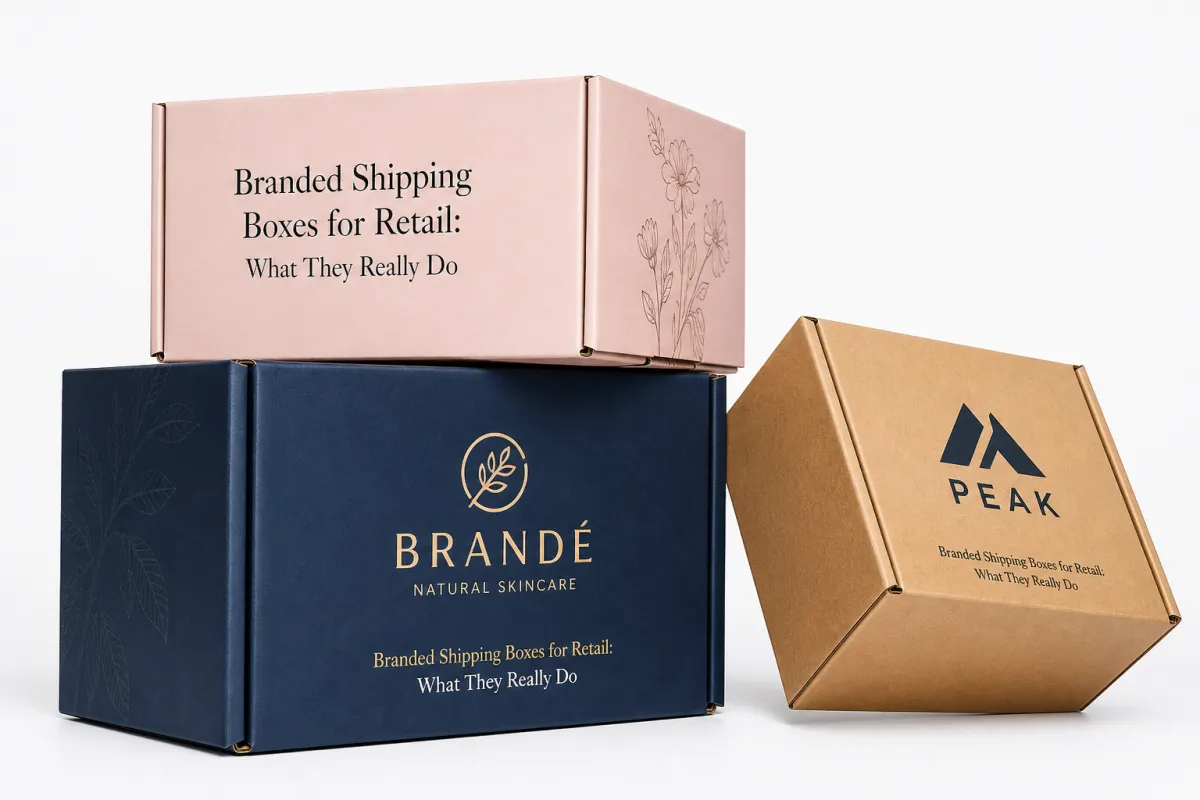
The box shows up before the product does. That tiny fact carries a lot of weight. It is why branded shipping Boxes for Retail matter more than people like to admit. Customers may never see the warehouse, the pick line, or the shipping rates you spent half a morning arguing over. They see the carton. They handle it. They make a snap judgment. Clean or sloppy. Thoughtful or cheap. That verdict lands fast.
From a packaging buyer’s perspective, branded shipping Boxes for Retail are not just cartons with a logo printed on top. They are shipping containers designed to survive transit while also carrying brand signals like color, typography, pattern, texture, or a simple mark. The structure has to work first. Branding sits on top of that job, not instead of it. If the box falls apart, the logo does not rescue anything. It just makes the failure easier to notice.
I have seen brands spend heavily on print and then skimp on board grade. That usually ends the same way: damaged corners, complaint emails, and a very awkward meeting with operations. The box is not a billboard that happens to ship. It is a shipping tool that also communicates identity. If you treat it like decoration, it will eventually act like one.
That distinction matters because packaging changes behavior. A tight, well-sized shipper can lower the chance of returns before the product is even touched. That shows up in apparel, cosmetics, wellness, specialty food, and premium accessories. It also cuts down on damage claims. Fewer replacements. Fewer apologies. Fewer hidden margin leaks. Not glamorous. Still real money.
For DTC brands, branded shipping boxes for retail shape the unboxing moment and the repeat-purchase instinct. For store replenishment or retail backstock, they support order fulfillment, keep products organized, and reduce the chaos of mystery cartons showing up on a dock. The branded layer helps the box do more than just survive the trip. It tells the buyer the shipment was handled with intent, not luck.
The real decision is not whether the box should be branded. The real decision is how much branding the margin can handle without creating waste. A small run with heavy graphics, specialty coatings, and custom inserts can look impressive and quietly wreck profitability. A simpler spec can still feel premium if the fit is right, the board is strong, and the print is clean. That is usually where the smart money goes.
That is the practical lens for the rest of this piece. Branded shipping boxes for retail should earn their place by improving the shipment, not by turning every order into a tiny parade float.
How Branded Shipping Boxes for Retail Work
A good shipper starts with structure. Decoration comes later. Board grade, box style, closure method, and print surface all have to line up. If the base structure is weak, branding just makes the weakness easier to see. Pretty boxes are nice. Crushed corners are not.
Most branded shipping boxes for retail use corrugated board or heavy paperboard depending on product weight and the route the shipment takes. A mailer-style box for apparel might use E-flute or B-flute corrugate because it balances stiffness with print quality. Heavier products often need single-wall or double-wall corrugated construction, especially if the shipment is going through parcel handling, stacking, or a long distribution chain.
Printing changes the economics quickly. One-color flexographic printing is efficient and works well for simple logos, repeated patterns, or restrained brand marks. Digital printing fits shorter runs and faster artwork changes. Offset or premium print processes can create richer color and sharper imagery, but they usually make sense only when presentation matters enough to justify the extra spend. There is no magic formula here. Just cost, setup, and how much visual drama the box actually needs.
Fit is where a lot of teams lose money. If branded shipping boxes for retail are too large, shipping materials go up, void fill balloons, and dimensional weight gets ugly. The product shifts around. The outer carton takes more abuse. The customer opens a box full of air and crumpled paper. A tighter size often improves ecommerce shipping performance, lowers freight costs, and makes the whole package look more expensive before anyone even reads the logo.
Internal protection matters too. Inserts, paper dunnage, molded pulp, foam, or custom partitions keep the branded outer shell from doing all the work. Fragile product? The insert is not optional. It is part of the packaging system. The outer box sells the experience. The inside keeps the return rate from chewing through the margin.
Fulfillment changes the build as well. If a packer has to fold, fill, seal, and label hundreds of boxes a day, the design needs to be fast to assemble. If automation is part of the line, the dieline and glue points need to behave. If the cartons stack in a warehouse, the structure has to survive storage pressure, not just look good in a mockup file.
That is why branded shipping boxes for retail are really a systems decision. They are part packaging, part operations, and part brand theater. The good kind of theater, ideally.
Key Factors That Decide Fit, Finish, and Durability
If you want branded shipping boxes for retail to work in the real world, start with the product instead of the artwork. Dimensions and weight decide the rest. A box built around a sketch often fails once inserts, tissue, sleeves, or bubble wrap are added. Then the lid bows, the corners crush, and everyone pretends the sample “looks fine.” It does not.
Board strength comes first. Single-wall corrugated can work well for lighter goods. Heavier or more fragile items may need double-wall construction or a higher edge crush rating. Burst strength still matters in some specs, but edge crush test numbers often tell you more about stacking and transit performance. For many retail brands, the right answer is not “strongest possible.” It is “strong enough without paying for board you do not need.”
Finish choice is another tradeoff, not a fantasy menu. Matte gives a softer, more restrained look and hides scuffs better. Gloss makes colors pop and can suit bolder graphics, though it also shows fingerprints and handling marks more easily. Soft-touch feels premium, but it adds cost and may not be worth it for high-volume shippers meant to be opened once and tossed. Uncoated stock feels honest and natural, which works well for eco-conscious branding or simpler packaging systems.
Color count and print coverage affect both price and consistency. Full-coverage wraps look striking, but they also raise ink usage, setup complexity, and the odds that a small color shift will stand out. If the box is moving through branded shipping boxes for retail programs at scale, a simpler palette usually ages better across reorder cycles. It is kind of boring, sure, but boring is often what keeps inventory consistent across six months of reorders.
Sustainability claims belong in the spec sheet, not just the sales deck. Recycled content, curbside recyclability, FSC-certified paperboard, and reduced plastic use can all matter to buyers and retail partners. If a retailer has packaging standards, follow them. If the brand is making environmental claims, make sure the material choices and labels support them. Guessing is a bad strategy. The internet remembers.
Testing should be part of the spec too. A box can look fine on a desk and still fail after real transit abuse. ISTA test methods help because they simulate drops, vibration, and compression in a structured way. You do not need to become a lab tech, but you do need proof that the packaging can survive the carrier path. More on that at ISTA.
For broader packaging language and sourcing concepts, packaging.org is a useful reference point. Specs built from standards and measured requirements age better than specs built from a mockup that just happened to look premium. That is how branded shipping boxes for retail stay useful after launch day.
Branded Shipping Boxes for Retail Cost, Pricing, and MOQ
Pricing for branded shipping boxes for retail works in the least charming way possible: the fewer boxes you buy, the more each one costs. Setup, artwork prep, tooling, and press time do not vanish just because the order is small. They get spread across fewer units, which is why short runs feel expensive before freight even shows up.
The main cost drivers usually stack up like this: size, board grade, print method, number of colors, coating, inserts, and total quantity. Size affects board usage and dimensional weight. Board grade affects material cost and damage resistance. Print method changes setup. Inserts add material and assembly time. If you want a clean comparison, ask suppliers for the same structure in multiple tiers. Otherwise, you end up comparing apples, oranges, and a very expensive pear.
Hidden costs are where budgets get bruised. Samples, plates or dies, freight, storage, and rush charges can all appear late if you do not ask about them early. A box can look inexpensive on paper and still become a warehouse headache. Landed cost is the number that matters. Not the pretty line in the quote subject.
For a rough buying range, a basic one-color corrugated shipper at higher volume can land far below a short-run full-color build. Depending on size and spec, the gap can easily run 2x to 3x per unit. That is not unusual. That is normal. A buyer who understands that spread is less likely to fall in love with a quote that only works in one slide deck.
Here is a practical way to compare common options for branded shipping boxes for retail:
| Option | Best For | Typical Price Range | Notes |
|---|---|---|---|
| One-color flexo corrugated mailer | High-volume apparel, simple DTC shipping | $0.45-$1.10 per unit at 3,000+ units | Good balance of cost, speed, and basic branding |
| Digital-printed short run box | Launches, seasonal drops, smaller brands | $1.20-$3.50 per unit at 500-2,000 units | Fast setup, better for design flexibility |
| Premium printed shipper with coating | Luxury accessories, cosmetics, giftable retail | $1.80-$4.80 per unit at mid-volume | Higher presentation value, more expensive finishes |
| Custom shipper with inserts | Fragile products, kits, subscription-style packaging | $2.25-$6.50 per unit depending on insert | Better package protection, more parts to coordinate |
Those numbers are planning ranges, not promises. They move with board thickness, print coverage, and order quantity. They also move with geography, fuel surcharges, and how cooperative your freight lane feels that week. For many brands, the best decision is not the cheapest box. It is the box that protects margin while still making branded shipping boxes for retail feel intentional and on-brand.
One more thing: compare quotes as landed cost, not just box price. Freight can wipe out a small per-unit savings fast, especially on bulky cartons. If the supplier is cheap but the boxes travel badly, the real cost shows up later in replacements, returns, and complaints. That is not a bargain. That is a delayed invoice.
Branded Shipping Boxes for Retail Process and Timeline
The process for branded shipping boxes for retail usually starts with the brief. You need product dimensions, weight, shipping method, target quantity, and the look you want. If the box has to work for ecommerce shipping, retail replenishment, or both, say that early. Mixed use changes the structure more than most people expect.
From there, the supplier chooses or builds a dieline, reviews artwork, and sends proof files. That proof stage is where problems get caught before they get expensive. A logo too close to a fold line, a bleed that was ignored, or a barcode in the wrong place can all create delays. It is boring work. It is also how you avoid paying twice.
Typical timing is reasonable if everyone stays focused. Artwork and proofing can take 1 to 3 days. Sampling often lands in the 5 to 10 day range. Production is commonly 10 to 25 days, depending on quantity, print complexity, and tooling. Freight has its own rhythm. Ground shipments move faster than ocean freight, but both depend on route and availability. Anyone promising miracles should probably be selling something else.
Delays usually come from the same handful of mistakes: missing measurements, slow artwork approval, untested inserts, or one more change after the proof is already approved. That last one is classic. People spend two weeks asking for precision, then change the Pantone note after production starts. Great way to make friends in procurement.
To speed things up without wrecking quality, lock the dimensions early and keep the print spec simple. If the design works in one or two colors instead of six, do that. If the product is stable enough to ship without a complex insert, simplify the build. Every layer you remove reduces the chance of error and improves the odds that branded shipping boxes for retail arrive on time.
Sampling against the real packed product beats testing an empty shell. A sample box that looks great empty can fail once the insert, tissue, or label stack is added. If you need more than one format, review the broader range of Custom Packaging Products alongside the dedicated Custom Shipping Boxes page. That makes comparison easier than trying to build the decision from memory.
For brands that want a clearer proof point, case examples help. The workflow behind Case Studies often shows where a small packaging adjustment reduced damage or improved the packing line. That tends to be more useful than another slideshow of pretty cartons. Branded shipping boxes for retail should earn their keep in operations, not just in photos.
Rush orders can be done, but the tradeoff is predictable: higher cost, fewer finish options, and less room for revisions. If the deadline is real, fine. If the deadline is just impatience wearing a watch, slow down and do it right. The box only has to be perfect once. Then it has to be repeatable.
Common Mistakes That Burn Budget and Damage Perception
The most expensive mistake with branded shipping boxes for retail is designing for the idea of the product instead of the actual packed item. The sketch on the screen is never the whole story. Add tissue. Add the insert. Add protective wrap. Add the label. Suddenly the “compact” box is too small or too loose, and everyone starts negotiating with gravity.
Another common failure is overbranding the outside while underbuilding the structure. A flashy carton that buckles in transit does more damage than a plain one ever could. Customers do not hand out points for optimism. They notice scuffs, crushed corners, and tape repairs. If the board grade is wrong, the branding becomes a witness.
“The cheapest box is the one that never gets reordered because it embarrassed the product.” That is the kind of sentence people laugh at until the replacement claims arrive.
Artwork mistakes are almost always preventable. Low-resolution files, ignored bleed, and color expectations that were never matched to the printing method create avoidable friction. Digital print and flexo print do not behave the same way. If you expect one to look exactly like the other without proofing, you are asking for disappointment and a follow-up email nobody wants to write.
Teams also miss the full spend by focusing on unit price and forgetting freight, storage, reprints, and damage-related replacements. That is especially true in order fulfillment programs with multiple SKUs. A box that saves four cents but triggers a higher damage rate is not saving anything. It is just hiding the expense until the quarter closes.
Dimensional weight deserves more respect than it gets. An oversized carton can look harmless on a spreadsheet and still raise parcel cost enough to erase the margin. If a tighter shipper reduces void fill and improves pallet density, it often wins twice: lower freight and cleaner presentation. That is why transit packaging decisions should be made with actual shipping rates in mind, not just die-line aesthetics.
Changing specs every reorder is another quiet disaster. One run has a matte finish. The next has gloss. One uses a different insert. The next shifts the logo. Inventory gets messy. Fulfillment slows down. Retail launches lose consistency. If the goal is a recognizable brand system, then branded shipping boxes for retail need a stable spec sheet, not a monthly reinvention project.
There is a reason packaging teams keep simple checklists. The box is not just a container. It is one of the few physical touchpoints customers remember. If it falls apart, the brand story falls with it. If it holds up and looks considered, the product starts with a better reputation before it is even opened.
Expert Tips and Next Steps Before You Order
Start with a measured packing test using the real product, the real insert, and the real carrier path. Not a theoretical mockup. Not a “close enough” sample. The actual packed item. That tells you whether branded shipping boxes for retail will survive compression, scuffing, and the kind of handling that happens between a label printer and a customer’s front door.
Ask suppliers for two or three quote tiers. One value build. One stronger build. One premium build. That gives you a clean way to compare tradeoffs instead of guessing. If the premium version looks beautiful but eats margin, you will know immediately. If the value version protects the product without looking cheap, even better. That is a real win.
Request a sample pack or prototype before full production, then inspect corner crush, print accuracy, stacking strength, and how the box looks after being handled. Open and close it a few times. Tape it. Stack it. Put the product inside. This sounds obvious because it is obvious, and yet people still approve packaging from a flat mockup and hope the warehouse will somehow be happier than physics.
Build a simple reorder spec sheet and keep it current. Include dimensions, board, print notes, approved artwork, quantity target, and any insert details. If you need FSC-certified materials, note that too. The next run should not become a scavenger hunt. The cleaner the document, the smoother the reorder, and the less likely your branded shipping boxes for retail become a quarterly debate.
If you are sorting formats across categories, compare the outer shipper with the rest of your packaging stack. Sometimes the best answer is a branded outer box paired with a simpler inner pack. Sometimes it is the reverse. That depends on the product, the route, and the customer expectation. Not every brand needs luxury-level presentation on the carton. Some need better protection and less drama. Sensible, right?
From a practical buying standpoint, here is the short version:
- Lock product dimensions and packing method first.
- Choose the lightest structure that still passes transit needs.
- Keep print simple unless presentation justifies the extra spend.
- Use samples to test damage risk, not just appearance.
- Compare landed cost, not quote price alone.
If you do those five things, branded shipping boxes for retail usually become a smart brand asset instead of an expensive decoration. That is the difference between packaging that looks good in a meeting and packaging that actually works in the warehouse.
For brands ordering through Custom Logo Things, the next move is straightforward: confirm the spec, freeze the dimensions, review the sample with the packed product inside, and only then place the order. Do not let a pretty mockup override transit reality. Branded shipping boxes for retail are worth it when they protect the product, hold the brand line, and keep the numbers defensible.
What is the difference between branded shipping boxes for retail and regular retail boxes?
Branded shipping boxes for retail are built to survive transit first, while Retail Display Boxes usually prioritize shelf presentation first. Many brands use both: an outer shipper for protection and an inner printed box for the reveal. If the box ships directly to customers, the shipping spec matters more than a fancy finish.
How much do branded shipping boxes for retail cost?
Price depends on size, board grade, print method, quantity, and whether you need inserts or special coatings. Short runs usually cost much more per unit because setup is spread across fewer boxes. Compare landed cost, because freight, samples, tooling, and reprints can move the real budget fast. That is why branded shipping boxes for retail should be quoted as a system, not a single line item.
How long does production take for branded shipping boxes for retail?
Proofing can take 1 to 3 days, sampling 5 to 10 days, and production usually lands in the 10 to 25 day range. Freight adds its own timeline, especially on longer routes. Rush jobs are possible, but they usually cost more and leave less room for revisions. Branded shipping boxes for retail with inserts or coatings may need extra time.
Are branded shipping boxes for retail worth it for small brands?
Yes, if better unboxing, fewer damage claims, or a stronger first impression supports repeat purchases. They are especially useful when the packaging is part of the product experience, not just a shipping shell. Keep the design simple at smaller volumes so branded shipping boxes for retail help margin instead of eating it.
What should I send a supplier before ordering branded shipping boxes for retail?
Send exact product dimensions, weight, shipping method, and whether you need inserts or extra protection. Provide artwork files, print colors, quantity target, and your delivery deadline. Share your budget range early so the supplier can recommend a spec that fits both cost and performance. The better the brief, the fewer surprises in branded shipping boxes for retail production.

