Buyer Fit Snapshot
| Best fit | Printed Retail Display Boxes with Logo projects where brand print, material claims, artwork control, MOQ, and repeat-order consistency need to be specified before quoting. |
|---|---|
| Quote inputs | Share finished size, material target, print colors, finish, packing count, annual reorder estimate, ship-to region, and any compliance wording. |
| Proofing check | Approve dieline scale, logo placement, barcode or warning zones, color tolerance, closure strength, and carton packing before bulk production. |
| Main risk | Vague material claims, crowded artwork, missing packing details, or unclear freight terms can make a low unit price expensive after revisions. |
Fast answer: Printed Retail Display Boxes with Logo: Board, Finish, Dieline, and Unit Cost should be specified like a repeatable production item. The safest quote records material, print method, finish, artwork proof, packing count, and reorder notes in one written spec.
Production checks before approval
Compare the actual filled-product size with the drawing, then confirm tolerance on folds, seals, hang holes, label areas, and retail display edges. Reserve space for logos, QR codes, warning copy, and material claims before decorative graphics fill the panel.
Quote comparison points
Review material grade, print process, finish, sampling route, tooling charges, carton quantity, and freight assumptions side by side. A quote is only useful when the supplier can repeat the same color, closure quality, and packing count on the next order.
Printed Retail Display Boxes with Logo: A Smart Guide
Printed retail display Boxes with Logo have a very specific job: get noticed before the shopper moves on. Shelf attention is brief. I have seen it in audits and on store visits alike; people glance, hesitate, and decide far faster than most brands expect. Research on retail behavior has long shown that purchase decisions can happen in seconds, not minutes, which means packaging often does the first round of selling before a clerk or product page ever gets involved.
That is why the strongest printed Retail Display Boxes with logo are never just containers. They carry branding, product details, color cues, and shelf presence in a format that has to hold up under real handling. They also have to be practical to manufacture. If your team is comparing formats, the full range of Custom Packaging Products can help you weigh structure, print coverage, and the store environment the box will face after it leaves the plant.
There is a sustainability story here, too, and it is rarely as dramatic as marketing makes it sound. Right-sizing the display, choosing the correct board grade, and avoiding unnecessary ink coverage can reduce material use without making the box look stripped down or cheap. Printed retail display boxes with logo work best when branding, function, and end-of-life handling are considered together, not as separate checkboxes. That is kind of the real test, honestly.
What Printed Retail Display Boxes with Logo Are
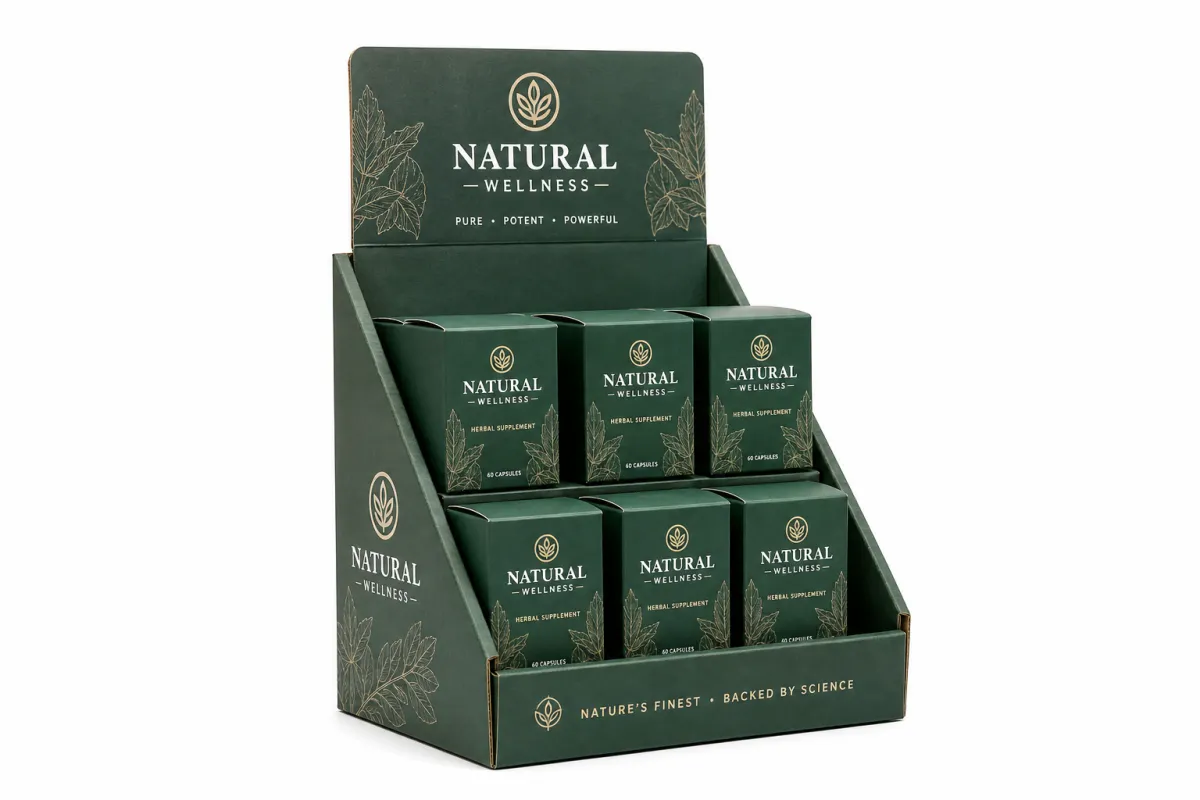
Printed retail display boxes with logo are retail-ready cartons or display structures built to present a product in a store, on a counter, or in a pallet display while making the brand obvious at a glance. That can mean a folded carton standing upright on a shelf, a countertop tray holding multiple items, or a die-cut display that leaves part of the product visible through a window or open front. The logo is not an afterthought. It is part of the selling mechanism.
The gap between a shipping carton and printed retail display boxes with logo is larger than many buyers expect. A shipping carton protects inventory during transport and disappears into the back room. A display box has to survive repeated handling, keep its shape under retail lighting, and present the front panel like a small billboard. A strong artwork system on a flimsy build still loses. A sturdy build with weak graphics loses just as fast.
Shelf-facing details do more work than most teams give them credit for. A clean logo on the front panel can build recognition, but effective retail display packaging also uses product name hierarchy, flavor or variant color coding, barcode placement, and sometimes a cutout window that lets the shopper confirm the item instantly. Printed retail display boxes with logo perform better when the box delivers the right information in the first few seconds instead of trying to say everything at once.
Materials matter from the start. These boxes can use folding carton board, SBS, CCNB, or corrugated builds depending on product weight and how long the display needs to hold up. A light cosmetics carton may do well on 16pt or 18pt board. A snack tray or electronics accessory display may need E-flute corrugated to stay upright after several hands have touched it. Printed retail display boxes with logo should fit the product, not force the product into a structure chosen only because the mockup looked good.
Sustainability starts with that fit. Right-sized displays reduce empty space, and efficient artwork layouts can keep ink usage in check. A white or lightly printed area is not a flaw if it improves readability and lowers coating or ink demand. Plenty of boxes try to look premium by covering every surface, then end up heavier, more expensive, and harder to justify from a recycling standpoint.
“If the shelf view is not clear from six feet away, the package has to work harder than it should.”
How Do Printed Retail Display Boxes with Logo Help Products Sell?
Printed retail display boxes with logo help products sell by doing three things at once: they stop the eye, tell the shopper what the product is, and make the brand easy to remember. That matters in point-of-purchase displays, where attention is scarce and every inch of shelf space competes with a dozen other messages. A box that looks sharp from a distance, reads clearly up close, and survives handling is already doing most of the work.
The best versions also reduce friction. When the shopper can identify the product, price tier, flavor, or use case without turning the package around, the buying decision gets easier. That is why printed retail display boxes with logo often outperform plain cartons in crowded categories. They do not just hold the product. They guide the choice.
In practical terms, the format becomes a small sales tool. A strong logo, a clear hierarchy, and one visible call to action can move the package from passive storage to active retail display packaging. If the structure also makes restocking faster or keeps the product upright as items are removed, the retailer benefits too.
I once watched a beverage accessory launch get quietly saved by a better display tray. The product itself had not changed at all, but the new box made the brand mark visible from across the aisle and cut the “what is this?” reaction almost to zero. That is the sort of improvement a good display structure can produce without shouting.
How Printed Retail Display Boxes with Logo Are Made
The production path for printed retail display boxes with logo begins well before ink reaches board. The first step is the dieline, the structural blueprint that shows folds, scores, glue flaps, die cuts, and any windows or hanger slots. Board grade comes next because a layout that works on paper can behave very differently once product weight, inserts, and retail handling are added to the equation. Structure and print need to be planned together if the box is going to be efficient.
Board selection is one of the earliest real technical decisions. Folding carton stock is common for lighter retail items, especially when the box functions mainly as a brand shell around a single product. Corrugated board is the better fit when the package needs crush resistance, stacking strength, or a display that will travel from warehouse to counter. Many printed retail display boxes with logo use a clean outer print face while letting the internal structure handle the stress, which is a sensible way to protect the look without overspending on material.
Artwork setup matters just as much as the board. The logo needs proper clear space, the color values should be matched to the printing process, and the front panel should avoid claim overload that competes with the brand message. High-resolution files, accurate bleed, and a clean dieline overlay prevent expensive surprises later. With printed retail display boxes with logo, color consistency usually matters more than a flashy effect that only looks right under presentation lighting.
Printing and finishing options depend on quantity and budget. Offset printing handles detail and color control well for larger runs. Digital printing often makes more sense for short runs, versioned artwork, or projects that need a faster proof-to-production path. Aqueous coating can add abrasion resistance without making the surface feel overly plastic, while varnish can provide a cleaner protective layer. Die-cut windows, embossing, and spot UV can all earn a place, but each one should justify itself. On display cartons, finishing should support the sell, not become the whole story.
Transit testing deserves attention if the display ships inside another carton or moves through distribution before reaching the shelf. Standards from organizations such as ISTA are useful because they force teams to think beyond the render and into vibration, drop, and compression. That kind of checking helps the box hold up after the first handling cycle instead of failing once the launch is already underway.
Sustainability runs through the process as well. Fewer layers, water-based inks, recyclable coatings, and a structural layout that reduces trim waste all help. Printed retail display boxes with logo do not need to look plain to be responsible. They need to be built with enough discipline that the material choices fit the product life cycle. That separates a box that merely looks “green” from one that is genuinely better designed.
Key Factors That Shape Cost, Materials, and Sustainability
Cost is never a single number for printed retail display boxes with logo. The unit price shifts with board grade, box size, print coverage, finishing steps, quantity, and whether the structure needs reinforcement such as lock tabs, stronger scores, or inserts. A box that appears simple from the outside can become expensive if it requires several structural adjustments or a highly saturated print build across every panel.
Print coverage has a direct effect on pricing. A design with large solid color fields, metallic effects, or spot coatings usually costs more than one that uses restrained graphics and leaves some board visible. Ink usage is part of the story, but not all of it. Dense coverage can also require tighter press control, more setup attention, and more waste during make-ready. A cleaner layout can look sharper and cost less.
Material choice is where sustainability and budget meet. Recycled paperboard, FSC-certified fiber, and right-sized corrugated structures are common options, but the best fit depends on product weight and how long the display needs to stay in service. If the box goes from warehouse to shelf and sees limited handling, lightweight board may be enough. If it will be stacked, shipped, and touched several times, stronger corrugated board may prevent damage that would cost more than the upgrade. You can check fiber sourcing guidance through FSC-certified supply standards if your team wants a clearer benchmark.
Shipping deserves its own line in the budget. Printed retail display boxes with logo that fold flat can reduce freight and warehouse space, while nested packing layouts can lower pallet count and improve receiving efficiency. A package that saves a few cents on board but adds more in transport is not really a savings. Buyers often focus on the print quote and forget that the box still has to move through the supply chain before it creates shelf value.
| Material or Format | Typical Use | Approx. Unit Cost at 5,000 Units | Sustainability Notes |
|---|---|---|---|
| 16pt SBS folding carton | Lighter cosmetics, supplements, small accessories | $0.18-$0.32 | Good print quality, widely recyclable when coatings stay simple |
| Recycled paperboard / CCNB | Value-driven retail cartons and displays | $0.16-$0.28 | Often strong from a fiber-content standpoint; print can be slightly less crisp |
| E-flute corrugated | Counter displays, heavier kits, shipping-to-shelf formats | $0.42-$0.85 | Better crush resistance; usually strong for transit and shelf life |
| Premium printed display with coating | High-visibility launches and branded promotions | $0.55-$1.10 | Can stay recyclable if coatings and add-ons are selected carefully |
These ranges are only a starting point, because a display that is 20 percent larger or needs a custom insert can shift pricing fast. Vendor, region, and order timing matter too. Even so, the pattern is clear: printed retail display boxes with logo do not become expensive only because they are printed. They become expensive when the structure, finish, and handling requirements keep adding layers of complexity.
There is also a tradeoff between premium presentation and production economy that every buyer should understand. Soft-touch lamination feels upscale, but it can complicate recyclability depending on the build. Spot UV creates strong contrast, but it can add cost and may not suit a more natural fiber story. Sometimes the smartest option is a disciplined structure, a clean logo hit, and one or two high-impact print elements instead of five effects competing for attention.
Step-by-Step: Planning Printed Retail Display Boxes with Logo
The cleanest way to plan printed retail display boxes with logo is to start with the product, not the artwork. Gather the real dimensions, packed weight, fragility level, intended shelf life, and retail setting first. A counter display in a pharmacy has different requirements than a floor display in a club store, and a single-item carton behaves differently from a mixed assortment tray. If those basics are loose, the rest of the project tends to wobble.
- Define the product load. Measure the item, any insert, and any closure allowance, then allow for board thickness and assembly tolerance.
- Choose the display format. Decide whether the job needs a countertop tray, tuck carton, sleeve, or gravity-fed structure.
- Map the artwork hierarchy. Place the logo, product name, and main benefit in a clear order so the eye lands where it should.
- Reserve technical space. Leave room for barcode placement, legal copy, icons, batch coding, and any required regulatory text.
- Prototype before release. Review a sample or digital proof so fit, fold sequence, and color placement can be checked before full production.
Structure selection is where many display projects are won or lost. A gravity-fed display can work well for snacks or accessories because it keeps product fronts visible as items are removed. A tuck box may suit premium cosmetics or small electronics where the package itself contributes to perceived value. A sleeve can add drama, but it can also slow assembly if the fill team is moving quickly. Every structure has a job, and that job should be obvious before the die is cut.
Artwork development should be treated as its own step, not a decoration phase. Strong logo placement can hold a front panel together, but the hierarchy has to be deliberate. If the product name fights the brand mark, or if too many claims crowd the face, the eye loses its path. Printed retail display boxes with logo usually perform better with one primary message, one supporting message, and one clear visual anchor. That matters even more on a crowded shelf where neighboring packages are fighting for the same few inches.
Samples are not window dressing. They are where the problems that the render hides show up in plain view. Maybe the glue flap is too tight for the board thickness. Maybe the die cut interferes with the product label. Maybe the brand blue prints a shade darker on recycled board than expected. Those are minor issues in a sample room and expensive issues in full production. A proper prototype phase protects the launch from avoidable disappointment.
For buyers managing several packaging types, it helps to compare the display project against other Custom Packaging Products for retail launches so the branding language stays consistent across cartons, shippers, and secondary packaging. A display box should feel like part of the same family, not a one-off that clashes with everything else on the shelf.
One practical rule keeps many teams out of trouble: design from the shelf outward. Start by asking what the shopper must notice first, then build the panel hierarchy around that visual path. The process becomes easier to approve when the team can explain why the logo sits where it does, why the product name is that size, and why certain areas are intentionally quiet.
Process and Timeline for Printed Retail Display Boxes with Logo
The process for printed retail display boxes with logo usually follows a familiar sequence: discovery, dieline development, artwork setup, proofing, sampling, production, finishing, quality review, and shipping. The exact order can shift a little, but the logic stays the same. Each stage removes risk from the next one, and skipping a stage usually just pushes the risk downstream where it costs more.
Timeline depends heavily on how prepared the project is at the start. If the artwork is already built, the structure is standard, and the board choice is straightforward, a digital-run project can move relatively quickly. If the job needs a custom die, a unique coating, or a more complex display format, the schedule stretches. A straightforward digital project may move in about 7-10 business days after proof approval, while a custom offset run with new tooling can easily sit in the 12-18 business day range before freight is added. Printed retail display boxes with logo reward teams that start early and leave room for revision.
Structure changes almost always take longer than color corrections or copy edits. A text tweak can often be handled in artwork. A fold line move, a tab adjustment, or a tray-depth correction can affect the die itself and may trigger a revised sample. That is why it helps to lock measurements early and confirm product fit before artwork is pushed to approval. The mechanical side should be stable first.
Sustainable material sourcing can add time too. If a project calls for a specific recycled board, a low-migration coating, or a specialty fiber blend, procurement may need extra room to find the right stock without weakening performance. That does not mean sustainable choices are slow by nature. It means the team needs to build time into the schedule rather than assuming every board and coating is waiting on a shelf.
For launch planning, think in three windows: approval time, production time, and transit time. Many delays happen because a buyer only watches the factory clock. Printed retail display boxes with logo also need time for the product team to review proofs, for the retailer to receive and distribute the goods, and for the launch date to stay protected if freight shifts by a day or two. A small margin in the schedule can save a large amount of stress later.
If you are still comparing formats, reviewing another Custom Packaging Products selection at the same time can help align secondary packaging, display cartons, and master shippers in one pass. That kind of coordination often shortens the entire project because the brand does not have to reinvent the message every time a box size changes.
Common Mistakes When Ordering Printed Retail Display Boxes with Logo
The most common mistake is choosing a structure that looks strong in a presentation but cannot handle the real product weight or retail handling load. Printed retail display boxes with logo need to survive more than a single touch. They get opened, stocked, moved, and sometimes bumped by shoppers or store staff. If the structure is underbuilt, the shelf presentation breaks down faster than anyone planned.
Artwork overload is another frequent problem. Buyers want the logo to stand out, but they also want half a dozen claims, icons, and promotional messages on the same face. The result is usually visual noise. A box can carry a strong logo and still feel calm if the team is disciplined about hierarchy. Too much copy usually weakens the sale rather than helping it.
Measurement errors show up more often than they should. A product insert, a tuck closure, a hanging tab, or a lip on a display front can change the usable interior space by more than a casual sketch suggests. Exact sample measurements matter. If the product must be removed quickly in a retail environment, even a small fit issue can slow the process and make the package feel awkward.
Sustainability claims can backfire if the build does not support them. A display made from recyclable board may still be difficult to recycle if it uses heavy lamination, mixed materials, or plastic windows that are not easy to separate. The message should be clear and defensible. A sensible material choice is better than a louder claim that creates confusion at end of life.
Skipping samples is the fastest way to pay twice. A proof can catch copy errors, but a sample catches the real-world issues: fold pressure, board memory, print shift, assembly speed, and retail handling behavior. Even a simple one-up prototype can show whether the display will feel solid on shelf or flimsy the moment it is unpacked.
Here is a practical callout I share often with buyers: if the package fails the six-foot shelf test, it usually fails the close-up test too. That does not mean every box has to be loud. It means the structure and artwork have to work together clearly enough that the shopper understands the offer without effort.
“A display that confuses the eye usually confuses the buyer.”
One more mistake deserves attention because it hurts both budget and schedule. Teams sometimes change copy, size, and structural requirements at the same time, then expect the whole project to stay on track. Printed retail display boxes with logo can absorb one or two changes without drama, but a stack of revisions turns a simple project into a moving target. The cleaner the brief, the easier the production.
Expert Tips and Next Steps for Printed Retail Display Boxes with Logo
My strongest advice is to design from the shelf outward. Decide what the shopper must notice first, then place the logo, product name, and support copy in that order. Printed retail display boxes with logo become much more effective when the visual path is intentional rather than accidental. If the shopper has to hunt for the brand, the package is already doing too much work.
Use restraint where it helps the product look more premium. Printed retail display boxes with logo do not need a full flood of ink to feel complete. A cleaner panel with carefully placed color blocks or a strong logo hit can feel more sophisticated and more responsible than a design that tries to cover every inch. White space is not wasted space if it improves clarity and lowers material load.
Ask for the exact board, coating, and print method you plan to use, not just a generic sample. A box can look excellent on one substrate and very different on another. If the finished package needs to be recyclable, say that early and ask how the coating, window, or lamination affects that goal. The best printed retail display boxes with logo are built around honest constraints, not wishful thinking.
Here is a simple action list that usually gets projects moving in the right direction:
- Measure the product, insert, and closure allowance carefully.
- Define the retail setting: shelf, counter, ship-to-shelf, or mixed use.
- Set a target unit budget and a realistic volume.
- Confirm sustainability requirements before the dieline is approved.
- Review a prototype or sample before locking the run.
If the project spans cartons, shippers, and displays, keep the language consistent across the full packaging set so the shopper sees one brand, not three different voices. That is where a broader review of Custom Packaging Products can save time. A display box should support the same promise as the rest of the pack line, just in a format that works harder at shelf level.
For buyers who want a cleaner launch path, I would also recommend building in time for one real round of feedback after sampling. That single pause can protect the budget, protect the launch date, and improve the retail result far more than rushing to press with a package that has not been stress-tested. Printed retail display boxes with logo work best when branding, structure, and production planning are treated as one system rather than separate choices.
The practical takeaway is simple: bring the product dimensions, retail environment, target cost, and recyclability requirements into the first packaging conversation, then build the structure around those facts. If the box is designed that way, printed retail display boxes with logo can improve recognition, support cleaner material use, and help a product earn attention in a busy aisle without shouting.
What are printed retail display boxes with logo used for?
They are used to help products stand out on shelves or counters while giving shoppers a quick read on brand, product type, and value. Printed retail display boxes with logo are common for cosmetics, supplements, snacks, electronics accessories, and other items that benefit from strong shelf presentation. The logo supports recognition and trust, while the structure can also improve handling, organization, and product protection.
How much do printed retail display boxes with logo cost?
Price depends on board grade, box size, print coverage, finishing, quantity, and how complex the structure is. Small runs usually cost more per unit, while larger runs can reduce unit pricing if the setup is already approved. Sustainable material choices can slightly affect cost, but efficient sizing and simpler finishing often help offset that difference.
Which materials work best for sustainable display boxes?
Recycled paperboard, FSC-certified fiber, and right-sized corrugated structures are common choices for retail displays. The best option depends on product weight, display duration, and whether the box needs to survive shipping or just hold up on shelf. Water-based inks and recyclable coatings can support sustainability goals without sacrificing print quality.
How long does it take to produce printed retail display boxes with logo?
Timing varies based on artwork readiness, dieline complexity, sample needs, and the print method used. A straightforward project moves faster when the structure is standard and the artwork is approved early. Custom structures, material sourcing, and multiple proof rounds can extend the schedule, so planning ahead matters.
Can printed retail display boxes with logo be recycled after use?
Often yes, if the board and coatings are compatible with local recycling systems and the design avoids non-recyclable add-ons. Heavy laminations, mixed materials, or certain plastic windows can reduce recyclability, so material choices should be checked early. Clear disposal instructions on the package can help retailers and customers handle the box correctly after product use.


