Buyer Fit Snapshot
| Best fit | Branded Thank You Cards in Boxes projects where brand print, material claims, artwork control, MOQ, and repeat-order consistency need to be specified before quoting. |
|---|---|
| Quote inputs | Share finished size, material target, print colors, finish, packing count, annual reorder estimate, ship-to region, and any compliance wording. |
| Proofing check | Approve dieline scale, logo placement, barcode or warning zones, color tolerance, closure strength, and carton packing before bulk production. |
| Main risk | Vague material claims, crowded artwork, missing packing details, or unclear freight terms can make a low unit price expensive after revisions. |
Fast answer: Branded Thank You Cards in Boxes: Design and Fit should be specified like a repeatable production item. The safest quote records material, print method, finish, artwork proof, packing count, and reorder notes in one written spec.
Production checks before approval
Compare the actual filled-product size with the drawing, then confirm tolerance on folds, seals, hang holes, label areas, and retail display edges. Reserve space for logos, QR codes, warning copy, and material claims before decorative graphics fill the panel.
Quote comparison points
Review material grade, print process, finish, sampling route, tooling charges, carton quantity, and freight assumptions side by side. A quote is only useful when the supplier can repeat the same color, closure quality, and packing count on the next order.
Branded Thank You Cards in Boxes: Design and Fit
Two cartons can hold the same product, carry the same shipping label, and use the same filler, yet still feel completely different the moment the lid opens. That shift often comes from branded thank you cards in boxes, because the first human touchpoint sits right on top of the pack-out instead of being left to chance. A small printed card changes the pace of the unboxing from "order received" to "someone prepared this for me."
For a packaging buyer, that distinction has real weight. branded thank you cards in boxes can carry color, type, tone, and a next-step message without adding much weight, and they can do it in a way that works inside everyday fulfillment reality: fast pack lines, mixed SKUs, and cartons that are never perfectly forgiving. Sized and printed well, the card feels deliberate. Rushed, it feels like a loose insert that happened to end up in the shipment.
Custom Logo Things sees this pattern often. The strongest programs treat the card as part of the pack-out system, not a last-minute marketing add-on. That is why branded thank you cards in boxes deserve the same care given to a carton insert, a label, or a care sheet. The card can support repeat purchase behavior, make a customer more willing to open a follow-up email, and quietly signal that the brand pays attention to detail.
Picture the difference between a plain shipment and one that opens with a clean note, a clear logo, and a message that sounds like it came from a real team. The product may be identical. The feeling is not. Once that feeling lands, branded thank you cards in boxes start doing more than saying thanks; they shape how the customer remembers the brand.
The practical questions are simple enough: how the cards are made, which stock works best, what they cost, how long they take, and where teams usually go wrong when they treat the insert as an afterthought. The details are small, yet in packaging the small details are often the ones customers notice first.
What Branded Thank You Cards in Boxes Do for Unboxing
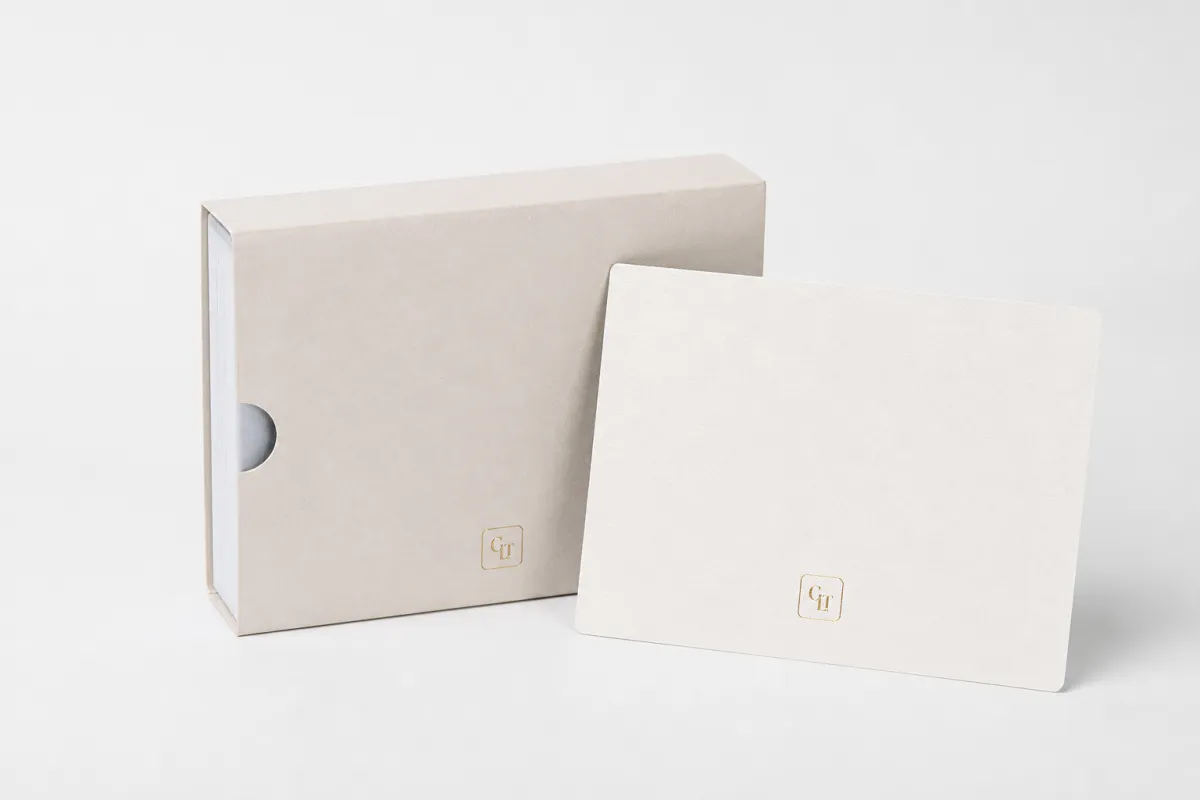
Branded thank you cards in boxes create an immediate emotional cue at the top of the shipment. The customer opens the carton, sees the card first, and gets a clear signal that the order was assembled with care. That is different from a generic fulfillment event, where the product appears with no context and the brand voice shows up somewhere else, maybe later, maybe never.
In practical use, the card handles several jobs at once. It says thank you. It repeats the brand identity. It can point the customer to a support channel, a QR code, or a reorder path. It also gives the box a human note that feels warmer than a printed shipping label or a stock packing slip. That is a lot of work for one small piece of board, honestly.
- Brand recall: the logo, colors, and typography appear during a high-attention moment.
- Customer reassurance: the note can reduce hesitation and confirm the order was checked.
- Next-step guidance: a short line can direct customers to register, review, or reorder.
- Perceived value: the package feels more complete, even when the product itself has not changed.
That last point gets missed often. branded thank you cards in boxes do not need ornate decoration to feel premium. A 14pt or 16pt card with clean print, balanced spacing, and a message that sounds sincere can elevate the entire shipment. Buyers sometimes assume premium means foil, embossing, or complex finishing, but many of the strongest inserts are simple, readable, and cleanly trimmed.
"The customer should feel the card before they read the whole card. If the paper, size, and message all work together, the box feels finished."
There is also a business side to the insert. A well-planned card can support repeat purchasing by reminding the customer where the brand lives, what the tone sounds like, and how to come back. It can also lower hesitation by showing that there is an actual service team behind the shipment. That matters for newer brands that need trust to build quickly, and for premium lines where the packaging has to justify the price point.
For readers comparing options, our Case Studies page is a useful place to see how packaging details support customer experience across different product categories. If you are mapping the whole shipment rather than only the insert, our Custom Packaging Products page can help you think through the box, tissue, and supporting components as one system rather than isolated parts.
The central idea stays simple: branded thank you cards in boxes are a small investment in the opening moment. That moment is brief, yet it has influence, because it is where the customer decides whether the shipment feels generic or prepared.
How Branded Thank You Cards in Boxes Are Produced and Packed
The production path for branded thank you cards in boxes is straightforward, though the best results come from paying attention to each step. The card begins as a layout file, usually built in the same design environment used for other brand materials. That file moves into proofing, where dimensions, colors, bleed, copy, and barcode or QR placement are checked. After approval, the cards are printed, trimmed, counted, and packed for use in fulfillment.
Flat pre-printed cards are the simplest version. They are easy to store, easy to count, and easy to insert. Variable inserts take more coordination. Those may change by product line, subscription tier, season, promotion, or language. Once several versions enter the mix, the workflow needs stronger labeling discipline, because the wrong insert in the wrong box creates confusion for the customer and inventory headaches downstream.
In a real packing environment, branded thank you cards in boxes may be hand inserted, machine inserted, or bundled with other printed materials. Hand insertion fits smaller volumes and custom kitting jobs. Machine insertion makes more sense for high-speed, repeatable pack-out lines. Kitting is common when the card travels with tissue, care instructions, samples, or a coupon packet.
The order of operations matters more than many teams expect. If the card should be seen first, it needs to sit on top or in the most visible position before the fill material closes over it. The customer then meets the message before the product is fully revealed. If the card gets buried under tissue, the unboxing loses some of its rhythm. A thoughtful insert hidden at the bottom is only doing half its job.
Good production also includes a few quality checks that are easy to overlook when the team is moving quickly:
- Ink density: blacks should stay rich, and brand colors should not drift too far from proof.
- Trim accuracy: uneven edges make the piece look rushed and can affect box fit.
- Orientation: the card should read correctly when the carton is opened.
- Count verification: mixed quantities need clear counting, bagging, and labeling.
- Version control: SKUs, offers, and QR destinations must match the correct program.
For brands that care about sourcing, paper selection can be tied to FSC-certified fiber. If chain-of-custody matters to your team, the FSC framework gives a clear path for documenting responsible forest material. If the insert is part of a larger distribution test, ISTA resources are useful because they help teams think about how printed materials behave inside a shipment under vibration, compression, and handling.
That technical side matters because branded thank you cards in boxes are still packaging components, not just marketing assets. They have to survive storage, move cleanly through the pack-out area, and arrive in a condition that reflects the brand properly.
Key Factors That Shape Quality, Feel, and Brand Impact
Paper stock is usually the first thing buyers feel in their hands. A heavier cover stock gives branded thank you cards in boxes more presence, which helps when the insert needs to feel substantial. Lighter stock lowers cost and works well when the card is mostly informational. Uncoated stock feels warmer and is easier to write on, while coated stock tends to keep print sharper and colors more vivid.
Finish changes the tone. Matte usually reads as calm and restrained. Soft-touch feels elevated and velvety, though it can add cost and may not suit every brand voice. Gloss can make colors pop, although it sometimes pushes the piece toward a more promotional look. If the goal is for branded thank you cards in boxes to feel personal rather than flashy, matte or uncoated stock usually supports that better than a high-gloss surface.
Size is not only a design choice. It is a fit issue. The card has to live comfortably inside the carton with tissue, product wrap, filler, and any additional inserts. Too large, and it curls or catches. Too small, and it disappears. In a standard apparel box or subscription mailer, common sizes like 3.5 x 5 in., A6, or 4 x 6 in. often make sense because they are easy to pack, easy to print, and easy for the customer to handle.
Messaging is where many teams either get it right or crowd the piece into uselessness. A short thank-you, one support line, and one next step usually outperform a card packed with several promotions. Plenty of brands try to fit loyalty programs, seasonal discounts, social channels, warranty details, and referral language onto the same small card. The result is a wall of copy that feels more like a flyer than a thoughtful insert. Branded thank you cards in boxes work best when they stay focused.
Print color deserves real attention, especially if the brand relies on precise identity standards. What looks correct on a monitor can shift once it lands on paper, and paper tone changes the result again. A warm white uncoated sheet will make some colors appear softer than a bright coated sheet. A rich black may need more control than the artwork file suggests. That is why proofs matter, especially when the project depends on a specific blue, red, or neutral palette.
For packaging teams balancing multiple goals, it helps to keep the main options in view:
| Option | Best Use | Typical Feel | Common Cost Range |
|---|---|---|---|
| 14pt uncoated card | Handwritten notes, approachable brands, quick pack-out | Warm, tactile, easy to write on | $0.10-$0.22 per card at 5,000 units |
| 16pt C1S or C2S card | Sharper graphics, stronger visual identity, cleaner color blocks | Slightly more polished, still practical | $0.14-$0.30 per card at 5,000 units |
| Soft-touch laminated card | Premium programs, higher-end retail, luxury gifting | Smooth, upscale, more tactile | $0.22-$0.48 per card at 5,000 units |
Those figures are directional rather than universal, because artwork coverage, finishing, quantity, and pack-out requirements change the economics quickly. Even so, they give a buyer a better sense of where branded thank you cards in boxes usually land when the specs are realistic and the project is quoted on the same basis from supplier to supplier.
From a packaging buyer's point of view, the best card is the one that fits the box, fits the hand, and fits the brand story without fighting the rest of the shipment. That is a better test than simply asking whether the insert looks "premium." Premium can be useful language, but fit and function usually tell the truth faster than adjectives.
Branded Thank You Cards in Boxes: Process and Timeline
The timeline for branded thank you cards in boxes is usually shorter than a full carton program, though it still has enough steps to cause delays if the project is not managed cleanly. The sequence generally begins with a creative brief, then moves to copy approval, layout, proofing, revision, production, finishing, counting, and packing. Each stage can move quickly, provided the previous stage is locked.
Fast projects are the ones where the buyer has already settled size, paper, quantity, tone, and insertion method. Every open question adds another round of proofing or coordination. If the card needs a variable QR code, a new message for each SKU, or language changes by fulfillment region, the schedule stretches. Branded thank you cards in boxes may be simple in format, yet they still sit inside a production chain that has to stay synchronized with the rest of the order.
A practical timeline for a straightforward run might look like this:
- Brief and content: 1-2 business days to define the message, size, and stock.
- Proofing: 1-3 business days, depending on revisions and asset quality.
- Print and finish: often 3-7 business days for standard work.
- Pack and count: 1-3 business days, longer if there are multiple versions.
- Transit: depends on freight method and destination, so it should be planned separately.
That outline is practical, not a promise. A simple one-version card can move quickly. A program with special coatings, Custom Die Cuts, foil accents, or personalized messages can take longer. The more versions you add, the more carefully the inventory and proofing steps need to be controlled. That is why branded thank you cards in boxes should be scheduled with the same care used for labels or printed cartons, especially if the launch date is tied to a campaign or retail event.
The better scheduling question is not "How fast can you print it?" It is "When does the complete set need to be ready for the warehouse?" That includes proof approval, print time, packing time, and freight transit. If the insert lands late, the customer gets the box without the note, and the opportunity is gone. The value of the card depends on being in the box on time, not sitting on a dock somewhere after the shipping wave has moved on.
For teams that run seasonal drops or subscription launches, a buffer around the first shipping date is worth having. A small cushion protects against proof delays, art corrections, count mismatches, and warehouse intake timing. That buffer is cheap compared with reprinting cards that miss the shipment window.
Branded Thank You Cards in Boxes: Cost, Pricing, and MOQ
Pricing for branded thank you cards in boxes is easier to understand once it is broken into components. There is the design or prepress work, the print setup, the paper stock, the ink coverage, the finishing step, the count and pack-out labor, and the freight. A quote that looks low at first can turn less attractive if one of those items is missing or only partly included.
Quantity has a direct effect on unit cost. Larger runs usually lower the per-card price because setup gets spread across more pieces. Smaller runs cost more per unit because the setup work is the same whether you print 250 cards or 25,000. That is why some brands use test quantities for launch periods, then move to higher volumes once the message and size are confirmed. Branded thank you cards in boxes fit that kind of phased buying well because the format is simple to scale once the spec is locked.
Minimum order quantity is not just a sales number. It reflects how the job is manufactured. A press needs setup. Finishing equipment needs setup. Packing labor needs a measurable quantity to make the run efficient. In other words, MOQ is usually a production reality rather than an arbitrary rule. If a quote seems unusually low for a tiny run, check what is excluded. The card might be cheap, but the setup, trimming, or insertion may not be.
Here are the main cost drivers buyers should watch:
- Print coverage: full-bleed color often costs more than a simple one- or two-color layout.
- Special finishes: foil, embossing, spot UV, and soft-touch lamination add labor and materials.
- Size and cut: custom dimensions or rounded corners can increase finishing time.
- Variable data: personalized names, QR codes, or offer codes require tighter file management.
- Pack-out method: manual insertion adds labor that should be planned, not assumed.
For a realistic benchmark, many buyers will see standard branded thank you cards in boxes quote somewhere around $0.10-$0.30 per unit at higher quantities, with premium finishing pushing the number higher. Small runs can land well above that, especially if the artwork is complex or the pack-out is customized. A 250-piece test may be perfectly sensible for a new product line, but it should not be compared directly with a 10,000-piece reprint because the setup economics are completely different.
Fair quote comparison depends on like-for-like specs. If one supplier quotes a 4 x 6 in. card on 16pt uncoated stock and another quotes an A6 card on soft-touch laminated stock, the numbers are not comparable. The same applies to print sides, packing method, and whether insertion is included. Apples-to-apples quoting is the only useful way to judge value.
One more practical point: if the card is going into multiple box programs, ask whether version control is included in the workflow. Mixed SKUs can increase the chances of a pack-out mistake, and mistakes are expensive to fix after the shipment leaves the building. A solid quote for branded thank you cards in boxes should account for the real operational picture, not just the print spec.
If you are balancing several packaging components, it helps to judge the card alongside the full kit. A slightly higher unit price on the insert may be worth it if the overall unboxing experience feels better and the workflow stays clean. Packaging is rarely won on one line item alone; it is won when the whole system behaves well.
Common Mistakes When Ordering Insert Cards
The biggest mistake with branded thank you cards in boxes is overdesigning them. Too many fonts, too many messages, too many logos, and too many calls to action all fight for space. A card that tries to do everything usually does nothing well. The strongest insert cards are often the ones that stay disciplined: one message, one visual direction, one clear action.
Box fit is another common issue. If the card is too large, it curls, bends, or blocks the product. If it is too small, it gets lost under tissue or filler. Both outcomes weaken the moment. That is why the box structure should be part of the design brief, not an afterthought. Branded thank you cards in boxes should fit the carton the way a label fits a shipper: with enough margin to stay neat, but not so much that it floats around.
Copy errors cause more damage than many teams expect. A broken QR code, an old discount code, a misspelled word, or a stale offer can turn a goodwill insert into a credibility problem. If a customer scans a code and lands on a dead page, the card stops feeling thoughtful and starts feeling careless. That is a hard thing to recover from for such a small piece of printed material.
Warehouse execution can also go wrong if the process is not documented. If the team packing the boxes does not know exactly where the card goes, it may end up upside down, buried, or missing from a subset of orders. That inconsistency matters because branded thank you cards in boxes are supposed to create a reliable opening moment. Reliability is part of the message.
Here is a short list of mistakes I see often:
- Rushing approval: small copy errors turn into expensive reprints.
- Poor file prep: missing bleed, low-resolution artwork, and weak contrast affect print quality.
- Ignoring storage: cards stored in humid or cramped conditions can warp.
- Mixing versions without controls: SKU confusion slows the pack line.
- Treating the card as disposable marketing: the strongest cards feel like a brand asset, not a flyer.
The last point deserves emphasis. A flyer is usually built to push a promotion. A strong thank-you insert is built to strengthen trust. That difference shows up in tone, spacing, paper choice, and message length. A card that sounds respectful and specific will do more for the brand over time than one that shouts for attention.
"If the insert reads like it belongs in the box, the customer feels the care. If it reads like leftover promo material, the whole shipment loses polish."
There is no need to make branded thank you cards in boxes complicated. Clear structure, accurate copy, and correct fit solve most of the real problems. The failures usually come from trying to squeeze too much into too little space or from skipping a proof that would have caught an obvious issue.
Expert Tips and Next Steps for a Smooth Launch
Start with the box structure and the fulfillment method before settling the design. That sequence saves time later because the insert has to fit the real pack-out, not an imagined one. If the team already knows the carton dimensions, tissue arrangement, and whether the card is hand inserted or machine inserted, branded thank you cards in boxes become much easier to spec correctly.
If the message feels uncertain, test two versions. One can sound warm and personal, almost handwritten in tone. The other can be cleaner and more product-focused, with a stronger emphasis on support or reorder behavior. I have seen brands assume the warm version would win, only to discover that the cleaner version felt more aligned with the product category. That is why a sample review inside the actual box is so useful.
Before production, use a simple checklist. It sounds basic, but it catches the issues that usually cause delays.
- Confirm the exact card size and finish.
- Approve the final copy and QR destination.
- Check logo files, color references, and image resolution.
- Lock the quantity and any version splits.
- Define how the card will be packed and stored.
- Confirm proof approval and ship-to timing.
That checklist helps especially when branded thank you cards in boxes are part of a launch tied to a seasonal drop, subscription renewal, or retail campaign. The closer the delivery date gets, the less room you have for drift. A clean checklist keeps the project from depending on memory, and memory is a poor production system.
If the program is new, a pilot run is often worth it. A small test can reveal whether the card feels too large, too glossy, too plain, or too busy once it is actually sitting in the carton. On screen, almost every card looks acceptable. In the box, the differences are much easier to judge. That is the point where fit gets decided, and fit is the real test.
It also helps to think about the whole package as a set of connected choices. A card with a clear message works better when the carton, tissue, and product presentation support the same tone. The strongest programs are usually coordinated, not overloaded. If you want to explore how card inserts fit into larger packaging programs, the team at Custom Logo Things can help you compare Custom Packaging Products that support the same brand story.
For buyers who want a more proof-driven approach, reviewing Case Studies can help you see how different box and insert combinations perform across categories. That kind of comparison matters because branded thank you cards in boxes do not exist in isolation; they are part of the customer's first physical experience with the brand.
To keep the launch clean, gather your dimensions, define the message, request a proof or sample, compare pricing by quantity, and confirm lead time before the first shipment is scheduled. That sequence sounds ordinary, but it prevents most of the avoidable mistakes. Once the card is ready, the pack-out team can use it consistently, and the customer sees the result immediately.
Done well, branded thank you cards in boxes are not just decorative inserts. They are a measured packaging decision that supports unboxing, reinforces the brand, and helps the shipment feel complete. The best takeaway is simple: lock the box fit, write one clear message, verify the proof, and schedule the cards to arrive before the first pack-out starts. Get those four pieces right, and the insert will do its job without making the operation messy.
Frequently Asked Questions
What size should branded thank you cards in boxes be?
Choose a size that matches the box footprint and leaves room for tissue, product wrap, or any other inserts without bending the card. Common sizes such as 3.5 x 5 in., A6, or 4 x 6 in. often work well because they are easy to print, easy to store, and easy to place during pack-out. If the card includes a QR code, support information, or a longer note, make sure there is enough open space so the message stays readable after handling.
Are branded thank you cards in boxes better on coated or uncoated stock?
Uncoated stock usually feels warmer and is easier to write on if you want a handwritten note or a signature. Coated stock can make colors sharper and graphics cleaner, which helps if the design is more visual or more polished. The better choice depends on whether the goal is premium polish, handwritten authenticity, or a balance of both. For many brands, the decision comes down to the feel they want the customer to have when the carton opens.
How long do branded thank you cards in boxes usually take to produce?
Simple one-version cards can move quickly once the artwork is approved, but the exact timeline depends on proofing, print scheduling, finishing, and freight. Variable data, special finishes, or multiple versions add time because each change needs extra setup and verification. A practical plan also includes warehouse intake, so the cards arrive before the fulfillment date instead of after it.
What affects the cost of branded thank you cards in boxes?
Quantity, paper stock, print coverage, finishing, and insertion method are the biggest pricing drivers. Custom cuts, special coatings, personalization, and multiple SKUs can raise the unit cost quickly. To compare quotes fairly, make sure the size, stock, quantity, and pack-out expectations match across suppliers. That is the only way to judge value with any real confidence.
Can branded thank you cards in boxes include personalized messages?
Yes, personalized messages are possible through variable printing, but they usually require cleaner data, tighter proofing, and more coordination in production. Many brands start with a standard card and reserve personalization for VIP orders, subscriptions, or special campaigns. If names, locations, or offers change by order, the fulfillment workflow needs clear data handling so the inserts stay accurate.


