Buyer Fit Snapshot
| Best fit | Branded Tissue Inserts Wholesale for Premium Unboxing projects where brand print, material claims, artwork control, MOQ, and repeat-order consistency need to be specified before quoting. |
|---|---|
| Quote inputs | Share finished size, material target, print colors, finish, packing count, annual reorder estimate, ship-to region, and any compliance wording. |
| Proofing check | Approve dieline scale, logo placement, barcode or warning zones, color tolerance, closure strength, and carton packing before bulk production. |
| Main risk | Vague material claims, crowded artwork, missing packing details, or unclear freight terms can make a low unit price expensive after revisions. |
Fast answer: Branded Tissue Inserts Wholesale for Premium Unboxing should be specified like a repeatable production item. The safest quote records material, print method, finish, artwork proof, packing count, and reorder notes in one written spec.
Production checks before approval
Compare the actual filled-product size with the drawing, then confirm tolerance on folds, seals, hang holes, label areas, and retail display edges. Reserve space for logos, QR codes, warning copy, and material claims before decorative graphics fill the panel.
Quote comparison points
Review material grade, print process, finish, sampling route, tooling charges, carton quantity, and freight assumptions side by side. A quote is only useful when the supplier can repeat the same color, closure quality, and packing count on the next order.
Branded Tissue Inserts Wholesale for Premium Unboxing
Branded tissue inserts wholesale can change the feel of a product before the customer gets to the product itself. A plain carton says shipping. A printed tissue sheet says someone planned this. That difference is small on a spreadsheet and obvious in the hand. It photographs better, opens cleaner, and gives even a modest order a more finished look without forcing a full packaging redesign. For Custom Logo Things and other packaging buyers, that balance is the point: a strong visual return, controlled spend, and a format that can scale across repeat orders.
Packaging is never judged one component at a time. The box, the tissue, the sticker, the fill, and the insert all show up together. If one piece looks improvised, the whole package loses credibility fast. Brands that source tissue at wholesale volume usually want consistency first, then price control, then enough flexibility to cover seasonal launches, subscription shipments, retail kits, and promotional runs without rebuilding the spec every time.
For teams comparing sourcing paths, this is also where Wholesale Programs and repeatable specification sheets start earning their keep. A one-off print run might solve a single launch. A wholesale tissue program has to survive reorders, approval cycles, changing SKUs, and the occasional last-minute request from marketing. That is the standard.
Why branded tissue inserts wholesale changes the unboxing math
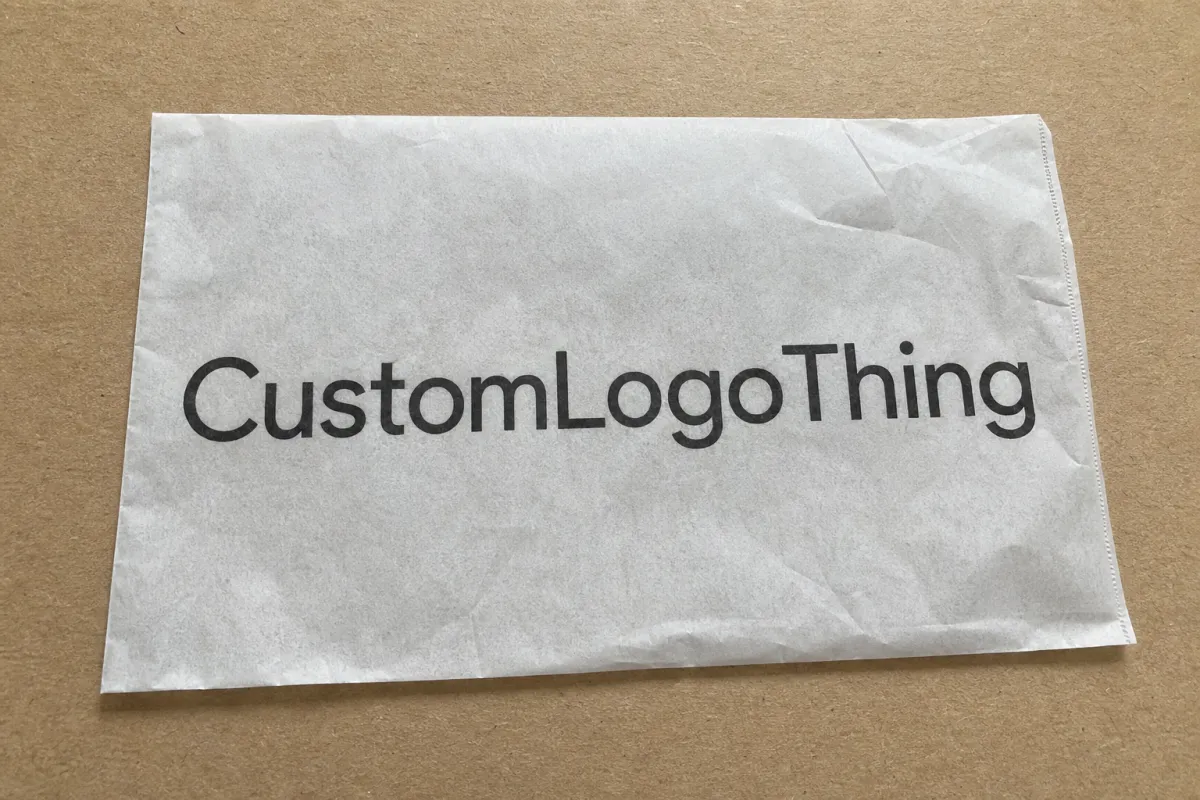
A basic tissue wrap can make the same product feel gift-ready. That is not branding fluff. It is buyer behavior. A shirt in a mailer reads as a shipment. The same shirt, folded in branded tissue with a repeating logo and a clean crease, reads as intentional. The product has not changed. The perceived value has.
From a packaging buyer's point of view, that matters because tissue is one of the few tools with a low enough unit cost to use across a large catalog. A sleeve can work for premium items. A rigid insert can work for protection. A label can work for fast identification. Tissue wins when the goal is flexible presentation across many SKUs. It is light, easy to store, and visually generous for the spend. In a lot of programs, it becomes the least expensive way to make the whole shipment feel on-brand.
The wholesale part is where the economics improve. Ordering tissue in a larger run usually lowers the per-sheet price, cuts down on setup repetition, and gives the buyer enough inventory to handle reorders without rushing. That is especially useful for brands with seasonal collections, subscription boxes, or ecommerce assortments that change every quarter. The alternative is chasing small runs and paying more every time the design changes.
There are limits. Tissue is not a structural insert, and it is not the answer if the product needs crush resistance, retention, or heavy transit protection. A rigid paperboard insert or molded tray still wins on load-bearing function. Tissue wins on presentation, consistency, and the feeling of care. Different jobs. Different tools.
The strongest tissue programs understand that tradeoff. Tissue does not replace the box, the fitment, or the mailer. It improves the reveal. That is why brands often pair it with labels, paper fill, and outer cartons instead of treating it like a standalone miracle.
A tissue insert is rarely the most expensive line item in the package. It is often the line item that makes the rest of the package feel deliberate.
When a buyer manages multiple SKUs, wholesale sourcing matters more than design novelty. One approved spec can serve a dozen products. One paper grade can cover a year of replenishment. One color system can keep the brand steady across DTC, retail, and wholesale channels. That kind of consistency reduces friction for operations, customer service, and marketing at the same time.
If you need a practical reference point for packaging sustainability or transit testing while you scope a project, industry resources like ISTA and FSC are useful benchmarks. They do not replace supplier quotes, but they do help separate marketing language from actual performance and sourcing claims.
Product Details: paper weight, print options, and folding styles
Tissue looks simple. It is not. The first variable is paper weight, usually measured in GSM. Standard branded tissue often lands around 17 gsm to 22 gsm. Lighter sheets feel delicate and cost less, but they wrinkle fast and can tear if the pack-out is rough. Heavier tissue, closer to 28 gsm, feels more premium and handles folding better, but it costs more and can look bulky in a small box.
Opacity matters almost as much as weight. A sheet with more opacity hides the product shape better and supports stronger color coverage. Thin, translucent tissue can look beautiful, but if the item underneath shows through too much, the brand color can read washed out or uneven. Texture matters too. A smoother sheet usually prints cleaner logos and tighter pattern edges. A more textured sheet can feel natural and hand-finished, though it may soften fine detail.
Print choices that actually change the result
Most wholesale tissue programs use one of four print approaches: a one-color logo repeat, a two-color brand pattern, a full-coverage design, or a border-and-corner layout. One-color repeats are the workhorse. They are efficient, clean, and easier to proof. Full-coverage sheets create a richer effect, but coverage density raises cost and can make the paper feel slightly stiffer. Borders use less ink and can look sharp if the fold exposes enough of the sheet.
One-sided print is often enough for tissue inserts that sit inside a box or wrap around a product. Double-sided print matters more when the sheet will be folded open in a premium presentation or viewed through a transparent outer layer. It also matters when the sheet is likely to shift during shipping and the reverse side could show. The buyer should decide based on how the tissue is actually handled, not on what looks prettiest in a render.
Color system matters too. Pantone matching can help brands preserve identity, but tissue is porous and absorbs ink differently than coated board. Exact screen-level color matching is not guaranteed unless the supplier controls the print process and signs off on a sample. For many brands, the more practical goal is consistency across reorders, not lab-perfect duplication on every sheet.
Folding styles and sizing logic
Sheet size should follow the box, the product footprint, and the fold pattern. Flat sheets are easier to store and ship. Pre-folded sheets save labor at packing tables and keep presentation consistent, but they can raise unit cost. The right choice depends on whether your team packs by hand, by line, or through a co-packer.
The most common sizing mistake is guessing instead of measuring. A sheet that is too small leaves the product exposed. A sheet that is too large adds waste and can crease in ugly places. The better method is to measure the interior of the box, measure the product footprint, and then allow enough margin for coverage and fold overlap. That matters especially for shirts, beauty kits, and gift items where the reveal is half the point.
Useful premium options include acid-free paper, recycled content, soft-touch handling, and custom repeat patterns that match a larger packaging system. For brands that care about print integrity, the ask should include trim tolerance, fold tolerance, and the approved method for color checks. Those small details are what separate a decent-looking order from a repeatable brand asset.
- 17 gsm to 22 gsm: Common for standard branded tissue and most ecommerce presentation programs.
- 28 gsm: Better for premium feel, larger sheets, and more opaque coverage.
- One-color repeat: Lowest setup complexity, easiest to reorder.
- Full-coverage print: Strongest visual impact, higher ink and setup demand.
- Pre-folded sheets: Best for packing speed, especially in fulfillment environments.
That mix of variables is why a tissue spec is never just a design decision. It is a production decision, a labor decision, and a brand control decision at the same time.
Specifications to confirm before you request a quote
Most quote delays come from missing details, not from pricing itself. If a supplier has to guess the sheet size, print area, or fold style, the first number you get may not mean much. A useful quote starts with a clean build sheet. At minimum, that should include sheet dimensions, product dimensions, print colors, print coverage, fold style, pack count, delivery address, and whether the order should ship flat or pre-folded.
The second layer is tolerance. Ask how much trim variance is allowed, how ink density is controlled, and what shade range counts as acceptable. On tissue, small variations are normal. The real question is whether the supplier defines those limits clearly enough that you can compare vendors on the same basis. If they cannot state tolerance ranges, you may be comparing quotes that are not actually equivalent.
Ask how the proofing process works too. A digital mockup is fast and useful for layout approval, but it does not fully show how ink will sit on porous paper. For high-visibility launches, a physical sample or pre-production sample is worth the time. That is not being fussy. It is cheaper than finding out the logo repeat is weak after the run is already done.
Specification checklist that keeps quotes comparable
- Sheet size: Flat dimensions in inches or millimeters.
- Fold style: Flat, pre-folded, interfolded, or custom fold.
- Print area: Full coverage, repeat pattern, border, or center logo.
- Color count: One-color, two-color, CMYK, or special ink requirement.
- Pack count: Sheets per carton, ream, or retail pack.
- Material requirement: Virgin, recycled, acid-free, FSC-certified, or other specified stock.
- Delivery format: Flat-packed for storage or pre-folded for packing speed.
Brands That Work with paper sourcing standards often ask for FSC-certified stock when the claim matters to the end customer. If that is part of the program, say it at the quote stage, not after the proof. For operational programs, recycled content can matter more than certification. For premium presentation, sheet feel and print quality may matter more than both. The right spec depends on the buyer's actual use case.
Another detail worth clarifying is how the supplier handles artwork files. A vector logo, a dieline or flat sheet layout, and clear placement notes speed up every step. If your design uses a repeated border or scattered icons, say so. Do not expect the printer to reconstruct intent from a JPEG and a half-finished note. Better files produce cleaner quotes, fewer revisions, and a tighter first production run.
One more practical note: if the tissue will be used inside a shipping program with fragile products, ask whether the supplier can support transit testing expectations aligned with ISTA methods. Tissue itself is not a protective insert, but the full pack-out still has to survive handling. That distinction matters more than a lot of buyers expect.
Pricing, MOQ, and quote factors for wholesale orders
Wholesale tissue pricing comes down to a small group of variables that move quickly. Sheet size is one. Paper grade is another. Print coverage is often the biggest swing factor because more ink, more setup, and more waste all push cost up. The number of colors matters too, as does whether the design is a simple logo repeat or a dense full-coverage pattern. Volume usually lowers unit cost, but not in a neat straight line.
MOQ is where many buyers hit the first tradeoff. A smaller run can be workable, but the per-piece price usually rises because setup, proofing, and press time are spread across fewer sheets. For brands testing a new product line, that may still be the right move. For established lines, a larger order often gives a better balance of unit economics and inventory continuity.
Buyers also miss the hidden cost buckets. Artwork prep, plate or screen fees, sample charges, freight, rush handling, and special packing for shipment can all change the final landed cost. None of those charges are unusual. The problem is when they show up late, after the buyer has already budgeted around the headline sheet price.
| Option | Typical use | Indicative unit price | MOQ reality | Buyer tradeoff |
|---|---|---|---|---|
| Plain tissue, no print | Simple wrap, low visual priority | $0.03-$0.08 per sheet | Often flexible | Lowest cost, least brand control |
| One-color logo repeat | DTC apparel, gifts, subscription orders | $0.07-$0.16 per sheet | Commonly 3,000-10,000 sheets | Best balance of cost and impact |
| Two-color or border design | Premium retail presentation | $0.10-$0.20 per sheet | Often higher than simple logo work | More visual depth, moderate complexity |
| Full-coverage custom pattern | Hero packaging, launches, seasonal kits | $0.12-$0.28 per sheet | Usually 5,000+ sheets | Highest impact, highest setup sensitivity |
Those numbers are directional, not universal. A small sheet with light coverage can price lower than a large sheet with aggressive print area, and a high-volume repeat order can land far below an initial launch run. The real point is to compare pricing at more than one quantity. Ask for 3,000, 5,000, 10,000, and 25,000 units if the supplier can support those levels. That shows where setup cost starts to flatten out.
A useful budgeting rule is simple: balance unit price against storage space, replenishment cycle, and launch risk. If demand is still a guess, do not overbuy just to win a lower per-sheet number. If demand is proven, under-ordering can create more expense later through reruns, rush freight, and inconsistent presentation. The cheapest quote is not always the cheapest program.
Brands that want a broader view of how packaging prices scale often review a supplier's Case Studies and compare how print complexity changed the landed cost. That habit helps separate real value from line-item optimism.
Process and lead time: from artwork approval to delivery
The workflow is straightforward, but each step can grow teeth if the buyer is not ready. It usually starts with an inquiry and a spec review. Then comes artwork setup, proof approval, production, inspection, packing, and shipment. If the order is straightforward and approvals are quick, the calendar stays reasonable. If the artwork goes through several revisions, the schedule stretches fast.
Turnaround time is driven most often by artwork complexity, production queue, order size, and shipping distance. The actual printing may move efficiently. The delay is more likely to come from waiting on internal sign-off, adjusting the repeat pattern, or reworking color references. Faster approvals shorten the schedule more reliably than any promise of a faster press run.
For launches, that means the buyer should plan the approval chain before the quote goes out. If procurement, marketing, and operations all need to weigh in on the mockup, gather that feedback early. A supplier cannot compress a three-person approval chain into a two-day production window. Physics still applies.
What to request at proof stage
- Digital mockup: Enough to confirm layout, placement, and repeat logic.
- Color reference: Pantone callout or approved brand values.
- Material confirmation: Paper weight, finish, and certification status if relevant.
- Sample approval: Especially useful for high-visibility launches.
- Pack-out reference: A photo or mock assembly guide showing how the sheet sits in the box.
For a typical wholesale order, a practical planning window is often 12 to 20 business days after proof approval, depending on complexity and volume. Rush orders may be possible, but they are rarely the best commercial outcome unless the launch date is fixed and the cost of delay is higher than the freight or rush premium. Shipping time is separate from production time, and buyers should treat it that way in the schedule.
That separation matters. A production quote that looks fast can still miss a retail deadline if freight is moving across regions or if the warehouse needs time to receive and label the stock. Ask for both production lead time and transit time. Then add a buffer. Packaging timelines are rarely improved by optimism.
Paper-based packaging also benefits from disciplined material planning. If the tissue is part of a sustainability story, align the sourcing claims with the actual stock and avoid vague language. FSC-certified paper, recycled content, and responsible print planning are more credible than broad promises. That kind of discipline matters to retailers, ecommerce teams, and compliance staff alike.
Why choose a supplier that handles branding and production together
A single partner managing artwork, print production, and quality control reduces handoff risk. When branding and manufacturing sit in separate vendor chains, the buyer has to translate the same spec more than once. That is where mistakes start. A border can shift. A fold can change. A color can drift from the approved file because the print house never saw the original intent.
Integrated sourcing is easier to manage. It also makes reorders faster because the supplier already knows the approved sheet size, paper grade, print logic, and pack format. That cuts back-and-forth and shortens re-quoting time. For brands with multiple SKUs, the operational benefit is real. New launches become variations on an existing spec instead of a fresh search for a vendor every time.
Quality control is the practical divider here. Ask how the supplier checks registration, trim accuracy, fold consistency, and finished presentation inside the real carton. A good tissue run is not just about whether the logo printed. It is about how the sheet sits once it is packed, whether it covers the product cleanly, and whether the finished look matches the brand standard from the first sheet to the last.
There is also a scaling advantage. Brands that start with one collection often expand into gift sets, seasonal editions, or alternate colorways. A supplier with a clear reorder record can move faster because the base artwork, paper spec, and approved proof already exist. That keeps the packaging program from splintering as the product line grows.
Compare that with a fragmented supply chain. In a split workflow, the buyer may need one vendor for artwork support, another for print, and another for packing or distribution. Every extra handoff creates a chance for misunderstanding. The lowest quote on paper can become the most expensive option once delays, corrections, and rework show up.
Buyer rule of thumb: the best tissue supplier is not the one with the loudest claims. It is the one that makes the order repeatable, predictable, and easy to approve. That is the operational advantage behind stronger wholesale programs.
For teams building repeat purchasing systems, Custom Logo Things' Wholesale Programs are most useful when the business wants a reorder path, not just a price list. That distinction matters more as the brand adds channels, collections, and higher monthly volume.
Next steps: build a smarter branded tissue inserts wholesale order
The best first move is practical: gather the measurements, the target quantity, the brand colors, the print file type, and the date the order has to land. That gives the supplier enough information to quote the same build across multiple volumes. If the box dimensions are missing, the tissue order is already under-specified.
Then ask every supplier for three things: a written spec, a proof or sample, and a tiered price sheet at more than one quantity. Those three items expose most of the differences between a serious manufacturing quote and a rough guess. If a vendor cannot provide all three, the buyer should treat the offer cautiously.
A simple approval checklist
- Fit: Does the sheet cover the product and box cleanly?
- Fold: Does the presentation match the packing workflow?
- Color: Does the print sit within the accepted brand range?
- Paper feel: Does the stock feel premium enough for the product price point?
- Freight: Will the order land before the launch or replenishment date?
- Repeatability: Can the same spec be reordered without reengineering it?
A clean sequence helps too: define the spec, compare quotes, review the proof, approve the sample, then release production. That order matters because it keeps the buyer from committing before the details are locked. It also gives the supplier a better shot at delivering a second run that matches the first one.
Brands should treat tissue as a repeatable packaging input, not an afterthought. That is the real shift. Once the sheet size, stock, print logic, and reorder rules are set, the tissue stops being a decorative extra and becomes part of the operating model. That is where branded tissue inserts wholesale starts paying back in consistency, speed, and customer perception.
FAQ
What MOQ should I expect for branded tissue inserts wholesale?
MOQ depends on sheet size, print coverage, and whether the order is one-color or more complex. Smaller runs are possible, but the per-unit price usually rises because setup and proofing costs are spread across fewer sheets. Ask for tiered pricing at several quantities so you can compare a test order against your real replenishment volume instead of guessing where the economics improve.
Can branded tissue inserts wholesale orders match my exact brand colors?
They can usually get close, but tissue is not coated board. The paper absorbs ink differently, so exact color duplication is not always realistic. A supplier should confirm the color system used, such as Pantone references or approved digital values, and should show a proof or sample before mass production. In practice, the goal is controlled consistency, not perfection on every sheet.
How do I choose the right size for custom tissue inserts wholesale?
Measure the interior of the box first, then measure the product footprint and allow enough extra margin for folding and coverage. Bigger sheets are not automatically better; oversized tissue can crease badly, waste material, and slow packing. A good supplier should translate your dimensions into a flat sheet size and a final folded presentation that fits the real pack-out.
What files do you need for a branded tissue inserts wholesale quote?
The basics are a vector logo, flat dimensions or a dieline, brand color references, quantity, and the target delivery date. If the artwork uses repeats, borders, or multiple placements, the supplier also needs print-area guidance. Clean files reduce revision cycles and make the first quote far more useful than a rough mockup sent without measurements.
How long does production usually take for branded tissue inserts wholesale?
Lead time depends on order size, print method, proof revisions, and the current production queue. A straightforward run can move quickly after approval, while artwork changes and rush shipping stretch the schedule. Plan for both production time and freight time, and do not build a launch plan on best-case assumptions. That is the practical discipline behind branded tissue inserts wholesale, and it is what keeps reorders predictable instead of stressful.
What should I do before I approve the first run?
Check the sheet against the box, confirm the color reference in writing, and make sure the sample reflects the exact paper grade you plan to reorder. If the order is for a retail launch, test one finished pack-out at the warehouse or packing table before sign-off. That small step catches size and handling issues while they are still cheap to fix.
Takeaway: lock the measurements, paper grade, print method, and reorder quantity before you request final pricing. That one habit turns branded tissue inserts wholesale from a guess into a repeatable packaging program, and it is the difference between a nice-looking sample and a supply chain that actually holds up.


