Buyer Fit Snapshot
| Best fit | Custom Folding Cartons for Supplement Brands projects where brand print, material claims, artwork control, MOQ, and repeat-order consistency need to be specified before quoting. |
|---|---|
| Quote inputs | Share finished size, material target, print colors, finish, packing count, annual reorder estimate, ship-to region, and any compliance wording. |
| Proofing check | Approve dieline scale, logo placement, barcode or warning zones, color tolerance, closure strength, and carton packing before bulk production. |
| Main risk | Vague material claims, crowded artwork, missing packing details, or unclear freight terms can make a low unit price expensive after revisions. |
Fast answer: Custom Folding Cartons for Supplement Brands: Board, Finish, Dieline, and Unit Cost should be specified like a repeatable production item. The safest quote records material, print method, finish, artwork proof, packing count, and reorder notes in one written spec.
Production checks before approval
Compare the actual filled-product size with the drawing, then confirm tolerance on folds, seals, hang holes, label areas, and retail display edges. Reserve space for logos, QR codes, warning copy, and material claims before decorative graphics fill the panel.
Quote comparison points
Review material grade, print process, finish, sampling route, tooling charges, carton quantity, and freight assumptions side by side. A quote is only useful when the supplier can repeat the same color, closure quality, and packing count on the next order.
Custom Folding Cartons for Supplement Brands That Earn Their Space
A supplement bottle can be carefully formulated, fully compliant, and still look undercooked if the carton misses the point. That is why Custom Folding Cartons for supplement brands are rarely just packaging. They carry the product story, protect the contents, and signal quality before a shopper reads a single ingredient line.
I have watched strong formulas get ignored because the outer pack looked like an afterthought. It is a weird little truth of the aisle: the market often judges the carton before it judges the capsules. A brand may have spent months refining potency, sourcing, and labeling, then lost the first impression battle in three seconds flat. That is not drama. It is retail math.
A packaging buyer usually has a few seconds to make the right call. The box has to protect the product, fit the container without a workaround, support branded packaging, and make the shelf easier to read almost instantly. If it does all of that while staying inside margin, it earns its place. If it only looks nice, it is a costly piece of paperboard doing costume work.
What Are Custom Folding Cartons for Supplement Brands?
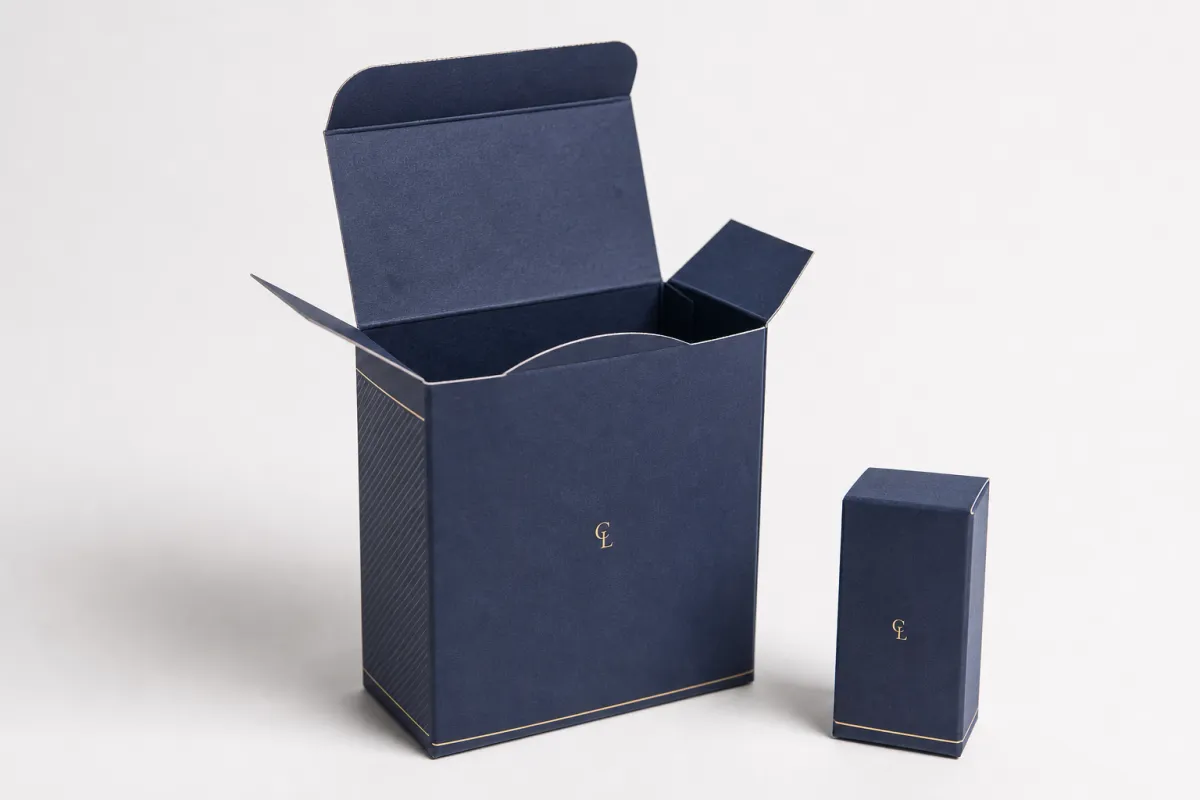
Custom Folding Cartons for supplement brands are printed outer boxes made from paperboard and shipped flat before assembly. They commonly hold bottles, jars, sachets, blisters, or stick packs, and they give the brand a larger surface area than a label ever could. In practical terms, they turn a plain container into retail-ready product packaging that can hold graphics, claims, compliance copy, lot codes, and shelf-facing personality in one structure.
Most shoppers decide how a supplement feels before they decide how a formula performs. That may sound superficial, but retail packaging works that way every day. A matte carton with disciplined typography usually reads as more credible than a generic bottle under harsh store lighting. Custom Folding Cartons for supplement brands shape that first impression, especially in categories crowded with nearly identical bottles and familiar promises.
The carton matters most in a few situations:
- Crowded shelves where the carton has to separate your product from a field of similar bottles.
- E-commerce unboxing where the package needs to feel intentional rather than assembled at the last minute.
- Variant lines such as flavor, strength, gender, or use-case differences that need clear color and copy hierarchy.
- Products with tamper-evident expectations where the carton adds another visible layer of confidence.
- Items with light-sensitive formulas where the outer box adds extra protection during storage and retail handling.
It helps to distinguish folding cartons from nearby packaging types. A folding carton is a paperboard box that ships flat and is assembled later. A rigid box uses thicker chipboard and feels more premium, but it costs more and is usually too much for everyday supplement SKUs. A shipping mailer protects products in transit, yet it is not built for retail presentation. Smart brands match the box to the channel instead of paying for a structure that never earns back its cost.
In the supplement space, custom printed boxes usually need to do a few unglamorous things very well: hold the container snugly, leave room for regulatory text, avoid crushing on a packing line, and survive warehouse handling without losing the finish. That sounds ordinary because it is. Good packaging design proves itself by preventing problems later.
How Custom Folding Cartons for Supplement Brands Work
The structure behind custom folding cartons for supplement brands is simpler than many teams expect. The carton usually depends on four pieces: the board substrate, the printed graphics, the structural style, and the finishing layer. Each one changes cost, shelf appeal, and how the box behaves once production starts.
Board substrate is the base material. Common choices include solid bleached sulfate (SBS), kraft, and recycled paperboard. SBS prints crisply and gives a polished feel. Kraft signals natural or earthy positioning and suits brands that want less of a clinical finish. Recycled board can support sustainability goals, though print results and surface consistency may vary more than brands would like. If your design depends on precise color matching and small type, that decision matters.
Printed graphics carry the brand story, supplement facts layout, ingredient callouts, and the visual cues that help a customer identify the formula quickly. This is where package branding either holds together or starts to fray. A cluttered layout reads like a flyer that lost control of its message. An orderly layout makes the product feel more trustworthy. That point matters even more for custom folding cartons for supplement brands, since shoppers often compare several similar products side by side.
Structural style is the carton shape itself. A tuck-end box is common and economical. Reverse tuck, straight tuck, auto-lock bottom, sleeve, and window cartons solve different problems. The dieline has to reflect the actual container height, closure shape, insert needs, and any display requirements such as hanging tabs or shelf-ready fronts. A box that looks perfect in a PDF and fails on the line is an expensive geometry lesson.
Finishing layer is the treatment applied after printing. Matte varnish, aqueous coating, soft-touch lamination, spot UV, foil, and embossing all change the feel and durability of the carton. Not every finish deserves the spend. A clinical omega-3 line may benefit from muted matte stock with a single spot-gloss detail, while a premium collagen SKU may justify foil on the logo. Loading every effect onto one carton usually produces a cost problem before it produces a design win.
The production flow usually follows a familiar sequence:
- Build the packaging brief and confirm the exact container dimensions.
- Create or review the dieline.
- Place artwork, compliance copy, and barcode art in the safe zones.
- Review a digital proof or physical sample.
- Print, die-cut, score, fold, glue, and pack.
Some brands also check transport performance and distribution discipline before signing off. The ISTA testing framework is a practical reference when carton performance has to survive actual shipping, not just a studio mockup. If the pack must withstand distribution abuse, the specification has to reflect that reality.
Custom folding cartons for supplement brands are not meant to replace shipping protection. They improve presentation and add a measured layer of defense against scuffs, dust, and casual handling. That is the balance. The box should feel substantial enough to protect the product, yet not so thick that it turns into dead weight.
Key Factors That Make a Carton Sell and Protect
Strong custom folding cartons for supplement brands start with the right board. Material choice affects stiffness, print quality, and the impression a shopper gets before opening the box. SBS is often the best fit for premium retail packaging because it supports fine typography and sharp imagery. Kraft works for natural, organic, or minimalist brands, though it usually softens the visual impact. Recycled board can be a smart choice, but it can also bring a rougher surface and less predictable color reproduction. None of those choices wins in every case. They are tradeoffs.
Size creates the next trap. Too much empty space inside the carton makes the product feel cheap and allows movement in transit. Too little room can crush the container, damage the cap, or slow down packing because the bottle has to be forced into place. In production, a good fit often lives inside a small tolerance band, usually around 1-3 mm depending on the closure and insert. That number may look minor on paper. On the line, it can decide whether the job runs cleanly or turns into rework.
Finish selection is where brands often overspend. Here is the practical view:
- Matte varnish gives a clean, modern look and hides fingerprints better than a glossy surface.
- Soft-touch lamination feels premium but adds cost and can limit some production choices.
- Spot UV works well when one focal point needs extra emphasis without covering the entire carton in shine.
- Foil creates a premium cue quickly, but it should support the design rather than fight it.
- Embossing adds tactility and works best when the logo or brand mark is simple enough to benefit from relief.
- Aqueous coating is a practical workhorse for many supplement cartons because it protects print without acting like a luxury tax.
For brands that care about sustainability, material selection can also align with FSC sourcing and recycled-content goals. The Forest Stewardship Council is a useful reference point if you need certified sourcing language, but the claim has to match the actual supply chain. Greenwashing is not a strategy. It invites awkward questions from buyers and informed consumers.
Readability matters as much as aesthetics. Custom folding cartons for supplement brands need enough room for supplement facts, warnings, dosage directions, barcodes, lot codes, and any required claims without burying the front panel under copy. A good box guides the eye. It gives the buyer a clear product name, one or two proof points, and enough legal structure to keep compliance from becoming a fire drill.
A useful rule sits close to the center of the issue: if the front panel needs six different messages to explain the product, the packaging design is trying too hard. One strong claim, one clear visual cue, and one obvious product name usually outperform a dozen competing headlines. Shoppers scan like humans, not like auditors. They are looking for meaning, not a transcript.
A carton that looks expensive but does not fit the bottle is still just expensive cardboard.
That line lands bluntly because the point is blunt. Fit, strength, and legibility do the real work. Premium finishes help only after the basics are solved.
| Carton Option | Typical Unit Cost | Best Use | Tradeoff |
|---|---|---|---|
| 14pt SBS, 4-color print, aqueous coat | $0.18-$0.32 at 10,000 units | Mainstream retail supplement lines | Good value, limited premium feel |
| 16pt SBS, matte finish, spot UV | $0.24-$0.42 at 5,000 units | Higher-end retail packaging | Higher setup cost, better shelf appeal |
| Kraft board, simple print, matte coating | $0.20-$0.38 at 5,000 units | Natural or eco-positioned brands | Less color pop, more rustic look |
| Soft-touch laminated carton with foil | $0.35-$0.70 at 3,000 units | Premium hero SKUs and gifting | Cost climbs fast, not for every formula |
Those numbers are not a promise. They are a planning range for many custom folding cartons for supplement brands, and final pricing still depends on size, coverage, finishing, die complexity, and volume. Even so, a rough range keeps the conversation grounded. “Affordable” means little if the unit price wrecks the margin.
Custom Folding Cartons for Supplement Brands: Step-by-Step Guide
If you want custom folding cartons for supplement brands to perform well, begin with a clear packaging brief. That brief should include exact container dimensions, closure height, fill weight, bottle material, target retail channel, expected order volume, and any special requirements like tamper evidence, hanging tabs, or insert needs. The more specific the brief, the less time everyone spends guessing and correcting guesswork.
Step one is the structure. Request a dieline from the printer or verify the one already in hand. A dieline is not decoration; it is the skeleton of the carton. It defines glue areas, folds, bleed, and panel sizes. If the bottle is 6.25 inches tall with a 1.5 inch cap, the box has to be built around that fact, not around what looked nice in a mockup.
Step two is artwork placement. Put branding, claims, dosage directions, supplement facts, lot-code location, and barcode art in the right zones. Keep important text away from folds and cut lines. That should sound basic, yet it remains one of the most common ways packaging design gets expensive. If copy lands on a seam, the printer cannot move it later without another approval round.
Step three is proofing. A digital proof or physical sample can save real money. A sample lets you check color, fold direction, board feel, and how the carton sits around the product. For a supplement launch, this step earns its keep because the cost of a bad carton is rarely limited to the box. It can slow packing, trigger retailer questions, and delay launch timing.
Step four is testing with the actual product. Do not approve custom folding cartons for supplement brands using a “similar” bottle. Similar is not the same. A pump is not a cap. A wide shoulder is not a straight wall. A 2 mm gap that seemed harmless on screen can turn into a line jam during pack-out. I have seen teams approve a neat-looking carton only to discover the closure scraped the inner panel after the first thousand units. That kind of mistake is annoyingly avoidable.
Step five is final approval. Only sign off after the carton has been checked against the real bottle, closure, and insert. Once production starts, every mistake gets multiplied across the run. That is how a small measurement issue becomes pallet-level waste.
For brands comparing how structure and presentation support a broader launch, the Case Studies page offers real packaging decisions to study. If you are comparing formats and finishing options, the Custom Packaging Products page can help frame what is possible without drifting into fantasy-budget territory.
The simplest workflow is still the best one: design first, structure second, sample third, production last. Reverse that order and the project becomes harder, slower, and more expensive than it needs to be.
Custom Folding Cartons for Supplement Brands: Cost, Pricing, and MOQ
Pricing for custom folding cartons for supplement brands depends on quantity, board stock, print coverage, finishing, die complexity, and any add-ons such as inserts or windows. If you want a meaningful quote, ask for each line item separately. Otherwise the number can look tidy until tooling, proofing, and freight show up like late fees in a hotel bill.
Minimum order quantity, or MOQ, is one of the biggest levers. Lower MOQ runs usually cost more per unit because setup costs are spread across fewer cartons. A brand ordering 1,000 units will almost always pay more per carton than a brand ordering 10,000 units, even if the same board and print method are used. That is not a trick. It is manufacturing math.
Here is a practical pricing framework for planning:
- 1,000 units: useful for pilot launches, but unit pricing is usually high.
- 3,000-5,000 units: a common middle ground for many supplement SKUs.
- 10,000+ units: better unit economics, especially if the design will stay in market for a while.
When comparing quotes, make sure every supplier is pricing the same version of the job. One vendor may quote 16pt SBS with aqueous coating and shipping included. Another may quote base print only and expect you to handle freight, proofs, and tooling separately. That is how apples-to-apples turns into apples-to-buffalo.
To keep costs under control without flattening the brand, put money where shoppers can actually see or feel it:
- Invest in a better board if the carton will sit on shelf next to premium competitors.
- Use one premium finish well instead of three finishes badly.
- Keep the dieline efficient so you are not paying for unused space.
- Choose a carton style that packs quickly on the line.
For many brands, the sweet spot is not the cheapest quote. It is the quote that supports margin, shelf impact, and pack-out speed at the same time. Custom folding cartons for supplement brands should protect the product and strengthen the brand. If the carton does only one of those things, you are paying for half a solution.
One more practical point: if the product is launching through retail and fulfillment at the same time, budget for extra samples and a buffer in the run schedule. A missed approval can cost more than a better carton spec ever would. Nobody likes paying for reprints, but spreadsheets rarely show mercy.
Process, Timeline, and Production Steps
The production timeline for custom folding cartons for supplement brands depends on complexity, but the flow itself is predictable. A simple job with a known dieline and ready artwork can move quickly. A carton with premium finishes, custom inserts, or multiple revision rounds takes longer. Fewer changes almost always means less time spent in production.
A realistic timeline often looks like this:
- Brief and measurement review - 1 to 3 business days.
- Dieline confirmation and artwork placement - 2 to 5 business days.
- Proof review and revision - 2 to 7 business days, depending on how many people need to weigh in.
- Print setup and production - about 7 to 15 business days for many standard runs.
- Finishing, packing, and freight - another few days to a couple of weeks depending on shipping distance and capacity.
Delays usually appear in the same predictable places: missing copy, barcode changes, late ingredient updates, and approval loops that keep moving the target. The press is rarely the main problem. Human indecision usually is.
If the carton has to meet broader shipping expectations, ask whether the supplier tests to standards that match the real distribution path. A useful benchmark is the EPA recycling guidance for material communication, especially if your brand wants to make recyclable packaging claims responsibly. Claims should stay accurate and specific. “Recyclable where facilities exist” is less catchy, but it is more honest.
For many supplements, the launch sequence works best in this order:
- Product formula confirmed.
- Bottle or jar selected.
- Carton dimensions approved.
- Label copy frozen.
- Carton proof approved.
- Production scheduled.
That order matters because packaging often gets treated like a side task. It is not. The carton can block shipping, delay compliance approval, and stall retail onboarding if it is left until the end.
In practice, custom folding cartons for supplement brands perform best when the packaging schedule is treated as part of the product schedule, not as a cleanup task after everything else is finished.
Common Mistakes Supplement Brands Make
The biggest mistake is overdesign. A brand can spend a lot making the carton look luxurious and still fail to explain the product. If the front panel is packed with gold foil, gradients, three taglines, and a tiny ingredient statement, the shopper learns almost nothing except that someone in the room liked effects. Good custom folding cartons for supplement brands communicate quickly. Fancy is optional. Clarity is not.
The second mistake is designing the box before the container is final. That one creates endless rework. Bottle height changes. Closures change. Insert needs change. The carton changes too, because paperboard is not stretch fabric. Start with the actual container or, at minimum, lock the container spec before artwork gets too far along.
The third mistake is ignoring tolerances. A supplement line may use pumps, scoops, desiccant packs, child-resistant caps, or blister inserts that add hidden height. A carton that fits on paper can fail during real pack-out if the closure or insert shifts the internal dimensions. That gets painful fast when the boxes are already printed and glued. No one enjoys explaining that to operations.
The fourth mistake is asking for a vague quote. If one vendor prices the carton with tooling, proofing, and freight while another leaves those items out, the “cheaper” quote is not actually cheaper. It is incomplete. Every quote for custom folding cartons for supplement brands should show unit price, plate or die charges, sample charges, freight, and any storage or kitting fees.
The fifth mistake is treating the carton as though it only needs to look good alone. It also has to work with the label, the bottle, the shelf tray, the shipper, the fulfillment line, and the retail buyer’s expectation of how the product should feel. That wider view turns a box into product packaging that actually sells.
A few more issues show up often enough to mention:
- Using tiny type for compliance copy and then wondering why the carton feels crowded.
- Picking a finish that looks premium but fingerprints immediately.
- Choosing a weak board for a heavy jar because the sample looked fine empty.
- Assuming every printer will catch design errors during proofing. They will not catch everything. That part still belongs to the brand.
Brands that avoid these mistakes usually move faster and waste less. The carton does not need to be perfect. It needs to be accurate, legible, structurally sound, and aligned with the brand promise.
Expert Tips and Next Steps for Launching
If you are preparing to order custom folding cartons for supplement brands, start with samples. Always. A sample round is worth the time because it exposes the things a flat proof cannot: how the carton feels, whether the bottle sits too loose, whether the closure rubs the inside panel, and whether the finish supports the intended brand position. That is where real packaging design starts to reveal its edge.
Ask every vendor to quote the same spec. Same board. Same size. Same finish. Same quantity. Same shipping terms. Otherwise you are not comparing suppliers; you are comparing assumptions, which is a fast way to buy the wrong thing with confidence.
Keep the visual system disciplined. A clean hierarchy, readable typography, and one or two finishes that support the message usually outperform a crowded surface with too many effects. For supplement carton packaging, the consumer is usually looking for trust, clarity, and a reason to believe. Give them that first. The glitter can stay home.
Use custom folding cartons for supplement brands strategically, not automatically. A pilot SKU may need simple printed packaging with one solid finish. A hero product in a competitive category may justify foil, embossing, or a thicker board. A bundle or seasonal line may need a different carton style altogether. Good decisions come from matching the structure to the channel and margin, not from chasing the fanciest spec on the sheet.
Before you sign off, check three things:
- Fit - does the actual bottle or jar sit correctly?
- Readability - can the shopper find the product name, benefit, and required copy quickly?
- Economics - does the carton protect margin while still supporting the brand?
If those three are right, the rest gets easier. If one of them is off, the carton will probably annoy someone later, and usually that someone is the person who has to fix the packing issue on a Friday afternoon.
For brands building out a broader line, the smartest next move is to compare two or three quotes, verify the dieline against the actual container, and then approve custom folding cartons for supplement brands only after print specs, finishes, and carton strength are locked. That is how you avoid waste, protect margin, and give the product a better shot at winning attention where it matters.
If you want a simpler rule to carry into the next project, use this one: specify the container first, test the carton with the real product, and keep one person accountable for final sign-off. That single habit saves more reprints than any fancy finish ever will.
Frequently Asked Questions
What do custom folding cartons for supplement brands actually do?
They protect the bottle or jar from scuffs, light exposure, and handling damage during shipping and retail display. They also give the brand more room for benefits, usage directions, flavors, and compliance copy. Just as important, they help a supplement look organized and credible instead of like a generic white bottle floating on a shelf.
How much do custom folding cartons for supplement brands cost?
Price depends on quantity, board stock, print coverage, finishes, and whether the carton needs inserts or special die cuts. Small runs usually cost more per unit because setup costs are spread across fewer boxes. A proper quote should separate unit price, tooling, proofs, and freight so you can see where the money is going.
What do I need before requesting a quote for supplement cartons?
Have the exact container dimensions, closure height, and any insert or hanging-tab requirements ready. Decide on quantity, board type, finish level, and whether you need tamper evidence or window cutouts. Send usable artwork or at least a brand brief so the printer is not guessing at structure or compliance space.
How long does the process take for custom folding cartons for supplement brands?
Simple projects can move quickly if the dieline is known and artwork is ready without major revisions. Complex cartons with premium finishes, custom inserts, or multiple proof rounds will take longer. Build in time for approval, because the longest delay is usually not production; it is waiting on the brand to sign off.
Which features matter most when choosing supplement carton packaging?
Fit and board strength matter first because a pretty carton that crushes is just expensive waste. After fit, choose finishes that support the product position, like matte for clinical, foil for premium, or kraft for natural. Make sure the layout leaves room for required copy, barcodes, and lot codes without making the front panel crowded.

