The Bucket Hats Unit Cost Breakdown for streetwear brand sourcing starts with a blunt fact: the logo is rarely the expensive part. The silhouette, fabric, and finish drive most of the number. Brim width, crown depth, lining, sweatband, stitching density, and packing can move unit cost faster than the artwork, which is why a serious quote should begin with measurements and materials, not a vague style reference.
Streetwear teams get caught by this constantly. They send a screenshot, ask for “something similar,” and then wonder why one supplier prices the hat at three dollars and another lands above six. Those quotes are not truly comparable. If the spec is fuzzy, the factory fills in the blanks with assumptions, and assumptions are expensive. A real costing conversation needs shell fabric, panel count, brim structure, decoration method, packaging, and target MOQ.
Bucket hat unit-cost drivers for streetwear sourcing
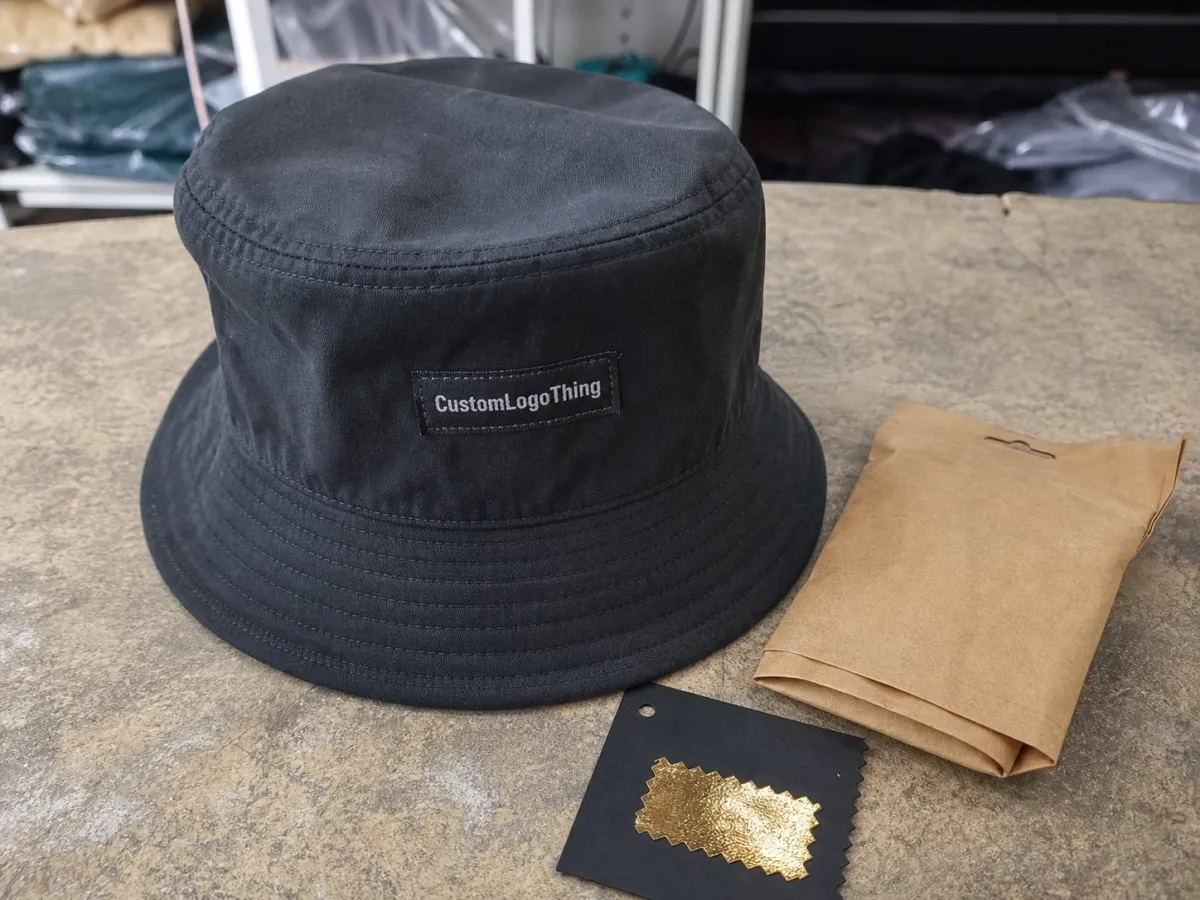
Not every bucket hat is the same product with a different print. A shallow crown with a short brim uses less fabric, sews faster, and usually costs less than a deeper streetwear shape with a wider brim and heavier internal structure. Across hundreds or thousands of pieces, those differences become real money.
The fastest way to get a clean quote is to describe the hat like a production team would. State crown depth, brim width, panel count, seam allowance, stitch row count, and whether the body should be soft and unstructured or built to hold shape. Ask for “bucket hat” and you get a rough estimate. Ask for a 58 cm head circumference, 8 cm brim, 9 cm crown depth, matching thread, and interior taping, and the factory can start costing with confidence.
If the quote only says “bucket hat with logo,” you do not have a quote. You have a guess with formatting.
The split between sample cost, bulk cost, and landed cost matters just as much. A sample may run $45 to $120 because it requires one-off setup, extra handling, and sometimes hand finishing. Bulk unit cost might sit between $2.40 and $5.80 ex-factory for a straightforward custom hat. Landed cost can rise another $0.60 to $3.50 once freight, duties, brokerage, and domestic delivery are added.
For a useful breakdown, every line item should connect to a visible decision on the hat. If you cannot point to the part on the product, it should not be treated like a mystery charge.
Fabric, shape, and trim choices that change the retail look
Cotton twill is the safest option for most streetwear programs because it prints well, accepts embroidery cleanly, and holds shape without fighting the sewing line. Heavy canvas gives the hat more body and a stronger premium feel, but it can slow production and feel stiff if the finish is wrong. Nylon is lighter and useful for sport-adjacent drops, although sheen and hand feel need attention. Washed denim has a strong visual identity, but it adds dye variation, shrinkage questions, and extra risk in bulk matching.
Shape changes the mood more than many teams expect. A shallow crown feels sharper and more fashion-forward. A standard crown is the easiest to wear across head sizes and tends to work well for broader distribution. A deep crown gives a more relaxed, oversized look, which suits some streetwear capsules, but it can look sloppy if the proportions are off by even a small amount. Brim width matters too: a short brim feels casual, a medium brim is the most versatile, and a wide brim can push the hat into a more directional retail story.
Trim choices are where a hat starts feeling premium or merely inexpensive. A lining adds structure and comfort. Interfacing helps the brim hold shape. Chin cords move the product toward utility. Eyelets improve airflow and add visual rhythm. Stitch density affects the finished look more than most buyers guess; 6 to 8 rows on the brim usually looks tighter and more intentional than a loose, sparse stitch pattern, especially on heavier fabrics.
For seasonal drops, cotton twill or nylon often makes the most sense because color control and lead time are easier to manage. For core products, a better canvas or denim build can support a more distinctive brand identity. If the target is repeat wear, the cheapest option is not always cheap once returns, complaints, and weak shelf appeal are factored in.
Artwork, branding, and decoration specs that affect quotes
Embroidery is still the most common route, but stitch count and placement matter a lot. A small front logo with 4,000 to 6,000 stitches behaves very differently from a dense patch-style mark with 12,000 stitches and layered fill. More stitches mean longer machine time, more thread consumption, and a higher chance of distortion on a curved surface.
Patch work is often the smarter choice when the art is detailed. A woven label or faux leather patch can hold fine lines without forcing embroidery to do work it was never built for. Printed logos can be efficient at scale when the fabric and ink system match well. Direct embroidery still wins for simpler graphics that need a clean premium finish and limited setup.
Clear artwork saves money, but it also saves time, which is often the real cost. Vector files, Pantone references, and exact placement measurements reduce back-and-forth. “Center front” and “35 mm above brim seam” are not the same instruction. If one buyer means the midpoint of the crown and another means the visible face of the hat, the first sample can miss the mark even if everyone thought they were aligned.
Inside branding matters too. Woven main labels, size labels, care labels, and interior taping each add a small amount, then stack into a meaningful difference. The same is true for multi-hit decoration. One logo is manageable. Two or three placement points increase setup, slow approval, and raise the chance that placement drifts between units. The result is inconsistent product that looks cheap even when the materials were not.
Before asking for pricing, confirm the art against the build. A quote is only useful when the decoration plan is tight enough to survive production, not just render well on a mood board.
Price bands, MOQ, and unit cost targets for bulk buys
There is no universal bucket hat price. There are only bands, and they shift with volume, fabric, decoration, and how custom the build becomes. If a quote looks too cheap, the likely explanation is one of three things: the spec is thin, the quality is weak, or something important has been left out.
| Order size | Typical build | Target ex-factory unit cost | What usually drives the number |
|---|---|---|---|
| 300-499 pcs | Cotton twill, small embroidery, basic label set | $4.80-$7.20 | Higher setup burden, lower sewing efficiency, tighter MOQ rules |
| 500-999 pcs | Standard twill or canvas, woven patch or embroidery | $3.60-$5.90 | Better machine efficiency, more predictable trim usage, lower sample-to-bulk spread |
| 1,000-2,999 pcs | Streetwear core build, upgraded sweatband, cleaner finishing | $2.90-$4.80 | Improved material buying power, smoother sewing flow, stronger price breaks |
| 3,000+ pcs | Custom fabric, premium trim, tighter branding control | $2.10-$3.90 | Volume efficiency, better freight packing, lower per-unit overhead |
Those numbers are not fantasy. They are the range where a real quote should usually land for a custom streetwear bucket hat, assuming normal decoration and a sane spec. Washed denim, heavy canvas, custom dyeing, special lining, or multiple branding locations push the cost upward. A single logo on stock fabric pulls it back down.
MOQ changes with construction. A basic cotton twill hat often has a lower minimum because the fabric is common and the process is familiar. Special dyeing, custom-printed shells, or multiple decoration positions usually raise the minimum because the factory is committing more material and more setup time.
For comparison, ask suppliers to split pricing into shell, trims, decoration, packing, and shipping. Then compare the quote against the approved spec rather than against the headline number alone.
Sample approval, production process, and lead time
The usual process is simple enough: inquiry, brief, quote, mockup, sample, revisions, bulk approval, production, packing, and dispatch. The difficult part is the time between those steps.
Sample lead time is often 5 to 12 business days, depending on whether the factory already has the fabric and trims on hand. Bulk production usually begins only after final sign-off and can run 12 to 25 business days for a standard program. Washed denim, heavy canvas, custom dyeing, or dense decoration can push that longer. Repeat orders move faster only when measurements, materials, and artwork are already locked.
Delays usually come from four places: artwork changes, color matching, sample revisions, and late approvals. That is why the cleanest quotes are built around a proper spec sheet with measurements, fabric references, decoration placement, packaging instructions, and a delivery window. The cleaner the brief, the less the factory has to guess, and the less money gets burned on rework.
Packaging and transit matter here more than many apparel teams want to admit. A hat can look perfect at the end of the sewing line and still arrive bent or crushed if the carton plan is weak. Standard references such as Packaging and ISTA are useful if you need a quick framework for packing and transit testing.
QC checkpoints that keep bulk orders consistent
Quality control on bucket hats is not glamorous, but it decides whether the drop feels premium or sloppy. The core checkpoints are straightforward: fabric shade, brim symmetry, stitch tension, logo placement, and size consistency. If those five drift, the product looks wrong even when nobody can describe the problem immediately.
Pre-production samples are helpful, but they are not enough by themselves. A first-article check or bulk top sample matters because it proves the factory can repeat the approved sample rather than make one good unit and hope the rest follow.
Tolerances should be written before bulk starts. For many apparel programs, a few millimeters of variation may be acceptable, but the exact standard needs to be documented. A logo that sits 5 mm off center may be fine on a soft casual hat and unacceptable on a sharper, more structured release. Crown depth, brim width, and stitch pitch should also be fixed in the spec.
A practical inspection plan also includes approved sample photos, a signed spec version, and a clear note on any acceptable variation. If the line is positioned as premium, consistency becomes part of the product value.
If sustainability claims matter to the collection, ask whether the paper stock, inserts, or hangtags can use FSC-certified material. It is a small detail, but brand teams often lose credibility by saying the right thing and sourcing the cheapest possible insert behind the scenes.
Shipping, packaging, and landed cost decisions
Packaging changes the math more than most buyers expect. A bucket hat is soft, which sounds easy, but the way it is packed still affects freight cost, carton density, and damage risk. Flat packing can reduce volume. Nesting hats or using a good inner form can improve carton efficiency without flattening the crown. Polybags, size stickers, hangtags, inserts, and master cartons all add cost.
Air, sea, and courier each solve a different problem. Air is fast and expensive, so it makes sense for launches with tight dates or smaller quantities. Sea is slower but usually better for margin when the calendar allows it. Courier works for samples or very small rush runs, although the per-unit freight can become unpleasant fast. If a buyer forgets landed cost and prices the line off ex-factory only, margin gets thinner than the brim on a cheap fashion hat.
The clearest way to think about it is simple:
- Product cost: shell, trims, decoration, and labor.
- Packaging cost: polybag, hangtag, insert, carton, labels.
- Freight cost: air, sea, or courier.
- Import cost: duty, brokerage, and domestic delivery.
That landed number is the only number that matters for resale planning. A hat that costs $3.10 ex-factory can land at $4.20 or $5.90 depending on shipping mode and carton efficiency. Better packing can improve margin without changing the product.
Action steps to request a clean bucket hat quote
Send one brief with the shell fabric, trim list, decoration method, packaging, sample requirement, target MOQ, and delivery date. Add measurements, logo artwork, Pantone references, and any notes on lining or sweatband construction. If the brief is thin, the quote will be thin too.
Then ask for the quote to be split into separate lines: shell, trims, decoration, sample, packaging, and shipping. That is the only fair way to compare offers. Two factories can quote the same headline number and mean different things. One includes setup. One does not. One includes packed cartons. One treats them as extra.
Request one sample round first, then approve bulk only after fit, branding, and color are confirmed. If the sample is wrong, fix the spec. A tight brief, a clear approval trail, and a realistic unit target usually do more for the final margin than aggressive bargaining ever will.
Use this breakdown to decide whether to simplify the build, raise MOQ, or push for a better landed price.
Frequently Asked Questions
What does a bucket hat unit cost quote usually include for streetwear orders?
A proper quote should separate the hat body, trims, decoration, sample charges, packing, and any setup costs. Ask whether freight, duties, and domestic delivery are excluded, because those line items change the final number more than most first quotes do.
What MOQ is realistic for custom streetwear bucket hats?
Simple builds often start lower than custom fabrics, specialty washes, or multi-location branding. The more custom the construction, the more likely the factory is to ask for a higher Minimum Order Quantity or a higher unit price to cover setup.
Which decoration method is most cost-efficient on bucket hats?
Small embroidery is often efficient at moderate volume. Woven patches work well when you want detail without a large stitch count, and printed decoration can be the lowest-cost option when the artwork and fabric allow it.
How do I compare two bucket hat factory quotes fairly?
Make sure both quotes use the same fabric weight, brim width, decoration size, and packing method. If one quote looks cheaper, check whether setup, sample work, or shipping was quietly removed from the math.
How long does bucket hat production usually take after sample approval?
Timing depends on fabric availability, decoration complexity, and order size, but bulk production usually starts only after final sign-off. A clear spec sheet and quick approvals are the easiest way to keep the schedule from drifting.
For streetwear sourcing, the best result usually comes from a simple build, a disciplined approval process, and a quote that shows its work.

