The bucket Hats Factory Quote checklist for trade show orders is the difference between a clean purchase order and a scramble that shows up, inconveniently, on move-in day. Bucket hats look simple. The quote rarely is. Freight, decoration, carton counts, sampling, and split delivery can move the landed price far more than the hat body itself.
Why Trade Show Bucket Hat Quotes Go Wrong
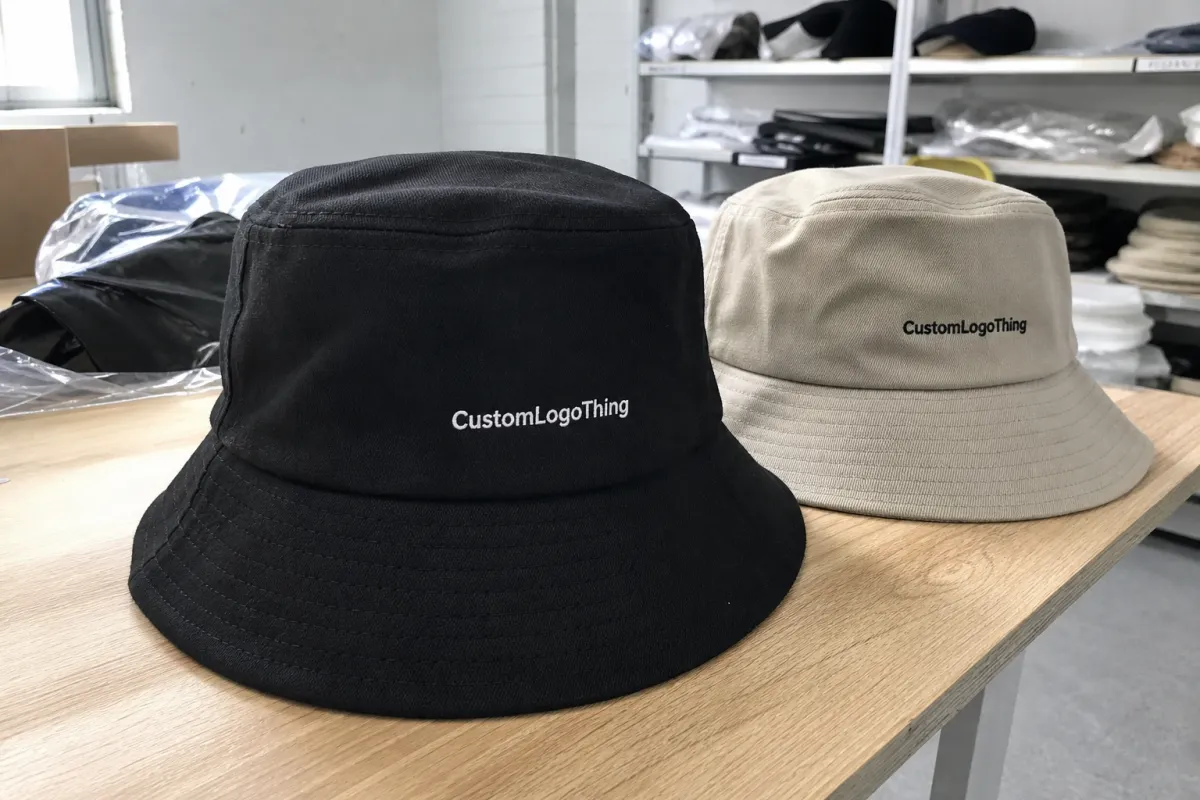
Most quote problems are not really pricing problems. They are information problems. A factory can only price what it understands, and trade show orders tend to arrive with gaps: no exact delivery date, no decoration method, no carton requirement, no clue whether the hats are for staff, giveaways, or VIP kits.
That is why the bucket Hats Factory Quote checklist for trade show orders should be treated as a control document, not a formality. It should force four things into view before anyone compares numbers: the product spec, the branding method, the packing method, and the timing. Miss one, and the quote may look competitive while quietly excluding a cost that appears later.
The cheapest sample is rarely the cheapest landed order once freight, decoration, carton counts, and split shipments are included.
There is also a practical buyer pattern that shows up again and again. A low unit price can hide a more expensive overall job if the factory uses extra handwork, slow decoration, heavy packaging, or a shipping method that does not match the deadline. A $1.10 bucket hat with a $0.45 patch, a $0.20 polybag, and a rushed air shipment can cost more than a $1.45 hat that ships in one carton line and needs less manual finishing. The number on the first line of the quote is not the whole story.
- Product: exact hat shape, fabric, brim width, and fit.
- Branding: embroidery, patch, print, woven label, or mixed decoration.
- Packing: polybag, insert card, carton count, barcode, and master carton setup.
- Timing: sample approval, bulk run, inspection, and transit window.
A quote that does not address those four items is not ready for comparison. It is only a rough estimate.
Product Details That Make the Quote Accurate
Start with the hat itself. Bucket hats can look almost identical in a product photo and still be very different in production. A soft giveaway hat, a structured retail-style piece, and a packable event hat each use different fabric behavior, sewing time, and decoration choices.
For trade show use, the factory should know the crown height, brim width, fabric weight, sweatband requirement, eyelets, lining, and closure style if there is one. A 280-320gsm cotton twill hat is a common baseline for promotional orders because it is easy to sew, holds embroidery well, and feels substantial without becoming too expensive. A washed cotton version usually costs more because the finish is less uniform and the handling is more involved. Nylon, recycled polyester blends, and water-resistant fabrics can make sense for packable event hats, but the buyer should confirm how the finish looks in person, not just in a render.
Fit and use case matter more than people expect. A hat worn by booth staff for eight hours has different requirements than a hat handed out at a registration desk. Staff hats need better sweatband behavior, sturdier stitching, and a shape that survives repeated wear. Giveaway hats can be lighter and simpler. VIP pieces often justify improved trim, cleaner finishing, and packaging that feels more considered.
Decoration placement is another point that affects the quote immediately. Front embroidery, side patches, underbrim print, and woven labels all carry different setup and labor profiles. Tiny logos and dense text are the common troublemakers. A logo that looks crisp on screen can collapse on curved fabric if the stitch count is too low or the letters are too small. That is not a design failure; it is a production constraint. The factory should be asked to flag those limits before sampling starts.
- Giveaways: lighter fabric, lower decoration complexity, tighter cost control.
- Staff uniforms: better fit, sturdier construction, more repeatable color.
- VIP gifts: richer hand feel, improved trim, more careful packing.
- Retail or reseller stock: repeatable sizing, consistent carton counts, stable decoration.
It also helps to explain how the hats will be used at the show. Orders for door drops, conference kits, retail tables, and booth staff are not interchangeable. A factory that understands the use case can often suggest a better build before the quote hardens into a bad spec.
Specs That Shift Cost: Materials, Decoration, and Packing
Three things move the price most often: material, decoration, and packing. Buyers sometimes focus only on the body fabric, but the factory is pricing the full job. Small spec changes can have a larger impact than expected, especially on lower-volume trade show orders.
Material choice sets the baseline. Cotton twill is still the default for many promo bucket hats because it is familiar, predictable, and easy to decorate. Washed cotton usually adds cost because the surface finish is less uniform and the factory has to manage a more variable appearance. Canvas can improve structure but may also add weight and sewing time. Nylon and recycled blends are common on packable styles and weather-friendly event hats, though the hand feel may be less substantial unless the construction is carefully chosen.
If sustainability claims matter, the buyer should ask for the exact fiber blend and some proof of the claim path. Recycled content is not the same as verified recycled content. A factory can usually state what it used; confirming how that claim is supported is a separate step.
Decoration method changes the quote as much as fabric does. Embroidery is durable and often the cleanest option for simple logos. Patches are useful when the artwork has fine detail or needs a more retail-like look. Printed decoration can keep unit cost under control if the design is simple and the color count is restrained. Woven labels and small badge applications are tidy, but they still require setup and placement control. The factory should state where the cost lives: digitizing, machine time, appliquie, hand sewing, or patch application.
Packing is the quiet cost driver. Polybags add material and labor. Insert cards, size stickers, hang tags, barcode labels, and retail-ready cartons all add time. A hat packed to protect the brim may ship in a larger carton than a flat-packed version, which affects freight density. On a trade show order, that can make the “cheaper” quote more expensive once the cartons are on a pallet.
| Spec choice | Typical quote impact | Best use | Buyer watchout |
|---|---|---|---|
| Cotton twill 280-320gsm | Baseline pricing | Standard promo runs | Can feel plain without upgraded trim |
| Washed cotton | + $0.15-$0.35 per unit | Retail-leaning gifts | Shade variation is normal |
| Nylon or recycled blend | + $0.20-$0.50 per unit | Packable event hats | Confirm finish and hand feel first |
| Embroidery | + $0.25-$0.60 per unit | Durable simple logos | Tiny text can lose clarity |
| Woven or printed patch | + $0.35-$0.90 per unit | Detailed branding | Patch size affects labor and balance |
| Individual polybag and insert | + $0.08-$0.25 per unit | Retail-ready or VIP packs | Raises labor and freight volume |
For packed event orders, the seller should also state carton count and carton dimensions. Those two numbers affect storage, warehouse handling, and transport quotes in a way that unit price alone never shows. If the shipment must survive long transit or a rough receiving process, carton testing matters. The International Safe Transit Association standards are a useful reference point for those conversations, because a visually nice box is not automatically a durable one.
Pricing, MOQ, and Unit Cost
A proper quote should break the price into pieces. If the factory only gives one number, the buyer has no real way to compare it with another supplier. The better version shows base hat cost, setup, sampling, decoration, packing, and shipping assumptions separately.
MOQ deserves a close look. A 300-piece order and a 3,000-piece order live under different economics. At low quantities, setup and labor are spread across fewer units, so the unit cost rises. At higher quantities, the unit cost usually drops, but inventory risk grows. If a team only needs 450 hats for a single trade show, chasing the lowest per-unit price at 2,000 pieces can create more waste than savings.
Factories should be asked for tiered pricing. Request numbers at 300, 500, 1,000, and 3,000 pieces if possible. The spread between those tiers often reveals whether the lower price is meaningful or just cosmetic. Sometimes the difference from one level to the next is only a few cents. That is not enough to justify extra stock. Other times, the jump is large enough to change the decision entirely.
Pay attention to the shipping term too. EXW, FOB, and delivered pricing are not the same comparison. EXW can appear cheaper because it excludes pickup and export handling. FOB includes more of the export-side cost. Delivered pricing is easiest to compare only if the destination is named clearly, because a delivered quote to a warehouse and a delivered quote to a trade show city are not equivalent. A good quote should say exactly where the risk transfers and what is excluded.
The lowest quote is not the best quote if freight, artwork, packing, or local handling reappear later as add-ons.
For budgets, a useful working range is this: basic promotional bucket hats from offshore factories can sometimes sit below $1.50 FOB at meaningful volume, while more finished or decorated versions often move into the $1.60-$3.50 range depending on fabric, patching, and packing. Rush orders, small runs, and premium packaging can push past that quickly. Those figures are not universal, but they are realistic enough to keep a buyer from being surprised when the first quote arrives.
Ask the factory one more thing: whether the quoted price assumes a stable fabric lot. If the order will be repeated later, lot consistency can matter more than saving a few cents on the first run. A low price is less useful if the second order comes back slightly different in shade, texture, or trim.
Process, Timeline, and Lead Time
Trade show timing leaves little room for improvisation. The production sequence usually runs the same way: inquiry, brief, artwork review, digital proof, sample, bulk production, inspection, and dispatch. If one stage slips, the next stage compresses. That is why proof approval should be treated as a real gate, not a casual step.
For simple bucket hats with straightforward embroidery, a factory may quote roughly 12-15 business days after proof approval. Add Time for Custom fabric dyeing, complex patches, lining, special labels, or multiple decoration zones. Sampling often takes 5-10 business days, sometimes longer if the spec is unusual or the logo needs adjustment. Transit can be another variable entirely. Air freight may rescue a deadline, but it can also change the landed cost by several dollars per unit, which matters on a giveaway item.
Seasonal load is easy to ignore and hard to recover from. A factory may accept an order while already filling its sewing schedule. That is why the quote should show whether the production slot is actually reserved or merely estimated. Buyers should also ask about split shipment options. If part of the order can move by air and the rest by ocean, the show can still be stocked without paying air rates on every piece.
- Rush production: useful when the deadline is fixed, but it usually carries a premium.
- Split shipment: useful when only part of the order must arrive first.
- Air freight: best for urgency, not for low-cost distribution.
- Buffer time: the easiest protection against proof revisions and transit delays.
The practical buyer lesson is simple: a cheaper quote with no schedule attached is not really cheaper if it misses the event. Time has a price, even when it is not written on the line sheet.
Artwork, Branding, and Compliance Checks
A factory cannot quote accurately if the artwork file is weak. Send a vector logo, preferred Pantone references if color matters, placement notes, and any text limits that apply to the decoration zone. A JPEG can help as a reference image, but it is not enough for production. The cleaner the input, the faster the quote stabilizes.
Small logos create more trouble than large ones because stitching and printing behave differently on curved panels and narrow brims. Ask the factory to confirm minimum line thickness, stitch density, and safe placement size. If the logo is too fine for embroidery, a woven patch or printed badge may be a better fit. That is not a downgrade. It is a better engineering choice for the hat.
Compliance checks are easy to skip and painful to fix late. Retail-ready or distributed orders may need fiber-content labeling, country-of-origin marks, carton labels, and barcode placement that matches the buyer's receiving rules. If the hats will move through a retailer, a show organizer, or a kit assembly vendor, the carton marking standard should be defined early. Mixed cartons and multi-destination shipping need even more care because the packing spec and the receiving spec can conflict if they are not aligned.
If sustainability paperwork is part of the order, ask for the relevant documentation at the quote stage, not after production begins. Claims about recycled content, paper inserts, or certified materials should be matched to the actual spec. For printed cards and inserts, FSC-certified stock may be useful, but only if the printer and the factory can both support it in practice. Standards only help when they are matched to the real production chain.
One of the best warning signs is not a refusal. It is a cautious answer. A supplier that says a patch is better than direct embroidery for a small curved logo is usually protecting the job. A supplier that says yes to everything without checking stitch limits or color variation is the one to watch.
How to Compare Factories Without Guessing on Quality
Price matters, but quote detail matters more. A reliable factory explains materials, decoration, packing, tolerance, and delivery assumptions in plain language. A weak one sends a single number and waits for the buyer to discover the missing pieces later.
Response quality is one of the fastest signals available. If the supplier asks for measurements, use case, quantity breaks, artwork format, and destination, that is usually a good sign. It means the factory is thinking about the order as a production job instead of a sales lead. A fast one-line answer is not automatically bad, but it rarely gives enough control for trade show work.
Ask for sample photos of similar bucket hats, inspection options, and carton details. Consistency matters more than one attractive sample because event programs depend on repeatable color, stable branding, and accurate carton counts. If a repeat order is likely, ask whether the factory can hold the same fabric lot or note a sensible substitution path if the original cloth is unavailable. That question often separates a real production partner from a quoting service.
The comparison should be practical, not theatrical:
- Transparent factory: lists materials, method, packing, timeline, and shipping term.
- Vague factory: gives a price first and details later.
- Responsive factory: asks for artwork, use case, and quantity tiers.
- Risky factory: avoids questions about lead time, carton count, or replacement policy.
That is the real purpose of the bucket hats factory quote checklist for trade show orders: not to make the buying process feel formal, but to expose the assumptions before they turn into delays or invoice surprises. A quote with clear specs and clear timing is worth more than a cheaper number that leaves the hard parts unnamed.
The strongest order plans are usually the boring ones. They define the hat, define the decoration, define the packing, and define the deadline. That is not flashy, but it is how trade show inventory arrives on time and in the right shape.
Frequently Asked Questions
What should be included in a bucket hat factory quote for trade show orders?
The quote should show fabric, decoration method, MOQ, packing, lead time, and delivery terms. It should also state whether sampling, setup, and freight are included or billed separately.
How do MOQ and unit cost affect bucket hats for a trade show?
MOQ affects how efficiently the factory can spread setup and labor across the run. Unit cost usually drops at higher quantities, but freight, storage, and leftover inventory still need to be counted.
Which decoration method is best for a factory quote on promotional bucket hats?
Embroidery is durable and works well for simple logos. Patches suit more detailed artwork, and print can help when speed or lower setup cost matters more than texture.
How long is the typical lead time for trade show bucket hat orders?
Simple runs may take around 12-15 business days after proof approval, plus sampling and transit. Complex specs, rush requests, and peak season schedules can extend that timeline quickly.
What files do factories need to quote bucket hats accurately?
Send a vector logo, placement notes, size or spec preferences, and any color targets. A reference photo helps the factory quote the right shape, trim, and finish on the first pass.


