Dad Hats Factory Quote Request: What Buyers Miss First
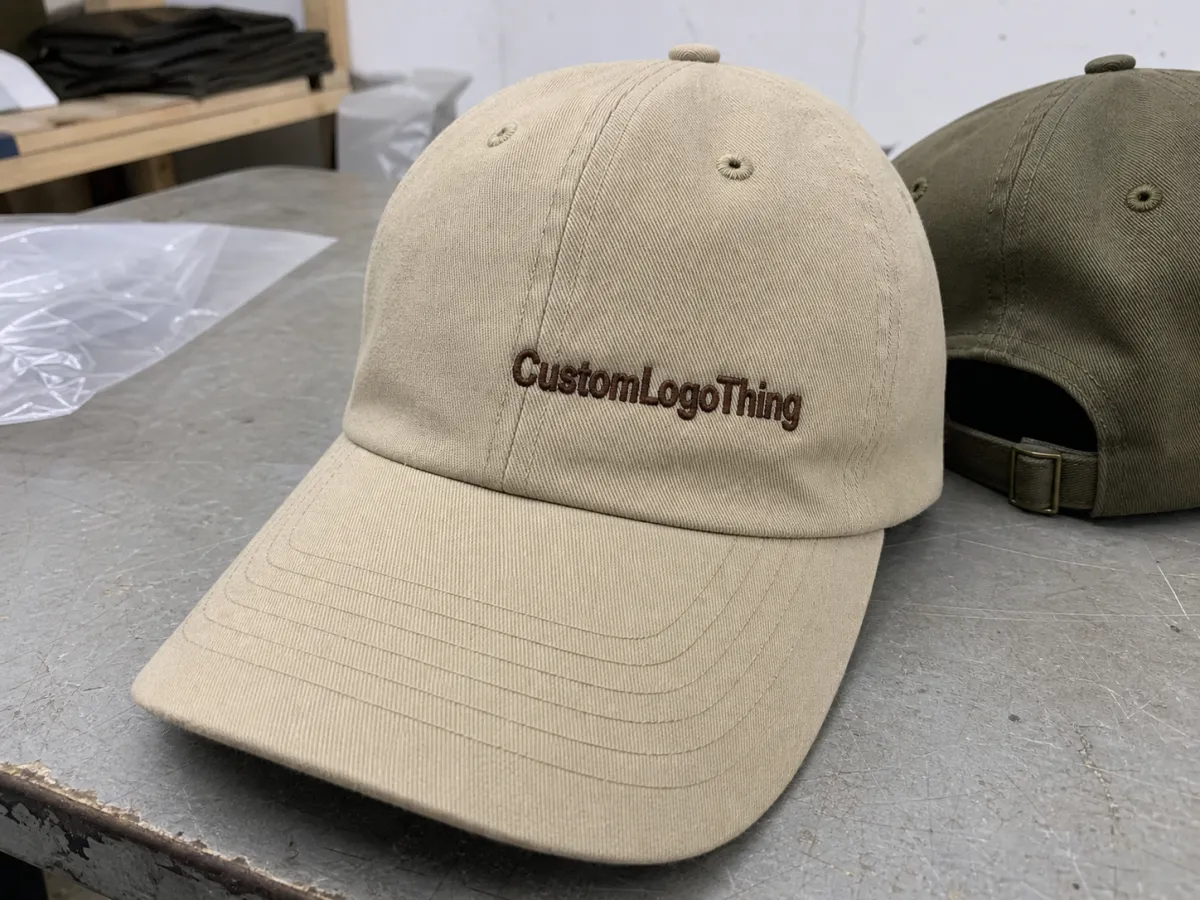
The fastest way to get a useful dad hats Factory Quote Request answered is to send production details, not just a logo. If the factory has to guess the crown shape, closure, fabric finish, or wash treatment, the first number is usually a placeholder. That creates extra rounds of questions and makes it harder to compare suppliers on the same basis.
On dad hats, price changes less from the artwork than many buyers expect. A one-color logo can still land in very different cost tiers depending on whether the cap is unstructured, lightly structured, washed, pigment-dyed, or finished with a brass buckle instead of a basic plastic adjuster. The decoration matters, but the build often matters more.
Buyers usually have three different goals. One order is for promotions and needs the lowest possible price. Another is for retail and needs cleaner materials and a better hand feel. A third is for repeat brand or team use and has to match every time. Those are not the same job, so they should not get the same quote assumptions.
A low quote is not useful if it is based on the wrong cap construction.
The main risk is quoting a generic six-panel cap when the buyer actually wants a washed dad hat with a woven patch and custom inside label. That quote may look competitive until the missing pieces are added. A proper quote should state what is included, what is optional, and which choices will change the final cost.
Product Details That Belong in the First Email
Good quotes start with the basics: fabric, structure, brim, and closure. The factory needs to know whether the cap is 100% cotton twill, brushed cotton, pigment-dyed cotton, denim, or a blend. It also needs the build: unstructured or structured front, pre-curved brim, and the closure style. A self-fabric strap with a brass buckle is not priced the same as hook-and-loop or a basic plastic adjuster.
- Fabric: cotton twill, brushed cotton, pigment-dyed cotton, denim, or blended cloth.
- Structure: unstructured for a relaxed silhouette, or lightly structured if the front needs more shape.
- Brim: pre-curved, flat-sewn, or reinforced with a firmer insert.
- Closure: strap and buckle, metal clasp, snapback, or hook-and-loop.
Decoration details belong in the first message too. State the logo size, placement, and method: direct embroidery, 3D puff embroidery, woven patch, printed patch, woven label, side hit, or back embroidery. A front logo that spans 2.25 inches is a different production task from a 3.5-inch mark that stretches wider across the crown. If the cap needs more than one decoration location, say so early so the quote includes all labor.
Color instructions should be practical. Pantone references help, but the factory also needs to know whether the cap is washed, garment-dyed, or expected to match a specific thread family. Washed fabric will vary slightly by nature. If you want contrast stitching, specify the thread color and where it should appear. If the logo must sit low on the crown, include that as well. Specific instructions reduce revision rounds.
Specs That Change Fit, Decoration, and Durability
Fit is a production issue, not a styling detail. Buyers often assume casual headwear is forgiving, but crown depth, front panel shape, and strap range determine whether the hat sits naturally or collapses in a way that looks accidental. A low-profile dad hat often sits around 3.25 to 3.75 inches in crown depth, though that is a working range rather than a rule. Some runs are softer and flatter; others carry more body.
Construction details shift both cost and wear. Panel count affects cutting and stitching. Eyelet count affects ventilation and finish time. Sweatband type changes comfort, especially for repeat wear. Brim insert thickness changes how the hat feels in hand and how well it keeps its curve after packing and shipping. Seam finishing matters too, because it affects how neat the cap looks when it comes out of the box.
Decoration is where small technical choices become visible fast. Tight text, narrow curves, and multiple color changes increase stitching time. A simple front logo under 8,000 stitches is usually easier to price than a detailed design above 12,000 stitches. Patches can help with larger runs, but they add setup and attachment steps. If the design needs front and back decoration, or if a woven label should be sewn into a side seam, include that in the first request.
The same logo does not behave the same on every fabric. Thick embroidery that looks crisp on twill may sit differently on brushed cotton or a heavily washed cap. A patch can hide some of that variation. Direct embroidery cannot. That is why experienced buyers ask for both the decoration method and the fabric type before they compare suppliers.
My practical rule is simple: if a choice changes wear, stitch time, or material use, it belongs in the first request. Crown shape, strap style, brim feel, logo size, wash finish, and label plan all need to be decided before quoting starts. Otherwise the first number is just a rough estimate.
Pricing, MOQ, and Unit Cost Benchmarks
Most dad hat pricing breaks into the same buckets: blank cap cost, decoration, digitizing, sample fee, packaging, and freight. Some factories quote only the cap and decoration. Others bundle a few extras and leave shipping for later. That is why two quotes can look close on paper and still land far apart once cartons, labels, and freight are added. A strong dad Hats Factory Quote request asks for the full picture early.
MOQ, or Minimum Order Quantity, is another place where the math needs to be understood rather than wished away. Smaller runs usually carry a higher unit cost because setup gets divided across fewer pieces. Digitizing, sample handling, label setup, and packing prep do not shrink just because the order is small. On 100 pieces, those fixed costs are noticeable. On 5,000 pieces, they matter less.
| Order Size | Typical Unit Range | What Usually Affects the Price | Best Fit |
|---|---|---|---|
| 100-299 pcs | $4.50-$8.00 | Setup fees, sample approval, low-volume labor | Events, pilot drops, internal programs |
| 300-999 pcs | $2.90-$5.20 | Decoration method, closure type, packaging | Promo orders and small retail tests |
| 1,000-4,999 pcs | $2.10-$4.20 | Stitch count, color changes, label options | Brand launches and repeatable programs |
| 5,000+ pcs | $1.75-$3.40 | Material selection, production efficiency, freight | Core retail, seasonal replenishment, wholesale |
Those ranges assume a straightforward cotton twill dad hat with one main decoration area and standard packaging. Add a woven patch, custom inner label, specialty wash, or premium closure hardware, and the unit cost moves. Digitizing often falls in the $15-$60 range for a basic logo. A pre-production sample frequently lands around $30-$120 before shipping, depending on decoration and construction. Freight can be modest or irritating in a hurry, so it should not be hidden.
It also helps to separate one-time costs from recurring costs. Digitizing is usually a setup fee. Custom labels, sewn patches, and decorated samples may be charged once or every run depending on the factory. That distinction matters when comparing a short run to a reorder. A slightly higher unit price with lower setup can be the better deal if the first order is small.
Process and Timeline From Artwork to Ship Date
The cleanest production path usually follows the same sequence: inquiry, quote, mockup, approval, digitizing, sample, bulk production, quality check, packing, and shipment. Once buyers understand that sequence, the schedule becomes easier to manage because each step has a purpose. A complete quote can often come back in 1 to 2 business days. Mockups may take another 1 to 3 days, especially if the artwork needs cleanup or the placement is not locked yet.
Sampling usually takes the most patience. A blank sample may move quickly. A decorated pre-production sample more often needs 5 to 10 business days before shipping. Bulk production for a simple run commonly lands around 12 to 20 business days after sample approval. That range shifts with order size, decoration complexity, and backlog. Washed fabric, custom-dyed panels, and custom labels all add time.
Rush orders exist, but they compress the available steps and can increase cost or raise the risk of mistakes. For launch dates, trade shows, or retail replenishment, the safer approach is to plan backward from the ship date and leave room for sample review and minor corrections. A schedule with no buffer is fragile.
Quality control should also be visible before approval. For warehouse-bound orders, ask about carton strength, inner packing, and drop resistance. The ISTA testing standards are useful for thinking about transit conditions because the cap that leaves the factory neatly is not always the cap that arrives neatly. For paper hangtags, insert cards, or mailers, FSC certification gives buyers a straightforward way to check paper sourcing.
How We Keep Repeat Orders Consistent
Repeat orders are where a factory either proves its system or exposes its gaps. A new quote is easy to make look attractive. Matching the previous run is harder. Brands that reorder dad hats care about saved specs, approved artwork files, and recorded color references more than they care about a fresh low number. If the first run worked, they want the second to match without another round of guessing.
That means the factory should track the details that actually matter: thread color codes, patch material, closure hardware, panel shape, label placement, and packaging format. If the first order used brushed cotton twill with a brass buckle and a 2.5-inch woven patch, the reorder should not quietly switch to another cloth or a lighter buckle unless the buyer approves it. That sounds obvious, but it gets missed often enough to matter.
Seasonal drops and regional programs make consistency even more valuable. If a spring release restocks in summer, the shade, crown height, and finishing should stay within the approved range. The same applies to team programs and franchise orders, where buyers want the cap to look like the same item every time it is reordered. Once the spec is locked, a good factory keeps the record clean so the next production run does not require a fresh sample chase.
Good records also reduce correction risk. Fewer corrections mean fewer delays, fewer sample rounds, and fewer surprises after approval. If a supplier cannot tell you what was approved last time, that is a system problem, not a paperwork problem. You want to know that before the cartons are packed.
How to Compare Factory Quotes Without Getting Burned
Comparing hat quotes only works if the specs match. Same fabric. Same closure. Same decoration method. Same logo size. Same packaging. If two quotes are far apart, one of them is missing something. Usually it is the one that quietly left out setup, labels, or shipping assumptions.
The most common hidden costs are predictable: digitizing, sample shipping, label changes, carton charges, custom bag inserts, and rework if the mockup changes after approval. A factory can offer a tidy unit price and still be expensive if every extra detail is billed later. That is why the useful number is the total landed cost, not just the cap cost. If the order needs to arrive on time and in one piece, landed cost is the figure that matters.
The cheapest quote is often the one that forgot to count something.
Ask for pre-production photos before bulk shipping. Ask which material substitutions are allowed without approval and which ones are not. Ask whether the sample fee is credited back on the bulk order. Ask how many revision rounds are included in the mockup process. Those questions do not make you difficult. They make it harder to miss a costly detail.
One simple comparison rule works better than a long checklist: if the quote says “embroidery” but not the stitch count, if it says “strap closure” but not the hardware, or if it says “packaging” but not the carton quantity, the quote is not finished. Close the gap before placing the order. It is cheaper to ask a boring question now than to correct a mistake later.
What a Cleaner Quote Request Looks Like
A better quote request is usually shorter than a vague one because it removes the back-and-forth. Start with the logo file, target quantity, cap color, decoration placement, delivery location, and deadline. Then add fabric preference, closure style, and any packaging or label requirements. If there is a target price, include it so the factory can quote toward the budget instead of guessing it.
It also helps to give one preferred spec and one acceptable fallback. For example, washed cotton twill with a brass buckle can be the preferred version, while standard cotton twill with the same logo becomes the fallback. That gives the factory a real path and a backup path. It also makes the dad hats factory quote request easier to answer in one pass because the price difference is tied to an actual production choice.
Before approval, confirm the sample policy, revision limit, lead time range, and whether the quote includes packaging, labels, and freight. If artwork cleanup is needed, ask who is responsible for final sign-off. If a deposit is required before sampling, ask what that deposit covers. Clear answers here prevent a lot of expensive confusion later.
A finished quote should feel specific enough to build from. It should tell you what fabric is being used, how the hat is closed, how the logo is applied, what the setup costs are, what the sample timeline looks like, and what happens if the order needs rework. That is the difference between a price and a production plan.
What should I include in a dad hats factory quote request?
Send the logo file, quantity, cap color, decoration method, and desired delivery date. Add fabric preference, closure type, and any packaging or label requirements. If you already have a target price, include it so the factory can quote to budget instead of guessing.
How low can the MOQ be for custom dad hats?
MOQ depends on decoration method and whether the factory is using stock materials or custom-built components. Lower MOQs usually mean a higher unit cost because setup is spread across fewer pieces. For small launches, ask for a quote at your target quantity and one step above it to see the break point.
What drives unit cost on embroidered dad hats?
Fabric choice, embroidery size, stitch count, and the number of decoration locations usually move the price the most. Setup costs like digitizing and sampling matter more on small orders than on repeat runs. Shipping, packaging, and custom labels should be included when you compare true per-unit cost.
How long does production take after I approve the mockup?
Timeline depends on sample approval, material availability, and how complex the decoration is. Simple orders move faster than multi-location embroidery or custom trims. Ask the factory for a clear lead time range plus the steps that could extend it.
Can I get a sample before bulk production?
Yes, and for custom caps it is usually the smartest way to check fit, color, and logo placement. Ask whether the sample is a pre-production sample, a blank sample, or a decorated sample so expectations stay clear. Confirm the sample fee, shipping cost, and whether sample time counts toward the final production schedule.


