Bucket Hats Material and Sizing Guide for Bulk Buyers
A bucket hat can look right in a mockup and still fail in real wear. A brim that photographs well may sag in wind, and a crown that seems relaxed on a sample card may feel shallow or tight after an hour. Those problems are small on paper and expensive in bulk, so a practical bucket hats Material and Sizing guide matters before samples are approved.
The two choices that shape most of the result are material and fit. Material affects drape, heat, structure, wash behavior, and decoration compatibility. Sizing affects whether the hat feels easy, snug, or awkward across a broad audience. When those choices are clear, quotes are easier to compare and revisions are shorter. When they are vague, even a strong design can drift into complaints about pressure points, a top-heavy silhouette, or an uneven brim.
Bucket hats material and sizing guide basics
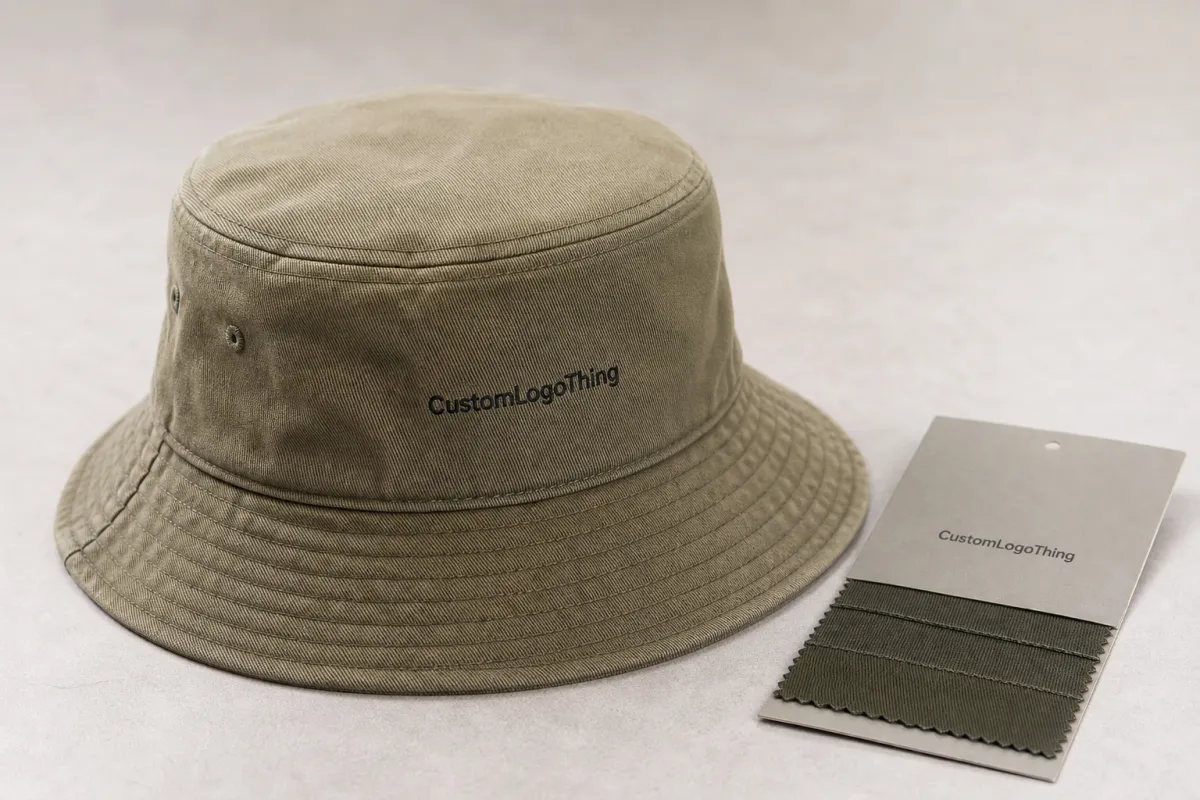
Useful spec details fit into a few lines: fabric content, fabric weight, brim width, crown height, sweatband type, lining, and size range. If a supplier cannot state those clearly, the order is probably not defined tightly enough yet.
Two hats can look similar on a table and wear very differently. Cotton twill usually feels familiar, breathable, and easy to decorate. Denser polyester can hold shape better and wrinkle less, but it may feel less natural on skin. Neither is always better; the right choice depends on use, care, and decoration.
For bulk buying, the goal is not to find the prettiest sample first. It is to build a spec that repeats well, fits the target audience, and keeps production predictable. A clear spec also reduces quote drift because every supplier answers the same question.
The cheapest-looking problem in headwear is often a sizing issue. It rarely shows up during approval, and it is usually visible the moment the hats are worn.
How fabric, crown shape, and brim construction affect wear
Fabric changes more than appearance. It affects airflow, handfeel, aging, and how a logo sits on the surface. Cotton twill remains one of the most workable options because it balances softness and structure. It often sits in the 220-320 gsm range, enough to feel substantial without becoming stiff. Canvas is tougher and more structured, but it can feel heavier in heat. Polyester and nylon dry faster and wrinkle less, which helps in outdoor programs and travel use. Denim gives a textured casual feel. Terry cloth feels soft and retro, though it needs testing if the decoration is dense or the pile is uneven.
Crown shape matters just as much. A structured crown keeps a cleaner outline and usually photographs better. A softer crown collapses more easily, packs flatter, and gives a relaxed look. Buyers often ask for one style and prefer the other after the first wear test because silhouette changes how the hat sits on different head shapes.
Brim construction is easy to underestimate. A floppy brim gives a casual look, but it can shift in wind and create an uneven shadow line. A reinforced brim tends to hold its curve better, feel more finished, and survive shipping with less distortion. On a quote sheet, brim width looks minor; in wear, it changes function and perceived value.
Small construction choices can matter as much as the base cloth:
- Stitch density helps the brim stay tidy and reduces strain at high-movement points.
- Sweatbands influence comfort during longer wear, especially in warm or humid conditions.
- Lining can soften the interior feel and improve the sense of finish.
- Ventilation eyelets improve airflow, which helps once fabric weight rises.
Decoration and fabric should be reviewed together. Dense embroidery on thin or stretchy cloth can pull the crown out of shape. A stiff patch backing on very soft fabric can create a buckled look. The hat should be built for the decoration method, not decorated after the structure is already fixed.
Key factors buyers should compare before sampling
Start with use case. Outdoor event hats need shade, airflow, and a brim that behaves in real weather. Retail fashion hats care more about texture and silhouette. Workwear needs durability first, then comfort, then decoration.
Next, decide how fit should be handled. Universal sizing can work when the audience is narrow, but it is weak for mixed head sizes, youth groups, or broad retail distribution. In those cases, think in centimeters or inches first, then translate that into a size range or adjustable build. S, M, and L labels are convenient, but they are not precise enough on their own.
Decoration compatibility should be checked early. Embroidery behaves differently on cotton than on smooth polyester. Woven labels, patches, and prints all have different tolerance for curvature and seam placement. A badge sitting too close to a side seam can lift, and a thick backing can change how the crown drapes.
Before approving a sample, compare these points side by side:
- Wear climate - hot, humid, dry, or mixed.
- Audience size range - narrow, average, or broad.
- Decoration method - embroidery, patch, print, or label.
- Care expectations - occasional wear or regular washing.
- Quality target - promo, retail, premium, or workwear.
Packaging belongs in the discussion too. If hats ship in corrugated cartons with kraft paper tissue, they are less likely to arrive crushed, and the opening experience is usually cleaner. Some buyers also specify recycled materials, post-consumer waste content, or biodegradable inner wrap. Those choices can support sustainability goals, but they also affect freight efficiency, protection, and condition on arrival. A paper-based pack-out is not automatically better than plastic; it needs to match the route, compression risk, and retail expectation.
For shipping standards, references such as ISTA for transit testing and FSC for certified paper sourcing are more useful than broad environmental claims. They give buyers a way to ask better questions.
Step-by-step sizing and fabric selection process
The cleanest process starts with the wearer, not the product photo. Define who will wear the hat, how often it will be worn, and in what conditions. Then translate that into material feel, brim profile, and a realistic fit range. A hat for a summer streetwear capsule should not be spec’d the same way as a hat for an outdoor staff uniform.
Collect head measurements in centimeters or inches. Decide whether the project needs one-size-fits-most, multiple sizes, or an adjustable build with hidden flexibility. A relaxed fit often needs more interior room than buyers first expect. If the crown is shallow, the hat can feel tight even when the circumference looks fine.
Use swatches. Photos help, but they do not show stiffness, surface texture, or the way color changes in natural light. A 280 gsm cotton twill swatch feels very different from a 160 gsm polyester swatch, even if both are described as midweight.
A practical selection flow looks like this:
- Define wearer and use case.
- Set the target circumference and crown depth.
- Choose 2-3 fabric options.
- Request decoration tests on each finalist.
- Approve a sample only after real wear testing.
That sequence saves time because it exposes weak points early. A sample that looks good on a hanger may still fail after an hour on different head shapes. If a brim sags too fast or the sweatband feels abrasive, adjust it before bulk production starts.
Cost, pricing, MOQ, and unit cost drivers
Pricing is shaped by several variables at once: fabric choice, lining, brim reinforcement, embroidery complexity, print coverage, trims, and packaging. A plain cotton twill bucket hat with a small embroidered logo sits in a simpler cost band than a hat with a custom lining, all-over print, specialty trim, and branded tissue. Labor changes too. A clean one-color build is faster to produce than a detailed design with multiple finishing steps.
MOQ has a direct effect on unit price. Smaller orders carry a higher per-hat cost because sampling, setup, and labor are spread across fewer units. Larger runs usually bring the unit cost down, but only if the spec stays stable. A buyer comparing a 300-piece quote with a 3,000-piece quote is not looking at the same pricing structure.
Sample and proofing costs should be separated from production pricing. Some suppliers charge development fees, then quote production cleanly after approval. Others roll those costs into one number. If that distinction is missed, quotes are hard to compare and the cheaper option may not actually be cheaper.
As a general buying pattern, simple promo-grade bucket hats can sit in a lower ex-works range, while better-constructed retail pieces or specialty builds move upward quickly. In many programs, a basic custom hat may sit around the low single-digit dollar band at higher MOQs, while more complex builds with richer decoration or custom packing can move into the mid single digits or beyond. The exact figure depends on fabric weight, order size, labor time, and how many custom touches are added.
| Option | Typical unit cost impact | Fit / feel | Best use case |
|---|---|---|---|
| Cotton twill, small embroidery | Lower to mid-range | Soft, familiar, easy to wear | Promos, retail basics, general merch |
| Canvas with reinforced brim | Mid-range | Structured, durable, heavier handfeel | Workwear, premium branding, outdoor use |
| Polyester with printed panels | Varies by print coverage | Light, quick-drying, less natural drape | Events, athletic programs, travel |
| Terry or denim with specialty trim | Higher | Distinctive, texture-led, style-driven | Fashion drops, limited editions |
To make quotes comparable, keep every supplier on the same build: same fabric, same size range, same decoration method, same packaging, and the same delivery terms. A quote that includes FSC-certified cartons and kraft paper tissue is not directly comparable to one that includes plain polybags.
Process and turnaround: from spec sheet to delivery
The production flow is usually straightforward: inquiry, tech pack review, sample approval, bulk cutting, sewing, decoration, finishing, inspection, and shipment. Delays are rarely caused by the sequence itself. They come from missing artwork, unclear measurements, late sample revisions, or a fabric substitution that changes the handfeel.
Turnaround depends on order size, decoration complexity, and factory load. A simple run with a single logo may move quickly. A multi-color order with custom fabric, special packaging, or repeated revisions will take longer. For a straightforward program, a common planning range is 12-15 business days from sample approval to bulk completion, then shipping time on top. Heavier decoration, larger quantities, or fabric sourcing delays can stretch that timeline.
Milestones help keep the schedule from slipping. Approve swatches first. Then confirm the sample. Then sign off on the final pre-production version. Skipping one step usually costs more time later than it saves in the moment.
Packaging should be planned early too. A bucket hat packed in corrugated cardboard with kraft paper tissue is less likely to arrive creased or crushed, and it usually opens more cleanly for retail or gifting programs. If sustainability is part of the brief, ask whether FSC-certified cartons, recycled materials, or post-consumer waste content can be used without weakening protection.
Common mistakes that cause fit and quality problems
The most common mistake is assuming one generic size will work for everyone. It will not. Mixed age groups, regional head-shape differences, hair volume, and hairstyle changes all affect fit. A hat that seems fine in one audience may feel shallow or tight in another.
Fabric shrinkage is another source of trouble. Some natural fabrics can tighten after washing, especially if they are unwashed cotton or cotton-heavy blends. Pre-washed or treated fabrics usually hold size better. Ask about shrinkage tolerance before approval, not after the first wash test.
Decoration-first thinking also creates avoidable problems. If embroidery density is too high for the cloth, the crown may pucker. If a patch backing is too stiff, the fabric can buckle around it. The hat should be engineered with the decoration method in mind.
Wear testing is often skipped because it feels like extra work. It is not extra. It is the cheapest insurance in the order. Give the sample to different head sizes, move around in it, and check the fit after a realistic amount of wear. See whether the brim droops too fast, whether the sweatband rubs, and whether the crown sits too high or too low.
A good sample does more than look correct. It survives movement, heat, and a full day on the head.
Expert tips and next steps before you order
Ask for a size chart in circumference, not just S/M/L labels. If a supplier will not give exact measurements, the fit discussion is too loose already. Confirm whether the hat is intended to fit relaxed, snug, or adjustable.
Request swatches, a sample, and a decoration placement proof before bulk production begins. That three-step check catches most surprises early. It also helps stop the design from drifting after the first round of feedback.
Build a comparison grid for materials, sizing, MOQ, unit cost, turnaround, and packaging. One clear table on your side can save a long chain of emails. If two suppliers quote similar prices but only one includes better packaging or clearer measurement data, you have a real difference to evaluate instead of a vague preference.
Use this bucket hats Material and Sizing guide as the final approval checklist: confirm fabric weight, confirm brim shape, confirm circumference, confirm decoration method, confirm shipping packaging, and confirm timeline. That is how a bulk order stays controlled instead of turning into guesswork.
What material is best for a bucket hat in hot weather?
Lightweight cotton, cotton twill, or breathable polyester blends are usually the most practical starting points. Look for ventilation eyelets, a softer interior, and a brim that shades without trapping too much heat. Very heavy fabrics can work, but they are better suited to structure-led designs than to all-day heat exposure.
How do I choose the right bucket hat sizing range?
Measure the target audience in head circumference, then convert that into a clear size chart. Decide whether the hat should be one-size-fits-most, multi-size, or adjustable. Always test the sample on real wearers before approving bulk production, because shallow crowns and tight interiors are easy to miss on paper.
Do bucket hats shrink after washing?
Some natural fabrics can shrink, especially if they are unwashed cotton or cotton-heavy blends. Pre-washed or treated fabrics usually hold size better and reduce post-wash surprises. Ask the supplier to confirm shrinkage tolerance before you finalize the spec.
What affects MOQ and unit cost for custom bucket hats?
Fabric choice, decoration method, color count, packaging, and order size all affect pricing. Smaller orders usually carry a higher unit cost because setup and sampling are spread across fewer hats. Compare quotes with identical specs so the numbers stay meaningful.
How long does custom bucket hat production usually take?
Timeline depends on sampling, approvals, order size, and decoration complexity. A straightforward run may complete bulk production in about 12-15 business days after sample approval, then shipping adds more time. Extra revisions, special fabrics, or heavier decoration can extend the schedule.


