A half-inch on the cuff can change the way a beanie sits, stretches, and carries a logo. That is why the Cuffed Knit Beanies material and sizing guide matters before anyone signs off on decoration or compares quotes. On a knit beanie, small spec choices affect warmth, recovery, front-panel visibility, and how the hat feels after a full day of wear, not just how it looks in a product photo.
Cuffed knit styles earn their place because the fold does useful work. The cuff adds insulation around the forehead, gives embroidery or a woven patch a flatter field, and usually reads as more structured than a loose uncuffed cap. Buyers use them for retail assortments, employee uniforms, winter promotions, and event giveaways because the front of the cuff creates a clean branding zone without needing much extra construction.
Material and Sizing should be handled together. Yarn choice changes hand feel and durability, stitch density changes warmth and elasticity, and cuff depth changes both fit and decoration space. Split those decisions apart and the usual result is sample revisions, artwork resets, or a beanie that looks fine flat but behaves poorly on a head.
Cuffed Knit Beanies Material and Sizing Guide: Start With Fit
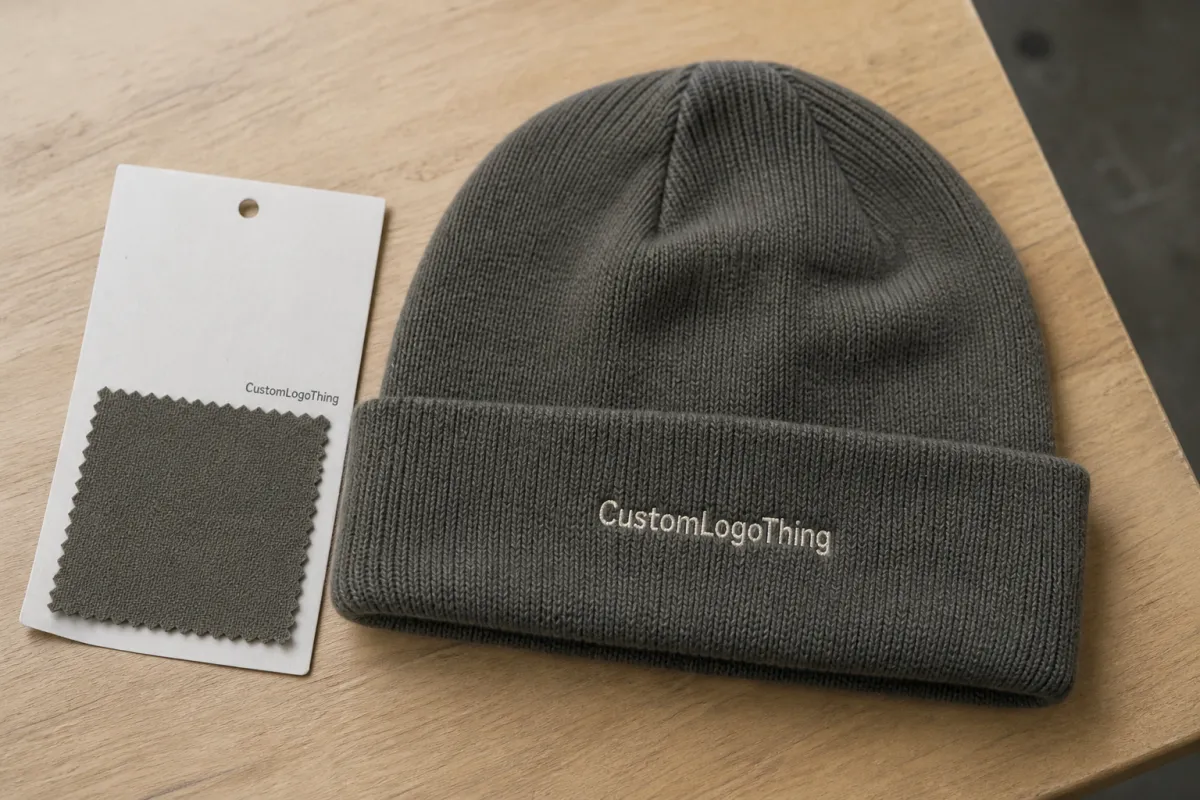
The right starting point is the wearer, not the catalog image. A snug uniform beanie for outdoor staff needs a different relaxed measurement than a softer retail style that is meant to drape a little at the crown. Adult, youth, and oversized fits can all share the same general silhouette and still feel dramatically different once the cuff is folded and the knit relaxes.
In practice, the cuff can matter as much as the yarn. A deeper fold gives more warmth at the ears and forehead, but it also pushes the usable decoration area lower on the hat. A shorter cuff gives more crown height and a lighter profile, though it reduces the stable flat space available for branding. That trade-off is easy to miss if the only approval step is a mockup.
Most cuffed beanies are built on a ribbed or circular knit structure, and that structure is what gives the hat its stretch. The opening may measure one thing off the machine and feel something else once it is blocked, folded, and worn. A useful cuffed knit Beanies Material and Sizing guide should therefore include both relaxed measurements and expected stretch range, not just a single nominal size.
Typical adult cuffed beanies often fall around 7.5 to 9.5 inches in relaxed width when laid flat, with many styles stretching significantly beyond that without permanent distortion. Youth styles run smaller, while oversized fashion cuts can look loose even when the opening is technically within range. Those differences sound minor on paper. They are not minor on a head.
For buyers, the practical question is simple: do you need a tighter fit that stays in place in wind, or a softer fit that feels less compressive? The answer changes yarn weight, stitch count, cuff depth, and even the decoration method. A well-built spec sheet keeps those choices aligned instead of letting each one drift in a separate direction.
How the Knit Structure Changes Stretch, Warmth, and Wear
Not all knit beanies behave the same. A finer gauge knit usually feels smoother, sits closer to the head, and gives a cleaner surface for logos. A heavier gauge knit feels chunkier, warmer, and more textured. Rib knit constructions generally recover stretch better than flatter knits, which matters if the beanies need to be worn for hours and still return to shape afterward.
Fiber choice is just as important. Acrylic is common because it is cost-effective, widely available, and usually soft enough for broad wear. It also holds color well, which helps when brand matching matters. Wool brings stronger insulation and a more premium hand feel, though some wearers find it itchier and some programs need clearer care instructions. Blends can balance price, softness, and durability, which is why they often appear in everyday winter programs.
Temperature performance depends on construction as much as fiber. A dense acrylic rib can feel warmer than a lighter wool knit if the wool style has more open structure. That is one reason material charts can mislead buyers. Fiber content says a lot, but not enough on its own.
The finish changes the experience too. Brushed yarn can feel softer at first touch, but it may pill sooner. Tighter construction tends to hold shape better, though it can feel firmer on the forehead. For long-shift workers, commuters, and anyone outside for more than a few minutes, comfort after four or eight hours matters more than the first thirty seconds.
There is also the question of recovery. A beanie that measures correctly on the table can still feel wrong if the rib is too dense or the yarn has poor elasticity. A looser style may seem comfortable immediately, then grow baggy by the end of the day. That is why sample approval should include a real wear check, not only a flat measurement.
A good fit spec is the point where warmth, recovery, decoration space, and wearer comfort agree on the same hat.
If the order needs a warmer, more premium feel, wool or a wool blend can make sense. If the priority is cost control and repeatable scale, acrylic is usually easier to manage. For mixed programs, recycled yarn content can also be a practical option, especially when the buyer wants the beanie to match other recycled materials or paper-based packaging.
Pricing, MOQ, and Unit Cost: What Drives the Quote
The quote usually comes down to a small set of variables: yarn type, stitch density, color count, decoration method, and packaging. If the beanie needs a woven label, a patch, a custom hangtag, or a special retail fold, the labor load rises quickly. Multiple color changes in the knit itself also add setup and machine time, which is easy to underestimate when the design looks simple on screen.
MOQ has a direct effect on unit cost. A smaller run carries more setup cost per piece because the factory still has to thread yarn, test tension, approve a sample, and prepare decoration. A larger run spreads those fixed steps across more units, so the per-piece price usually drops. That difference can decide whether a hat works as a giveaway, a retail SKU, or a seasonal bundle item.
| Decoration option | Typical cost impact | Best use case |
|---|---|---|
| Direct embroidery | Often adds about $0.40-$1.20 per unit, depending on stitch count and run size | Simple logos, durable branding, and a classic retail look |
| Woven patch | Often adds about $0.35-$0.90 per unit, plus patch setup | Small details, fine text, and a clean premium finish |
| Sewn label | Often adds about $0.20-$0.60 per unit | Low-profile branding and programs that need a softer front panel |
| Custom packaging | Can add $0.10-$0.75 per unit depending on materials | Retail presentation, e-commerce fulfillment, and gift-ready programs |
Those numbers move with order volume and spec complexity, but they are a useful frame. A simple acrylic beanie with one-color embroidery and basic folding can price very differently from a wool-blend style with a woven patch, custom hangtag, and paper-based packaging. If the carton or mailer needs branding too, ask whether corrugated cardboard, kraft paper wraps, or biodegradable packaging can be used without pushing the order into a full custom box build.
A tighter spec sheet usually saves money. When the buyer states the opening size, cuff depth, logo placement, artwork size, packaging style, and acceptable yarn family, vendors spend less time guessing and fewer sample rounds are needed. That makes comparisons cleaner and reduces the chance that one quote looks cheaper only because it left out part of the work.
For packaging and transit planning, some buyers also check ISTA methods when winter accessories ship in sets or retail cartons. If packaging is part of the program, FSC guidance is worth reviewing when paper stock, inserts, or sleeve boards need a sourcing claim. Those details do not change the look of the beanie, but they can affect approval timelines and compliance paperwork.
Process and Lead Time: From Spec Sheet to Bulk Delivery
The cleanest production path usually follows the same order every time: sizing brief, artwork review, material selection, sample knitting, revisions, bulk production, inspection, and shipping. If the buyer changes the cuff depth after the sample is made, or moves the logo after proof approval, the schedule often resets because the beanie has to be reworked instead of simply run again.
Lead time stretches for a few predictable reasons. Yarn that is not already in stock can add days or weeks. Complex decoration, especially when multiple colors or layered trims are involved, slows approval. A late response from the buyer between sample rounds can hold the entire line while the factory waits for confirmation. Straightforward runs move faster; custom-heavy orders need more buffer.
Good checkpoints prevent surprises. A buyer should expect confirmation of the relaxed measurement, cuff depth, logo placement, yarn color, and final packaging before bulk begins. If the program includes retail folding or polybagging, that should be signed off too. The more specific the approval step, the fewer misunderstandings show up at inspection.
Production quality checks should be visible in the process, not buried in a handoff note. On Cuffed Knit Beanies, that usually means checking stretch recovery, cuff symmetry, stitch consistency, yarn shade consistency across lots, and the exact distance between the fold and the decoration area. If one of those is loose, the order can still ship. It just may not wear the same from piece to piece.
Packaging can add its own timing. Beanies shipped with printed inserts, kraft paper bands, or recycled materials in a folded carton need separate proofing and assembly time. Even modest custom packaging can add several business days, especially if paper stock with FSC content or a post-consumer waste claim has to be documented in writing.
Common Sizing Mistakes That Create Returns and Rework
The most common mistake is assuming one size fits every audience. It sounds harmless, but a youth program, an adult retail drop, and an oversized fashion style all need different relaxed measurements and stretch ranges. If the opening is too tight, wearers stop using it. If it is too loose, the beanie rides up, slouches awkwardly, or looks careless in photos.
Cuff depth is another frequent problem. If the cuff is deeper than planned, the logo can sit too low, get lost near the fold, or become partially hidden once the hat is worn. If the cuff is too shallow, the logo can crowd the edge and look cramped. For embroidery especially, a little extra planning around the front panel saves a lot of frustration later.
Buyers also get drawn toward a fashionable yarn without checking the comfort profile. Some yarns feel soft in a sample but become itchy after extended wear. Others shrink more than expected or lose recovery after repeated stretching. A pretty swatch is not enough; the knit has to hold shape, stay comfortable, and work for the actual use case.
Measurement tolerances matter more than many teams expect. A half-inch can sound trivial on paper, yet it can be the difference between a beanie that sits securely and one that constantly shifts. If a program will be reordered later, consistency becomes even more important because the second batch needs to match the first closely enough that the customer does not notice a fit change.
Decoration placement is part of sizing, not a separate decision. The front of the cuff looks best when the hat is sized deliberately because decoration space and wear position are tied together. If the cuff rolls differently from one batch to the next, even a well-made logo can look off-center. That is why the cuffed knit Beanies Material and Sizing guide should be treated as a production tool, not just a buying checklist.
Actionable Next Steps for Choosing and Ordering the Right Spec
Start by naming the wearer clearly. Adult staff? Youth volunteers? Retail customers who want a slightly slouchy profile? Once the audience is defined, measure the relaxed circumference and decide how much stretch, warmth, and structure the beanie should have. Those decisions are more useful than a generic “one size” label.
Next, gather artwork early. The logo size should fit the flat front area without being forced into the fold or pushed too close to the edge. If the artwork is detailed, ask whether a woven patch or sewn label would reproduce better than direct embroidery. That small decision can improve legibility and reduce the risk of a crowded front panel.
Then ask for a sample or proof and compare more than the visual. Confirm MOQ, unit price, timeline, packaging details, and whether the order needs corrugated cardboard mailers, kraft paper wraps, or biodegradable Packaging for Retail presentation. If the project has a sustainability target, confirm whether recycled materials and FSC-certified paper can be documented in writing.
A simple buying sequence keeps the order grounded:
- Define the wearer and the desired fit.
- Confirm material preference and comfort expectations.
- Set cuff depth and logo placement together.
- Request pricing by MOQ and decoration method.
- Review the sample, then approve bulk only after measurements and packaging are right.
That approach reduces rework because the same decisions that affect appearance also affect cost and lead time. For buyers comparing vendors, a clean spec sheet makes the numbers easier to trust and the samples easier to judge.
Done well, the Cuffed Knit Beanies material and sizing guide becomes a practical buying framework: the right fiber, the right stretch, the right cuff depth, and the right decoration space, all settled before production starts. That is what keeps the final order warm, wearable, and repeatable.
How do I measure cuffed knit beanies sizing for a custom order?
Measure the relaxed opening first, then compare it with the intended wear fit instead of assuming one universal size. Check cuff depth separately because it affects both coverage and how much front space is available for decoration. It also helps to test stretch recovery so the beanie returns close to shape after wear, which keeps fit more consistent across a run.
What material works best for cuffed knit beanies in cold weather?
Wool offers strong warmth and natural resilience, while acrylic is usually lighter on cost and easier to scale for larger orders. Blends can balance softness, warmth, durability, and price when the goal is a practical everyday winter beanie. The right choice depends on itch sensitivity, climate, and how long the wearer will keep it on during the day.
What affects the price of cuffed knit beanies most?
Yarn type, stitch density, and decoration method are usually the biggest levers behind unit cost. MOQ matters because setup work is spread across more or fewer pieces depending on the run size. Extra details like woven labels, patches, or custom packaging can raise the quote even when the base beanie is simple.
How long is the usual lead time for cuffed knit beanies?
Lead time depends on sample approval, yarn availability, and how complex the decoration and packaging are. A straightforward run moves faster than a heavily customized order with multiple revisions or special trims. It is smart to build in buffer time if the beanies are tied to a launch date, event, or seasonal program.
How should cuff depth be chosen for logos on cuffed knit beanies?
Leave enough flat space on the cuff so the logo stays visible when the beanie is worn and folded. Keep the decoration away from the fold line if the design must stay clean and centered in every wear position. Match the cuff depth to the logo size, because oversized artwork can look cramped on a short cuff.


