A bucket hat can look polished in a mockup and still arrive limp, shiny, or oddly stiff. That gap is where procurement teams lose money. This Bucket Hats Material spec guide for cosmetics brand procurement is built to close it by translating brand intent into fabric weight, lining choice, brim construction, trims, and pack-out details that factories can actually price and build.
Cosmetics buyers tend to care about the same hat for several different reasons at once. It may sit in a PR mailer, support retail merchandising, live in an influencer kit, or serve as staff apparel at an event. A single weak decision can make the whole bundle feel cheaper. According to FSC and ISTA, packaging and transit choices matter as much as the product itself; a bent brim or crushed carton can undo a premium spec faster than a bad logo file.
The useful way to brief this category is to define the build before asking for quotes: outer fabric, GSM, lining, sweatband, brim support, stitch count, closure method, decoration method, color reference, MOQ, carton pack-out, and lead time. Leave out three of those and the supplier will fill the gaps with assumptions. That usually produces a quote that looks tidy and a sample that does not.
Bucket hats material spec guide for cosmetics brand procurement
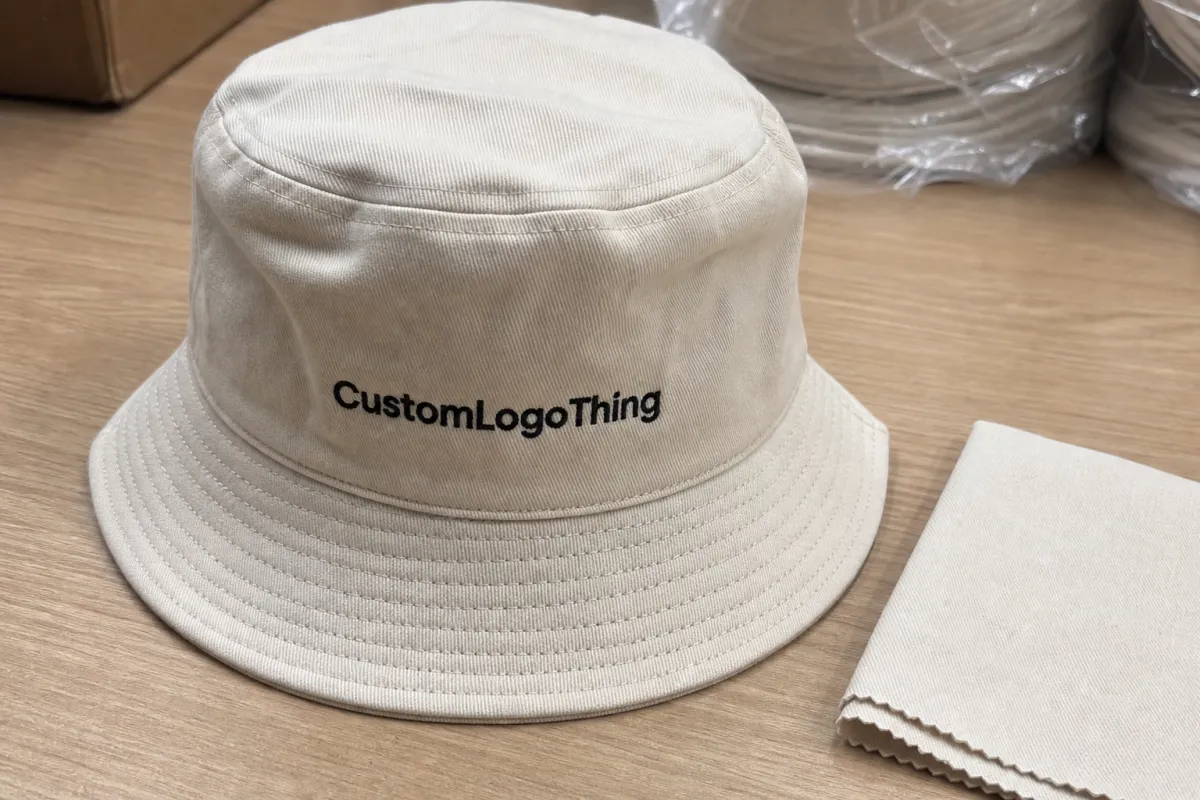
The fastest way to overspend is to approve a pretty render and skip the material logic underneath it. A bucket hat is simple on paper: crown, brim, seams, logo. In practice, it behaves like a small structure. Change the fabric, and the silhouette changes. Change the lining, and the handfeel changes. Change the brim core, and the hat either holds form or droops after one wear.
For cosmetics brands, that matters because the hat is rarely sold in isolation. It is part of a launch story. If the box is matte, the insert is tidy, and the serum carton is carefully finished, a shiny, floppy hat looks off-message immediately. The reverse is also true: a modest hat with disciplined construction can make a whole kit feel more deliberate than the price suggests.
The spec should read like a production instruction, not a mood board. A good one does four jobs at once: it sets expectations, narrows the quote spread, improves sample accuracy, and gives the team a clean approval trail. That is why the details need to be specific enough to survive factory interpretation. “Premium” is not specific. “Cotton twill, 260 GSM, lined crown, reinforced brim, embroidered logo, woven size label, paper wrap, 50 pcs per carton” is.
A vague brief does not just create one bad sample. It creates a chain of small errors: pricing drift, delayed revisions, and a final hat that looks close only if nobody inspects it.
There is also a brand consistency issue that buyers underestimate. If your cartons are FSC certified, your inserts use recycled materials, and the rest of the kit leans on kraft paper or other low-gloss finishes, the hat should not introduce a completely different visual language. The materials do not have to match exactly. They do need to feel like they belong in the same system.
That is the real purpose of this guide: give procurement teams a practical way to choose materials that support the brand tone, survive production, and arrive looking like they were planned with the rest of the campaign rather than added at the last minute.
How fabric, lining, and structure change the final look
The outer shell sets the first impression. Cotton twill is usually the safest premium choice for cosmetics merch because it has enough body to hold embroidery cleanly and enough softness to photograph well. Canvas feels rougher and more casual, which can work if the brand wants a less polished, lifestyle-driven look. Nylon and polyester blends are useful for price and durability, but they tend to read more sporty unless the finish is carefully controlled.
Fabric weight matters more than most render decks admit. A light fabric can collapse around the brim and show stitching distortion. A heavy fabric can feel overbuilt, especially if the buyer wants a relaxed bucket silhouette. In practice, many mid-spec runs land in the 220-320 GSM range for cotton-based fabrics, with the exact point chosen by the desired drape and the decoration method. Embroidery on thin material often puckers. Print on textured fabric can lose edge sharpness. The fabric choice and logo method should be decided together, not in separate meetings.
The inside finish changes how the hat feels in hand. An unlined hat can work for a basic giveaway, but it often feels incomplete. A light lining improves comfort and helps the hat sit more evenly on the head. Add a proper sweatband and the piece starts to feel like branded apparel rather than rushed promo stock. Buyers notice that the moment they try on a sample. So do consumers.
Brim construction is where many specs go sideways. A soft brim drapes naturally but can look tired after packing or repeated handling. A reinforced brim holds shape better, yet too much stiffness makes the bucket hat look forced. The right answer depends on use case, not personal taste. Retail add-ons usually need more shape retention. Staff uniforms can tolerate a simpler build. Influencer mailers need enough structure to survive photography, unpacking, and a few wears without collapsing.
Use case should guide the build:
- Giveaway merch: lighter fabric, simpler trims, lower-cost print or embroidery.
- Influencer kits: smoother handfeel, cleaner inside finish, better shape control.
- Staff uniforms: durable fabric, darker colors, easy-care construction.
- Retail add-ons: tighter stitching, refined labels, stronger packaging presentation.
- Photo-led launches: controlled color, matte finish, precise logo placement.
The lesson is straightforward: each layer changes the final read, and the differences are small enough to miss in a spreadsheet but large enough to show up on camera or in a try-on. That is why material review matters before sampling starts.
Material and trim choices that actually fit cosmetics branding
If the goal is a clean, premium cosmetics look, cotton twill remains the most dependable default. It balances structure and softness well, and it usually takes embroidery without fighting the stitch density. Canvas is a better fit when the brand wants more texture or a tougher, utility-driven feel. Polyester and blended fabrics are often chosen for budget and durability, especially in larger event runs, but they can look too sporty if the finish is not carefully spec’d.
Trim is where the budget starts to drift. A woven label usually reads more refined than a printed tag. Inside taping looks small on a quote sheet and meaningful in the finished hat. Metal eyelets can add a premium detail, though they can feel too rugged if the rest of the hat is minimal. Drawcords can be useful for function, but they also change the silhouette. A cosmetics brand aiming for understated polish may be better off without them.
The more important question is not what is available, but what supports the brand tone. Matte trims feel calmer. Glossy finishes pull attention quickly, sometimes in the wrong direction. An under-brim print can add a quiet surprise, though it only works if the artwork does not compete with the front logo. More decoration is not automatically better. Sometimes it just makes the hat look busy.
Color control deserves discipline. Pantone references help, but fabric dye and print output are not identical systems. Pale blushes, creams, and stone shades are especially unforgiving because minor stitching variation or dye-lot mismatch shows up faster. Dark colors hide small defects better and usually age more gracefully through handling and transit. Light shades can look elegant in a launch deck and unforgiving in person. If a brand wants a delicate tint, real swatches should be approved before bulk.
Do not separate the hat from the rest of the kit. If the order ships with a printed mailer, a folded insert, or a foam-free tray, the hat texture and color should support that presentation. The same is true for outer cartons, whether the shipper is standard corrugated cardboard or a retail-ready box. The value is in consistency, not in matching every material exactly.
If the hat sits beside a serum kit or holiday PR box, the safest move is usually a calmer fabric, one strong logo placement, and trim choices that do not compete with the packaging.
Process and lead time: from brief to approved sample
A clean process matters as much as the material choice. The basic flow is simple: internal brief, quote, fabric confirmation, sample, revisions, pre-production approval, bulk production, inspection, and freight handoff. The problems start when decisions are still moving after sampling begins. A supplier can only build what the brief allows.
Sampling usually takes longer than teams expect. If the factory needs to source fabric, match color, build a brim sample, and adjust logo placement, the first round is rarely immediate. A realistic range is 7-14 business days for the first sample, with a few more days if revisions are needed. Bulk production often lands in the 15-25 business day range after approval, but that can stretch if material sourcing is slow or decoration is complex. Orders with multiple colorways or custom trims can take longer.
The delay points are predictable. Artwork is still changing. Pantone targets are not locked. Brim width is being debated after the sample has already been cut. Someone decides the tag should be woven instead of printed because it feels nicer. Each late change adds time, and some changes add cost as well. None of that is unusual. It is just the reality of making soft goods with a fixed launch date.
One decision owner usually saves more time than another round of comments. The best approval process is boring: one consolidated spec sheet, one feedback channel, one sign-off point. If five people send notes separately, the order drifts. If one person collects and clarifies feedback, the sample moves forward.
Transit planning deserves equal attention. If the hat is part of a larger campaign kit, the pack-out should be tested in the same way the product is. ISTA transit test protocols are useful for identifying how much abuse the carton and contents can take before the presentation fails. That matters for bucket hats because they are shape-sensitive. A crushed brim can make a good spec look cheap on arrival.
Material claims should also be handled carefully. If the box or insert needs to support a sustainability story, FSC guidance can help keep the paper-side claims defensible. The hat itself may not be paper-based, but the full program still has to make sense as one purchasing decision.
Cost, pricing, MOQ, and unit cost drivers
Quotes move for specific reasons. Fabric weight matters. Panel count matters. Embroidery size matters. So do custom labels, sweatbands, packing method, and carton configuration. If a supplier gives a price without knowing those details, the number is a placeholder. Sometimes it is a useful placeholder. It is still not a spec-based quote.
MOQ affects unit cost more than first-time buyers want to believe. A lower MOQ means setup, cutting, and decoration costs are spread across fewer hats, so the per-unit number rises. That does not make low MOQ bad. It simply means the math behaves as expected. For a test launch or short seasonal run, paying more per unit can still be rational if it reduces excess inventory.
| Spec level | Typical MOQ | Typical unit range | What you get |
|---|---|---|---|
| Basic promo | 100-300 pcs | $1.80-$3.20 | Simple fabric, basic print or embroidery, minimal trim, plain polybag |
| Mid-spec brand run | 300-800 pcs | $2.90-$5.20 | Cotton twill or canvas, cleaner stitching, woven label, better inside finish |
| Premium launch piece | 500-1,500 pcs | $4.80-$8.50 | Refined fabric, stronger structure, custom under-brim print, upgraded pack-out |
Those ranges are directional, not guarantees. A one-color logo on a simple twill hat can stay near the low end. Add dense embroidery, branded tape, custom inside labels, and premium packaging, and the quote climbs quickly. That is normal. The mistake is expecting every extra detail to cost almost nothing because it is “small.” Small details are often where labor accumulates.
Compare quotes only after the spec is held constant. If one factory is pricing cotton twill with a woven label and another is pricing polyester with a printed tag, the numbers are not comparable. They are different products wearing the same category name. For procurement, that distinction matters more than most presentation decks admit.
Many cosmetics teams end up balancing two realities. A clean, unbranded hat saves money but can feel generic beside a carefully designed kit. A more finished version costs more, yet it reinforces the launch story and reduces the risk of the hat looking like leftover promo stock. That tradeoff is not a luxury question. It is a brand-consistency question.
Step-by-step spec sheet for a clean supplier quote
A strong spec sheet saves time because it removes interpretation. The supplier should not have to read mood and guess at build. If the Bucket Hats Material spec guide for cosmetics brand procurement is going to function as a procurement tool, the document has to be direct.
- Hat style: bucket silhouette, crown depth, brim width, panel count.
- Fabric: cotton twill, canvas, nylon, or polyester blend with GSM.
- Color reference: Pantone, approved swatch, or physical reference sample.
- Decoration: embroidery, print, woven patch, label, or mixed method.
- Placement: front, side, under-brim, back, or inside label position.
- Structure: lined or unlined, brim reinforcement, sweatband spec.
- Tolerance: crown height, brim width, and logo placement range.
- Packaging: fold method, wrap type, carton count, insert needs.
Use measurements, not adjectives. A crown height of 8.5 cm with a +/- 0.5 cm tolerance gives a factory something concrete to hold. A brim width of 6.5 cm +/- 0.3 cm helps protect visual consistency across the batch. Without tolerances, the same order can arrive with enough variation to make the logo sit differently from piece to piece.
Add approval rules. Ask for photos of the first sample in daylight, a physical swatch if the color is important, and a pre-production sample before the bulk run. If the hat is part of a launch set, include a packing mockup so the supplier knows how the piece should arrive. That avoids the common problem where the hat is perfect on its own but wrong inside the box.
Keep the file readable. A tidy spec sheet reduces quote time, improves accuracy, and shortens revision cycles whether the order is 300 pieces or 3,000. Factories respond better to concrete instructions than to creative ambiguity. That is not a preference. It is how production works.
Common mistakes that cause rework, delays, and ugly hats
The biggest failure point is vague language. “Nice fabric” tells a factory almost nothing. “Good quality” is not a specification. “Premium look” is a subjective aim, not a build instruction. If the brief is fuzzy, the sample will be fuzzy too.
Another mistake is mixing retail expectations with promo budgets. A hat that looks premium costs more because the cost sits in multiple places: fabric, stitch quality, decoration, and pack-out. Pretending otherwise leads to disappointment and extra revisions. The price has to match the ambition.
Skipping sample review is where ugly hats are born. Crooked logos, warped brims, weak stitching, and color drift usually appear early if anyone looks closely. A sample should be worn, measured, photographed in daylight, and checked against the spec. Polite feedback helps nobody here. The sample either works or it does not.
Packaging errors are easy to ignore and expensive to fix. A good hat shipped in a bad polybag or crushed carton can arrive looking tired before anyone opens the kit. If the order is meant to support brand perception, the outer package needs to protect the shape, not merely contain the item. That may mean stronger corrugated cardboard, a better fold method, or a cleaner paper wrap.
If sustainability claims are part of the story, the packaging details need to match the language. FSC certified shippers, kraft paper wraps, and measured use of recycled materials can support the message without turning the kit into a lecture. Overclaiming creates a different problem: it makes the brand look careless rather than responsible.
Transit is the final filter. A hat that leaves the factory looking crisp can still arrive flattened if the carton spec is weak or the pack-out is too loose. The box, wrap, and fold method belong in the same brief as the hat itself. They are not secondary details. They are part of the product.
For more examples of how packaging decisions affect campaign execution, see the Case Studies page. In procurement, the unglamorous constraints are usually the useful ones.
Expert tips and next steps to lock the right batch
The fastest wins are still the simplest ones. Ask for real fabric swatches, not only photos. Approve one pre-production sample in daylight. Check the logo placement on an actual hat, not just on a render. Those three actions catch more issues than a week of email back-and-forth.
If the team is split between value and premium, build two spec versions side by side. One can be lean: standard fabric, simpler label, minimal pack-out. The other can include upgraded twill, woven label, better brim structure, and a more polished carton presentation. Seeing the difference in writing usually ends abstract debates faster than a meeting does.
Document the final decision set in one place: material, trim, artwork, fit, pack-out, and delivery window. Do not let the order drift after sample approval because someone wanted one last revision. Late changes are expensive because they hit schedules, not just unit price. That is often where launch plans get squeezed.
The cleanest procurement outcome is the one that looks ordinary on paper and polished in hand. That means the brief was specific, the sample was checked properly, and the production run stayed close to the approved build. Use this guide as the working checklist, not as theory. Lock the fabric, define the trim, confirm the logo method, set the carton plan, and approve one sample before bulk production starts. That is how a hat ends up supporting the campaign instead of competing with it.
FAQ
What fabric is best for bucket hats in cosmetics brand procurement?
Cotton twill is usually the safest premium-looking option because it feels balanced, photographs well, and holds structure without looking stiff. Canvas works when the brand wants more texture or a tougher feel, while polyester blends are useful when price and durability matter more than handfeel. The best choice depends on how the hat will be used, what kind of decoration it needs, and how closely it has to match the rest of the kit.
How much does a custom bucket hat cost at low MOQ?
Low MOQ usually raises unit cost because setup, cutting, and decoration are spread across fewer units. Fabric weight, embroidery size, label type, and packaging can move the number as much as the order quantity itself. A narrow, one-color logo on a simple build may stay near the low end, while custom trims and premium pack-out push the price upward.
What should be included in a bucket hat spec sheet?
Include the hat style, measurements, fabric, color reference, decoration method, placement, lining, sweatband, closure details, tolerances, and packaging instructions. Add artwork files, sample approval rules, and carton requirements so the supplier is not guessing. A complete spec sheet reduces revisions and helps the quote reflect the actual build.
How long do sampling and production usually take?
First samples often take 7-14 business days, especially if fabric sourcing or artwork adjustments are still open. Bulk production commonly falls in the 15-25 business day range after approval, though complex decoration or slower material sourcing can extend that. A locked brief is the best protection against schedule creep.
How do I avoid color mismatch on branded bucket hats?
Use Pantone references and confirm whether the supplier is matching fabric dye or printed decoration. Ask for physical swatches or a pre-production sample under daylight before approving the run. Small dye-lot variation is normal, so the approved range should be defined before ordering, not after delivery.


