Bucket Hats Unit Cost Breakdown: What Buyers Really Pay For
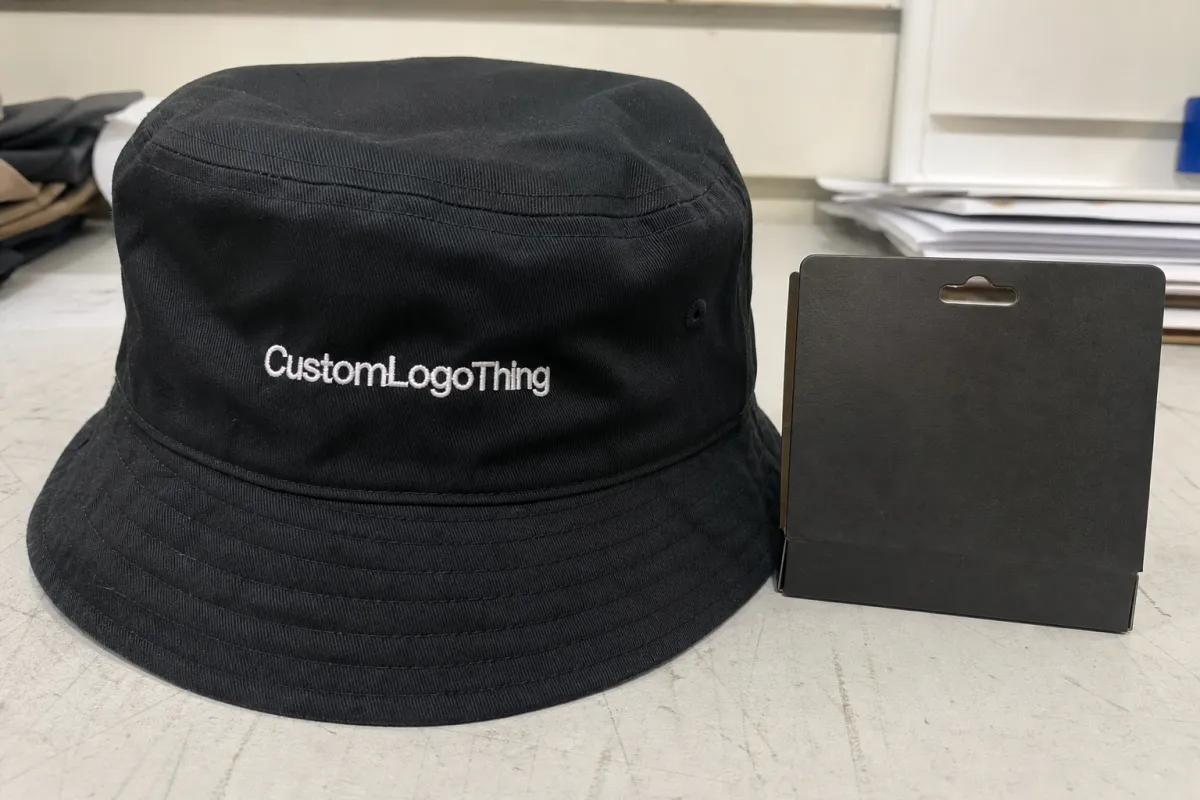
Two bucket hats can look nearly identical in a product photo. One lands at $3.40 per unit. The other lands at $5.85. A proper bucket hats Unit Cost Breakdown explains the gap: fabric yield, stitch count, decoration method, trim choices, carton efficiency, labor handling, freight mode, duties, and quality control.
Most of those costs are invisible until the quote is built line by line. That is where buyers get into trouble.
The lowest unit price is not automatically the lowest total cost. A cheap hat becomes expensive fast if the cotton feels thin, the brim warps in packing, the logo needs rework, the sizing drifts across cartons, or the final shipment moves by air because the original timeline was fantasy. Promotional headwear is not complicated, but it is full of small variables that punish sloppy quoting.
A custom bucket hat quote usually includes the base construction, fabric, decoration, trims, labels, packaging, sampling, labor, inspection, inland freight, international freight, duties, and delivery. Some suppliers show those costs clearly. Others bury everything inside one attractive number. Nice for a quick screenshot. Bad for comparison.
Procurement teams, merch buyers, event planners, and retail brands should look at bucket hats the same way packaging buyers look at cartons: material choice, process tolerance, packing efficiency, and transit risk all affect landed cost. Organizations such as the International Safe Transit Association have pushed distribution teams to take transport testing and damage risk seriously. Apparel buyers should bring that same discipline to promotional headwear.
Buying rule: compare landed cost, not just factory cost. A hat that saves $0.20 in production but adds $0.55 in air freight is not a cheaper hat.
The goal is not to turn every bucket hat order into a twelve-tab spreadsheet. Please don’t. The goal is to know which details actually move cost, which shortcuts create risk, and which upgrades are worth paying for.
When Custom Bucket Hats Beat Generic Stock
Generic stock hats have their place. If a team needs 100 pieces next week with a one-color logo, decorating an available blank may be the right call. It is fast, simple, and usually easier to approve.
Custom Bucket Hats make sense when the hat has to do more than exist. Custom production gives buyers control over fabric color, brim width, crown depth, lining, sweatband, label placement, packaging, and decoration durability. Those details shape perceived value. They also shape cost.
Different use cases have different cost logic. A music festival may care most about visibility from 15 feet away, so a bright all-over print or oversized patch can justify a higher unit price. Corporate gifting usually prioritizes hand feel, neat embroidery, and packaging that does not scream “leftover table giveaway.” Streetwear drops are stricter. Fabric weight, fit, brim angle, label execution, and color consistency can decide whether a $6.00 production item feels like a $28 retail accessory. Tourism retail often focuses on reorder consistency, barcode labeling, and margin at the register.
Bucket hats can be efficient promotional products because one adult size range fits a broad audience, the branding area is visible, and the item has use beyond one event. That does not mean every hat is a bargain. It means a disciplined cost review can show where the value sits.
Decoration changes move pricing more than buyers expect. A 7,000-stitch embroidery may price very differently from a 13,000-stitch embroidery, even if both logos fit in the same front area. A woven patch can preserve small type and fine detail without pushing stitch time too high. A printed patch can handle gradients that embroidery will butcher. A higher quantity can reduce the per-piece cost because setup, sampling, freight, and carton handling are spread across more units.
Custom Logo Things is best suited for buyers who need a quote they can defend internally. Not just a pretty mockup. Finance may ask why one option is $1.10 higher. A merch manager may ask why the sample takes 10 business days. The answer should be specific enough to survive scrutiny.
Product Details That Change the Final Hat Price
Construction drives cost before the logo enters the conversation. Crown depth, brim width, panel count, reversible construction, lining, sweatband type, metal eyelets, sewn eyelets, drawcords, toggle hardware, custom taping, and internal labels all change handling time.
A reversible bucket hat is a good example. It is not just two designs stitched together. It usually requires more fabric, cleaner interior finishing, tighter alignment, extra seam control, and slower sewing. That costs money. Shocking, I know.
Fabric is the most visible quality signal. Cotton twill works well for classic promotional use because it balances cost and familiarity. Washed cotton feels softer and more retail-ready, but the wash process can add cost and lead time. Polyester is common for outdoor events because it dries faster and supports bright print effects. Nylon gives a sportier hand feel and some water resistance. Canvas delivers structure, though it can increase both material cost and shipping weight.
Weight matters. A 160gsm cotton hat may be fine for a one-day handout. It may also feel disposable if the campaign promises premium merchandise. A 260gsm canvas or heavier twill can lift perceived value, often adding roughly $0.35-$0.90 per unit depending on quantity, dyeing, finishing, and market pricing. Treat that as a planning range, not a universal rule carved into stone.
Decoration has its own economics. Embroidery gives durability and a premium look, but stitch count controls machine time. Dense logos can pucker lighter fabric if the backing, thread tension, or digitizing is wrong. Woven patches handle small lettering and detailed graphics better than direct embroidery in many cases. Printed patches support gradients and color complexity. Screen print can be efficient for simple artwork and larger runs. All-over print creates strong visual impact, but registration, cutting alignment, and waste allowance can increase cost.
| Option | Typical Use | Cost Impact | Buyer Watchout |
|---|---|---|---|
| Cotton twill with embroidery | Promos, employee gifts, campus merch | Often mid-range; stitch count affects price | Dense logos may pucker on lighter fabric |
| Washed cotton with woven patch | Retail-style campaigns and lifestyle brands | Usually higher than basic promo builds | Patch size and edge finish can add setup charges |
| Polyester with screen print | Events, outdoor activations, large giveaways | Can be efficient at higher quantities | Print durability depends on ink and curing quality |
| Reversible construction | Premium merch, fan gear, fashion drops | Higher due to fabric, sewing, and QC time | Interior labels and seam finishing need approval |
Small details can become real quote variables. Contrast stitching, private labels, hangtags, individual polybags, barcode stickers, carton marks, retail cards, and special folding all require labor. One change may add only $0.05. Ten changes across 5,000 hats is no longer “just a detail.”
Specifications to Confirm Before Requesting a Quote
A vague quote request creates a vague price. Worse, it creates a price that may not survive artwork review.
Before asking for a bucket hats unit cost breakdown, prepare the fields that drive the estimate: order quantity, fabric, target color, decoration size, decoration location, number of artwork colors, size range, packaging requirements, delivery address, and target in-hands date. If you do not know every answer, say that. Guessing is how buyers end up comparing quotes that were never based on the same product.
Artwork format deserves attention. Vector files such as AI, EPS, or clean PDF artwork reduce interpretation risk. They help estimate stitch count, print layers, patch complexity, and Pantone matching more accurately. A low-resolution PNG from a website may be fine for a rough concept. It is rarely enough for production costing.
Sizing affects comfort, returns, and reviews. Standard adult sizing works for many promotional runs. Youth sizing needs a separate pattern. Oversized streetwear fits may require a deeper crown and wider brim. Adjustable drawstring styles introduce extra hardware and sewing steps. If the order supports a paid retail launch, fit sampling is usually worth the time. One awkward crown shape can kill sell-through faster than a mediocre hangtag ever could.
Color control is another decision point. Stock colors usually cost less and move faster. Custom-dyed fabric can strengthen brand matching, but it may bring higher MOQ, dye-lot variation risk, and added lead time. Pantone matching makes sense for strict brand programs, especially universities, franchises, sports properties, and national campaigns. It is probably overkill for a casual picnic giveaway.
Packaging needs should be clear before the quote is finalized. A bulk-packed event order may need only master cartons and simple polybags. Ecommerce fulfillment may require individual bags, SKU labels, barcode stickers, carton labels, and consistent carton counts. Retail programs may need hangtags or paper cards, and the Forest Stewardship Council may be relevant if FSC-certified material claims are required.
The warning is blunt: quote gaps become change fees, schedule pressure, or quality arguments. A precise brief protects both sides.
Pricing, MOQ, and Quote Variables That Move the Unit Cost
MOQ exists because production has fixed costs. Material sourcing, artwork preparation, machine setup, sample handling, trim ordering, and scheduling do not disappear because the order is small. A 100-piece custom run may carry a high cost per piece even with a simple logo. A 2,500-piece run can absorb setup charges more efficiently.
A clear quote should separate visible and hidden variables. The visible part is the base hat and decoration. The less obvious part may include patch tooling, embroidery digitizing, sample fees, special trims, packaging, inspection, inland freight, international freight, duties, rush handling, and final-mile delivery. If a supplier gives one number, ask what is inside it.
Quantity bands help frame expectations, although actual pricing depends on specs. A sample or pre-production proof may be priced separately. A small promotional run might sit around 100-500 pieces. A mid-size event order may run 1,000-5,000 pieces. Retail-scale programs can move beyond 10,000 pieces and benefit from stronger bulk pricing, better material planning, and more efficient carton use.
Here is a simplified planning view. These are not fixed offers; they show how the commercial logic usually works.
| Order Scenario | Typical Quantity | Likely Cost Drivers | Smart Cost Move |
|---|---|---|---|
| Small brand test | 100-300 pieces | Setup charges, sample fees, limited fabric efficiency | Use stock fabric and one decoration location |
| Event giveaway | 500-2,500 pieces | Decoration method, delivery deadline, carton counts | Approve artwork early and avoid rush freight |
| Retail drop | 1,000-5,000 pieces | Fabric quality, fit, labels, hangtags, packaging | Sample fit and confirm SKU labeling before bulk |
| Large merch program | 5,000+ pieces | Material sourcing, inspection plan, freight mode, duties | Consolidate colorways and optimize carton dimensions |
Buyers can often reduce unit cost without making the hat look cheap. Simplify decoration. Use stock fabric colors. Consolidate colorways. Increase quantity where demand supports it. Choose efficient packaging. Approve artwork quickly. Avoid air freight unless the date justifies it.
I see buyers over-focus on shaving cents from fabric while ignoring freight and rework risk. Saving $0.18 on material is useful. Avoiding a failed sample that delays an event order by two weeks is usually worth more. A disciplined cost breakdown makes that tradeoff visible before the purchase order is issued.
Process and Timeline From Artwork to Delivered Hats
The process looks simple: spec intake, artwork review, quote, digital mockup, sample or pre-production proof, approval, bulk production, quality control, packing, freight booking, customs clearance where applicable, and delivery.
The problems hide between the steps.
Production time is not delivered time. Many missed deadlines come from counting only factory days. A buyer hears “15 business days for production” and assumes hats arrive in three weeks. Then artwork revision, sample approval, freight transit, customs, and final-mile delivery add another 7-25 days depending on shipping mode and destination.
Lead time drivers include material availability, decoration method, factory capacity, order quantity, custom dyeing, packaging requirements, inspection needs, and freight mode. Direct embroidery may move quickly for a simple logo. A custom-dyed reversible hat with woven labels, hangtags, and barcode stickers will not move at the same pace. Pretending otherwise does not make the boxes arrive faster.
For event-driven orders, buffer is not a luxury. It is risk control. If hats are needed for a festival, conference, grand opening, or product launch, build in time for one artwork correction and one logistics delay. Air freight can be justified when the campaign revenue or event exposure outweighs the premium. Ocean or consolidated shipping protects margin when the schedule allows it.
Custom Logo Things reduces timeline drift by confirming specs early, flagging risky artwork, documenting approvals, and matching the quote to the deadline before production starts. That last part matters. A cheap quote with a timeline that misses the event is not a working quote.
A clean planning rhythm is simple: approve the artwork first, approve the sample second, release bulk production third, and confirm freight fourth. Skipping steps can work on repeat orders with known specs. For new custom hats, it usually increases risk.
Quality Checks That Protect Margin and Brand Reputation
Quality control is part of cost. Not an optional extra tucked in at the end.
A hat that arrives late, puckered, off-color, misshaped, or poorly stitched can erase savings through refunds, replacements, discounting, or brand damage. For retail programs, one defective carton can also create inventory reconciliation problems. That is a deeply annoying way to lose money.
Inspection should focus on the details buyers can actually feel and see: fabric hand feel, brim symmetry, crown shape, embroidery density, thread trimming, label placement, color consistency, seam strength, sizing tolerance, and packaging accuracy. For embroidery, density matters because too few stitches can look thin, while too many can stiffen the front panel or cause puckering.
Sample approval is necessary, but it is not enough. A good sample proves the target. Bulk inspection checks whether production stayed near that target across cartons, operators, and material lots. Color consistency matters especially for custom dyeing and multi-color orders. A slight shade shift may be acceptable for a giveaway. It may be unacceptable for a brand store reorder.
Packaging quality depends on the channel. Event orders may need simple individual polybags and well-marked cartons. Distribution programs may need carton labels by location. Retail orders may need hangtags, size stickers, barcode labels, and clean folds. Ecommerce programs may need SKU-level accuracy because one mislabeled carton can trigger fulfillment errors.
Custom Logo Things documents specs and checks production against the approved reference. That reduces ambiguity. If an issue appears, the team can compare the actual hat against agreed artwork, fabric, trim, sizing, and packaging standards instead of arguing from memory.
For buyers building a bucket hats unit cost breakdown, QC should be treated as margin protection. The cheapest inspection plan is not always the cheapest outcome.
Build a Cleaner Brief and Order With Fewer Surprises
Before contacting sales, gather the commercial basics: quantity, deadline, delivery location, fabric preference, logo method, artwork file, packaging need, and budget range. If the budget is confidential, at least define the target lane: basic event giveaway, premium corporate gift, retail-ready merchandise, or something in between. That helps the quote land closer to reality.
Ask for two or three quote scenarios instead of one generic number. A good-better-best structure can show how cotton twill compares with washed cotton or canvas. Another useful comparison is direct embroidery versus woven patch versus printed patch. Buyers often find that the best option is not the lowest factory cost, but the cleanest balance of appearance, timeline, and landed price.
Compare landed cost. Always. Factory cost alone can hide freight, duties, packaging, and rush handling. If hats are tied to a launch date, event date, or retail delivery window, the delivery plan should be part of the quote conversation from the beginning.
To prepare a precise estimate, Custom Logo Things needs a logo file, target quantity, mockup inspiration if available, preferred hat style, fabric or color requirements, shipping destination, packaging expectations, and in-hands date. If you are unsure about fabric or decoration, say so. A capable supplier can price options and explain the tradeoffs without forcing you into a final specification too early.
A clear bucket hats unit cost breakdown turns a vague promotional order into a controlled purchasing decision. It shows what the hat costs, why it costs that amount, and where smarter choices can protect both margin and brand perception.
FAQ
What is included in a custom bucket hat unit cost breakdown?
A practical custom bucket hat cost breakdown includes the base hat, fabric, decoration, trims, labels, packaging, sampling, quality control, freight, duties, and any rush or special handling charges. Buyers should ask whether the quoted unit cost is factory-only or landed to their delivery address.
How does MOQ affect the unit cost of bucket hats?
Higher MOQ usually lowers the unit cost because setup, artwork, sampling, and freight are spread across more hats. Very small runs can carry a higher per-piece cost even when the hat itself is simple, especially if custom fabric, patches, or special packaging are required.
Which decoration method is most cost-effective for bucket hats?
Screen printing is often efficient for simple artwork and larger runs, while embroidery offers stronger perceived value and durability. Woven or printed patches can be cost-effective when the design has detail that would be expensive or difficult to embroider directly.
Can I get a lower bucket hat unit cost without lowering quality?
Yes. Use stock fabric colors, simplify decoration size, consolidate colorways, increase quantity, choose efficient packaging, and avoid rush shipping. The best savings usually come from reducing complexity and freight pressure, not from removing basic quality controls.
How long does a custom bucket hat order usually take?
Timeline depends on artwork approval, sampling, material availability, decoration method, order size, packaging, and shipping mode. Buyers with fixed event dates should confirm both production lead time and delivered lead time before approving the order.


