A Custom Event Hats sample approval checklist can save an order from becoming a very expensive “almost.” Picture 2,000 caps landing three days before a trade show, and the logo sits 8 millimeters too low. Or the sponsor color reads navy instead of black. Or the closure slips after five minutes. None of that feels minor when the cartons are already in the building.
A pre-production sample is not ceremony. It is the last physical checkpoint before money, fabric, embroidery time, packaging labor, and freight are committed. One cap may represent hundreds or thousands of finished hats, so small errors scale fast. The checklist keeps the review grounded in details that affect the final order: decoration accuracy, fit, fabric, color, label content, packaging, compliance notes, and shipping assumptions.
Buyers also need to separate the different proof stages. A digital proof shows layout. A virtual mockup shows concept. A blank sample confirms construction and fit. A strike-off shows decoration on a flat patch, fabric swatch, or test panel. A fully decorated production sample shows what the final order should look like in real life. Treating those as interchangeable is how teams approve the wrong thing with great confidence. Always a popular strategy, apparently.
The goal is not paranoia. The goal is a written, measurable approval before production becomes expensive to change.
Custom Event Hats Sample Approval Checklist: Why One Hat Can Protect the Whole Order
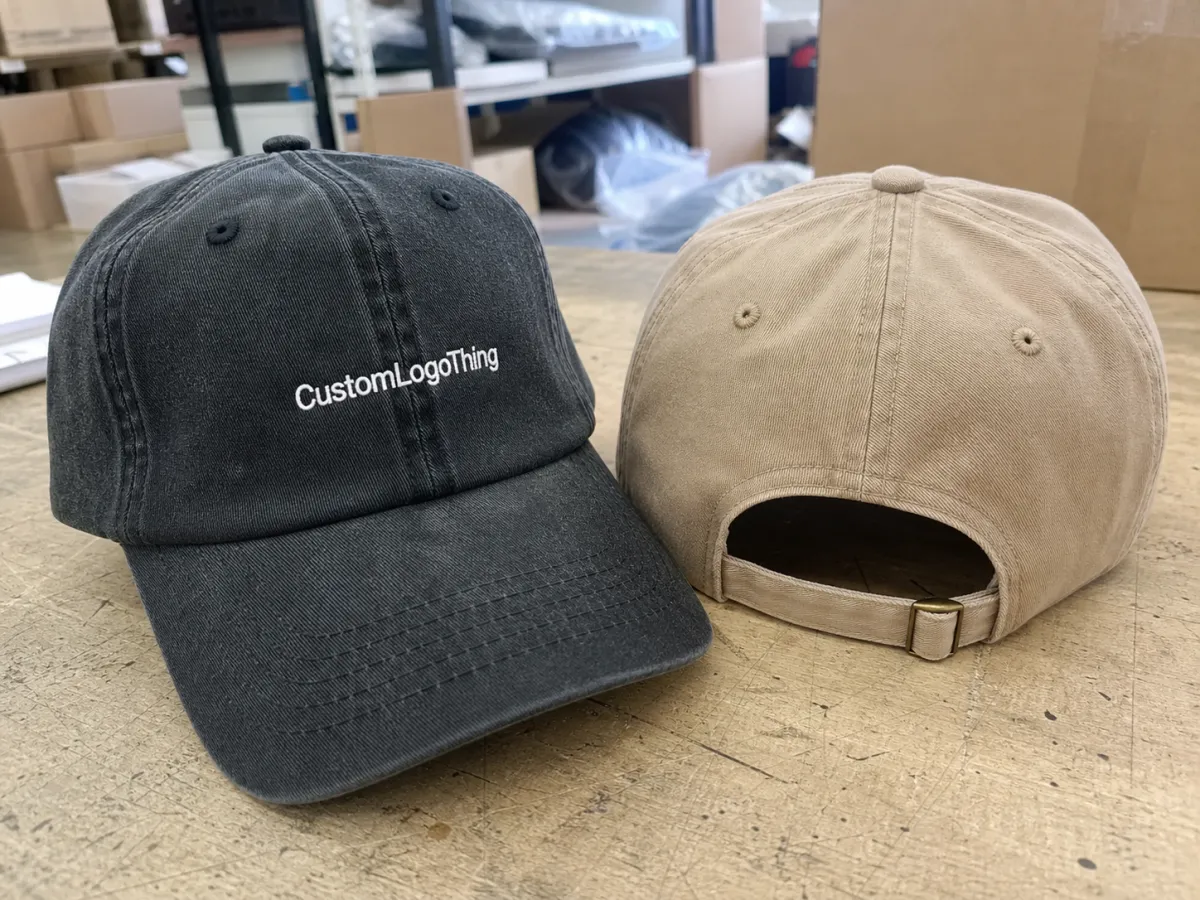
From a buyer’s point of view, the sample is a control point. It is also a forecast. If one cap shows a crooked patch, a warped brim, puckered embroidery, or a closure that slips, the same issue can appear across the full run unless someone catches it early.
The economics are not complicated. A decorated sample might cost $45, $80, or $150 depending on setup, decoration, and freight. The finished order might cost $1,800 or $18,000. If the sample is wrong and the issue goes unchallenged, the buyer may end up paying for rework, rush shipping, replacement caps, or a very awkward sponsor conversation.
A useful approval checklist covers the parts most likely to cause trouble:
- Decoration accuracy checks logo size, placement, stitch density, patch edges, print opacity, and small-text readability.
- Hat construction confirms crown shape, seam quality, brim curve, panel balance, and closure function.
- Fit tests whether the cap works for the intended audience, not just the first person who grabs it from the sample box.
- Color compares fabric, thread, patch, and print against brand expectations under real light.
- Packaging confirms polybags, labels, carton marks, case counts, and kitting requirements.
- Shipping assumptions confirm carton dimensions, delivery date, transit mode, and special handling needs.
The approval trail matters as much as the hat. A digital proof might be approved by marketing, while the physical sample gets passed around purchasing, events, and a sponsor contact. That creates three opinions, two email chains, and zero accountability. Use one final approver, one written decision, and one approved version of the sample.
The same discipline applies to Custom Packaging Products. A clear spec, a physical reference, and one approved version prevent drift later, whether the project involves event hats, packaging design, or custom printed boxes for a sponsored kit.
“The sample is where guessing should stop. If the approval note is vague, production has to interpret. That rarely improves the order.”
How Hat Sample Approval Works Before Bulk Production
The basic path is simple: quote confirmation, artwork review, digital proof, sample production, buyer inspection, revisions if needed, final sign-off, then production release. The checklist belongs inside that flow, not floating around as a separate document nobody opens.
Several people may touch the order: buyer, event planner, brand manager, designer, supplier sales rep, production coordinator, and sometimes a sponsor. That is fine. What fails is letting everyone comment while nobody owns the final decision. Samples can sit for days that way, and production clocks do not care about internal indecision.
Before a sample ships, the supplier is checking details most buyers never see. Thread count. Logo size. Panel placement. Backing material. Closure type. Color availability. Whether the decoration method is practical on that cap body. A patch that looks sharp in a mockup may be too stiff for a curved front panel. A thin outline that looks elegant on screen may disappear once stitched into textured twill. These are normal production constraints, not weird exceptions.
Review the sample under real conditions. Look at it in daylight and indoor light. Photograph it from attendee distance. Try it on more than one head. Bend the brim. Adjust the closure. Run a finger over the embroidery or patch edge. A cap can look fine on a desk and feel cheap after ten minutes of handling.
If hats are shipping inside event kits, carton handling also deserves attention. The ISTA framework is useful for thinking about vibration, compression, and handling risks, especially when caps ship with other branded materials. Most hat orders do not need formal lab testing, but the principles help buyers ask smarter packaging questions.
Specs to Inspect: Logo, Fit, Fabric, Color, and Packaging
“Looks good” is not a production note. “Logo is 6 mm too low” is. The review should turn opinions into measurable instructions the supplier can repeat.
Start with the logo. Check width, height, thread colors, stitch density, patch edge quality, print opacity, and whether small text remains readable at actual hat size. Sponsor lockups, thin outlines, gradients, and tiny registration marks should be inspected first because they fail first.
Check placement next. Front-center alignment matters, but so does distance from the brim seam, side-panel angle, and how the mark sits on a structured versus unstructured crown. A design can be technically centered and still look visually low, heavy, or cramped.
Fit deserves more respect. Adjustable caps should cover the range the audience needs. If the event has a mixed attendee group, test the closure on different head sizes. Ponytail openings, low-profile crowns, stretch-fit bands, and snapback closures all change comfort. A hat that looks polished but fits poorly becomes a souvenir nobody wears.
Color needs controlled tolerance. Compare fabric, thread, patch, and printed colors against brand standards, but do not pretend every material behaves the same. Cotton twill, polyester, foam, leatherette, PVC, woven labels, and embroidery thread all reflect light differently. A black fabric may read charcoal under warm lighting. Navy thread may look almost black in a proof and clearly blue in person. That is not a moral failure. It is material science being annoying.
Packaging is part of the finished product. If hats will be placed in conference bags, sponsor boxes, influencer kits, or registration packs, confirm individual polybags, size labels, carton counts, barcode stickers, and case markings. The same logic used in product packaging and package branding applies here: the product has to survive sorting, handling, staging, and handoff before the audience sees it.
For paper-based outer packaging, some procurement teams request FSC-certified corrugate or inserts. The FSC system can support documented paper sourcing claims. It does not replace quality control, and it will not magically fix weak cartons, but it can matter for sustainability reporting.
Photograph every approved angle: front, side, back, inside, decoration close-up, label close-up, and packaging. Those images become the evidence file. If the bulk shipment arrives with a questionable logo position or carton label, nobody has to rely on memory. Memory is a terrible spec sheet.
| Sample Type | What It Verifies | Typical Cost Range | Best Use |
|---|---|---|---|
| Blank hat sample | Fit, crown shape, brim curve, hand feel | $20-$45 | Basic construction checks |
| Decorated embroidery sample | Logo size, stitch density, placement, thread color | $45-$120 | Standard branded event caps |
| Patch or woven label sample | Edge quality, texture, adhesion, small-text visibility | $60-$150 | Sponsor-heavy or premium designs |
| Rush sample | Deadline feasibility, not ideal for complex revisions | Base fee + $25-$75 | Fixed event dates with little slack |
These ranges move with quantity, decoration method, tooling, and shipping speed. A supplier may also charge separately for digitizing, patch molds, woven label setup, or private-label development. Put the sample beside the quote before approving either one.
Cost, Pricing, and MOQ Factors Hidden Inside Sample Approval
Sample approval does more than confirm appearance. It often exposes the real order economics. A buyer who approves features not included in the quote may be surprised later when the unit cost climbs. Funny how “just a small upgrade” becomes a line item.
The major cost drivers are predictable: hat style, fabric, decoration method, stitch count, number of logo locations, packaging complexity, order quantity, and deadline pressure. The sample makes those variables visible. Maybe the chosen cap needs a custom closure. Maybe the underbrim color is special order. Maybe the embroidery needs more stitches than the first estimate assumed.
Minimum order quantity also matters. Simple embroidery on a stock cap may support lower minimums, often around 50 to 100 pieces depending on the supplier. Custom woven patches, molded patches, private labels, special fabrics, and fully custom cap bodies can push minimums higher, commonly into the 200 to 500 piece range. That is not universal. It depends on the factory, decoration line, and sourcing plan.
A strong review catches pricing mismatches before they become disputes. If the sample includes upgraded closure hardware, special fabric, retail packaging, hangtags, or inside labels, confirm whether those items are included in the quoted unit cost. For sponsored events, that difference can change the margin on the whole program.
Freight deserves a line in the approval file too. Hats are light, but they take volume. Structured caps cannot be crushed flat without risking crown shape. Individual polybags, retail boxes, or kit packing increase carton count. Air freight may protect the deadline but damage the budget. Ocean freight may reduce cost but add timing risk. The sample stage is a good time to confirm how the final order will be packed, not after production is done and everyone suddenly discovers dimensional weight.
Treat the sample as risk control, not decoration theater. That mindset leads to better decisions on branded packaging, packaging design, and finish details that make an event kit feel intentional instead of assembled during a calendar panic.
Process and Timeline: When to Approve the Hat Sample
The approval clock does not really start when a quote is requested. It starts when artwork, quantities, hat style, decoration method, packaging, and shipping details are locked. That subtle distinction changes the whole schedule.
A realistic timeline includes artwork preparation, digital proofing, sample production, sample shipping, internal review, revision time, bulk production, quality control, packing, and final delivery. If the event has a fixed date, every step needs buffer. One revision is manageable. Two revisions can squeeze freight choices and production slots.
Do not confuse sample lead time with bulk lead time. An approved cap sample does not mean the full order is already moving. It only means the supplier can release production with less uncertainty. That distinction matters if the hats are part of a larger event kit with custom printed boxes, inserts, badges, apparel, or other branded packaging components that must land together.
Deadline pressure lowers review quality. The fewer days left, the more likely a team is to approve from a forwarded phone photo. That is a weak position. If the order is important enough for a sponsor, client, or large attendee audience, it is important enough to inspect in person whenever the schedule allows.
Set decision deadlines before the sample arrives. If the brand manager needs two days, the event planner needs one, and purchasing can approve same day, write that into the timeline. That prevents the classic failure pattern: the sample is acceptable, but the feedback loop eats the schedule.
Practical rule: work backward from the in-hands date and protect enough room for one revision. If the schedule leaves no room for error, the approval process is already too tight.
Step-by-Step Review Before You Sign Off
Simple process beats scattered judgment. A clean Custom Event Hats sample approval checklist should become a repeatable review, not a debate over who has the best eye. Here is the sequence I recommend.
- Match the sample against the quote, artwork file, proof, brand guide, purchase order, and event brief. If one source conflicts with another, resolve that before approving anything.
- Inspect the hat in person. Review construction, brim shape, crown height, stitching, closure, fabric weight, and overall feel. Do not approve a physical product from a pretty mockup alone.
- Measure the decoration. Confirm logo width, height, placement from the brim seam, alignment, thread colors, patch edge quality, and readability of small details.
- Test fit and handling. Try the hat on more than one person, adjust the closure, bend the brim if appropriate, and check whether the cap keeps its shape after normal handling.
- Review labels and compliance details. Confirm size labels, care labels, country-of-origin markings, fiber content, safety warnings if required, and any sponsor or internal tracking codes.
- Check packaging and carton requirements. Confirm polybags, hangtags, carton counts, case markings, barcodes, kitting instructions, and delivery address details.
- Document the decision. Approve, approve with exact changes, or reject and request a revised sample. Vague feedback creates vague production.
The approval note should be painfully clear. “Approved as submitted for bulk production” means the supplier should repeat the sample. “Approved with logo moved up 5 mm and thread changed to Pantone 186 C match where possible” means the supplier has an instruction. “Looks great, maybe make it pop more” means someone is about to guess. Guessing is not a production method.
Keep the approved sample until the bulk order is inspected. If the order ships to multiple locations, keep the sample images in a shared folder with the purchase order, proof, quote, and approval email. The physical cap and the digital record should tell the same story.
Common Mistakes That Turn Good Event Hats Into Reorders
Most bad hat orders are not caused by one dramatic failure. They come from small skipped checks that stack up.
The first mistake is approving artwork at screen size without checking actual cap scale. Fine lines, small text, gradients, and stacked sponsor marks can collapse once stitched or printed on a curved surface. If the design needs to be simplified, the sample stage is the time to say so.
The second mistake is ignoring the cap body. A structured trucker hat, low-profile dad cap, foam front cap, five-panel camper, and performance cap do not decorate the same way. Front-panel stiffness, seam placement, fabric texture, and crown height all affect how the logo sits. The cap is not just a blank billboard with a brim attached.
The third mistake is skipping packaging details because “it is just a giveaway.” That phrase has harmed many event tables. If hats arrive crushed, mislabeled, or packed in carton counts that do not match the distribution plan, staff lose time fixing a preventable mess. For kits, packaging can be as operationally important as the hat.
The fourth mistake is letting too many people approve informally. A sponsor likes one mockup. Marketing likes another. Purchasing approves the cheapest quote. The event team assumes the sample reflects all of it. No. Put the final decision in writing.
The fifth mistake is approving under deadline pressure without noting exceptions. If the team accepts a close color match because the event date is fixed, write that down. If the buyer accepts a stock cap instead of a custom body, write that down too. Future disputes often start with a rushed compromise nobody documented.
Finally, do not skip bulk inspection. The approved sample lowers risk; it does not eliminate it. Check a reasonable number of cartons when the order arrives. Compare samples from different boxes against the approved reference. Look for color shifts, logo placement drift, loose threads, crushed crowns, missing labels, and carton damage. Catching a problem on arrival is still better than finding it at the registration table.
Next Steps: Build Your Approval File Before Ordering
The cleanest sample approvals start before the sample exists. Build the file early, then use it as the order’s control center.
Include the final artwork, brand colors, logo placement notes, cap style, fabric, closure, decoration method, sample photos, quote, purchase order, packaging requirements, delivery address, and in-hands date. Add any sustainability or sourcing requests, such as recycled materials, FSC-certified paper packaging, or reduced plastic packaging. Be specific. “Eco-friendly” is not a spec. It is a wish wearing a marketing badge.
For event kits, connect the hat approval file to the broader packaging plan. Caps may need to fit inside sponsor boxes, ship with inserts, match campaign colors, or arrive in specific carton quantities for regional distribution. A hat sample that looks perfect alone may still fail the project if it does not fit the packing plan.
The final approval should answer three questions: Is the product correct? Is the packaging correct? Can the supplier repeat this result at full quantity within the timeline and budget? If the answer is yes, approve in writing. If the answer is no, request exact changes and confirm whether those changes affect cost or lead time.
A good sample approval will not make the order glamorous. It will make it controlled. That is usually what the buyer actually needs.
FAQ
What should be included in a custom event hats sample approval checklist?
Include logo size, placement, decoration method, thread or print color, cap style, crown shape, brim curve, closure type, fit, labels, packaging, carton marks, shipping details, and final approval notes. The checklist should connect directly to the quote, artwork proof, purchase order, and event deadline.
Is a digital proof enough for custom event hats?
A digital proof is useful, but it is not enough for higher-risk orders. It shows layout, not real fabric texture, stitch density, crown shape, fit, thread shine, or patch stiffness. For larger quantities, sponsor-heavy designs, premium kits, or fixed event dates, a physical sample is the safer checkpoint.
How long does hat sample approval usually take?
Many decorated samples take several business days to produce, plus shipping and internal review time. Rush options may be available, but they reduce room for revisions. Build the schedule backward from the in-hands date and protect time for at least one correction if the event order matters.
How much does a custom hat sample cost?
A blank sample often falls around $20-$45. A decorated embroidery sample may run $45-$120. Patch, woven label, molded patch, or rush samples can cost more, often $60-$150 or higher depending on tooling and freight. Some suppliers credit sample costs toward the final order, but that should be confirmed before approval.
What is the biggest risk during sample approval?
The biggest risk is approving vague assumptions. If the buyer does not document the exact cap style, decoration placement, color tolerance, packaging, and approval decision, production has room to drift. The sample should become the reference standard for the full order.
Should the approved sample be kept after production starts?
Yes. Keep the physical sample and a photo record until the bulk order has been received and inspected. The approved sample is the best comparison point if there is a question about logo placement, color, labels, packaging, or overall quality.


