Branded paper Bags for Retail stores do more than carry a purchase. They are visible after checkout, so they affect how premium the store feels, how organized the buying experience seems, and whether customers remember the brand later.
That makes bags a practical packaging decision, not an afterthought. The right bag has to hold the merchandise, match the store’s price tier, and survive handling, stacking, and transport. If any of those fail, the customer notices quickly.
The simplest way to choose well is to match the bag to the product, the brand, and the budget. A kraft shopper, laminated boutique bag, and rope-handle gift bag can all be “paper bags,” but they behave very differently in production and in use.
What branded paper bags for retail stores really signal
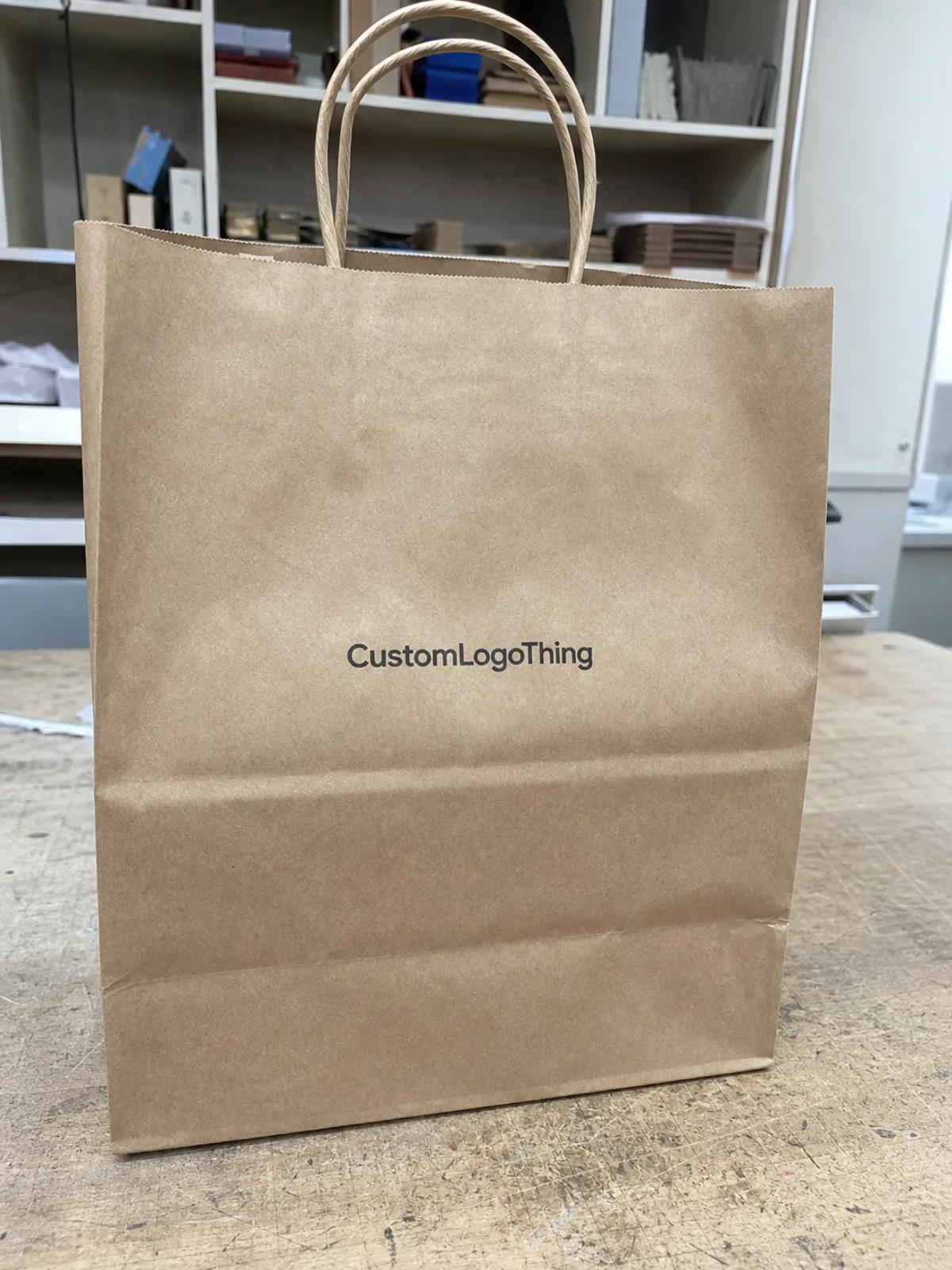
Retail packaging speaks before staff do. A clean, well-built bag signals care, order, and confidence. A thin bag with weak handles or muddy print sends the opposite message, even when the product inside is strong.
Because the bag leaves the store with the customer, it also works as mobile signage. The logo stays visible on the street, on transit, and in parking lots. That is one reason buyers should treat bag quality as part of the brand system rather than a separate purchase.
The details that shape that signal are usually small: paper weight, handle style, print coverage, and finish. Heavier stock hangs better and resists collapse. Matte finishes read more restrained; gloss reflects more light and feels more promotional. A limited print palette can look sharper and more controlled than full-coverage artwork.
If sustainability claims matter, they should be documented in the brief. Recycled content, FSC certification, and chain-of-custody language need to be written requirements, not assumed benefits. For buyers who need a verification reference, fsc.org is a useful starting point for paper sourcing language.
The store environment matters too. A bag that looks fine in a spec sheet can underperform if the brand invests heavily in fixtures and presentation but hands customers a flimsy carrier. Packaging and retail space should reinforce the same impression.
How print, structure, and finishing make the bag work
Production starts with the dieline. That template shows folds, trim, gussets, handle positions, glue areas, and safe zones. Artwork that ignores the dieline can lose logos at the seam, bury text in a fold, or place details too close to handle anchors.
Print method should follow the graphics, not the other way around. Simple one- or two-color branding often works well on kraft with flexo or offset. Rich color, gradients, and photographic detail usually need coated stock and a more controlled print process. More expensive print does not automatically make the bag better; it only makes the build more demanding.
Structure is where performance becomes visible. A flat-bottom bag stands more reliably at the counter. Side gussets add usable volume without making the footprint awkward. Reinforced top edges and handle patches matter when the load is dense or boxed. Lightweight apparel bags can be simpler; beauty kits, candles, and premium gift sets usually need more reinforcement.
Finishing changes the tone quickly. Soft-touch lamination feels more tactile but adds cost and can extend lead time. Foil stamping is effective for smaller logos or seasonal ranges, though it can become crowded if the artwork is already busy. Spot varnish can add emphasis without full coverage. The right finish depends on how much visual weight the bag needs to carry.
Durability checks belong in this stage as well. If the bag will be stacked tightly, shipped long distances, or used for heavier goods, ask how the supplier tests seams, top edges, and handle attachment points. ISTA-style vocabulary can help when discussing shipping stress or compression expectations; ista.org is useful for that language. The goal is not overengineering. It is avoiding a bag that fails in front of customers.
Cost drivers, MOQ, and quote math that change unit price
Unit price is driven by a few core variables: paper grade, dimensions, print count, finish, handle style, packaging format, and shipping distance. A plain kraft shopper with one-color branding lives in a very different cost bracket from a laminated boutique bag with rope handles and foil.
MOQ means Minimum Order Quantity, or the smallest run a supplier can produce at a workable cost. Lower quantities usually raise unit price because setup, plates, proofing, and press prep are spread over fewer bags. That is standard print economics, not a hidden surcharge.
Indicative pricing is useful for planning, but not for final budgeting. Freight, region, and paper market swings can move these numbers quickly.
| Bag type | Typical stock | Best use | Indicative unit price at 5,000 pcs | Notes |
|---|---|---|---|---|
| Basic kraft shopper | 120-170 gsm kraft | Apparel, gift shops, lightweight retail | $0.22-$0.38 | Lower setup cost, efficient for simple branding |
| Mid-tier laminated bag | 150-200 gsm art paper with lamination | Beauty, lifestyle, premium accessories | $0.55-$0.95 | Better color density and a more finished look |
| Premium rope-handle bag | 200-250 gsm board or reinforced paper | Luxury retail, gifting, special launches | $0.85-$1.60 | Handle upgrades and finishing add cost quickly |
Quote comparisons often go wrong because inclusions differ. One supplier may include plates and proofs, another may not. Freight can be bundled or excluded. Carton packing, overs, and tax treatment may also vary. Ask for landed cost if you want the number that actually affects margin.
Small short-run quotes are also easy to misread. A 1,000-piece order can cost far more per unit than 5,000 because setup work does not scale down neatly. If you need flexibility, price the lower run knowingly instead of expecting volume economics on a short order.
Production timeline from dieline approval to delivery
The schedule usually follows a predictable path: brief, dieline, artwork proofing, sampling if needed, production, inspection, packing, and dispatch. Delays most often happen at handoffs, especially when artwork is not ready or approvals take too long.
Artwork readiness matters more than many teams expect. Missing fonts, low-resolution files, wrong color space, or artwork that ignores safe zones can all create avoidable revisions. A clean file is not just nice to have; it protects the timeline.
For straightforward orders, roughly 12 to 15 business days after proof approval can be realistic. Special finishes, custom inserts, heavy board, or overseas freight can extend that quickly. Seasonal launches are even tighter because factories fill early and shipping capacity gets consumed by other retail programs.
The safest method is to plan backward from the shelf date. Leave room for artwork revisions, a sample round if needed, and freight variability. A bag that is 20 mm too narrow for the product is not a cosmetic issue; it is a failed spec that can delay the launch.
Approval chains also consume time. Marketing may want polished visuals, operations may need the size confirmed, finance may need landed cost, and procurement may need clean paperwork. That is normal, but it means the order should be built around the real decision path, not optimism.
Size, paper, handle, and ink choices that affect performance
Size should come from the product, not from a guess. Too-small bags tear at the gusset or distort at the base. Too-large bags look underfilled and cheap. The best dimensions usually follow the largest common purchase, with enough room for practical handling.
Paper choice affects both strength and appearance. Kraft gives a natural, grounded look and works well for apparel and gift retail. Coated or art paper supports sharper color and cleaner blocks, which is why it is common in beauty, jewelry, and premium lifestyle packaging. Recycled stock can support sustainability claims, though the surface texture may soften fine detail. Heavier board feels more rigid, but it increases cost and shipping weight.
Handle choice changes customer experience quickly. Twisted paper handles are cost-effective and familiar. Rope handles feel sturdier and usually read as more premium. Ribbon handles suit boutique and gifting formats. Die-cut handles can work for light merchandise, but they are less forgiving with heavier loads.
Ink and coverage deserve testing, especially when the artwork uses large solid areas or fine type. Thin ink on textured kraft can scuff or lose contrast. Metallic colors often look sharper in proofs than in production. It is worth checking the bag under the store’s lighting, because a warm LED showroom and daylight outside do not read the same way.
For heavier retail sets, ask about the load path. Handle failures often begin at the attachment point, not the handle material itself. If the supplier can explain top reinforcement, patching, or seam testing, that is a good sign. The bag does not need laboratory complexity, but it does need enough margin to survive a normal shopping trip.
Step-by-step ordering plan for a retail launch or refresh
Start with a usage audit. What goes in the bag, how heavy is it, how far does the customer carry it, and does the bag need to feel reusable or simply functional? Those answers shape the spec faster than a mood board.
Next, define the visual direction. Some stores need a restrained kraft bag with a single strong mark. Others need brighter color or a more polished finish. Both can work, but the bag should fit the store’s price point and category instead of borrowing a look from somewhere else.
Then request samples or material references close to the final build. Judge paper feel, handle comfort, closure behavior, and print tone in the lighting your store actually uses. A bag can look strong on screen and weak in hand.
After that, lock the artwork spec. Confirm dimensions, bleed, safe zones, handle positions, and print method before approval. If the bag will be reordered, keep the spec sheet simple and stable so future orders do not become redesigns.
Finally, set a reorder point before stock becomes urgent. A few weeks of buffer is usually more realistic than last-minute replenishment, especially around store openings or promotions. Keeping the approved spec with the opening checklist or seasonal rollout plan saves time later and reduces errors on repeat orders.
Common mistakes that make retail bags look cheap or fail
The most common mistake is under-specifying the paper. Thin stock creases easily, shows contents through the surface, and can collapse at the bottom seam. In a busy store, that becomes a front-of-house problem fast.
Crowded artwork is another recurring issue. Small text, weak contrast, and too many graphic elements can disappear once the bag is moving. Good bag design should read clearly from a few steps away, not only when zoomed in on a screen.
Handle testing gets skipped more often than it should. The handle is the load-bearing interface between the product and the customer. If it fails, it usually does so at the worst possible moment. A real test means loading the heaviest likely purchase and carrying it, not just lifting the bag once from a table.
Transport conditions matter too. Heat, humidity, carton compression, and warehouse stacking can deform paper packaging before it reaches the sales floor. A proof that looks perfect on a desk can still produce a weak fold line or glue issue in production.
The last mistake is buying on unit price alone. A low quote on the wrong spec is not savings. It is a problem with a lower invoice number.
Expert checks, sampling moves, and next steps before you order
Compare samples under the same lighting used in the store. Fluorescent, warm LED, and daylight all shift how paper and ink read. A bag that looks rich in a sample room can look flat beside merchandise at the counter.
Load each sample with the heaviest expected purchase. Carry it a few steps. Set it down and look at the base. Check whether the handles cut into the hand or the top edge buckles under weight. These ordinary checks catch expensive mistakes early.
Ask the supplier for a written production schedule with dates for proof approval, sampling, production start, inspection, packing, and dispatch. If they can also define overrun policy, carton pack count, and what is included in the price, the process is usually more dependable.
It also helps to store the approved specification beside the store opening checklist or seasonal rollout plan. That keeps the exact dimensions, material, and finish easy to retrieve for future orders. Reorders should depend on a controlled spec, not memory.
Used well, branded paper bags for retail stores are part packaging, part signal, and part operating discipline. The best versions are durable, proportionate, and easy to reorder. If the sample feels right, the quote is complete, and the lead time leaves room for approvals, the project is in good shape.
How much do retail paper bags with branding usually cost?
Price depends on size, paper grade, print coverage, handle style, finish, and order quantity. A simple kraft shopper can stay in the low tens of cents at scale, while laminated or rope-handle bags move into a much higher bracket. Always ask for landed cost so freight, setup, and tax are clear before you compare suppliers.
What MOQ should I expect for custom retail paper bags?
MOQ varies by construction and print method. Simpler bags can be produced at lower quantities, but more complex finishes usually need bigger runs to keep the unit price workable. Small launches are possible; they just tend to cost more per bag and offer fewer options.
How long does it take to produce branded retail bags after approval?
Simple orders can move in about 12 to 15 business days after proof approval, but special finishes, sampling, and shipping extend that. Seasonal periods can add more delay. If the lead time sounds identical for every spec, ask what assumptions are being made.
Which paper weight is best for shopping bags in apparel or gift retail?
Light apparel can work with lighter kraft, while gift items and boxed products usually need thicker stock and better reinforcement. The right paper weight is the one that matches the load and keeps the bag upright. If the base sags or the handles stretch, the paper is too light.
Should I choose matte, gloss, or natural kraft for branded retail bags?
Matte and natural kraft usually feel more restrained and premium. Gloss reads brighter and more promotional. The best choice depends on your store lighting, price point, and the tone you want customers to associate with the purchase.

