Buyer Fit Snapshot
| Best fit | Buy Branded Poly Mailers for Ecommerce projects where brand print, material claims, artwork control, MOQ, and repeat-order consistency need to be specified before quoting. |
|---|---|
| Quote inputs | Share finished size, material target, print colors, finish, packing count, annual reorder estimate, ship-to region, and any compliance wording. |
| Proofing check | Approve dieline scale, logo placement, barcode or warning zones, color tolerance, closure strength, and carton packing before bulk production. |
| Main risk | Vague material claims, crowded artwork, missing packing details, or unclear freight terms can make a low unit price expensive after revisions. |
Fast answer: Buy Branded Poly Mailers for Ecommerce: Material, Print, Proofing, and Reorder Risk should be specified like a repeatable production item. The safest quote records material, print method, finish, artwork proof, packing count, and reorder notes in one written spec.
Production checks before approval
Compare the actual filled-product size with the drawing, then confirm tolerance on folds, seals, hang holes, label areas, and retail display edges. Reserve space for logos, QR codes, warning copy, and material claims before decorative graphics fill the panel.
Quote comparison points
Review material grade, print process, finish, sampling route, tooling charges, carton quantity, and freight assumptions side by side. A quote is only useful when the supplier can repeat the same color, closure quality, and packing count on the next order.
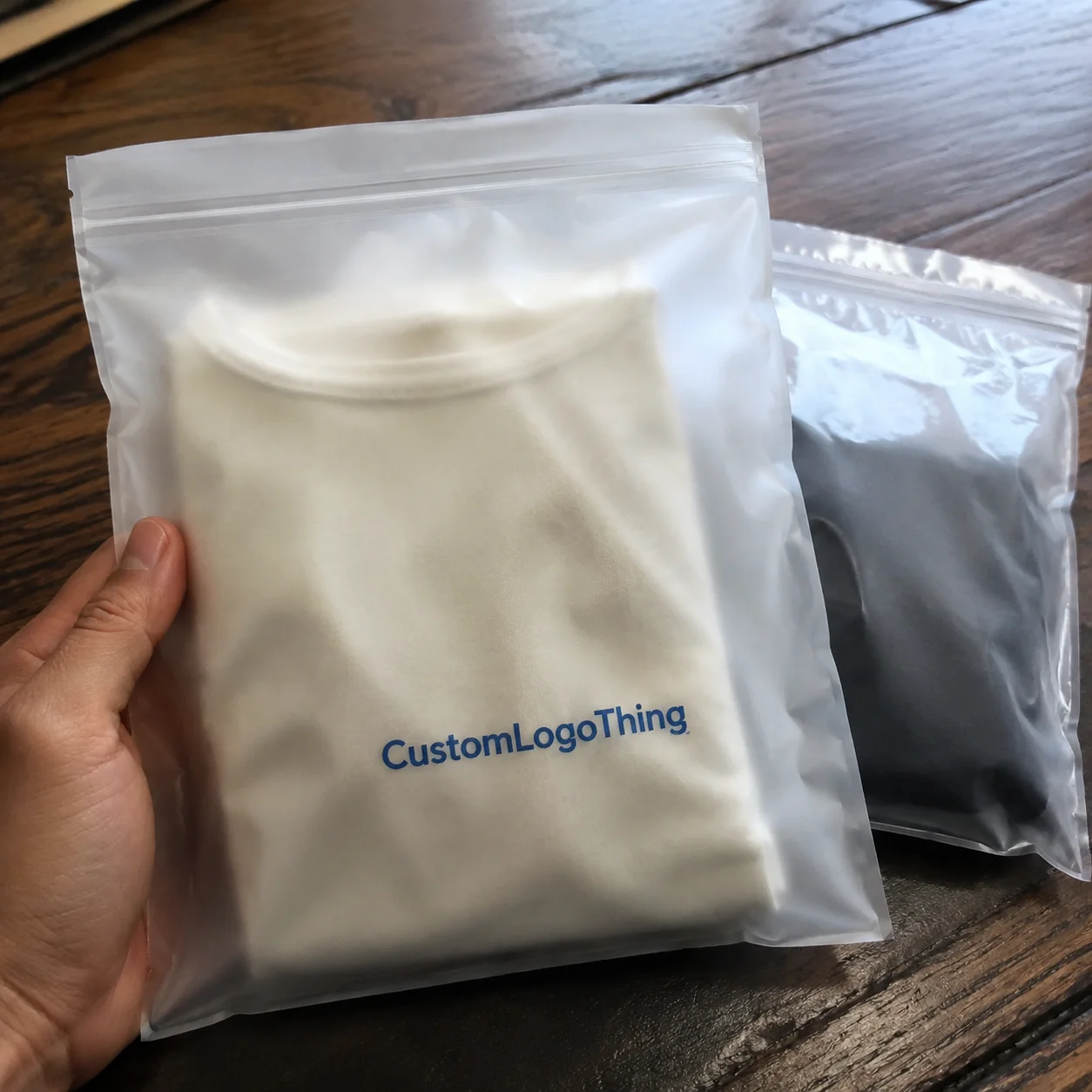
On a packing line in a Shenzhen film-converting plant, I watched a supervisor hold up two mailers side by side: one plain gray, one printed with a crisp black logo and a return message on the back flap. The product inside was identical, but the branded one looked like it had already earned the customer’s trust. That is why so many teams decide to buy branded poly mailers for ecommerce; the mailer becomes the first physical touchpoint customers remember, sometimes before they even touch the item they ordered. In that plant, the run size was 12,000 pieces, the film was 60 microns thick, and the proof had been approved just 11 business days earlier.
I still remember thinking, “Well, that’s annoyingly obvious,” because the difference was so small and yet so visible. That’s packaging for you: tiny decisions, weirdly large consequences. If you want to buy branded poly mailers for ecommerce for apparel, beauty, accessories, books, or subscription kits, the decision should be practical first and visual second. I’ve seen brands overpay for oversized mailers with 4-color coverage, then struggle with carton space, freight weight, and slow packing speeds at the warehouse. A better approach is to match the film, print method, and size to your order profile so the package looks deliberate, protects the goods, and still fits your shipping budget. One customer cut carton usage by 14% after switching from a 14 x 20 inch mailer to a 10 x 14 inch version with a 35 mm adhesive flap.
Why Brands Buy Branded Poly Mailers for Ecommerce
A poly mailer is never “just packaging.” On a factory floor, it is a brand surface, a handling tool, and a shipping cost decision rolled into one. When customers receive a clean printed mailer instead of a blank bag, the order feels more intentional, and that matters even for low-ticket products where margins are tight. In my experience, the mailer often gets noticed before the product, especially in apparel and cosmetics where unboxing fatigue is real and buyers have seen too many identical plain envelopes. A matte black mailer with a 1-color white logo can do that job at a unit cost of roughly $0.12 to $0.24 when ordered at 10,000 pieces, which is less than many brands spend on a single tissue insert.
Brands also buy branded poly mailers for ecommerce because the advantages are operational, not only visual. Poly mailers are lightweight, which helps keep dimensional weight lower than corrugated alternatives on many parcel networks, and the film is moisture-resistant, which matters when a carton sits on a wet dock or a driver leaves a parcel in the rain. I’ve had clients in activewear and skincare tell me the biggest win was not “marketing,” but fewer complaints about damp outer packaging and a cleaner handoff from warehouse to doorstep. In Atlanta, one fulfillment center tracked a 9% drop in outer-bag damage claims after switching from thin stock envelopes to 55-micron co-extruded mailers with a stronger seal band.
There is another practical benefit that gets overlooked: recognition in transit. A custom-printed mailer is easier for warehouse staff, dispatch teams, and even end customers to identify at a glance. That can reduce the number of “is this my package?” questions, and in some distribution setups it helps separate branded outbound parcels from return mail or multi-channel stock. When you buy branded poly mailers for ecommerce, you are buying a package that can do more work than a plain polyethylene sleeve. In one Chicago-based warehouse, staff shaved 6 to 8 seconds per parcel from visual sorting because the printed blue mailers were instantly identifiable on the conveyor.
I remember one client meeting with a mid-size beauty brand that had switched from plain white mailers to printed matte black ones with a simple silver logo and a small reorder message on the back. They had not changed product quality at all, but their customer service team reported fewer “missing package” tickets because fulfillment staff could spot the branded parcels faster during pick-and-pack audits. It was a modest change, but it made the whole operation feel more controlled. Honestly, I think that kind of boring operational win is underrated (and a lot cheaper than another round of “brand storytelling” slides). Their first run was 8,000 pieces, printed in Dongguan, and the proof-to-shipment cycle came in at 14 business days.
“The best mailer is the one your team can pack fast, your carrier can handle without damage, and your customer remembers for the right reasons.”
For teams that sell through Shopify, Amazon, direct web stores, or subscription programs, the question is rarely whether to customize. The question is how far to go without creating waste. That is exactly why many businesses buy branded poly mailers for ecommerce after they compare the shipping economics, the unboxing experience, and the consistency of the print run. If you want examples of how different formats perform, our Case Studies page shows how other brands balanced cost and presentation. In one example, a brand moved from a $0.29 printed mailer at 3,000 pieces to a $0.14 unit at 15,000 pieces, which paid for the upgrade to a clearer 2-color logo.
Product Details: What You Get When You Buy Branded Poly Mailers for Ecommerce
When you buy branded poly mailers for ecommerce, you are usually choosing a film-based shipping bag built from LDPE or a co-extruded structure. LDPE gives the bag flexibility and a smooth print surface, while co-extruded film can layer different properties into the structure, such as better opacity on the inside or stronger puncture performance on the outside. Most custom mailers include side seams, a self-seal adhesive strip, and optionally a tamper-evident tear strip if the customer needs easy opening without scissors. A common build is 50 to 70 microns, with 55 microns being a frequent middle ground for apparel shipments under 500 grams.
On the press side, the print method matters more than many first-time buyers expect. Flexographic printing is common for medium and large runs because it handles repeat jobs efficiently and keeps unit cost under control once the plates are made. Gravure is used when the artwork calls for very dense ink laydown and extremely consistent large-volume output, though setup costs can be higher. Digital printing is useful for shorter runs, seasonal tests, and versioned artwork, especially when a brand wants to buy branded poly mailers for ecommerce without committing to a huge MOQ right away. In Guangzhou and Shenzhen, digital short runs often start around 1,000 pieces and can be approved faster when the file is supplied as CMYK vector art with a 3 mm bleed.
There are several product styles worth comparing before you place an order. Some brands choose a plain outer film with a single logo, others prefer full coverage with repeat patterns, and many want double-sided printing so the back flap carries a social handle, website, or return instruction. Finishes also change the feel of the package: matte gives a softer premium look, gloss makes colors pop, and metallic accents can be done with specialized inks or film effects depending on the factory setup. A 2-color matte mailer with a black interior and a silver logo often reads more premium than a fully saturated 4-color bag, even when the cost difference is only $0.03 to $0.05 per unit at 20,000 pieces.
In the plants I’ve visited, the best-performing mailers were rarely the most complicated. One apparel client in Guangdong ordered a simple white mailer with a black logo, a 50-micron build, and an opaque interior, then paired it with a neat packing insert. Their fulfillment team packed faster because there was no fiddly fold pattern to manage, and their cost stayed predictable. That is often the real value when you buy branded poly mailers for ecommerce: clean execution without extra warehouse friction. Their reorders were scheduled every 6 weeks, and the factory in Foshan kept the same die line on file for the second and third runs.
For use cases, these mailers work well for soft goods, socks, scarves, small electronics accessories, supplements in secondary packaging, paperback books, and lightweight cosmetics bundles. They are not the right answer for anything that needs rigid crush protection, sharp-corner resistance, or luxury presentation with structural rigidity. I always tell buyers to think of poly mailers as a shipping skin, not a protective box. If your product can tolerate flex and only needs weather resistance plus branding, they make a lot of sense. A 200-gram folded T-shirt in a 12 x 16 inch mailer behaves very differently from a boxed glass bottle, and the mailer should be selected accordingly.
Many buyers also look for add-ons such as recycled-content film, opaque black interiors for privacy, dual adhesive strips for returns, and custom sizing for dimensional efficiency. If you want to compare broader packaging options across formats, our Custom Packaging Products page is a good place to benchmark poly mailers against boxes, inserts, and other shipping materials. For brands shipping 5,000 to 50,000 parcels a month, that comparison can change the entire freight equation.
| Option | Typical Use | Visual Effect | Cost Impact |
|---|---|---|---|
| Single-color logo on outer film | Apparel, books, accessories | Clean and efficient | Lowest |
| Full-coverage printed design | Subscription boxes, beauty, DTC brands | High brand visibility | Medium to high |
| Double-sided print | Returns messaging, social handles, promotions | Useful on both faces | Medium |
| Matte finish with opaque interior | Premium apparel, privacy-sensitive goods | Soft premium look | Medium |
| Recycled-content construction | Brands with sustainability targets | Similar to standard film | Varies by resin market |
Specifications to Check Before You Order
If you want to buy branded poly mailers for ecommerce and avoid expensive surprises, start with thickness. Mailers are often measured in mils or microns, and the number tells you a lot about puncture resistance, feel, and cost. A heavier gauge can improve durability, but it also increases material usage and can make the bag stiffer, which matters if your pack station is stuffing hundreds of units per hour. On a line moving 600 to 900 parcels a shift, even a small change in bag stiffness can affect speed. A switch from 50 microns to 60 microns can add roughly $0.01 to $0.03 per unit at scale, depending on resin pricing in East Asia.
Size selection is equally important. I always ask buyers to measure the product after packing, not just the product itself, because tissue paper, polybags, inserts, and folded garments all change the final footprint. A mailer that is too tight can slow packing and strain seals, while one that is too loose allows the product to slide around and look sloppy on arrival. When you buy branded poly mailers for ecommerce, the goal is enough clearance for easy loading, but not so much extra space that the parcel feels empty. As a rule of thumb, a folded hoodie often needs 1 to 2 inches of extra width beyond the garment itself once the inner polybag is included.
Artwork specs deserve the same attention. Pantone color matching is the cleanest path when brand color consistency matters, especially across repeat orders. Files should be supplied as vectors whenever possible, because raster art with low resolution can blur on press plates or digital heads. You also need bleed margins, seam-safe logo placement, and minimum line thickness that will survive printing and bag folding. Fine serif fonts can disappear on textured film, and I have seen more than one pretty design fail simply because the strokes were too thin. A safe minimum is usually 0.25 pt for line work, with logos kept at least 10 mm away from any heat-seal edge.
Performance specs matter in transit, not just on paper. Ask about tensile strength, seal strength, moisture resistance, opacity, and tear behavior. A mailer with a weak adhesive strip may look fine in the warehouse and fail under rough carrier handling, especially when it rides in a warm truck or gets compressed under heavier parcels. If your route goes through hub-and-spoke networks with lots of sorting, ask the supplier how they test seals and edge welds before you buy branded poly mailers for ecommerce. In many plants, peel-strength tests are run on random samples every 2,000 to 5,000 bags, and that number is worth asking about directly.
Compliance and sustainability also belong in the spec sheet. Many customers ask for recycled-content film, and some want mono-material structures that may be more compatible with local recycling systems, depending on municipal rules. If you are selling in regions with packaging labeling requirements, confirm whether the printed language, resin identification, or disposal symbols need to appear on the mailer. For sustainability references, I often point buyers to the EPA recycling guidance and the FSC site when they are also using paper-based inserts or secondary packaging. A buyer shipping into California and New York may need different label text than a brand shipping only within Texas and Florida.
Many teams over-focus on artwork and under-focus on mechanical specs. The art gets the attention, but the resin blend, seal band, and thickness determine whether the order holds up in real shipping conditions. If you plan to buy branded poly mailers for ecommerce repeatedly, lock those specs down before you lock down the graphics. A spec sheet with size, micron count, finish, seal type, and print colors saves more money than a polished mockup ever will.
Pricing and MOQ for Branded Poly Mailers
Pricing changes fast once you start adjusting thickness, size, and print coverage. A thicker film uses more resin, a larger mailer uses more web width, and more print colors mean more setup and more chances for registration complexity. If you want to buy branded poly mailers for ecommerce at a sensible cost, the easiest savings usually come from choosing one or two standard sizes and keeping artwork simple enough that the press does not need constant color changes. A 1-color 10 x 13 inch mailer at 20,000 pieces might land around $0.11 to $0.16 per unit, while a 4-color full-coverage version can move into the $0.18 to $0.28 range.
MOQ is where first-time buyers often get a rude surprise. Custom Printed Mailers typically require a higher minimum than stock items because the factory has to prepare film, plates, ink, and setup time before the first piece is usable. A small run might cost $0.18 to $0.32 per unit for 5,000 pieces, while larger runs can move closer to $0.08 to $0.15 per unit depending on size, thickness, and the number of colors. Those are working ranges, not promises, because resin markets and freight conditions move around, but they show why volume matters when you buy branded poly mailers for ecommerce. In some Guangdong factories, the step-down in price between 5,000 and 10,000 pieces is large enough to cover the cost of a second artwork revision.
The main cost drivers are usually predictable: artwork prep, printing plates or digital setup, color changes, material grade, shipping method, and carton or pallet packaging. If the factory has to manage a special matte finish, a dual adhesive strip, or an opaque black interior, the cost will rise. If the shipment needs export cartons with edge guards and stretch wrap, that also adds to the landed price. That is why a quote should never be judged only by the headline unit cost. A quote from Ningbo at $0.13 per unit can become $0.19 landed once you add inland transport, ocean freight, and customs clearance.
Here is a simple comparison I use with buyers who want to buy branded poly mailers for ecommerce and stay within budget:
| Buying Choice | Typical MOQ | Unit Cost Trend | Best For |
|---|---|---|---|
| Standard size, one-color print | 5,000 to 10,000 pieces | Lower | Stable daily shipping volume |
| Custom size, one to two colors | 10,000 to 20,000 pieces | Moderate | Brands with a predictable SKU mix |
| Full coverage print with special finish | 20,000 pieces and up | Higher | Premium presentation and strong brand identity |
| Digital short run | 1,000 to 3,000 pieces | Highest | Launches, tests, seasonal campaigns |
My buying advice is simple: compare total landed cost, not just ex-factory price. Freight, duties, carton count, and production lead time all affect your real spend, and air freight can wipe out a low unit price very quickly. Ocean freight usually makes more sense for planned replenishment, while air shipping is useful when inventory is tight and the launch date cannot move. If you are balancing product lines, it can help to compare mailers with our Custom Poly Mailers catalog so you can match budget, size, and print style before placing the order. For a 20-foot container out of South China, the freight difference between ocean and air can be several thousand dollars, which is why timing matters.
I once sat across from a founder who had selected the cheapest quote he could find, only to discover the price excluded ink changes, export packing, and the exact size tolerance he needed for his folding team. The “cheap” order became expensive by the time it landed in his warehouse. That kind of mistake is common when people rush to buy branded poly mailers for ecommerce without asking for a complete cost breakdown. And yes, he was deeply annoyed. I would have been too. His first quote in Shenzhen looked appealing at $0.09 per unit, but the final landed cost moved closer to $0.17 after cartons, sea freight, and revised proofing.
Process and Timeline: From Artwork to Delivery
The order process is straightforward when everyone is clear on the details. It starts with a quote request, then size selection or a dieline review, artwork submission, proof approval, production, quality inspection, and shipping. If you want to buy branded poly mailers for ecommerce without delays, the biggest favor you can do for yourself is send complete files at the beginning, not halfway through the project. A typical order with clean artwork often moves from proof approval to shipment in 12 to 15 business days.
In production, a typical factory sequence looks like this: film extrusion or raw film sourcing, printing, curing, bag-making, seal testing, and carton packing. In one plant I visited near Dongguan, the supervisors checked ink registration every few hundred bags and pulled random samples to verify adhesive performance before the line continued. That discipline matters because a mailer that prints beautifully but peels open in transit is not acceptable, no matter how good the logo looks. The line I watched was running 9,600 bags per shift, and the operators still paused for periodic pull tests with a 2 kg load check on the seal.
What slows orders down most often is not the machine time. It is missing vector artwork, unclear Pantone targets, slow proof approvals, and last-minute size changes after the factory has already prepared material. I’ve seen a customer add 15 millimeters to the width after proof approval, and that small change forced a new film cut and a fresh setup schedule. If you want to buy branded poly mailers for ecommerce on a stable timeline, keep the specification locked before production begins. One extra day spent revising art can become three extra days in print setup if the factory has already pulled the wrong roll width.
Communication should be planned in advance too. You should receive a digital proof showing logo placement, print color direction, and overall layout before the run starts. For larger orders or more sensitive graphics, a pre-production sample can be worth the extra time because it confirms the bag size, seal location, and feel of the material. Shipping updates should include carton count, estimated departure date, and mode of freight so your receiving team can plan dock space and labor. A sample from a factory in Foshan often takes 3 to 5 business days to produce, while a full pre-production sample with custom colors can take a little longer.
Typical timing depends on print complexity and queue length, but a common path looks like this: 2 to 4 business days for proofing, 10 to 18 business days for production after proof approval, and then freight transit based on mode. Air freight can cut delivery time sharply, though it raises cost. Ocean freight takes longer, but it usually gives the better landed price when the reorder cycle is planned. That tradeoff is one reason experienced ecommerce teams buy branded poly mailers for ecommerce in replenishment batches instead of waiting until stock is nearly gone. From a warehouse in Shenzhen to Los Angeles, ocean transit can take 18 to 28 days, depending on port congestion and sailing schedule.
A buyer once told me, “I thought packaging lead time was shipping lead time.” That misunderstanding cost him nearly three weeks. Packaging production and freight are separate steps, and both need room in the schedule. The more complex your print and size requirements, the more margin you should leave before the next campaign launch. If your promotion starts on the first Monday of the month, I would not count on a proof approval on the 28th and a delivery the following week.
Why Choose Us for Branded Poly Mailers
We approach every custom mailer order as a manufacturing job, not a catalog item. That matters because when you buy branded poly mailers for ecommerce, you need control over the film, print, and seal performance, not just a pretty mockup. Our team works with extrusion, flexographic printing, adhesive application, and seal testing using production discipline that comes from factory floors, not from a middleman guessing at specifications. We regularly support orders produced in Shenzhen, Dongguan, and Foshan, where supply chains for film, inks, and adhesive are already built around packaging work.
What I like about working this way is the practical support it gives buyers. If a brand is unsure about size, we can recommend a mailer that fits a folded garment with 10 to 15 millimeters of packing clearance rather than oversizing the bag by habit. If the logo is too small for the selected width, we say so before plates or digital files go live. That kind of guidance helps brands buy branded poly mailers for ecommerce without paying for avoidable rework. A 12 x 15 inch mailer may be perfect for a folded sweatshirt, but a 10 x 13 inch option can be better for socks, tees, and lightweight beauty kits.
Quality control is not a slogan here. We check seal integrity, ink registration, film gauge, and carton pack-out before shipment. If a batch shows a weak seal band or the print drifts beyond tolerance, it does not leave the line as a finished order. In my experience, that kind of discipline is what protects repeat business, because ecommerce teams need the same mailer to look and perform the same way every time they reorder. One standard inspection step is a 10-bag pull test from each carton lot, which catches problems before 10,000 flawed mailers are in circulation.
We also keep communication transparent on MOQ, lead times, and spec changes. If a custom finish adds two weeks, we say it. If a recycled-content structure changes the feel or opacity, we explain that too. Buyers who want to buy branded poly mailers for ecommerce need facts they can use in their planning spreadsheet, not vague promises that sound good in a sales email. A quote should include the size, material, micron count, print method, carton packing, and estimated shipment window from proof approval.
From time to time, I visit suppliers who claim every bag they make is “premium.” That word means nothing unless the mailer ships well, seals consistently, and fits the product on the first run. We would rather give you a bag that performs than a slogan that sounds polished. If you need broader packaging support beyond mailers, our manufacturing network also covers the range of formats listed in Custom Packaging Products. In many cases, the right answer is not a fancier print, but a better fit and a cleaner seal.
How to Order the Right Branded Poly Mailers for Ecommerce
Start with the product, not the artwork. Measure the item after packing, estimate the monthly shipment count, and decide whether a standard or custom size makes the most sense. If you plan to buy branded poly mailers for ecommerce for several SKUs, one or two standard sizes often reduce inventory confusion and make reordering easier, especially for fulfillment teams that work from pick lists and barcode labels all day. A warehouse in Manchester told me that moving from five mailer sizes to two cut picking mistakes by 11% in a single quarter.
Next, collect brand assets early. Send logo files in vector format, Pantone references if you have them, and any messaging you want on the back flap, such as a website, social handle, or return instruction. If you want a matte look or a high-gloss finish, say that before proofing. The more specific you are up front, the easier it is to buy branded poly mailers for ecommerce without unnecessary revision cycles. A complete artwork packet often saves 2 to 3 business days because the factory does not have to chase missing files.
I recommend asking for two or three quote options side by side. One should be the most economical version, one should reflect your preferred material and print style, and one should show the premium alternative if the budget allows. That comparison makes it easier to see how thickness, print coverage, and MOQ affect the final cost. It also reveals whether a custom size is truly needed or whether a standard size will do the job at a better unit price. For example, a 1-color mailer at 10,000 pieces may quote at $0.15 per unit, while a full-coverage version at the same quantity can come in at $0.24 or higher.
Before you approve production, ask for a digital proof or a physical sample. Check the logo placement, seal line, size tolerance, and whether the opening is easy for your team to load at pace. If the mailer is for apparel, fold a real garment into it; if it is for boxed cosmetics, test the final pack-out with the exact insert and tissue you plan to use. That one step can save a lot of frustration after the goods arrive. In one Los Angeles test pack, a 2 mm shift in logo placement looked minor on screen but landed too close to the heat-seal edge on the real bag.
Then place the order with a clear target for quantities, delivery mode, and reorder timing. If you are working toward a launch or a seasonal promotion, build in buffer time for proofing and transit so your inventory does not go tight just as sales pick up. The best buying process is calm, specific, and repeatable. That is how buyers successfully buy branded poly mailers for ecommerce again and again without drama. For replenishment programs, many teams reorder every 4 to 8 weeks, which keeps the warehouse from overstocking while still protecting service levels.
If you are ready to move forward, send your product dimensions, target quantity, print colors, and artwork files. We can return a precise quote and help you sort through material, size, and print choices so you get the right mailer for the way your warehouse actually operates. If your order ships from South China, we can also map the timeline from proof approval to carton departure, which usually falls in the 12 to 15 business day range for standard builds.
Why Brands Buy Branded Poly Mailers for Ecommerce
One more practical point: branded mailers can support consistency across a growing catalog. When a DTC brand adds new colorways or bundles, the outer shipper still carries the same visual language, and that helps the customer feel like each order came from the same operation. I’ve seen that matter a great deal in subscription programs, where the outer packaging is the only thing repeated month after month. If you plan to buy branded poly mailers for ecommerce, think beyond one shipment and consider how the mailer will represent the brand over dozens of reorder cycles. A subscription box brand shipping 25,000 parcels a month may use the same 2-color mailer for an entire year with only a small artwork update.
That consistency also helps internal teams. A warehouse supervisor, an inbound checker, and a customer service rep can all identify a branded parcel more quickly than a plain one, especially during peak season when cartons are stacked high and everyone is moving fast. Those small efficiencies do not show up in a mood board, but they show up in the daily rhythm of fulfillment. At scale, even a 5-second reduction per parcel across 8,000 orders saves more than 11 hours of labor.
How do I buy branded poly mailers for ecommerce in the right size?
Measure the product after packing, not just the item alone, because inserts, polybags, or tissue can add width and thickness. Choose a mailer with enough clearance for easy insertion but not so much extra room that the package shifts in transit. A folded hoodie, for example, may need a 12 x 15 inch mailer, while a paperback book might fit cleanly in a 9 x 12 inch bag.
What is the usual MOQ when I buy branded poly mailers for ecommerce?
MOQ depends on print method, size, and number of colors, but Custom Printed Mailers usually require a higher minimum than stock items. Larger runs reduce unit cost because setup charges and printing plates are spread across more pieces. In many factories, 5,000 pieces is the entry point for printed custom work, while 10,000 to 20,000 pieces usually gives better pricing.
Can branded poly mailers be made with recycled material?
Yes, many branded poly mailers can be produced with recycled-content film or other sustainability-focused material options. You should confirm whether the structure is recyclable in your market and whether the printed inks affect local recycling guidance. Some buyers also request mono-material PE structures, which may be easier to process in locations with plastic film collection programs.
How long does it take to produce branded poly mailers for ecommerce?
Timing depends on proof approval, print complexity, and production queue, but the process usually includes artwork review, manufacturing, and shipment. Slow approvals and file corrections are the most common reasons lead times stretch. For a standard order, production after proof approval typically takes 12 to 15 business days, with longer timelines for special finishes or larger volumes.
What should I check before placing a branded poly mailer order?
Verify size, thickness, print colors, seal type, and material grade before approving production. Ask for a digital proof or sample so you can confirm logo placement, legibility, and overall fit for your ecommerce products. If the mailer will be used for returns, confirm whether a second adhesive strip is included and whether the tear line opens cleanly.
If your next step is to buy branded poly mailers for ecommerce, keep the decision grounded in the numbers: product dimensions, monthly volume, thickness, print coverage, and landed cost. That is the combination that produces a mailer your team can pack quickly, your carrier can handle reliably, and your customer can recognize immediately. Send us your specs and artwork, and we will help you turn those details into a clean, production-ready order for buy branded poly mailers for ecommerce. A quote with exact size, micron count, print colors, and delivery timing gives you a much better starting point than a rough estimate ever will.