Why bakery bucket hats deserve a serious spec sheet
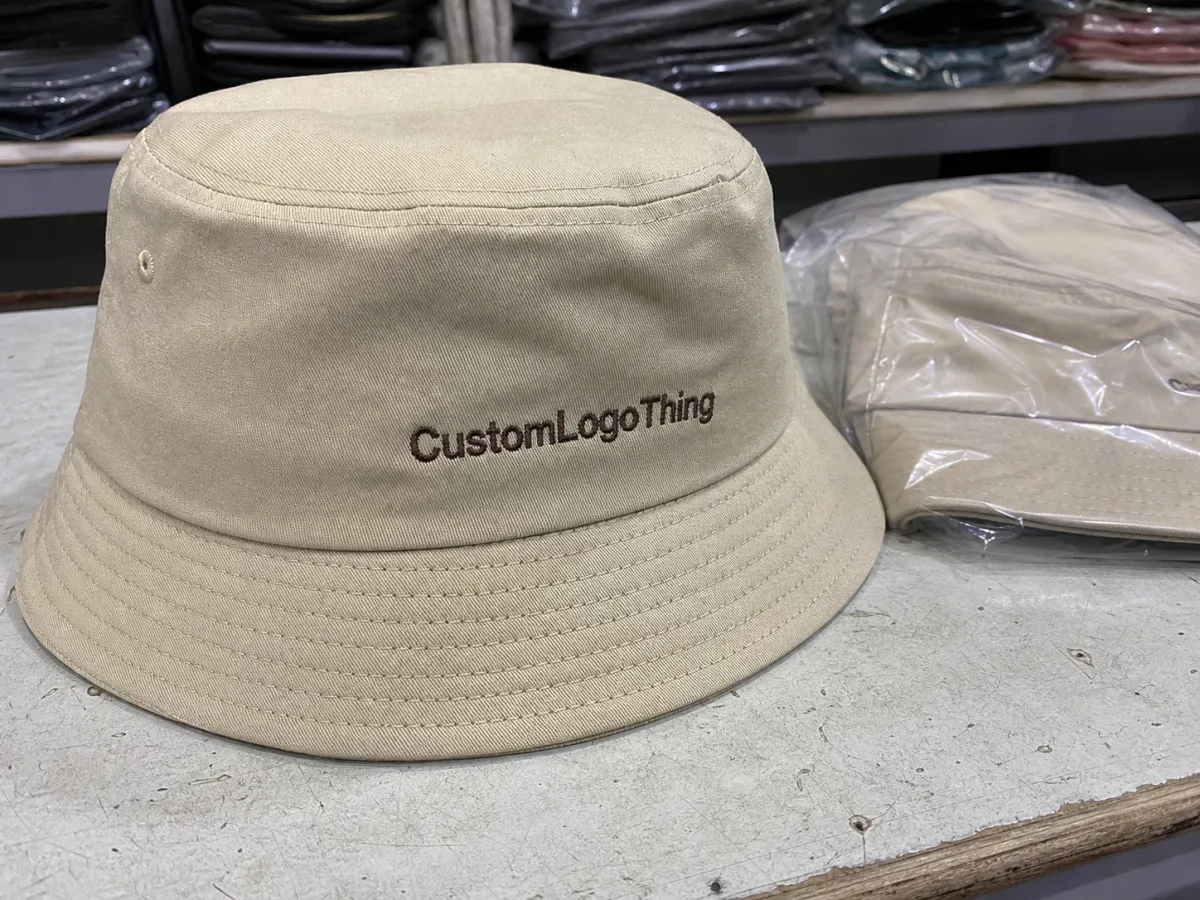
bucket hats MOQ and Lead Time for bakery orders sounds narrow until the first quote lands. Then the details start showing up. Brim width changes the look. Crown depth changes the fit. A logo that looks easy on paper can turn awkward on a curved panel.
Bakery buyers keep choosing bucket hats because they read cleanly behind a counter, photograph well in menu shots, and feel more deliberate than a random cap pulled from stock. For staff kits, retail drops, and seasonal launches, they also look more finished than a basic workwear piece.
The quickest order is rarely the most creative one. The quickest order is the one with the fewest decisions left hanging.
The real question is not whether the hat looks good in a mockup. It is whether the specs are tight enough to produce without avoidable revisions. Start with the materials, then the fit, then the decoration method. Skip that order and the quote gets messy fast.
Fabric, fit, and finish that hold up in real bakeries
For bakery use, three materials show up most often: cotton twill, washed canvas, and lightweight polyester. Cotton twill is the safest middle ground. It has enough structure for embroidery, breathes reasonably well, and keeps its shape after washing. Washed canvas looks softer and more retail-friendly, while polyester dries quickly and handles warm environments better.
Fabric weight matters too. A midweight range around 220-280 gsm usually gives the best balance of body and comfort. Light fabrics can look flat in a store setting. Very heavy fabrics can feel overbuilt for short shifts, especially near ovens or in back-of-house prep.
Fit is not a minor detail. Hair volume, tied-back styles, and the fact that head sizes vary more than standard charts suggest all affect comfort. A one-size-fits-most approach can work for merch, but staff orders often need an adjuster, elastic back, or a clearly stated size range.
Finish choices should reflect use, not mood-board ambition. A front-of-house giveaway needs one strong logo placement and a color that pairs with packaging. Replenishment orders for multiple bakery locations usually do better with neutral colors and a repeatable finish.
- Black, navy, and stone are easier to stock, easier to match, and less likely to age badly.
- Stock blanks move faster and usually cost less than dyed-to-order fabric.
- Custom color matching can push both price and lead time upward if fabric has to be sourced or dyed to spec.
- Contrast stitching, woven labels, and special trims look polished, but they add setup, inspection, and rework risk.
For most bakery teams, a standard blank with one decoration method is the cleanest answer. It is easier to approve, easier to price, and easier to reorder without drifting away from the original look.
What to confirm before you request a quote
Quotes go sideways when the brief is vague. Before asking for numbers, pin down crown depth, brim width, panel count, size range, sweatband, and closure type. Those details sound small until production starts and the factory has to guess.
One-size-fits-most is not always enough for bakery crews. Hair nets, tied-back hair, braided styles, and long shifts change what feels comfortable. If the hats are for staff rather than retail, ask whether the cap has an internal adjuster, elastic back, or measured size range.
Decoration needs to be decided early too. Embroidery is usually the simplest to produce and the most durable in daily wear. Woven patches can preserve fine logo detail without depending on stitch density. Printed panels can work, but curved surfaces are less forgiving than a flat mockup suggests.
Packaging and Labeling can quietly change the unit cost. If the hats need to ship by store, by role, or as mixed bundles, say so at the start. Otherwise the quote may only cover bulk packing, and repacking becomes a separate line item.
Useful details to send with the first request:
- Quantity by color, size, or store if the order is split.
- Decoration method such as embroidery, woven patch, print, or label.
- Artwork files in vector format with Pantone targets if the brand color matters.
- Packaging format such as bulk packed, individual polybag, belly band, or retail box.
- Delivery split if the order needs to move to more than one location.
For buyers who want a reference point on packaging and transport basics, the Institute of Packaging Professionals and ISTA are useful standards bodies to know. The point is to make the first quote real instead of aspirational.
bucket hats moq and lead time for bakery orders
Here is the part buyers actually need. bucket hats moq and lead time for bakery orders changes depending on whether the run uses stock blanks, special decoration, or custom fabric. The hat itself is rarely the most expensive part. Setup, trim sourcing, packing, and freight tend to drive the calendar and the invoice.
For small pilot runs on stock blanks, MOQ often starts around 50 to 100 units. That is common when the order uses one logo placement and a straightforward embroidery file. Once the brief asks for custom dye, several color splits, or multiple patches, MOQ can rise to 200, 300, or more.
| Order type | Typical MOQ | Estimated unit cost | Typical lead time | Best for |
|---|---|---|---|---|
| Stock blank + embroidery | 50-100 pcs | $4.50-$7.50 | 10-15 business days after proof approval | Staff uniforms, small launches, test runs |
| Stock blank + woven patch | 100-200 pcs | $5.20-$8.80 | 12-18 business days | Sharper logo detail, retail merch |
| Custom fabric + embroidery | 300+ pcs | $6.50-$10.50 | 25-40 business days | Brand-led releases, national programs |
Those ranges move with order size, fabric availability, artwork complexity, and freight terms. Embroidery is usually the safest decoration choice because it survives wear and washing better than most flat applications. Woven patches help when the logo has small text or fine outlines that stitch would blur. Printed panels can work, but only when the artwork is simple and the buyer accepts that curved panels are a compromise.
If a supplier mentions tooling, ask exactly what they mean. Some jobs involve a mold or badge shape, but many bucket hat orders are really about digitizing, sample correction, and setup. Those are different costs. One is a one-time tooling charge. The other is pre-production labor that can recur if the artwork changes.
How the production timeline actually falls apart
The production path looks simple on paper: brief, proof, sample, production, QC, delivery. In practice, one missing answer can stop the line. If the logo needs cleanup, if the Pantone needs a second look, or if the size range is still undecided, the clock does not really start.
For stock blanks with embroidery, lead time often lands around 10 to 15 business days after proof approval. Add a few more days if a sample is required first. Woven patches, multiple color splits, or store-by-store packing can move that to 12 to 20 business days. Custom fabric or custom dyeing needs more runway, and it is safer to plan 25 to 40 business days before shipping.
Rush service only works when the order is already clean. If the supplier has stock blanks, finished artwork, and a simple decoration method, a tighter schedule is realistic. If the brief is still changing, any promise of a fast custom run should be treated carefully.
- Send the full brief with quantity, deadline, decoration method, and color targets.
- Approve the proof quickly and keep one decision-maker in the loop.
- Confirm payment and shipping split before production starts.
- Keep a buffer week if the launch date has no room to move.
Lead time is not a single number. It is a chain of small decisions. Clean artwork, simple packaging, and fast approvals usually save more days than any rush fee can buy back.
How to cut delays, rework, and rush freight
The easiest way to miss a launch is to keep changing the order after the proof is signed. Color changes, extra placements, revised text, and last-minute packaging edits all create rework. Rework costs money and burns time that was already allocated to something else.
Artwork is another common failure point. A logo can be technically usable and still be wrong for production. Low-resolution files, stretched PDFs, tiny lettering, and tight embroidery detail all create avoidable headaches. A clean vector file saves more time than a long explanation ever will.
Keep the first order narrow: one hat style, one decoration method, one logo placement. If the bakery group needs different store names or a regional campaign, it is often better to use a single base design with a small variable element than to create several nearly identical versions. That keeps the order within a reasonable MOQ and helps the quote stay readable.
- Finalize sizes early so production does not stall while fit questions are still open.
- Avoid multiple decoration methods on the same run unless the margin can carry the extra cost.
- Confirm carton counts if stores need split delivery or staggered receipt.
- Lock shipping terms before production so freight is not renegotiated after the hats are finished.
Split shipments can be useful for multi-store bakery groups. If one location opens before the others, the first batch can ship on time and the rest can follow later. That is cleaner than forcing every carton to wait for the slowest address.
Why repeat orders get easier with better specs
Repeat buyers stop asking for "a quote" and start sending a tighter spec sheet. Better specs mean faster proofing, clearer MOQ guidance, and fewer surprise adjustments. A supplier who gives honest lead-time estimates is usually more useful than one who promises speed before checking fabric stock.
Consistency matters more than dramatic claims in this category. Same crown shape. Same embroidery size. Same thread color. Same carton count. That is how bakery merch and staff uniforms keep looking like they belong to the same brand.
Replenishment orders are where the value shows up. Once the design is approved, future runs can move without reopening the artwork, rechecking placement, or renegotiating the color direction from scratch. That saves time on both sides and makes seasonal restocks easier to plan.
Watch the less glamorous parts of the shipment too: inner packing, carton labeling, and outer box strength. If retail tags or paper sleeves are included, materials matter there as well. For larger programs, FSC-certified paper can make sense. For multi-store delivery, transit durability matters more than presentation alone.
A loose spec sheet can turn a 100-piece order into three rounds of clarification. A tight one can make the same order feel routine. That difference shows up in the calendar, the invoice, and the number of emails needed to get from quote to production.
What to send to lock the order
If speed matters, send buying details instead of a mood board. Quantity. Deadline. Decoration method. Logo file. Size mix. Delivery address. If the order is split across locations, list the breakdown by store. That is the minimum needed for a credible quote.
Comparing vendors only works when each one is pricing the same thing. Same blank style. Same decoration placement. Same packing method. Same freight terms. Otherwise one quote looks cheaper because it quietly excluded something. A selective quote is not a better price. It is just a narrower one.
The cleanest path is simple:
- Request the quote with the full spec sheet.
- Approve the proof and confirm the decoration method.
- Make payment and reserve the production slot.
- Leave enough shipping buffer for the hats to arrive before launch.
If you are comparing bucket hats moq and lead time for bakery orders across suppliers, keep the brief identical and ask each one to price the same run. That is the fair comparison. The best factory cannot undo late approvals, and the fastest sample room cannot fix a vague spec.
What is the typical MOQ for bakery bucket hat orders?
Small decorated runs often start around 50 to 100 units when the hats are stock blanks and the logo is straightforward. Custom fabric, special colors, or multiple decoration elements usually raise the minimum. The simplest way to keep MOQ manageable is to use one hat style and one logo placement.
How long is the lead time for custom bakery bucket hats?
Simple orders on stock blanks can move in roughly 10 to 15 business days after proof approval. Sampling, custom dyeing, mixed color packs, or multi-location packing adds time. If a launch date matters, build a buffer. Rush service only makes sense when the artwork and specs are already final.
Which decoration method is best for bakery bucket hats?
Embroidery is usually the safest choice because it holds up well through daily wear and washing. Woven patches work well when the logo has fine detail or small text. Large printed designs on curved panels are more sensitive to distortion, so a simple mark usually ages better than a busy one.
Can I mix colors or sizes in one bakery hat order?
Yes, but mixed runs can increase unit cost and slow production if the split is too complicated. Give the supplier a clear ratio before quoting so materials can be planned correctly. One artwork file across all variants keeps the order cleaner and usually cheaper.
What details do you need to quote bucket hats for a bakery launch?
Send quantity, deadline, logo file, preferred decoration method, and target colors. Include whether the hats are for staff uniforms, retail merch, or a giveaway. The more complete the brief, the faster the quote and the fewer revisions later.