A bakery Logo Patch Beanies digital proof checklist sounds overly fussy until the first shipment lands with the patch too low, the logo too tiny, or the color so dark it disappears into the knit. None of that is dramatic. It is worse. It is the kind of miss that looks small on a screen and obvious in the real world. Beanies do not forgive sloppy placement. The cuff curves. The fabric stretches. A patch that feels balanced in a mockup can drift half an inch once it is sewn and worn.
For bakery brands, that matters more than it does for a throwaway promo item. These beanies show up on staff, in retail displays, in winter pop-ups, and in photos that end up on social feeds. The logo has to read clearly from a few feet away and still look clean up close. That is why the proof is not just a design approval. It is the last controlled checkpoint before blank hats are ordered, patch tooling is locked, and labor gets scheduled.
Bakery Logo Patch Beanies Digital Proof Checklist: what gets missed
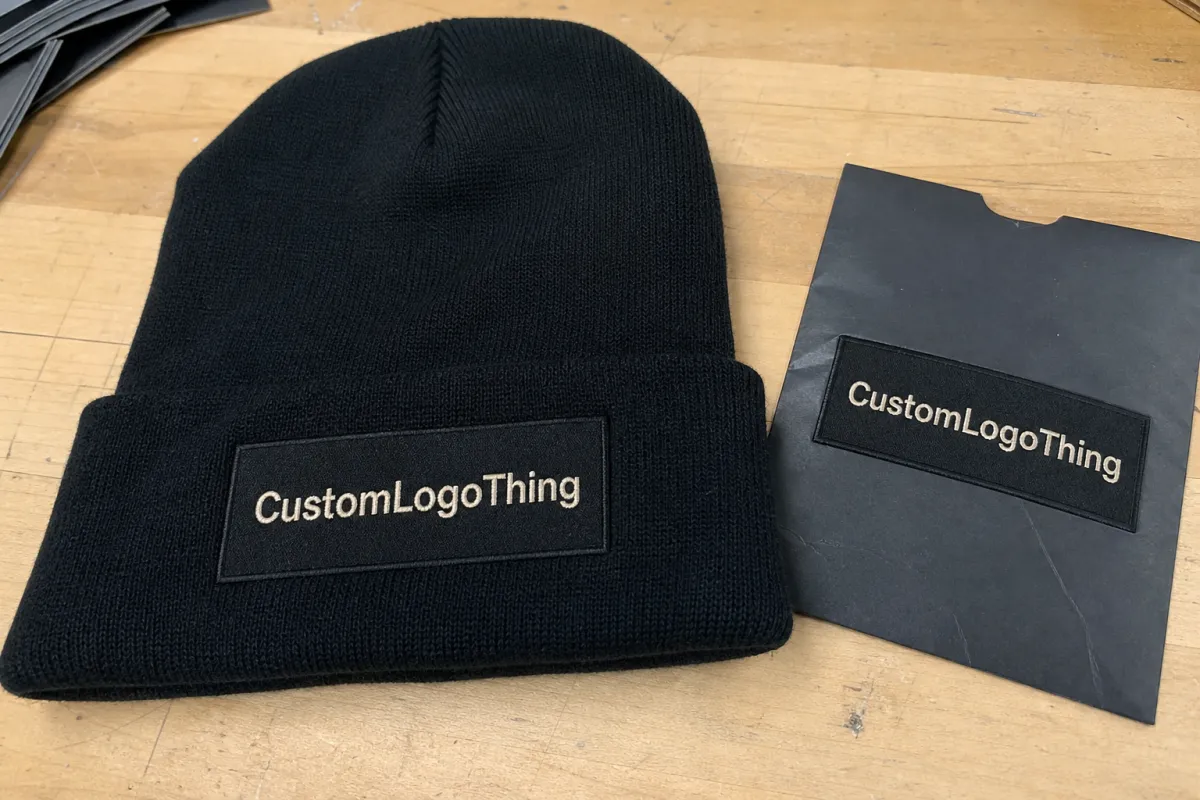
The failures that cause the most pain are rarely headline-worthy. They are small mismatches in scale, placement, and texture. A logo can be centered in a mockup and still sit slightly off once it is stitched to a cuffed knit beanie. Fine type can look sharp at full size and turn muddy when reduced to a 2.25-inch patch. Screen previews flatten everything, so the eye stops noticing what production will expose.
A digital proof turns artwork into a production plan. It should show the patch style, the beanie color, the decoration size, and the exact placement, ideally measured from the cuff seam or crown centerline. If the proof is vague, the job is vague. That is usually where the trouble starts.
Bakeries feel these errors quickly. A beanie is not just branding; it is part of the uniform, the seasonal merch line, and sometimes the wholesale presentation at the counter. The same patch has to work in person and in photos. If the proof does not account for the way knit fabric bends and stretches, the finished piece will do the accounting for you.
This checklist saves money because it catches issues before the order reaches the point where blanks are purchased, patch components are committed, or sewing time is booked. A correction on a PDF costs minutes. A correction after production starts can mean rework, extra setup, and a delayed ship date. Nobody enjoys explaining that one to a holiday launch team.
How the proof process works from artwork to sign-off
Good proofs start with clean intake. Send vector artwork whenever possible, ideally AI, EPS, or a press-ready PDF. Include the preferred patch style, beanie color, placement notes, and color references in PMS, HEX, or both. If the bakery uses one logo version on packaging and another on storefront signage, send the exact version you want on the beanie. Guessing is how revisions multiply.
Once the art is received, it gets translated into a mockup. That step is not decoration. It is a check on whether the logo still holds together at the chosen size, whether thin strokes survive the reduction, and whether the patch shape still feels right on the cuff. On a knit surface, designs with too much detail can collapse visually even if they looked perfect in a brand sheet.
The cleanest approval loop is simple: review the proof, mark comments directly, request revisions if needed, and confirm the final version in writing. If multiple people are involved, collect feedback first and send one response. Conflicting notes create delay fast. One person wants the logo larger. Another wants it lower. A third asks for a color change based on a laptop screen that was never calibrated in the first place.
"If the proof hides the problem, production will find it for you."
That rule saves more time than any sales pitch. It is also why a useful bakery Logo Patch Beanies digital proof checklist should focus on what production can actually control: placement, scale, color references, patch style, and final quantity. Pretty mockups do not help if the beanie will be worn, stretched, folded, and washed.
A clean proof process also keeps sales, art, and production aligned. That matters when the order is tied to a holiday launch, a grand opening, or staff uniforms that need to arrive before the weekend rush. If you are comparing decoration options across products, a broader manufacturing overview can help line up the beanie order with the rest of the branded set before the schedule gets tight.
Patch specs that change the final look and fit
Not every patch behaves the same. Woven patches hold fine text better than embroidery because the surface is tighter and flatter. Embroidered patches bring more texture and a heavier, more traditional look. Leather feels premium and restrained, but it usually simplifies small details. PVC handles bold shapes and high contrast well. Sublimated patches are useful for full-color art, though they look more printed than dimensional. For bakery logos with delicate scripts or narrow icons, patch material changes the result just as much as the artwork does.
| Patch type | Visual effect | Best use | Typical pricing impact |
|---|---|---|---|
| Woven | Flat, crisp, good detail retention | Small logos, fine type, clean line art | Usually mid-range |
| Embroidered | Textured, dimensional, classic look | Bold logos, heritage branding, simple shapes | Often mid to higher depending on stitch count |
| Leather | Premium, understated, low contrast | Minimal marks, lifestyle bakery branding | Commonly higher than woven |
| PVC | Bright edges, durable, modern feel | Sharp icons, bold color blocks | Often higher setup, stable at volume |
| Sublimated | Full-color, printed look, smooth surface | Complex artwork, gradients, illustrations | Varies widely by quantity |
Sizing matters just as much. A patch that looks balanced on a flat mockup can feel oversized once the knit stretches across the forehead. For cuffed beanies, a common front patch range is roughly 2.0 to 2.5 inches wide. Slouch styles often need the decoration to sit a little higher so it does not disappear into the fold. There is no magic number. The beanie shape, stitch density, and patch shape all affect how the final piece reads.
Placement changes with the style too. A cuffed beanie usually wants a centered front position. A slouch beanie can carry a slightly higher placement because the crown drapes differently. If the patch lands too low, it gets swallowed by the fold. Too high, and it can float awkwardly above the face line. Neither one looks intentional.
Backing, edge finish, color count, and stitch density influence both appearance and price. A merrowed edge gives a patch a finished border. Laser-cut edges work better for irregular shapes. Fewer colors can reduce complexity, but they do not magically erase setup costs. For bakery brands, I would be careful with tiny script, thin outlines, and crowded ingredient-style graphics. They may look clever in a branding deck and unreadable on a 2-inch patch. If the line weight drops below about 1 mm, simplification is usually unavoidable.
Material consistency matters too. If your packaging uses recyclable carriers or FSC-certified cartons, the beanie shouldn’t feel like it came from a different universe. The branding can stay in the same visual lane even if the items are produced separately. For sourcing and packaging context, the FSC and Packaging Industry Association resources are useful reference points.
Production steps, timeline, and turnaround expectations
The production path usually follows the same sequence: proof creation, revision rounds, possible sampling, full production, and packing for shipment. Each handoff is a place where delay can creep in. If the file is clean and approvals are quick, proofing may take a day or two. If the artwork needs cleanup or the buyer changes colors late, the schedule stretches immediately. That part is not glamorous. It is just how production works.
What speeds things up? Finalized artwork, one decision-maker, exact quantity, and color references that do not need interpretation. A supplier does not have to guess whether "cream" means warm ivory or a brighter off-white if the proof includes a PMS code or physical sample reference. The same goes for placement. "Centered on cuff" is useful. "Looks good on the front" is not.
Delays usually start with low-resolution files, missing fonts, and comments that should have been made on the first proof. Another common slowdown is indecision about the patch style. If the buyer approves woven, then asks to compare embroidered, then changes to leather because the sample photo looked nicer, the order has to move back to the art stage. That is not a design problem. It is a process problem.
For seasonal bakery campaigns, timeline realism matters. Employee welcome kits, holiday gifts, and grand opening promos often need 12 to 15 business days after final approval for standard production. Sampling, special packaging, or larger quantities can add more time. If the delivery date is fixed, say so early. A clear deadline lets the supplier tell you whether the job is actually feasible before anyone spends time on proof rounds.
Shipping and packing matter more than people expect. If the order is going to multiple stores, ask how the cartons will be labeled and whether items will be separated by size or location. A simple packing plan can prevent a receiving headache later. For transit testing and packaging standards, ISTA is a useful reference for how distribution hazards are evaluated.
Cost, pricing, MOQ, and quote drivers for patch beanies
Pricing usually comes down to five things: the blank beanie style, the patch material, stitch complexity, color count, and total quantity. A basic acrylic cuffed beanie with a simple woven patch will quote very differently from a premium knit hat with a leather patch and custom packaging. More detail usually means more setup, more handling, or both.
MOQ is where many bakery buyers get surprised. Smaller orders almost always carry a higher unit cost because setup fees are spread across fewer pieces. A 50-piece run can easily land 20 to 40 percent higher per unit than a 300-piece run, depending on decoration method. That does not make small orders a bad idea. It just means the economics are different, and the quote should be read that way.
Common add-ons include rush service, extra proof revisions, samples, and special packaging. If you want each beanie polybagged with an insert card, say so early. If the order needs split shipping to multiple locations, that should be included before approval. Surprises are what make a final invoice feel heavier than the first estimate.
The best way to compare quotes is to make sure the specs are identical. Same blank. Same patch size. Same backing. Same quantity. Same packaging. Same shipping assumptions. A lower number may simply reflect a thinner blank, a simpler patch, or less durable finishing. In packaging terms, apples-to-apples matters more than a headline price.
For budgeting, a realistic starting point for a simple patch beanie order often falls around $4.50 to $7.50 per piece for modest quantities, $3.25 to $5.50 at higher volumes, and more for premium materials or complex patches. Those are directional ranges, not promises. Final pricing depends on the spec sheet, which is exactly why the bakery Logo Patch Beanies digital proof checklist should come before the quote is locked.
Common proof mistakes that trigger rework
The most common miss is approving a logo size that looks fine in the mockup but turns too small once it is applied to the actual beanie panel. Knit fabric shifts the image visually. If the type is already thin, that shrinkage can turn a crisp logo into something fuzzy and hesitant.
Color is another trap. Monitor color is not a production standard. Brightness, calibration, and ambient light all change how a proof appears on screen. That is why the proof notes matter more than the image alone. If the supplier labels the patch color as "navy thread" and the screen shows a bright royal blue, the text note wins. Good buyers read both.
Low-resolution JPGs and screenshots also create trouble before production even begins. Soft edges, flattened layers, and missing fonts slow the art process and can force simplification. If the only file available is a screenshot from a website logo, ask for cleanup before approval. It is easier to fix that early than to explain why the final patch looks heavier than the logo on the bakery menu.
Vague feedback causes a different kind of rework. "Looks off" is not usable direction. Is the issue placement, scale, wording, color, or patch style? The clearer the note, the fewer revision rounds. A useful proof comment is specific enough that a production artist can act on it without a follow-up email.
One subtle mistake: forgetting that a beanie is a wearable item, not a flat print sheet. The knit structure changes how the image lands. Buyers who review only on a laptop often miss that. Opening the proof on a larger screen, or printing it out, can reveal spacing issues that a small device hides. That little habit can save a full remake.
Final approval steps before you place the order
Before you sign off, run one final pass through the essentials: artwork, patch type, placement, quantity, color notes, and shipping details. If even one of those feels fuzzy, ask for a revised proof. A one-minute correction now is much cheaper than remaking finished beanies later, especially if the order is tied to a launch date or a staff giveaway.
Save the final proof PDF and the internal approval notes in the same folder. Reorders become much easier when someone can find the exact version that was approved. That matters for bakery groups with multiple locations, because a small change in patch size or placement can become a consistency problem across stores and seasonal drops.
For teams with several stakeholders, appoint one final reviewer. That person can collect input from operations, marketing, and store leadership, then send one consolidated approval. It sounds basic. It is basic. And it prevents the back-and-forth that usually slows custom programs more than production itself.
If you are requesting a quote, send the logo files, target quantity, desired timeline, and any artwork notes together. That gives the supplier enough information to build a proof that matches the order instead of guessing at it. Use the bakery Logo Patch Beanies digital proof checklist before quoting, before revisions, and before final approval, and the odds of a clean first run improve fast.
FAQ
What should I check first on a bakery logo patch beanies digital proof?
Start with logo size and placement so the patch sits correctly on the cuff or crown. Then confirm the beanie color, patch type, and quantity. If those are right, the proof is already much closer to production-ready.
How long does proof approval usually add to turnaround for patch beanies?
A clean approval round may add only a day or two. Multiple revision cycles can push the order further out, especially if file cleanup or color changes are needed. Fast approvals depend on clear comments and final artwork.
Why is my bakery patch beanie quote higher than expected?
Small quantities raise unit cost because setup is spread across fewer pieces. Premium blanks, detailed logos, and special patch materials also move pricing up. Rush service, extra proofs, and sample requests can add more.
What file format works best for a patch beanie proof?
Vector files like AI, EPS, or PDF are best because they scale cleanly. Include PMS or HEX color references and note any text changes. JPGs are fine as references, but they are not ideal as final proof art.
How do I avoid rework on custom bakery beanies?
Assign one reviewer to collect comments so the supplier gets a single response. Check spelling, placement, patch style, and delivery details before approval. Reviewing the proof on a larger screen also helps catch scale issues early.


