Chocolate Recycled Poly Mailers Material Sample Guide
Chocolate Recycled Poly Mailers can look straightforward, but small differences in film, seal, and print show up fast once they reach the packing line. Two bags with the same color can feel and perform very differently, which is why a sample matters before a production order is placed.
A sample lets buyers check the actual material, closure, color, and fit under real warehouse conditions. Photos can suggest quality; they do not show how the bag behaves when it is filled, handled, rubbed, or stacked. For recycled-content packaging, that practical test is often the difference between an approved spec and a costly mistake.
These mailers are usually made from recycled polyethylene and chosen for lightweight ecommerce shipping, moisture resistance, and faster pack-out. They are not compostable packaging, and they should not be evaluated that way. If the goal is recycled-content messaging with a darker finish that helps reduce visible scuffs, chocolate is often a sensible option.
Why one sample can save an entire order
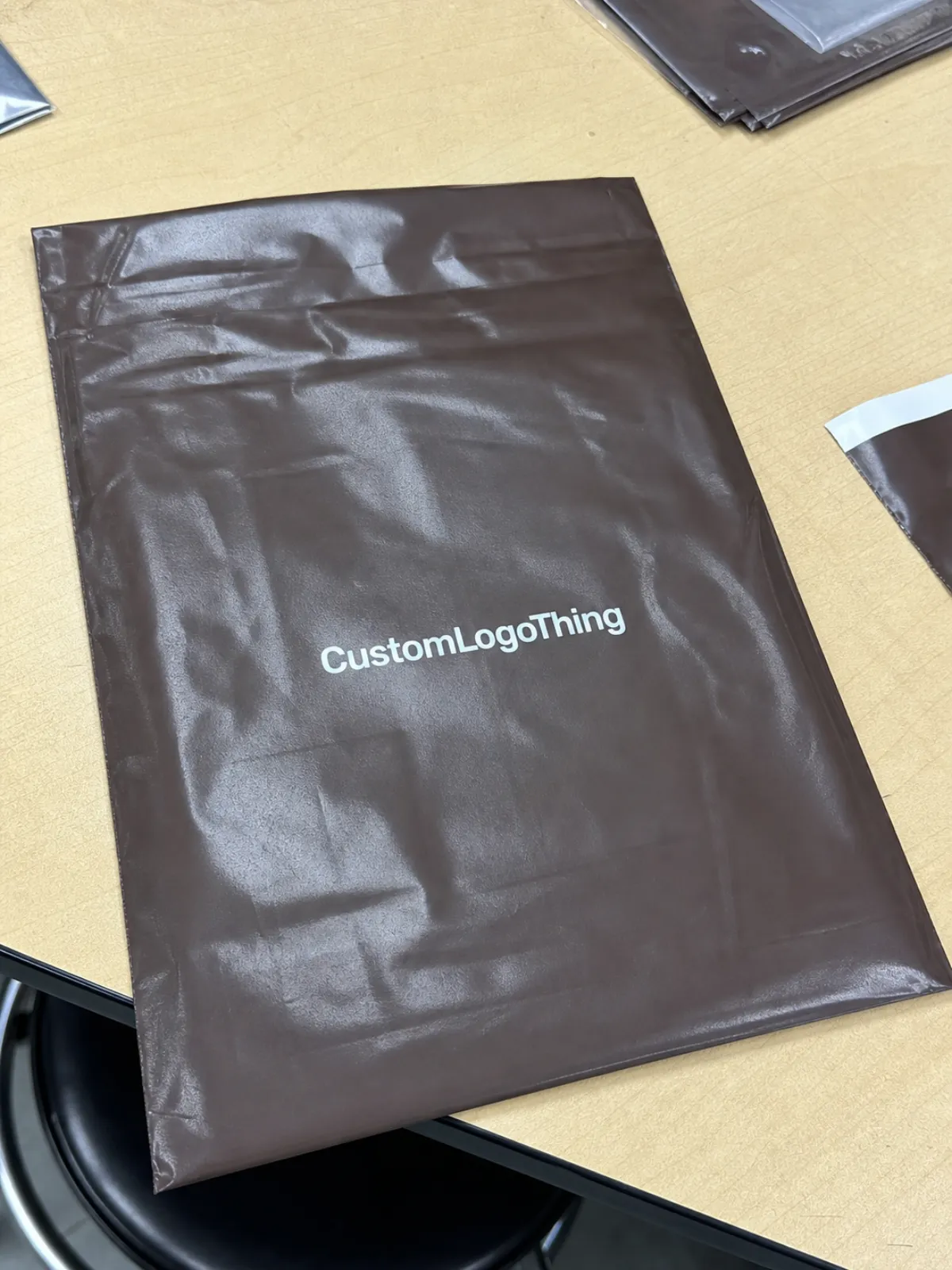
Product listings flatten everything. A recycled mailer can look premium online and still arrive too soft, too glossy, too thin, or too inconsistent for the job. A sample is the first real chance to confirm whether the paper spec matches the bag in hand.
That matters because small differences affect daily use. A slightly heavier film may resist puncture better. A better adhesive strip may close on the first press instead of requiring a second pass. A more stable brown tone may look rich under warehouse lights instead of muddy. Those details are hard to judge from a screenshot.
It also helps to think about the full pack-out system. Many teams use recycled-content mailers alongside cartons, kraft inserts, labels, or other materials. If the outer bag feels weak or fails in transit, the rest of the packaging program loses value. The customer notices the problem first.
A useful sample shows how the material behaves during normal handling. Does it feel crisp or flimsy? Does it fold cleanly or spring back? Does the darker finish hide crease marks, or do stretch lines show up clearly? That kind of feedback is more useful than a product page claim.
If you are comparing packaging formats, our Custom Packaging Products page is a useful place to review related components. If you already know you need poly mailers, our Custom Poly Mailers page is the more direct spec reference.
What to check on the sample
Start with color. Chocolate should read as an intentional brown, not a dull gray-brown or a tint that shifts heavily by lighting. Review it under the same conditions used in receiving or fulfillment. A sample that looks good at a desk can look flatter under fluorescent warehouse light.
Then check the hand feel. Recycled film often feels different from virgin material, and that is not automatically a problem. Some buyers want a firmer bag for a stronger impression. Others want a softer film for easier packing. The right answer depends on the product and the packing process.
Inspect the seams and edge welds closely. They should be even, with no pinholes, thinning, or wrinkled sections that could weaken the bag. If the mailer uses an adhesive flap, open and close it several times. The liner should peel cleanly and the strip should grab without extra pressure.
Check the fit with the actual product, not an empty bag. Pack the item, seal it, and look at the stress points. Does the bag bulge? Does the product press hard against the seam? Does the flap close flat, or does it lift because the contents are too dense for the width?
Do a quick rub test. Slide the filled mailer across a table, then inspect the surface again. Dark colors hide some abrasion, but not all of it. If the print scuffs immediately or the bag shows white stress marks after a simple handling test, that is useful information before any order is approved.
If the supplier can provide both a loose film swatch and a finished bag, ask for both. A swatch shows raw material behavior. A finished bag shows the folds, seal, closure, and print area in the form that will actually ship. Those are different tests, and both can reveal issues early.
For recycled-content claims, documentation matters too. The EPA recycling guidance is a useful reminder that claims should be phrased carefully and supported by supplier records. If the broader pack includes paper components, FSC certified inserts or cartons may help the overall program, but they do not replace mailer testing.
What controls strength, seal quality, and print
Film thickness is usually the first spec buyers notice. Many ecommerce mailers sit around 2.25 mil to 3.5 mil, though the right gauge depends on what is inside the bag. Thicker film usually improves puncture resistance, but it can also make the mailer stiffer and slower to pack.
Seal quality matters just as much. A neat seal is not enough if it opens under pressure or creeps after stacking. Tug the seam by hand and inspect the bonded edge under light. A clean-looking seal with poor bonding is a common sample failure, and it is cheaper to reject it before production.
Print performance changes quickly on darker recycled film. Chocolate bags can look sharp when the artwork is designed for contrast, but small text and thin lines can disappear if the ink is too light. A logo that reads well on white paper may need bolder treatment on brown film.
Material consistency also matters. Recycled resin blends can vary slightly from batch to batch because the feedstock is not identical every time. Small shifts in gloss, stiffness, or tone are normal within a controlled range. The sample should show whether those shifts stay within the tolerance your team can accept.
Simple checks catch a lot:
- Stretch the film gently and watch for whitening at stress points.
- Inspect the seal under light for pinholes, waviness, or thin spots.
- Apply a label and rub it after a few minutes to test adhesion.
- Pack the real product and see whether the mailer closes without strain.
- Drop the packed bag from waist height a few times to look for seam creep or flap lift.
For teams that want a more structured way to think about shipment durability, the testing mindset behind ISTA shipping standards is useful. You do not need a lab to learn something real. A few practical pack-out checks, handling tests, and basic drops often reveal more than a polished sample sheet.
If a sample only looks right and does not pack or ship right, it is not ready.
Sample costs, MOQ, and what changes price
Sample pricing depends on what kind of sample you request. A plain film swatch is usually the cheapest option and may be free or nearly free aside from shipping. A finished unprinted bag costs more because it requires cutting, sealing, and assembly. A printed proof costs the most because it adds setup, press time, and review steps.
| Sample type | What it shows | Typical cost range | Best use |
|---|---|---|---|
| Plain film swatch | Color depth, gloss, hand feel, and recycled film character | $0 to $20 plus shipping | Early screening before you finalize a bag spec |
| Finished unprinted mailer | Seal quality, closure behavior, folding, and fit | $20 to $60 plus shipping | Checking the real bag structure with the actual product |
| Custom printed sample | Artwork clarity, color contrast, registration, and final brand look | $75 to $200+ depending on setup | Approving the final design before production |
MOQ affects price more than many buyers expect. A 3,000-piece order usually carries a higher unit cost than a 10,000-piece run because setup, film, and print costs are spread over fewer bags. If the order needs a custom width, a thicker gauge, a matte finish, or a tighter color match, the quote moves again before the logo is added.
Sample spend can still save money. A sample may show that the bag needs a stronger adhesive, a slightly different width, or a heavier film to stop puncture issues. Catching that on one test order is cheaper than discovering it after thousands of units are already printed.
Ask direct questions before approving the sample path:
- Will the sample charge be credited back on the production order?
- Is freight included or billed separately?
- Does the quote include one revision, or does every revision cost extra?
- What MOQ is tied to the quoted price?
- Are recycled-content documents available in a form your team can file?
If those answers are vague, the quote is not ready yet. A good sample process should make cost drivers visible, not hide them behind generic pricing.
Sample request to production timeline
The smoothest sample process starts with a complete brief. Share the bag dimensions, closure type, product weight, color target, and print coverage before anyone starts cutting film. Add packing constraints too. If the bag needs to hold a sharp-edged item, a bulky garment, or something that shifts in transit, say so early.
Once the sample arrives, review it like a production tool. Confirm that the product fits. Check how the film folds. Inspect the seal. Look at the color in the lighting your team actually uses. If the order includes multiple SKU sizes, test the worst-case item first. That is usually the one most likely to expose a bad width or a weak closure.
Timelines vary. A plain sample usually moves faster than a printed proof because there is less setup. A printed sample takes longer if the artwork needs adjustment, the color match is tight, or the approval chain is crowded. Teams lose time when they do not know who has final sign-off.
A simple approval flow helps. One person confirms fit. One person signs off on print and color. One person approves the final spec for purchase. It does not need to be complicated; it just needs to keep everyone reviewing the same version instead of multiple versions pulled from email threads.
For new programs, a small pilot run can be worth the extra step. It is not about making the order bigger. It is about proving that the approved sample matches actual production. If the pilot run behaves differently, the team still has room to adjust before the full order ships.
Mistakes that lead to bad approvals
The most common mistake is judging the bag by appearance alone. Chocolate can look premium and still be a problem if the closure lifts, the film feels brittle, or the seam starts creeping under load. A nice sample is not automatically a good sample.
Another mistake is testing an empty bag and calling it done. That tells you almost nothing. A flat mailer can close beautifully with nothing inside, then bulge, wrinkle, or split once a real product is packed and compressed. Fit matters more than presentation in that moment.
Lighting causes plenty of false confidence. A sample reviewed under warm office light can look richer than it does in a warehouse. Under cooler fluorescent light, the same bag can look flatter or grayer. If design, operations, and purchasing all look at different lighting conditions, they are not comparing the same thing.
People also ignore scuffing until it is too late. Recycled film can show handling marks differently than virgin film. A darker color helps, but it does not erase abrasion. If the bag moves through a fulfillment center or sits on retail shelves, a simple rub test is worth the time.
Finally, do not let paper-based sustainability claims distract from the bag’s job. FSC certified inserts or cartons can support the broader package story, but they do not fix a mailer that tears, opens, or prints poorly. The outer bag still has to perform on its own.
How to document the approval
Once the sample passes, document what made it pass. Keep the notes in one place. Compare two or three samples under the same light, score them against the same criteria, and write down the result while it is still fresh. Memory gets sloppy fast once the order moves into purchasing.
A short spec sheet is enough if it is clear. Include dimensions, thickness, closure style, color target, print coverage, carton count, acceptable variation, and any documentation tied to recycled-content claims. If the production quote changes later, that sheet becomes the reference point instead of a string of half-remembered comments.
Photos help more than most teams expect. Take shots of the seal edge, the packed product, and the front print under the same lighting used for approval. When operations, design, and purchasing are all looking at different screens, a few consistent photos reduce the back-and-forth.
If the final version is close but not perfect, ask whether the supplier can provide a revised sample or a small production pilot. Sometimes a slight change in width, film gauge, or adhesive strength solves the problem. Sometimes it does not. That is the point of the sample process: catch the issue while changes are still cheap.
Once the mailer behaves the way the real order should, the rest of the program gets easier. Packing is steadier. Brand presentation is more consistent. Returns caused by bad closure or weak film are less likely. A proper sample review usually costs less than one avoidable reprint or return cycle.
What should I check on a chocolate recycled poly mailer sample?
Check the film feel, the seam quality, the closure strength, and whether the bag fits the real product without stressing the edges. Review the color under warehouse lighting, not just on a desk. If there is print, make sure it still reads clearly on the darker surface.
How does a recycled poly mailer sample affect unit cost?
The sample shows whether the final spec needs thicker film, a stronger adhesive, or a different print method, and those changes affect unit cost. MOQ matters because smaller runs usually cost more per bag than larger ones. Custom sizing and special finishes also move pricing faster than the base material choice alone.
How long should sampling and production take?
A plain material sample usually moves faster than a printed proof because it needs less setup and fewer approvals. Production time can stretch when the artwork changes or the color match is tight. The fastest route is to approve one clear spec set before moving to the next stage.
Will chocolate-colored recycled mailers hide scuffs or print issues?
The darker color can hide minor handling marks better than a light film, but it can also reduce contrast if the artwork is too thin. Matte and textured finishes may hide glare better than glossy film. Always inspect the sample under the same lighting used in packing.
What specs should I confirm before placing a sample order?
Confirm the mailer dimensions, thickness, closure style, print requirements, and the material claim you want to support. Ask for acceptable color variation, freight terms, sample credit terms, and whether revisions cost extra. If those details are clear, the sample process becomes useful instead of noisy.


