If you are sourcing packaging for invitations, favors, welcome boxes, or event-shop shipments, the wedding Recycled Poly Mailers Material Sample guide is not a box-ticking exercise. It is the fastest way to separate what looks good online from what actually survives packing, handling, and shipping. Screenshots do not show seal strength. They do not show scuffing. They definitely do not show how a soft pastel print behaves under warehouse lighting.
Wedding packaging sits in a strange middle ground. It has to protect product, but it also has to feel intentional. That means recycled-content poly mailers are judged on more than size and color. Buyers care about fit, finish, print clarity, opacity, and whether the mailer still looks clean after it has been folded, sealed, stacked, and moved around a table a few times. A sample is the easiest way to see those tradeoffs before they become expensive.
The hidden problems are rarely dramatic at first glance. A mailer can look premium in a mockup and still arrive with weak side seams, print that dulls under light, or an adhesive strip that grabs poorly in cold conditions. This guide focuses on the parts that matter in real production: what to ask for, how to inspect it, where recycled films vary, and how to avoid a rushed approval when the wedding timeline is already tight.
Wedding Recycled Poly Mailers Material Sample Guide: What It Actually Solves
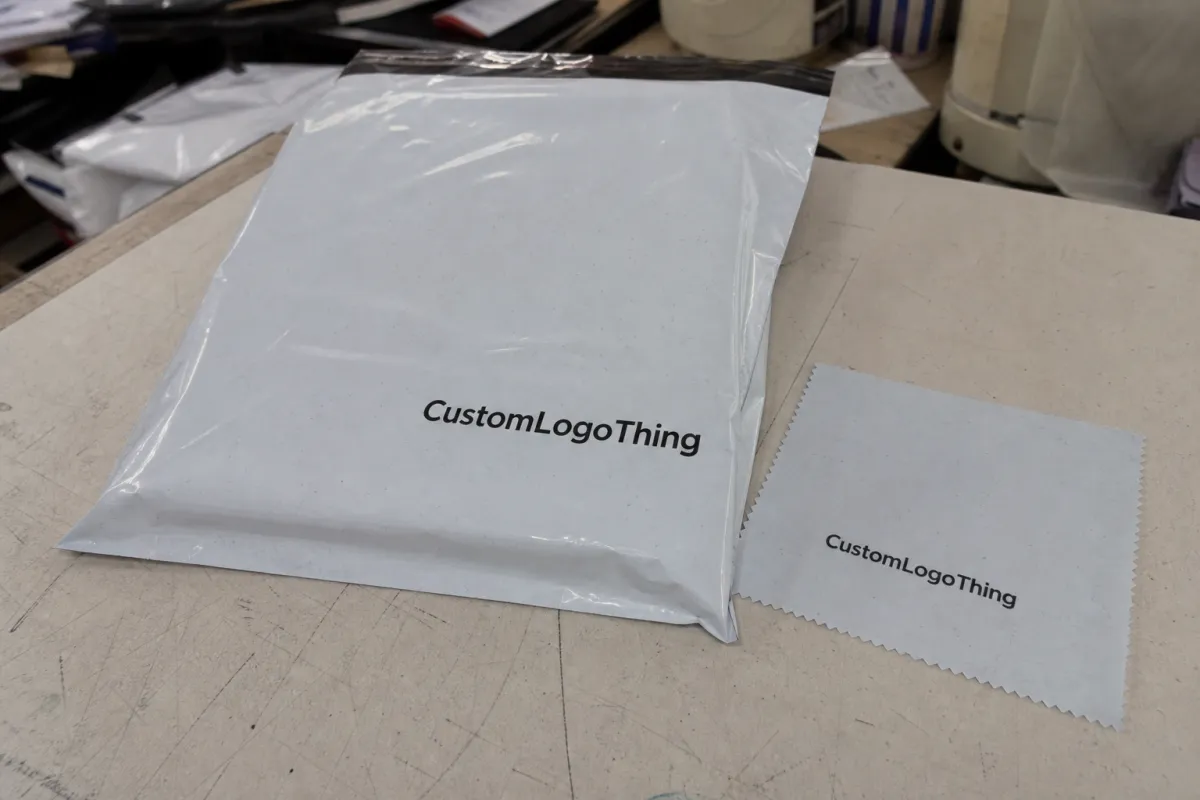
A sample turns assumptions into something measurable. That sounds obvious, but buyers still treat samples like decoration. They are not. A good sample tells you whether the mailer protects the contents, presents the brand well, and can be reproduced consistently in a production run. Those are three different checks, and all three matter.
For wedding use, the same recycled film may be right for one job and wrong for another. A flat invitation suite needs different performance than a welcome-kit shipment with a soft box, ribbon, and tissue paper. Favor orders have their own issues, especially when the mailer sits on a shelf for a while before shipping. Samples need to be tested against the actual use case, not an imaginary one.
The best buyer questions are simple: does the mailer close securely, does it stay attractive after handling, and does it match the promised spec? If the answer is yes to all three, you have something usable. If one of those falls apart, the sample has done its job by failing early.
“A sample is only useful if it survives handling. If it cannot pass a bend, a drop, and a seal check, it is not ready for production.”
Ask for a spec sheet with every sample. The recycled-content claim, thickness, closure type, finish, and print method should all be listed clearly. That is how you keep marketing language from drifting away from production reality. A pretty proof without specs is just a pretty proof.
It also helps to treat wedding mailers the same way packaging teams treat corrugated or rigid box samples: inspect the structure, not just the artwork. The substrate is flexible here, but the logic is the same. Testing should reflect shipping and storage conditions, not studio conditions.
How Sample Packs Translate into Real Production Performance
A useful sample pack usually includes more than one piece. A plain mailer shows the material itself. A printed version shows color, coverage, and finish. A spec sheet shows whether the sample is actually tied to the construction you plan to order. If the supplier is organized, the pack may also include notes on closure behavior or alternate thicknesses.
The details that change performance are predictable: recycled PE blend, gauge, seal geometry, closure type, and surface finish. Those are the levers. Thickness influences puncture resistance and the way the film feels in hand, but thickness alone is not the whole story. A 60-micron mailer and an 80-micron mailer will feel different immediately. The difference is usually obvious before you even start packing.
The right way to test a sample is plain and practical. Put in the real item or the real insert weight. Seal it. Bend the corners. Slide it across a table. Rub the print lightly. Check for whitening, edge lift, or scuffs. If the mailer is meant for a wedding welcome kit, test it with the actual tissue, card stack, or boxed item. An empty mailer can pass almost anything. A loaded mailer tells the truth.
There is also a difference between a stock sample and a production-intent sample. Stock samples are fine for checking hand feel, opacity, and broad finish. They are not proof of exact color matching or final closure hardware. A production-intent sample is much closer to the actual order, but it takes more time and usually costs more. Buyers often discover this only after the first proof misses the mark.
For teams that want to stay close to standard packaging practice, the same discipline used in recognized handling references applies here. Test under realistic conditions, not ideal ones. Industry references such as ISTA and EPA are useful starting points if sustainability and transit performance both matter.
If the wedding brand story includes recycled materials or certified inserts, the mailer sample should be reviewed as part of the full package. An attractive outer mailer does not rescue an insert set that wrinkles, slides around, or arrives loose inside the pack.
Key Material Factors That Change Feel, Strength, and Print Quality
Gauge and thickness are usually the first numbers buyers ask for. That makes sense. They affect puncture resistance, drape, and the overall sense of quality. For wedding packaging, perceived quality matters almost as much as structural quality. A slightly heavier film can make a soft color palette look more deliberate. A thin, floppy film can make good artwork feel cheap.
Recycled-content claims need context. Not all recycled films behave the same, and not every percentage means the same thing in practice. Post-consumer content can improve the sustainability profile, but it can also bring small variations in color, texture, or opacity. None of that is automatically a problem. It just means the buyer needs to judge the material by how it performs, not by the label alone.
Print quality is where recycled film can surprise people. White ink is often the difference between crisp branding and washed-out artwork. Metallic accents can look sharp, but they are sensitive to gloss and lighting. Pastel wedding colors are especially tricky. Blush, sage, and dusty blue can shift noticeably depending on whether you are checking them under daylight, showroom lights, or a packing table LED.
Size, gusset, and closure matter just as much as the print. If the mailer is too tight, the contents crease and the seam gets stressed. If it is too loose, everything slides around and the package starts to look careless. Wedding shipments have a presentation burden that ordinary utility mailers do not. Buyers feel that immediately when they hold the sample.
There is also a practical sustainability point that gets missed a lot: recycled material is only a better choice if it still performs. A mailer that tears, has to be replaced, or causes a re-ship creates waste of its own. The cleaner choice is the one that meets the job the first time.
- Gauge: higher numbers usually mean a firmer feel and better puncture resistance.
- Opacity: essential if the contents should not show through under bright light.
- Finish: matte hides handling marks better; gloss usually makes color appear brighter.
- Closure: adhesive, peel-and-seal, or zipper changes speed and security.
- Artwork coverage: full-bleed art and white ink respond differently on recycled film.
If you are comparing other packaging elements at the same time, it helps to keep the full kit aligned. Custom Packaging Products can help match the outer mailer to inserts and secondary wrap, while Custom Poly Mailers is the easiest place to compare construction options at a category level.
Cost, Pricing, and MOQ for Sample Requests
Sample pricing and production pricing are different conversations. A stock sample can be low-cost or free apart from freight. A custom proof costs more because someone has to set up the print, run the sample, and inspect the result. A full production-intent sample usually costs more again because it is meant to mirror the final build more closely.
For wedding packaging, the major cost drivers are predictable: film blend, thickness, size, print colors, closure style, and whether the mailer is custom decorated. In practice, sample fees can range from freight-only to roughly $20-$100 for a more complex proof, depending on setup and revision time. Production pricing is separate and depends heavily on order size. A run of 500 pieces and a run of 5,000 pieces live in very different price worlds.
MOQ affects unit cost in a straightforward way. Smaller runs carry more setup cost per piece, so the unit price rises. Larger runs usually improve pricing, especially when the same spec is repeated without changes. The cleanest quote comparison is always the same spec against the same spec: same dimensions, same gauge, same finish, same print method, same count. Anything else muddies the numbers.
Before requesting quotes, it helps to compare the sample types side by side.
| Sample Type | Typical Use | Typical Cost Driver | Typical Timeline |
|---|---|---|---|
| Stock material sample | Check feel, opacity, and general color tone | Freight and handling | Often a few business days |
| Printed proof | Review logo color, finish, and coverage | Setup plus print time | Usually longer than stock samples |
| Production-intent sample | Verify the final spec before release | Material, setup, and review time | Depends on art approval and queue |
Unexpected charges usually show up in freight, rush handling, plate or setup fees, and expedited color matching. Those details are easy to miss in the first quote, so ask for them directly. The cheapest sample is not the cheapest option if it forces a second round.
If recycled-content language is part of the buying brief, do not let it distract from total landed cost. A mailer can sound sustainable on paper and still be the wrong call if it arrives late, tears in transit, or needs to be remade. Real value is a mix of quality, timing, and fit.
Process and Timeline: From Sample Request to Approval
The cleanest approval flow is simple: request sample options, review the spec sheet, test the material, confirm artwork, and sign off on the final construction. The hard part is that wedding schedules leave little room for delays. Invitation launches, welcome box assembly, and shipping deadlines can compress a process that normally needs breathing room.
Stock samples move faster because they do not need custom setup. Printed proofs take longer because the supplier has to prepare artwork, run the job, and inspect the result. If the date is fixed, count backward and leave room for revisions. A few extra days can save the order.
Build the schedule around the actual use point, not only the arrival date. If the mailers are going into bridal welcome kits, they may need to be on hand before the rest of the kit is packed. If they are for an event shop, there may be photography, merchandising, and inventory setup before the first order goes live. That changes the timeline more than most buyers expect.
A practical sequence looks like this:
- Request two material options plus one printed proof if branding matters.
- Review the spec sheets and confirm size, gauge, closure, and recycled-content claims.
- Test the sample with the actual insert weight or product load.
- Inspect the sample in daylight and indoor light.
- Approve one master sample in writing before production starts.
That written approval matters more than people think. It becomes the reference point if the production run drifts from the approved sample. A good supplier treats it as a shared checkpoint. A good buyer treats it as a protection against memory gaps and spec creep.
Keep one backup option alive until the order is actually released. Print delays happen. Freight delays happen. A little flexibility near the end is far more useful than trying to force a perfect spec after the calendar has already closed in.
Common Mistakes Buyers Make When Reviewing Recycled Mailer Samples
The first mistake is judging by appearance alone. A recycled mailer can look refined and still fail on seal performance, tear strength, or scuff resistance. That matters even more for wedding packaging because the eye gets pulled toward color and branding while the functional checks get rushed.
The second mistake is comparing different constructions as if they were the same product. If one sample is 60 microns, another is 80 microns, and a third uses a different closure style, the comparison is not clean. The prettiest one under the room lights is not automatically the right one for production.
Lighting creates another trap. Wedding colors are sensitive to light temperature, and recycled film can exaggerate that. Warm light may make blush look richer. Cool daylight may make the same color look flatter or gray. The fix is not to trust one light source. Check it in more than one.
Fit gets missed all the time. If the real item is a folded invitation suite and the sample is empty, the test is incomplete. Load the actual insert, seal the mailer, and check for bulging, rubbing, or stress at the edges. That one step catches a lot of expensive mistakes before production starts.
The last mistake is approving a sample without asking about repeatability. Recycled materials can vary slightly between runs, and a buyer should know what tolerances are acceptable for size, print, and closure placement. If the order has to stay consistent across multiple wedding shipments, the acceptable range should be written down before the run begins.
This is where experienced packaging teams usually separate themselves from casual buyers. They do not ask only, “Does it look nice?” They ask, “Will it still look nice after packing, shipping, and storage?” Different question. Better answer.
For a sourcing benchmark on certified material context, the FSC site is worth checking if chain-of-custody language is part of the brief.
Expert Tips and Next Steps Before You Place the Order
Request at least two material options and one printed proof if branding matters. That gives you a better read on feel, color, and seal strength than a single sample ever will. For a premium wedding suite, the extra step is usually cheaper than rework.
Test the sample with the real insert weight, tissue, card stack, or boxed item you plan to ship. Do not swap in a generic load. A mailer that behaves perfectly with paper may act very differently with ribbon, fabric, or a soft-sided favor bag. Real content exposes real risk.
Inspect the sample under daylight and indoor light, then keep one approved piece as the master reference. Label it with size, gauge, closure, print details, and any color references you actually care about. That small bit of discipline makes reorders easier and reduces spec drift when the work gets handed to someone else.
Confirm the reorder spec in writing. Include the exact size, gauge, color, print method, closure, and acceptable tolerances. If the sustainability story matters, write the recycled-content claim language into the approval too. Clean paperwork is not glamorous, but it prevents expensive misunderstandings.
That is the real value of the wedding Recycled Poly Mailers material sample guide. It is not a checklist for the sake of looking organized. It is the approval system that keeps presentation, timing, and budget from pulling against each other. Once the approved sample is documented, the rest of the order has a much better chance of behaving the way the proof promised.
The best final order is the one that looks right, fits right, and ships right. If the sample process does its job, those three things stop being a guess.
What should a wedding recycled poly mailers material sample guide include?
It should include a spec sheet with size, gauge, recycled content, closure type, finish, and print method. Add a plain sample or swatch plus at least one printed version so you can review color, opacity, and surface quality. It should also explain how to test fit, seal strength, and scuff resistance with the actual wedding items.
How many samples should I request for wedding recycled poly mailers?
Request at least two material options so you can compare feel and performance instead of relying on one piece. If branding matters, add one printed proof because ink coverage and color can shift on recycled film. If timing is tight, ask for a backup sample option in case the first choice misses the schedule.
Do recycled poly mailer samples match the final production order exactly?
Only if the supplier confirms the sample uses the same gauge, closure, and print method as production. Stock samples may show material quality but not the exact final color or finish. Ask for a written approval reference so the production run can be checked against the approved sample.
What affects the cost of wedding recycled poly mailers material samples?
Material type, print complexity, and whether the sample is stock or custom all affect pricing. Shipping, rush setup, and special proofs can also increase the cost. MOQ and final order size influence unit price more than the sample itself, so compare both together.
How long does the sample and approval process usually take?
Stock samples can arrive quickly, while custom printed proofs usually need extra setup and review time. Build in time for testing, artwork revisions, and shipping before the wedding deadline. A written approval step helps prevent delays if the first sample does not match the final spec.

