An electronics Recycled Poly Mailers material sample guide is only useful if it answers the ugly questions, not the polished ones. Recycled film can look fine in a spec sheet and still feel different once it is folded, sealed, labeled, and packed around an actual product. Gauge tells part of the story. Seal behavior, puncture resistance, surface drag, opacity, and scuffing tell the rest.
That matters more for electronics than for generic apparel or soft goods. Cables press into corners. Chargers poke through slack film. Slim accessory boxes shift inside the bag and create pressure points. Even a small kit can be harder on a mailer than it looks on a drawing.
The best sample review is a live packing test. Not a hand wave. Not an empty bag sitting on a desk. If the sample survives the real item, the real seal, and the real handling path, it is doing its job. If it fails early, that is cheap information. Better now than after a larger run is already in motion.
A sample should answer one thing: does the mailer still protect the product after the real weight, seal, and handling are added?
What an electronics recycled poly mailers material sample guide actually proves
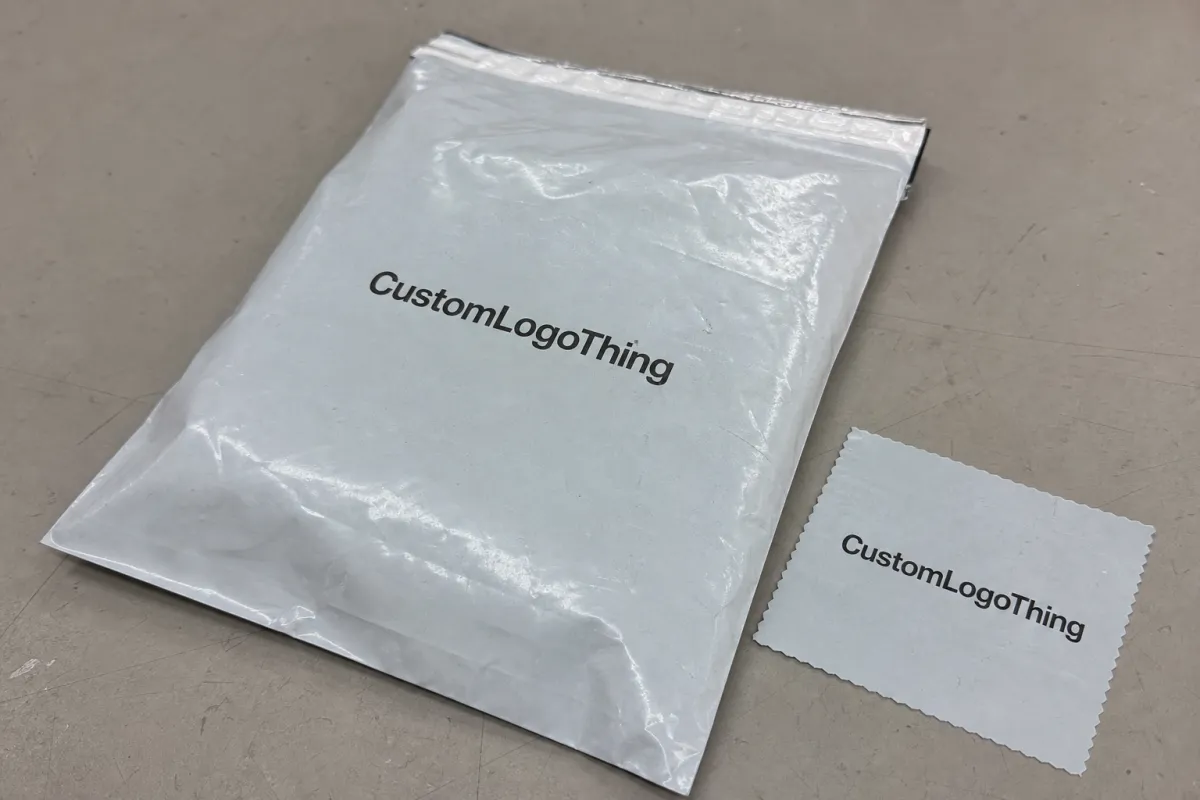
Recycled content changes more than most buyers expect. Two bags with the same nominal thickness can feel very different in the hand. One may be crisp and stable. Another may feel softer, have more slip, or behave a little differently at the seal. That is not a cosmetic issue. It affects packing speed, closure reliability, and how confident the finished mailer looks on the line.
The sample is supposed to prove fit, function, and presentation under real conditions. An empty mailer can hide weak seams and make the film look stronger than it is. It can also make a bag seem oversized when, in practice, the product needs that extra room to close cleanly. The only meaningful test is with the actual item mix inside.
For electronics shipments, the sample should be checked with the product, the accessory bundle, and any inner carton or insert used in production. If you ship a device with a charger, user guide, cable, or warranty card, include all of it. The bag does not care about your spec sheet. It reacts to shape, edges, and pressure.
That is why this kind of review is a performance check, not just a material check. It tells you whether the mailer can handle the packout, the warehouse, and the customer-facing side of the order. If it passes, production usually feels predictable. If it does not, the failure shows up where you can still do something about it.
How recycled film behaves in real packing conditions
Recycled film is not one thing. A bag made with post-consumer recycled content can have a different odor, a different seal window, or a slightly different finish than a virgin-resin bag, even when the wall thickness is the same. That is normal. What matters is whether those differences interfere with use.
Most suppliers will quote a PCR percentage, but that number alone does not tell you how the finished mailer will behave. The blend, the layer structure, the sealant layer, and the extrusion settings all matter. A coextruded bag can place recycled content in one layer while keeping the inner seal layer tuned for closure performance. That is often the difference between a bag that looks good and a bag that runs well.
In practical terms, buyers usually need to watch a short list of behaviors:
- Seal consistency during normal packing speed, not just one clean lab sample.
- Puncture and dart resistance near corners, cords, and sharp accessory edges.
- Stretch and recovery when the mailer is slightly overfilled.
- Scuffing and whitening after the bag is flexed, stacked, or moved across a conveyor.
- Print adhesion if the design includes branding, instructions, or a return message.
If your team has access to formal testing, pair the sample review with established methods for the finished package and the film itself. ISTA procedures are useful for transit simulation, and common film tests such as ASTM D882 for tensile behavior or ASTM D1709 for dart impact can give you a cleaner comparison between materials. You do not need a full lab for every decision. You do need repeatable criteria.
Warehouse conditions matter too. Heat, humidity, dry air, and fast throughput all change how a film feels. A bag that looks perfect in an office can act differently on a packing line where hands are moving quickly and cartons are dusty. Review the sample where the order will actually be packed. Clean rooms make nice photos. They do not always make honest results.
Key specs to compare before you approve a run
Price gets the first question. Specs should get the first answer. A bag can be technically thick and still feel weak if the resin blend or seal layer is wrong. For electronics, the difference between 1.8 mil and 2.5 mil is not just a number on a sheet. It changes how the mailer resists puncture, holds a seam, and presents after packing.
Size is the next filter. Measure the actual packed item, not just the device. Include the accessory bundle, the inner carton, and any insert or instruction sheet. Then allow enough room for clean insertion and a proper seal. A bag that fits in theory can still be annoying in practice if the top bunches, twists, or forces the operator to work too close to the edge.
Review these points before anyone signs off:
- Dimensions and fold allowance for the real packed item, not the product alone.
- Closure style, including adhesive strength, peel behavior, and any tamper evidence.
- Seam quality and trimmed edge finish, both of which affect tear resistance and appearance.
- Opacity, especially if the contents should not be visible through the film.
- Print requirements, including logo coverage, barcode placement, and scan quality.
- Special handling needs like anti-static treatment or dust control for sensitive parts.
If your outer shipper uses FSC certified fiber or a kraft paper insert, keep those claims separate from the mailer itself. A recycled poly bag can work well inside a paper-based program, but it is not the same thing as FSC certified corrugated cardboard or biodegradable packaging. Buyers get into trouble when they blur those categories and then try to use one material claim to cover everything in the packout.
That separation matters for operations too. If the packaging system depends on a recycled poly mailer for moisture resistance and speed, do not replace it with paper just because the sustainability story sounds cleaner. The sample tells you what actually fits the product. It does not reward wishful thinking.
A practical sampling checklist for your team
The cleanest sample review uses the same structure every time. Start with three real shipping scenarios: a light accessory pack, a standard product carton, and a worst-case fuller load. Those three usually expose the weak points. Does the bag close without stress? Does the seal lie flat? Does the outer surface still look acceptable after handling?
Run the test the same way your team works. If the product is hand packed, use hand packing. If the seal is applied fast on a line, keep the same speed and pressure. If the shipping label is applied after closure, place it where the warehouse will actually place it. Small changes in process can change the outcome enough to make a sample review useless.
A simple checklist keeps the review honest:
- Measure the packed item and compare it to the closed bag dimensions.
- Check overlap at the seal area so the closure has enough bite.
- Shake the packed mailer gently and watch for movement or corner poke-through.
- Flex the bag a few times to see whether the film clouds, scuffs, or stresses.
- Apply the shipping label and a return label if the same mailer will be reused in reverse logistics.
- Record pass-fail notes and take photos so internal teams can compare samples later.
That last step saves time later. A good approval record prevents confusion six months down the line when someone asks why one bag was selected over another. It also helps if you are comparing Custom Poly Mailers against another format or aligning the sample with other Custom Packaging Products in the same program.
Warehouse conditions matter. If the team packs in a warm room, under bright lights, or at high throughput, test there. A sample that passes in a quiet conference room can still fail during a live shift, especially if the product is slightly irregular or the operator is working fast.
Sample process and lead time: what happens after you request one
Most sample requests follow the same path. The supplier confirms the material, size, and closure style. Then the layout is reviewed, followed by a stock sample, prototype, or short-run printed sample depending on how custom the bag is. If the spec sheet is clear, the whole thing moves faster because fewer details need to be guessed.
Lead time depends on the sample type. A stock unprinted sample can move quickly because the bag already exists. A printed prototype takes longer because it needs artwork review, setup, and sometimes additional confirmation on film structure or print placement. If your recycled-content target is unusual, expect another round of review. That is normal. It is also why vague requests waste time.
Here is a practical comparison:
| Sample type | Typical cost | Lead time | Best use |
|---|---|---|---|
| Stock unprinted sample | $0 to $25 plus freight | 2 to 5 business days | Fit checks, seal tests, and quick internal review |
| Printed prototype | $75 to $200 | 5 to 10 business days | Brand review, print placement, and opacity checks |
| Short-run approval sample | $150 to $350 | 7 to 15 business days | Closer performance validation before a larger order |
Those are planning ranges, not promises. Freight, carton count, and setup work move them around. The better question is not whether the sample is free. It is whether the sample tells you enough to approve production without creating a correction later.
A clean request should include dimensions, closure type, print file status, target thickness, recycled-content target, and whether the mailer needs anti-static behavior. That level of detail usually shortens the process more than a rush request ever will. It also reduces the number of sample revisions that happen because someone forgot to mention a cable, insert, or barcode panel.
Cost, pricing, MOQ, and unit cost drivers
Pricing for electronics mailers usually follows a few predictable drivers: gauge, recycled-content target, bag dimensions, print colors, seal style, and whether the order uses a standard size or a custom die. A simple one-color logo on a standard size is usually less expensive than a fully custom bag with heavy coverage and special handling features. That is true across most recycled packaging programs.
For early budgeting, a standard recycled poly mailer with light print might land around $0.18 to $0.35 per unit at 5,000 pieces, depending on size and freight assumptions. A more customized mailer with multiple colors, a special closure, or tighter recycled-content targets can move into the $0.28 to $0.60 range or beyond. These are broad planning numbers, but they are useful if procurement needs a starting point before quotes are finalized.
MOQ usually rises when the size is custom, the print has several colors, or the film structure needs extra setup. Standard sizes can sometimes support lower minimums. Custom sizes usually cannot. That is one reason the sample matters so much. It lowers the chance that you commit to a spec that turns out to be expensive to repeat.
Ask for landed unit cost, not just piece price. Freight, cartons, pallet counts, and storage can change the real budget enough to matter in review. A quote that looks clean on paper can lose that advantage once shipping and handling are added, especially if the order needs to be split across locations or held in inventory for months.
If you are comparing standard and custom options, line up the sample against the quote on the exact approved spec. That is where Custom Poly Mailers can be evaluated honestly against other packaging choices without guessing on thickness or finish. It is also where the supplier should explain whether sample costs are credited later or treated as a separate development expense.
Mistakes that make sample reviews misleading
The biggest mistake is testing an empty bag and calling it done. A mailer that feels strong with no load can fail as soon as the product shifts inside it, especially if the electronics bundle has hard corners or a small accessory that acts like a wedge. In that case, the buyer has approved a look, not a performance result.
Price-only comparisons cause a different kind of damage. A slightly more expensive film can cut tears, reduce repacking labor, and lower customer complaints if it holds up better in transit. In a busy operation, the real cost of a failed bag is usually not the bag itself. It is the labor, the delay, and the support issue that follows.
Keep these traps out of the review:
- Judging the sample without the real product inside.
- Using a different seal method for each bag.
- Ignoring temperature, humidity, or line speed.
- Overlooking label placement and return use.
- Confusing recycled poly with biodegradable packaging.
That last point comes up more than people expect. Recycled Poly Mailers and biodegradable packaging are not the same thing, and they should not be sold that way. One uses recycled feedstock to reduce virgin resin demand; the other depends on a different material behavior and a different disposal story. Buyers who keep that distinction clear usually make better claims and avoid awkward conversations with sustainability teams.
Paper alternatives can be useful, but they are not a universal fix. Kraft paper and other fiber-based formats work well in some programs, especially alongside corrugated cardboard shippers, but small electronics may need a different balance of abrasion resistance, moisture resistance, and packing efficiency. The sample tells you which path fits the product, not the marketing brief.
Expert next steps for moving from sample to order
Once the sample passes, put the decision into a short spec sheet that lists dimensions, gauge, recycled-content target, closure style, print needs, and any anti-static or branding requirements. Keep it short enough that operations, procurement, and brand can all read the same page and reach the same conclusion. That document should become the approved source for production.
Then compare at least two or three samples side by side using the same packed item, the same seal method, and the same handling test. If one sample feels better but costs more, the team can judge the trade with actual evidence instead of instinct. That is usually the cleanest way to choose between recycled materials options without arguing over a single feature.
A practical buying sequence looks like this:
- Approve the sample only after it passes fit, seal, and handling tests.
- Request a quote on the exact approved spec, not a revised guess.
- Confirm MOQ, lead time, freight assumptions, and reorder thresholds.
- Document whether the sample cost will be credited against the order.
- Lock the final artwork and proof before production starts.
If your broader packaging program includes kraft paper inserts, FSC certified corrugated cardboard, or other sustainability-forward components, keep the claims clean and separate. That makes the entire package easier to explain to buyers, auditors, and customers. It also keeps the mailer working for what it was chosen to do: protect the product, pack efficiently, and present well.
Used correctly, an electronics Recycled Poly Mailers Material Sample guide is not a one-time approval step. It is a repeatable decision tool. It helps your team choose the right film, the right closure, and the right print finish for the actual product mix. That is the kind of process that saves time later, because the final order starts from a tested spec instead of a hopeful guess.
Frequently asked questions
What should I look for in a recycled poly mailer sample for electronics?
Check fit with the real product, not an empty carton, so you can judge closure, overlap, and packing speed. Look for seal strength, edge finish, opacity, and whether the film scuffs or clouds when handled repeatedly. Test label adhesion and return handling if the same mailer will move through outbound and reverse logistics.
How do I compare recycled poly mailer samples for electronics shipments?
Use the same product load, the same sealing method, and the same handling test for every sample. Compare stiffness, stretch, noise, and how the bag behaves when fully loaded rather than judging by thickness alone. Record pass-fail notes so procurement, operations, and brand can make the same decision from the same evidence.
Does recycled content change the price of electronics mailers?
It can, but the bigger drivers are usually gauge, bag size, print complexity, and order volume. Higher recycled-content targets may narrow material choices or affect setup, which can change unit cost and lead time. Ask for landed pricing so freight and packaging counts are part of the comparison.
What MOQ is typical for custom recycled poly mailers?
MOQ varies by size, print count, and whether the mailer uses a standard or custom film structure. Custom sizing and multicolor printing usually increase the minimum because setup time is spread across fewer units. If MOQ is tight, ask whether a stock size with custom print is a better starting point.
How long does sample approval usually take before production?
Stock samples can move quickly, while custom prototypes need more time for material setup and print review. Approval time also depends on how fast the buyer can confirm dimensions, artwork, and performance criteria. A clean spec sheet usually shortens the process more than any rush request.


