A shopper may touch your neck label before they notice the stitching on your side seam. That is why Custom Clothing Labels with logo decisions should not be treated as afterthoughts. They are small, physical trust signals sewn into the product.
Labels are one of the cheapest places to make a garment feel more intentional. A hoodie can use the same fleece, fit, and rib cuff, yet look far more retail-ready once the blank manufacturer tag is replaced with a clean woven brand label, a size tab, and a proper care label. Small part. Big read.
What Custom Clothing Labels With Logo Really Do
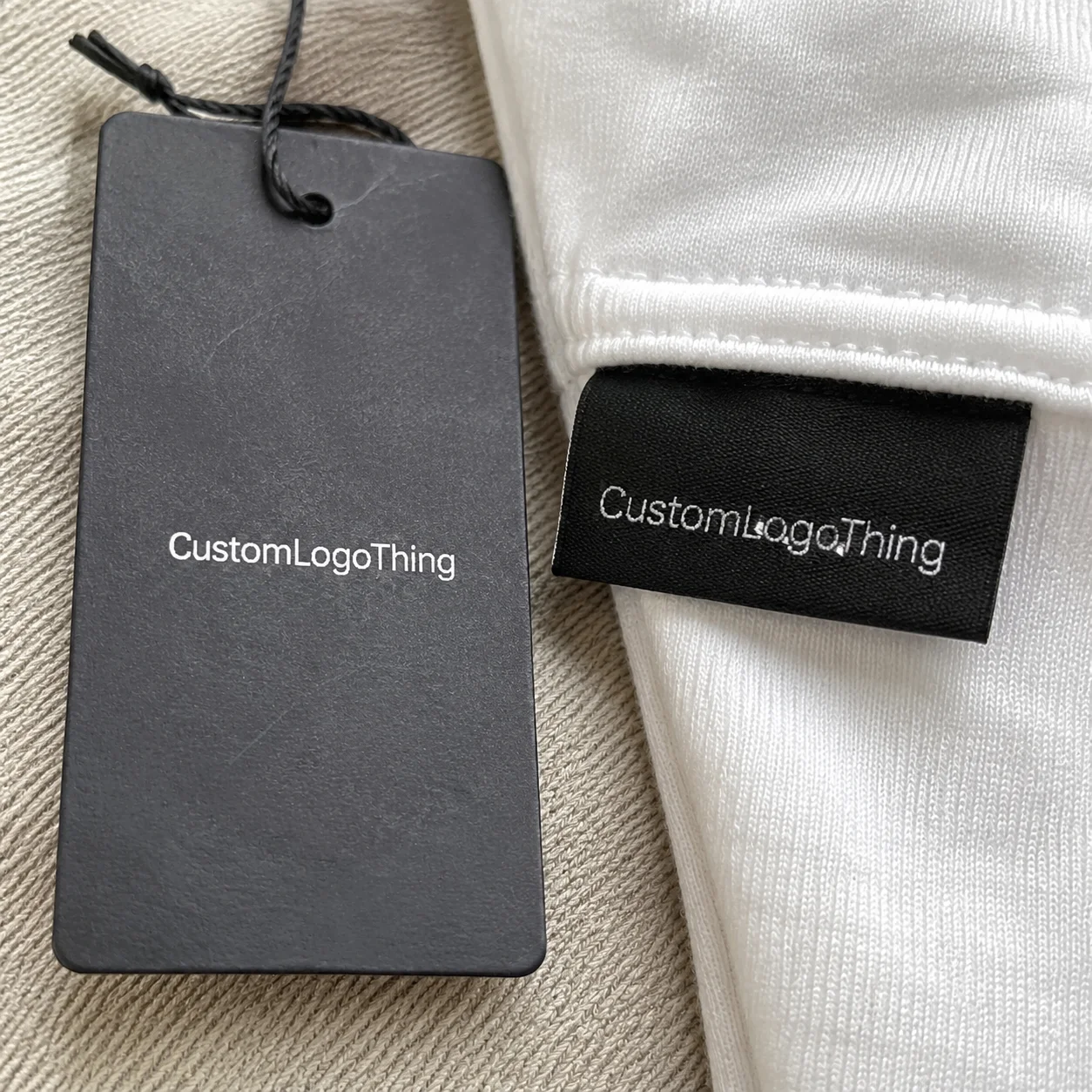
Custom Clothing Labels with logo are branded identifiers used on apparel to show a brand name, size, care instructions, fiber content, origin, product line, or short product story. They can be woven, printed, heat-transfer, leather, silicone, cotton, recycled polyester, or paper-based hang tags. Some sit inside the neck seam. Others sit on a hem, sleeve, waistband, cuff, pocket, or exterior patch area.
The job sounds simple until the garment reaches a real wearer. A label has to brand the item, satisfy compliance needs, survive washing, avoid scratching skin, and support resale value. A weak label can cheapen a strong garment in seconds. Buyers sometimes obsess over a heavy hang tag, then ignore the scratchy neck label that touches the customer every time the shirt is worn. That is backwards.
Basic vocabulary helps before ordering:
- Main neck labels: Usually show the brand mark and sometimes size. Softness matters because they often touch skin.
- Size tabs: Small folded labels, commonly 10–15 mm wide, used beside a main label or care label.
- Care labels: Printed satin, nylon, cotton, or polyester labels carrying wash symbols, fiber content, country of origin, and legal details.
- Hem tags: Small woven or printed brand markers placed at the bottom edge of tees, hoodies, and sweatshirts.
- Sleeve labels: Visible branding used on streetwear, uniforms, sportswear, and limited drops.
- External patches: Leather, faux leather, silicone, rubber, or woven patches stitched or heat-applied to outer garment panels.
Labels also connect apparel to the wider logic of product packaging. The same customer who judges a box by print alignment judges a garment by label feel, placement, and consistency. If your brand invests in Custom Packaging Products, the label should not look like it came from another company.
Practical callout: If a startup hoodie brand moves from blank stock tags to sewn-in damask woven labels, the garment can look more boutique without changing the fabric, cut, or decoration method. That is not magic. It is consistency.
How Branded Apparel Labels Are Made
Good label production begins before a machine runs. Artwork is converted into a production-ready file, colors are matched, material is selected, and the label format is confirmed. Then the supplier weaves, prints, cuts, folds, heat-seals, backs, or finishes the label according to the approved specification. The tighter the spec, the fewer surprises.
For woven labels, the design is built from thread. Damask woven polyester is common for premium apparel because it allows relatively fine detail, a smooth hand feel, and strong durability through repeated washing. Taffeta woven labels cost less but feel stiffer and show less detail. Satin woven labels bring sheen and softness, although fine logos can lose edge definition if the weave is not chosen carefully.
Printed labels work differently. The design is applied to a base material such as satin polyester, cotton, nylon, organic cotton, or recycled polyester. Printed labels are usually better for fine text, care symbols, ingredient-style content, QR codes, and variable information across multiple sizes or product lines. A printed care label can carry 20–40 lines of regulated content more economically than a woven label.
Specialty options send a different signal. TPU and silicone labels feel sporty and technical. Faux leather and genuine leather patches suit denim, outerwear, aprons, workwear, caps, and heritage-style goods. Recycled polyester and organic cotton labels are often chosen by brands trying to align apparel trims with broader sustainability claims. If you make an environmental claim, keep it supportable; buyers are more skeptical now, and regulators have less patience for vague language.
Finishing matters as much as material. A straight-cut label is flat and simple. An end-fold label has folded edges for sewing into side seams or neck seams. A center-fold label loops over a seam and can show branding on one or both sides. A loop-fold label works well for size tabs and hem tags. A Manhattan fold creates a more structured top edge, often used for premium neck labels. Heat-seal backing can help with positioning before sewing, while adhesive backing is usually temporary unless specified for a particular application. Merrowed edges add a stitched border, common on patches.
File quality decides how clean the final tag looks. Vector artwork is ideal because it scales without blurring. Tiny text below roughly 5–6 pt often needs testing, especially on woven labels. Thin lines, gradients, shadows, and photographic details usually need simplification for thread-based production. A logo that looks crisp on a 27-inch monitor can collapse into fuzz on a 25 mm woven tag.
For apparel brands building a full trim set, the easiest starting point is the Custom Labels & Tags category. Think in systems: logo label, size marker, care label, and exterior brand marker. That usually beats ordering one isolated tag and discovering later that nothing matches.
Key Specs That Decide Comfort, Durability, and Brand Feel
The first spec is size. Neck labels often land around 35–60 mm wide, depending on garment type and brand mark. Size tabs may be only 10–15 mm wide. Care labels can be 25–40 mm wide and much longer because of wash symbols and legal text. Outer patches vary widely, but a 50 x 30 mm patch on denim reads very differently from a 20 x 20 mm sleeve marker on a performance tee.
Placement changes the material decision. A neck label needs softness. A hem tag can tolerate more structure. A waistband label needs durability against stretching and abrasion. An external patch must survive rubbing, washing, and sometimes heat from dryers or ironing. Babywear, underwear, activewear, sleepwear, and premium tees punish rough edges quickly; jackets, denim, and canvas workwear are more forgiving.
Logo complexity is another quiet cost driver. A minimal wordmark may look sharper woven than a detailed emblem squeezed into a small tag. Thread count, color count, label density, and contrast all affect legibility. If your logo has five colors, hairline strokes, and a small tagline, the supplier may recommend printing instead of weaving. That is not a downgrade. It may be the correct production method.
| Label Type | Best Use | Typical Feel | Common Cost Position |
|---|---|---|---|
| Damask woven polyester | Main neck labels, hem tags, premium brand marks | Smooth, structured, retail-grade | Medium |
| Printed satin | Care labels, size labels, fine text | Soft, light, slightly glossy | Low to medium |
| Organic cotton printed | Natural apparel, babywear, eco-positioned basics | Soft, matte, fabric-like | Medium |
| Silicone or TPU patch | Sportswear, outerwear, bags, technical apparel | Flexible, rubbery, modern | Medium to high |
| Leather or faux leather patch | Denim, caps, aprons, outerwear | Firm, rugged, heritage-led | Medium to high |
Durability should be judged after washing, not just from the proof photo. Ask about colorfastness, shrinkage, fraying, abrasion resistance, and wash temperature. Packaging buyers already understand drop and transit testing through organizations such as ISTA. Apparel labels need the same kind of stress thinking: what happens after friction, heat, detergent, moisture, and repeated handling?
Standards can help frame the conversation. ASTM methods are commonly referenced for textile performance, colorfastness, abrasion, and dimensional stability, depending on the test. FSC certification may be relevant if your trim system includes paper hang tags or cards; the FSC framework is familiar to many buyers comparing paper-based retail packaging and branded tags. Not every project needs formal lab testing, but high-volume programs should not rely on guesswork.
Brand feel is the final filter. Satin suggests softness. Damask suggests premium retail. Cotton feels natural. Silicone reads sporty. Leather signals heritage or ruggedness. The right choice depends on the garment, not just the logo.
Pricing, MOQ, and Unit Cost Drivers
Pricing for Custom Clothing Labels with logo is rarely a flat per-piece number. Setup, artwork conversion, material, label size, color count, fold style, backing, edge finish, quantity, sampling, and shipping all influence the quote. A 20 x 50 mm two-color woven label is a different job from a 60 x 40 mm silicone patch with raised detail and custom color matching.
Planning ranges help set expectations. Simple printed care labels in moderate quantities may land around $0.03–$0.10 per piece, depending on size and print method. Woven damask labels often sit around $0.08–$0.35 per piece at common small-business quantities. Leather, faux leather, silicone, and rubber patches can range from roughly $0.25 to more than $1.50 per piece, especially if tooling, embossing, debossing, custom molds, or special backing are involved. These are planning ranges, not promises. Freight, currency, inspection level, and rush timing can move the number.
MOQ means minimum order quantity. Low minimums are useful for testing a capsule drop or sample run, but larger orders usually reduce unit cost because setup labor and machine preparation are spread across more pieces. A supplier may quote 500 labels at one unit price and 5,000 labels at a much lower one. That does not automatically signal pricing games. Setup time is real.
Cost tradeoffs are usually logical once you see the production steps. Printed care labels are economical for variable information. Woven labels cost more but can lift perceived value. Specialty patches cost more because they may require molds, thicker material, separate cutting, hand placement, or slower finishing. Separate size tabs can look cleaner than printing every size on the main label, but they add another SKU and another sewing step.
Hidden costs catch buyers off guard. Rush fees can add 15–40% in some programs. Physical samples may carry a sample charge or extend the timeline. Pantone matching may cost extra if the color is critical. Split shipments can increase freight. Label rolls may be cheaper for automated application, while cut stacks may suit hand sewing. Packaging of the labels themselves matters too; a tangled bag of tiny tags wastes labor at the sewing line.
Before requesting a quote, gather the details that actually drive price:
- Label type: woven, printed, heat-transfer, leather, silicone, cotton, or patch
- Dimensions in millimeters or inches, including folded size and flat size if relevant
- Quantity, plus any size or color splits
- Vector logo file, preferred colors, and font details
- Fold style, backing, edge finish, and sewing method
- Garment type, wash requirements, and skin-contact concerns
- Proof, sample, production, and delivery deadline
This quote discipline mirrors good packaging design. Vague briefs create vague pricing. Specific briefs expose better options.
Process and Timeline From Artwork to Finished Labels
The standard order flow is straightforward: submit artwork and specs, receive a quote, approve a digital proof, review a photo sample or physical sample if needed, approve production, inspect, and ship. The friction appears in the details, especially if several label versions are involved.
For a simple printed label with clean files, production can sometimes be completed in about 5–10 business days after proof approval, excluding shipping. Woven labels often need around 10–18 business days, depending on queue, sampling, finishing, and quantity. Silicone, rubber, leather, or specialty patches may take 15–30 business days or more if tooling, molding, embossing, or special color matching is required. Treat these as planning windows because supplier capacity and freight method can shift them.
Artwork readiness is the biggest controllable variable. A clean vector logo, confirmed dimensions, and decisive approvals can remove days from the schedule. Unclear sizing, low-resolution screenshots, last-minute color changes, missing size breakdowns, or multiple label versions slow the job down. One late size tab can hold up a full garment run if the sewing team needs every trim component before finishing.
Proofs deserve more attention than they usually get. Check spelling. Check logo proportions. Check thread colors or print colors. Check fold direction. Check cut lines. Check whether the label orientation matches the garment seam. If the label is center-folded, confirm which side faces out. If the care label includes legal content, verify fiber percentages, wash symbols, RN or business details where applicable, and country of origin.
Photo samples are useful for speed, but they do not always show how a label feels. Physical samples help for neck labels, babywear, activewear, and premium basics. If the project is a small first run, a good photo proof may be enough. If the label will touch skin on 10,000 garments, pay for a sample. Catching scratchiness early is usually cheaper than handling customer complaints later.
Order labels before full garment production starts. Cut-and-sew factories can often move through body assembly quickly, then stall while waiting for tags. That creates a strange bottleneck: thousands of nearly finished garments sitting in cartons because a 40 mm label did not arrive. Build label approval into the production calendar, not the final week.
Common Mistakes That Make Clothing Labels Look Cheap
The most common mistake is over-detailed artwork. Tiny tag space punishes thin lines, small type, gradients, distressed textures, and complex icons. If your brand mark needs a magnifying glass at 30 mm wide, simplify it for the label. Many strong apparel brands use a reduced logo version for trims and a fuller version for website, signage, or branded packaging.
Material mismatch is next. A stiff woven label may be fine on a canvas jacket but irritating on a lightweight tee. A leather patch can look excellent on denim and awkward on thin jersey. Heat-transfer labels can be a smart choice for performance shirts, but they need proper application temperature, pressure, dwell time, and fabric compatibility. No single label type wins every garment.
Guessing dimensions causes quiet damage. A label that looks balanced on screen may overwhelm a baby tee or disappear on a structured jacket. Print a paper mockup at actual size and place it on the garment. Better still, tape it where the label will sit and look at it from normal shopping distance. Two minutes of crude testing can prevent a production run of awkward tags.
Poor contrast makes premium labels look muddy. Dark gray thread on black fabric can be intentional and sleek, but it can also be unreadable. Too many thread colors create clutter and may raise cost. Inconsistent brand fonts create another problem: the label, hang tag, shipping mailer, and custom printed boxes look like separate campaigns instead of one brand system.
Fold style must match the sewing method. An end-fold label is useful when both sides are sewn down. A center-fold label works when the fold sits in a seam. A straight-cut label may fray if the edge is not properly finished. If you do not know how the garment factory will attach the label, ask before ordering.
Finally, buyers order too few. Production overruns, quality rejects, prototype garments, influencer kits, photo samples, sales samples, and future small-batch reorders all consume labels. If you plan to make 1,000 garments, ordering exactly 1,000 labels is risky. Many buyers add 3–10% extra, depending on sewing waste and reorder plans.
Next Steps Before You Request a Label Quote
Before asking for pricing on custom clothing labels with logo, choose the label placement first. Neck seam, side seam, hem, sleeve, waistband, cuff, pocket, and exterior patch positions all create different requirements. Measure the available seam area on a real garment, not just on a flat tech pack. Then decide whether the label touches skin. That single answer can eliminate several wrong materials.
Build a simple label system instead of one lonely tag. A practical apparel setup might include a main logo label, a size marker, a printed care label, and an optional exterior brand marker. For retail programs, you may also add a hang tag, barcode sticker, belly band, pouch, mailer, or carton label. The best package branding feels connected from garment to shipping box, even if each component uses a different material.
Do not force the production method too early. The same logo can perform differently as woven thread, digital print, silicone, heat transfer, leather debossing, or rubber molding. Ask which method best protects legibility, comfort, and budget for the garment type. A good recommendation may save money or improve the feel.
For first-time runs, request a digital proof at minimum. A photo sample is better for color and proportion. A physical sample is best if softness, fold bulk, or exact color is critical. If the brand is still locking in fabric, trims, hang tags, or retail presentation, sampling helps align the whole system before inventory is produced.
Use this pre-quote checklist:
- Garment type, fabric weight, and label placement
- Skin-contact level and softness requirement
- Preferred label type, or openness to supplier guidance
- Logo file in vector format, plus brand color references
- Flat and folded dimensions, measured on a sample garment
- Quantity by size, color, or version, including overage
- Wash requirements, deadline, and shipping destination
If sustainability is part of the brief, define it clearly. Recycled polyester labels, organic cotton labels, FSC paper hang tags, soy-based inks, reduced plastic packing, and consolidated freight are different choices with different evidence requirements. Specific claims are stronger than broad green language.
Custom Logo Things can help connect labels to the rest of the retail presentation, from garment trims to cartons, mailers, hang tags, and other branded components. That matters because customers do not experience your label in isolation. They open the package, touch the garment, read the tag, and decide whether the product feels worth the price.
Prepare specs, quantity, deadline, garment type, and logo files before requesting pricing for custom clothing labels with logo. You will get a cleaner quote, faster proofing, and a label that looks intentional instead of improvised.
FAQ
What are the best custom logo clothing labels for T-shirts?
Soft woven damask, satin printed labels, and heat-transfer labels usually work best for T-shirts because they feel smooth against the neck. For lightweight tees, avoid bulky patches, stiff folds, and oversized labels that can irritate skin or distort the garment. If the shirt needs care details, pair a main logo label with a separate printed care label.
How much do custom clothing labels with a logo cost?
Cost depends on label type, size, quantity, color count, material, fold, backing, sampling, and rush timing. Simple printed labels may cost only a few cents each at moderate quantities, while woven labels and specialty patches cost more. The most accurate quote includes artwork, dimensions, quantity, garment type, and delivery deadline.
What is the minimum order quantity for branded clothing labels?
MOQ varies by material and production method. Printed labels often support smaller trial runs than specialty woven, silicone, rubber, or leather labels. Lower MOQs help with samples and limited drops, while larger runs usually improve unit economics. Include extra labels for damaged pieces, prototypes, sales samples, and small reorder needs.
How long does it take to make custom apparel labels?
Timeline depends on artwork readiness, proof approval, sampling, production complexity, inspection, and shipping method. Simple printed labels can move faster than woven or specialty labels that require more setup. Clean files and quick approvals help, but proofs should still be checked carefully before garment production depends on them.
Should I choose woven or printed labels for my logo?
Choose woven labels for durable brand marks, premium neck labels, and logos that translate well into thread. Choose printed labels for fine text, care instructions, detailed graphics, QR codes, or lower-cost variable information. If the logo has tiny details, request a proof or sample before approving full production.