The first question buyers ask about trucker caps Minimum Order Quantity usually misses the real issue. The cap itself is not what drives the number. Setup does. Artwork cleanup does. Decoration method does. Even the way the finished caps are packed can change the floor.
A plain mesh-backed trucker cap can look simple from the outside, but production has a habit of exposing the hidden work. A logo may need digitizing for embroidery, a patch may need a separate run before it is applied, and a heat transfer may need testing so the colors hold on curved front panels. None of that scales neatly when the order is tiny.
That is why a quote for 24 pieces can look awkwardly expensive beside a quote for 144. The blank cap is only one line in the calculation. The rest of the price is tied to whether the supplier is decorating stock caps, making patches, changing thread colors, adding labels, or preparing retail-style packaging. Buyers who define the job in those terms usually get better pricing and fewer surprises later.
For a brand launch, team issue, event giveaway, or small retail test, the most useful mindset is production first, quantity second. Decide how the logo should be applied, how the cap should feel and fit, and whether the final delivery needs to be shelf-ready or simply clean and functional.
Trucker Caps Minimum Order Quantity: Why the First Run Costs More
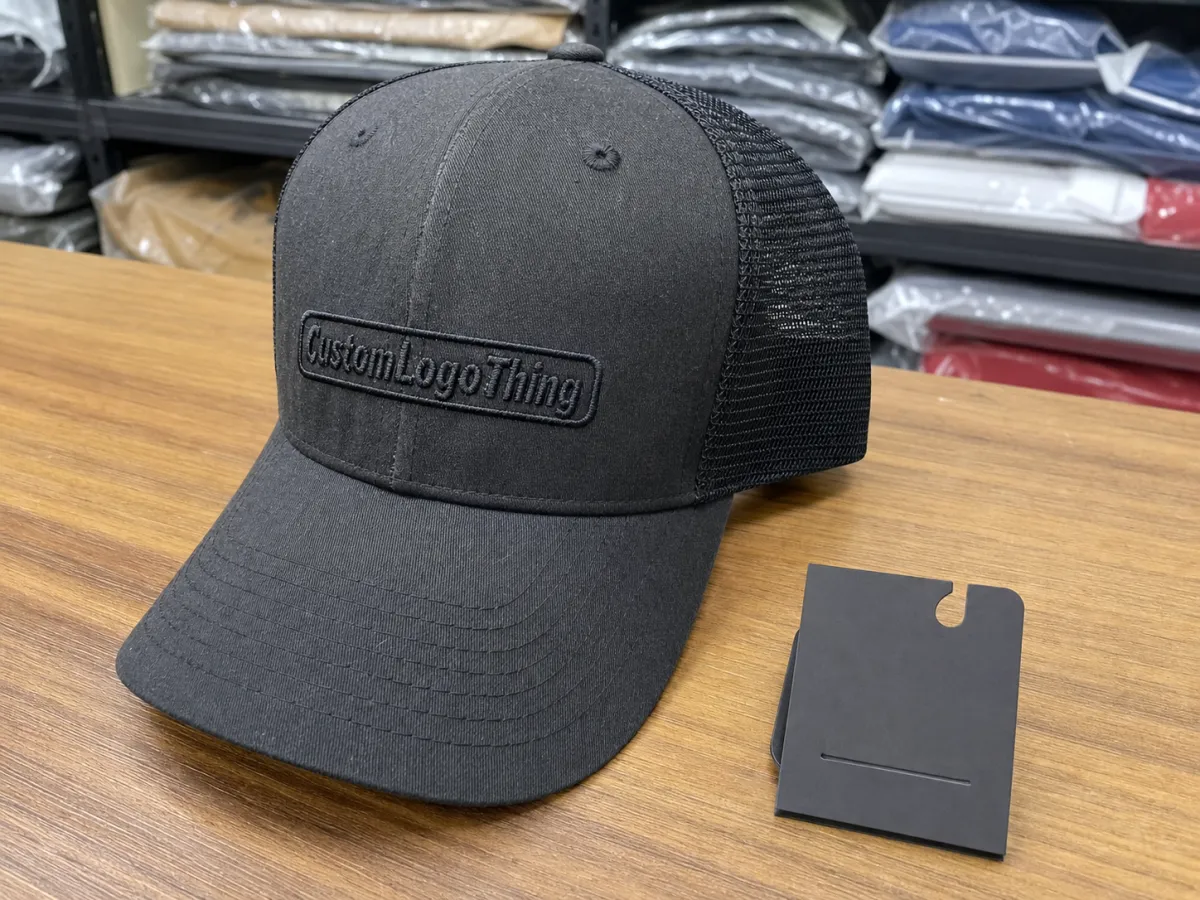
On paper, a trucker cap is a straightforward object: structured front, mesh back, visor, and adjustable closure. In production, the first run costs more because the supplier has to convert your artwork into something that can be repeated cleanly. That may mean digitizing a logo for embroidery, making a woven patch, cutting a leather badge, or building a print file for transfer decoration. Those steps exist whether the order is 12 caps or 120.
The minimum is usually a labor problem, not a fabric problem. A shop has to stop to review art, set up the machine, match thread, inspect the first pieces, and confirm that the logo sits where it should. If the job uses patches, there is also the batch cost of making the patch itself before it can be applied. Once those fixed costs are spread across a small run, the unit price jumps fast.
The MOQ is rarely a random rule. It is usually the point where setup, run time, and quality control stop overwhelming the value of the order.
Different decoration methods carry different practical floors even on the same cap style. Embroidery can sometimes start lower if the logo is clean and compact. Woven or leather patches often need more units because the patch is produced in a batch before application. Heat-applied graphics can support shorter runs for detailed art, but the supplier still has to price the transfer, pressing labor, and inspection time.
That is why the better question is not simply, “What is the minimum?” It is, “What minimum gives me a clean result without paying a disproportionate premium per cap?” That is where the decision gets practical.
What Defines a Custom Trucker Cap Order
A custom trucker cap order is defined by more than the logo on the front. The base product usually includes a foam or cotton front panel, a polyester mesh back, a curved or flat visor, and a closure such as snapback, hook-and-loop, or metal buckle. Those details affect fit, comfort, decoration placement, and how the finished cap presents on shelf or at an event.
The front panel matters most. A structured front helps embroidery and patches sit flatter and look sharper because the crown holds its shape under the decoration. A softer front can feel easier to wear, but large logos may warp more easily, especially when the design crosses a seam or carries dense stitching. Panel count matters too. A six-panel crown behaves differently from a five-panel build, and that changes how a logo sits across the front.
Most buyers compare decoration methods first, and that makes sense. The differences are real:
- Embroidery suits bold text, simple icons, and logos that can be simplified without losing identity.
- Woven patches handle fine detail, sharp edges, and small lettering better than stitches do.
- Leather patches add a rugged, premium look for outdoor and lifestyle programs.
- Heat transfers can capture more color variation and smaller details on short runs.
Each choice changes how the cap is perceived. A plain embroidered trucker usually reads as promotional and accessible, which is fine for events, staff issue, and broad giveaways. A leather patch or woven badge shifts the product closer to retail. That matters if the cap will sit beside other branded merchandise or appear in product photography where a cheap finish is obvious.
There is also a difference between a cap that is decorative and a cap that is supposed to sell. Retail-ready headwear needs consistency: same crown shape, predictable patch size, even spacing, and a front surface that does not buckle under the logo. Small imperfections are easy to ignore in a free handout. They are much harder to ignore in a display bin.
Specifications That Change the Quote
If you want a quote that holds up, lock the specs before asking for pricing. The biggest swings usually come from front panel color, mesh color, bill color, stitch color, closure style, logo placement, and the number of decoration colors involved. A black front with white mesh is a different job from a two-tone cap with custom thread changes and side or back decoration.
Artwork detail matters just as much. A logo with tiny lettering, gradients, thin outlines, or multiple thread colors can push the job toward a patch or transfer instead of standard embroidery. That is not a branding choice so much as a production constraint. Fine text below roughly 0.12 inches can blur in stitches, especially on curved surfaces that move under the needle.
Fit and audience matter too. A snapback gives the broadest fit range for general distribution. Hook-and-loop is often chosen for fast adjustment in active or event settings. A metal buckle feels more premium, but it can add cost and affect how caps are packed. If the order is for a staff uniform, a tradeshow handout, or a retail drop, the closure should match the end use rather than the mood board.
These are the details that should be confirmed before the quote goes out:
- Panel color, mesh color, and bill color
- Closure type and interior sweatband preference
- Logo size and exact placement on the front, side, or back
- Stitch color or patch material selection
- Packaging needs such as polybags, hangtags, size stickers, or carton labels
That last item gets overlooked often. If the caps are moving into retail channels or direct fulfillment, packaging becomes part of the production job. Some buyers want each cap polybagged and labeled by color. Others need mixed cartons split by department or location. A supplier that understands pack-out instructions can prevent a lot of wasted sorting later.
Carton strength matters too. Headwear is soft, but shipping still punishes it. If the order is moving through a distribution center, ask how cartons are packed and whether the shipper follows common handling standards such as ISTA procedures or commercial packaging practices such as ASTM D3951. That matters more than many first-time buyers expect.
The same logic applies to decoration tolerance. On a trucker cap, a few millimeters of logo drift can be visible because the front panel is small and the seam lines are close to the art. Ask how the supplier checks placement, density, and alignment. Good shops measure these things. They do not just eyeball them.
Cost, Pricing, and MOQ Breakpoints
Unit price usually falls as quantity rises because setup costs get spread across more caps. That is the basic structure behind almost every decorated headwear quote. A low minimum can be useful, but it is not always the best price point. A small order may meet the supplier's floor and still cost enough per unit that moving up one tier would have saved money.
For trucker Caps Minimum Order Quantity planning, the more useful comparison is not “small versus large” but “what changes at each breakpoint.” A quote for 48 caps may include the same digitizing, proofing, and machine setup as 96 caps, which means the larger run can feel materially cheaper without changing the cap itself. If the blanks are already in stock, decoration labor often drives the spread more than the base product.
Practical wholesale pricing varies by market, decoration, and timing, but these ranges are common enough to be useful:
- A plain stock trucker cap may sit around $2 to $5 before decoration at wholesale quantities.
- Simple embroidery can add a modest amount if the logo is clean and thread colors are limited.
- Woven, leather, or PVC patches usually add more setup and a higher per-unit finish cost.
- Retail packing, hangtags, and custom labels can add surprisingly fast once labor is included.
Digitizing fees are another common line item. For a small run, that fee can matter more than the blank cap itself. Some suppliers waive it once quantity rises, others roll it into the per-piece price. The same is true for sample charges. A sew-out or preproduction sample often costs extra, but it can prevent a bad run, which is usually the cheaper outcome.
The table below is directional rather than universal, but it reflects how production typically behaves:
| Decoration method | Typical MOQ range | Price behavior | Best fit | Lead time notes |
|---|---|---|---|---|
| Simple embroidery | 24-72 pieces | Lower setup cost for clean logos; better pricing as quantity rises | Text-heavy branding, staff caps, giveaways | Often the quickest if blanks are ready and artwork is clean |
| Woven patch | 50-100 pieces | Patch production adds setup, but detail is strong | Fine lines, small type, retail merch | Needs patch approval before full production |
| Leather patch | 50-100 pieces | Premium look, moderate setup, material choice affects cost | Lifestyle brands, outdoor programs | Tooling and adhesive prep can add a few days |
| Heat transfer | 25-75 pieces | Good for detailed art, though pressing labor still matters | Complex artwork, color-rich logos | Proofing and press testing are often the long pole |
| PVC patch | 50-150 pieces | Higher setup, strong visual impact | Bold branding with a dimensional look | Longer approval cycle because mold or sample review may be needed |
Those ranges are not promises. A supplier with in-house decoration, a clean logo, and blank stock can move lower. A shop that outsources patches, handles unusual packaging, or works with a complex retail pack-out can require a higher minimum even if the cap style looks identical. That is why quotes should always separate blank cost, decoration cost, and packaging add-ons.
Compare quotes on the same terms. Same cap style. Same decoration method. Same logo size. Same number of thread colors or patch material. Same packaging standard. If one supplier includes polybags, size stickers, and carton labels while another does not, the cheaper number may not really be cheaper.
If the order is part of a repeat buying program, ask whether reorder pricing changes once the artwork and cap spec are already approved. Reorders should be faster and more predictable. If they are not, the first order may look inexpensive only because the hidden work appears later.
Process and Timeline: From Artwork to Shipment
A clean order usually follows a predictable path: inquiry, artwork review, quote approval, proofing, sampling if needed, production, inspection, and packing. The order moves faster when the buyer sends vector art, clear cap specs, and a realistic delivery window from the start. The delay is rarely the actual stitching. It is usually the back-and-forth over artwork cleanup, color matching, and approval details.
- Inquiry: Share quantity, cap style, decoration method, and target ship date.
- Artwork review: The supplier checks line thickness, color count, and logo placement.
- Quote approval: Pricing is confirmed with blanks, decoration, and packaging separated where possible.
- Proofing: You review a mockup or sew-out/patch sample before production starts.
- Production: Caps are decorated, pressed, trimmed, and inspected during the run.
- Quality check and packing: The finished goods are counted, packed, and labeled for shipment.
The longest stage is usually proofing. If logo files need cleanup, the supplier may redraw shapes, remove tiny text, or simplify gradients for embroidery. A thread chart may need matching. A patch proof may need adjustment in size or edge treatment. None of that is glamorous, but it protects the final result.
Typical turnaround depends on stock availability and the decoration method. A straightforward embroidered run on stock trucker caps often lands around 7 to 12 business days after proof approval. Patch orders, custom labels, and retail packaging can push that into the 12 to 20 business day range, sometimes longer during peak season or when artwork takes multiple revision cycles. Those numbers are practical ranges, not guarantees.
Rush orders are possible, but only when the product and artwork support speed. If the cap is in stock, the logo is simple, and approvals are quick, a shorter timeline may be realistic. If the order needs custom patches, mixed cartons, or special pack-out instructions, a standard production window is usually safer. Compressing all of that tends to create errors rather than savings.
Physical samples help when the order is sensitive to color, logo placement, or material feel. They add cost and time, but they also reduce the chance of approving a mockup that does not translate well onto a curved front panel. Buyers who skip sampling entirely on a complex design often end up paying more in revisions than they would have spent on one sample.
For broader packaging or sustainability requirements, standards such as the ISTA packaging test standards and FSC-certified materials at FSC can be useful references when the order needs retail-ready cartons or documentation.
How to Choose a Supplier That Can Repeat the Same Cap Cleanly
The best supplier is not only the one with the lowest quote. It is the one that can repeat the same cap cleanly from first sample to reorder. On headwear, consistency is visible fast. If the crown shape shifts, the logo sits too high, the stitch density changes, or the mesh tension is uneven, buyers notice immediately. So do customers.
Repeatability should sit near the top of the checklist. Ask for proof images that show exact placement, final size, and thread or patch material. Ask how changes are handled after approval. Ask whether reorders will use the same digitizing file, the same patch spec, and the same blank cap family. A supplier that handles those questions without drama usually knows how production really works.
Quality checks on trucker caps are straightforward, but they are not optional:
- Stitch consistency across the logo and any topstitching
- Panel alignment so the front does not twist around the seam
- Mesh tension and back closure alignment
- Patch edge finish and adhesive hold
- Sweatband neatness and interior trimming
It also helps to know whether the supplier keeps reorder records. A strong production partner will retain the cap style, decoration method, and approval file so the second run resembles the first. That matters for retail programs and recurring promotions because visual drift shows up quickly when every reorder is treated like a new project.
The most revealing conversation is usually the one about problems. Good suppliers can explain where the process may slow down: artwork cleanup, patch approval, thread matching, or pack-out. If every answer sounds too smooth, the order may be cheap only until it reaches production.
What to Send for an Accurate Quote
The fastest way to get a usable price is to send one complete message with the logo file, target quantity, preferred decoration method, color preferences, and needed delivery window. That lets the supplier quote the real job instead of guessing. If you only send a logo and ask for a price, the reply will usually be broad. If you send the details, the estimate becomes sharper.
Before requesting pricing, confirm whether you want samples, how the caps should be packed, and whether the order should be split by color, department, or ship-to location. Those choices affect labor, carton count, and the way the run is scheduled. A buyer who knows that upfront is much easier to serve, and the order usually lands cleaner.
A useful pre-quote checklist looks like this:
- Final quantity and any quantity break you are considering
- Cap style, closure type, and colorway
- Logo file in vector format if possible
- Decoration method preference: embroidery, patch, or transfer
- Packaging needs: polybag, hangtag, size sticker, carton label
- Target ship date and whether the job is time-sensitive
That checklist also makes it easier to compare trucker caps Minimum Order Quantity options across suppliers without mixing different jobs together. Once the artwork is defined and the quantity is set, the estimate becomes a production plan rather than a rough guess. That is the point where a purchase can move forward with fewer assumptions.
For buyers building a repeat program, internal reference pages like FAQ and Wholesale Programs are useful because they help keep proofing rules, reorder behavior, and pack-out expectations consistent across departments.
Common Questions
What is the usual trucker caps minimum order quantity for custom decoration?
The minimum depends on the decoration method, the complexity of the artwork, and whether the supplier is using stock blanks or producing custom components. Embroidery often starts lower than patch-based options, but the final MOQ should be confirmed after the artwork and cap spec are reviewed together.
Why does a custom trucker cap quote change with quantity?
Setup costs for artwork, digitizing, patch production, and machine preparation are spread across the order, so higher quantities usually lower the unit cost. Some suppliers also use pricing tiers, which can make a slightly larger run more economical than the smallest allowable order.
Which decoration method works best for lower quantities?
Simple embroidery is often the easiest path for smaller runs when the logo is clean and not overly detailed. If the artwork is complex, a patch or transfer may preserve more detail, but the setup can raise both the minimum and the lead time.
How long does production usually take after artwork approval?
Turnaround depends on stock availability, decoration method, and approval speed. A simple embroidered run on stock caps may finish in roughly 7 to 12 business days after proof approval, while patch orders, custom labels, or special packaging can take longer.
Can I order different cap colors under one MOQ?
Sometimes, but color splits can change the effective minimum if each color requires its own setup or production allocation. Ask the supplier how mixed-color orders affect pricing, proofing, and carton packing before committing.
What should I ask about quality before I place the order?
Ask how the supplier checks placement, stitch density, patch adhesion, and panel alignment. Also ask whether reorders will use the same approved files and the same blank cap family, since that is the easiest way to keep the next run consistent with the first.

