Subscription apparel looks straightforward until the packaging starts showing its weaknesses. A brand can invest in custom boxes, inserts, and polished product styling, then ship folded garments in a bag that shifts in transit, traps too much air, or slows the pack line because it is awkward to load. If you are sourcing a custom plastic garment Bags Wholesale Supplier for subscription, the real objective is not decoration. It is a bag that protects the fold, fits the workflow, and keeps the product presentation consistent from the first order to the repeat shipment.
Most damage complaints do not start with the carrier. They start earlier, inside the warehouse. A loose fold, a bag cut too large, or a closure that does not hold properly can create scuffing, misalignment, and unnecessary rework before the parcel even leaves the building. A proper garment bag prevents that chain of small failures. It keeps the garment stable, reduces handling friction, and helps fulfillment teams move at a predictable pace.
For subscription programs, consistency matters more than novelty. Every monthly drop, seasonal restock, or member replacement order has to pass through the same process without creating exceptions. That is the point of packaging engineering: fewer decisions on the floor, fewer mistakes in the box, and fewer surprises once the customer opens the kit.
Why Subscription Apparel Needs Better Bagging Than Mailers
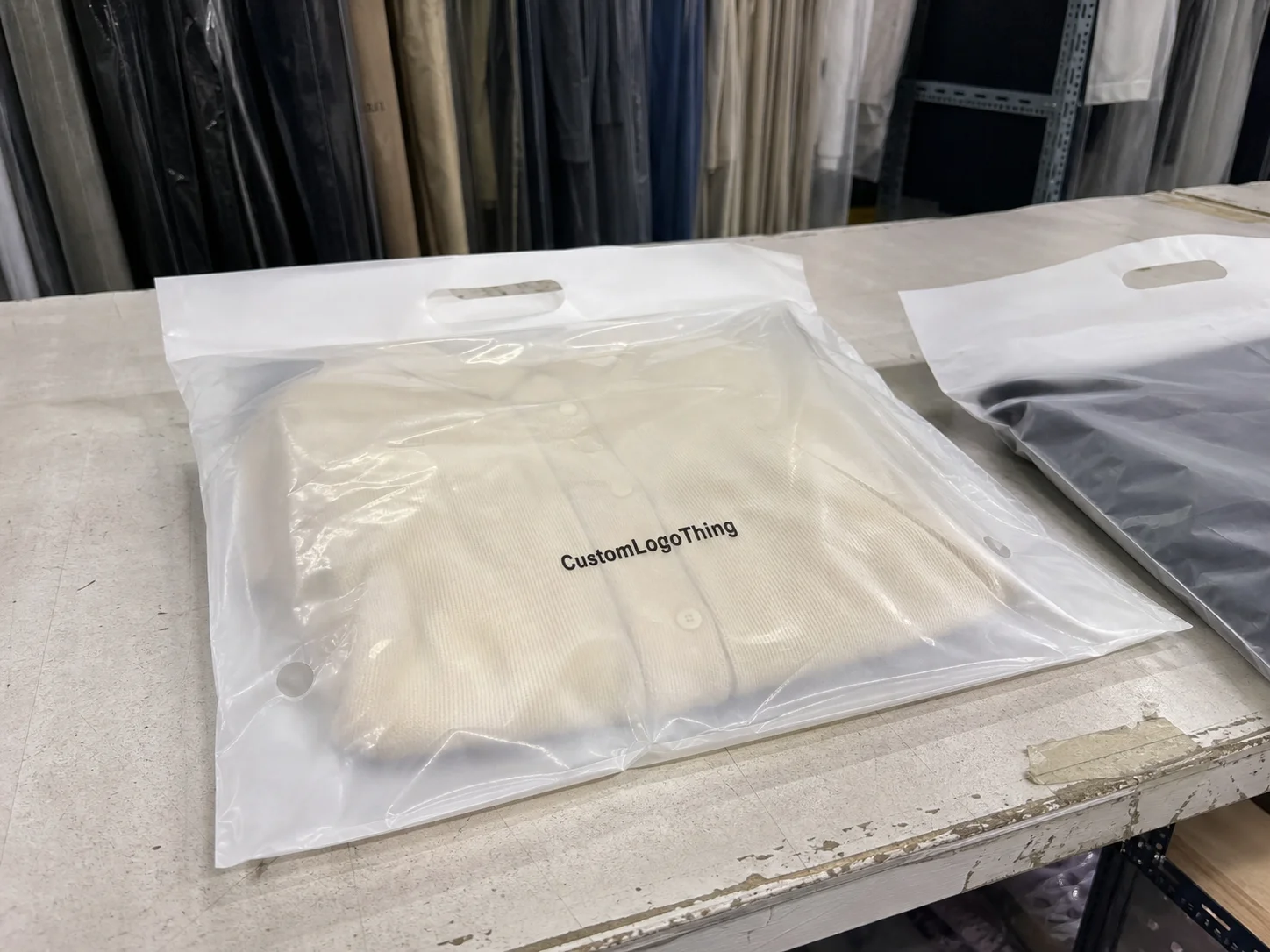
Mailers work well for some soft goods, especially when the product is already compact and not intended to be refolded. They are less forgiving for apparel sets that need to stay flat, clean, and easy to identify through the packing process. A garment bag gives the operation a predictable unit to handle. That matters if one subscription box includes a tee, a pant, and a card that all need to remain tidy and legible.
The main benefit is control. A correctly sized plastic garment bag keeps the fold tight and the silhouette uniform, which helps during scanning, sorting, and pack-out. If the subscription includes multiple SKUs or sizes, that uniformity cuts down on mix-ups. It also reduces the chance of a piece being rebagged because it slipped out of position or picked up dust and lint during handling.
“The cheapest bag is not the cheapest outcome if your team has to touch it twice.”
That line is practical, not rhetorical. A lower unit price can be irrelevant if the bag forces extra labor, slows fulfillment, or causes a higher reject rate at packing. In a subscription program, labor often costs more than the film itself. If the bag saves ten seconds per order across thousands of units, the operational value is real and measurable.
Garment bags also help preserve the brand experience across the full journey. The outer box may carry the visual identity, but the inner bag is often the first surface a customer sees when opening the shipment. If the apparel arrives in a wrinkled, shifting bundle, the package feels improvised. If the fold is stable and the bag looks intentional, the product feels better managed before the customer even touches the fabric.
Brands already using Custom Packaging Products or building out subscription-ready product packaging usually notice this quickly. The bag is not the headline piece, but it is one of the parts that determines whether the pack-out feels controlled or improvised.
Material, Print, and Closure Choices That Actually Affect Performance
Material choice is where buyers tend to overthink the wrong details and underthink the ones that matter. For most apparel subscription programs, LDPE is still the practical baseline. It gives a good balance of clarity, softness, and cost, and it handles folding and loading well. LLDPE can add toughness and tear resistance. Recycled-content blends can work too, but they should be tested for clarity, seal behavior, and consistency before a full production run. A sustainability claim has little value if the bag becomes harder to use on the line.
Clear film is useful for fast SKU identification, barcode checks, and visual inspection. Frosted film can make the presentation feel cleaner and hide fold lines more effectively, though it usually reduces visibility a bit. That tradeoff is worth considering if the bag is meant to feel more premium inside a kit. In many subscription programs, the right answer is not the fanciest material. It is the one that gives the warehouse and the customer the right balance of visibility and finish.
Print should support operations first. A one-color logo, size callout, barcode window, or short handling instruction can make sorting easier and reduce mistakes. Heavy coverage, metallic effects, and elaborate decoration increase cost and can complicate production without improving the bag’s function. If the bag goes directly into a subscription box, a clean logo and a few operational marks usually do more good than a full graphic treatment.
Closure style has a bigger effect on day-to-day use than many buyers expect. Resealable adhesive strips work well for returns, exchanges, or any kit that may be reopened after assembly. Flap-style seals are simple and economical, but they do not always tolerate repeated handling. Hanger holes make sense for garments packed on hangers before bagging. Perforations can help with quick opening if the warehouse needs the bag to tear cleanly without damaging the product.
| Option | Typical Use | Relative Unit Cost | What It Does Well |
|---|---|---|---|
| Clear LDPE | Basic tees, fast SKU checks | $0.05-$0.11 | Visibility, low cost, easy sorting |
| Frosted LDPE | Premium basics, cleaner presentation | $0.07-$0.14 | Hides folds, improves perceived finish |
| Recycled-content blend | Brands with sustainability claims | $0.08-$0.16 | Better environmental story, solid handling |
| Printed with adhesive seal | Subscription kits with returns or open-check steps | $0.09-$0.18 | Branding plus faster reseal workflow |
There is a temptation to add features because they sound more advanced. In practice, extra additives, heavy ink coverage, and specialty finishes can push the price up fast without improving performance in any meaningful way. If the bag is not hanging on a retail peg, it does not need retail-style treatment. It needs to survive fulfillment, transit, and repeat ordering without becoming a problem for the warehouse.
If your team needs compliance or documentation support, ask early. Recycled-content claims should be supported with traceable information, not vague language. Paper components can be reviewed under standards such as FSC, while plastic sourcing should be documented honestly according to what the supplier can actually verify. A serious supplier should be able to tell you what is documented, what is estimated, and what cannot be claimed at all.
Size, Gauge, and Venting Specs to Lock Before You Quote
Before any quote is useful, the bag has to match the folded garment rather than a rough assumption. A folded tee, a knit sweater, a heavier hoodie, and a hang-ready dress all need different footprints. If the bag is too wide, the product moves around. If it is too tight, the packing team spends extra time forcing the garment into place, and the bag itself can distort or wrinkle in a way that hurts the final presentation.
Gauge, or thickness, should follow the weight of the product and the amount of handling it will see. Light tees can often run on a lighter film if the dimensions are right and the bags are not being abused in transit. Heavier knits, outerwear, and mixed apparel sets usually need more body. The right question is not which thickness sounds strongest. It is which thickness holds the garment safely without inflating cost or creating a harder load-in process.
Venting can look like a minor detail, but it matters in high-volume packing. Air release keeps bags flatter, easier to carton, and less likely to balloon during sealing or storage. Shoulder room matters for hang-ready products. Gusset depth matters if the assortment includes thicker items or paired SKUs that do not sit flat in a single-panel sleeve. Those are not cosmetic details. They affect how the bag behaves in the hand and how many units a line can move per hour.
Buyers often make the same mistake: they design around the hero SKU and ignore the rest of the line. That usually leads to waste. A bag sized to fit a light tee perfectly may crush a sweatshirt. A bag sized around a hoodie can leave a tee swimming inside extra film, which means more movement, more trapped air, and less consistency at pack-out. One size rarely solves a mixed assortment without compromise.
If the bag has to sit beside custom printed boxes or an insert pack, the packaging plan should be treated as a system. A bad fold or an oversized sleeve can slow the entire line. By the time that problem shows up, the cost is no longer just material waste. It is labor, delay, and the time spent fixing an issue that should have been solved during spec review.
Wholesale Pricing, MOQ, and Quote Inputs That Change Unit Cost
Wholesale pricing for garment bags is not random, but it is sensitive to details. The unit cost moves with film type, thickness, size, print colors, closure style, and quantity. Larger volume helps, though only if the specification remains stable. If the artwork changes, the closure changes, or the bag structure changes, the quote shifts again. That is normal. Production has setup costs, and those costs do not disappear because the order is important.
As a working range, plain bags often start at lower minimums, while printed or custom-built bags tend to push the MOQ higher. Simple plain bags may begin around 5,000 pieces. Printed or custom-construction orders often land closer to 10,000 pieces or more, depending on the run method and the setup required. Flexographic printing, plate preparation, and film changeovers all carry real time and material cost. There is no useful shortcut around that.
For an accurate quote, send the supplier the bag dimensions, target gauge, artwork file, monthly or total quantity, and the destination ZIP or port. Add the folding method if you already know it. Also state whether the bags need to ship flat, in bundles, or pre-packed for warehouse use. That detail changes carton count, packing labor, and freight planning. One missing detail can turn a reasonable estimate into a quote that is technically correct but operationally wrong.
Price should be evaluated as landed cost, not just unit cost. A slightly higher-spec bag can still be the better buy if it reduces rebagging, speeds fulfillment, or lowers the reject rate. A cheap bag that slows the line by even a few seconds per order can end up costing more than a better-engineered option. That is often the difference between a low invoice and a low total cost.
If you need volume pricing or repeat-order planning, our Wholesale Programs page is the right place to start. Good wholesale work is about matching the spec to the supply chain, not about pushing a catalog and hoping it fits.
Production Steps, Lead Time, and Delivery Windows for Replenishment
The production path is direct, but each step can add delay if approvals drag. It usually runs through spec confirmation, artwork proof, material procurement, printing, conversion, packing, and final inspection. A lot of the schedule is consumed before the machine run begins. That surprises buyers who assume the press time is the bottleneck. In reality, approval timing and material availability are often the places where schedules slip.
Lead time depends mainly on three factors: artwork approval, film sourcing, and print setup. Once those are locked, production usually moves at a predictable pace. A plain bag can move faster than a printed one, but even a printed order stays manageable if the spec stops changing. The easiest way to lose time is to revise the barcode, adjust the logo, and then ask why the shipment missed the window.
For standard wholesale runs, 12-15 business days from proof approval is a realistic planning range in many cases. Larger or more customized orders may take longer, especially if the film is special-order or the design requires multiple color passes. Rush production can exist, but it should be treated as an exception. It costs more, and it tends to compress the room for inspection.
Delivery planning matters as much as production planning. Confirm carton counts, palletization, and backup stock before the shipment lands. If a subscription drop misses its replenishment window, the issue does not stop at “late bags.” It becomes delayed packing, missed outbound slots, and a warehouse trying to catch up with orders already in motion. A packaging shortage can ripple across the entire fulfillment schedule.
For brands that ship monthly, the bag should be treated like any other replenishable component. Set a reorder point, keep a safety stock buffer, and revalidate the spec before the seasonal spike arrives. Small format changes, new sizes, or a shift in garment weight can all change the right bag spec. The most expensive time to discover that is after inventory is already committed.
What a Subscription-Ready Packaging Supplier Should Prove
A supplier for subscription apparel needs to prove consistency, not just send a polished PDF and a sample that looks good on a desk. Look for stable dimensions, clean print registration, low defect rates, and repeatability across multiple runs. If the first batch is good but the reorder drifts, the supplier has solved the sample, not the job. Reorder consistency is the real test.
Fulfillment knowledge matters more than a generic packaging catalog. A supplier should understand how bags are packed into master cartons, how labels are applied, how repeat orders are scheduled, and how warehouse teams actually use the material. Those are practical details, not sales talking points. A true custom plastic garment Bags Wholesale Supplier for subscription should be able to talk through the pack line, not just the artwork file.
Sample review should be structured. Check seal strength. Check clarity. Check opening resistance. Rub the surface to see whether it scuffs too easily. Fold it the way the warehouse will fold it, then see whether it still holds shape inside the box. A bag can look excellent in isolation and still fail once it is placed into a fast-moving pack workflow.
If you want a reference point for distribution testing, the ISTA framework is worth reviewing. Their testing methods are useful for moving the conversation beyond “does it look okay” toward “does it survive handling, stacking, and transit in the real supply chain.” Packaging teams that ignore test discipline usually pay for it later in returns, replacement labor, or damaged presentation.
A good wholesale partner should also make reorders calmer, not more complicated. Direct production control usually means better price stability, fewer missed details, and fewer surprises when the second run needs to match the first. That matters in subscription packaging because a repeat order is not a new project. It is a check on whether the system still works.
Next Steps: Send Specs, Approve Artwork, and Place the Trial Order
The next move is straightforward. Send the garment measurements, folding method, monthly volume, print file, preferred closure, and target delivery date. If you do not have an exact fold spec, describe the product and the way your team packs it now. That is usually enough for a supplier to estimate fit and flag obvious issues before production starts. Guessing is what creates waste.
Start with a sample or a short production run before scaling to full subscription volume. That matters even more if you are changing formats, adding a new SKU family, or replacing another supplier. The first order should tell you whether the fit is right, the print is readable, the pack-out speed holds, and the damage rate stays low. It is cheaper to correct those issues early than to discover them after pallets are already committed.
Use the trial run as a benchmark. Measure how many units the team can pack per hour. Check whether the bags stay clean in transit. Compare the rebagging rate against the previous setup. If the bag saves labor and keeps the kit looking polished, the spec is doing its job. If it does not, change the spec before ordering in volume.
For buyers balancing branded packaging, subscription kits, and apparel drops, the bag is part of the packaging system, not a side purchase. If the rest of the presentation is already dialed in, the garment bag should support that standard instead of fighting it. That is why the right supplier matters: not because the order is complicated, but because small decisions in film, print, and sizing have a habit of showing up in labor, timing, and customer experience.
FAQs
What MOQ should I expect for custom plastic garment bags for subscription boxes?
Plain bags usually have the lowest minimums, while custom-printed or specialty-built bags need a higher order quantity. MOQ is driven by film setup, print colors, and changeover time, not just bag size. If volume is still unstable, ask for a smaller trial run first and scale after the fit is proven.
Can a custom garment bag supplier print logos without slowing fulfillment?
Yes, if the print is planned around clean artwork, limited colors, and a format that is easy to pack. Simple one-color branding is usually faster and more consistent than heavy coverage or complex effects. Ask for a proof and confirm where the logo sits so warehouse staff do not lose time sorting or orienting bags.
What film thickness works best for subscription apparel packaging?
Light tees and basic apparel usually do fine with a lighter gauge if the bag fit is correct. Heavier knits, outerwear, and longer transit routes usually justify a stronger film. Choose thickness based on product weight, fold size, and handling rather than the biggest number offered.
How long does wholesale production usually take for garment bags?
Lead time depends on artwork approval, material sourcing, and whether the job is printed or plain. Once specs are locked, production moves faster than the approval stage in most cases. Build in buffer time if the bags must arrive before a subscription launch or seasonal replenishment cycle.
What details do I need for an accurate quote on wholesale garment bags?
Send the bag dimensions, thickness target, print artwork, and total quantity you want to order. Include the garment type and folding method so the supplier can confirm fit before pricing. Share the delivery location and timeline, because freight and rush scheduling affect the final number.


