Hotels do not buy packaging for its own sake. They buy it because the bag has to protect the contents, present well under bright room lighting, and survive repeated handling by housekeeping, front desk staff, or guests who may open and close it more than once. That is why a Clear Zipper Bags Wholesale Supplier for hotel orders needs to do more than offer a low number on a quote. The real test is whether the supplier can keep the same size, clarity, zipper feel, and seal strength across every reorder.
That consistency matters whether the bag holds toiletries, spa items, welcome gifts, laundry accessories, or small retail products. A bag that looks fine on a screen but arrives cloudy, too thin, or slightly undersized creates problems immediately. In hotel operations, small packaging flaws rarely stay small. They show up in room presentation, stockroom sorting, and guest perception, which is usually the most expensive place to discover a spec issue.
For buyers building a repeatable procurement process, the goal is not to chase the cheapest source. It is to lock a practical specification, compare like with like, and make sure the supplier can support reorder cycles without changing the product every time the price shifts.
Why Hotels Buy Clear Zipper Bags in Bulk Instead of Reordering Randomly
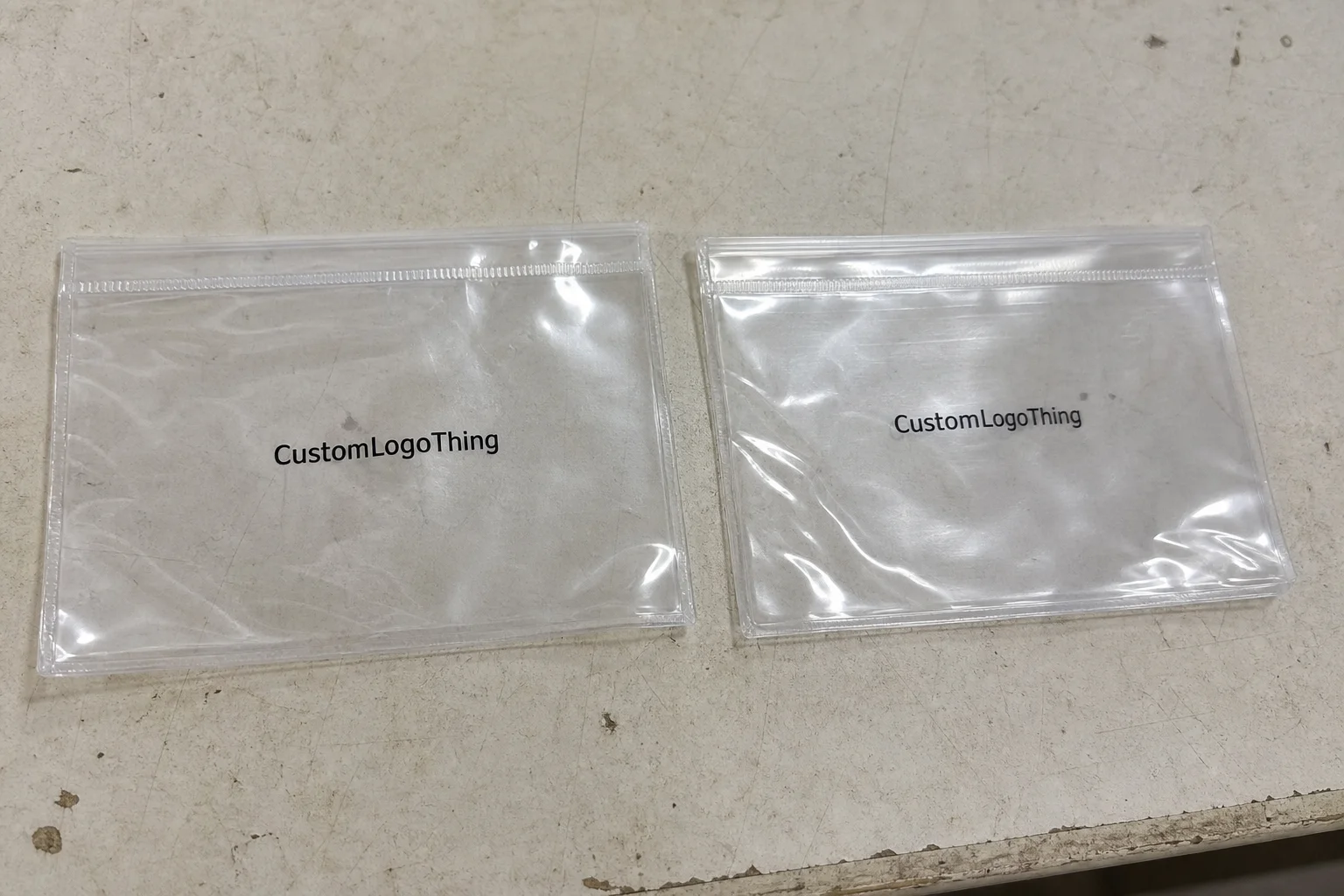
Hotels buy packaging in bulk because packaging has to behave like part of the operating system. A clear zipper bag used for amenity kits or guest-facing inserts needs to open easily, close securely, and keep its shape well enough to look intentional in the room. If one shipment feels crisp and the next feels limp, the inconsistency is visible even before the bag is filled.
Random reordering often looks harmless at first. Then one batch arrives with a softer zipper track, another has a slightly different width, and another is made from film that looks cloudy under warm lighting. Those differences create confusion for housekeeping and can make a polished kit look improvised. A hotel that standardizes its packaging reduces that kind of variation, which saves time in packing, restocking, and approval loops.
Bulk buying also improves planning. The purchasing team can forecast usage, set reorder points, and avoid emergency buys from a supplier that happens to have stock. That matters most during peak occupancy, openings, renovations, and seasonal program changes, when there is very little room for substitutions.
- Faster room setup because the bag size and opening style stay consistent.
- Cleaner presentation for guest-facing kits, spa items, and welcome packs.
- Better inventory control because departments are not mixing different bag types.
- Fewer stockouts because reorder timing can be based on actual usage.
A bag that fails in transit, tears at the seal, or clouds up under room lighting costs more than its unit price suggests. In hotel procurement, the cheapest line item is not always the cheapest outcome.
For that reason, a hotel buyer should look for a supplier that can hold the same film clarity, zipper action, and pack count from one order to the next. That is the difference between a one-time quote and a usable supply relationship.
Clear Zipper Bag Styles, Materials, and Hotel Use Cases
Clear Zipper Bags are not all built the same way, and the right structure depends on what the hotel is packing. A flat zip bag is often enough for slim items such as sewing kits, cards, or small amenity sets. A stand-up pouch makes more sense for a more premium presentation, especially when the contents need to sit upright on a vanity, in a spa basket, or on a shelf. Slider Zipper Bags are easier to open and close, though they usually cost more than standard press-to-close styles.
For hotel buyers, the decision usually comes down to function first and appearance second. If the bag is meant for internal storage, durability and stackability may matter more than a luxury feel. If it is guest-facing, clarity and hand feel become much more visible.
Common hotel applications include:
- Flat zipper bags for grooming kits, sewing kits, and small inserts.
- Stand-up pouches for premium amenities, tea service, or retail samples.
- Slider zipper bags for repeated opening and a more polished guest experience.
- Frosted clear bags for a softer appearance when full transparency is not needed.
Material selection affects both feel and performance. PE is common for flexible, cost-conscious bags and works well for lighter applications. CPP tends to feel crisper and can give a clearer, more finished look in some uses. Laminated structures add stiffness and can improve print quality or barrier performance, which is helpful for higher-value kits or products that need a more substantial presentation.
Thickness should be chosen based on how the bag will be used, not on a guess. For light dry goods or low-touch amenity use, 40-60 microns can be enough. For repeated handling, bathroom items, or contents with edges that press against the film, many buyers move closer to 70-100 microns. The bag should still feel flexible, but not so thin that it collapses in the hand or wrinkles badly when filled.
Customization can turn a basic bag into a more useful hotel package. Size, thickness, print area, hang holes, matte or glossy finish, and tamper-evident features all affect how the package performs. For front-of-house use, the film needs to look clean under bright lighting and avoid obvious scratches or haze. For stockroom use, the focus shifts toward durability, packing efficiency, and ease of counting.
For buyers who want a practical point of reference on testing and transport, standards and packaging resources from ISTA and packaging.org are worth reviewing. Packaging problems are often transit problems, and transit problems are often packing problems.
Key Specifications That Actually Matter Before You Quote
Most quote requests are too vague to be useful. “Need Clear Zipper Bags” is not enough. It gives a supplier almost no basis for pricing, and it leaves too much room for later revisions. The better the spec, the fewer surprises later in sampling, production, or freight.
Start with these details:
- Size tolerance because a few millimeters can matter for tight kits.
- Thickness because 50 microns and 80 microns are very different in use.
- Zipper type such as press-to-close, slider, or double-track.
- Seal strength because weak edge seals fail under packing pressure and handling.
- Clarity level because cloudy film can make a good amenity look low grade.
If the bag will hold food or edible samples, ask whether the material is suitable for food contact and request a material declaration. If it will sit near toiletries, fabrics, or spa items, ask about odor and surface finish as well. A bag may seem neutral on a specification sheet but still carry a noticeable plastic smell that affects the contents.
Printing adds another layer of detail. One-color logo printing is usually easier to control and cheaper than multi-color artwork. Fine lines, very small type, and large solid areas can behave differently depending on the film and ink system. That is why artwork approval is not just a formality. It is the point where a design that looks clean on screen gets checked against real material behavior.
Samples should be checked under the same lighting the hotel uses in guest rooms or service areas. Look closely at zipper smoothness, edge seal quality, and visual clarity. A bag can pass a spec sheet and still feel flimsy in the hand, especially once contents are added. That kind of mismatch matters more in hotel use than in many other packaging categories.
Cost, Pricing, and MOQ: What Changes the Unit Cost
Pricing for a hotel clear zipper bag order depends on a small set of concrete variables: size, material thickness, zipper style, print coverage, order volume, and packing format. Larger runs usually lower the unit price. Custom features raise it. That is normal production economics, not a hidden trick.
Here is a practical range to use for early planning, not a fixed quote:
| Option | Typical MOQ | Indicative Unit Price | Best For |
|---|---|---|---|
| Plain clear flat zip bag | 3,000-5,000 pcs | $0.04-$0.09 | Basic amenity packs, stock use, internal storage |
| Custom printed clear zip bag | 5,000-10,000 pcs | $0.10-$0.24 | Branded guest kits, welcome packs, retail inserts |
| Heavy-duty slider or stand-up pouch | 3,000-8,000 pcs | $0.18-$0.42 | Premium amenities, spa kits, repeat handling |
Those ranges move with material choice, print method, and freight conditions. A 10,000-piece run with simple one-color printing will often have a lower unit cost than a 3,000-piece run with multiple colors, special packing, and a tighter schedule. Buyers sometimes compare quotes that are not truly comparable. A thinner film, smaller bag, or reduced print area can make one quote look much cheaper than another even though the products are not the same.
It also helps to ask about the charges that sit outside the unit price. Sample fees, tooling or plate charges, freight, and carton or pallet packing can all change the final landed cost. If those items are buried inside a single line, the quote is harder to verify and harder to compare.
- Sample fees for physical prototypes or printed proofs.
- Tooling or plate charges for custom print setup.
- Freight because a low ex-works price can rise quickly once shipping is added.
- Carton or pallet packing if export packing or retail-ready handling is needed.
For apples-to-apples pricing, every quote should use the same size, same thickness, same zipper type, same print count, and same pack quantity. Otherwise, the comparison is not meaningful. In hotel procurement, a low number attached to the wrong spec is just an expensive misunderstanding that has not happened yet.
Production Steps, Lead Time, and Delivery Planning
Production for clear zipper bags is a sequence, and each step depends on the one before it. Inquiry, spec confirmation, artwork review, sample approval, production, quality control, and shipment all need clean handoffs. If the first round of details is incomplete, the rest of the schedule stretches out.
A typical timeline for custom orders is often 12-20 business days after proof approval, though the exact lead time depends on quantity, structure, and printing complexity. Plain stock orders can move faster. Bags with special structures, heavier film, or larger quantities usually need more time. Rush production may be possible, but it tends to reduce flexibility and usually increases cost.
Typical timing looks like this:
- Sample or proof stage: 3-7 business days, sometimes longer for new artwork.
- Production: 7-15 business days for standard orders, longer for larger or custom runs.
- Shipping: depends on lane, carton count, and whether the shipment moves by air or sea.
What slows an order down most often is not the machinery. It is unclear artwork, missing size confirmation, late changes after approval, or packing instructions that were never included in the original request. A purchase order does not fill in those gaps on its own. Production still needs exact directions.
Hotels should also plan ahead for peak travel periods, renovation schedules, and property openings. If the bag is part of a guest experience program, the supply should arrive before the room rollout starts. Packaging that lands late can delay a launch or force substitutions that undermine the presentation the hotel worked to create.
Carton strength and transit protection deserve attention as well, especially for longer shipping routes. A supplier should be able to explain how the order is packed, stacked, labeled, and protected during transport. That does not sound glamorous, but it is often the difference between usable stock and a damaged shipment that has to be sorted by hand.
What a Clear Zipper Bags Wholesale Supplier for Hotel Should Prove
Price matters, but it is not the only thing a hotel buyer should examine. A supplier should prove that they can repeat the same spec, manage the same artwork, and maintain the same carton requirements across reorders. That is what separates a one-off source from a supplier that can support an ongoing hotel program.
Look for these proof points:
- Factory capacity that matches your monthly or seasonal demand.
- Quality control checks for film thickness, seal integrity, and zipper function.
- Material consistency so reorders do not drift in feel or clarity.
- Documentation for material declarations, invoice accuracy, and export packing details.
- Reorder memory so the approved spec is saved and used again without constant rework.
That last point is easy to overlook, but it matters. Hotels do not want to explain the same size, zipper style, print placement, and carton count every time they place another order. A good supplier should store approved details and reproduce them without rebuilding the file from scratch.
Communication is another strong signal. Clear quotations, quick sample responses, and direct answers are more useful than polished sales language. If a supplier cannot explain the material, the timeline, or the packing method in plain terms, the order may be harder to manage later.
For branded hotel programs, the best suppliers can also handle mixed SKUs without letting the spec drift. A smaller amenity run should not quietly change because a larger retail order is on the schedule. If that happens, the operation is stretched too thin or the process is not controlled tightly enough for hospitality work.
Next Steps to Order the Right Hotel Zipper Bags
To get a useful quote, send a clean order sheet with the details that actually affect production. The request does not need to be complicated. It just needs to be complete enough for the supplier to price the bag accurately and avoid guesswork later.
- Bag size with width, height, and any gusset or depth requirement.
- Material and thickness such as PE, CPP, laminated structure, and microns.
- Quantity plus your expected reorder pattern if this is a recurring program.
- Print requirements including logo file, print colors, and print area.
- Use case such as amenity kit, spa kit, retail insert, or housekeeping stock.
- Delivery deadline and whether cartons, pallets, or export packing are required.
Ask for 2 to 3 samples if possible. Compare the zipper feel, bag clarity, and how the contents fit once loaded. A bag that looks good empty can feel awkward once it is filled, especially if the insert is rigid or the opening is too narrow. That is a simple check, but it prevents a surprising number of mistakes.
Request a formal quote that separates unit cost, sample cost, freight, and setup charges. A clean quote is easier to verify, easier to compare, and easier to use again for future orders. That matters for hotels because the same bag is often reordered over months or seasons rather than purchased just once.
For hotel procurement, the smartest approach is to lock the spec early, approve the sample, and place the order with enough time to absorb production and freight. A Clear Zipper Bags Wholesale Supplier for hotel programs should make the process predictable rather than complicated. If a current spec or reference sample is already available, that is usually the fastest way to get a matched quote and avoid buying the wrong bag twice.
What size clear zipper bags are best for hotel amenity kits?
The best size depends on the largest item in the kit, plus enough room for easy loading and a neat finish. Common hotel uses include toiletries, grooming kits, sewing kits, and small retail inserts, so a few standard sizes often cover most needs.
How much does a hotel clear zipper bag order usually cost?
Unit cost depends on size, material thickness, zipper type, printing, and quantity. Larger orders usually lower the per-bag cost, while custom printing and special features raise it.
What is the typical MOQ for wholesale hotel zipper bags?
MOQ varies by factory, material, and whether the bags are plain or printed. Standard plain bags usually have a lower MOQ than fully custom versions, so it helps to ask for both options if volume is limited.
Can clear zipper bags be customized with a hotel logo?
Yes. Most suppliers can add one-color or multi-color printing, depending on the material and artwork requirements. Logo size, print area, and color count will affect both pricing and lead time.
How do I check if a supplier can handle repeat hotel reorders?
Ask whether they keep approved specs, artwork files, and carton requirements on record for future runs. A good supplier should be able to reproduce the same bag size, thickness, zipper style, and print quality without rebuilding the order each time.


