Premium activewear is often judged before the garment is touched. A bag that tears, traps static, hides the size, or fights back at the packing station creates friction before the customer ever tries the product on. Custom Slider Lock Clothing Bags for fitness brands solve a narrow but useful packaging problem: they protect folded apparel, reopen cleanly, and give the product a more finished presentation than a basic flap bag.
That matters because fitness apparel moves through more handling than many categories. A pair of leggings might be folded at the warehouse, opened by a customer at home, repacked for a return, and handled again during restocking. A resealable slider bag helps keep that cycle orderly. It also gives brands more control over how the item is seen on shelves, in mailers, or in influencer kits.
The bag is not the hero of the product, but it can quietly damage the first impression if it is undersized, cloudy in the wrong way, overprinted, or awkward to open. The best packaging choices usually disappear into the process. The bad ones get noticed immediately.
What custom slider lock clothing bags for fitness brands actually do
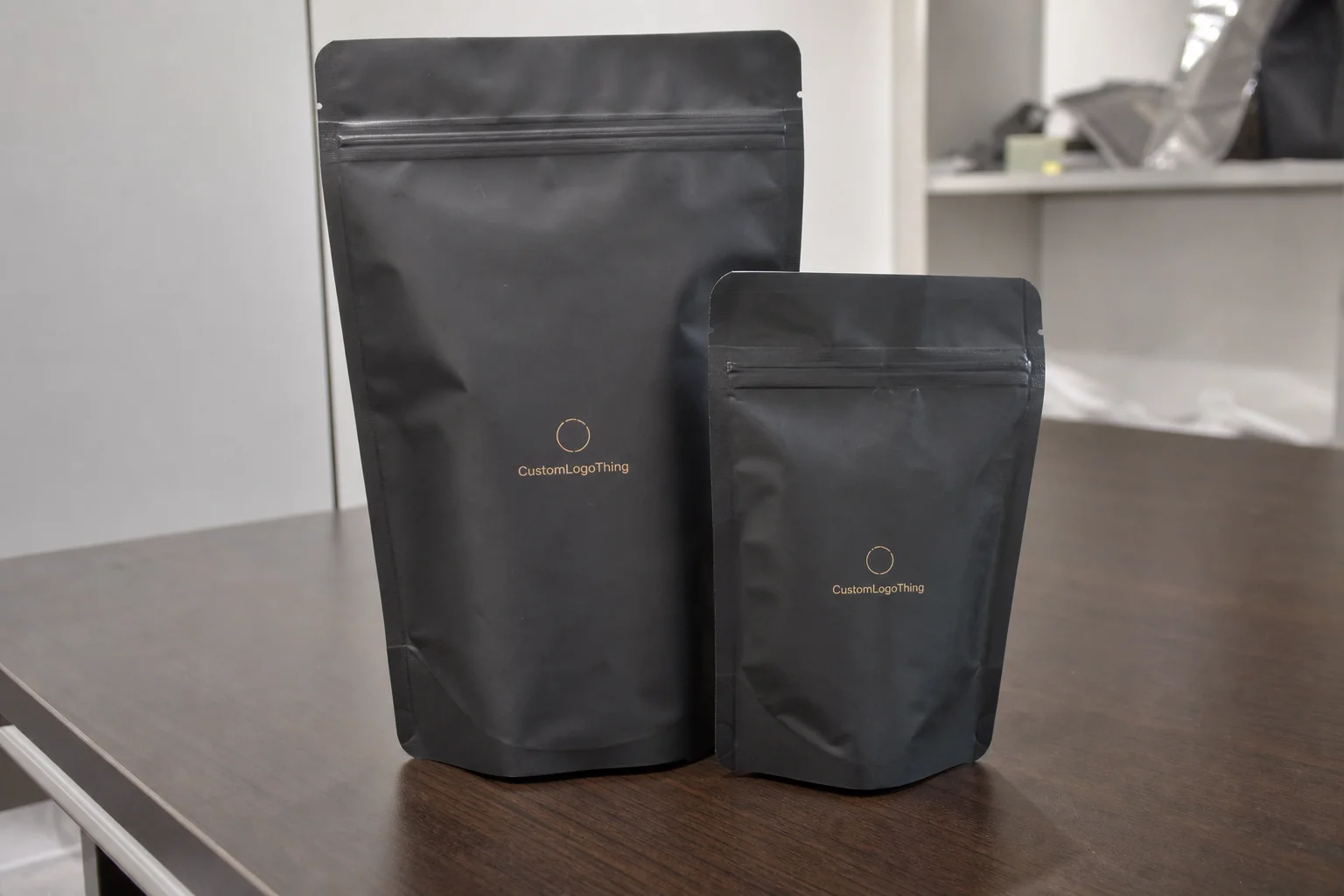
Custom Slider Lock Clothing Bags are flexible plastic apparel bags with a track-and-slider closure, custom printing, and sizing built around folded garments such as leggings, sports bras, training tops, shorts, socks, and bundle sets. The slider moves across the top track to seal the bag, then back again to open it. That simple mechanism gives the package a reusable feel that basic adhesive closures usually do not match.
They are useful across several parts of the operation. In fulfillment, they keep items cleaner and easier to identify. In retail, they help product look orderly and less exposed. For returns, they make repacking less messy. For launches, they make a small assortment of products feel like a planned system instead of loose inventory.
Fitness brands tend to need that consistency because their products are inspected more often than a typical shirt. Customers check opacity, stretch, support, seams, and sizing. They compare color against the website photo. They open the package, try the item, then decide whether it stays. Packaging that supports that behavior is worth more than packaging that only looks good in a mockup.
These bags sit between low-cost self-seal poly bags and more rigid formats such as sleeves, pouches, or custom printed boxes. Adhesive bags can be fine for simple one-way shipping. Standard zipper bags are serviceable. Slider bags usually feel easier to operate, especially if the customer will reopen them after a try-on or if the warehouse team needs repeated access during sorting.
Used well, they can do three jobs at once: protect the garment, speed the pack-out, and support the brand presentation. Used poorly, they become expensive plastic with a logo on it. The difference is mostly in the spec.
How slider lock apparel bags work from closure to shelf
A slider lock bag has three practical components: the film body, the closure track, and the slider itself. The slider runs across the track to lock the bag, then back again to reopen it. Nothing complicated there. The useful part is the repeatable motion, which is better suited to activewear than a single-use flap.
Material selection usually starts with LDPE, HDPE blends, or recycled-content film where the supply chain allows it. LDPE tends to feel softer and more pliable, which is helpful for folded apparel. HDPE blends can feel crisper and a little more structured. Recycled-content film can be a good choice, but the brand should confirm availability, clarity, strength, and the exact wording of any environmental claim before it goes onto the package.
Thickness deserves more attention than many buyers give it. Thin film works for light items like socks, tees, or a single sports bra. Mid-weight film is usually the practical middle for leggings, shorts, and most performance tops. Heavier film is more suitable for hoodies, bundles, and retail programs where the bag will be opened and closed multiple times.
| Spec choice | Typical fit | Tradeoff |
|---|---|---|
| Clear film | Color checks, ecommerce fulfillment, SKU visibility | Shows wrinkles and packing marks more easily |
| Frosted film | Premium activewear, boutique retail, gift sets | Softens product visibility and usually costs more |
| Opaque film | Privacy, stronger branding, kit presentation | Makes product inspection harder without labels |
| Tinted film | Color-coded lines or limited editions | Can complicate scanning and visual checks |
Print placement should be treated like part of the packing system, not decoration. Most brands use a front logo, size marker, care copy, warning text, recycling mark, barcode window, or a small repeat pattern. Keep useful information away from folds, seals, the slider track, and the areas that crease the hardest.
For a fitness brand, the right bag also depends on where the product will travel. A bag that works in a warehouse bin may not hold up to retail handling. A bag that looks clean on a shelf may be too rigid for efficient folding at scale. The spec has to fit the channel, not just the artwork.
Key specs fitness brands should decide before quoting
A useful quote starts with real product details. “A bag for leggings” is not enough. That kind of request usually leads to vague pricing, extra revisions, and a spec sheet that has to be rebuilt later anyway.
The main details are finished bag width, finished bag height, usable interior depth, film thickness, closure style, hang hole or handle needs, print colors, print coverage, quantity, and delivery location. If the bag needs a barcode zone, suffocation warning, recycling mark, retailer label area, or an insert pocket, say so before the quote is issued.
Size should be based on the folded garment, not the size label on the clothing tag. A small sports bra and an XL compression top can need very different packaging once padding, seams, and folding method are included. The only reliable method is to fold real product samples the way fulfillment will pack them, then measure width, height, and thickness. Add enough room for the closure to move without stress.
That extra space is not wasted. It reduces packing friction, protects the slider track, and keeps the garment from looking crushed. Overly tight packaging tends to slow teams down and increases the chance of damage during handling.
- Light-duty film: useful for socks, tanks, lightweight tees, and low-risk single garments.
- Mid-weight film: usually the best starting point for leggings, shorts, sports bras, and standard activewear.
- Heavy-duty film: better for hoodies, bundles, textured fabrics, and products with zippers or drawcords.
Print choices affect both price and usability. One-color printing keeps things clean and usually stays more economical. Two to four colors allow more branding flexibility, including size icons, QR codes, and stronger shelf presence. Full-coverage art can look striking, but it also uses more ink, reduces transparency, and makes barcode placement more sensitive.
Compliance needs to be checked early. A bag may need suffocation warnings, recycle marks, country-specific labeling, and barcode zones that scan reliably under the actual warehouse lighting and software used by the team. Distribution testing programs from ISTA can be useful for brands shipping through more demanding channels. Recycling claims should be accurate and specific; if a bag is only accepted through certain flexible-film collection streams, that distinction matters.
Material claims need the same discipline. If recycled content is part of the spec, confirm whether the content is post-consumer or post-industrial and whether the percentage is verified. Soft claims do not help when a retailer asks for documentation.
Cost, MOQ, and unit pricing for custom slider bags
Pricing depends on bag size, film type, thickness, print colors, print coverage, quantity, freight, and any special tooling or material requirements. Bigger bags use more film. Thicker bags use more material. More colors add setup complexity. Small runs carry higher per-unit costs because the setup is spread across fewer bags.
For planning purposes, the pricing curve usually looks like this: stock bags with labels are the cheapest starting point, small custom orders are the most expensive per unit, and larger repeat orders reduce the per-bag number once setup is absorbed. A 500-piece custom run can sit in a very different cost bracket from a 5,000-piece run of the same size and print. The exact numbers depend on film, print area, and freight, but the direction is predictable.
| Buying option | Best use | Cost behavior | Main risk |
|---|---|---|---|
| Plain stock slider bags with stickers | Small tests, sample programs, early launches | Low setup cost, more hand labor | Slower packing and less polished presentation |
| One-color custom bags | Repeat ecommerce orders and clean branding | Often the most efficient custom option | Limited shelf impact |
| Multi-color custom bags | Retail, seasonal drops, premium kits | Higher print and proofing cost | More room for artwork and registration errors |
| Special film or recycled-content bags | Brand standards and sustainability targets | Variable depending on material availability | Claim accuracy and supply consistency |
The cheapest quote is not always the cheapest result. A weak closure, poor print registration, cloudy film where clarity is needed, or a bag that slows pack-out can cost more than a few cents saved per unit. Packaging teams usually learn that after one painful production run.
Minimum order quantities depend on size, print method, and material availability. Many brands start with stock bags for a test period, then move into custom printing once demand stabilizes. That sequence makes sense. It protects cash flow and keeps the first iteration from becoming dead inventory.
A useful quote should list specs, MOQ, sample terms, lead time, setup charges, freight assumptions, and payment terms. If any of those items are missing, the quote is not ready for comparison.
Process and lead time from artwork to packed bags
The normal process is straightforward: confirm specs, request pricing, review artwork, approve a proof, sample if needed, manufacture, inspect, pack, and ship. Lead time begins after the final approvals, not when the first file is sent. Launch schedules often slip because teams count time from the wrong point.
Artwork review usually checks file resolution, vector quality, ink colors, print placement, barcode clearance, warning copy, and bag fit. Vector files are preferred because they scale cleanly. A low-resolution image pulled from a website may look acceptable on a screen and fail immediately in production.
Physical samples are worth requesting when the garment is valuable, the finish is new, or the fit is tight. Samples help confirm the feel of the film, the strength of the closure, and whether the bag still works after repeated opening. They are also the easiest way to test barcode placement and see how the print behaves on a real fold.
Timeline depends on quantity, print complexity, material availability, and approval speed. Repeat orders of a known spec move faster than first-time custom projects. For planning, simple jobs often need a few weeks after approval, while more complex orders can stretch longer once special film, extra colors, or custom labeling enter the mix. Freight adds its own timing layer.
- Measure three real products, not one ideal sample.
- Approve artwork only after checking size, warning copy, and barcode zones.
- Assign one person to sign off on packaging changes.
- Build buffer time for freight, receiving, and rework.
Fitness launches are usually tied to a campaign date, a retail reset, a trade show, or a drop schedule. Packaging delays do not care about any of those. Rushing custom packaging is possible, but it narrows the options and leaves less time to catch avoidable mistakes.
Common mistakes that make apparel bags harder to use
The most common mistake is choosing the bag before testing the garment. The product has thickness and rebound. The spreadsheet does not.
Undersized bags slow packing, stress the closure, and make the product look cramped. If the garment barely fits, the slider track gets extra wear every time someone opens or closes it. That is a maintenance problem hiding inside a packaging decision.
Another mistake is using film that is too thin for textured or bulky activewear. Zippers, padded cups, drawcords, and heavy waistbands can cut into weak material. A bag that works for a lightweight tee may be the wrong choice for leggings or a hoodie.
Overprinting causes a different set of problems. Branding matters, but product visibility matters too. If the customer, warehouse team, or retail associate cannot see color, size, or SKU information, the design has started working against the sale. Use opaque areas with intent, not by default.
Barcode placement is often handled carelessly. Wrinkles, glossy film, curved placement, dark backgrounds, and print too close to the edge can cause scanning errors. Keep the barcode zone flat, high contrast, and away from folds. Test it with the actual scanner or app the team uses, not with guesswork.
Returns need to be considered before approval, not after the first exchange request. Fitness apparel is routinely opened, tried on, and repacked. A slider bag that tears after one use is not really reusable, even if the marketing sheet says it is.
Sustainability claims need accuracy. If the bag contains recycled content, state the verified percentage. If recycling depends on a special collection stream, do not imply curbside acceptance. Packaging claims get audited more often than people expect.
One size across every SKU can look efficient on paper and awkward in practice. Socks, bras, leggings, and hoodies often need different bag dimensions. Standardization only helps if the fit still supports the products inside it.
Next steps to spec and order the right bags
Start by folding three representative products the way fulfillment will actually pack them. Measure the finished width, height, and thickness. That gives the bag its real starting point.
Then decide on film type and finish. Clear film helps with retail checks and order verification. Frosted film reads more premium and hides packing marks better. Opaque film supports stronger branding and privacy. Tinted film can help with product differentiation, but it needs careful barcode and color management.
Choose the print system with restraint. A logo, size area, warning text, recycling mark, and a useful QR code are enough for many brands. If the QR code is not doing real work, it is just visual clutter. Good packaging is usually more disciplined than expansive.
- Measure real folded products and define the finished bag size.
- Select film type, thickness, and finish.
- Decide whether you need a hang hole, handle, or label zone.
- Prepare vector artwork and any required warning copy.
- Request pricing with quantity, delivery address, and sample needs.
- Review the proof against the actual product before approval.
Proof review is the last inexpensive chance to catch a bad assumption. Check fit, closure movement, print clarity, barcode placement, and packing speed. A mockup can look right while still being wrong for operations.
For fitness brands with multiple SKUs, the bag should fit into the broader packaging system rather than compete with it. When the spec is consistent across apparel, inserts, and shipping materials, the entire operation becomes easier to pack, easier to inspect, and easier to restock.
Brands that treat slider bags as a functional packaging decision usually get cleaner presentation, fewer packing delays, and fewer unpleasant surprises once the product reaches the customer.
FAQ
What size custom slider lock apparel bags do fitness brands usually need?
Size should be based on the folded product, not the clothing label. Measure width, height, and thickness after folding the item the way fulfillment will pack it, then add enough room for easy insertion and smooth closure movement. Leggings, sports bras, tees, and hoodies often need different dimensions.
Are slider lock clothing bags better than adhesive flap bags for activewear?
Slider lock bags work better when the customer may reopen, inspect, return, or reuse the package. Adhesive flap bags are cheaper and fine for simple one-way shipping. For premium fitness apparel, the slider closure usually feels more durable and more user-friendly.
How much do custom slider zipper clothing bags cost?
Cost depends on size, film thickness, print colors, print coverage, quantity, freight, and sampling needs. Small custom runs usually carry the highest per-unit cost because setup is spread across fewer bags. Larger repeat orders lower the unit price. A useful quote should show MOQ, setup charges, lead time, and shipping terms.
What artwork works best on custom slider lock clothing bags?
Vector logos, readable warning text, clear size or SKU areas, and barcode zones with enough contrast work best. Keep important details away from folds, seals, and the slider track. If the bag is used in fulfillment or retail, preserve enough visibility for color and size checks.
How long does production take for custom clothing bags with slider locks?
Lead time depends on proof approval, material availability, order quantity, print complexity, and freight method. Simple repeat jobs move faster than first-time custom projects. For planning, allow several weeks after final approval, then add buffer time for launch dates, receiving, and distribution.


