Buyer Fit Snapshot
| Best fit | Buy Custom Tear Strip Mailers projects where brand print, material claims, artwork control, MOQ, and repeat-order consistency need to be specified before quoting. |
|---|---|
| Quote inputs | Share finished size, material target, print colors, finish, packing count, annual reorder estimate, ship-to region, and any compliance wording. |
| Proofing check | Approve dieline scale, logo placement, barcode or warning zones, color tolerance, closure strength, and carton packing before bulk production. |
| Main risk | Vague material claims, crowded artwork, missing packing details, or unclear freight terms can make a low unit price expensive after revisions. |
Fast answer: Buy Custom Tear Strip Mailers: Specs, Pricing, and More should be specified like a repeatable production item. The safest quote records material, print method, finish, artwork proof, packing count, and reorder notes in one written spec.
Production checks before approval
Compare the actual filled-product size with the drawing, then confirm tolerance on folds, seals, hang holes, label areas, and retail display edges. Reserve space for logos, QR codes, warning copy, and material claims before decorative graphics fill the panel.
Quote comparison points
Review material grade, print process, finish, sampling route, tooling charges, carton quantity, and freight assumptions side by side. A quote is only useful when the supplier can repeat the same color, closure quality, and packing count on the next order.
Why Buy Custom Tear Strip Mailers for Faster Unboxing
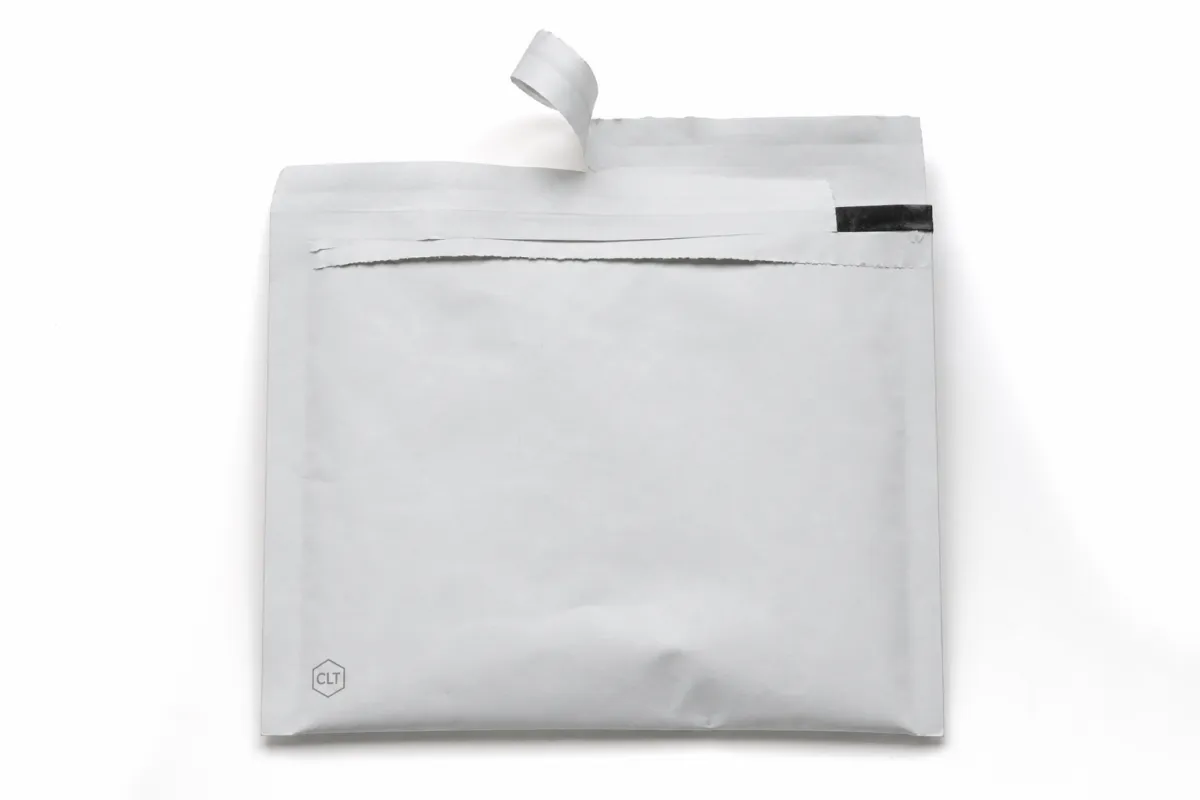
If you want to buy Custom Tear Strip Mailers, start with the practical stuff: film strength, tear-line placement, and whether the print still reads after the bag has been handled by a packer, a sorter, and a few delivery trucks. I have opened enough mailers over the years to know how quickly a simple shipping bag can become annoying when the tear path drifts or the flap catches. Nobody is gonna remember the mailer fondly if they need scissors just to reach the product.
That first opening moment matters more than a lot of brands expect. A well-made tear strip gives the customer a clean, predictable entry point, and that tends to reduce little frustrations that pile up into support tickets. It also lowers the chance of a badly sliced garment, a nicked insert, or a box cutter scar right through the contents. That is not some fancy packaging theory; it is a real problem in fulfillment rooms that move fast.
Brands buy custom tear strip mailers for more than convenience. The format keeps outbound packaging light, but it also gives the shipment a branded face before the product is even seen. For apparel, soft accessories, subscriptions, and other flat or flexible goods, that combination is hard to beat. You get speed at the pack table and a cleaner opening experience on the other end.
From the buyer's side, the decision usually comes down to five things: size, film thickness, print coverage, tear-strip style, and lead time. Those details shape the real landed cost, the warehouse behavior, and the customer's first touchpoint. The catalog description is only the starting point.
The cleanest mailer is the one the customer can open without thinking about it.
Buy custom tear strip mailers when the shipping format needs to feel easy, tidy, and intentional. If the bag looks professional on arrival, opens where it should, and protects the contents without excess bulk, it helps both the brand and the packing line. That is a straightforward packaging win, not marketing fluff.
These mailers also fit neatly into broader branded packaging programs. A one-color logo can be enough for a smaller brand, while a larger rollout may call for richer packaging design with sizing marks, return instructions, or interior print. Some teams also keep a parallel lane for Custom Packaging Products so the mailer works with inserts, cartons, or labels. That is usually the cleanest approach when the goal is consistency across product packaging without overbuilding every component.
- Faster opening: customers do not need tools for a straight, controlled tear.
- Cleaner presentation: fewer ragged edges and less random shredding around the opening.
- Better workflow: the packing line can stay with a lightweight mailer instead of switching to a carton.
- Lower support friction: fewer complaints from shipments that are simply hard to open.
- More brand visibility: a printed mailer delivers package branding before the product is even seen.
What Custom Tear Strip Mailers Are Made Of
Most custom tear strip mailers start with a polyethylene body, usually made as a co-extruded film so the outside can print cleanly while the inside keeps the bag flexible and strong. The tear strip is built into the structure, which means the opening follows a controlled line instead of wandering through the film. That sounds minor until you hold one in your hands and feel how much easier it opens.
Buy custom tear strip mailers when you want a material that stays light but still handles the rough edges of parcel shipping. Opaque white and gray films are common because they hide the contents and give the graphics a clean backdrop. Clear or translucent films show up less often in retail-facing work, though they can be useful for internal fulfillment or certain sorting applications. For most branded runs, privacy and print contrast matter more than seeing the product through the bag.
The sealing and opening sequence is simple. The packer loads the item, closes the adhesive flap, and sends the bag into transit. On arrival, the consumer finds the pull point, opens along the intended path, and gets to the product without fighting the packaging. That is why many teams buy custom tear strip mailers for apparel, books, accessories, and other textile-heavy or flat product packaging. The format feels neat, and it also supports high packing speed in the warehouse.
There is a practical sustainability angle here, but it deserves a careful explanation. Poly mailers often use less material than a carton-and-dunnage combination for soft goods, though the actual environmental tradeoff depends on the product, the route, and local recycling rules. Not every poly mailer belongs in curbside recycling, and the film blend matters. For source-reduction guidance, the EPA has helpful material at EPA recycling guidance. That does not make the bag automatically better, but it does keep the conversation honest.
Shipping performance matters too. Labs and packaging teams often refer to the ISTA test families because drop, vibration, and compression are not abstract concerns for mailers. A bag can look perfect on a proof sheet and still fail if the film gauge, seal width, or tear-strip placement is off. I have seen that happen more than once, and the fix is usually not glamorous: tighten the spec, check the content shape, and stop guessing.
Brands that compare mailers to custom printed boxes usually run into the same tradeoff every time. Cartons bring structure and crush resistance, while mailers win on speed, storage, and freight efficiency for soft or flat products. The right answer depends on the product, not a trend report. If the item needs rigid protection or a more substantial presentation, a carton may still be the smarter move. If the item is flexible, lightweight, and shipping in volume, buy custom tear strip mailers and keep the pack line moving.
Specifying the Right Build for Custom Tear Strip Mailers
Spec work is where a mailer project either stays efficient or gets expensive. Before You Buy custom tear strip mailers, start with the actual packed item, not the flat product alone. Measure the folded garment, bundled accessory, insert pack, or subscription kit in its finished shipping form, then add enough room for loading without forcing the contents into a tight fit. Width, length, flap depth, and usable opening space all need to be considered together.
Film thickness is usually listed in mils or microns, and the right answer depends on the contents. A lighter apparel program might run comfortably in a 2.5 mil structure, while a heavier or sharper-edged item may need 3.0 mil or more. If you are shipping dense accessories, layered textiles, or bundles with corners, a slightly heavier film often gives the packer more confidence and reduces the chance of puncture on a conveyor or during parcel sorting. That does not mean the thickest bag is always best. It means the build should match the product.
Tear-strip placement matters more than first-time buyers usually expect. A centered pull line gives a simple opening path, but some programs need the tear strip offset to align with print, flap geometry, or an internal fold. The goal stays the same: the customer should open the bag without fighting the structure, and the product should not catch on the tear line. If the pull is too aggressive or too close to the seal zone, the opening can look sloppy even if the bag technically works.
Print specifications deserve the same discipline. One-color logos are often enough for a crisp branded look, especially on white film. Multi-color print is possible, but the ink coverage, registration, and artwork spacing all become more sensitive as the design gets busier. If you need white ink on a colored film, ask whether the process supports that layer cleanly and whether the artwork needs to avoid the seal area. A good supplier will tell you where the safe zone is before proofs are approved.
Here is the fit-and-function checklist I would use before signing off on a run:
- Load weight: know the heaviest packed unit, not just the average.
- Contents shape: note corners, zippers, buttons, or anything that can poke through film.
- Warehouse speed: confirm the bag can be loaded quickly by staff or automation.
- Carrier handling: assume the package will be compressed, dropped, and shifted in transit.
- Presentation goal: decide whether the bag should feel premium, plain, or retail-ready.
Buy custom tear strip mailers with the finished use case in mind, not just the artwork proof. A bag that looks fine in a PDF can still waste money if the dimensions are too tight, the film gauge is too light, or the seal area conflicts with the print. In a real packing line, those details show up fast.
| Spec choice | Typical use case | What it changes | Buyer takeaway |
|---|---|---|---|
| 2.5 mil film | Light apparel, flat soft goods | Lowers weight and unit cost | Good starting point if the contents are flexible and low risk |
| 3.0 mil film | Mixed apparel, accessories, multi-item packs | Adds puncture resistance and body | Often the safest middle ground for buy custom tear strip mailers orders |
| Full-panel print | Brand-heavy launches, retail packaging programs | Improves shelf and unboxing presentation | Costs more, but gives the strongest package branding impact |
| One-color logo print | Cost-controlled fulfillment | Limits setup and keeps the look clean | Best for buyers who want branding without overcomplicating the run |
Buy Custom Tear Strip Mailers: Cost, Pricing, and MOQ
Pricing is where most buyers finally get a clear picture, because the same bag can look cheap or expensive depending on what is included in the quote. If you buy custom tear strip mailers, the unit price usually moves based on size, film thickness, print colors, tear-strip construction, and total order volume. A larger run spreads setup costs across more pieces, while a more complex print job or heavier film pushes the number upward.
MOQ, or minimum order quantity, is not just a random line on a quote. It usually reflects the economics of setup, printing plates or cylinders, conversion waste, and production scheduling. A smaller run may still be possible, but the unit price often climbs enough that the math stops making sense. That is why many packaging buyers ask for two or three quantity levels before deciding whether to buy custom tear strip mailers at a particular volume.
As a rough working range, a simple one-color custom run may land around $0.18 to $0.28 per bag at 5,000 pieces, while a heavier build or fuller coverage job can move into the $0.28 to $0.45 range. Those are not fixed numbers, and they will shift with artwork, freight, and material choice, but they are useful for budgeting. If the quote sits way outside those bands, ask what is driving it. Sometimes it is a larger bag size, sometimes it is a heavier film, and sometimes it is just freight that should have been obvious from the start.
Setup charges can show up in a few places. Artwork prep, plate charges, proofing, and shipping are the most common. Some quotes bundle those items, while others separate them. Ask for the landed cost, not just the factory price, because the freight line can change the final number more than buyers expect. That is especially true if you need the bags delivered to a fulfillment center far from the production site.
To make the comparison easier, use the table below as a planning tool rather than a promise.
| Order level | Typical build | Indicative unit price | Best fit |
|---|---|---|---|
| 2,500 pieces | 2.5 mil, one-color print | $0.24-$0.40 | Testing a launch or handling a short seasonal window |
| 5,000 pieces | 2.5-3.0 mil, one- or two-color print | $0.18-$0.32 | Common first production run for buy custom tear strip mailers |
| 10,000 pieces | 3.0 mil, fuller print coverage | $0.15-$0.27 | Repeat orders where usage is steady and storage space is available |
| 25,000+ pieces | Custom-sized, brand-heavy run | Quoted case by case | High-volume programs that need predictable replenishment and lower unit cost |
The simplest quote checklist is also the most useful. Send the approved size, material preference, print color count, tear-strip style, quantity target, delivery address, and artwork files. If you already know you want to buy custom tear strip mailers for a recurring program, say that plainly. Reorder planning helps suppliers estimate smarter and usually cuts down on back-and-forth later.
One more practical point: if your team is comparing mailers against custom printed boxes or padded envelopes, compare the whole packout, not just the sticker price. A carton can look reasonable until inserts, tape, void fill, and freight are added. A tear-strip mailer may win because it is lighter, faster to pack, and easier to store. The right answer is usually the one that gives the best total cost per shipped order, not the cheapest packaging line item.
Production Process and Lead Time
The production workflow is straightforward, but each step depends on the one before it. A buyer requests a quote, the supplier reviews the artwork and specs, the proof gets approved, the job moves into scheduling, and the bags are printed, converted, checked, and shipped. If any step is unclear, the lead time stretches. The cleanest projects are the ones where the buyer knows exactly what they want before proofing starts.
Buy custom tear strip mailers with the understanding that print complexity changes the timeline. A simple one-color design on a standard size may move through production faster than a multi-color, full-panel layout on a custom dimension. Material availability matters too. If a specific film structure or shade is tight in the supply chain, the schedule can shift even after artwork approval.
Most teams should expect roughly 12 to 15 business days from proof approval for a standard run, with more complex orders landing closer to 18 to 25 business days. Rush orders can sometimes be arranged, but they usually require quicker art approval, a narrower spec, and fewer options. The fastest way to protect the schedule is to approve the artwork promptly and answer dimensional questions before the sample lands in your inbox.
Before production starts, confirm these points in writing:
- Bag dimensions: width, length, flap depth, and any usable opening allowance.
- Color expectations: how the final print should look against the chosen film color.
- Logo placement: where the mark sits relative to the tear path and seal zone.
- Material choice: film thickness, opacity, and any special finish.
- Delivery plan: destination, freight terms, and receiving window.
For buyers who manage recurring fulfillment, inventory planning matters almost as much as production speed. Keep enough cushion to cover a shipping delay, a seasonal spike, or a sudden jump in order volume from a launch. A good replenishment plan is usually boring, and that is exactly what you want. Running short on packaging almost always costs more than carrying a sensible buffer.
Buy custom tear strip mailers early enough to avoid paying for urgency later. The schedule is far less stressful when the artwork is complete, the proof is signed, and the receiving team knows the shipment is coming. That discipline is part of good package branding, even if nobody sees it on the front end.
Why Choose Custom Logo Things for Poly Mailers
For buyers comparing suppliers, the real value is not a flashy promise. It is whether the supplier can match the film strength, print approach, and opening style to the items you actually ship. Custom Logo Things is a practical fit for buyers who want clear guidance on Custom Poly Mailers and need a vendor that talks in terms of fit, handling, and print behavior instead of vague claims. That matters when a run has to work the first time.
Honestly, the best packaging partner is the one that will tell you when a specification is too light, too heavy, or simply the wrong format for the job. If you buy custom tear strip mailers, you should expect honest input on bag sizing, material thickness, and whether a tear-strip layout is actually the right choice for your product. Sometimes the answer is yes. Sometimes the smarter answer is a different mailer or even a carton, especially if the contents are rigid or unusually sharp.
Quality control also matters in high-volume production. Buyers should look for consistent seal performance, print alignment, and pouch formation that stays uniform across the run. If the tear line wanders or the flap seal varies too much, the customer feels it right away. That is why good suppliers watch the converting stage closely and keep artwork positioning tight enough to preserve the brand on every bag.
There is also value in communication. A packaging program often runs through artwork questions, proof revisions, and freight coordination before the first carton reaches the dock. If the supplier is responsive, the work feels controlled instead of reactive. That is especially useful for launches, seasonal peaks, or retail packaging programs that cannot absorb delays.
Custom Logo Things can also help buyers coordinate mailers with other parts of the shipment, from labels and inserts to companion components that support the overall product packaging system. Some brands want the mailer to stand alone, while others want it to support a broader branded packaging experience that includes internal tissue, printed inserts, or matching outer cartons. If that is your situation, a broader sourcing conversation through Custom Packaging Products is usually worth having before you place the order.
From a buyer's perspective, the right supplier should make buy custom tear strip mailers feel routine, not risky. That means clear quotes, readable proofs, practical recommendations, and a production plan that matches the real ship date. If the bag is right, the print is right, and the delivery lands on schedule, the packaging gets out of the way and lets the product do the talking.
How to Buy Custom Tear Strip Mailers Without Delays
The fastest path is a simple one. Gather your dimensions, contents, quantity target, artwork files, color goals, and delivery deadline before you request a quote. When buyers buy custom tear strip mailers with complete information, the estimate is more accurate the first time, and the proof stage moves with fewer corrections. That usually saves both time and budget.
Start by defining the packed product. A folded garment, a two-piece accessory kit, and a subscription bundle all take different shapes, even if the flat item size looks similar. Then decide whether the mailer should be plain with a logo, heavily branded, or designed to coordinate with other retail packaging elements. If the program needs a premium presentation, say so early. If the job is pure fulfillment, say that too. The supplier can only recommend the right film and print structure if the use case is clear.
Before you approve the proof, review it with a checklist. Make sure the logo sits where the tear path will not distort it, the text is readable at scale, and the bag size still allows easy packing. If your team has a reordering schedule, share that now rather than after the first shipment. Seasonal peaks, subscription cycles, and launch windows all affect the amount of inventory you should keep on hand.
Here is a short approval checklist that keeps jobs moving:
- Confirm the final size against the actual packed item.
- Check the material thickness and opacity.
- Verify the artwork colors and placement.
- Review the tear-strip location and seal zone.
- Confirm shipping destination and receiving details.
Good buyers also ask one extra question: what happens if the usage changes? If the product line grows heavier, if the folding method changes, or if the brand moves into a different season, the spec may need to change too. That is not a sign of a bad order. It is a normal part of real packaging design and replenishment planning.
If you are trying to keep the project moving, the most useful next step is not a big strategy session. It is a clean spec packet: packed dimensions, artwork files, quantity targets, and the exact ship-to address. Send those four items together, and the quote usually gets a lot better the first time around.
For teams comparing options, ask for pricing at two volume levels and one backup material thickness so you can see the real tradeoff between unit cost and performance. That is the clearest way to buy custom tear strip mailers without stalling in email loops or overbuying a spec that is more expensive than the shipment needs.
What is the minimum order to buy custom tear strip mailers?
Minimums usually depend on print complexity, film type, and production setup rather than the mailer shape alone. A larger quantity often lowers the unit cost, so the best order size is the one that fits both your usage rate and your storage space. Ask for two or three volume levels so you can compare MOQ against total landed cost before you buy custom tear strip mailers.
Can I buy custom tear strip mailers with a logo on one side only?
Yes, one-sided print is common when the goal is a cleaner look or a lower setup cost. Single-sided art can keep the outside simple while still carrying your branding, sizing, or shipping message. Confirm whether the artwork should avoid the flap and seal area so the print stays sharp after production.
Are tear strip mailers stronger than standard poly mailers?
The tear strip improves opening control, but overall strength still depends on the film thickness and construction. A properly specified tear strip mailer can be just as durable as a standard mailer for the same product category. For heavier or sharper items, compare puncture resistance and seal quality before you buy custom tear strip mailers.
What artwork files do I need to request a quote for custom tear strip mailers?
Send a vector logo or print-ready file when possible, plus any brand colors, text copy, and placement notes. Include the bag size, quantity target, and preferred print coverage so the quote reflects the actual job. If you do not have a final file yet, share a rough layout so the supplier can advise on print limitations before you buy custom tear strip mailers.
How do I choose the right size before I buy custom tear strip mailers?
Measure the finished product in its packed form, not just the flat item, so the mailer fits with enough clearance. Account for inserts, folds, and any protective packaging that adds thickness or changes the shape of the load. If you are between sizes, ask for guidance on the inside dimensions and the amount of usable flap space so you can buy custom tear strip mailers that actually fit the way you ship.
Practical takeaway: start with the packed product, not the flat item, then request quotes at two volumes with the exact film gauge, print count, and tear-strip layout. That is the fastest way to buy custom tear strip mailers that fit the line, the shipment, and the budget without wasting time on revisions.

