A wedding embroidered baseball caps Unit Cost Review is usually less about the cap body and more about the layers wrapped around it. A $4 blank can become a $13 to $18 finished item once digitizing, proofing, embroidery, packing, and freight are added. That spread surprises buyers because the blank cap feels like the main product, yet the expensive part is often the work that happens before the first stitch. Wedding orders make that easier to miss: they are small, time-sensitive, and often split across names or roles rather than repeated as one identical design.
The practical question is not whether embroidered caps can be affordable. They can. The real question is which parts of the order are fixed, which are variable, and which are quietly adding cost without improving the look. Once those pieces are separated, the quote becomes easier to judge. That matters because wedding caps are usually purchased for a specific event date, not for open-ended resale. A bad guess on lead time or packaging can be more expensive than a slightly higher cap price.
Why Small Wedding Cap Orders Cost More Than Expected
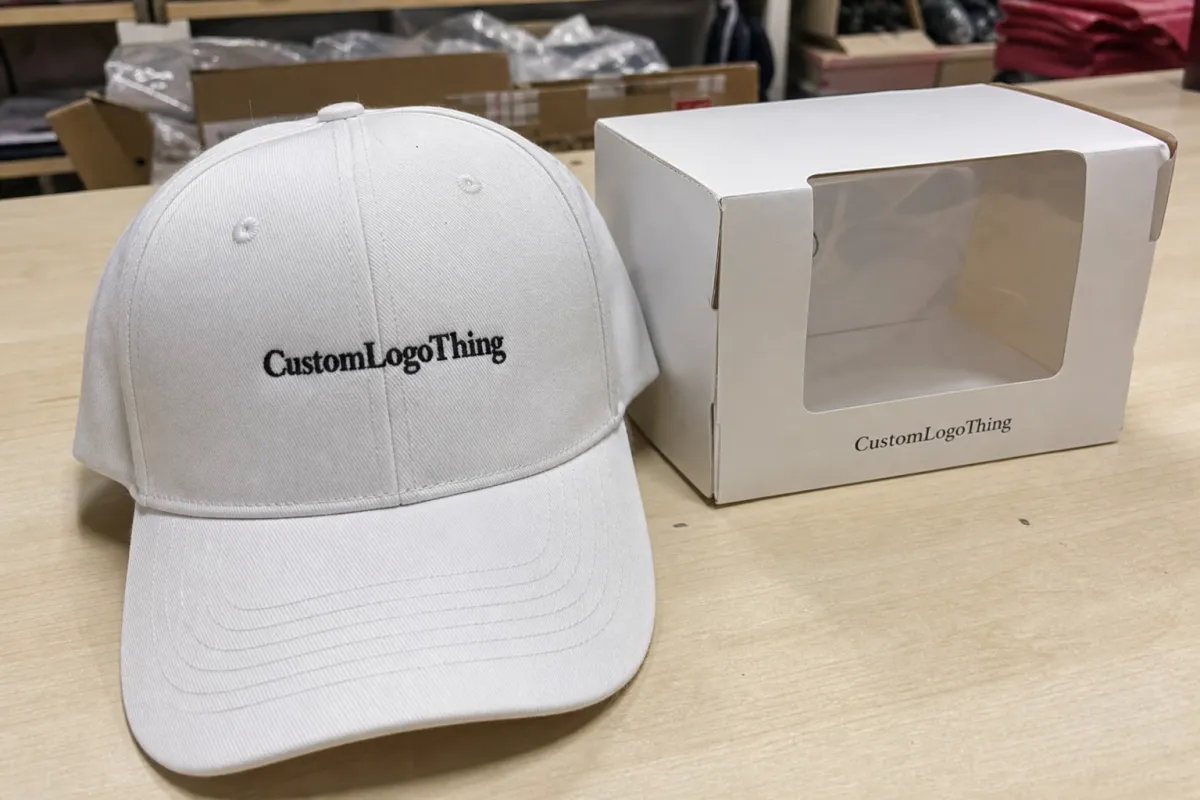
Small wedding orders look simple. Ten caps for the wedding party. Maybe twenty if the couple wants extras for siblings, parents, or the photographer. Then the quote lands and the unit price feels high. The reason is not mystery markup. It is fixed-cost embroidery math.
Digitizing is one example. The logo or monogram must be converted into a stitch file before production starts. That file can cost a modest one-time fee for a clean, simple design, or more if the artwork includes thin script, layered fills, tiny dates, or multiple colors. On a 12-piece order, a $40 digitizing charge is noticeable. Spread across 100 caps, it becomes a rounding error. The same pattern applies to proofing, machine setup, and thread testing.
Material choice changes the equation too. A brushed cotton twill cap costs more than a thin promotional cap because the body is sturdier, the front panel holds shape better, and the embroidery usually looks cleaner. Polyester blends can be cheaper and more colorfast, while washed cotton or garment-dyed caps may have a softer finish but a less formal appearance. Wedding buyers often want the cap to look premium in photos, which is sensible, but that expectation pushes the order toward better fabric and tighter construction.
Personalization has a cost of its own. One monogram repeated across every cap is efficient. Five different roles, six names, and two embroidery placements are not. Each variation can require a separate thread path, a separate proof line, or a different hooping step. If the caps also need size adjustments or different closures, labor rises again. The unit price starts to behave like a custom project because, frankly, it is one.
Packaging can distort the quote just as much as decoration. Plain bulk packing is one thing. Individual polybags, folded tissue, presentation boxes, and insert cards are another. A bride may want the caps to feel like keepsakes, not merchandise. That is a fair expectation, but it adds material and handling cost. In many runs, packaging contributes more to the per-piece price than the embroidery itself.
There is also the issue of waste. Small orders have less room for error. If one cap is misstitched or one name is spelled wrong, the supplier may need to remake the piece and still absorb the labor. Rework risk is built into the quote, especially when the order is unique and non-repeatable. That is why lower minimums often come with higher unit prices.
Experienced buyers look at the quote structure, not the headline number. If the blank cap is cheap but the setup fee is high, the order may still be a good value. If the blank cap is expensive and the embroidery is light, another supplier may not actually be better. A wedding embroidered baseball caps Unit Cost Review should separate those pieces before comparing vendors.
Cap Styles, Embroidery Placement, and Finish Options
Cap style affects both appearance and production cost. A structured six-panel cap is usually the most stable option for wedding embroidery because the front panel stays flat enough for clean lettering and simple monograms. That makes the stitch result more predictable, which matters when the design needs to look polished in photos. A relaxed dad cap feels more casual and can suit a beach ceremony or outdoor rehearsal dinner, but the softer crown may make larger designs sit less evenly.
Five-panel caps give a wider front surface, which helps when the artwork includes a longer phrase, a date, or a bridal party title. The tradeoff is that the visual style leans more laid-back. Low-profile caps are a good middle ground when the goal is subtle branding or a minimalist keepsake. None of these options is universally best. The better choice depends on how formal the event feels and how much visible embroidery the buyer actually wants.
Placement matters almost as much as the cap body. Front embroidery is the most efficient because the machine setup is straightforward and the result is easy to read. Side embroidery can look refined, especially for initials or a small date, but it often adds handling time. Back embroidery is common when the front panel is reserved for a logo or role title. Brim marks are less common for weddings and more likely to be used for understated detail. Each extra location increases labor even if the stitch count remains low.
Finish choices shape both the feel and the unit price. Flat embroidery is the standard for text, monograms, and simple icon marks. Raised or 3D embroidery can add dimension, but it is not a good fit for fine script, tiny letters, or crowded artwork. Metallic thread can elevate the look in photos, though it may stitch less smoothly on dense fills and often slows production. Tonal thread on a tonal cap creates a quieter, more tailored result, while contrast thread gives better visibility from a distance.
Material specs matter here too. Polyester thread is usually preferred for durability and color stability, especially for outdoor events or humid locations. Rayon can have a softer sheen, but it is not always the better choice when the cap is expected to be worn repeatedly. Backing also matters. A lightweight backing can keep the front panel from puckering, but overly stiff backing may make the cap uncomfortable. The right balance depends on stitch density and the cap fabric.
Comfort should not be treated as an afterthought. Adjustable closures are a practical choice for wedding groups because head sizes vary more than people expect. Snapbacks are easy to fit and photograph well. Buckles feel more finished. Fabric straps can look softer and more casual. If the event is warm or outdoors, mesh-backed caps may breathe better, though they usually read as more relaxed than formal. For a wedding party that includes different ages and hair volumes, a flexible closure is often the least risky option.
Here is a practical comparison of common wedding cap styles:
| Cap style | Best use | Embroidery note | Typical cost impact |
|---|---|---|---|
| Structured six-panel | Formal bridal party sets | Stable front panel for clean monograms and logos | Usually the most predictable |
| Dad cap | Casual outdoor weddings | Softer crown, best for simple text | Low to moderate |
| Five-panel | Longer phrases or larger front graphics | Wide decoration area for names or dates | Moderate |
| Low-profile cap | Minimalist wedding gifting | Subtle appearance with less visual bulk | Often similar to a dad cap |
Wedding Embroidered Baseball Caps Unit Cost Review
For a wedding embroidered baseball caps Unit Cost Review, the quote should be broken into five parts: blank cap, digitizing or setup, embroidery labor, packing, and freight. That split is the only honest way to compare suppliers on equal terms. A bundled price can look attractive while hiding a heavy setup fee or a weak cap body.
In practical terms, many small wedding orders land in a familiar range. A blank cap may run around $3.00 to $7.00 depending on body quality, closure type, fabric weight, and color. Digitizing can range from $20 to $60 for a simple logo, and more for artwork that needs cleanup or multiple stitch layers. Embroidery labor often sits around $3.50 to $12.00 per cap, depending on stitch count, placement, thread changes, and whether the design is one color or several. Packing and freight can add more than buyers expect, especially when the order must be individually prepared for gifting.
The minimum order quantity has a bigger effect than many buyers assume. At 25 units, setup costs are spread across a small run and the per-piece price rises fast. At 50 units, the quote usually improves. At 100 units, the same artwork often becomes materially more efficient, provided every cap shares the same design. At 250 units, the fixed work is diluted further and the per-cap number can drop again. Nothing about that is magical; it is simply the way fixed labor gets divided.
The range below is a planning tool, not a promise. It reflects common pricing patterns for straightforward wedding embroidery, not every possible supplier or market.
| Quantity | Typical blank cap | Setup / digitizing | Embroidery per cap | Estimated cost per piece |
|---|---|---|---|---|
| 25 units | $3.50-$7.00 | $35-$90 | $7.00-$14.00 | $12.00-$24.00 |
| 50 units | $3.25-$6.50 | $35-$90 | $6.00-$11.00 | $9.50-$18.50 |
| 100 units | $3.00-$6.00 | $35-$90 | $4.50-$9.00 | $7.50-$14.00 |
| 250 units | $2.75-$5.50 | $35-$90 | $3.75-$7.50 | $6.00-$11.50 |
Several things can push the number higher. Metallic thread tends to be slower to run. Dense fills with very small lettering need more care. Multiple names or titles create more handling. A second embroidery location may look elegant on a mockup, but it usually adds labor that is not obvious at first glance. Premium packaging can also lift the final number by more than the decoration does.
Several things can lower it. A simple one-color monogram is easier than a full crest. Repeating the same artwork across every cap reduces machine changes. Standard bulk packing avoids the labor of individual presentation. Choosing a simpler closure or a slightly less expensive cap body can shave real dollars off the quote without weakening the design.
Watch for hidden or late-added charges. Art revisions after proof approval often carry a fee. Extra thread colors can trigger a higher setup. Rush orders may be possible, but they narrow production windows and leave less room for error. Some suppliers will also quote freight only after packaging weight is finalized, which means the first number you see is not always the final one. That is not necessarily a red flag, but it should be disclosed clearly.
One practical test helps separate a serious quote from a decorative one: if quantity, packaging, or placement changes, does the supplier explain exactly which line moves and by how much? If the answer is vague, the quote is not finished.
A dependable unit quote should make the cost drivers visible enough that a buyer can change one variable and predict the effect before approving the order.
That is especially useful with wedding orders because the budget often has to fit a fixed event plan. The cap price may need to sit beside flowers, venue deposits, and printing costs. If the supplier can show the economics clearly, the buyer can decide whether to spend more on better fabric, cleaner embroidery, or more polished packaging.
Specifications Buyers Should Confirm Before Quoting
Clean specs produce clean quotes. If the supplier does not know the cap body, decoration area, artwork format, thread color, or packaging requirement, the price is really an estimate dressed up as certainty. The best orders arrive with a short spec sheet and a final artwork file, not a chain of half-answered emails.
Artwork format is one of the biggest friction points. Vector files such as AI, EPS, or a clean PDF usually move fastest because they can be digitized without redrawing the artwork from scratch. JPEGs and screenshots can work as reference, but they often require cleanup before stitching. Thin script, very small text, and highly detailed crests may need simplification. That is normal. Embroidery has physical limits, and the stitched version should be judged on readability, not just on screen appearance.
Thread color should be finalized early. A sage-and-ivory wedding theme can look noticeably different if the cap is stitched in a bright, saturated thread that photographs louder than intended. Pantone references help, but thread is not paint and exact matches are rare. A small tolerance is normal. Buyers should also confirm whether the same artwork will repeat across every cap or whether each piece will carry a different name, role, or date. Repetition lowers cost. Variation raises it.
Stitch density deserves more attention than it usually gets. Too little density and the design looks sparse. Too much and the fabric can pucker, especially on softer cotton or low-profile caps. For clean wedding branding, the sweet spot is usually enough stitching to make the logo feel solid without turning the crown into cardboard. A good supplier will understand this balance and should be willing to adjust underlay or backing if the first test looks too heavy.
Packaging needs to be specified with the same care as the cap. A bulk-packed order is fast and inexpensive. A gift-ready order may need polybags, tissue, folded cards, branded stickers, or small boxes. If the caps will travel to a venue, ask how they are packed for transit. For carton integrity and shipping performance, standards from ISTA are a useful reference point. If paper-based inserts or boxes matter, FSC certification can help buyers sort material claims from vague green language.
Quality tolerances should be defined before production starts. A 2 to 3 mm shift in embroidery placement might be acceptable on a small run, but a front monogram that sits visibly off-center will not read as acceptable on a wedding favor. Loose threads, skipped stitches, and uneven backing should also be addressed in the approval stage. The more explicit the standard, the fewer arguments later.
Useful specs to confirm before any wedding embroidered baseball caps Unit Cost Review moves forward:
- Cap body: structured, relaxed, five-panel, or low-profile.
- Fabric: cotton twill, brushed cotton, polyester blend, mesh back, or washed finish.
- Decoration placement: front, side, back, or brim.
- Artwork: final logo file, names list, thread colors, and font preference.
- Packaging: bulk packed, polybagged, gift boxed, or card inserted.
- Approval rules: one proof, two proofs, or sewn sample review.
Production Steps and Timeline From Artwork to Delivery
The production path should be predictable: inquiry, spec review, quote, artwork proof, approval, production, quality check, packing, and shipment. Most delays happen because one of those steps is rushed or skipped. A missing name list can hold up a run just as easily as a machine issue can.
Artwork approval is usually the largest time variable. If the logo needs cleanup, if the names arrive in pieces, or if the thread colors change after proofing, the schedule shifts immediately. That is why buyers who send final artwork and a final guest list early tend to get better turnaround. A clean file can save days. A messy one can cost more than a week, especially when the factory is already busy with seasonal wedding orders.
For straightforward production, a realistic timeline is often 12 to 15 business days after proof approval. Complex artwork, multiple names, dense embroidery, or premium packaging can extend that window. Rush production can shorten it in some cases, but only if the artwork is final and the order details are fixed. If the buyer starts changing the design after approval, any time saved may disappear.
Seasonality matters more than many buyers expect. Demand rises during the same periods every year: spring engagements, summer ceremonies, and fall receptions. That means capacity can tighten quickly. A supplier may have the materials in stock but not the same production slot. Buyers who think in calendar dates rather than working days are often the ones who miss the event.
There is a simple way to reduce risk: assign one person to own the final file. A single spreadsheet with spelling, capitalization, placement notes, and quantity by name is easier to execute than a long message thread. The cost of that organization is tiny compared with the cost of remaking caps because one bride-of-honor title was typed two different ways.
Quality control should not be a mystery step at the end. It should be part of the timeline. A real QC pass checks stitch alignment, tension, color consistency, loose thread trimming, and whether the embroidery sits where the proof showed it. For wedding orders, it also checks whether all names are correct and whether every cap in the run belongs in the same presentation standard. One good piece in the sample room is not enough. The buyer needs confidence that the whole order matches the approved look.
The cleanest schedule usually belongs to the cleanest spec: final artwork, final spelling, final packing choice, and one clear delivery date.
If the order includes mixed names, mixed titles, or cap color variations, that should be declared before production starts. Those details are manageable, but they are not free. Each variation adds handling and increases the chance of delay. The earlier those choices are locked, the more reliable the timeline becomes.
What a Reliable Wedding Cap Supplier Should Prove
A low quote is only useful if the caps arrive on time and look right. That sounds obvious, yet buyers still compare numbers without checking execution. A reliable supplier should be able to show close-up samples or recent production photos with even stitching, clean edges, and consistent placement across the crown. If the thread tension is good at full size, it should also hold up on a smaller front panel without distortion.
Transparent pricing is the next test. A serious supplier can explain what is included, what costs extra, and whether setup or digitizing fees are waived at scale. They can also point to the most likely cost drivers: extra thread colors, premium closure types, second placements, name-by-name personalization, or special packing. That clarity matters because wedding orders tend to have narrow budgets and fixed dates at the same time.
Communication speed is part of the product. A wedding buyer often needs a mockup quickly so the couple can decide between two directions before approving the run. Slow replies can do more damage than a small price difference because they reduce the time available for corrections. The better suppliers ask specific questions, avoid guessing, and do not present a vague file as if it were production-ready.
Quality control should be visible in the quote conversation, not hidden after payment. Ask how many pieces are checked, whether the first article is reviewed before the run continues, and what happens if one cap in a small order misses the standard. Ask whether the supplier trims loose threads by hand or by process, and whether replacement pieces are covered if the error is theirs. A shop that can explain defect handling without drama usually has a real process behind it.
Flexibility matters too. Can the supplier handle five names, two cap colors, and one logo without turning the order into chaos? Or does every variation trigger a new setup charge and a fresh delay? Mixed wedding orders are common. The couple may want a different cap for the bride, groom, and wedding party, but the project still needs one organized production plan. A capable supplier can manage that without shifting the coordination burden to the buyer.
When comparing options, judge the whole package:
- Sample quality: stitch clarity, placement, and thread matching.
- Pricing clarity: separate blank, decoration, packing, and freight lines.
- Timing confidence: realistic lead times after proof approval.
- Order handling: ability to manage names, roles, and cap color mixes.
- Risk control: proof process, QC checks, and replacement policy.
That is the real filter. Not the prettiest mockup. Not the lowest headline number. The best supplier is the one that can explain how the caps will be made, checked, packed, and delivered without turning each step into a surprise fee.
Common Questions
What usually drives wedding embroidered baseball caps unit cost the most?
Quantity, stitch count, and setup fees usually matter more than the blank cap price on small orders. Extra thread colors, name-by-name personalization, and individual packaging can lift the cost per piece quickly. If the design is simple and repeated across every cap, the unit price usually improves.
What MOQ should I expect for wedding embroidered baseball caps?
Many suppliers quote starting quantities in the 25 to 50 range, though the exact MOQ depends on the cap style and decoration method. Larger runs usually lower the unit cost because setup, digitizing, and proofing are spread across more pieces. Smaller runs are still possible, but the fixed costs show up more clearly.
How long does production take after artwork approval?
For straightforward embroidery, a common lead time is about 12 to 15 business days after proof approval. Complex artwork, multiple names, premium packaging, or seasonal demand can extend that schedule. Rush work is sometimes available, but only when the final files are already locked.
Can I mix names or roles in one wedding cap order?
Yes. Most suppliers can handle names, roles, or even cap color variations in one order if the base structure stays the same. The key is to send a clean spreadsheet with the final spelling and formatting before proof approval. Changes after approval can add fees and extend the schedule.
What should I send for an accurate embroidered baseball cap quote?
Send quantity, cap style, artwork file, thread color preferences, packaging needs, and the required delivery date. If the order includes multiple names or roles, include a simple list with spelling and capitalization notes. That gives the supplier enough information to price the job without building guesswork into the quote.
A strong quote starts with final specs, readable artwork, and one clear delivery deadline. Those three things do more for price accuracy than any last-minute discount ever will.


