For buyers building winter kits, client thank-you boxes, or event handouts, the embroidered beanies Unit Cost Breakdown for corporate gifting sourcing is rarely just about the hat. The final number usually reflects four moving parts: the blank beanie, the embroidery, the packaging, and the freight that carries the order to its destination. A knit cap can look simple on a quote sheet and still behave like a more complex product once decoration, folding, bagging, and shipment are added.
That is why seasoned procurement teams look at landed cost rather than a headline unit price. A cheaper blank can become the more expensive option if it needs extra setup, has a higher stitch failure rate, or ships in cartons that waste space. A slightly pricier beanie with a cleaner knit and better packing density can end up costing less to deliver, which is often the number that matters after approval.
Why a Small Knit Hat Can Carry Outsized Gift Value
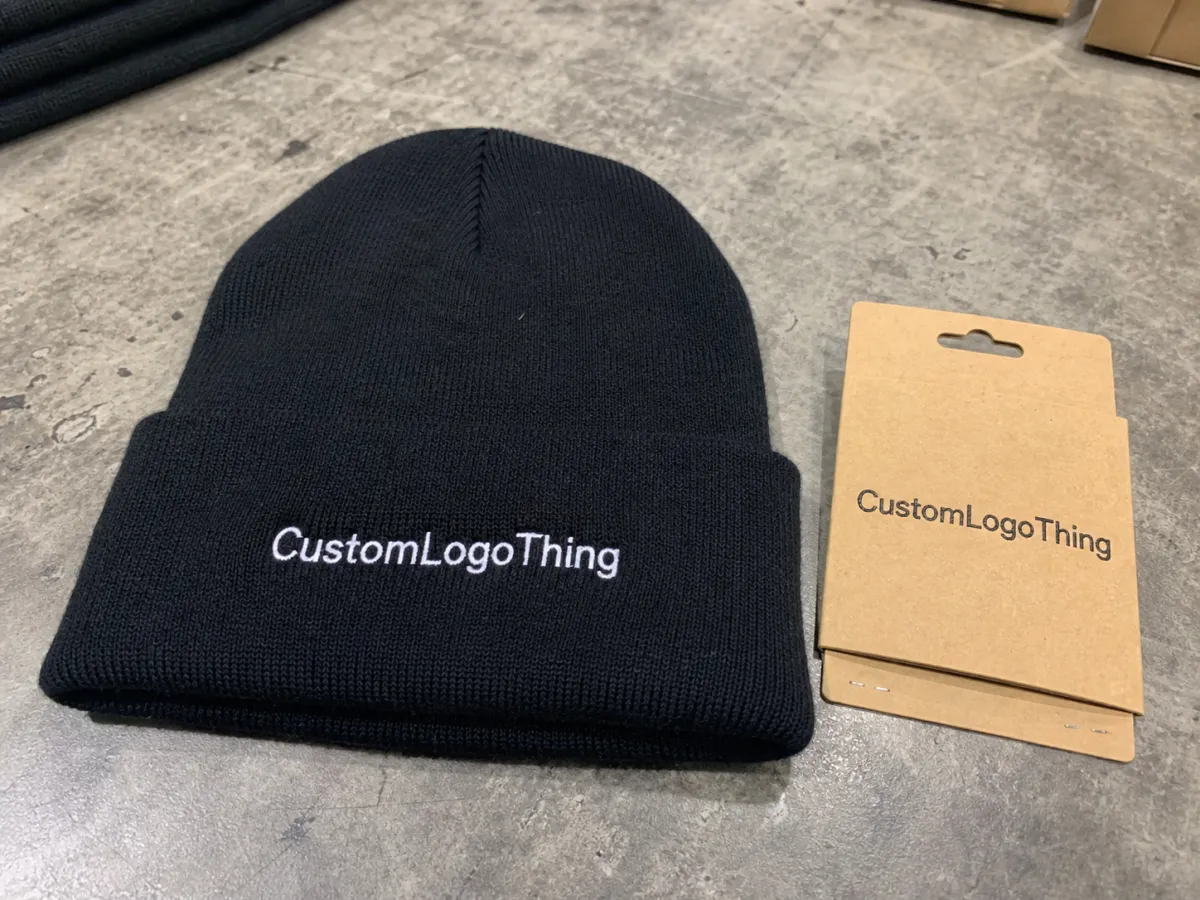
A beanie is small enough to fit inside a gift box, mailer, or multi-item onboarding kit without pushing the carton into a heavier shipping band. That matters. On parcel networks, even modest weight changes can move a package into the next rate tier, and soft goods usually give buyers more room to manage that than mugs, tumblers, or hard cases. A single knit hat can therefore carry a larger gift budget than its size suggests.
The other advantage is visibility. People wear beanies on commutes, at outdoor events, in job sites, and during travel, so the logo tends to get repeated exposure rather than one-time viewing. Compared with a flat promo item, the beanie has a better chance of being used long after the event. That makes it useful for holiday gifting, donor appreciation, onboarding, field team programs, and conference kits.
There is also a perception gap that procurement teams sometimes underestimate. A textile gift feels more considered than a plastic accessory, even when the cost difference is small. A clean embroidery hit on a rib-knit cuff can read as thoughtful and functional at the same time. That mix explains why beanies keep showing up in corporate programs despite their humble shape.
“The least expensive beanie is not always the best buy. The real question is which version looks finished, fits a broad range of heads, and still lands inside budget after setup and freight.”
That lens is practical, not decorative. The blank hat matters, but the cost story is written by the full chain of decisions that follow it.
Beanie Body Options, Cuff Styles, and Logo Placement
Start with the silhouette. A cuffed beanie usually gives the cleanest branding area because the cuff creates a flatter panel and keeps the logo out of the most stretch-prone part of the knit. It also reads more corporate. The shape feels tidy, and the decoration sits where people expect to see it. An uncuffed or slouch style can work well for lifestyle brands, but the drape makes placement harder and increases the risk that the embroidery lands slightly off-center when worn.
Rib knit is the most common structure because it stretches comfortably and returns to shape after wear. Fine-gauge knits look more refined and usually take embroidery with less distortion, while chunkier rib knits feel warmer and more casual. For a finance team or professional services gift, a tighter cuff and smoother face generally make more sense. For field teams or outdoor events, a thicker body can feel more appropriate and more durable.
Logo placement deserves more scrutiny than many buyers give it. A front-center cuff logo is the safest choice, but small side marks, woven labels, or hybrid builds can work if the composition is balanced. When an artwork file is oversized for the knit, the logo can pucker the fabric or ride too close to the seam. Ask for the actual decoration field in millimeters, not a vague “standard front placement.” That one detail prevents a lot of layout problems.
A useful rule: the logo should still read clearly from a few feet away and remain comfortable on the head. For most corporate gifting programs, that means a modest embroidery size rather than a large, heavy patch. Clean execution usually beats scale.
Fabric, Gauge, and Stitch Specs That Change Wear and Cost
Fabric choice affects more than hand feel. It changes warmth, wash behavior, appearance, and the price structure of the order. Acrylic remains the workhorse for promotional headwear because it is stable, warm enough for most climates, and usually the lowest-cost option at scale. Cotton blends feel softer and breathe better, which can help for shoulder-season campaigns or indoor-to-outdoor use. Wool blends raise the perceived value and can give the hat a richer surface, but they often come with a higher unit cost and tighter care expectations. Recycled yarns are increasingly requested for sustainability-led gifting, though availability can vary by color and minimum order quantity.
Gauge matters in a way many buyers miss. A tighter gauge creates a smoother surface and generally supports cleaner embroidery, especially for small marks or text. A looser knit can look more textured, but dense stitching may pull the fabric if the backing and stitch count are not matched to the body. That is why the same logo can look crisp on one hat and slightly compressed on another. The knit is not a neutral canvas; it changes the behavior of the thread.
Seam style, cuff depth, and lining also affect cost and wear. A longer cuff creates more space for decoration and often looks more balanced in photos, while a shorter cuff can appear sleeker but leaves less room for the logo. Lined beanies feel more premium against the skin and can justify a higher price for executive gifting or employee rewards, but they add labor and sometimes lengthen production. For large handout orders, an unlined hat with solid structure is usually the more efficient option.
Embroidery density is another technical variable that changes the result. Dense stitches can make a logo look sharp, but too much density on a softer knit can cause puckering. Too little density, and the mark may appear thin or broken. Buyers often focus on thread color and ignore stitch architecture, yet that is one of the most common reasons an embroidered sample looks different from the proof.
Recycled content and packaging standards matter if the campaign has sustainability requirements. If inserts or mailers are part of the kit, transit testing should be considered, especially for presentations that combine soft goods with rigid items. Resources such as ISTA are useful when a shipment needs to survive parcel handling without crushed presentation pieces. For fiber or paperboard sourcing, FSC remains a practical benchmark.
Embroidered Beanies Unit Cost Breakdown for Corporate Gifting Sourcing
This is the part of the quote that reveals whether the order is actually under control. A useful embroidered beanies Unit Cost Breakdown for corporate gifting sourcing separates the blank hat, the decoration, the setup, the packaging, and the freight. Bundled pricing can hide weak points. Itemized pricing shows exactly where the money goes and where it can move if the scope changes.
Typical blank beanie pricing at moderate volume often lands around $2.10-$4.50 per piece. Basic acrylic cuffed styles sit closer to the bottom of that range, while wool-blend or lined versions move higher. Embroidery usually adds $0.70-$1.80 per piece, depending on stitch count, logo size, and color changes. A simple one-color mark with a modest stitch count is much easier to price than a multi-color emblem with fine detail. Digitizing or embroidery setup commonly appears as a one-time charge of roughly $35-$85, though some suppliers roll that into tooling or program fees.
Packaging can be cheap or surprisingly expensive, and the difference is often more than cosmetic. A plain polybag may add just $0.10-$0.35. Add a tissue wrap, insert card, barcode label, or folded presentation card and the figure can climb to $0.50-$1.50 per unit. Gift boxes cost more again, partly because they add materials and partly because they slow packing. Freight tends to range widely, often around $0.40-$3.00 per unit depending on destination, carton count, carrier method, and whether the order ships as parcel or consolidated freight.
| Option | Typical MOQ | Blank + Decoration | Packaging Scope | Indicative Unit Cost |
|---|---|---|---|---|
| Basic acrylic cuffed beanie | 100-300 | Small logo, 5,000-7,000 stitches | Polybag only | $3.10-$5.20 |
| Midweight cotton-blend beanie | 250-500 | Front cuff embroidery, 7,000-10,000 stitches | Polybag + size insert | $4.25-$6.75 |
| Premium wool-blend or lined beanie | 300-1,000 | Multi-color logo, tighter stitch control | Gift wrap or boxed presentation | $6.00-$10.50 |
MOQ changes the math because the fixed costs do not shrink much. If an order carries a $60 digitizing fee and a $45 setup charge, those costs are barely visible at 1,000 units but become meaningful at 150. That is why a smaller order can show a higher apparent unit price even when the blank and decoration look similar to a larger run. Volume absorbs friction.
Comparing quotes fairly means checking that all the moving parts match. The same beanie body, the same stitch count, the same packaging scope, and the same freight terms need to be on the page. One supplier pricing bulk polybagging and another pricing individual folding plus labeling are not quoting the same job, even if the headline numbers look close. The fair comparison is the landed cost that survives the shipping dock.
A useful caution: if a quote seems unusually low, check whether it excludes setup, proofing, freight, or final packing. The discount often reappears later as a change order.
Process, Timeline, and Production Steps From Art to Carton
Headwear production usually follows a clear sequence. First comes artwork review, where line weight, file quality, and logo scale are checked against the beanie body. Then comes proofing, which should show the placement, thread colors, stitch direction, and any packaging elements. If a sample is needed, it adds time, but it can catch the two most common issues early: the logo is too large for the knit, or the contrast is weaker than it looked on screen.
For a standard order, production often takes 10-18 business days after proof approval. That range stretches if the order needs a sample, custom labels, special packaging, or thread matching. Holiday gifting pushes timelines further because the queue gets longer even when the factory itself is working normally. Buyers who approve artwork late in the week and expect shipping in days are usually compressing a process that needs a little more space.
The sequence after approval is straightforward but not trivial. Thread gets loaded, the machine is programmed, and a first-off piece is checked before the run continues. Quality control should verify logo position, thread tension, stitch density, color match, and the way the cuff sits after embroidery. Once the decoration is approved, the hats are folded, bagged, labeled, and carton-packed according to the agreed presentation method.
Late changes are expensive in a way that is easy to underestimate. A revised logo, an extra thread color, or a last-minute increase in quantity can add time because the proof may need to be reissued and the packing plan may need to be adjusted. Even a small change can push the timeline by a day or two. In a seasonal gifting window, that can be the difference between standard freight and a rush shipment.
The cleanest production runs tend to be the ones where the approval chain is tight. Final artwork, quantity, delivery address, and packaging plan are locked before bulk embroidery begins. Once those are fixed, the order moves with fewer surprises.
Decoration Control: Thread Matching, Labels, and Packaging Inserts
The difference between a decent beanie and a polished one often comes down to tiny controls. Thread matching is first. A logo can look strong in a digital proof and muted in production if the thread shade is too dull for the knit color. Good shops compare thread under normal shop lighting, not only under bright monitor light. That small habit reduces surprises, especially with brand colors that are sensitive to warmth or contrast.
Stitch density is the next control point. Too sparse, and the embroidery looks thin. Too dense, and the knit may pucker or lose its natural stretch. The best settings depend on the beanie gauge, the size of the mark, and whether the artwork includes fine letters or solid fills. A 6,000-stitch wordmark on a tight-gauge cuff will behave differently from a 10,000-stitch emblem on a looser rib. Treating those as interchangeable is how good proofs turn into average bulk goods.
Branding often extends beyond embroidery. Woven labels near the cuff can add a quiet identity mark. Hang tags work well for retail-style presentation or internal awards. Tissue paper adds perceived value without much weight. Individual polybags help with cleanliness and storage, while a small insert card can add care instructions or a short message from leadership. In many gifting programs, the packaging is what separates a promo item from a gift.
Buyers should ask to see all of those pieces in the proof: logo scale, placement, thread codes, label location, carton count, and whether each unit ships folded or flat. A carton plan is even better, because it shows the actual handoff from production to distribution. That matters when the order is being split across offices or mailed to multiple recipients.
More packaging layers mean more cost sensitivity. Changing from bulk polybagging to individual boxed presentation late in the process usually increases labor and materials, and it often changes freight weight too. That is not a bad decision by itself, but it should be made with the trade-off visible on the quote sheet.
Why a Packaging-Focused Supplier Keeps Orders Consistent
There is a real advantage to working with a supplier that treats packaging as part of the product, not as an afterthought. Once a beanie moves into a corporate gift program, the outer carton, the insert, the packing method, and the recipient-facing presentation all become part of the order. A supplier that understands that structure is less likely to miss a label, mix packing methods, or quote a shipping method that does not fit the final carton count.
That consistency matters most on repeat programs. Seasonal restocks, multi-wave shipments, and annual appreciation gifts work better when thread codes, mockups, carton notes, and packaging specs are already documented. The next run then has a reference point. Color drift is less likely, and the reordering process gets faster because the supplier is not rebuilding the job from scratch.
Strong suppliers also flag the sensitive parts of the quote. If a specific color affects lead time, that should be stated early. If boxed presentation materially changes the freight class, the quote should show it. If a logo will need to be simplified to hold up on a tighter knit, that is better discussed before proof approval than after the first sample is stitched.
For corporate gifting teams, that kind of clarity reduces friction. There is less back-and-forth, fewer correction loops, and fewer presentation problems at the distribution stage. The order looks more controlled because the supply chain behind it is controlled.
Next Steps to Lock in an Accurate Quote
A clean quote starts with a clean brief. Send the logo file, target quantities by tier, shipping destination, required delivery window, and the packaging format. If the beanies will go into kits, be mailed individually, or be handed out at an event, say so early. Those use cases change the cost structure in different ways, especially once cartons and inserts are involved.
Ask for an itemized quote rather than a single bundled number. The most useful version separates the blank beanie, embroidery, setup, packaging, and freight. If sample charges are included, check whether they are credited back after approval. If the order needs multiple packaging formats, that should be spelled out too. Clear line items make it easier to compare options without guessing what has been left out.
Ask for a proof before production begins, and make sure the proof shows logo scale, thread colors, placement, and the final presentation. If inserts or labels are part of the job, they should appear in the proof as well. That one step catches many avoidable problems before they become production delays.
The best quote is usually the one that matches the actual business goal. If the beanies are meant to feel premium, a better blank and cleaner packaging may be worth the added spend. If the order is for broad event distribution, a simpler build may be the more efficient choice. The unit cost only matters if it reflects the result you want and the freight path it will travel.
For embroidered beanies, the unit price is never just the unit price. The true number is the sum of decoration, packing, and shipping decisions, and that is where a quote either holds together or starts to drift.
What affects embroidered beanies unit cost the most for corporate gifting?
The biggest drivers are blank beanie quality, stitch count, setup time, packaging scope, and freight distance. MOQ also matters because fixed costs are spread across fewer units on small runs.
How does MOQ change the unit price on custom embroidered beanies?
Smaller runs usually carry a higher per-piece price because digitizing, machine prep, and proofing do not scale down much. Larger quantities lower the unit cost when the same logo, placement, and packaging are repeated.
Can I approve a mockup before production starts?
Yes. Buyers should expect a digital proof or mockup before bulk decoration begins. Use it to confirm logo size, placement, thread colors, and any packaging details.
What lead time should I plan for embroidered beanies with a logo?
Plan for proof approval, thread matching, and any sample step before bulk production. Standard timing is often 10-18 business days after approval, but holiday demand and artwork changes can extend that window.
How do I compare two embroidered beanie quotes fairly?
Check that both quotes use the same beanie style, decoration area, stitch count, packaging scope, and freight terms. Include setup and sample fees so the unit price reflects the actual landed cost.

