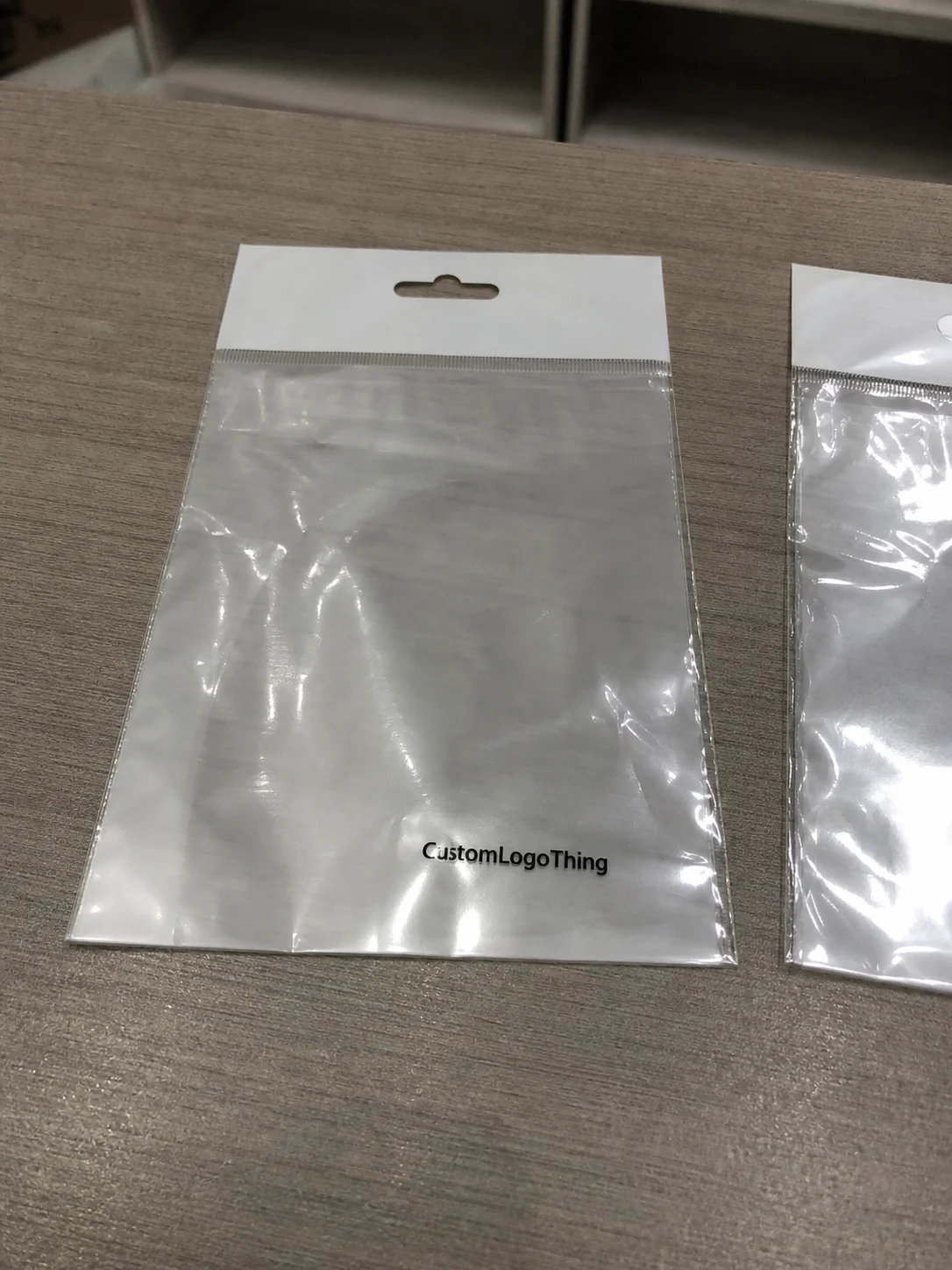
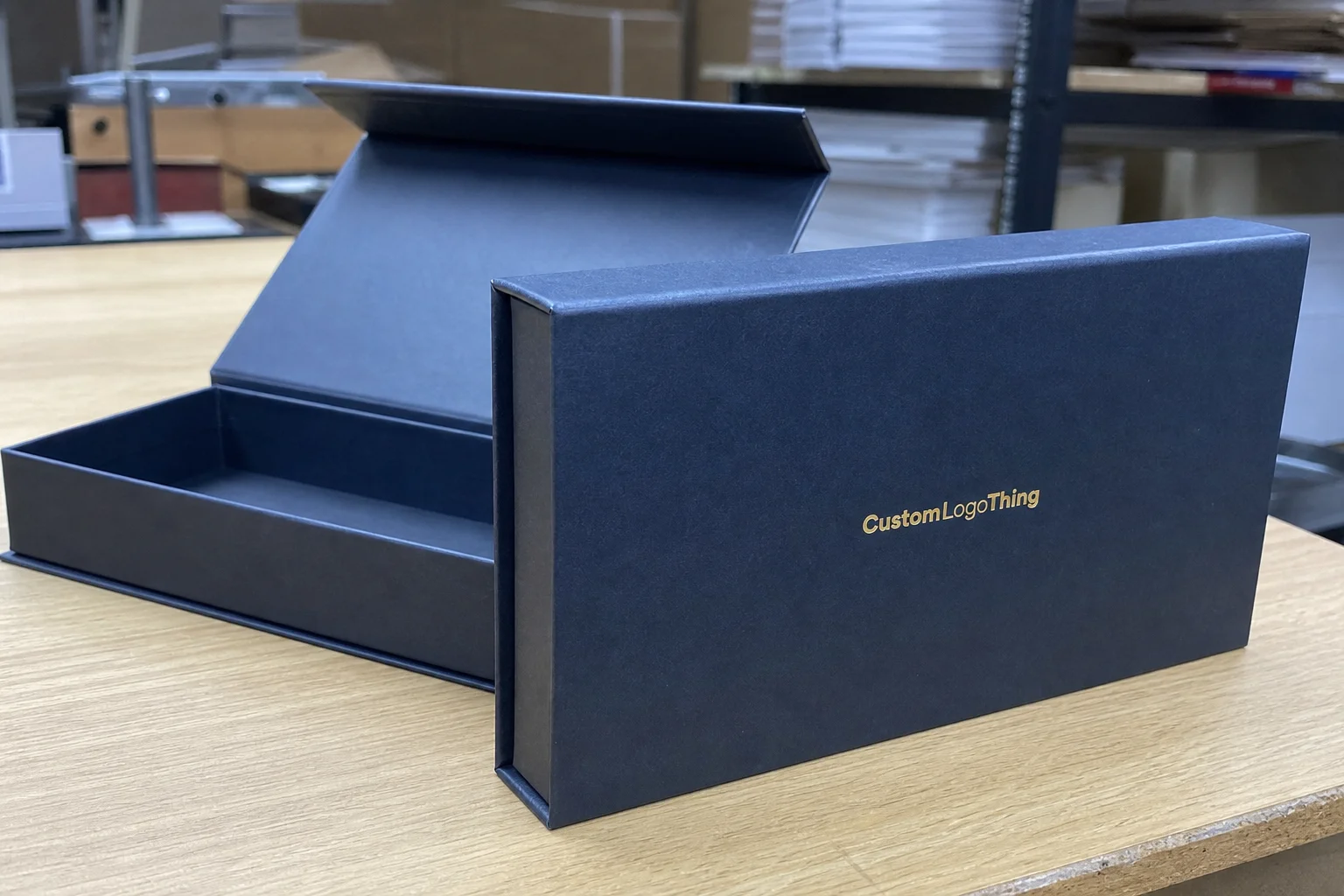
Embroidered Patches Unit Cost for gift set brands matters because the patch is often handled before the main product is used. A recipient may touch the stitched badge on a hoodie, pouch, cap, blanket, notebook band, or insert card before they test the item that absorbed most of the budget.
The gift-set detail buyers notice before the product
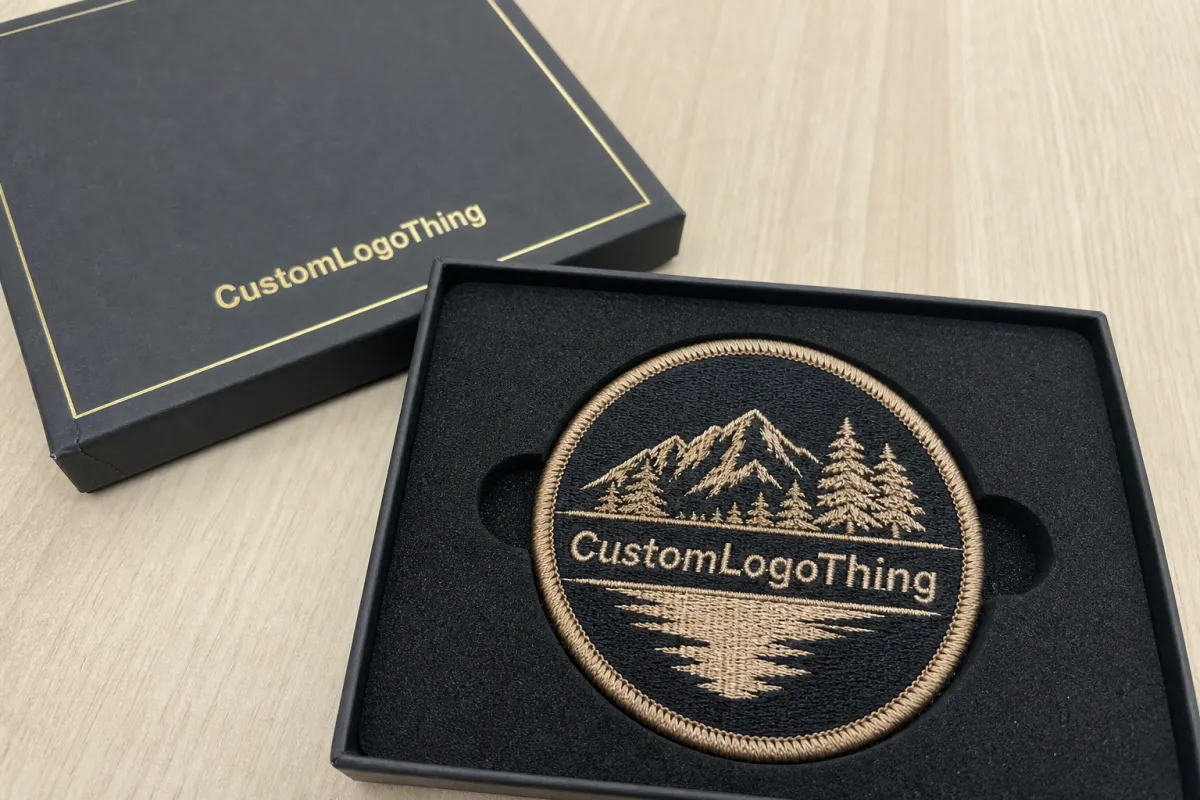
A small patch can change the way a larger gift set is judged. Compare two boxes with similar contents: one uses a flat printed sticker, the other includes a clean embroidered patch with a tight border, accurate thread color, and a backing that feels intentional. The second box usually reads as more deliberate. Sometimes more expensive.
That is the strange economics of packaging and trim. A low-cost accessory can lift the perceived value of a much higher-cost bundle. In apparel gift sets, welcome kits, travel bundles, corporate merchandise boxes, subscription packs, and seasonal retail offers, an embroidered patch can function as a logo label, keepsake, and value cue at the same time.
For a packaging buyer, the appeal is flexibility. One branded patch can move across a beanie, tote, fleece blanket, cosmetic pouch, cooler bag, travel case, or rigid box insert without forcing the brand to develop a separate trim for every component. That saves design time. It also simplifies inventory planning when several SKUs share the same identity system.
The cost question is not minor, though. Patch pricing affects retail margin, distributor quotes, reorder strategy, launch timing, and the familiar decision of whether to keep or remove the detail when costs start rising. A difference of a few cents per patch looks harmless on a sample invoice. Multiply it by 5,000, 20,000, or 80,000 sets and finance will notice.
Custom Logo Things works in that practical middle ground: custom branded patches with defined specifications, sampling before bulk production, and production planning that accounts for scale. No vague “premium quality” claim should replace the hard questions. What size? What stitch coverage? Which backing? What MOQ? How is it packed? What is the landed cost?
Buyer reality: a patch is small enough to be overlooked during planning, but visible enough to make a whole gift set feel finished—or unfinished.
Patch formats that work inside premium gift sets
Gift set patches are not one product. They are a family of constructions. Pick the wrong format and the cost per piece may look acceptable while the application fails during assembly, shipping, or normal use.
Sew-on patches are the workhorse for jackets, hoodies, caps, beanies, tote bags, and blankets. They are durable because the final bond is mechanical, not chemical. For apparel that may face washing, abrasion, or stretching, sew-on construction is usually the safer choice. The tradeoff is labor. Someone has to stitch it on, and that labor belongs in the program cost.
Iron-on patches use a heat-activated backing. They can suit DIY gifting, promotional packs, and consumer self-application kits. They also work for some pre-applied apparel uses, but the fabric must be tested. Cotton canvas behaves differently from brushed polyester fleece. Heat sensitivity, dwell time, pressure, and wash expectations all affect whether the backing performs.
Hook-and-loop patches fit tactical, outdoor, motorsport, pet, school, and team kits where the patch is meant to be removable or collectible. They cost more than a basic sew-on patch because the backing adds material and conversion steps, but they can increase utility. If the recipient can move the badge from a bag to a jacket, the branded item may stay in circulation longer.
Adhesive patches are useful for short-term packaging decoration, photo kits, launch mailers, event kits, and temporary display. They should not be treated as a permanent garment solution unless the adhesive has been tested against the intended surface. Paperboard, coated stock, plastic pouches, and textured fabric all produce different adhesion results.
Merrowed-edge patches create the raised border many buyers associate with uniforms, clubs, outdoor badges, and retail heritage styling. They work best on simple circles, ovals, squares, rectangles, and shields. Complex silhouettes usually need laser-cut, heat-cut, or satin-stitched edges instead.
| Patch format | Best gift set use | Cost effect | Watch point |
|---|---|---|---|
| Sew-on | Hoodies, caps, totes, blankets | Usually efficient at volume | Adds application labor |
| Iron-on | DIY kits, apparel promos | Backing raises unit cost slightly | Needs heat and wash testing |
| Hook-and-loop | Outdoor, tactical, collector kits | Higher material and conversion cost | Grip and alignment must be checked |
| Adhesive | Packaging inserts, temporary decoration | Depends on adhesive grade | Not always suitable for fabric |
| Merrowed edge | Classic retail badge presentation | Often economical on simple shapes | Limited on complex outlines |
Embroidery is not always the best method. Woven labels reproduce tiny type better. PVC patches can handle bold molded graphics and water-resistant applications. Leather patches suit heritage apparel and premium drinkware sleeves. Printed labels are often cheaper for high-detail, full-color artwork. Embroidery wins on texture, depth, and tactile value, but tiny serif lettering, gradients, and photographic details may need a different construction.
Many gift set buyers use patches in two ways: attached to the product or presented loose as a branded insert. Loose patches can reduce application labor while still giving the recipient a branded item to keep. Pair them with belly bands, insert cards, tissue paper, stickers, hang tags, or custom boxes and the unboxing feels coordinated without forcing every SKU through an extra sewing or heat-press step.
Embroidery specifications that change price and appearance
The strongest price drivers are usually visible before production starts: patch size, shape complexity, embroidery coverage, stitch density, thread count, number of colors, edge style, backing type, base fabric, and special thread effects. If a quote does not ask for those details, it is not a serious quote yet.
Embroidery coverage is one of the easiest variables to misunderstand. A 50% embroidered patch leaves twill, felt, or another base material visible. It usually costs less because fewer stitches are needed. A 75% embroidered patch adds more density and visual weight. A 100% embroidered patch covers the surface with thread, creating a richer feel but adding machine time, thread consumption, and potential stiffness.
Size matters twice. First, larger patches use more base material and thread. Second, they often take longer to run. A 2-inch circular patch may suit caps, socks, small pouches, or insert cards. A 3-inch to 4-inch patch has stronger shelf presence for hoodies, totes, blankets, and box inserts. Go too small and the logo loses legibility. Go too large and the patch can dominate the product instead of branding it.
Shape affects both cost and appearance. Simple circles, rectangles, and shields are efficient. Irregular mascot outlines, script logos, jagged mountain shapes, and multi-point badges may require laser-cut edges, more inspection, and tighter trimming control. That can raise unit cost even when the patch area is modest.
Edges deserve more attention than they get. Merrowed borders are durable, rounded, and traditional. They are excellent for simple geometric shapes. Laser-cut or heat-cut borders support modern logo silhouettes and fine outer contours. For retail gift sets, the edge is often the first quality cue because recipients see it before they inspect the stitching inside the logo.
Color control is another hidden source of risk. Thread does not behave like ink on a screen. It catches light, shifts slightly under different lighting, and must be matched to actual thread charts. For brand-critical logos, buyers should provide Pantone references, but final approval should still be based on available thread colors and a physical sample. A digital proof is useful. It is not a substitute for thread in hand.
Design constraints are real. Tiny serif type, hairline rules, gradients, distressed textures, complex crests, and detailed illustrations may need simplification. A capable supplier should flag that before production starts. Many patch projects go wrong because the buyer asks for a logo to be “exact,” while embroidery requires the logo to be translated into stitches.
- Minimum readable text: often safer above 4 mm to 5 mm in letter height, depending on font, thread, and stitch direction.
- Thread colors: commonly quoted from stock thread charts, with custom dyeing reserved for larger or stricter programs.
- Common base fabrics: twill, felt, canvas, or specialty textured fabric.
- Special effects: metallic thread, glow thread, chenille, 3D foam, and mixed embroidery can raise cost and extend sampling.
For programs that also include cartons or inserts, broader packaging standards may come into play. Transit testing under ISTA methods may not evaluate the patch itself, but it can affect how patches, inserts, and boxes are packed and shipped. If paperboard components are part of the same gift set, FSC-certified materials from FSC sources may also be relevant to the brand’s sourcing policy.
Embroidered patches unit cost for gift set brands
Embroidered patches unit cost for Gift Set Brands is built from more than thread and fabric. A real quote usually includes material, embroidery time, backing, border method, artwork digitizing, setup charges, quality control, packing, and freight. Sometimes duties and local handling are included. Sometimes they are not. That difference can distort comparisons.
The cheapest patch on a spreadsheet may not be the lowest-cost patch in the program. If the edge frays, the iron-on backing fails, the thread color misses approval, or the carton quantities do not work for the co-packer, the savings disappear quickly. Defects create rework. Delays create air freight. Bad packing creates warehouse labor.
Practical pricing factors include higher stitch density, metallic threads, oversized dimensions, specialty backing, individual polybagging, barcode labeling, color-separated packing, and kitting with other packaging components. Each may be justified. None should be invisible.
MOQ also deserves a straight answer. Lower MOQs help brands test a seasonal gift set, influencer kit, corporate pilot, or limited collaboration. Larger orders usually reduce unit cost by spreading digitizing and setup charges across more patches. That is basic bulk pricing logic, but the effect can be substantial.
| Example order condition | Likely cost behavior | Buyer implication |
|---|---|---|
| Small pilot quantity with 100% embroidery | Higher cost per piece because setup is spread across fewer units | Useful for testing, weaker for margin |
| Mid-volume run with simple merrowed edge | More balanced unit cost | Good fit for corporate gifting and subscription boxes |
| Large retail rollout with shared artwork | Lower unit cost if specs remain stable | Best for planned reorder programs |
| Multiple backings or SKU labels | Higher handling and packing cost | Quote needs line-item clarity |
A realistic quote comparison should confirm whether digitizing, sampling, backing, border, freight, duties, carton marks, and packaging are included. A quote that omits tooling fees or setup charges can look attractive for ten minutes and then drift beyond budget after approval. Ask for landed cost if the buying decision depends on margin.
The math gets blunt. If a brand ships 5,000 gift sets, a $0.12 difference in patch cost equals $600 before freight, storage, or assembly handling. At 25,000 sets, that same difference becomes $3,000. For retail programs with fixed shelf pricing, the gap can decide whether the patch stays, gets downgraded, or gets removed.
Custom Logo Things quotes embroidered patches based on artwork, dimensions, coverage, backing, order volume, packing requirements, and deadline. That matters because pricing should be tied to the actual build, not a vague per-piece promise that ignores the details responsible for cost.
Process, timeline, and lead time from artwork to delivery
The production path is predictable when the buyer has the right files ready. It usually starts with artwork review, then quote confirmation, digitizing, digital proofing, physical or pre-production sampling, sample approval, bulk embroidery, trimming, backing application, inspection, packing, and shipping.
Digitizing is not the same as uploading a logo. It converts artwork into stitch paths, thread directions, density settings, underlay choices, and machine instructions. Good digitizing can make a patch cleaner, stronger, and more consistent across a production run. Poor digitizing creates puckering, unreadable type, uneven fill, and excessive thread breaks.
Simple patches with approved vector artwork can move faster. Complex shapes, full embroidery coverage, metallic thread, hook-and-loop backing, chenille effects, or strict retail compliance requirements add time. If individual bags, SKU labels, insert cards, or carton marks are needed, those details should be included before the production clock is promised.
A sensible decision sequence looks like this:
- Confirm the use case: garment application, loose insert, packaging decoration, or collector patch.
- Lock patch size, backing, border, and embroidery coverage.
- Approve artwork adjustments for stitchability.
- Review the digital proof.
- Approve a physical or pre-production sample.
- Release the purchase order for bulk production.
- Confirm packing instructions and shipping route.
Reversing that order creates avoidable delays. A purchase order before sample approval can work for repeat programs, but it is risky for a new retail gift set or a brand collaboration with strict logo rules. One changed letter height or border style can affect both cost per piece and lead time.
Shipping planning is just as important as factory time. Air freight can protect urgent launch dates, but it raises landed cost. Ocean, ground, or consolidated freight can suit larger programs with more planning room. Buyers should ask for both production lead time and transit time. A patch that finishes production on schedule but misses the co-packer’s receiving window still creates trouble.
Custom Logo Things can coordinate patches with related packaging elements, including insert cards, labels, and boxes, so components arrive in a planned sequence. For examples of coordinated branded components across merchandise and packaging programs, review the Custom Logo Things Case Studies.
Quality checks that protect gift-set margins
A gift set may contain six or eight components, but one visibly poor patch can make the entire bundle look discounted. That is the risk. A small trim item can undermine a larger presentation if no one checks it properly before assembly.
Quality control should cover stitch density, loose threads, color accuracy, border alignment, backing adhesion, size tolerance, shape consistency, logo legibility, edge fraying, and packing accuracy. A tolerance of even 2 mm to 3 mm may matter if the patch sits inside a die-cut tray, printed recess, or belly band window.
Backing deserves special scrutiny. Iron-on backing should be tested on the intended fabric, not a random swatch. Adhesive backing should be evaluated for temporary versus longer-term use. Hook-and-loop backing should be checked for grip, orientation, and alignment. If the loop side is supplied separately for sewing to a bag or jacket, it should be counted and packed correctly too.
Durability expectations should match the application. A patch sewn onto a hoodie may face washing, stretching, abrasion, and dryer heat. A collector patch placed loose inside a rigid gift box has very different demands. Overbuilding wastes money. Underbuilding creates complaints. The smart specification sits between those two errors.
Packaging-level checks are equally practical. Individual bagging, SKU labels, carton marks, color separation, and quantity counts matter when patches are sent to a co-packer or fulfillment center. A carton containing mixed colors without clear separation can slow an assembly line. A missing label can trigger receiving delays. These are not dramatic failures, but they cost labor.
Operational rule: quality is not an aesthetic luxury. For gift set programs, it is insurance against rejects, assembly interruptions, and customer complaints.
Brands that operate through distributors or retail partners should also document the approved sample. Keep photos, measurements, thread references, backing notes, and packing instructions. If a reorder is needed six months later, those records reduce the chance of drift. The same discipline applies to custom boxes, cards, and labels, which is why integrated planning often performs better than treating every component as a separate late-stage problem.
What to send for a fast, accurate patch quote
The fastest quote is not produced by sending a logo and asking, “How much?” That only invites assumptions. For embroidered Patches Unit Cost for gift set brands, the supplier needs the build details that affect production time and landed cost.
Prepare these inputs before requesting pricing:
- Logo file, preferably vector artwork such as AI, EPS, or editable PDF
- Desired patch width and height
- Quantity, plus any expected reorder volume
- Backing type: sew-on, iron-on, adhesive, hook-and-loop, or no backing
- Edge style: merrowed, laser-cut, heat-cut, or satin stitch
- Embroidery coverage preference: 50%, 75%, or 100%
- Thread colors or Pantone references
- Target delivery date and shipping destination
- Individual packing, SKU labels, barcode labels, or carton mark requirements
- Gift set context: apparel attachment, loose insert, packaging decoration, or collector item
Send the context, not just the artwork. A patch meant for a hoodie behaves differently from one sitting in a rigid box as a collectible insert. Application method changes the best construction, and the best construction changes the unit cost. The quote request should describe how the recipient will actually use the patch.
Ask for two or three costed options if margin is tight. Compare 50% embroidery against 100% embroidery. Compare merrowed border with laser-cut edge. Compare sew-on and iron-on backing. Sometimes the best answer is not the cheapest version, but the version that protects the look of the set without forcing a retail price increase.
For retail gift sets, corporate gifting programs, subscription boxes, and brand collaborations, request proofing and sample approval before bulk production. If the patch will ship to a fulfillment center, confirm how cartons will be labeled and counted. If it will be paired with boxes or insert cards, coordinate the timeline early. The Custom Logo Things Case Studies show how branded merchandise and packaging details can work together when specifications are planned instead of repaired late.
To confirm pricing, send Custom Logo Things your artwork, quantity, preferred backing, edge style, packing needs, and delivery location so the quote reflects the real build—not a generic estimate.
FAQ
What affects embroidered patch unit cost for gift set brands the most?
The biggest drivers are patch size, embroidery coverage, stitch density, backing type, edge style, quantity, packaging requirements, and freight. Artwork complexity also matters because detailed logos may require more digitizing work and more machine time.
What MOQ should gift set brands expect for custom embroidered patches?
MOQ depends on patch size, construction, and order complexity. Larger quantities typically lower the per-unit cost by spreading setup charges and digitizing across more patches. For a launch test, ask for a low-MOQ quote and a scaled quote so pilot pricing can be compared with full-rollout pricing.
Are embroidered patches cheaper than woven labels for gift sets?
Not always. Woven labels can be more economical for small text and high-volume garment labeling, while embroidered patches offer more texture and perceived value. If the patch is part of the unboxing experience or meant to be kept, embroidery may justify the higher unit cost.
How long does embroidered patch production take for gift set orders?
Timeline depends on artwork approval, sampling, patch complexity, order volume, and shipping method. Buyers should plan for artwork review, digitizing, proof approval, sample approval, bulk production, quality inspection, and transit time rather than judging lead time from factory production alone.
Can Custom Logo Things quote embroidered patches with packaging included?
Yes. Provide patch artwork plus packaging needs such as individual bags, insert cards, SKU labels, carton marks, or coordination with custom boxes. Bundling patch and packaging details in the quote helps avoid hidden handling costs during fulfillment.