Buy Event Merch Custom Poly Mailer Bags Packing Rules
The event merch Custom Poly Mailer Bags packing requirement guide starts with a practical reality that gets missed far too often: you are not packing a single item, you are packing a finished stack. A folded shirt, a card, tissue paper, a lanyard, and a sticker sheet all behave differently once they are together. The flat product size on a spec sheet stops mattering the moment the line starts filling bags.
That is why poly mailers can work beautifully for event merch and still fail badly in the wrong use case. They are light, quick to pack, and easy to print. They also leave very little room for error. A bag that is too large shifts in transit and looks underfilled. A bag that is too small slows the pack line and can split at the seal. There is no prize for either outcome.
For event teams, these bags often carry booth sales, VIP kits, sponsor packs, registration handouts, and soft merchandise that needs to look finished under time pressure. The package has to feel orderly, protect the contents, and move quickly through the workflow. That balance is what makes the spec more important than the artwork.
If the contents are rigid, unusually heavy, or easily crushed, a mailer may be the wrong format. In those cases, a carton or another structured package usually performs better. A poly mailer is a tool, not a cure-all.
Event Merch Custom Poly Mailer Bags Packing Requirement Guide
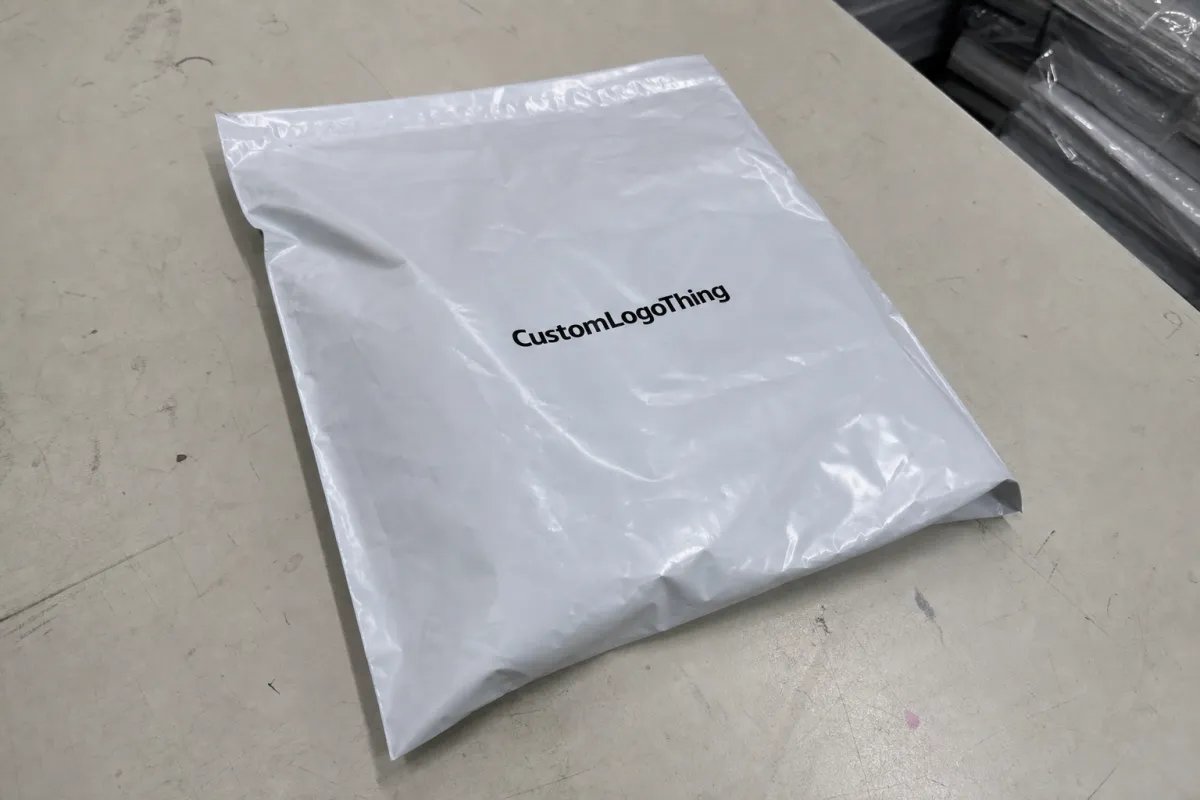
Most buyers begin with the garment size and end up in trouble. A medium tee is not the same thing as a medium pack. Once you add folding style, inserts, tissue, and a seal allowance, the package thickness changes fast. The packed unit is what matters. Build around that, not around a catalog description.
The four most common event uses split into very different packing demands:
- Event handouts need to move fast across check-in desks and booth counters.
- Merch sales need a cleaner retail feel and a consistent closure.
- VIP kits usually need better presentation and tighter quality control.
- Sponsor packs often combine multiple inserts, so thickness matters more than expected.
Size accuracy matters because the bag does two jobs at once. It protects the contents, and it frames the contents. Too much dead space makes the kit shift, especially if the event includes shipping, stacking, or repeated handling. Too little room creates wrinkles, seal stress, and rework. For hand-packed kits, the right fit usually leaves just enough clearance for the stack to slide in without forcing the seal shut.
A useful test is simple. Pack the real stack, seal it, then shake it gently and look at it from a normal viewing distance. If the contents rattle, the bag is too large. If the flap feels strained or the corners buckle, the bag is too tight. The problem may look small on a table and become obvious in a distribution line.
Use poly mailers for: apparel, printed inserts, soft promo items, and lightweight event kits. For hard goods, sharp edges, or fragile components, a mailer usually needs backup protection or a different format altogether.
"If the bag swallows the kit, it looks cheap. If the kit fights the seal, the line slows down."
That is the useful middle ground. Enough room to pack quickly, not so much room that the package turns into a loose sleeve.
How the Pack-Out Spec Works From Insert to Seal
The cleanest spec starts with the actual pack-out order. Folded merch first. Then the cards, labels, or inserts. Then tissue or protective wrap if it changes the thickness. Then any accessory that affects the final stack. This sounds basic, but many problems start when teams measure the shirt and forget the materials surrounding it.
The most useful inputs are straightforward:
- Inner dimensions for the finished packed stack.
- Film gauge, usually listed in mil.
- Seal flap size and adhesive type.
- Opacity if the contents should stay hidden.
- Print areas for logos, copy, and any handling marks.
Film gauge changes how the package behaves. A thinner bag saves money, but it also stretches more and can wrinkle under load. Thicker film keeps its shape better and tolerates repeated handling. For mixed kits or higher-value event merch, that extra stiffness often makes the final package look more deliberate.
Artwork placement deserves real attention. A proof can look fine on screen and still fail once the bag is folded, sealed, and handled. Keep logos away from the adhesive flap, leave space around seams, and avoid placing critical text where a fold line will distort it. If the design spans a gusseted section or a folded edge, expect visual compression. Packaging does not forgive guessing.
Optional features should match the actual workflow, not the wish list. Tear strips help staff open bags quickly without scissors. Double adhesive gives a second chance if the first seal is crooked. A reclose strip is useful when kits need to be inspected or repacked during the event. Hang holes can make sense for retail display, but only if the bag will truly hang. Matte finishes often read cleaner than glossy film under harsh venue lighting, and they are less likely to show fingerprints or glare in photographs.
A good buyer will also ask for quality-control checkpoints before the order is approved. Those checks usually include print registration, seam integrity, seal adhesion, odor level, and clarity under the event's actual lighting conditions. Cheap-looking film is rarely a design problem alone. It is often a material-choice problem that was never tested in the right environment.
Before final sign-off, run three real pack tests. Not one. Three. Pack them the way the event team will pack them on site, then check fit, seal behavior, and visual appearance. That gives you a better read than a flat proof ever will.
Pricing Breakdown: MOQ, Unit Cost, and Add-Ons
Poly mailer pricing is usually clear once the spec is fixed. The trouble is that buyers often compare quotes that are not actually equivalent. Size, film thickness, print coverage, and quantity drive most of the cost. Change one of those, and the quote changes with it.
For event merch runs, these rough ranges are common enough to be useful:
| Spec Type | Typical MOQ | Unit Cost Range | Best Use |
|---|---|---|---|
| Standard clear or frosted mailer, single-color logo | 3,000-5,000 pcs | $0.18-$0.28 | Basic event handouts and soft merch |
| Heavier film, two-sided print | 5,000 pcs+ | $0.24-$0.38 | VIP kits and repeated handling |
| Custom size, matte finish, special adhesive | 5,000 pcs+ | $0.30-$0.55 | Premium branding and tighter pack-out control |
Those ranges can move fast if the order includes custom dimensions, heavier gauge film, special closure features, or full-bleed artwork. A lower quantity can also push the unit price higher than buyers expect because setup is spread across fewer pieces. That part is normal. The surprise usually comes from the extras: frosted film, double adhesive, rush production, and secondary packing. None of those costs is extreme by itself. Together, they can change the budget enough to matter.
Shipping is another place where the math shifts. On smaller orders, freight can cost more than the bags, especially if the event has multiple delivery points or an awkward receiving window. Ask for landed cost, not just piece price. A quote that looks cheap on paper may stop being cheap once cartons move across the country.
Order terms matter too. Some factories want a deposit before sampling, some bundle proof costs into the order, and some charge separately for color matching or special packaging. If the design has more than one print color or a tight brand standard, ask whether Pantone matching is included or if the printer is working from a close approximation. That distinction is easy to miss and expensive to clean up later.
If you need broader packaging support, keep the scope tight and compare only the relevant format. For mailer-based runs, the useful question is not whether the supplier sells other products. It is whether the quote reflects the exact bag, the exact print method, and the exact pack-out you plan to use.
For handling and transit expectations, ISTA test standards are a practical reference point when you need to talk about durability instead of vague confidence. That is especially useful for event kits that will be shipped and rehandled before they are handed out.
Production Timeline: Proofs, Sampling, and Turnaround
A normal production flow is not exciting, but it keeps schedules intact. Spec intake comes first. Then artwork review or dieline review. Then the proof. Then a sample, if the order needs one. After approval, production begins, followed by inspection and freight booking. If one of those steps is skipped, the problem usually appears later when it is more expensive to fix.
Most delays happen before printing starts. Missing measurements, late logo revisions, weak source files, or an approved sample that was never packed with real contents can slow the order more than the press itself. The event deadline does not care whether the delay came from the artwork or the dock. It only cares that the cartons missed the window.
For standard event merch orders, a realistic production range is often 12 to 18 business days after proof approval. Simple rush jobs can come in around 7 to 10 business days if the factory has room and the spec is straightforward. Freight sits outside that window. Air shipping can save a deadline, but it will also change the invoice in a way nobody enjoys.
Sampling deserves more discipline than it usually gets. A sample approved empty tells you little. A sample approved with the wrong insert count tells you almost as little. The only meaningful sample is the one filled the way the event team will actually pack it. Otherwise, the final line becomes an improvisation exercise with a hard stop.
Before placing the order, lock these details:
- Final delivery date and receiving hours.
- Ship-to address and backup contact.
- Proof approval window.
- Sample sign-off method.
- Whether the shipment needs to be staged or split.
That kind of preparation is dull. It is also the difference between a clean receiving day and a frantic call asking for overnight freight.
Material and Size Choices That Stop Damage Before It Starts
Material choice should follow handling conditions, not preference alone. For soft apparel and lighter promotional items, a lighter film can be enough. For denser kits, repeated handling, or shipments that will be stacked and reopened, thicker film usually performs better. A lot of buyers ask for "strong" without defining what strong means. That is not a spec. It is a hope.
A practical shorthand looks like this:
- 1.5-2.0 mil for light apparel or low-risk handouts.
- 2.25-3.0 mil for mixed kits or more frequent handling.
- 3.0 mil+ for bags that will be stacked, shipped, or handled many times.
Size should be built from the packed stack, not from the product category. A folded hoodie with a card insert can need far more room than a standard tee. A sample kit with one small box may need a different format entirely. Once the package becomes a stack, the dimensions become a packaging problem, not a clothing problem.
Clear, frosted, and opaque films each serve a different purpose. Clear film works well when the product is meant to be seen. Frosted film softens the look and can hide minor wrinkles or scuffs. Opaque film protects privacy and helps if the contents should not show through. The right choice depends on whether the merchandise itself is part of the presentation.
Environmental conditions also matter. Heat can soften film. Humidity can make labels less reliable. Glossy surfaces show scratches more easily. Underpacked bags can collapse when stacked in back rooms or loaded into bins. These are not dramatic failures. They are the kind that slowly make a brand look less careful than it really is.
If sustainability is part of the brief, ask about downgauged film, recycled content, and the practical limits of each claim. For printed inserts and labels, FSC-certified paper remains a cleaner option than vague green language that cannot be verified. Buyers see more of this now, and regulators do too.
Common Packing Mistakes That Waste Money and Create Rework
The most common mistake is using the wrong measurement. A garment size is not a packed size. Once folding, inserts, tissue, and seal allowance enter the picture, the dimensions change enough to matter. That gap is where many orders go sideways.
Another expensive mistake is forgetting the small items. Cards, stickers, lanyards, and protective sheets all add thickness. A bag that fit perfectly on paper can become too tight on the line. Then staff start forcing seals, slowing the workflow and creating wrinkles or torn corners.
Artwork problems are just as common. A logo that looks balanced in a PDF can get pushed into a seam or hidden by a fold after the bag is filled. If the print zone is too close to the flap or the edge, the design can look distorted even when the press run is technically correct. The bag is not a poster. It moves.
Skipping the real pack test is another costly habit. An empty sample proves almost nothing. A fully packed sample can expose weak adhesive, bad fit, awkward opening behavior, and print placement issues that were invisible in proofing. That is why the sample stage exists.
Ordering too close to the event date creates a chain reaction. Proof revisions become risky. Sampling becomes rushed. Freight options narrow. If one piece of the workflow slips, the whole schedule can buckle. Custom print does not reward optimism.
There is also a quieter problem: over-ordering the wrong spec. Teams sometimes buy a premium bag because they like the finish, then discover the contents are too heavy for that film weight. Others buy a thicker bag than needed and pay for material they never use. The right answer usually sits somewhere between cost control and physical reality.
Expert Tips for Faster Kitting, Cleaner Branding, and Better Unboxing
If the team is hand-packing hundreds or thousands of units, standardize the pack order. One person should not insert the card before the apparel while another inserts it after. That tiny inconsistency slows the line and creates uneven finished packs. A consistent sequence saves time and makes the final stack look cleaner.
Use a one-page spec sheet. Include dimensions, quantity, print colors, seal type, delivery date, and the final approver. Keep the file with the artwork so the next reorder does not begin from memory. Rebuilding a pack spec from fragments is a reliable way to repeat old mistakes.
Leave a blank area for labels, barcodes, or distribution marks if the bags will be sorted after packing. Operational stickers and brand graphics do not need to compete. A good package includes the boring details too.
Ask for a substrate sample, not just a screen proof. Screen color never shows how the film catches light, how glossy the surface looks, or whether the print feels too heavy on the material. Real film under real lighting tells the truth faster than a mockup.
For larger runs, do a short pilot pack before full production. Ten to twenty units is enough to show whether the bag size supports the workflow, whether inserts snag, and whether the seal closes cleanly at speed. That tiny test is cheaper than finding the bottleneck after freight has already been booked.
One more practical detail: if the bags are being distributed by different teams or at multiple checkpoints, label the outer cartons clearly and align the bag count with the staging plan. Miscounts in packaging are rarely dramatic. They are simply annoying, and they consume time in places that were supposed to be simple.
Next Steps: Build a Spec Sheet Before You Request Quotes
Before you request pricing, gather the non-negotiables: packed dimensions, insert count, order quantity, delivery location, event date, and whether the bag needs print on one side or both. If the kit has multiple versions, list each one separately. Mixed packs without clear dimensions are where quotes drift.
Then decide what matters most. Lowest unit cost. Fastest turnaround. Cleanest unboxing. You can usually optimize for two of those. Three is harder. If the brief tries to demand all three without a tradeoff, the quote will either be padded or unrealistic.
Send one spec sheet, one artwork file, and one target budget. That keeps the quote grounded in the right use case instead of forcing the supplier to guess. If you are buying across several event formats, keep each quote tied to one packed unit. Comparing unlike packages is how teams waste a week and still end up undecided.
Review the sample the same way it will be used onsite. Packed, sealed, handled, and stacked. Check seal strength, print clarity, and fit before you approve the run. That is the point where the package stops being a file and becomes a workflow decision.
Used well, the event merch Custom Poly Mailer Bags packing requirement guide is not a marketing phrase. It is the difference between a clean handoff and a pile of avoidable rework.
How do I size event merch custom poly mailer bags for packed kits?
Measure the fully packed kit, not the flat garment. Add room for inserts, tissue, and the seal flap, then test one filled sample before final approval. The sample should match the real pack-out, not a simplified version of it.
What affects custom poly mailer bag pricing the most?
Size, film thickness, print coverage, and quantity drive most of the price. Rush timing, special finishes, custom dimensions, and extra adhesives add cost. Freight can matter just as much as the bag on smaller orders.
How long does production usually take for event merch orders?
Standard production often runs 12 to 18 business days after proof approval, with simple rush jobs sometimes landing closer to 7 to 10 business days. Sampling and freight sit outside that window, so they need to be planned separately.
Can poly mailer bags handle heavy event merch kits?
Only if the kit stays within the film and seal limits. Thicker film helps, but rigid or very heavy items usually need a different package. If the bag stretches, bulges, or threatens the seal, switch formats.
What should I send to get an accurate quote?
Send packed dimensions, quantity, artwork, seal preference, and delivery date. Include a photo or item list if the kit has inserts or mixed contents. If the event has a hard deadline, say so early so the schedule can be built around it.
The strongest quotes come from the clearest briefs. Once the packed size is defined, the rest of the order becomes much easier to price, test, and ship.

