Hotel Retail Custom Poly Mailer Bags Material Spec Guide
A hotel retail Custom Poly Mailer Bags material spec guide only matters if it changes what gets ordered. The useful version is not a mood board or a logo discussion. It is a working document that tells buyers which film to choose, how thick it needs to be, how the seams should behave, and what kind of abuse the bag must survive before a guest carries it away.
Hotel retail packaging has a strange double life. It has to look polished on a shelf or at a front desk, but it also has to function like a utility item in the back of house. One team member stacks it in storage. Another packs it in a rush. A guest may carry it through a lobby, stuff it into a suitcase, or hand it to travel staff for delivery. That mix of conditions is why a bag that looks fine on screen can still fail in use.
Presentation matters. So does puncture resistance. So does how the bag opens at speed, whether it seals cleanly, and whether the print holds its color after handling. A more expensive logo does not fix a weak seam, and a thicker film does not rescue bad artwork. The spec has to carry both sides of the job.
“A pretty bag that splits on the first sharp corner is expensive packaging, not premium packaging.”
For hotel retail teams, the best results usually come from narrowing the decision to the parts that change performance: material, thickness, closure, finish, and print coverage. Everything else is secondary. That is where the buyer gets control instead of guesswork.
Hotel Retail Custom Poly Mailer Bags Material Spec Guide Basics
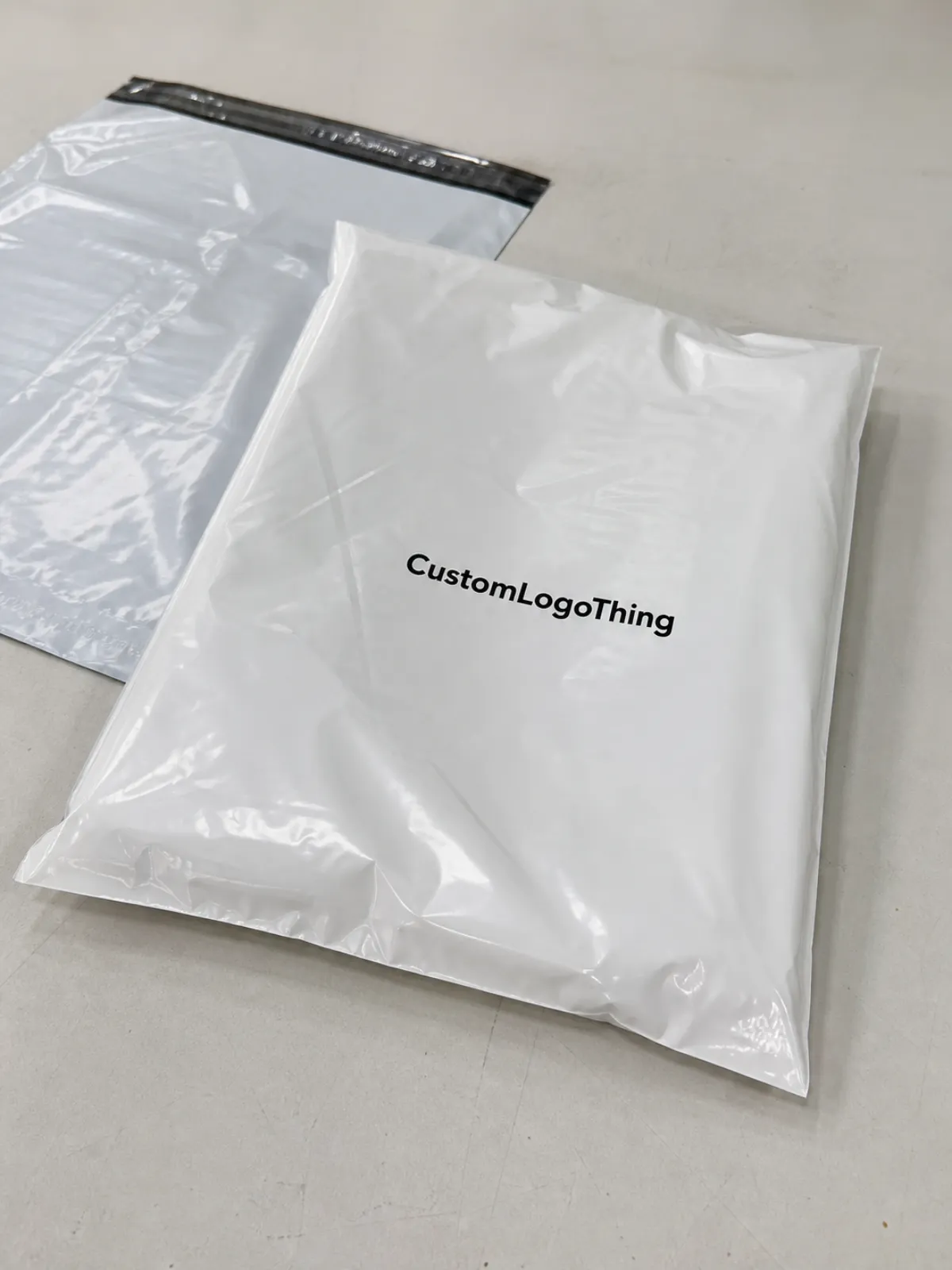
The starting point is simple: the spec controls how the bag behaves, not just how it looks. Film type, gauge, seal strength, opacity, finish, and print method all affect the final result. A proof can show color. It cannot show whether the bag will split at a side seam after a folded towel set or a boxed candle is dropped in at an angle.
Hotel retail bags tend to handle a wider product mix than buyers first expect. Soft goods like T-shirts, slippers, robes, and fabric accessories sit next to rigid gift items, spa sets, amenity kits, and boxed souvenirs. That means the same bag may be asked to carry both easy items and corner-heavy items. If the assortment changes by season, the spec should be built for the hardest use case, not the lightest one.
There is also a practical difference between display use and replenishment use. A front-of-house bag can justify a cleaner finish and tighter print registration because guests see it. A back-of-house bag often needs fewer color passes and more tolerance for rough handling because staff use it first. The smartest programs separate those jobs instead of forcing one generic bag to do everything.
That distinction is easy to miss because “custom” sounds flexible. In reality, customization usually means tradeoffs. More print coverage can improve shelf impact but raise cost. A softer film may feel better but resist puncture less well. A matte finish can look upscale, yet show scuffs differently than gloss. If the hotel wants packaging that feels intentional, those choices need to be made on purpose.
For buyers comparing packaging categories, this logic is the same one used with custom printed boxes and other retail packaging formats: the appearance has to match the handling environment. A bag that travels from stockroom to counter to guest hands needs more than brand color. It needs a spec that matches traffic, storage, and the item inside.
How the Bag Structure Works in Store and Transit
A poly mailer is really a small engineered system. Film layers, side seals, bottom seal, opening style, and closure all work together. If one part is weak, the rest cannot fully compensate. A good closure does not matter much if the bottom seal gives out. A strong film is not enough if the side seam was badly sealed.
Hotel conditions are harsher than many people assume. Bags get slid across counters, stacked in cramped cabinets, shifted in storage, packed around sharp corners, and handled by people in a hurry. They also face heat, humidity, and frequent touching. Standard parcel shipping is only part of the story. In hospitality, the bag often sees more human handling than transit stress.
That changes what buyers should pay attention to. Tear initiation matters. Seal consistency matters. Ease of opening matters. If staff have to fight the bag or rebag a product because the first one split, the cost is no longer just material cost. It is labor, waste, and a slower line at the retail desk.
Visibility also matters more than buyers expect. A translucent bag helps shoppers see the product, which can be useful for colorful apparel or gift sets. A more opaque film hides contents and can create a cleaner, more controlled premium feel. Neither is automatically better. The choice depends on whether the hotel wants the product to be visible or the brand story to stay more restrained.
Weight is not the whole story. A 120-gram box with sharp corners can be harder on a bag than a 250-gram soft item. The shape of the contents often matters more than the number on a scale. That is why material conversations should include item geometry, not just product category.
Material Choices That Decide Feel, Strength, and Print
Most hotel retail mailers use LDPE, LLDPE, or a co-extruded blend. LDPE is often softer and familiar in hand feel. LLDPE usually improves puncture resistance and stretch, which helps when items have edges, pulls, or inserts. Co-extruded films try to balance toughness, print quality, and surface finish by combining layers with different properties.
Thickness is where many buyers under-specify. It is tempting to choose the thinnest film that still looks acceptable in a sample. That works only if the item is soft, the handling is gentle, and the bag is not expected to survive much compression. For apparel and flatter accessories, 1.5 to 1.75 mil can be enough. A common middle ground is 2.0 mil. For boxed gifts, candle sets, or anything with rigid corners, 2.5 mil or higher is usually safer.
That range is not a rulebook. It is a practical starting point. A thick bag can still fail if the seal is poor. A thinner bag can work if the contents are soft, the seams are strong, and the pack-out is disciplined. Buyers often focus on weight, but puncture risk is usually the real issue.
Finish changes how the bag reads visually. Gloss reflects light and tends to feel brighter and more retail-forward. Matte softens the appearance and can support a quieter luxury look. There is no universal winner. A glossy bag can make colors pop; a matte bag can hide handling marks better in some cases. The right finish depends on how much visual attention the hotel wants the package to attract.
Additives and secondary properties deserve a mention too. Slip additives can improve stack performance and make bags easier to handle in a fast-moving store. Anti-static performance can help with opening and packing. Recycled content may support sustainability goals, but it often changes haze, color consistency, or seal behavior, so it should be sampled, not assumed. That is one of the places where a spec guide needs to be honest: sustainable claims can come with cosmetic tradeoffs.
Storage conditions can affect the bag before it ever reaches a guest. Heat, humidity, and long storage periods may alter sealing or make stacked bags stick together more than expected. If the hotel stores the mailers near cartons, paper bags, or other packaging, ask how they will hold up in the same room. A film that performs perfectly in a clean sample can behave differently after weeks in a warm stock area.
For broader sourcing checks and material standards, it helps to compare supplier claims with recognized references such as ISTA. If the program includes paper components or mixed packaging, FSC is useful for understanding paper-based certification claims.
| Option | Best For | Typical Spec | Price Signal |
|---|---|---|---|
| LDPE single-layer | Soft goods and simple carry-out items | 1.5-1.75 mil, limited print coverage | Lowest upfront unit cost |
| LLDPE blend | Mixed hotel retail assortments | 2.0 mil, stronger puncture resistance | Moderate cost, good durability |
| Co-extruded premium film | Boxed gifts and higher-end retail | 2.5 mil+, matte or gloss finish | Higher unit cost, lower damage risk |
Production Process and Lead Time From Spec to Shipment
Production usually moves slower than buyers want, and most delays are preventable. The process normally starts with an RFQ, then spec confirmation, artwork setup, proof approval, press setup, production, quality checks, packing, and freight. Each step depends on the one before it. If dimensions are wrong, the proof cycle stalls. If artwork is incomplete, the press cannot move. If approval comes back in pieces, the timeline stretches.
- RFQ and spec lock - confirm dimensions, film type, thickness, closure, print colors, and pack count before pricing.
- Artwork setup - send vector files, dieline fit, barcode placement, and any required copy.
- Proof approval - review color, bleed, layout, and readability with one decision-maker.
- Sampling or pre-production sample - test actual handling, not just visual appearance.
- Production and QC - inspect seals, registration, color consistency, and carton count.
- Packing and freight - confirm carton labels, pallet plan, and shipping method before release.
The slowest part is rarely the machine run itself. More often it is missing information, late feedback, or revisions that start after the proof stage should already be closed. A standard custom print run often takes 12 to 15 business days after proof approval. More complex specs, heavier print coverage, or special finishes can move that into the 18 to 25 business day range. Freight adds its own variable, especially if the order is crossing borders or shipping into a tight launch window.
The fastest orders usually have three things in common: the size already fits a standard dieline, the artwork is ready in a clean file format, and one person is responsible for approval. Committee review sounds careful, but it usually slows the schedule. A physical sample is especially useful for hotel retail programs because the bag must work in real hands, with real products, under real timing pressure. A design that looks polished on screen may still be awkward to pack, and that is the sort of flaw a sample catches quickly.
Cost, Pricing, MOQ, and Unit Cost Tradeoffs
Price depends on more than bag size. Resin cost, thickness, print coverage, number of colors, finish, custom sizing, and packing configuration all matter. A one-color bag in a standard size is a different cost structure from a full-coverage matte mailer with a tailored fit and inserted card. Early quotes can look high because they include setup, not just material.
MOQ is usually a reflection of production efficiency. Factories want repeatable specs and enough volume to justify the press setup. Many quote 3,000 to 5,000 pieces as a practical starting point for custom size or custom print. Once the order gets larger and the spec stays stable, unit pricing usually improves. If the size changes, the color count changes, or the finish changes, the savings can disappear fast.
Unit cost is not the same as total cost. A thinner bag may save a fraction of a cent, then cost more through tears, reprints, repacking, or customer complaints. Hotel retail is especially sensitive to that tradeoff because the packaging sits next to a brand promise. If the guest pays premium pricing for the item, a weak bag feels like the wrong place to economize.
There are still ways to reduce spend without weakening the package. Keep the print simple if the logo carries the brand. Use a standard size if the assortment allows it. Limit the number of SKUs sharing a program. Combine products that can use the same film spec. Those decisions tend to do more for budget control than shaving a small amount of resin from an already marginal bag.
| Spec Choice | Typical MOQ Pressure | Approx. Unit Cost Signal | Buyer Tradeoff |
|---|---|---|---|
| Standard size, 1-color print | Low | $0.18-$0.28 at 5,000 pcs | Best for budget control |
| Custom size, 2-3 color print | Moderate | $0.24-$0.38 at 5,000 pcs | Better fit, more setup |
| Premium film, full coverage, matte finish | Higher | $0.32-$0.55 at 5,000 pcs | Stronger shelf impact and higher durability |
Common Mistakes That Cause Reprints or Damage
The most common mistake is under-specifying for the real product mix. A bag that works for folded apparel may fail the moment a zipper, corner, or rigid insert appears. Weight alone does not tell the full story. Sharp edges and uneven loads are usually what cause punctures or seam stress.
Another frequent issue is choosing a closure that looks refined but slows staff. A sophisticated-looking opening may be fine for a display bag and painful for a busy counter. If the team needs to pack quickly, the bag should open and close without forcing extra steps. A few seconds per order sounds small until it repeats hundreds of times a week.
Artwork errors are expensive because they can force a reprint even when the bag itself is correct. Contrast, bleed, barcode placement, and small compliance text need to be checked before approval. Dark films and glossy finishes can also affect readability, so any scannable code should be tested against the final material, not just the file proof.
Storage and distribution are often treated like separate problems, but they belong in the same discussion. A mailer can be approved in sample form and still fail if it is overpacked, crushed in outer cartons, or stored in heat. The bag is one piece of the packaging chain, not an isolated purchase. If that chain is weak anywhere, the result can be a damaged item and a rushed reorder.
A clean sample is only useful if it reflects real handling, real storage, and real product weight.
Expert Tips and Next Steps for Ordering Smarter
Better orders start with a tighter approval sheet. Keep it to the facts: dimensions, film type, thickness, seal style, print setup, pack count, and carton dimensions. That page becomes the reference point when questions come up later. It also reduces the chance that a supplier is quoting from memory instead of the latest spec.
Request samples that test risk, not just appearance. Compare a lighter option, a standard option, and a heavier option against the same product. A bag that looks thinner may feel better, but the heavier version often wins once the item has edges, weight shifts, or repeated handling. The side-by-side test is more useful than an attractive mockup.
Watch reorder timing closely. If the lead time is three weeks and sell-through is uneven, waiting until the last carton is nearly gone is a fast way to create rush charges. It is better to base reorder points on actual usage and a real buffer than on optimistic inventory assumptions. That simple discipline prevents a lot of avoidable pressure.
Hotel retail packaging usually works best as a system, not a one-off purchase. A mailer may need to sit beside Custom Poly Mailers, Custom Packaging Products, display cartons, and gift-ready outer packs. The visual language should feel coordinated across the shelf, the room, and the back-of-house. That coordination matters more than adding more decoration.
For buyers trying to move quickly, the practical path is straightforward: choose the right film, keep the print plan realistic, test the sample like a real retail item, and confirm the lead time before the launch date gets close. That is the difference between packaging that simply exists and packaging that supports the hotel’s retail standard without becoming a source of damage or delay.
Frequently Asked Questions
What thickness works best for hotel retail custom poly mailer bags?
There is no single best thickness. Use lighter gauges for soft goods and move thicker when the item has sharp edges, corners, or a rigid insert. In practice, the item shape matters more than the weight. If the assortment mixes apparel with boxed gifts, test both against the same handling conditions before locking the spec.
Which material is best for premium-looking hotel retail mailers?
LLDPE-based structures usually offer a good balance of flexibility and puncture resistance. Co-extruded films can improve performance further, especially when the bag needs a cleaner finish or better print behavior. Gloss tends to feel brighter, while matte creates a quieter premium look. The best choice depends on whether the contents should be visible or more concealed.
How long does custom poly mailer production usually take?
Typical production runs often take 12 to 15 business days after proof approval, with more complex jobs extending to 18 to 25 business days. Artwork readiness and approval speed are often the real schedule drivers. Add freight time and a revision buffer if the order has a fixed launch date.
What drives MOQ and unit cost on hotel retail bags?
MOQ usually reflects press setup, film sourcing, and how efficiently the run can be produced. Unit cost falls as volume rises, especially when size, print count, and film spec stay stable. Custom shapes, premium finishes, and full coverage usually raise the first-run price.
What should I approve before placing a reorder?
Confirm the film gauge, dimensions, seal style, and artwork version before releasing a repeat order. Check carton count, warehouse labeling, and pack configuration too. If the last run produced tears, scuffs, or slow packing, use that feedback to adjust the next spec instead of repeating the same problem.

