For a buyer comparing branded winter merch, a stationery Logo Patch Beanies Unit Cost review should do more than compare sticker prices; it should show how the patch construction, knit spec, and packing method change the real landed cost, the hand feel, and the perceived value once the beanies are in a kit, on a retail shelf, or handed out at an event.
That matters because a small patch can make a plain cuffed beanie read as a considered branded item without drifting into the higher cost of all-over embroidery or a fully custom knit jacquard. For stationery brands, trade show welcome kits, employee gifts, and retail add-ons, the sweet spot is usually a decoration method that looks sharp, survives repeat wear, and still keeps the cost per piece inside a realistic budget.
What this stationery logo patch beanies unit cost review should compare
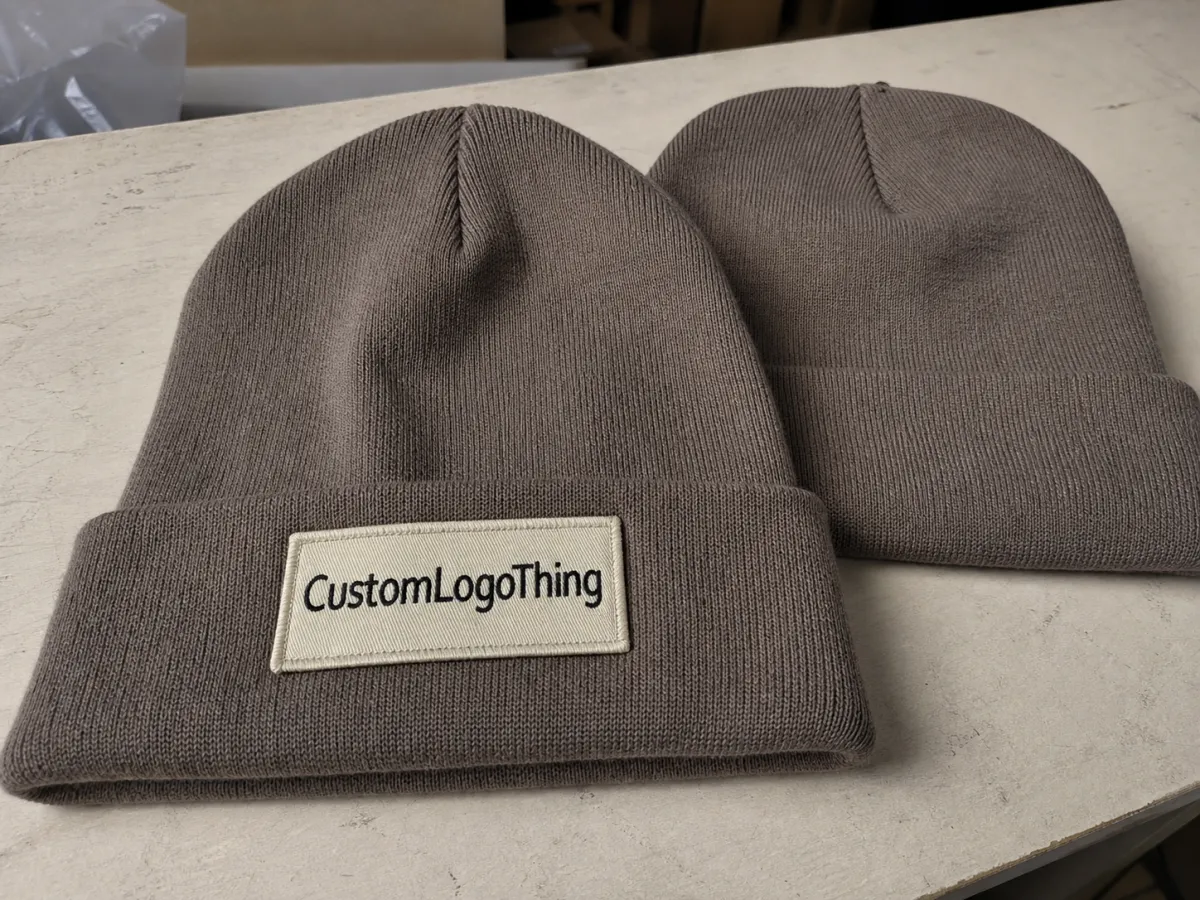
The first decision is not logo placement, and it is not even the patch shape. It is the job the beanie has to do. If the goal is visibility, the logo needs contrast and a clear silhouette. If the goal is tactile quality, the patch material and edge finish matter more. If the goal is repeat ordering, the spec needs to be simple enough that later runs hold color, sizing, and placement without drifting.
From a packaging buyer’s point of view, these beanies usually sit in one of four use cases: stationery brand merch, trade show kits, employee welcome boxes, or retail add-ons. Each one has a different tolerance for price and a different expectation for finish. A welcome box item may justify a softer hand and a cleaner internal label; a retail add-on may need a more polished face and better carton presentation.
That is why a useful stationery Logo Patch Beanies Unit Cost review should compare the patch style, the knit base, the minimum order quantity, and the packaging method as a single package. A beanie that looks inexpensive on paper can still feel premium if the patch is well proportioned, the yarn is tight enough to hold shape, and the application is clean. The reverse is also true. A nice patch on a loose, flimsy knit can sink the whole item.
A good branded beanie should feel deliberate in the hand. The patch needs to sit naturally on the cuff, the logo should read instantly, and the price should still make sense after freight, packing, and setup charges are added.
For teams comparing suppliers, the goal is to move past broad claims and ask for a quote that explains exactly what changes the number. The best quotes separate the beanie base, the patch production, the application labor, and any sample fee, so the buyer can see where the value really sits.
Patch styles, knit options, and brand details that change the feel
Patch style has a bigger effect on perception than many buyers expect. A woven patch gives crisp edges and handles small lettering well, so it is often the safest choice for detailed logos. An embroidered patch has more texture and can feel richer in the hand, but tiny type can blur if the artwork is crowded. A debossed PU patch feels cleaner and more modern, while a silicone patch can add a sporty, utility-driven look that suits outdoor or active brands.
| Patch type | Typical setup/tooling fees | Added unit cost at 1,000 pcs | Best for | Watch-outs |
|---|---|---|---|---|
| Woven patch | $35-$80 | $0.35-$0.70 | Fine text, clean logos, sharp edges | Can look flat if the art is too simple |
| Embroidered patch | $40-$120 | $0.45-$0.85 | Textured, classic branded feel | Small letters and thin lines need simplification |
| Debossed PU patch | $60-$150 | $0.40-$0.90 | Modern retail presentation | Gloss level and edge trim affect the final look |
| Silicone patch | $70-$180 | $0.55-$1.10 | Outdoor, athletic, durable branding | Heavier feel and higher tooling fees |
Beanie structure also changes how the patch sits. A ribbed cuff gives a stable landing zone and usually looks best for front placement. A taller cuff gives more room for larger artwork, while a shorter cuff can make even a modest patch feel crowded. Crown shape matters too. A shallow crown often reads cleaner, especially when the buyer wants the patch to stay in the viewer’s direct line of sight.
Yarn blend makes a practical difference. Acrylic is common because it keeps costs controlled and accepts color well. Acrylic-wool blends feel warmer and can justify a higher price, but they often belong in a more premium retail brief. For a stationery brand that wants a balanced merchandise piece, a midweight acrylic knit with a well-sized patch is often enough to deliver the right impression.
Placement changes tone instantly. Front cuff placement feels direct and commercial. Side placement feels quieter and more fashion-led. Some brands use tonal patches for a restrained look, while others choose high-contrast colors so the logo reads quickly in photos, on conference floors, and in social posts. Neither is universally better. The right answer depends on whether the brand story is utility, warmth, or display value.
Specifications buyers should lock before requesting samples
Sampling gets expensive when the brief is vague. Before asking for a sample, confirm the shell material, knit gauge, cuff style, patch dimensions, and the color targets. If the brand uses Pantone references, share them up front. If the factory is matching a print program or a stationery line, the closest-match target should be clear so the beanie does not drift away from the rest of the kit.
Artwork cleanup is another spot where buyers lose time. Small lettering, tight icon spacing, and thin rules may need to be simplified before the patch can be digitized or molded. That is not a flaw in the supplier; it is just the reality of scaling a graphic down to a small wearable surface. A logo that works on a notebook cover may need a stronger outline or thicker type to read well at patch size.
Packaging matters more than many teams expect, especially if the beanies ship inside a multi-item box. Individual polybagging is common and usually adds a modest charge, often around $0.08-$0.20 per unit depending on the pack spec. Hang tags, woven labels, and folded insert cards add both cost and perceived value. If the program wants a cleaner retail look, asking for FSC-certified paper stock can be a sensible choice for tags and belly bands; the FSC system explains the certification path clearly at fsc.org.
For shipping and carton testing, especially if the beanies are going into gift kits or retail distribution, it is worth checking packaging performance against transport expectations rather than assuming any carton will do. The International Safe Transit Association publishes widely used packaging test guidance at ista.org. That does not mean every beanie order needs a formal test plan, but it does mean the buyer should know whether the packaging will survive warehouse handling and route compression.
Sample review should be practical, not decorative. Look at the patch placement, the symmetry of the seams, the hand feel at the cuff, and the color under normal indoor light. Photos can hide a lot. If the beanie will be worn in offices or layered into employee kits, it should look good from arm’s length and still feel comfortable after several hours of wear.
Unit cost, MOQ, and quote math for smaller and larger runs
This is the part where a clear stationery Logo Patch Beanies unit cost review saves real money. The base beanie cost, patch construction, application labor, packaging, sample charges, and any custom labeling all flow into the final number. If a supplier quotes only the garment cost and leaves out setup charges or patch application, the real cost per piece can jump once the order is confirmed.
MOQ changes the math quickly. A run of 300 pieces may carry a noticeably higher unit cost than a run of 1,000 because the same artwork prep, patch tooling, and sewing setup get spread across fewer units. For a standard cuffed acrylic beanie with a sewn patch, realistic landed pricing often lands around $3.00-$5.50 per unit at smaller quantities, then drops into a $2.10-$3.80 range as the order moves into stronger bulk pricing territory. The exact band depends on patch type, packing, and whether the order needs custom labels or special color matching.
Sample fees are usually separate. Many programs see sample charges between $35 and $120, and some suppliers credit that back after bulk approval. That is fair as long as the buyer knows it up front. Tooling fees for molded or debossed patches also need to be reviewed carefully, because those charges can make a low-volume order look attractive until the setup line appears.
Compare quotes on the same basis:
- Does the price include patch production and application?
- Are sample charges, tooling fees, and setup charges included or separate?
- Is packaging individual, bulk-packed, or retail-ready?
- Does the number include domestic freight, overseas transit, or duties?
Ask for at least two quantity tiers. A quote at 500 pieces and another at 1,000 or 3,000 will show where the real break sits. That comparison tells you whether the order should be kept tight for a campaign or expanded to capture better cost per piece. In many cases, a modest increase in quantity can shave enough off the price to pay for upgraded packaging or a slightly better patch finish.
One more practical point: not every low price is a good buy. A quote that omits the patch sample, leaves the beanie unbagged, or assumes generic freight can look low on paper and still cost more after the hidden items are added. Honest quote math is better than a discount that disappears during approval.
Production process, timeline, and delivery checkpoints
The workflow is usually straightforward, but the handoffs matter. It starts with artwork submission, then proofing and cleanup, then sample creation, then bulk production, then final inspection, then shipment. Delays usually happen at proof approval and sample sign-off, not during the actual sewing itself.
For timing, a clean artwork file can move faster than a complex logo that needs simplification. Artwork cleanup may take 1-3 business days, sample production 5-10 business days, and bulk production often 12-20 business days after approval. Those numbers can stretch if the order lands during a busy season or if the supplier needs to remake the patch because the first sample misses the color target.
Freight changes the calendar as much as production does. Air freight and express can move fast, but they raise the landed cost. Ocean transit is cheaper on volume, but it needs more lead time and tighter planning. If the beanies are tied to a launch, a conference, or a seasonal drop, the shipping method should be discussed before the quote is approved, not after the production slot is already booked.
A clean checkpoint list helps everyone stay aligned:
- Confirm vector artwork and patch size
- Approve the material swatch or knit color target
- Sign off on the sample or photo sample
- Approve the pre-production sample if the run is large or the art is complex
- Release bulk manufacturing only after all details match the spec sheet
If the item will ship as part of a kit, the packaging spec should be treated like a product spec, not an afterthought. The carton count, fold style, and polybag choice all affect receiving, storage, and final presentation.
Quality control should be based on what the buyer will actually see. Check patch centering, edge finish, stitch density, and color consistency across the run. If the brand uses the beanies for employee kits or customer gifts, consistency is often more valuable than trying to squeeze in an extra design detail that complicates production.
Why buyers return for repeat stationery programs
Repeat orders are where a good spec sheet earns its keep. Once the patch type, yarn blend, placement, and color target are locked, reorders become faster and easier to approve. That matters for stationery brands that run seasonal kits, employee onboarding boxes, or event merchandise drops where the beanie needs to look consistent from one campaign to the next.
Consistency also protects the brand. A soft gray beanie with a bright woven patch can look polished one season and off-tone the next if the supplier changes a shade, a yarn lot, or a patch border. Buyers who return to the same spec usually do so because they want the same result, not a new interpretation of the artwork.
There is also a warehouse benefit. Stable carton counts, stable folding, and stable bagging make inventory easier to receive and distribute across multiple offices or event dates. That sounds minor until the order moves through procurement, warehouse receiving, and a tight launch window. A program that is easy to store is usually easier to reorder.
Most repeat buyers are not chasing novelty. They are trying to reduce friction. They want a supplier who keeps the spec on file, understands the difference between a retail-ready finish and a simple giveaway piece, and can quote the next run without starting from scratch. That is especially helpful when the first order was approved quickly and the second one needs to match it exactly.
Next steps for a cleaner quote and faster approval
Send vector artwork, target quantity, delivery date, patch size, and any Pantone references in the first message. That gives the quoting team enough detail to price the actual item instead of a placeholder version that may not match the final order. If there is a preferred beanie body color, include that too, because body color can affect both availability and cost.
Ask for a pricing table with at least three quantity levels, sample terms, production lead time, and packaging options. The table should show what changes as volume increases, not just a single number. For a stationery logo patch beanies Unit Cost Review, that transparency is the difference between a useful purchasing decision and a guess.
Before approving proofs, confirm the patch type, beanie color, and exact placement. Those are the details that create revision risk later. If the order is for a stationery campaign or retail support piece, compare the quote against the intended use case: visibility, hand feel, repeatability, and total landed cost. Then choose the version that best fits the program instead of the one that only looks cheapest on the first line. That is the simplest way to keep the stationery logo patch beanies Unit Cost Review grounded in facts and not surprises.
FAQ
How do you calculate stationery logo patch beanies unit cost?
Start with the base beanie cost, then add patch production, application labor, packaging, and any sample or setup fees. Divide the full amount by the ordered quantity, and compare that number across at least two volume tiers so you can see where the price break lands. It is usually smarter to review landed unit cost than factory price alone, especially if freight or duties are part of the order.
What MOQ is typical for logo patch beanies?
MOQ depends on the beanie style, the patch method, and whether custom colors or labels are included. Smaller minimums are possible, but they often carry a higher unit cost because the setup is spread across fewer pieces. Ask for a quote at your target quantity and one higher tier so you can see the bulk pricing difference clearly.
How long does production take after approval?
Production timing usually starts after artwork and sample approval, not when the first inquiry is sent. Many orders need a few days for proofing, about a week for sampling, then 12-20 business days for bulk production, followed by transit time. If the deadline is fixed, ask early about rush options and whether air freight is needed to protect the schedule.
Can I mix colors or patch designs in one beanie order?
Often yes, but mixed runs can increase complexity if each colorway or patch version needs separate setup or stitching changes. The best pricing usually comes from keeping the body style consistent and changing only the patch or knit color within the same run. Request a quote that shows the cost of each variation so you can decide whether the mix is worth the added flexibility.
What artwork files help the quote come back faster?
Vector files such as AI, EPS, or PDF usually make quoting and patch sizing much faster because the design is easier to measure and adjust. Include Pantone references, preferred patch size, and placement notes so the supplier does not need to guess at the finished look. If the logo has fine type or small details, mention that up front so the team can flag any changes before sampling.


