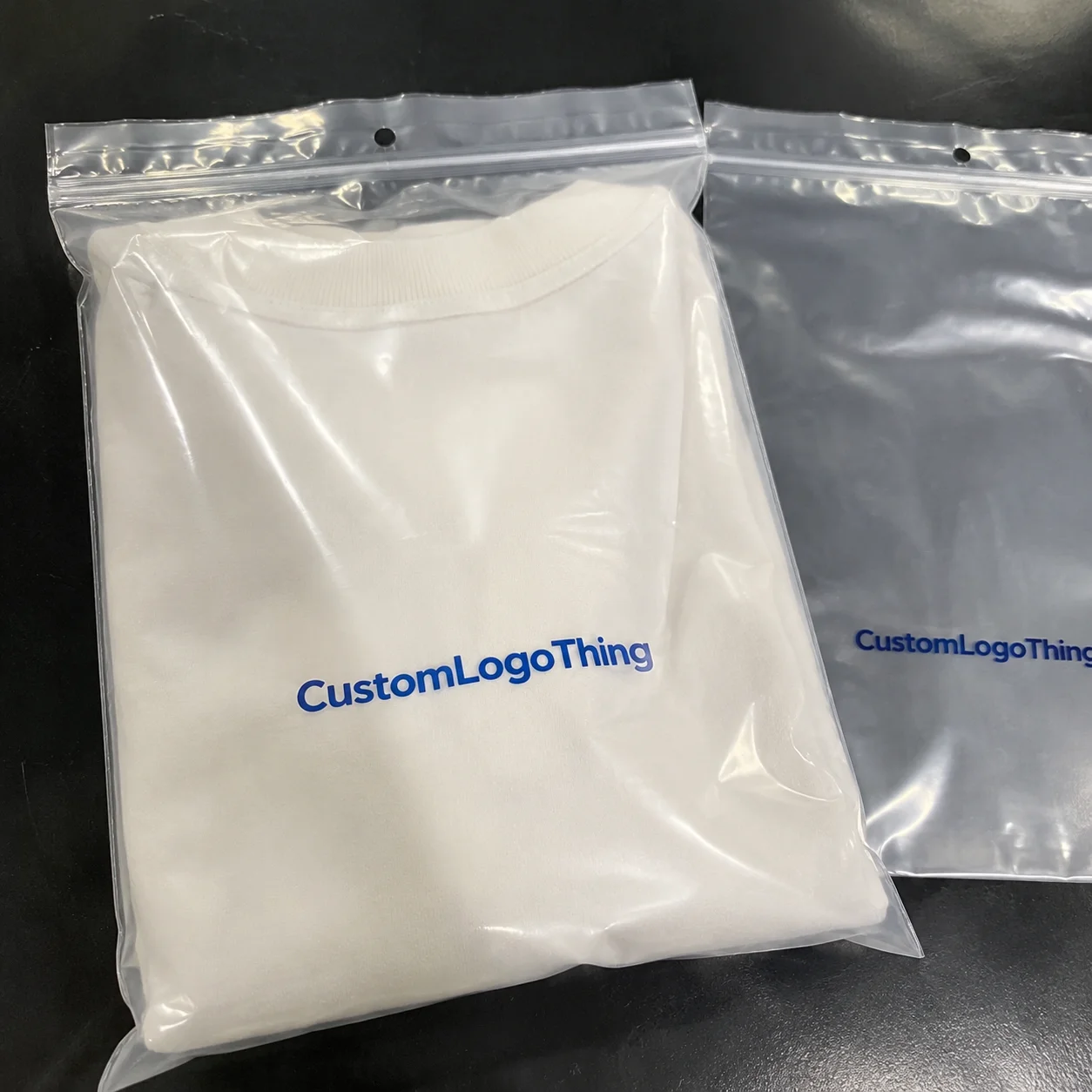
Choose the mailer from the shipment backward.
If you are sorting through Poly Mailer Bags material options for subscription apparel boxes, the first mistake is usually the easiest one to make: starting with print, color, or a sustainability claim before you know what the package has to survive. A mailer that looks clean on a render can fail fast in the real world if it is too thin for a hoodie, too slick for a return strip, or too loose for a pack of folded tees. Returns, reseals, and damaged goods are where the cheap bag turns expensive.
Apparel subscriptions are harder on mailers than many buyers expect. Garments vary wildly in bulk and memory. A ribbed knit, a brushed fleece hoodie, and a stack of lightweight tees all behave differently once they are compressed, stacked, and moved through parcel networks. That means material choice is not a branding garnish. It is a working spec.
The useful comparison starts with the film itself: standard polyethylene, coextruded structures, recycled-content blends, and specialty finishes. Each one changes puncture resistance, opacity, seal consistency, scuff visibility, and price. Once those are understood, brand feel can come into the conversation with some discipline instead of guesswork.
Poly Mailer Bags Material Options for Subscription Apparel Boxes
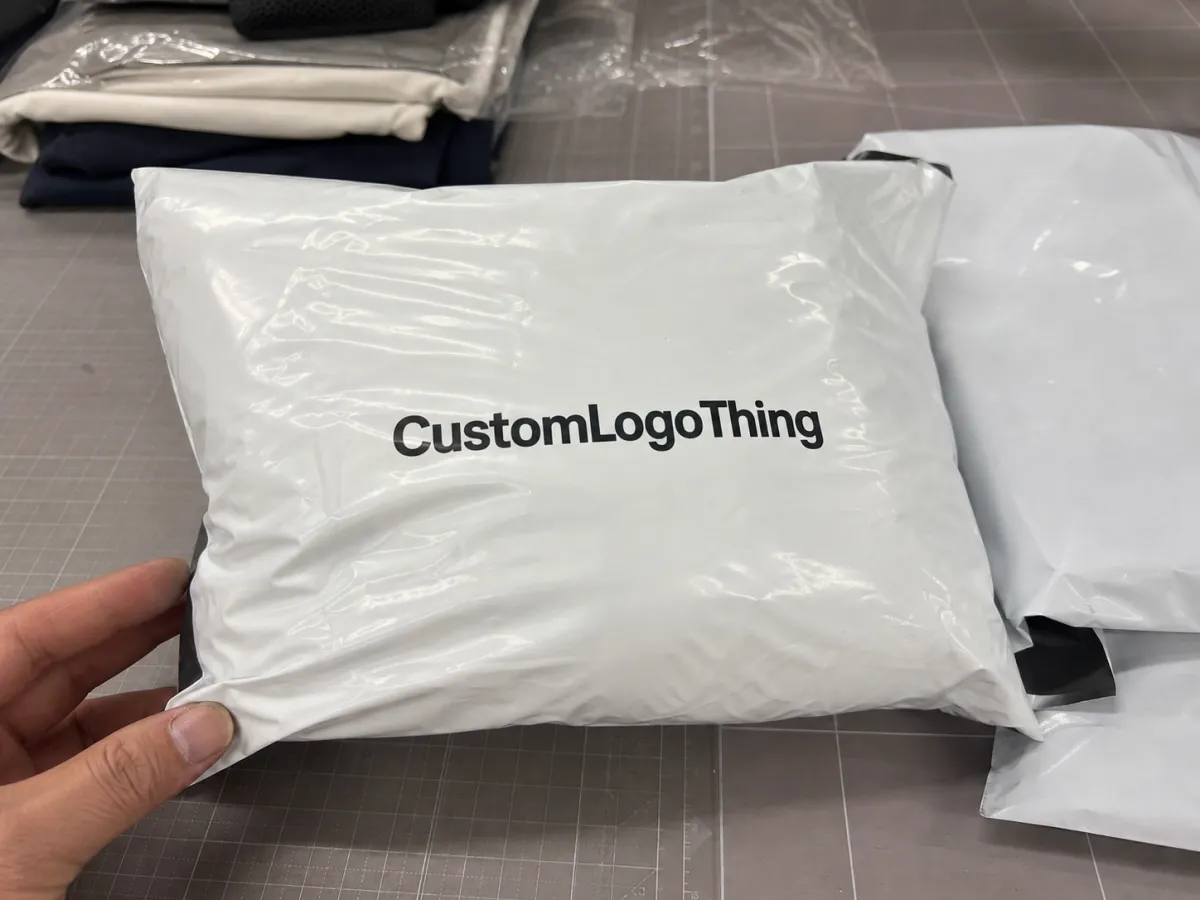
Most buyers narrow the field to four common categories. Standard polyethylene mailers are the baseline because they are flexible, familiar to converters, and usually the least expensive. Coextruded films add a little engineering: one layer can be optimized for sealability while another improves toughness or printability. Recycled-content blends introduce post-consumer or post-industrial resin into the structure, though the percentage and performance vary by supplier. Specialty matte or soft-touch finishes sit at the premium end and are chosen as much for presentation as for protection.
That sounds simple until you put actual apparel inside the bag. A light tee may fit comfortably in a lower-gauge mailer, but a hoodie packed with a card insert and a return label can stress the closure and pull at the side seals. If the film stretches too much under load, the package may look tidy during packing and fail after a few hours in transit. The mailer has to tolerate compression, not just contain the item for five seconds on a warehouse table.
One practical way to compare options is to look at the whole shipment, not just the film description. Here is the part teams often skip: the same mailer can work well for one SKU and poorly for another, even inside the same subscription program. That is why the heaviest item in the line should set the floor for the spec.
| Material option | Typical strengths | Best fit for | Approx. cost impact |
|---|---|---|---|
| Standard polyethylene | Low cost, flexible, easy to run on packing lines | Light tees, thin layers, low-risk shipments | Lowest baseline |
| Coextruded film | Better puncture resistance, cleaner print surface, improved seal balance | Mixed apparel packs, moderate handling stress | Usually +5% to +15% |
| Recycled-content blend | Lower virgin-resin share, often similar handling to standard PE | Programs that want recycled material without changing pack-out much | Often a small premium |
| Matte or specialty finish | Premium feel, reduced glare, stronger shelf appeal | Gift-like or high-touch subscription presentations | Highest of the group |
The table helps, but it is not the whole story. A slightly plainer mailer with the right gauge and seal can outperform a prettier film that was specified for image rather than use. In parcel testing, packaging usually fails at the weakest link. That link is often the seal, not the face film.
For brands building a packaging system, the mailer also needs to fit alongside tissue, inserts, and any secondary shipper. If the outer carton or branded shipper is already carrying some of the protection burden, the film can be lighter. If the mailer is doing almost all the work, that same thin film becomes a bad bet. The spec has to match the total pack-out, not just one layer of it.
The first failure point is often not the film itself, but the mismatch between the film and the garment load. Once the bag is stretched, compressed, or overfilled, thin margins disappear quickly.
How Film Structure Changes Protection in Transit
Film structure matters as much as thickness. A single-layer bag can be perfectly serviceable for soft, low-mass shipments, but multilayer or coextruded films usually give more room to balance seal strength, toughness, and appearance. In practice, that means the outer layer can be tuned for handling while the inner layer supports closure and bonding. Buyers do not need to memorize resin chemistry, but they do need to know that two bags with the same nominal gauge can behave very differently.
Transit stress is messy. Parcels get stacked, squeezed, dropped, and rubbed against other packages. A mailer that looks fine after packing can show seam creep, corner punctures, or scuffing once it moves through sortation. The issue is rarely theoretical; it shows up in returns, customer photos, and the slow erosion of trust that comes from a package arriving tired.
Gauge helps, but only up to a point. For lightweight apparel, a lighter film may be enough if the bag is sized correctly and the closure is consistent. For bulkier items, a modest move from 2.5 mil to 3.0 mil can improve confidence, but the bigger win may come from a better seal width or a more stable structure. Thicker is not always safer. A heavy film with a weak seal can still split exactly where the machine did its work.
Surface finish affects handling too. Glossy mailers tend to print sharply and feel crisp, while matte finishes reduce glare and can make a premium brand look more restrained. Soft-touch coatings can elevate the unboxing moment, though they also need scuff testing because some finishes show abrasion sooner than expected. The package should still look intact after it rides in a truck, not just after it leaves the proofing table.
Temperature adds another layer. Cold conditions can stiffen film, which makes some mailers harder to fold and seal cleanly. Warm conditions can change adhesive behavior. That is one reason buyers lean on established test methods from groups like ISTA and packaging references from The Association for Packaging and Processing Technologies. The point is not to over-engineer a pouch. It is to keep the bag honest under actual shipping conditions.
A good rule is to size for fit under stress. If the package is already fighting the contents before it enters transit, the result is usually wrinkling, seam strain, or an awkward closure. If it closes cleanly with a little room to spare, fulfillment tends to run faster and the bag survives rougher handling. That small difference is often worth more than an extra line in the marketing copy.
Specs That Shape Fit, Privacy, and Brand Feel
Quotes should always ask for the full spec set. “Custom Poly Mailer” is too vague to compare anything. You need the gauge, the film structure, the dimensions, the closure style, the print coverage, and whether there is a dual-adhesive return strip. Without those details, two prices can look close and still describe very different bags.
Privacy is one of the most underrated variables. Translucent film can help fulfillment teams verify contents quickly, but it also exposes the garment and can make a premium subscription feel less considered. Opaque film gives more concealment and usually reads as more polished. For giftable apparel, that difference is noticeable. Customers may not describe the film, but they notice whether the package feels private or exposed.
Brand feel sits on top of that. White or lightly tinted film can make logos brighter. Dark inks may hold better on some glossy surfaces than on others. Matte can soften the whole presentation, which works well for minimalist brands, while high-gloss can make graphics pop in a more direct, retail-like way. The art has to be proofed against the actual film, not an imaginary one.
Fit deserves a separate conversation. A bag that is too tight compresses the garment and stresses the seal. A bag that is too large wastes material and makes the shipment shift around, which can look sloppy and invite abrasion. The right size is usually the one that closes without forcing the load and still leaves enough tolerance for modest variation in fold style, accessory inserts, or a last-minute size swap on the packing line.
If sustainability language is part of the brief, ask for specifics, not slogans. Recycled-content percentage, resin source, and verification method should all be on the sheet. If paper components are involved, the supplier should be able to explain the role of FSC certified paper where relevant. That matters because a recycled or paper-based claim does not automatically solve shipping performance, and a plastic reduction claim does not automatically reduce overall package waste if damage rates rise.
A clear request helps keep the conversation technical:
- Gauge: ask for mils or microns, not just “light” or “heavy.”
- Film structure: confirm whether it is mono-layer, coextruded, or recycled-content blended.
- Closure: verify seal width, adhesive type, and whether a return strip is included.
- Artwork: define print coverage, ink count, and acceptable color variation.
- Fit: specify the heaviest SKU and the actual folded dimensions, not the average one.
If you are comparing the mailer against other packaging elements, keep the system view intact. A subscription box built around outer shippers or branded mailers from Custom Poly Mailers should not force the film to carry more protection than it can reasonably handle. That is how programs end up overspending in one place and under-specifying another.
Cost, MOQ, and Unit Price Tradeoffs
Price moves in layers. Resin markets matter, but so do thickness, print coverage, recycled content, and the size of the order. In many cases, MOQ affects the unit price more than the film family itself. A 10,000-unit run often prices very differently from a 50,000-unit run because setup, plate, and machine time get spread across more bags. That is why small subscription launches can feel expensive even before any special finish is added.
For a rough frame, a simple custom-printed poly mailer at mid-market volumes may land somewhere around a dime to a few dimes per bag, depending on size and spec. Specialty films, heavier gauges, full coverage printing, or premium finishes can push higher. Those are not universal numbers, and they should not be used as quotes. They are useful only as a sanity check when one supplier looks dramatically below or above the rest.
Hidden costs are where budgets quietly drift. Oversized bags waste material and can raise dimensional weight. Overbuilding the film because the team wants a safety margin can add cost without fixing the true weakness. Extra print colors look attractive in a mockup, but they only matter if the artwork truly benefits from them. Plenty of brands spend more on decoration than on durability, then pay again when the package does not hold up.
Comparing landed cost is better than comparing the bag alone. A slightly more expensive mailer can be the lower-cost option if it reduces re-packs, customer complaints, or damaged returns. That is especially true in subscription apparel, where repeated shipments turn small failures into recurring costs.
| Decision factor | Lower-cost choice | Higher-cost choice | What to check |
|---|---|---|---|
| Film | Standard polyethylene | Coextruded or recycled-content blend | Seal strength, puncture resistance, appearance |
| Single-color or limited coverage | Full coverage with multiple inks | Readability, color match, scuff resistance | |
| Size | Tighter fit | Oversized for flexibility | Dimensional weight, wrinkling, material waste |
| Volume | Small MOQ | Higher MOQ | Unit price, storage space, inventory risk |
Ask suppliers for a few pricing bands, not one number. Seeing 5,000, 10,000, and 25,000 units side by side usually tells you more than any polished sales sheet. It also reveals whether the program really benefits from scale or whether the rate curve flattens early.
Environmental claims deserve the same skepticism. The EPA has useful material-recovery guidance through EPA, and that is relevant because a bag described as recyclable on paper may not be accepted the same way in every collection stream. Claims should match local reality. Otherwise, the packaging story becomes more confident than the infrastructure behind it.
Production Timeline and Approval Steps
Most mailer programs follow a similar path: collect specs, confirm dimensions, choose the film and gauge, review artwork, approve a sample or proof, then move into production. The schedule gets longer when teams change direction late. A revised logo, a different closure, or a new recycled-content requirement can add days or weeks.
Timeline depends on how custom the bag really is. A stock-film run with simple print may move relatively quickly. A fully branded structure with tighter color matching, recycled-content qualification, or specialty finish will take longer. As a planning assumption, many teams should expect somewhere in the range of 2 to 4 weeks for sampling and proofing, then roughly 4 to 8 weeks for production and freight on a straightforward custom run. Complex programs can run longer. That spread is normal.
Samples are where practical issues surface. A flat proof shows layout, not behavior. It will not tell you how a folded hoodie sits inside the bag, whether the closure grabs cleanly, or how the surface scuffs when stacked against other parcels. The cheapest errors are the ones caught before a purchase order is released.
A useful approval check is simple and methodical:
- Pack the heaviest SKU and confirm the seal closes without stretch marks.
- Shake the package lightly and check for excessive movement inside the bag.
- Stack a small sample run and look for seam creep or print abrasion.
- Test both warm and cool storage conditions if the shipment travels through seasonal extremes.
Standards-based testing keeps buyers and suppliers speaking the same language. ISTA drop and compression methods are useful references, and ASTM terminology can help with material comparisons. Those tools do not replace real pack-out testing, but they do make failure easier to describe and easier to fix. That matters when several teams are signing off at once.
Good production management also separates timing into clear buckets: sample timing, approval timing, production timing, and transit timing. That way, if the launch slips, everyone can see where it slipped. Was it artwork? Machine time? Freight? Without that split, the schedule looks longer than it is and no one learns much from the delay.
Common Mistakes When Sourcing Subscription Mailers
The most common mistake is choosing thickness by instinct. Heavier is not automatically better. A thicker gauge can improve puncture resistance, but it can also make the bag stiffer, harder to seal, and more expensive without solving the real problem. If the closure is weak or the bag is undersized, extra material will not save the shipment.
Material mismatch comes next. A slick, lighter film may work well for soft tees, but it can feel underbuilt around bulky fleece or layered orders. A very stiff structure can be just as awkward, especially if it slows packing or makes the closure behave unpredictably. The right bag should support warehouse speed instead of forcing packing teams to fight it.
Sustainability claims can go sideways quickly. If the supplier says recycled content is included, ask how much, what the source is, and whether the bag still passes the handling tests that matter. If paper elements are part of the design, do not assume kraft paper or FSC certified components automatically outperform plastic in every application. Different materials solve different problems.
Skipping field testing is the one mistake that keeps showing up. Drop tests, compression checks, and actual pack-out trials catch weak points that are invisible in a quote. A mailer can look polished and still fail once it moves through a busy distribution channel. That is where damage claims begin.
Other failures are more mundane and more expensive than they sound:
- Buying a bag that is too small for folded sleeves, cuffs, or multi-item packs.
- Chasing the lowest unit price and ignoring repack labor or returns.
- Assuming recycled-content film behaves exactly like virgin resin without testing.
- Neglecting how print coverage changes scuff visibility and QC scrutiny.
Shipping method matters too. A mailer inside a secondary corrugated cardboard shipper has a different job than a mailer riding alone through parcel networks. The surrounding packaging changes the stress profile. That is why the right film for one program can be the wrong one for another, even if the product category is the same.
Practical Shortlist for Launch
For a subscription apparel launch, I would usually narrow the field to three candidates: an economical baseline, a stronger coextruded option, and a premium finish if the presentation really needs it. That shortlist forces a real tradeoff discussion. It also prevents the team from chasing ten tiny variants that differ more in language than in performance.
From there, ask for side-by-side pricing that shows gauge, print coverage, MOQ, and lead time on the same sheet. A lower price may be tied to weaker structure or more limited artwork. A higher price may buy better seal stability, better scuff resistance, or a smaller chance of damage claims once the program scales. The point is to compare like with like, not to chase the prettiest number.
Testing should happen with the exact pack-out you plan to ship. If the order includes a folded tee, a card insert, and a return label, test that combination. If the shipment includes hoodies or leggings, test those too. Look at seal width, closure reliability, surface wear, and fit after handling. The sample that survives those checks earns its place.
That is the simplest way to evaluate Poly Mailer Bags Material options for subscription apparel boxes: start with the heaviest shipment, verify the closure and film structure, and only then worry about finishes and branding details. If the material holds up, the rest of the system becomes easier to trust. If it does not, no amount of print polish will rescue it.
Which poly mailer material works best for subscription apparel boxes?
LLDPE and coextruded films are common starting points because they balance flexibility, puncture resistance, and seal reliability. Recycled-content blends can also work if the supplier can hold gauge consistency and closure performance. For heavier garments, the film needs more body than a lightweight tee mailer.
What thickness should I choose for apparel mailers?
Use the heaviest and bulkiest SKU as the baseline. Light tees may work with lighter gauges, while hoodies, sweaters, and multi-item packs usually need a stronger structure. A practical gauge range often sits around 2.0 to 4.0 mil, but the right number depends on fit, seal width, and transit stress.
Do recycled poly mailers cost more?
Sometimes, yes. The premium depends on resin market conditions, print complexity, and order volume. In many programs, MOQ and decoration have a larger effect on unit price than recycled content alone. The real comparison should be landed cost plus field performance.
How does printing affect material choice?
Heavy artwork coverage usually needs a stable surface and good opacity so the print stays crisp. Gloss, matte, and tinted films all change how ink appears once it is on the bag. If the design matters, ask for printed samples before approving the run.
What is a realistic lead time for custom mailers?
Simple custom runs can move faster than fully branded programs, but timelines vary with proofing, film sourcing, and freight. As a general planning window, many teams should allow 2 to 4 weeks for samples and 4 to 8 weeks for production and transit on straightforward orders. More complex specs can take longer.