Printed zipLock Bags With Logo are one of those packaging formats that look simple on the surface and then start revealing tradeoffs as soon as you work through a real product, real artwork, and a real reorder schedule. A good bag has to do several jobs at once: protect the contents, open and close cleanly, carry branding without distortion, and survive handling without making the product feel cheap.
That is why buyers use them for snacks, accessories, sample kits, cosmetics, hardware, supplements, and refills. The bag is part package, part display surface, part functional closure. If any one of those pieces is off, the whole result feels less finished than the mockup suggested.
Why printed zipper bags do more than hold product
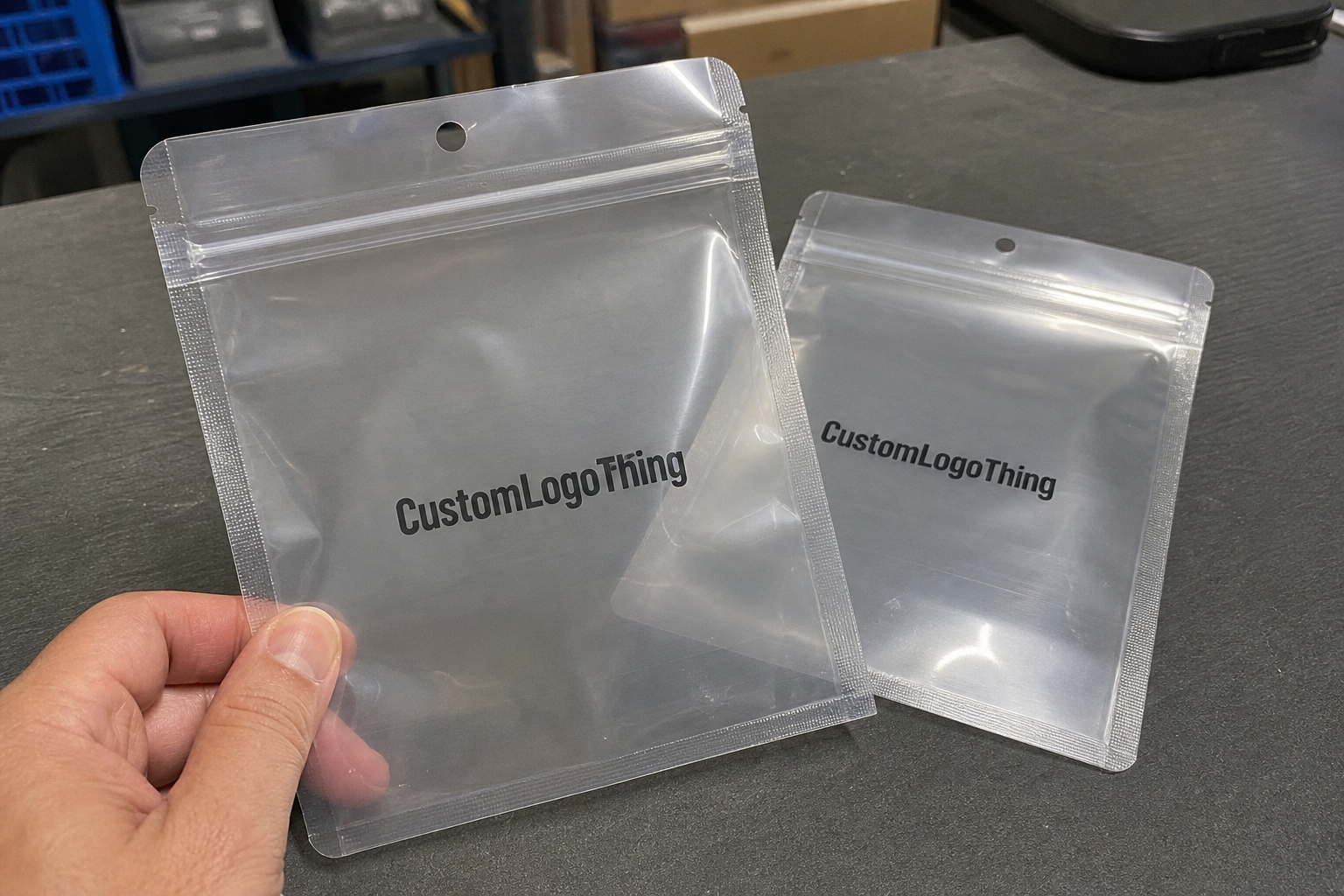
A zipper bag does more than keep a product together. It sets a tone before the customer ever gets to the item inside. Clear film can make a product feel fresh and visible, while frosted or opaque film can create a more controlled, premium look. If the zipper feels reliable and the artwork sits cleanly on the surface, the package reads as deliberate rather than temporary.
That is part of the appeal of printed ziplock Bags with Logo. The branding is always in view, but the bag still has to function like a working package. Retail buyers care about shelf appearance. Fulfillment teams care about packing speed. End users care about whether the bag opens easily, reseals without frustration, and keeps the contents protected through repeated use.
The difference between a plain poly bag and a custom printed zipper bag is not just visual. A plain bag often signals a short-term or internal-use package. A printed zipper bag suggests that the product was planned for handling, display, and repeat access. That signal matters in categories where the packaging influences trust as much as the product itself.
A buyer usually notices three things first: the clarity of the film, the feel of the zipper, and whether the print looks integrated with the bag rather than laid on top of it.
For that reason, printed zipper bags are used widely for items that benefit from repeated opening and closing. The bag can act as a lightweight retail unit, a refill pouch, a promotional sample carrier, or a protective sleeve for assembled components. The best version is the one that suits the product without adding unnecessary cost or complexity.
How custom printing works on ziplock-style bags
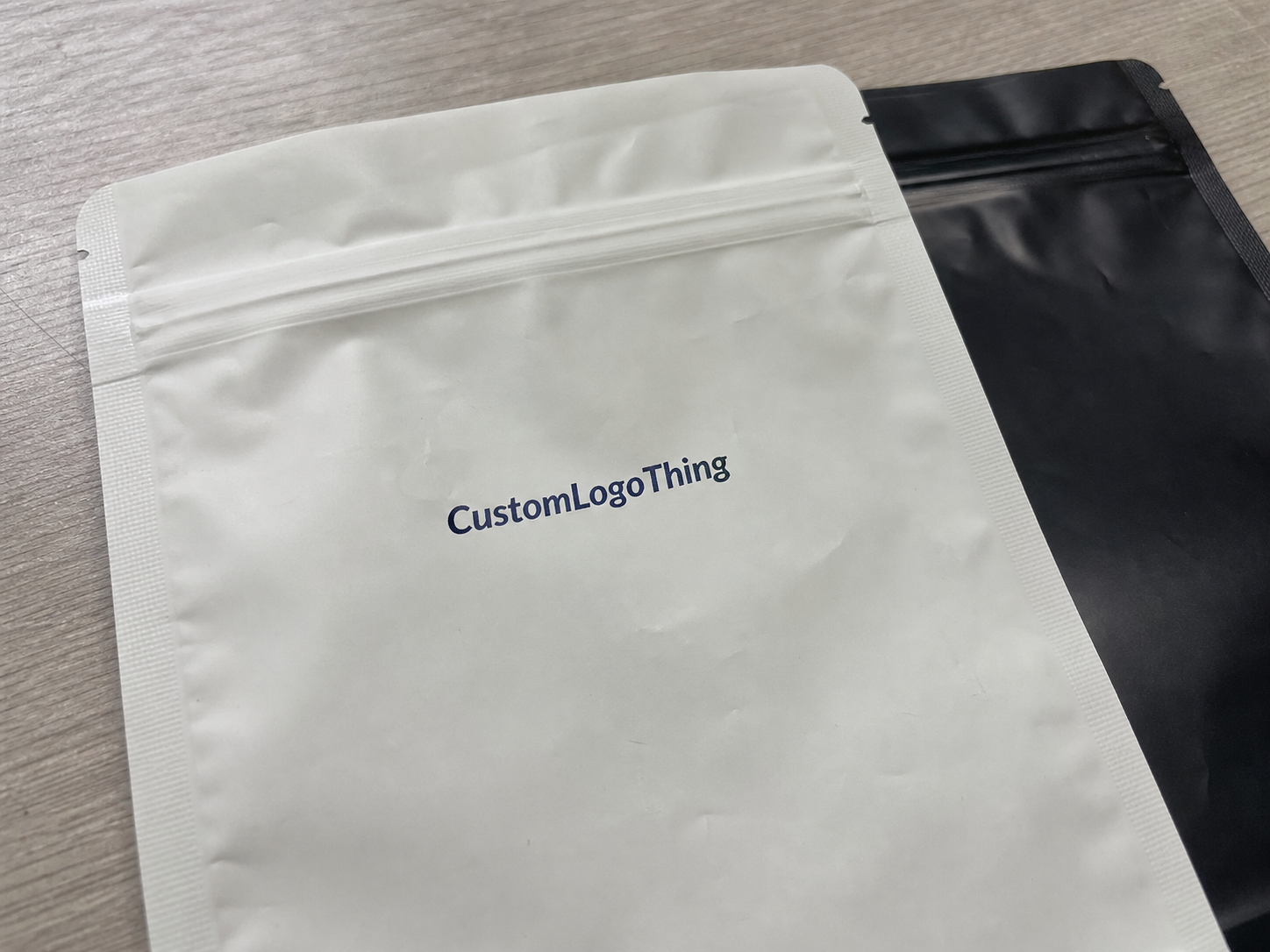
Most zipper bags share the same structure: a film body, a seal area, a zipper closure, and a printable surface. The details change by application. Some bags are clear so the product is visible. Others are matte, frosted, metallic, or fully opaque. The print may cover one side or both sides, and the area near the zipper or heat seal is usually kept clear so the closure still performs as intended.
When buyers ask for printed ziplock Bags with Logo, the print method becomes one of the biggest decisions. Flexographic printing is a common choice for medium to larger runs because it balances cost and repeatability well once the setup is approved. Rotogravure is used when volumes are high and the graphic demands are strict. Digital printing is useful for pilots, short runs, and designs that may change often, though the unit cost usually stays higher as volume rises.
| Print method | Best fit | Typical MOQ range | Strengths | Tradeoffs |
|---|---|---|---|---|
| Digital print | Short runs, pilots, frequent artwork updates | 250 to 5,000 units | Fast setup, flexible artwork changes, useful for testing the market | Higher unit cost, less efficient at larger volumes |
| Flexographic print | Retail programs and recurring replenishment | 5,000 to 50,000+ units | Stable repeatability, efficient on longer runs, good cost balance | Plate or setup cost, more planning before production |
| Rotogravure print | High-volume programs with demanding graphics | 50,000+ units | Sharp image quality, strong solids, consistent output over long runs | Highest setup investment, less attractive for smaller orders |
Artwork preparation is where quality often gets won or lost. Logos need to be supplied cleanly, usually as vector art when possible, so edges stay crisp at print scale. Fine text should be checked carefully because small type can close up on flexible film, especially if the surface is glossy or the contrast is weak. Registration also matters. A full-color design that looks fine on a monitor can drift once it is stretched across a bag and run through production.
The smartest artwork files are built with bleed, safe zones, and clear placement notes. That is especially true for bags with a zipper line or a hang hole, since the layout needs to avoid the areas where sealing or punching will affect the final package.
Key material and design factors to compare before you order
Material choice starts with the film itself. Thickness is usually described in mils, and the right range depends on what the bag will carry. A thinner film can work well for lightweight samples, accessories, and cosmetics. A heavier film, often in the 3 mil to 5 mil range depending on the application, usually gives better puncture resistance and a more structured feel. If the product has corners, weight, or enough rigidity to press against the bag, thickness becomes more than a cosmetic decision.
The zipper deserves the same attention. Some closures are designed for easy open and close use. Others are built to hold a firmer seal through repeated handling. If the package will be accessed many times, the zipper profile should feel smooth and predictable in the hand. If the bag needs visible tamper awareness, a tear notch or tear strip may be a better fit than a simple reusable closure alone.
Product behavior should drive the spec. A dry cosmetic puff, a packet of screws, a snack blend, and a powder refill are all handled differently by a bag. Odor retention, moisture sensitivity, sharp edges, and fill weight all affect the right construction. A package that looks acceptable while empty can perform poorly once it is filled if the seal area is too narrow or the film is too light for the contents.
Branding choices also need to stay practical. A simple one-color logo often looks cleaner than a crowded layout, and it may hold up better across reorders. Full-coverage artwork can look strong, but it leaves less room for registration error and makes color control more important. Many buyers get better long-term results from a restrained layout: logo, product name, a few functional callouts, and a QR code or web address if that information is actually useful.
- Use a clear front if the product itself should do most of the selling.
- Use opaque or frosted film if you want stronger shelf control or concealment.
- Use a window panel if you need both visibility and a more branded exterior.
- Use simple graphics if you expect frequent reorders and want color consistency.
Finish matters as well. Matte film cuts glare and can feel more restrained under bright lighting. Gloss film often looks sharper in photography and can make color appear more saturated. Neither one is inherently better. The right choice depends on whether the bag needs to read as premium, utility-driven, or retail-first.
Cost, pricing, and MOQ basics buyers should understand
Pricing usually comes down to five variables: bag size, film thickness, number of print colors, print method, and order quantity. Larger bags consume more material. Thicker film uses more resin. More colors increase print complexity. Special finishes and custom features add steps. Two bags that look similar in a mockup can land in very different price tiers once those variables are mapped out.
For printed ziplock Bags with Logo, setup costs matter a lot at lower volumes. On a short run, the fixed costs are spread across fewer pieces, so the unit price rises. On a larger run, the same setup is divided across more bags, which brings the per-unit price down. As a rough planning range, buyers may see something around $0.45-$1.10 per unit at 1,000 pieces, $0.18-$0.42 at 5,000 pieces, and $0.10-$0.28 at 10,000 pieces, depending on size, print coverage, and material. Those are working estimates, not a quote, but they help anchor a budget early.
MOQ is tied to real production economics, not just a supplier preference. Plates, cylinders, waste allowance, material yield, and press efficiency all affect the minimum quantity that makes sense. Digital print can support smaller orders because setup is lighter. Flexo and gravure usually become more attractive once the quantity grows enough to absorb the tooling cost.
Do not compare unit price by itself. Compare total landed cost. That includes freight, packing, proofing, plate or cylinder charges, and any art cleanup needed before approval. A lower quote can turn into a more expensive order if it requires extra proof rounds or if the shipping method pushes the landed cost up. For time-sensitive launches, freight choice can be just as important as the bag price.
| Order size | Typical unit price range | What usually drives cost | Best use case |
|---|---|---|---|
| 1,000 pieces | $0.45-$1.10 | Setup spread across fewer units | Pilot launch, sample kit, local test run |
| 5,000 pieces | $0.18-$0.42 | Moderate setup efficiency, more stable pricing | Regular retail or fulfillment use |
| 10,000 pieces | $0.10-$0.28 | Better material and press efficiency | Established SKU, repeat reorder, seasonal stock |
One useful habit is to build the package for the next version of the product, not only the current one. If the SKU name, flavor, size, or assortment may change later, a flexible layout saves money and time on the reorder. A design that can survive a few small adjustments is usually easier to manage than a hyper-specific bag that has to be rebuilt from scratch every season.
Process and timeline: from artwork approval to finished bags
The production path is simple on paper: quote, artwork review, proof, production, finishing, packing, and shipment. In practice, the slowest part is often the approval cycle. First orders of printed ziplock Bags with Logo usually spend the most time in prepress because that is where color, placement, and file issues get corrected before anything is committed to the press.
A standard lead time is often 12 to 20 business days after proof approval. Reorders can move faster if the material and artwork are already locked. Digital jobs sometimes ship sooner for short runs. Custom sizes, special finishes, and high-volume flexo or gravure work can extend the schedule. If the bag needs a custom zipper profile or nonstandard structure, add time at the front for sampling and confirmation.
The most common delay is artwork, not manufacturing. Files arrive with low-resolution logos, missing fonts, colors that do not reproduce cleanly, or text placed too close to a seal area. Color matching can also slow things down if the buyer wants a specific brand shade and the first proof needs correction. A sample request can help reduce uncertainty, but it also needs time, so it should be built into the launch calendar early.
A sensible production flow looks like this:
- Request a quote with the bag size, material, thickness, quantity, and print count.
- Submit final artwork in the correct format, with fonts outlined or embedded.
- Review the prepress proof for copy, color, and placement.
- Approve the proof after checking fit and closure behavior if a sample is available.
- Confirm packaging, palletization, and shipping requirements before production starts.
For distribution that includes vibration, compression, or long transit times, it can be useful to ask whether the finished package should be checked against relevant ISTA test methods. If the project includes paperboard inserts, cartons, or other paper components, packaging.org is a useful reference for broader packaging context. Neither one replaces supplier validation, but both help buyers ask better questions.
Common mistakes that hurt print quality or performance
Low-resolution art is still one of the fastest ways to weaken a printed package. A logo that looks fine on screen can turn soft or jagged on film if the source file is poor. Small type is another problem. Flexible packaging does not forgive tiny text, especially when the background is glossy or the contrast is weak. Crowded layouts create a third issue: too many messages fighting for the same visual space.
Another common mistake is choosing a bag because the mockup looks attractive, then discovering the real product is the wrong fit. Weight, corners, powder, oil, and moisture all change how a zipper bag behaves after fill. A pouch can look solid when it is empty and still fail in use because the zipper is inconsistent or the seal area is too narrow for the contents.
Buyers also underestimate the gap between low price and low risk. A cheap quote can be tempting, but if the zipper skips, the film punctures too easily, or the seal weakens after a few openings, the packaging creates returns and complaints later. The lowest number on the quote sheet is not always the least expensive choice once the bag is in the market.
One more issue shows up often in repeat orders: the original file set was never organized well. If the master artwork is buried in email threads or edited by several people over time, the package starts drifting. Color values change, copy moves, and the reorder no longer matches the original approval. That problem is avoidable, but only if the buyer treats the packaging file as a controlled asset.
Expert tips for better results and a smoother reorder
Test the bag with the real product before final approval. Fill height, settling, closure feel, and shelf posture matter more than a flat mockup. If the package will be opened repeatedly, open and close it several times with the actual contents inside. The difference between an empty bag and a filled one is often larger than people expect.
Keep the brand system stable. A reusable print layout with fixed logo placement, standard copy blocks, and defined color values makes reorders easier and reduces drift from one run to the next. That matters when several people touch the file over time. A disciplined master template is usually more valuable than a clever one-off layout.
Ask for a proof or sample that reflects the actual material and print method, not only a digital mockup. Screen images cannot show how matte film handles light, how opaque ink reads on clear film, or how the zipper feels in hand. Buyers who care about consistency usually want to see the package in a form that behaves like the final product, not a flat representation of it.
Plan for inventory turn, not just the first purchase. If the packaging will sit for months before use, the film, seal, and zipper should be suited to storage conditions. If the product is sensitive to humidity or odor, barrier performance matters. If the line is seasonal, keep the artwork flexible enough that the next reorder does not require a full redesign.
The strongest packaging decision usually balances shelf appeal, product protection, and easy reordering without forcing the team to redesign every time the SKU changes.
It also helps to think about the full handling path. How will the bag be filled, packed, shipped, displayed, and opened again by the customer? The answer often changes the specification more than the brand team expects. A package designed only for a mockup rarely holds up as well as one built around actual use.
Next steps for requesting a quote and choosing the right bag
The fastest way to get accurate pricing is to start with a short, concrete spec sheet. Include bag width, height, gusset if needed, film preference, thickness, print colors, zipper style, quantity, and the way the product will be used. Add any must-have features such as a matte finish, clear window, hang holes, tear notch, or space for ingredients and QR content. A complete brief usually saves more time than a long email chain.
Artwork should be sent in the right format, with clear notes on what cannot change. If the logo must stay a specific color, say so. If the bag needs to hold a particular fill weight or fit a retail fixture, include that too. The more concrete the input, the fewer assumptions the supplier has to make. Good suppliers can work from partial information, but better results come from a complete brief.
When you compare options, look at proofing details, lead time, production method, and the quality controls behind the quote. Ask whether the supplier checks seal integrity, print alignment, zipper function, and bag dimensions before shipment. For printed ziplock Bags with Logo, the right choice is usually the one that matches the product, the shelf, and the reorder schedule without adding hidden work later.
A simple final checklist helps: confirm size, confirm thickness, check zipper style, lock artwork, verify quantity, and decide whether the bag needs clarity, a matte finish, or more structure. If those basics are settled before quoting, the rest of the process is usually much more predictable.
FAQ
What are printed ziplock bags with logo best used for?
They work well for retail products, samples, accessories, parts, food items, and anything that benefits from resealability and branding. They also help improve shelf presentation while keeping contents protected from dust, moisture, and handling.
How do I choose the right size and thickness for custom zipper bags?
Measure the filled product first, then add room for closure, product movement, and easy opening. Choose thickness based on weight, sharp edges, and how much puncture resistance or structure the bag needs.
What affects the price of printed zipper bags the most?
Size, film gauge, print colors, print method, and order quantity are usually the biggest cost drivers. Special finishes, custom features, and lower quantities can also raise the unit price.
How long does production usually take for custom printed zipper bags?
Lead time depends on artwork readiness, print complexity, material availability, and whether the order is a first run or reorder. Approvals, sample requests, and corrections can extend the timeline, so final art should be ready early.
Can I order a small run of printed ziplock bags with logo?
Yes, but small runs usually cost more per bag because setup costs are spread across fewer units. Digital print or simplified designs may be better for lower quantities, depending on the supplier and specs.
For buyers comparing options, the best results usually come from matching the bag construction to the product first, then tuning the print and finish around that choice. That is the most reliable way to buy printed ziplock Bags with Logo without paying for extras you do not need.