Place a Candle Brand Frosted Plastic Bags Sample Order
Candle packaging is evaluated before the fragrance has any chance to do its work. The customer sees the jar shape, the label, the lid, the finish, the weight in the hand, and the way the package sits on a counter. A candle brand Frosted Plastic Bags sample order gives you one physical checkpoint before you commit cash, storage space, and brand trust to a full production run.
Frosted plastic can be a smart middle ground for candle brands that need a softer, more finished presentation without moving into rigid boxes or heavy paperboard cartons. It gives enough opacity to quiet visual clutter, enough flexibility for different product formats, and enough surface area for a logo or short brand mark. The risk is that small specification choices matter more than they appear to on a screen.
Why a Candle Brand Frosted Plastic Bags Sample Order Reduces Packaging Risk
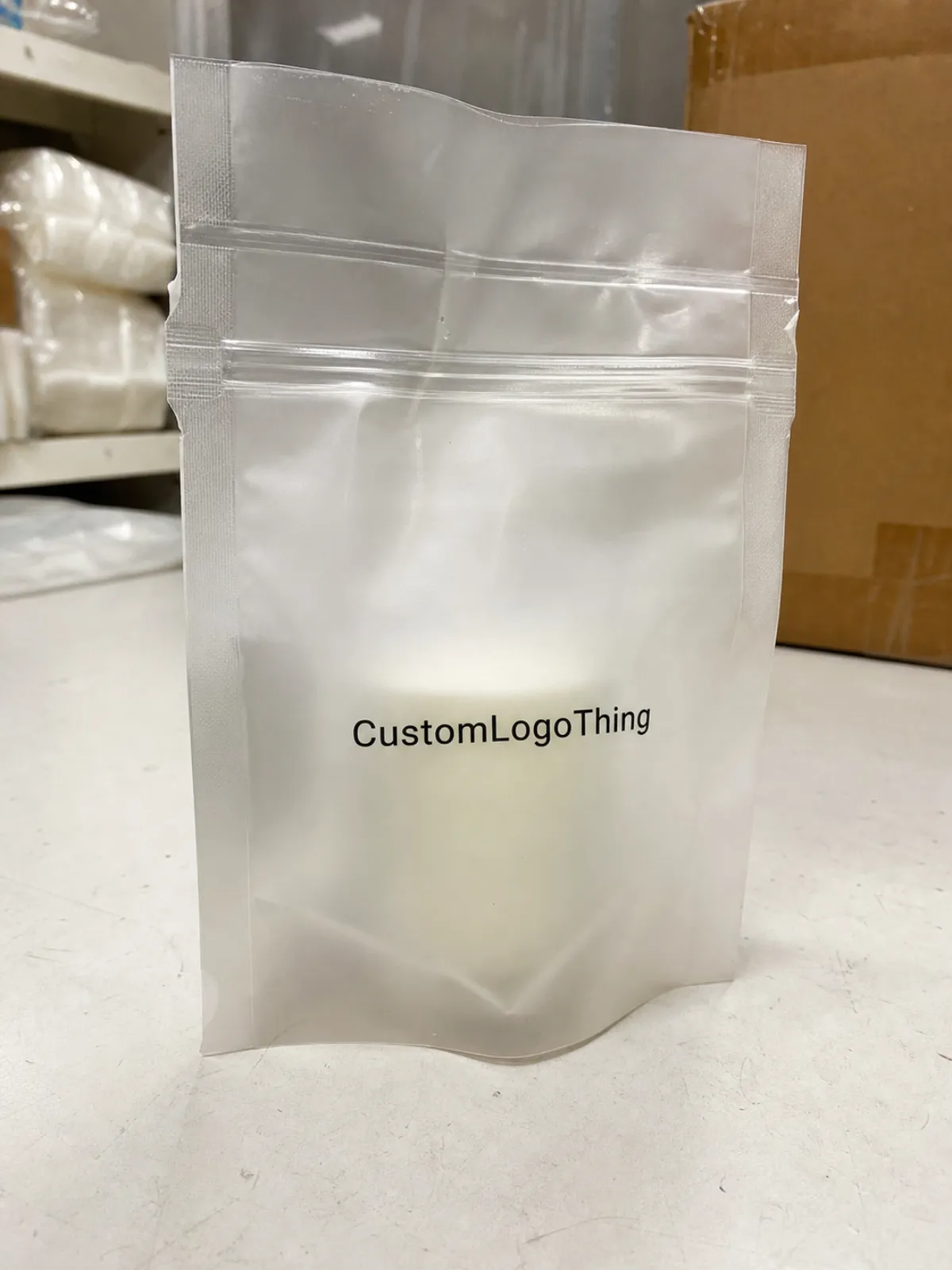
A frosted bag can make a small candle line feel retail-ready without absorbing the cost, freight volume, and storage demands of rigid gift packaging. That matters for boutique launches, spa retail, seasonal collections, wedding favors, wholesale testers, subscription inserts, and market-day packaging where the presentation needs to feel deliberate but the budget still has limits.
The sample is not a souvenir. It is a purchasing control tool. With one real bag in hand, you can verify opacity, hand-feel, logo contrast, handle strength, seam quality, fit, shelf presence, and the way the packed candle behaves when carried. A digital proof can show the artwork position and approximate scale. It cannot tell you whether a 9 oz glass jar pulls the handle out of shape, whether the bottom gusset stands cleanly, or whether a pale beige logo fades into the frosted surface under warm retail lighting.
Ordering 5,000 bags from a digital mockup alone is a gamble. Testing one sample with your actual jar, tin, wax melt pack, or gift set is a measurement exercise. Those are very different buying decisions.
Frosted plastic bags sit between Clear Poly Bags and more substantial cartons. They look more refined than transparent packaging because they soften barcodes, label edges, tissue folds, and insert cards. They are usually lighter and more moisture-resistant than paper. For many candle brands, that middle position is the advantage: enough branding to lift perceived value, without the storage burden of bulky packaging or the freight cost of heavier structures.
Packaging buyer rule: if the bag must carry glass, protect a label, and appear in product photography, approve it with the real candle inside. Not empty. Not guessed.
A sample also protects visual consistency. If your candle uses amber glass, a cream label, a black lid, and a gold logo, the frosted film changes all four. The material may cool the label tone, blur the jar edge, dull metallic ink, or make a dark lid look heavier than expected. The only honest test is physical.
Frosted Plastic Bag Details Candle Buyers Should Inspect First
Frosted plastic bags are translucent plastic packages with a soft matte or hazed surface. They diffuse the product view rather than fully hiding it or fully exposing it. A customer can still read the broad shape and tone of what is inside, but not every competing edge, label line, or packing insert.
Common candle uses include boutique jars, travel tins, votive sets, wax melts, discovery kits, wedding favors, holiday gift bundles, and retail checkout packaging. For smaller candle brands, the format can create a more polished unboxing experience without requiring an engineered box, printed insert, or molded internal support.
The effect works especially well with amber jars, matte black tins, white labels, kraft labels, and minimal scent collections. Clear bags often create glare and make labels look busier than they are. Frosted material reduces that noise. It can make a $12 travel tin feel more giftable and a $38 candle look cleaner on a boutique counter.
There are practical advantages too: low packed weight, flat storage, moisture resistance, flexible sizing, and faster fulfillment than complex rigid gift packaging. A carton may require dielines, inserts, board grades, print coatings, and crush testing. A frosted bag still needs real specs, but the path is usually simpler.
Not every candle belongs in one. Very heavy glass jars, multi-jar sets, fragile ceramic vessels, or luxury programs built around structure may need paperboard, corrugate, molded pulp, or a rigid box. Full product visibility may also matter in mass retail, especially if wax color, label design, fill level, or scent family drives purchase decisions.
The sample should answer one blunt question: does the frosted effect support the price point, or does it make the product feel generic? That answer changes by candle format, not by trend. A frosted bag may elevate a discovery kit and under-serve a large ceramic vessel. It may be perfect for a wholesale sampler and too light for a premium holiday set.
Material, Thickness, Handle, and Print Specifications to Confirm
Before requesting pricing, prepare the core specifications: bag width, bag height, gusset depth, plastic type, thickness, handle style, logo size, print color count, finish, and quantity. Missing one detail can change the quote by more than a cosmetic upgrade would. It can also produce a sample that looks fine empty but fails once the candle is inside.
Thickness needs plain language. Lightweight wax melts may work in a thinner frosted LDPE. Glass candle jars usually need a stronger gauge, stable seams, and sometimes reinforced handles. A 2 oz sample tin and a 14 oz glass jar do not belong in the same bag just because both are candles.
Common materials include frosted LDPE, HDPE, CPE-style soft-touch plastic, and recycled-content options where available. LDPE generally feels softer and more flexible. HDPE is often crisper and can feel a little more structured. CPE-style films can give a smoother, soft-touch impression, though cost and minimums may be higher. Recycled-content films may carry slight differences in haze, stiffness, tint, or surface consistency, so buyers should approve the physical material before building a launch around it. For broader sustainability context, the EPA materials management hierarchy is a useful reference point.
Handle choice changes both function and presentation. Die-cut handles look clean and flat. Patch-reinforced handles add strength around the hand opening. Soft loop handles feel more retail-oriented and can be more comfortable for heavier products. Drawstring closures can suit discovery kits or favor sets. No-handle flat pouches may work for wax melt cards, small samples, or lightweight promotional packs.
Print method matters. Screen printing is common for bold spot-color logos and shorter custom runs. Flexographic printing can suit larger quantities and repeat production. Metallic inks, dense white underprints, or high-contrast marks can improve brand recognition, but they may add setup cost or require tighter proofing. Very fine lines, small serif type, gradients, and low-contrast colors need extra caution because frosted film softens edges.
Logo contrast deserves more attention than most buyers give it. Cream, beige, pale gray, and low-saturation gold can lose readability, especially under warm light. Black, deep brown, charcoal, forest green, burgundy, and dense white usually hold better, depending on the product inside the bag. If your identity depends on quiet luxury, the solution may be a slightly larger mark, stronger ink density, or a different placement rather than a louder color.
| Specification | Typical Choice | Buyer Risk to Check |
|---|---|---|
| Material | Frosted LDPE, HDPE, or CPE-style film | Haze, stiffness, odor, tint, and recyclability claims |
| Thickness | Matched to product weight and bag size | Handle stretch, seam stress, and bottom sag |
| Handle | Die-cut, reinforced die-cut, loop, drawstring | Comfort and failure risk with glass jars |
| Printing | Screen print or flexographic print | Logo sharpness, ink coverage, and color shift |
Cost, Pricing, MOQ, and Unit Cost Variables for Custom Frosted Bags
Custom frosted plastic bag pricing is driven by size, thickness, material, print colors, order quantity, handle structure, artwork complexity, packing requirements, and shipping destination. A small flat pouch with one-color printing is not priced like a gusseted handled bag meant to carry a heavy glass candle.
Sample orders may carry separate charges. A plain stock sample can be inexpensive. A similar finished reference sample may only require the sample cost and courier fee. A custom printed pre-production sample can include setup, screen or plate preparation, material allocation, artwork proofing, and production labor. That single sample may cost far more per piece than the eventual production bags, but it can prevent a much larger mistake.
MOQ depends on how custom the order is. Stock-style bags with simple logo printing may allow lower quantities. Fully custom dimensions, specialty films, soft-touch materials, metallic ink, unusual handle construction, or nonstandard closures usually require higher minimums because setup time and material preparation must be spread across more pieces.
The unit-cost tradeoff is simple on paper and more difficult in practice. A small run protects cash flow and reduces storage pressure. A larger run lowers the per-bag cost, but it locks in the specification. As a broad planning range, a simple printed frosted bag might land around $0.18-$0.35 per unit at higher quantities, while smaller batches, heavier films, reinforced handles, or more complex printing can move materially higher. Freight can also change the final landed cost, especially for bulky cartons of lightweight bags where dimensional weight becomes part of the equation.
Ask for quote tiers if your forecast supports it. Compare 1,000, 3,000, 5,000, and 10,000 pieces rather than pricing only the smallest quantity. The difference between 3,000 and 5,000 bags can be meaningful because the same setup work is divided across more units. If you sell through wholesale, also compare the bag quantity against realistic reorder timing. A low unit price is not useful if half the bags sit in storage after a seasonal line changes.
For a useful quote, send dimensions, candle weight, desired finish, quantity target, logo file, print colors, delivery ZIP or postal code, deadline, and whether the sample must be printed. Custom Logo Things can price the practical options first, then show upgrades only when they affect shelf impact, durability, or brand consistency.
A candle brand frosted plastic bags sample order should be tied to a real purchasing decision: stock material review, printed test, or production-ready approval. Otherwise, the sample becomes another loose reference on a desk rather than evidence for the order.
Process and Timeline From Sample Request to Production Approval
The process is usually linear: inquiry, specification review, artwork check, quote, sample approval, production proof, manufacturing, quality inspection, packing, and delivery. Skipping steps rarely saves time. It usually moves risk later, where corrections cost more and schedules are tighter.
Buyers should separate three approval tools. A stock material sample confirms feel, opacity, stiffness, and basic film behavior. A digital proof shows logo scale, print position, and layout. A printed pre-production sample confirms the combined result: material, dimensions, print, handle, finish, and packed presentation.
Lead time depends on the sample type. A blank or similar sample is usually faster than a custom printed sample. Full production begins after proof and sample approval, not after the first inquiry. Complete specs, vector artwork, confirmed shipping details, and quick approvals reduce delays more reliably than a vague rush request.
Approve size with the actual candle product in hand before print approval. Width alone can mislead buyers because jar diameter, lid height, gusset depth, tissue paper, care cards, matches, sample vials, and hang tags all affect fit. A bag that looks generous flat may feel tight once the gusset opens and the candle weight pulls downward. A bag that looks perfectly proportioned empty may bulge once the candle is loaded.
Artwork proofing should include logo scale, centered placement, safe margins from seams and handles, Pantone references where needed, and readability against frosted plastic. If the logo sits too close to a die-cut handle, the top area can look crowded. If it sits too low, the candle may distort the print when loaded. If the mark is too small, the frosted surface may make it feel weaker than it looked on the PDF.
Brands selling through boutiques or wholesale channels should connect the bag decision to the wider retail program. The Wholesale Programs page is a practical place to think through repeat orders, quantity tiers, and packaging consistency across SKUs. Packaging that works for one scent should still make sense when the line expands or when a retailer orders mixed assortments.
Quality Checks That Matter Before You Approve a Full Run
Do not judge the sample only on a desk. Load it, carry it, display it, photograph it, and compare it under store-style lighting. Candle packaging has to perform with weight inside and visual pressure outside.
Start with fit. The candle should slide in without scraping the label, but it should not swim around inside the bag. Check seam strength, bottom gusset stability, handle comfort, opacity, logo alignment, ink coverage, surface scratches, odor, and whether the matte surface marks too easily. Rub the printed area lightly with a clean cloth and with dry fingers. Look for scuffing, ink transfer, or dull patches.
Candle-specific risks are unusually physical. Glass weight stresses handles. Loose lids can shift. Label varnish can scuff. Fragrance oil residue can transfer. Tissue paper may wrinkle behind frosted material and create shadows that look messy in photos. A care card with sharp corners may press into the film. None of those issues appear in a flat artwork proof.
Use the heaviest intended configuration. If the final package may include a 12 oz jar, tissue, care card, branded matchbox, and wax melt sample, test that exact set. Carry it by the handle for several minutes. Set it down on a counter. Lift it again. Hang it from a hook if that is how it may be displayed at retail. Small failures show up quickly when the package is treated like a real product rather than a sample to be admired.
Photography matters because many candle brands sell through ecommerce listings, wholesale catalogs, Instagram, and retailer line sheets. Frosted plastic can photograph beautifully, but glare, wrinkles, and low-contrast logos can weaken the brand impression. Take photos under daylight, warm retail light, and flash. Compare the results with the candle outside the bag and with other packaging formats you already use.
Document every approved detail in writing: dimensions, material, thickness, handle, print color, logo size, placement, quantity, packing method, and approved sample reference. If a future reorder must match the first production run, memory is not a specification. Keep the approved sample clean and labeled, then compare it against production bags before distribution.
If your team uses freight simulation or drop testing for broader packaging systems, standards from ISTA can help frame transport risk. A frosted retail bag is not a shipping carton, but it still interacts with the full packaging chain. If the candle ships inside an outer mailer or carton, test how the bag looks after that journey too.
How Custom Logo Things Supports Frosted Bag Sampling
Custom Logo Things is useful for candle brands that want packaging decisions based on samples, specs, and cost evidence rather than generic marketplace photos. Frosted bags can look similar online, yet differ sharply in thickness, haze, handle strength, print quality, odor, surface feel, and repeatability.
The value is practical: material recommendations, sizing guidance, logo placement review, print method selection, and quote comparisons across quantity tiers. Candle packaging has to balance atmosphere with function. The same bag must look giftable, protect the product, carry real weight, and reinforce brand identity without overcomplicating fulfillment.
A custom packaging manufacturer can also make repeat orders easier. Generic listings may change material, dimensions, or stock availability with little warning. Controlled specs reduce that problem. If your brand expands from three scents to twelve, packaging consistency becomes operational, not decorative. Retailers notice when one scent arrives in a slightly different bag, and customers notice when a gift set looks less finished than the product photography promised.
Proofing before production, sample review, MOQ guidance, and lead-time communication all reduce uncertainty before the order is placed. The goal is not to oversell frosted plastic bags. Sometimes a paperboard box, kraft bag, molded insert, or rigid set will be the better format. The point is to confirm the right structure for the candle line, launch size, and retail channel.
For examples of how packaging choices support different product categories, review the Custom Logo Things Case Studies. Patterns often repeat across categories: buyers want premium presentation, but they also need repeatable specs, reliable timing, and pricing that still works after the first order.
A sample gives that decision a physical basis. Not a mood board. Not a guess.
What to Prepare Before You Request a Quote or Sample
Measure the candle product first. Record jar diameter, jar height, lid height, packed weight, and any extras such as tissue, inserts, matches, scent cards, wick trimmers, or promotional samples. Then choose a preferred bag style: flat pouch, gusseted bag, die-cut handle, reinforced handle, loop handle, or drawstring format.
If you are unsure which size fits, send product photos or dimensions. Width alone can be misleading because round jars behave differently from tins, square boxes, and wax melt clamshells. A gusset that is too shallow can make the bag lean. A bag that is too wide can make a premium candle look under-scaled. A handle placed too low can crowd the logo or bend around the lid.
Prepare artwork in AI, EPS, or vector PDF if possible. If you only have a high-resolution PNG or JPG, Custom Logo Things can review whether cleanup or redraw is needed. Thin lines, gradients, tiny text, and low-contrast colors may need adjustment for frosted plastic. If you use metallic color in your brand system, ask whether ink, foil-like effect, or a flat color match is the realistic production route for the chosen bag.
Decide which sample you actually need. A blank material sample answers questions about feel and opacity. A similar finished sample helps you judge construction. A custom printed pre-production sample gives the strongest approval evidence before bulk production, especially for retail launches, wholesale presentations, and seasonal programs with fixed deadlines.
Compare two options if the decision feels close: one cost-efficient specification and one more premium specification. Test a standard die-cut handle against a reinforced handle, or a one-color logo against a two-color logo with stronger contrast. Real tradeoffs beat vague preferences. You may find that the less expensive bag is perfectly adequate for wax melts, while the heavier handled option is necessary for glass jars.
For common production and ordering questions, the FAQ page can help clarify file formats, ordering steps, and general custom packaging expectations. To move forward with a candle brand frosted plastic bags sample order, prepare your candle size, packed weight, logo file, quantity target, preferred delivery date, and any retail requirements that affect the finished presentation.
FAQ
What is included in a candle brand frosted plastic bags sample order?
A sample order may include a blank frosted material sample, a similar finished reference bag, or a custom printed pre-production sample depending on what you need to approve. The most useful sample confirms size, thickness, opacity, handle strength, print contrast, and how the candle looks when packed.
Can I order frosted plastic candle bags before committing to the full MOQ?
Yes. Sample options are commonly used before bulk production, but cost and availability depend on whether the sample is stock, similar, or fully custom printed. A printed sample may require setup work, so it can cost more per piece than production bags.
What information do I need for a custom frosted plastic bag quote?
Prepare bag dimensions, candle weight, quantity, material preference, thickness target, handle style, print colors, logo file, delivery location, and deadline. If dimensions are uncertain, send candle measurements so the correct gusset and fit can be recommended.
How long does a frosted plastic bag sample and production order take?
Lead time depends on the sample type, artwork readiness, material availability, print method, and order quantity. Blank or reference samples are usually faster than custom printed samples, while full production starts after proof and sample approval.
Are frosted plastic bags strong enough for glass candle jars?
They can be, if the bag thickness, gusset, seams, and handle construction are matched to the candle weight. For glass jars or multi-candle sets, test the heaviest packed configuration before approving bulk production.

