Plan Cosmetics Die Cut Plastic Bags Lead Time Right
Why Cosmetics Die Cut Plastic Bags Lead Time Catches Buyers Off Guard
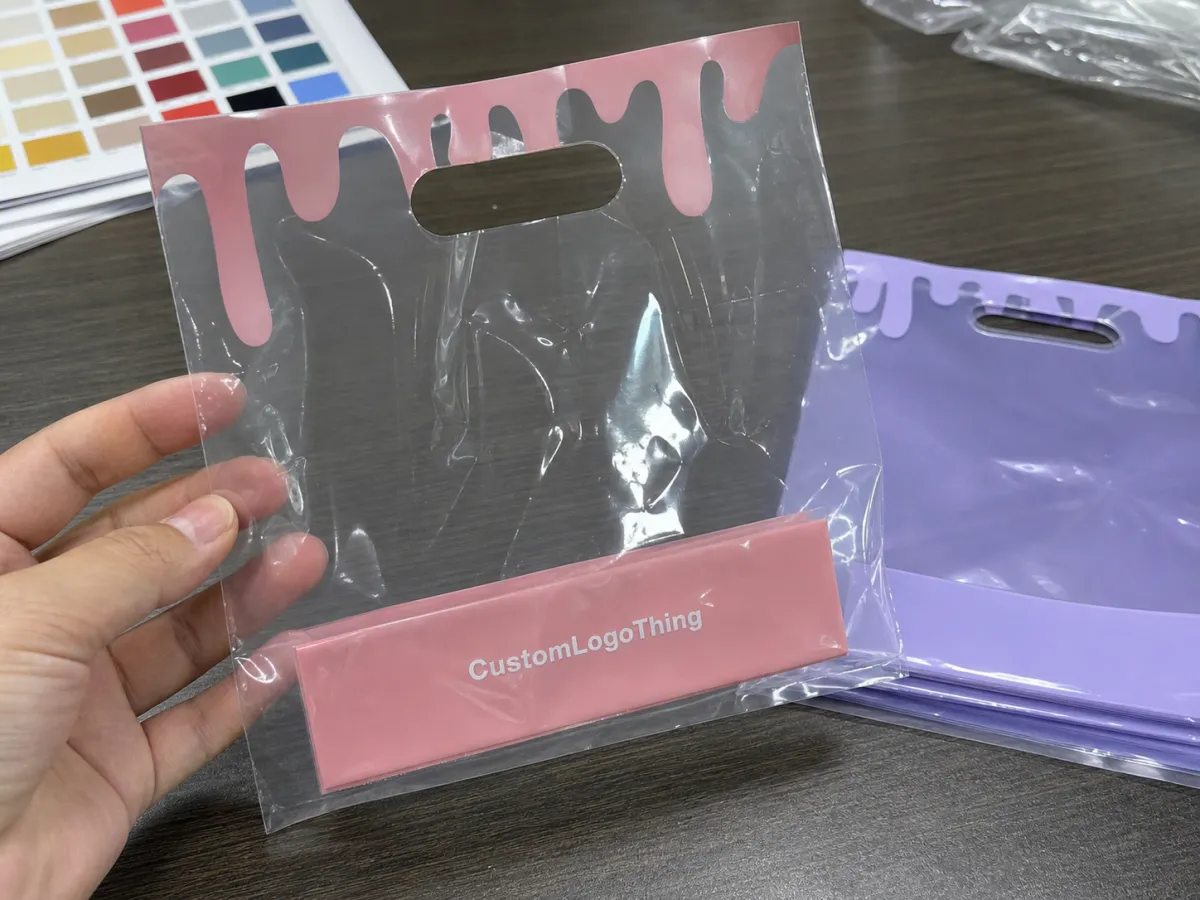
The jars are filled, the tubes are labeled, the sample cards are approved, and then someone asks whether the retail carry bag is ready. That is usually the moment cosmetics die cut plastic Bags Lead Time becomes a real scheduling problem, because the order is not measured only by the hours a bag spends on a press or converting line.
A custom plastic bag order moves through quoting, spec review, artwork cleanup, digital proofing, film selection, setup preparation, printing, cutting, handle punching, packing, and freight. If one of those steps pauses for two business days, the whole order pauses with it. Many delays do not come from the machine floor at all; they come from missing dimensions, unclear artwork, late color decisions, or proofs sitting in an inbox while a launch date keeps moving closer.
Cosmetic packaging carries more pressure than a basic checkout bag. A bag used for lip gloss, skincare jars, fragrance samples, boxed palettes, or gift-with-purchase sets has to look clean at the counter, carry weight without tearing at the handle, and keep the brand color reasonably close on flexible film. A plain merchandise bag can be forgiving. A bag holding a $48 serum set cannot look thin, cloudy, stretched, or carelessly printed.
A die cut plastic bag is a flexible retail or promotional bag with the handle cut directly into the top fold or body of the bag. Common material choices include LDPE for a softer hand, HDPE for a crisper and often more economical structure, co-extruded film for a balance of opacity and strength, and recycled-content or recyclable film options where the application, local collection stream, and claim language support them.
Lead time is easier to control when the bag is treated as part of the product launch, not as the final accessory ordered after every other component is finished.
The goal is not to rush blindly. The better approach is to understand which decisions shorten the schedule and which late changes quietly add days. Size, film type, handle style, print colors, proof approval, carton destination, and freight method all affect the true in-hands date.
How Die Cut Cosmetic Bags Are Made From Film to Finished Carton
Most Custom Die Cut cosmetic bags begin with resin that is extruded into plastic film. The film is wound into rolls, conditioned for handling, printed, allowed to set or cure as needed, and then moved into converting. During converting, the web is heat sealed, cut, handle-punched, stacked, counted, and packed into cartons. That sequence sounds tidy on paper, but each step has its own material limits, setup needs, and scheduling window.
LDPE has a softer, smoother feel that often suits beauty counters, launch kits, boutique retail, and higher-touch promotional packaging. HDPE has a sharper, crinklier feel and can deliver useful strength at a thinner gauge. Co-extruded film can combine layers to improve opacity, stiffness, print surface, or tear resistance. Recycled-content film may be available, but the appearance, minimum order quantity, documentation, and timing should be confirmed before a buyer builds a launch calendar around it.
Thickness is usually discussed in mil or micron, depending on the supplier. For cosmetic retail bags, a practical range might sit around 2.0 to 4.0 mil for many LDPE-style applications, though small sample bags may run lighter and heavier gift sets may need more body. Gauge should not be chosen in isolation. Width, height, handle shape, film type, side seal strength, and filled weight all matter. A bag carrying two boxed skincare items and a glass jar behaves differently than a bag carrying three flat sachet samples.
Printing adds another layer of timing. Flexographic printing is common for larger custom plastic bag runs and spot-color logo work. A one-color logo on white or frosted film is usually simpler than full flood coverage, metallic effects, tight multi-color registration, or small reverse type. Pantone references help, but ink on plastic film will not always match ink on paperboard, labels, folding cartons, or a screen. Film color, opacity, surface energy, and ink coverage can all shift the final impression.
The die-cut handle deserves the same attention as the artwork. Standard handle shapes usually move faster because the equipment setup is familiar. A custom handle shape, unusually tall lip, reinforced patch, or nonstandard proportion may require extra tooling review or machine setup. Those choices can be the right ones for a heavier retail set, but they should be discussed before artwork is approved.
Cosmetics die cut plastic Bags Lead Time is tied to every one of these choices. A buyer might approve the quote quickly but wait four days to confirm film opacity. Film may be available, yet proofing cannot move because the logo file is a low-resolution PNG pulled from a website. The converting run itself may be straightforward once everything is locked; the order only moves as fast as the slowest unresolved detail.
Production Timeline: What Usually Happens Before Bags Ship
A clean production timeline starts before the order is entered. The buyer requests a quote, the supplier reviews the specs, artwork is prepared, a digital proof is issued, and sometimes a physical sample, ink drawdown, or pre-production proof is needed. After approval, the order moves into scheduling, printing, converting, quality checks, carton packing, and shipping.
Quoting gets faster when the buyer provides the basics in one pass: bag width, bag height, film type or desired feel, thickness target, handle style, print colors, quantity, ship-to ZIP code, and what the bag will hold. “Small cosmetic bag with logo” is not enough. It could mean a 6 x 9 inch sample bag for trial sachets or a 12 x 15 inch retail carry bag for boxed sets. Those are different projects with different film needs, costs, and carton counts.
Artwork is often the most controllable part of the schedule. Vector logo files such as AI, EPS, or production-ready PDF are preferred because they scale cleanly. Pantone color references help when brand color matters. Gradients, photographic images, hairline rules, tiny icons, and ingredient-style copy may need adjustment because flexible film can stretch slightly and print differently than rigid packaging.
Proof approval should be treated as a production gate. The proof should show layout, approximate print placement, color callouts, bag dimensions, handle area, and any required warning or recycling language. Production generally should not begin until the buyer signs off. A fast approval can protect several days. A proof routed through five internal reviewers can burn a week before anyone notices the order has not started.
Production queue realities are not always visible from the buyer side. Promotional seasons, holiday kits, retail resets, material availability, press schedules, print complexity, and freight distance all affect the calendar. A repeat order with approved artwork may move in a much shorter window than a first-time custom order with special film, new graphics, and a compliance review.
For planning, think in business days rather than calendar days. A common custom run might need 1 to 3 business days for quote and spec review, 2 to 5 business days for artwork cleanup and proofing, and 10 to 20 business days for production depending on quantity, print, material, and queue. Transit can add 1 to 7 business days inside the United States, depending on carton count, destination, and service level. These ranges are not guarantees, but they are realistic enough to prevent a last-minute scramble.
| Stage | Typical Buyer Impact | Common Time Range |
|---|---|---|
| Quote and spec review | Faster with size, gauge, quantity, colors, use case, and ship-to ZIP code | 1-3 business days |
| Artwork and proofing | Faster with vector art, Pantone references, and one decision-maker | 2-5 business days |
| Production | Affected by film, print coverage, quantity, setup, and queue | 10-20 business days |
| Freight | Depends on carton weight, destination, receiving rules, and service level | 1-7 business days |
Build a buffer before launches, trade shows, influencer mailers, holiday kits, and retail resets. The bag is often ordered late, but it is one of the first things customers see. That makes lead time a brand issue as much as a purchasing issue.
Cost, MOQ, and Quote Details That Affect Your Bag Order
Pricing for Custom Die Cut plastic bags is usually built from film weight, bag dimensions, thickness, print coverage, number of ink colors, quantity, setup requirements, packing method, and freight. A small dimensional change can matter. Adding 2 inches to the height increases film use, carton weight, and sometimes the gauge needed to keep the bag from feeling weak.
Minimum order quantity, or MOQ, exists because presses and converting equipment need setup time, material, ink, and waste allowance before usable finished bags are produced. The first impressions, seals, and cuts are part of dialing in the job. That setup cost has to be spread across the run. For many custom printed plastic bags, buyers may see minimums from a few thousand pieces upward, with the exact number depending on size, print method, material, and supplier capacity.
Cost per bag can vary widely. A simple one-color logo bag in a standard size might price around $0.18 to $0.35 per unit at a 5,000-piece range, depending on film, dimensions, print area, and freight. A larger bag with heavier gauge, two to four print colors, stronger opacity, reinforced handling, or special packing can move much higher. Freight can also surprise buyers because plastic bags are light per piece but bulky once packed in cartons.
Size affects cost beyond width and height. A larger retail bag may need thicker film so the handle does not elongate under the weight of glass jars, boxed palettes, or bundled skincare sets. A wide bag may require different carton packing, which changes storage and shipping. If the bag will hold a 1.5 lb gift set, say that early. Saving pennies by guessing low on strength can lead to torn handles, repacking, complaints, or returns that cost far more than the film upgrade.
A one-color logo on standard white, clear, or frosted film is usually the economical route. Full-coverage artwork, heavy ink laydown, metallic effects, tight multi-color registration, and edge-to-edge graphics can look excellent, but they add setup, review, and production risk. For a first launch, a restrained design often protects both cost and timing while still giving the package a polished retail presence.
Quantity decisions should stay practical. Higher volume can lower the unit cost, but buying 25,000 bags may not make sense if branding, retail requirements, kit contents, or sustainability language could change soon. Ask for quantity breaks and compare total project cost against expected use, storage space, and reorder confidence.
- Gather before quoting: target quantity, bag size, film feel, thickness, print colors, artwork files, and required arrival date.
- Share product details: packed weight, number of items, glass or plastic containers, boxed sets, and sharp carton corners.
- Confirm requirements: store rules, state or local plastic bag restrictions, recycling preferences, and warning language.
- Ask about standards: packaging tests may reference groups such as ISTA, while paper-based inserts may involve FSC sourcing questions.
Rush choices tend to cost more. Expedited freight, special production handling, and extra artwork support may be available, but those charges are easier to avoid when the specs are clear at the quoting stage.
Key Factors That Can Shorten or Stretch Turnaround
The biggest schedule drivers are custom size, nonstandard film, high ink coverage, multi-color printing, color matching, reinforced handles, rush freight, and approved artwork availability. Some are worth the time. Others are avoidable if the delivery date is tight.
Standard dimensions usually move faster because they fit known production lanes. If the supplier already runs a common 9 x 12 inch or 12 x 15 inch die cut format, the quote, setup, and converting review can be more direct. An unusual tall-and-narrow bag may still be possible, but it can require more checks around handle placement, side seal strength, lip depth, and packing.
Artwork complexity matters more than many beauty teams expect. Clean vector logos, limited spot colors, and generous clear space tend to proof and print predictably. Photographic images, gradients, tiny type, fine rules, and heavy edge-to-edge coverage require more review. If the brand mark has thin strokes under 0.5 pt or reversed type below 6 pt, ask whether it will hold cleanly on the selected film.
Material availability can stretch cosmetics die cut plastic bags lead time. Standard clear, white, or frosted film is usually easier to source than a specific tint, unusual matte finish, high recycled-content blend, or film requiring compliance documentation. Recycled options are improving, but availability, appearance, and local recyclability claims need careful confirmation. The EPA recycling guidance is a useful starting point for general recycling language, though packaging claims should still be checked against the exact material and market.
Shipping choices affect the real in-hands date. A completed order sitting on a dock is not useful if cartons arrive after the influencer mailer packing day. Confirm whether the order is shipping to a fulfillment center, retail store, event venue, office, or contract packer. Liftgate needs, appointment delivery, limited receiving hours, and multi-carton handling can add friction after production is already complete.
Approval discipline may be the simplest way to save time. Assign one person to review proof details and collect internal comments before sending them back. Three rounds of “one more small change” can erase the benefit of a rush production request.
Common Mistakes That Delay Cosmetic Packaging Orders
Late artwork changes are the classic delay. A small logo move, copy edit, or color switch can restart proofing. If plates, screens, or setup files have already been prepared, the change may also create cost. Buyers often call it minor because the visual difference looks small on screen, but production has to treat the approved file as the source of truth.
Incomplete specs create the next delay. A quote request without dimensions, thickness, quantity, print colors, handle preference, or product weight forces extra back-and-forth before pricing can be accurate. “Similar to our last bag” helps only if the supplier has the old spec, the same film is available, and the artwork has not changed.
Another mistake is choosing only by appearance. A frosted bag with a delicate die-cut handle may look beautiful empty, then stretch or tear when loaded with two glass jars and a boxed palette. Test with real products. Add the actual tissue, insert card, sample sachets, and retail boxes if those will be used. Small corners and concentrated weight can stress a handle faster than a smooth product of the same weight.
Color matching on plastic film also needs respect. Ink can shift on clear, white, frosted, tinted, or recycled-content material. A Pantone callout is useful, but final appearance depends on opacity, ink coverage, film background, and lighting. If brand color is critical, ask whether a drawdown, physical proof, or prior print reference is possible. That may add time, but it can prevent disappointment on a full run.
Ordering too close to launch day is risky because production, approvals, and freight are connected. You may be able to compress one part of the schedule, but rarely all of it without added cost or quality risk. Count backward from the day the bags must be in hand, not from the day someone hopes production can start.
Regulatory and retail oversights can also slow an order. Depending on use and location, buyers may need to consider suffocation warnings, recycling marks, store requirements, or regional plastic bag rules. ASTM standards may come into play for certain plastic material tests or packaging evaluations, especially when larger retail programs require documentation. Avoid claims such as “recyclable” or “eco-friendly” unless the material, collection stream, and claim language support them.
Plan Specs, Artwork, and Delivery Dates Before the Rush
Start with the product, not the artwork. Confirm what the bag must hold, estimate the filled weight, choose a target size, decide how much opacity and stiffness you want, and then match the print approach to the budget and deadline. A good-looking logo cannot save a bag that is too small or too weak.
Create a simple spec sheet before requesting the final quote. It does not need to be elaborate. It should include bag width, height, lip or handle area if known, thickness target, film color, print colors, quantity, packing preference, ship-to location, and required arrival date. If you do not know the ideal gauge, provide product dimensions and weight so the supplier can recommend a practical starting point.
- Pack the real cosmetic items together and measure the filled footprint.
- Decide whether the bag is for retail checkout, gift-with-purchase, sampling, trade shows, or mailer kitting.
- Choose a film direction: soft LDPE feel, crisp HDPE feel, opaque co-extruded structure, or available recycled-content option.
- Prepare vector logo files, Pantone references, warning language, and recycling language before proofing.
- Ask what approval date protects the delivery date, including production time and transit time.
Testing with real products is especially useful for boxed skincare, glass cosmetic jars, fragrance samples, and multi-piece promotional sets. Fill the bag. Hold it by the handle for a minute. Walk with it. Set it down and pick it up again. That simple handling check can reveal whether the gauge, handle shape, or size needs adjustment before thousands of bags are produced.
Ask practical questions early: which specs are standard, which changes would reduce cost, which material options are available now, and which artwork choices add time. Also ask for the in-hands date, not just the production completion date. For a trade show, retail reset, or kitting appointment, cartons arriving two days late are still late.
The calmest projects usually have three things in place early: approved specs, clean artwork, and one person responsible for proof approval. Those three habits do more for lead time than most rush requests made after the schedule is already squeezed.
Plan the bag as part of the product experience. Once buyers understand the production path and the decisions that control it, they can make better choices about size, artwork, cost, and arrival date instead of treating the bag like a last-minute accessory.
FAQs About Custom Cosmetic Die Cut Bags
What is the typical lead time for custom cosmetics die cut plastic bags?
Lead time depends on artwork readiness, material availability, print complexity, quantity, production queue, and freight distance. A simple repeat order with approved artwork usually moves faster than a first-time custom order that needs spec decisions and proof revisions. Ask for both production time and transit time so you know the realistic in-hands date, not only the factory completion date.
How can I reduce cosmetics die cut bag turnaround without hurting quality?
Use a standard size, limit print colors, provide vector artwork, approve proofs quickly, and avoid changing copy or color after approval. Choose available film options rather than specialty materials if the delivery date is tight. Assign one person to review and approve the proof so internal feedback does not stretch across several days.
Do custom die cut plastic bags for cosmetics have minimum order quantities?
Yes. Most custom printed plastic bag orders have MOQs because film, printing, setup, and converting equipment are prepared for production runs rather than one-off pieces. The MOQ can vary based on bag size, print method, number of colors, material, and whether the order uses standard or specialty film. If the first order is for a launch or test program, ask for quantity breaks so you can compare total cost and unit cost.
What artwork files are best for printed cosmetics plastic bags?
Vector files such as AI, EPS, or production-ready PDF files are usually preferred for clean logos, sharp type, and reliable scaling. Pantone color references help when brand color matters, although final appearance can still vary by film color, opacity, and ink coverage. Avoid relying only on low-resolution PNG or JPG files, especially for fine type, small icons, or detailed cosmetic brand marks.
What bag specs should I confirm before asking for a quote?
Confirm bag width, height, film thickness, material preference, handle style, quantity, print colors, artwork status, packed product weight, and delivery location. Share the intended use, such as retail checkout, gift-with-purchase, trade show sampling, influencer mailers, or in-store promotional kits. If you are unsure about size or gauge, provide the dimensions and weight of the cosmetic products so the supplier can recommend a practical starting point.

