Candle Refill Plastic Bags Warning Label Checklist: What It Actually Covers
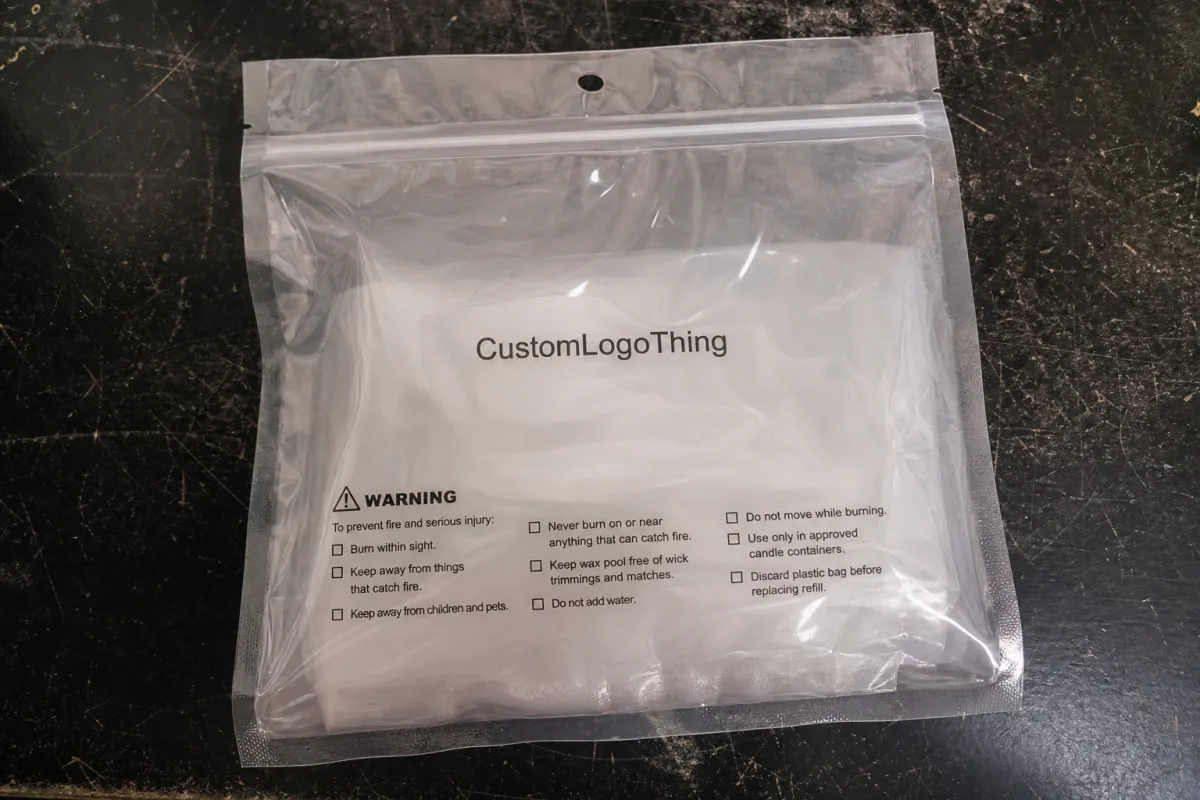
A candle refill pouch can look harmless on a packing table: a neat bag, a pleasant scent, a clean logo. But one missing suffocation statement, fragrance disclosure, heat-storage instruction, or lot code can turn that simple pouch into a complaint file, a retailer rejection, or a recall discussion. A candle Refill Plastic Bags warning label checklist is not paperwork for paperwork’s sake. It is a buyer’s risk-control document before money is spent on plates, labels, film, freight, and finished inventory.
Think of the checklist as a pre-order review tool. It should cover bag material, seal format, fill weight, child-safety concerns, suffocation language, wax temperature handling, scent and allergen communication, barcode placement, retail compliance, and the physical path a consumer takes to open and discard the bag. That sounds broad because refill packaging is broad. It is not just a plastic sleeve.
Candle refills are different from ordinary poly bags because they may hold wax pellets, beads, chips, blocks, molded inserts, fragrance oils, dyes, paper instructions, or small accessories. Oil can soften labels. Dye can stain panels. Wax dust can cling to static-prone film. A 2 mil LDPE bag that behaves perfectly around a cotton T-shirt may look tired after carrying 12 ounces of heavily scented wax chips in a warm delivery truck.
Food packaging teams usually obsess over seal strength, migration, shelf life, and scannability. Candle brands, especially smaller ones, sometimes treat refill bags as decorative sleeves. Honestly, I think that is the wrong mental model. A safer view is to treat candle refill packaging as consumer-facing chemical product packaging, even if the brand tone is cozy, handmade, or giftable.
The checklist does not replace legal counsel, regulatory review, or retailer-specific requirements. ASTM candle safety standards, marketplace rules, state plastic bag warning laws, and shipping expectations can overlap in awkward ways. What the candle Refill Plastic Bags warning label checklist does very well is force sharper questions before artwork approval: What material is being filled? What can leak, stain, melt, or be misunderstood? What must a consumer know before use?
How Warning Labels Work on Candle Refill Bags
A warning label has three jobs. It must be visible before use, durable enough to survive handling, and specific enough to tell consumers what not to do with the refill, the empty bag, and any included components. If a shopper has to rotate the pouch, flatten a gusset, or guess at half-hidden text, the package is making the wrong tradeoff.
For candle refill bags, warning content usually falls into several categories: suffocation risk for plastic bags, candle safety instructions, wax handling warnings, fragrance sensitivity notes, disposal guidance, batch or lot traceability, and manufacturer or distributor contact information. A small refill kit may also need caution language for children, pets, hot surfaces, melting equipment, and use only in compatible vessels.
Placement matters more than many buyers expect. The front panel should identify the product clearly: scent, refill type, net weight, and brand. The back panel is usually better for detailed warning language because it has more space and fewer design interruptions. Side seams, bottom gussets, and lower folds can work for lot codes only if they remain scannable and readable after filling. Critical warnings should not sit where heat seals, tear notches, zipper tracks, or hang holes can distort them.
Readability is a packaging spec, not a design opinion. Contrast, minimum type size, line spacing, and film opacity all affect whether the warning can be read by a real buyer under kitchen lighting. Black ink on white opaque film is forgiving. Charcoal ink on smoky translucent film can fail quickly, especially when pale wax chips or folded inserts sit behind it. Gloss film may look premium in a product photo, but glare can reduce legibility on curved or overfilled bags.
Direct print and adhesive labels create different risk profiles. Direct print gives a polished look and tends to resist curling or edge lift, provided the ink system and surface treatment suit the film. Pressure-sensitive labels can be practical for short runs, scent testing, or fast regulatory changes, but adhesive must be matched to LDPE, HDPE, polypropylene, or laminated film. Low-surface-energy plastics are not always friendly to ordinary paper labels.
Practical test: fill one sample bag, seal it, place it on a shelf, drop it into a mailer, then read the warning as if you bought it. If the text disappears after normal handling, the design is not finished.
A good candle Refill Plastic Bags warning label checklist turns those judgment calls into pass-fail questions. Is the warning visible before opening? Is the type large enough at actual size? Does the label stay flat on flexible film? Can the barcode scan when the pouch is full? Those answers prevent arguments later.
Key Specs to Confirm Before Artwork Approval
Start with film. LDPE is flexible and common for soft poly bags, but it can feel less crisp and may need corona treatment for reliable ink adhesion. HDPE is stiffer and more crinkly. Polypropylene can offer clarity and a sharper feel, though it may not suit every seal format. Recyclable mono-material films can support sustainability claims if the structure, label, and inks do not undermine the claim. Laminated structures add barrier and stiffness, but they may complicate recycling and raise unit cost.
Thickness is not only about durability. Gauge affects opacity, seal integrity, puncture resistance, hang-hole performance, and the perceived value of the refill. A thin 1.5 mil bag may be fine for a lightweight paper insert. Wax beads or chips often need more support, commonly in the 2 to 4 mil range depending on net weight, sharp edges, and shipping method. For Pouches with Zipper closures, the zipper track and seal area may drive the construction more than the panel thickness alone.
Closure format changes the label plan. A flat bag gives wide panels but may be awkward for chunky wax. A bottom gusset stands better but can hide lower copy. Wicketed bags are efficient for filling lines, while zipper pouches support repeated opening if the consumer uses part of the refill at a time. Tear notches, hang holes, tamper-evident seals, and euro slots all create no-print zones or high-distortion zones. The warning should not be sliced, folded, or stretched by those features.
Fill compatibility deserves a blunt conversation before artwork. Candle refill wax may arrive as pellets, beads, flakes, chips, blocks, or a flexible insert. Pellets move like small hardware and can abrade inner film. Blocks press against panels and expose weak seals. Fragrance-rich materials can transfer oil to labels, especially during warm storage. If the product may sit in a warehouse above 85°F, ask about film behavior and adhesive performance under heat.
Artwork files should be production-ready. Use vector warning icons, embedded fonts or outlined text, clear safe margins, correct dielines, barcode quiet zones, and a defined lot code window. GS1 barcode guidance is useful for scannability basics, and retailers may add their own rules for placement and size. If the bag will carry a paper label, the artwork should show exact label dimensions and corner radius, not a vague white box.
I like master spec sheets because they expose hidden conflicts. The sheet should link every warning claim to a physical packaging decision: film color, print method, seal area, closure path, and consumer opening direction. For example, “Keep away from children and pets” is not just copy. It needs a readable panel, durable ink or label stock, and enough contrast after filling.
Pricing, MOQ, and Unit Cost Factors Buyers Miss
Bag price is rarely “plastic plus printing.” It is a stack: resin cost, film extrusion or sourcing, ink coverage, plates or digital setup, conversion labor, zipper tracks, hang holes, inspection, cartons, freight, and overrun or underrun allowances. Resin markets move. Freight moves. Ink coverage moves the quote more than buyers expect, particularly if the design needs high-opacity white underprint on clear film.
Typical cost drivers include custom size, thicker gauge, zipper closures, bottom gussets, matte finishes, high-opacity white ink, multiple warning icons, QR codes, hang holes, and variable data such as batch numbers. A simple stock LDPE bag with an applied label may land far below a custom-printed zipper pouch, but it may also look less retail-ready and require manual label application.
MOQ has nuance. Low minimums may be possible with digital printing or stock bags plus labels. Larger orders usually lower unit cost because setup costs spread across more pieces. A 500-piece label run can be sensible for testing three scents. A 10,000-piece printed bag run may be cheaper per unit if the scent line is stable and the warning copy is locked.
| Option | Typical Use Case | Estimated Unit Range | Buyer Watchout |
|---|---|---|---|
| Stock poly bag with applied warning label | Small runs, scent testing, fast updates | $0.12-$0.28 at 1,000-5,000 units | Label curl, labor cost, less custom sizing |
| Digitally printed custom bag | Moderate runs with multiple SKUs | $0.25-$0.55 at 2,500-10,000 units | Color limits, substrate availability, proof discipline |
| Custom-printed zipper pouch | Retail-ready refill lines | $0.38-$0.90 at 5,000-25,000 units | Higher MOQ, setup fees, longer approval path |
These ranges are not promises. They depend on dimensions, film gauge, print coverage, closure, cartons, freight, and inspection level. A compact 3 x 5 inch refill sachet prices differently from a 7 x 10 inch stand-up pouch with zipper, matte finish, and two-color warning panel.
Direct print versus labels is an economic decision as much as a visual one. Adhesive labels can be faster for short runs and regulatory updates. They also let a brand use stock bags while testing demand. Custom-printed bags can reduce application labor, improve consistency, and look cleaner at scale. For labels, Custom Logo Things’ Custom Labels & Tags can be useful when a brand needs flexible warning versions across several scents or refill weights.
Ask quote questions in writing: Does the price include proofing, revisions, setup, freight, cartons, compliance samples, and extra units for destructive seal testing? What overrun or underrun tolerance applies? Are lot codes printed, stamped, or left to the buyer? A fraction of a cent saved on thinner film can vanish quickly if returns, relabeling labor, retailer chargebacks, or leak complaints rise by even a small percentage.
Process and Lead Time From Checklist to Finished Bags
The typical production path is more layered than a quick quote suggests. It usually moves through discovery, bag specification, warning copy review, dieline creation, artwork build, digital or physical proof, material confirmation, production scheduling, printing, converting, quality checks, packing, and freight. Each stage can be smooth. Each stage can also stall.
Delays usually appear in ordinary places: missing fill dimensions, unresolved warning language, low-resolution logos, late barcode changes, unapproved dielines, unavailable film, or a switch from label application to direct print after quoting. That last one is common. A buyer starts with stock bags and stickers, sees a cleaner custom option, then discovers the artwork needs a different safe area and a longer lead time.
Timeline structure depends on the route. Stock bags with applied labels are usually fastest because the bag already exists and the label can be revised without changing the film. Digital custom runs sit in the middle, especially for moderate quantities or multiple scent SKUs. Custom film structures, laminated pouches, zipper formats, or high-volume printed runs require more planning because materials, setup, and converting time stack together.
Run the candle Refill Plastic Bags warning label checklist before the first quote, not after artwork. Early answers about film, label placement, warning copy, and closure format prevent expensive rework. A dieline change after proofing can be annoying. A dieline change after printed inventory lands is expensive.
Proofing deserves discipline. Review proofs at actual size. Print a paper mockup. Fill a sample if possible. Photograph the package on a shelf, inside a shipper, after opening, and next to the candle vessel or refill container. A flat PDF can hide problems because no one sees the bulge, shine, fold, or blocked warning area.
Assign clear approval owners. One person should approve regulatory copy, one should approve brand design, and one should approve purchasing terms. If three people informally “take a look,” nobody owns the final risk. That is how small packaging decisions drift for two weeks without anyone admitting the project is stuck.
Step-by-Step Checklist for Reviewing Your Bag
A practical candle Refill Plastic Bags warning label checklist should be short enough to use and specific enough to catch real problems. Seven steps usually cover the ground.
- Define the refill. Confirm format, net weight, scent family, dye load, expected storage conditions, and whether the bag ships alone, inside a carton, or as part of a kit. A 4 ounce wax bead refill has different needs from a 16 ounce molded wax insert.
- Select the bag style and material. Choose based on puncture risk, fragrance-oil exposure, sealing method, display needs, and sustainability positioning. If recyclability is part of the claim, check the full structure, not only the main film.
- Draft warning copy in plain language. Cover suffocation, candle use, heat, children and pets, disposal, fragrance sensitivity, and product-specific handling instructions. Compare language against retailer requirements and relevant candle safety guidance, including resources from groups such as the International Safe Transit Association for distribution testing context.
- Place warnings on the dieline. Keep them visible after filling, sealing, folding, labeling, and display. Test the layout with a physical mockup rather than only a flat PDF.
- Verify print details. Check contrast, minimum type size, icon clarity, barcode scan performance, batch code area, and the effect of transparent or frosted film on readability.
- Order samples or a proof. Fill one bag with representative material. Rub the label. Bend the pouch. Place it in a warm room if heat exposure is plausible. Document what changes.
- Archive approvals. Keep the final quote, artwork, proof, sample photos, warning copy, and approval notes together. Reorders should not depend on memory or a screenshot in someone’s inbox.
That final archive step sounds boring. It is not. If a customer complains about missing instructions or a retailer asks for a corrected warning panel, version control lets the team trace what was approved, what changed, and whether the issue was design, production, or handling.
Common Mistakes That Trigger Reprints, Delays, or Complaints
The first mistake is treating the suffocation warning as optional because the candle product is not for children. The bag itself can still present a plastic-film hazard after disposal. Some jurisdictions and retailers look closely at bag dimensions, film thickness, and warning language. Requirements vary, so confirm the applicable rule set before printing.
The second mistake is beautiful but low-contrast artwork. Beige text on frosted film may pass a brand review and fail a kitchen-counter readability check. A warning panel does not need to ruin the design, but it does need hierarchy: readable type, enough contrast, and breathing room around icons.
The third mistake is placing warnings across gussets, folds, zippers, hang holes, or seal areas. Flexible packaging changes shape after filling. Copy that looks centered on a flat dieline may wrap around a corner or sit under a zipper flange once the pouch is formed.
The fourth mistake is assuming fragrance and dye will not interact with plastic. Oily compounds can transfer, stain, soften labels, or make adhesives behave unpredictably. This is especially relevant for warm storage, long dwell times, and highly scented wax products.
The fifth mistake is approving artwork before confirming fill volume. Overfilled bags bulge. Bulging hides text, stresses seals, distorts barcodes, and makes shelf presentation look sloppy. Underfilled bags can look cheap or cause inserts to slide over warning panels.
The sixth mistake is ignoring retailer or marketplace requirements until after production. Barcode placement, country-of-origin expectations, product identity rules, caution statements, and packaging sustainability claims can all trigger corrections. For environmental claims, use careful language and review guidance from sources such as the U.S. Environmental Protection Agency on recycling context rather than relying on vague green claims.
The seventh mistake is failing to archive approved warning copy. Copy drift is real. One reorder says “keep away from children.” The next says “not intended for children.” Another drops the disposal line entirely. A maintained candle refill Plastic Bags Warning Label checklist helps stop that quiet erosion.
Expert Next Steps Before You Request Samples or a Quote
Create a one-page buying brief before asking for pricing. Include refill material, target fill weight, bag dimensions, scent load, storage conditions, shipping method, desired finish, closure preference, and any retailer requirements. The brief does not have to be fancy. It has to be complete enough that a supplier can quote the real package, not an imaginary average bag.
Send the supplier the current artwork, warning copy, barcode files, and a photo or sample of the candle refill material. If the product is wax beads, say so. If it is a flexible insert, show the shape. If the scent load is high, say that too. Packaging decisions improve when the supplier understands what the film, ink, label, and seals will actually face.
Ask for two quote paths when possible: a fast stock-bag-plus-label option and a more polished custom-printed option. Compare unit cost, MOQ, lead time, appearance, and compliance flexibility. The cheaper option is not always worse. The premium option is not always safer. The right answer depends on order volume, launch urgency, warning stability, and how the bag will be sold.
Request proofing at actual size. Ask where lot codes, seals, folds, tear notches, and closures will sit relative to warnings. If labels are involved, ask about adhesive compatibility with the chosen film. For short runs or scent families with frequent copy changes, Custom Labels & Tags can support separate warning versions without rebuilding the entire bag program.
Build a simple approval gate: no purchase order until the warning copy, dieline, material, closure, pricing, lead time, and sample review are signed off by the right internal owner. This protects the buyer as much as the supplier. It reduces “I thought someone checked that” moments.
A candle refill plastic bags warning label checklist is most valuable before quoting because it turns vague packaging risk into specific decisions a buyer can verify: film, copy, placement, proofing, cost, and accountability.
FAQ
What should a candle refill bag warning label include?
Include a plastic bag suffocation warning, candle-use safety language, heat and storage instructions, child and pet cautions, fragrance sensitivity notes, disposal guidance, lot or batch code space, and manufacturer or distributor contact details. The exact wording should be reviewed against the product format, sales channel, and applicable regulations before production.
Do candle refill plastic bags need a suffocation warning?
Many plastic bags used for consumer products carry suffocation warnings because the empty bag can be hazardous, especially to children. Requirements can vary by bag size, film thickness, market, retailer, and jurisdiction, so buyers should confirm the rule set before approving artwork.
Where should warning labels go on candle refill plastic bags?
Place critical warnings on a flat, readable panel that remains visible after filling, sealing, folding, and display. Avoid zippers, tear notches, gussets, bottom folds, hang holes, heavy curves, and heat-seal zones where text can warp or disappear.
How does a warning label checklist affect pricing or MOQ?
The checklist can change cost by revealing needs for thicker film, better opacity, direct printing, adhesive labels, extra icons, QR codes, variable lot coding, or additional proofing. It also helps suppliers quote accurately because the bag style, warning area, print coverage, and production method are clearer from the start.
Can I use stickers instead of custom-printed warning labels?
Yes, stickers can work well for short runs, regulatory updates, testing new scents, or using stock plastic bags. For larger runs, custom printing may reduce application labor, improve appearance, and lower long-term unit cost, but it usually requires more setup and earlier artwork approval.

