A serum brand approves 10,000 Printed Plastic Bags. The proof looked elegant on screen: nude-pink logo, soft beige copy, a tidy QR code tucked near the back seam. Then the cartons arrive from fulfillment, the bags go under store lighting, and that “nude pink” reads flat beige. The QR code scans only when the bag is smoothed by hand.
A cosmetics launch Plastic Bags Print Proof Checklist is not administrative clutter. It is the last inexpensive checkpoint before a packaging mistake becomes inventory.
The damage adds up fast. A reprint on 10,000 custom cosmetic bags can mean new setup charges, replacement film, freight, delayed kitting, and a launch team debating whether the flawed bags are “usable enough.” In beauty packaging, close enough often fails. Color carries price position. Tiny copy carries legal and retailer risk. A barcode that scans on a flat PDF may struggle on glossy, flexible film.
Cosmetics Launch Plastic Bags Print Proof Checklist: What It Prevents
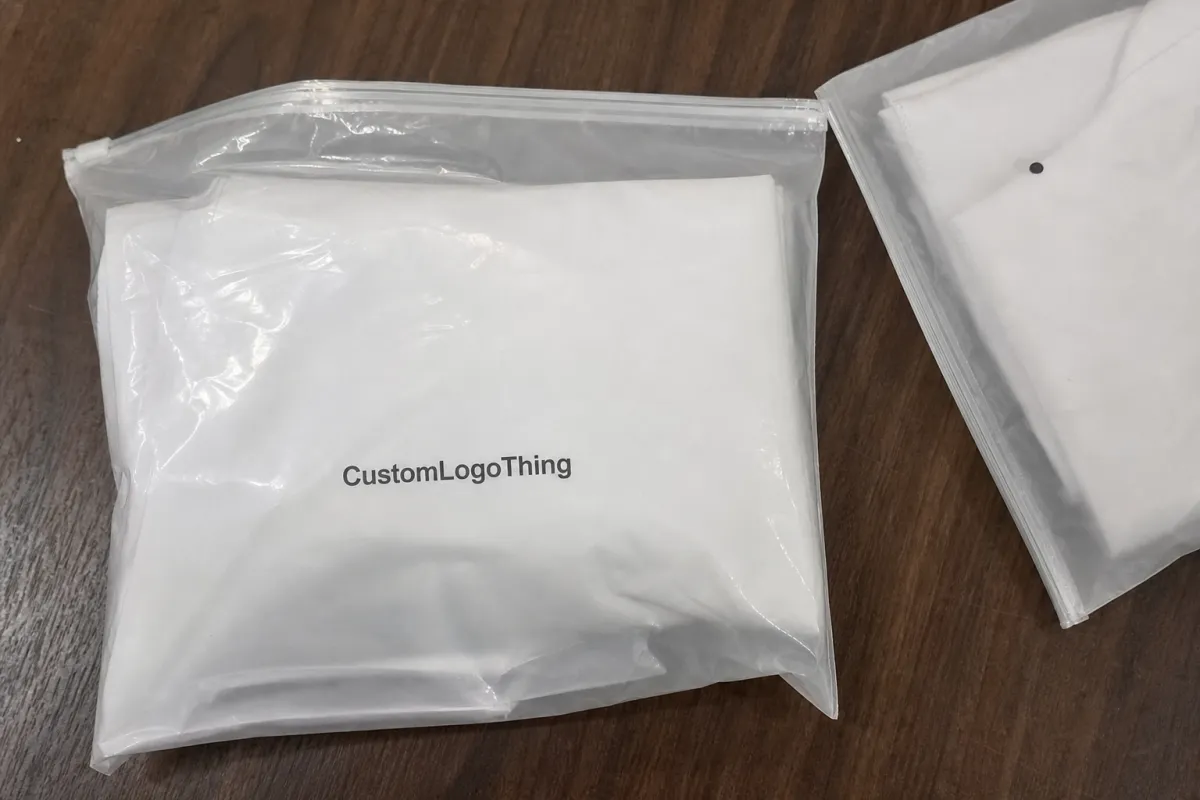
A print proof is the reviewed representation of the bag before full manufacturing starts. It should show artwork, color references, layout, sizing, legal copy, barcode placement, gussets, bleed areas, handle cuts, closures, and production assumptions. In plain terms, it shows what the supplier believes you approved.
Cosmetics packaging is unforgiving because the canvas is small and the expectations are high. A 6 x 9 inch frosted LDPE bag may need to carry a logo, shade name, product descriptor, ingredients, warning copy, recycling symbol, batch field, barcode, and social handle. Beauty buyers notice a color shift faster than most categories. Luxury cues can vanish with one dull ink choice or a weak white underbase.
Many teams underestimate the proof because it looks like paperwork. It is closer to a pre-flight inspection. The inspection does not make the aircraft fly, but it catches the loose bolt before the runway.
Proofing rule: if a mistake appears on the approved proof and nobody flags it, the manufacturer may reasonably treat it as an approved production detail.
The checklist helps prevent predictable failures: a logo too close to a heat seal, a distorted QR code, weak opacity on clear film, unreadable ingredient text, reversed front-and-back placement, missing white ink, or a barcode sitting across a fold line. One defect can trigger a reprint. Two can turn a launch bag into a write-off.
How Plastic Bag Print Proofs Work Before Production
Not all proofs answer the same question. A digital proof usually confirms layout, dimensions, text, logo position, dielines, print colors, gussets, handles, bleed, and basic production notes. It is fast, often delivered as a PDF or image file, and useful for catching structural and content errors. It cannot fully predict ink density, transparency, gloss, or the way a filled bag changes the artwork.
A physical sample answers a different question: how does the bag feel and behave in the hand? It can show gauge, film softness, opacity, closure quality, and product show-through. A press proof or printed production sample goes further by showing actual ink on actual film, though it can add cost and several business days. A production sample is pulled from the first manufactured run and is useful for final confirmation, but by then the machine is already moving.
Film changes everything. Frosted polyethylene softens contrast. Clear LDPE exposes the product behind the artwork. Matte finishes mute color. Metallic films can make a spot color feel richer, but they can also make fine type shimmer into mush. Recycled-content films may carry slight haze or color variation depending on resin source. None of that is automatically a problem. It simply needs to be expected before approval.
The usual chain looks tidy: the buyer submits artwork and specs, the manufacturer prepares a proof, the buyer reviews against brand standards, revisions are marked, and final written approval releases production. The trouble sits in translation. A Pantone swatch, a screen rendering, and ink on flexible plastic are three different color environments pretending to be one decision.
Barcodes and QR codes need special scrutiny on flexible bags. Wrinkles, seams, curved fill shapes, and glossy reflections can reduce scan reliability. For UPCs, buyers often ask about barcode grading or, at minimum, run scans from several angles before approval. If a retailer has technical packaging requirements, treat those rules as part of the proof review rather than a late-stage compliance chore.
The proof also functions as commercial evidence. It confirms that the manufacturer is building the same item the buyer thinks they ordered: same dimensions, same material, same print method, same quantity, same delivery expectation.
Key Specs to Check: Artwork, Film, Color, Copy, and Compliance
Good proof review feels like an investigation. Every mismatch is a clue pointing to a future chargeback, rejected shipment, or customer perception problem. Break the cosmetics launch plastic bags Print Proof Checklist into five inspection zones: visual branding, bag construction, print mechanics, product information, and compliance requirements.
Visual branding
Start with the brand assets. Verify logo size, orientation, safe zones, crop marks, bleed, image resolution, front-versus-back placement, and whether the artwork file is vector or raster. For most logo printing, vector files such as AI, EPS, or properly exported PDF files produce cleaner edges than low-resolution PNGs. If a 1.5 inch logo has delicate hairline strokes, ask whether the chosen print method can hold them without filling in.
Also compare the proof to the current brand guide, not just the last bag order. Cosmetic lines change shade architecture, claims language, icon sets, and trademark lockups more often than procurement teams expect. A supplier can accurately print the wrong file.
Bag construction
Check width, height, lip, flap, gusset, handle cutout, resealable closure, hang hole, and seam placement. A side gusset can steal printable space. A die-cut handle can slice through a slogan if nobody overlays the artwork correctly. A 2 mil bag and a 3 mil bag may both sound standard, but they feel different in a premium skincare kit.
Fit matters more than flat dimensions suggest. A 5 x 7 inch bag may look right in a mockup and still fight a boxed serum once the flap closes. If the bag will hold multiple units, tissue, an insert card, or a sample sachet, test that stack before approving size.
Print mechanics
Color is where assumptions get expensive. Compare Pantone references, CMYK builds, white ink underbase, opacity needs, metallic effects, matte or gloss finish, and expected contrast on the selected film. With flexographic printing, spot color control can be strong, but plates, ink drawdown, and setup discipline matter. Digital printing may suit shorter runs or complex artwork. Offset printing is less common for flexible plastic bags than for cartons or rigid paperboard, so expectations formed on paper packaging can mislead buyers reviewing plastic film.
Ask about tolerances. Print placement may vary by a few millimeters. Color may shift within accepted production limits. Film thickness can carry manufacturing tolerance as well. Those numbers sound small until a logo sits near a seal or a pale shade name depends on perfect contrast.
Product information
Inspect ingredient lists, warnings, batch fields, recycling symbols, cruelty-free icons, capacity claims, country of origin, and shade names. One retired shade name can create customer service headaches. One missing warning can create retailer friction. Check whether the copy remains readable at actual size; 4 pt type on a bright screen can look much more forgiving than ink on moving film.
Cosmetics copy also changes late. Formula updates, claims review, retailer requests, and regional requirements can all affect the bag after design approval. The proof should be reviewed against the final approved copy deck, not a marketing draft.
Compliance and retailer rules
Cosmetic plastic bag packaging may touch environmental claims, state warning requirements, barcode standards, retailer routing guides, and trademark consistency. If you make recyclability or recycled-content claims, align them with current guidance from sources such as the U.S. Environmental Protection Agency. For paper inserts or mixed-material gift sets, chain-of-custody claims may involve organizations such as the Forest Stewardship Council. Not every bag needs every standard. The point is to know which claims you are making before the bags are printed.
Process and Timeline: From Artwork Upload to Approved Proof
A realistic proofing process has more steps than “send art, approve PDF.” It usually includes artwork intake, technical file review, manufacturer questions, first digital proof, buyer markup, revised proof, final approval, and production release. A clean file can move quickly. Missing dielines, low-resolution logos, unclear sizing, or unconfirmed materials can add days before anyone prints a bag.
For a straightforward custom plastic bag order, the first digital proof may come back within 1 to 3 business days after complete artwork and specs are submitted. Revisions can add another 1 to 2 business days per round. A physical sample may add 5 to 10 business days depending on material, print method, freight, and whether the sample is printed or blank. Production after approval is often quoted in business days, and many custom printed bag runs fall around 12 to 20 business days after final proof approval, depending on quantity, complexity, and supplier capacity.
Launch calendars compress everything. Photoshoots need final packaging. Influencer kits need bags before the mailer assembly date. Retail buyer samples need to look like the shelf-ready version, not a placeholder. Fulfillment windows do not pause because legal reviewed the ingredient list two days late.
Build a buffer between proof approval and production start because revisions are normal. The buyer’s role is to designate one final approver, gather internal comments before sending revisions, and prevent conflicting feedback from marketing, compliance, and operations. Three people sending separate notes to the supplier is how old logos survive.
Rush orders change the risk profile. Skipping a physical sample may save a week. It may also hide color, opacity, finish, or texture surprises until 5,000 or 10,000 bags arrive. That is not always a deal-breaker, but it should be a conscious trade-off.
Before production release, confirm the basics in writing: bag size, artwork version, color references, material, gauge, quantity, ship-to address, delivery deadline, and proof number. The checklist should sit beside the quote and purchase order, not in someone’s memory.
Cost, MOQ, and Quote Variables That Change Proof Decisions
Proofing is tied to pricing because every art revision, film choice, ink count, plate setup, sample request, and freight decision can affect the quote. A bag that looks simple on screen can become materially different once you add frosted film, two spot colors, a resealable flap, a hang hole, and a heavy white underbase.
Major cost variables include quantity, bag dimensions, material gauge, number of print colors, print coverage, finish, closures, handles, and shipping speed. Minimum order quantity matters too. A low MOQ reduces inventory risk for a first cosmetics launch, but unit cost usually falls as quantity increases because setup expenses are spread across more bags.
| Proof or order choice | Typical effect on cost | What it helps prevent |
|---|---|---|
| Digital proof only | Often included or low cost | Layout errors, copy mistakes, wrong dimensions, missing bleed |
| Physical blank sample | Often modest, plus freight | Wrong size, poor fit, weak gauge, closure concerns |
| Printed physical sample | Can add sample, setup, or rush charges | Color surprises, opacity problems, finish mismatch |
| One-color flexographic printing | Lower than multi-color in many runs | Budget creep from unnecessary ink complexity |
| Two-color or high-coverage artwork | Higher due to ink, setup, and control requirements | Weak branding or poor contrast on clear/frosted film |
For budgeting, buyers might see custom printed cosmetic plastic bags around $0.18 to $0.35 per unit at 5,000 pieces for simpler sizes and prints. More complex film, larger dimensions, multi-color coverage, special closures, and finishing can move higher. These ranges vary sharply by supplier, location, print method, freight, and current resin costs, so treat them as planning numbers rather than promises.
Ask about proof-related charges before approving the quote: design cleanup, color matching, plate or screen fees, physical sample costs, rush proof fees, and freight for samples. A cheaper proofing path can become expensive if it misses a defect. One reprint can outweigh the savings from skipping a sample.
Quote scenarios help. Ask for one-color versus two-color printing, standard film versus frosted film, and 5,000 versus 10,000 units. The lowest quote is not automatically the best value. Approve the price only after the proof confirms the bag you priced is the bag you actually need.
Step-by-Step Review Guide for Approving Cosmetic Bag Proofs
A vague reminder to “check everything” is not much help at 5:40 p.m. on a supplier cutoff day. Use a sequence. It slows the room down.
- Compare against the purchase order. Confirm bag size, material, gauge, quantity, print method, colors, finish, closure, ship date, and delivery assumptions against the quote and artwork brief.
- Zoom out first. Judge shelf impact before inspecting details. Does the bag still feel like the brand at arm’s length? Is the logo dominant enough? Does the product inside compete with the print?
- Zoom in next. Inspect logo edges, line weights, ingredient copy, warning icons, recycling marks, shade names, alignment, and front-to-back orientation.
- Print at actual size. Screen scaling hides proportion problems. An 8 pt ingredient line may look acceptable on a monitor and strained on a 5 x 7 inch pouch.
- Test functional elements. Scan barcodes and QR codes. Check hang hole position, fold lines, seam clearance, handle cutouts, and closure placement.
- Review color under realistic lighting. Store LEDs, bathroom lighting, and photo lights can shift beige, pink, white, and metallic tones. Complexion products and fragrance gift sets are especially sensitive.
- Consolidate revisions. Use one marked document. Require a revised proof rather than relying on email interpretation.
- Approve only the final proof file. Not an earlier file name. Not a verbal summary. Not a screenshot buried in a comment thread.
The checklist becomes most useful when it forces one controlled decision instead of fifteen scattered opinions. From a packaging buyer’s point of view, version control is not clerical. It is risk control.
Common Proofing Mistakes That Derail Cosmetics Launch Bags
The highest-risk mistake is approving the front view while ignoring the back panel, side gussets, seals, handle cutouts, or fold areas. Flexible packaging has geography. A beautiful logo loses power if it lands half an inch too close to a side seam.
Color disappointment is another repeat offender. Buyers assume screen color equals ink color, especially on translucent or frosted plastic films. It does not. CMYK builds, spot color inks, white underbase strength, film haze, and print finishing all shape the final appearance.
Version-control chaos is quieter but just as damaging. Old logos, retired ingredient lists, discontinued shade names, outdated retailer symbols, and obsolete claims often survive because teams review too quickly. The proof may be technically accurate to the file supplied, while the file itself is wrong.
Tiny legal text creates trouble near seams and heat seals. Plastic flexes. Heat-sealed areas can distort. Gloss can reflect. If a required warning or ingredient line is barely readable on the proof, it may be worse on the actual bag.
White and light colors on clear bags need special attention. Without an underbase, a pale logo can vanish once products are inserted. A white serum carton, a rose-gold tube, or a dark eyeshadow palette behind the film changes the perceived print. Beauty brands often overlook product show-through because they review empty-bag artwork.
Another common miss: approving a bag without testing the actual product load. Fill weight changes how the film curves. A closure can sit under tension. A handle cutout that looks centered on a flat proof may feel awkward once the bag holds several boxed items.
Deadline pressure magnifies all of it. A rushed approval may save four hours today and cost three weeks later if inventory needs to be remade. That trade rarely looks good on a launch recap.
Actionable Next Steps Before You Release the Order
Before sending approval to a custom plastic bag manufacturer, create a one-page approval packet. Include the final artwork file name, proof number, bag dimensions, material, gauge, print colors, finish, quantity, ship date, delivery address, and approver name. Add the purchase order number if one exists. Simple. Boring. Powerful.
Ask the supplier three direct questions:
- What will not be visible in this proof?
- What production tolerances should I expect for color, placement, sizing, and material?
- What changes after approval would trigger added cost or delay?
Request a physical sample when color, opacity, texture, premium presentation, or retailer photography matters to the launch. If the bag supports a luxury skincare set or a shade-sensitive cosmetics line, the sample is often cheaper than the uncertainty.
Set an internal approval deadline at least one business day before the supplier’s cutoff. That gives marketing, compliance, and operations time for one controlled review instead of a late-night comment storm. Save the approved proof with the quote and purchase order because that file becomes the reference point if there is a dispute.
Before the order moves to production, use the cosmetics launch plastic bags print proof checklist as a decision record, not just a design review. It should prove that the color, copy, logo, barcode, film, quantity, and delivery assumptions were all checked before the budget was put at risk.
FAQ
What should a cosmetics launch plastic bag proof include?
It should include bag dimensions, material, print colors, logo placement, copy, barcode or QR code placement, gussets, seams, closures, artwork file version, and finish details. For cosmetics launches, it should also show ingredient copy, warning icons, recycling marks, shade or product names, and retailer-required information.
Do I need a physical proof for custom printed cosmetic plastic bags?
A physical proof is strongly recommended when color accuracy, film opacity, texture, luxury presentation, or product show-through affects the launch. A digital proof may be enough for simple one-color bags, but it cannot fully predict ink density, gloss, transparency, or how the bag looks when filled.
How long does the print proof approval process usually take?
A clean digital proof can often be reviewed within a few business days, but revisions, missing artwork details, physical samples, or color matching can extend the timeline. Build proofing time into the launch calendar instead of treating approval as a same-day task.
What mistakes should I check before approving cosmetic plastic bag printing?
Check for incorrect logo size, wrong artwork version, color mismatch, unreadable small text, misplaced seams, missing white ink underbase, distorted barcodes, and outdated compliance copy. Also confirm the bag size against the actual product, not only the design mockup.
How does proofing affect the cost of printed plastic bags for cosmetics?
Proofing can affect cost through artwork cleanup, color matching, sample production, rush fees, plate or screen charges, and revision rounds. Careful proofing usually protects the budget because a missed error can lead to reprints, launch delays, wasted inventory, or retailer rejection.

