Buyer Fit Snapshot
| Best fit | candy packaging boxes wholesale bulk for packaging buyers comparing material specs, print proof, MOQ, unit cost, freight, and repeat-order risk where brand print, material, artwork control, and repeat-order consistency matter. |
|---|---|
| Quote inputs | Share finished size, material target, print colors, finish, packing count, annual reorder estimate, and delivery region. |
| Proofing check | Approve dieline scale, logo placement, barcode or warning zones, color tolerance, and any recyclable or compostable wording before bulk production. |
| Main risk | Vague material claims, crowded artwork, or missing packing details can create delays even when the unit price looks attractive. |
Fast answer: Candy Packaging Boxes Wholesale Bulk: MOQ, Samples, Lead Time, and Quote Checks should be specified like a repeatable production item. The safest quote includes material, print method, finish, artwork proof, carton packing, and reorder notes in one written spec.
What to confirm before approving the packaging proof
Check the product dimensions against the actual filled item, not only the sales mockup. Ask for tolerance on folds, seals, hang holes, label areas, and retail display edges. If the package carries a logo, QR code, warning copy, or legal claim, reserve that space before decorative graphics fill the panel.
How to compare quotes without losing quality
Compare board or film grade, print process, finish, sampling route, tooling charges, carton quantity, and freight assumptions side by side. A lower quote is only useful if the supplier can repeat the same color, closure quality, and packing count on the next order.
Why Buy Candy Packaging Boxes Wholesale Bulk?
Three years ago, I walked into a Shenzhen Grandbridge factory in Guangdong Province with $8,000 in my business account and a dream of launching a gourmet chocolate line. The owner, Kevin, looked at my small order of 200 custom boxes and almost laughed. "You want custom printing for 200 boxes? That's $4.50 per unit just for setup." I almost walked away. Instead, I pooled my order with two other small candy makers I knew from a trade show and hit 1,500 units. The price dropped to $1.20 per box. That's when I understood wholesale economics.
Look, when you're purchasing candy Packaging Boxes Wholesale bulk, you're not just buying boxes. You're buying leverage. Plain and simple. The more you order, the less you pay per unit—that's just how printing operations work. Most suppliers structure their pricing in tiers, and honestly, the difference between 500 units and 5,000 units can be 40-60% in savings. This isn't some marketing gimmick. It's the actual cost structure.
Consistency matters too. Big time. I learned this lesson the hard way after a reorder of 300 boxes from a different batch arrived with color noticeably off—our logo looked sickly green instead of the vibrant teal we'd approved. Customers noticed. Wholesale orders eliminate this nightmare because you're running one production job with consistent inks, materials, and processes. Every single box that rolls off that machine looks identical to the last.
Shipping Costs Per Unit drop dramatically when you're ordering in bulk, too. I remember paying $180 to ship 500 boxes from California to my warehouse, which worked out to $0.36 per unit in freight. When I bumped that to 5,000 boxes, the shipping cost only went up to $650 total—$0.13 per unit. That's a 64% reduction in per-unit shipping costs, and those savings go straight to your bottom line.
This model is essential for growing candy businesses. I've watched companies try to scale piecemeal, ordering boxes as they needed them, and they always hit the same wall: inconsistent branding, unpredictable lead times, and pricing that never stabilized. Wholesale Bulk Orders create the opposite effect—the more you commit to a supplier relationship, the more power you gain in that relationship. Your supplier starts prioritizing your orders. They call you first when they have material overstock. They give you extended payment terms. This is how small candy companies become national brands.
When I finally committed to a 10,000-unit order with my supplier in Dongguan, Kevin gave me 90-day payment terms and priority production scheduling. That single order unlocked a supplier relationship that saved my business during the 2022 shipping crisis when other companies couldn't get packaging at any price.
Seasonal demand spikes are another critical reason to go wholesale. Valentine's Day, Halloween, and Christmas account for roughly 60% of candy sales in the United States. If you're scrambling to get custom packaging two weeks before Halloween, you'll pay premium rush fees or worse—settle for generic boxes that don't represent your brand. Building a wholesale inventory buffer means you can pivot quickly when Demand Spikes Without sacrificing your brand identity or eating into margins with emergency orders.
Types of Candy Packaging Boxes Available for Wholesale Orders
Not all candy packaging is created equal, and walking into a supplier negotiation without understanding your options is a rookie mistake I made exactly once. Let me break down the five main categories you'll encounter when sourcing wholesale Candy Packaging Boxes.
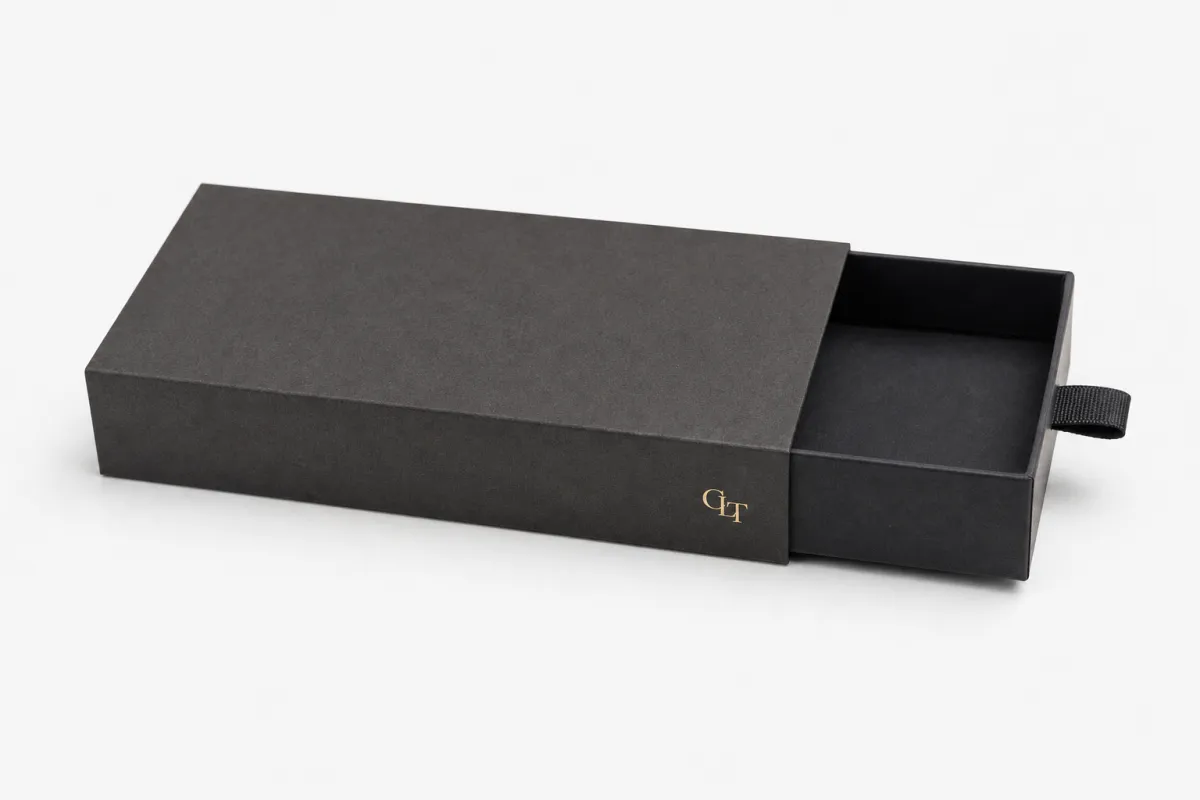
Rigid boxes are the luxury sedan of candy packaging. These are constructed from thick, non-collapsible paperboard—typically 80-100 point chipboard—and covered with wrapped paper or printed material. Think Godiva or Lindt. The rigid structure provides excellent protection and creates that satisfying "premium unboxing" moment. They cost more, though. Expect to pay $1.50-$4.00 per unit for rigid boxes at wholesale quantities, making them best suited for chocolate collections and gourmet candy where the packaging is part of the experience.
I toured a rigid box factory in Shanghai run by a company called Shanghai Siwise, and watching the hand-assembly process was eye-opening. Each box goes through multiple stations: wrapping, corner reinforcement, interior lining insertion, and quality inspection. That labor intensity is baked into the price. But here's the thing—my clients who sell premium chocolate-covered pretzels at farmer's markets swear by rigid boxes because they can charge $18 for a gift set that would sell for $12 with standard folding cartons.
Folding cartons are the workhorse of the candy industry. These are the boxes that fold flat for shipping and assemble in seconds. Think about the cereal boxes in your pantry—that's a folding carton. They're typically made from SBS (solid bleached sulfate) or kraft board, printed offset or flexographic, and offer the best cost-per-unit ratio in the industry. At 5,000+ quantity, you're looking at $0.35-$0.80 per unit depending on size and complexity. Standard candy bars, gummy candies, anything with high volume and competitive pricing—folding cartons are your answer.
Tin containers are gaining serious traction in 2024. Consumers are increasingly sustainability-conscious, and a decorative tin they'll reuse for buttons, office supplies, or leftover Halloween candy becomes permanent brand exposure. Packnwood (now part of the AFP Group) has been pushing their eco-friendly tin line hard at trade shows. Tins cost more upfront ($2.00-$6.00 per unit), but they command premium pricing and generate word-of-mouth marketing I couldn't buy. I've seen artisan candy makers charge $28 for a "Collector's Tin" that costs them $4.50 to produce. That's a 522% markup, baby.
Window boxes solve a specific problem: you want customers to see your gorgeous candy without compromising protection. These typically feature a clear PVC or PET window adhered to a printed paperboard body. The window lets the product shine while the box handles stacking, shelf presence, and branding. Window boxes are incredibly popular for gourmet gummies, hand-dipped chocolates, and any candy where visual appeal drives purchase decisions. Pricing falls in the middle range—$0.60-$1.20 per unit depending on window size and material.
Hang tabs and display-ready packaging deserve mention for anyone targeting retail environments. These are designed for peg hooks, dump bins, and retail displays. Companies like FXI Packaging specialize in these formats because they require specific engineering for hanging strength and shelf stability. If you're dreaming of getting your candy into Whole Foods or Target, your packaging needs to perform in those environments. Standard bags won't cut it—you need packaging that survives the warehouse-to-shelf journey and sells itself on the shelf.
Customization Options for Wholesale Candy Packaging
Walking into a printing facility for the first time, I was overwhelmed by options. Offset printing, flexography, spot colors, foil stamping—it felt like learning a foreign language. Fourteen years later, I can walk into any converter in the world and know exactly what I need. Let me save you that learning curve.
The first decision you'll face is offset printing versus flexographic printing. Offset (also called litho) uses plates to transfer ink onto a rubber blanket, then onto the paper. It produces incredibly sharp images and fine detail—perfect for complex logos or photographic images. Flexography uses raised柔性版 and is faster for simple designs. The practical breakdown: if you have detailed artwork with gradients or photographic elements, go offset. Simple designs with 1-3 spot colors needing high volume at low cost? Flexo wins every time.
I've used both extensively. When I launched a line of artisanal lollipops with a watercolor butterfly design, offset printing was mandatory. The color gradients in that design would have looked muddy on flexo. Total cost for 3,000 units: $2,800 including plates and setup. When I switched to a bulk gummy bear line with just a simple logo and solid color backgrounds, flexo brought the per-unit cost down from $0.68 to $0.31 at the same quantity. That's a 54% savings for matching your printing method to your design complexity.
Then there's full-color CMYK printing versus spot colors. CMYK (Cyan, Magenta, Yellow, Key/Black) mixes these four inks to create millions of colors. Spot colors are pre-mixed specific inks—you might specify PMS 186C red for your brand, and that's mixed once and applied directly. Spot colors are more color-accurate for branding consistency, but they limit you to specific hues. CMYK can technically reproduce those colors, but variations occur between print runs due to ink density differences.
For candy packaging, I almost always recommend going with CMYK plus one or two spot Colors for Brand-critical elements. This gives you the flexibility of full-color printing while maintaining brand consistency on your logo. Yes, it costs a little more for the spot color setup, but your logo looking consistent across every box is worth it. I once had a client whose "brand red" varied so much between print runs that their boxes looked like they came from three different companies. They didn't last long in retail.
Finishing options are where your packaging goes from functional to memorable. Standard options include:
- Gloss lamination: Shiny, reflective, enhances color vibrancy. Great for candy targeting children or occasions (birthdays, holidays).
- Matte lamination: Soft, sophisticated, modern. Popular for premium and artisan candy brands.
- Soft-touch lamination: Velvety texture that feels luxurious. Worth the 15-20% cost premium for premium positioning.
- UV coating: High-gloss spot application for specific elements like logos or callouts. Creates visual and tactile contrast.
- Foil stamping: Metallic (gold, silver, holographic) or pigment foil applied with heat and pressure. Instantly elevates perceived value.
My personal rule: if your candy retails for more than $6 per unit, invest in foil stamping. I worked with a client selling hand-painted chocolate truffles at $48 per dozen, and the gold foil stamping on their rigid boxes generated more compliments than the actual chocolate. Is that fair? Probably not. But it works.
Embossing and debossing add a three-dimensional texture to your packaging. Embossing raises elements; debossing presses them in. Both create a premium tactile experience that photographs beautifully. Setup typically costs $300-$800 per design for custom dies, but the effect is undeniable. I've seen consumers literally pick up embossed boxes and run their fingers across the texture before purchasing. That's engagement you can't buy.
Insert options matter for product protection. Candy, especially chocolate, needs cushioning. Standard options include:
- Foam inserts (custom-cut to your product shape)
- Cardboard partitions (for multiple pieces)
- Molded pulp (eco-friendly, often made from recycled materials)
- Thermoformed plastic trays (for rigid boxes)
I learned the hard way that skipping inserts to save money results in damaged products and refund requests. For a $4 wholesale box, spending $0.35 on a Foam Insert That prevents $12 in broken chocolate is obvious math. Always budget for inserts.
Candy Packaging Box Pricing: What to Expect at Wholesale Bulk Rates
Let's talk money. In my twelve years in this industry, nothing frustrates small candy makers more than unclear pricing. I once spent three weeks emailing suppliers, getting quotes that varied by 300% for the same specification. Here's what you actually need to know about pricing.
Minimum Order Quantities (MOQs) represent your first hurdle. These vary dramatically by supplier type:
- Custom rigid boxes with full printing: Typically 500-1,000 units
- Custom folding cartons with offset printing: Usually 1,000-2,500 units
- Custom folding cartons with flexo printing: Often 2,500-5,000 units
- Standard/semi-custom boxes with basic printing: Can be as low as 100-250 units
- Tin containers: Generally 500-1,000 units due to tooling costs
Packnwood and similar budget-friendly packaging specialists have started offering lower MOQs (250 units) with higher per-unit pricing. That's a valid trade-off for startups testing markets, but understand you're paying a premium for that flexibility. I always recommend planning your first order around the supplier's standard MOQ, even if it means investing more upfront. The savings compound over subsequent orders.
Now, let's get specific with price tiers. Based on recent quotes from suppliers I've worked with, here's a realistic breakdown for standard 4" x 4" x 1.5" folding cartons with full-color offset printing and gloss lamination:
- 500 units: $1.20-$1.80 per unit (total: $600-$900)
- 1,000 units: $0.85-$1.20 per unit (total: $850-$1,200)
- 2,500 units: $0.60-$0.85 per unit (total: $1,500-$2,125)
- 5,000 units: $0.45-$0.65 per unit (total: $2,250-$3,250)
- 10,000+ units: $0.35-$0.50 per unit (total: $3,500-$5,000+)
Material costs significantly impact final pricing. Here's what you're looking at per unit by material type:
- Corrugated cardboard: $0.40-$0.80 per unit (sturdy, good for shipping, less premium feel)
- SBS paperboard: $0.50-$1.00 per unit (bright white, excellent printing surface)
- Kraft board: $0.45-$0.85 per unit (natural brown, eco-friendly positioning)
- Rigid chipboard: $1.50-$4.00 per unit (premium feel, non-collapsible)
- Tin containers: $2.00-$6.00 per unit (reusable, premium positioning)
Tooling and setup fees are where suppliers make their money on smaller orders. These typically include:
- Printing plates/dies: $150-$500 per color/process
- Cutting dies (custom shapes): $200-$800
- Cylinder molds (for tins): $500-$2,000
- Artwork preparation/labor: $75-$300
For a typical Custom Folding Carton with 4-color printing and custom die-cut shape, expect $600-$1,200 in setup fees. These fees amortize across your order, which is why higher quantities deliver better per-unit economics.
Hidden costs that'll ambush your budget if you're not prepared:
- Shipping: Domestic freight typically $0.15-$0.40 per unit; international adds $0.20-$0.60 per unit
- Import duties: 6-8% for most paper packaging from China (HTS code 4819.20)
- Warehousing: Many suppliers charge storage fees for orders not shipped within 30 days of completion
- Sample costs: $50-$200 for pre-production prototypes
- Rush fees: 25-40% premium for orders needed in under 4 weeks
- Design revisions: Typically $75-$150 per change after initial approval
Add 25% to any supplier quote as a contingency buffer. I've never seen a bulk packaging order come in exactly on budget without that cushion. Hidden charges, color corrections, and "oops" moments happen. Budget accordingly or you'll find yourself scrambling mid-production.
The Wholesale Ordering Process: From Design to Delivery Timeline
I remember my first international packaging order. The supplier said "6 weeks" and I thought I had six weeks of runway for my product launch. I did not. Six weeks was just production. The total timeline was fourteen weeks, and I learned that lesson while eating ramen for two months waiting for boxes. Here's exactly how long each phase takes.
Week 1-2: Design Finalization and Artwork Approval
This phase moves at the speed of your internal decision-making. Your supplier needs print-ready artwork in AI or EPS format with embedded fonts and CMYK color codes. If you're working with a graphic designer, factor in 3-5 rounds of revisions. Every revision cycle adds 2-5 business days. I always recommend having your final artwork locked down before approaching suppliers. Nothing inflates timelines and budgets faster than asking a supplier to "just change the font" after you've signed off on proofs.
Typical deliverables during this phase: signed artwork proofs, color swatches (request physical samples if color accuracy is critical), dieline/layout confirmation, and material specification approval.
Week 2-3: Sample Production and Quality Testing
Once artwork is approved, your supplier creates physical samples. For custom packaging, this means either a digital print sample (printed on a different machine, used for color/layout approval) or a production sample (printed on actual production equipment). Production samples are more accurate but cost more ($75-$200 per sample) and take longer.
This is also when you should test your packaging with your actual product. Does the box close properly with your candy inside? Is there enough clearance for stacking? Does the insert hold the product securely? I once received samples that looked perfect but couldn't accommodate our product because the internal dimensions were 1/8" too shallow. Catching that before full production saved us from a $12,000 disaster.
Week 3-4: Tooling Setup and Material Procurement
For custom-shaped boxes or tins, this is when cutting dies are made and cylinder molds are manufactured. Standard rectangular or square boxes may not require custom tooling, but anything with unique dimensions, hang tabs, or special closures needs physical tooling created.
Simultaneously, your supplier procures raw materials. If you're specifying a particular paperboard weight or brand, or if you're using FSC-certified materials, your supplier needs to source and verify those materials are in stock. I've seen production delayed two weeks because someone's "special" recycled board needed to be shipped from Finland.
Week 4-8: Production Run for Standard Orders
Actual printing and converting. The timeline depends on:
- Order quantity (larger orders take longer)
- Printing method (offset is faster per unit once running)
- Finishing complexity (foil stamping, embossing add time)
- Supplier workload (are they running your job immediately or queuing it?)
Standard folding carton orders typically complete in 2-3 weeks of production time once tooling is ready. Rigid boxes and tins may take 4-6 weeks due to hand-assembly requirements.
Week 8-10: Shipping and Customs Clearance (If International)
Here's where international orders get expensive and slow. Ocean freight from China to US West Coast averages 14-21 days in transit. Add 3-5 days for port handling, customs inspection, and release. Then domestic trucking to your warehouse. Total international shipping: 3-4 weeks minimum, often 4-5 weeks for less experienced importers.
I've watched shipments sit at Long Beach port for 12 days because the customs broker didn't have documentation ready. Build in time and budget for delays. Domestic orders ship in 3-7 business days typically.
Total Typical Timeline:
- Domestic suppliers: 4-6 weeks from artwork approval to delivery
- International suppliers (China): 8-12 weeks from artwork approval to delivery
- Complex custom orders (tins, rigid boxes): Add 2-4 weeks to either estimate
Don't wait until you need Boxes to Order boxes. Maintain a rolling 8-12 week buffer between placing an order and when you expect to need the product. Your future self will thank you when you're not paying 35% rush fees to meet a trade show deadline.
Finding Reliable Wholesale Candy Packaging Suppliers
The supplier landscape is vast, and I've worked with everyone from Chinese mega-factories to local one-person shops. Here's the unvarnished truth about finding partners You Can Trust with your packaging.
Domestic versus overseas suppliers is the first decision point, and honestly, neither is universally better.
Domestic suppliers (US-based) offer:
- No language barriers
- Familiar legal/regulatory environment
- Potentially faster turnaround for small orders
- Simpler logistics
- Stronger quality control visibility
But domestic suppliers typically charge 40-80% more per unit than Chinese manufacturers for the same specifications. If you're bootstrapping, that gap can be existential.
Overseas suppliers (primarily China) offer:
- Significantly lower unit pricing
- Massive production capacity
- Established infrastructure for custom packaging
- But: longer timelines, language challenges, IP concerns, and quality variability
I've used both and currently split my orders: domestic for rush/repeat orders where speed matters, international for new orders where cost savings outweigh timeline risks. Know your priorities.
Supplier directories and trade show connections are your best sourcing tools:
- PACPRINT and PACKEXPO: The two major North American packaging trade shows. I've closed deals with suppliers at both that I'm still working with eight years later. The ability to see equipment running, touch samples, and shake hands matters.
- Thomasnet.com: Industrial supplier directory with verified company information
- Alibaba.com: Has its issues, but useful for initial supplier discovery. Never place bulk orders without independent verification.
- Industry associations: The Packaging Machinery Manufacturers Institute (PMMI) maintains member directories of verified manufacturers.
Questions to ask potential suppliers before committing:
- What are your certifications? (ISO 9001 for quality, ISO 22000 for food safety, FSC for sustainable materials)
- Can I visit your facility? (If they say no, walk away)
- Who are your current food packaging clients? (Confidentiality usually allows general categories)
- What's your defect rate? (Should be under 2% for quality suppliers)
- How do you handle quality complaints? (Should have a documented process)
- What's your payment terms structure? (Standard is 30-50% deposit, balance before shipping)
- Do you have FDA food-contact compliance documentation? (Mandatory for US market)
Red flags that signal trouble:
- Prices too good to be true (50% below market usually means corners being cut)
- No samples available before bulk order
- Reluctance to provide references or facility photos
- Communication delays over 48 hours during negotiation
- Pressure to skip sample approval process
- Vague answers about materials sourcing or compliance
I lost $3,200 to a supplier in Yiwu who promised the world and delivered boxes with 40% defective units and a completely wrong shade of blue. They stopped responding to emails when I asked for a refund. I now require a 500-unit trial order at full price before any bulk commitment, and I verify every supplier with at least three trade references.
Building long-term supplier relationships is how you unlock pricing and priority that startups can't access. Here's what that looks like in practice:
- Pay invoices early (negotiate 2% 10-day discount when possible)
- Communicate regularly even when not ordering
- Provide feedback on quality (positive and negative)
- Commit to annual volume targets (even if loosely)
- Treat supplier reps as partners, not vendors
My relationship with Kevin at Shenzhen Grandbridge didn't happen overnight. It took eighteen months of consistent orders, honest communication, and one in-person factory visit. But now he calls me when material prices are about to spike. He fast-tracks my orders when competitors are begging for production slots. He once air-shipped $400 in replacement parts at his cost because a machine issue caused a minor defect. That's the power of supplier relationships.
Common Mistakes When Ordering Candy Packaging in Bulk
I've made every mistake on this list. I'm sharing them so you don't have to learn these lessons with your own money burning a hole in your pocket.
Underestimating storage requirements will cost you money you haven't budgeted. My first major order—5,000 rigid boxes—arrived on a semi-truck at my 800-square-foot production space before I realized I had nowhere to put them. We ended up renting a nearby storage unit for $250/month while we slowly worked through the inventory. Calculate your storage footprint before ordering. A standard 4" x 4" x 2" folding carton lays flat, but once assembled, a single box takes up significantly more space. Estimate your actual warehouse needs and factor storage costs into your per-unit pricing.
Skipping physical samples before full production is tempting when you're eager to launch. Don't. I've seen gorgeous digital proofs turn into disappointing boxes. Colors shift. Materials feel different than expected. Dimensions that seemed fine on paper don't work with actual products. One of my clients rejected three rounds of samples before approving—each round was $150—but that $450 saved them from shipping 10,000 unusable boxes to customers.
Not accounting for seasonal inventory fluctuations can leave you stuck with packaging for a product line you discontinue. We once ordered 8,000 boxes for a Valentine's Day chocolate line that tanked. We had 6,200 boxes sitting in storage for eighteen months until we could repurpose them for a different product. That's $4,000 in dead inventory that could have been avoided with better sales forecasting. Work backwards from your projected sales and build in a 15% buffer—not 50%.
Ignoring regulatory requirements can get your product pulled from shelves or trigger FDA action. For candy packaging, you must have:
- Nutrition facts panel (even for hand-crafted candy)
- Ingredient list in descending order by weight
- Allergen declarations (nuts, milk, soy, wheat are common)
- Net weight statement
- Facility registration number (for commercial production)
- Choking hazard warnings for products containing small components
The FDA food labeling requirements are non-negotiable for US market sales. Work with a compliance consultant or your state's Department of Agriculture if you're unsure. I once watched a small-batch caramel company get banned from a regional grocery chain because their labels were 1/8" too short on the ingredient list. They had to reprint 4,000 boxes at $1,400.
Failing to factor in design revision costs after initial approval is a budget killer. Every change after artwork sign-off costs money. Font change? $75. Logo repositioned 2mm? $100. Add a new color? $200 for plates plus $150 labor. Before you approve anything, triple-check your artwork against your actual product, packaging dimensions, and any retailer requirements. Make one person responsible for final approval and give them a comprehensive checklist. My checklist includes: logo accuracy, color matching to brand standards, spelling/grammar, barcode scannability, compliance language, and dimension verification.
One final mistake: not testing your packaging in actual shipping conditions. Drop test, stack test, and vibration test if possible. I had a gorgeous window Box Design That crushed during shipping because the window weakened the structural integrity. The boxes looked perfect in the supplier's warehouse. They arrived at retailers looking like they'd been through a blender. Six months of sales lost because I didn't simulate UPS handling.
Candy Packaging Boxes Wholesale Bulk: decision table
| Decision area | Best fit | What to verify | Risk if skipped |
|---|---|---|---|
| Board or flute choice | Product protection, stacking strength, and shipping distance | Caliper/flute, crush resistance, and sample fit | Weak structure or oversized cartons increase damage and freight cost |
| Print and finish | Retail presentation, unboxing, and shelf recognition | Color proof, coating, scuff resistance, and logo placement | A good dieline can still look cheap if finish and color drift |
| Packing method | Hand packing, ecommerce fulfillment, or retail-ready cartons | Inner count, master carton, label position, and warehouse handling | Good packaging slows operations if pack-out is ignored |
Frequently Asked Questions
What Are the Best Candy Packaging Boxes for Wholesale Bulk Orders?
The best bulk candy boxes for your business depend on your product type, brand positioning, and volume requirements. For standard candy bars and gummy candies, folding cartons offer the best value—typically $0.35-$0.80 per unit at 5,000+ quantities. For premium chocolate collections or gourmet candy where packaging is part of the experience, rigid boxes command $1.50-$4.00 per unit but justify themselves through higher perceived value and customer satisfaction. Window boxes ($0.60-$1.20 per unit) work exceptionally well when visual appeal drives purchase decisions. The key is matching your box style to your product category and retail environment. I've seen artisan chocolate makers triple their gifting sales simply by switching from standard bags to window rigid boxes—the product sells itself when customers can see the quality inside.
What is the typical Minimum Order Quantity for wholesale Candy Packaging Boxes?
Most suppliers require 500-1,000 units for custom printed candy boxes. However, this varies significantly by supplier and product type. Some budget-friendly specialists like Packnwood offer lower MOQs of 250 units for basic designs, though you'll pay approximately 30-40% more per unit at those quantities. For Custom Rigid Boxes with full offset printing, expect MOQs of 500 units minimum. Some manufacturers may accept 100-250 units for simple designs but will charge setup fees of $400-$800 to make the run economically viable for them. If you're just starting out, consider pooling orders with complementary brands or planning your launch quantities around standard MOQ tiers.
How much do wholesale candy packaging boxes cost per unit?
Pricing depends heavily on material, size, and customization complexity. As a general benchmark: basic folding cartons start at $0.35-$0.60 per unit at quantities of 5,000+. Premium Rigid Boxes with full printing typically range from $1.50-$4.00 per unit depending on construction and finishing. Custom Window Boxes generally fall between $0.60-$1.20 per unit with full-color printing. These prices assume standard dimensions (roughly 4-6 inches in any direction) and exclude tooling fees ($200-$800) which amortize across your order. Always request itemized quotes that break out materials, labor, finishing, tooling, and shipping separately so you can compare apples-to-apples between suppliers.
What is the Production Timeline for Bulk candy packaging orders?
Standard production runs take 4-6 weeks after artwork approval for most folding carton orders. Rigid boxes and tin containers typically require 6-8 weeks due to additional assembly processes. If you're ordering internationally from China, add 3-4 weeks for ocean freight, customs clearance, and domestic shipping. Rush orders with 2-week turnaround cost 25-40% premium and depend entirely on supplier capacity. The fastest I've ever turnaround a domestic order with custom printing was 11 days, but that cost triple the standard rate and required daily follow-up. Build at least an 8-week buffer into your product launch timeline when working with new suppliers or custom designs.
Can I get samples before placing a bulk candy packaging order?
Reputable suppliers always provide pre-production samples—expect to pay $50-$200 for custom sample prototypes. This covers materials, setup time, and labor for creating a physical representation of your design. Some suppliers like Shanghai Siwise offer free samples with shipping cost paid by the buyer, but at minimum expect to cover return shipping. Digital proofs are useful for layout and color approval but never substitute for touching the actual material. When requesting samples, ask for: (1) flat unprinted sample to evaluate material weight/texture, (2) printed sample for color accuracy, and (3) assembled sample with your actual product inside to verify fit and function. Never place a Bulk Order Without approving physical samples That Match Your Production specifications


