The Printed Zip Lock Bags production timeline usually starts before the press runs. The real clock begins at artwork approval. If the bleed is wrong, the zipper spec is unclear, or the file is not press-ready, a simple order can sit for days.
What Actually Sets the Printed Zip Lock Bags Production Timeline
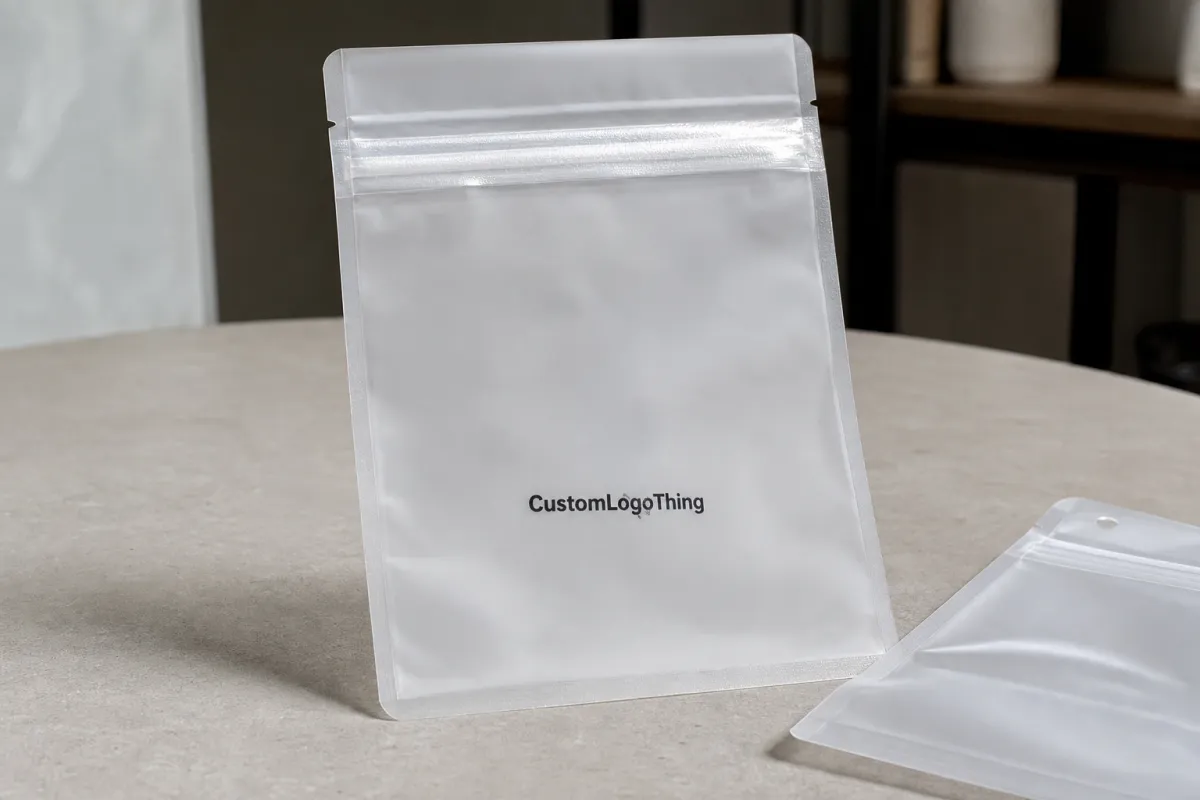
A printed bag is not just a bag. The schedule depends on file checks, tooling, print setup, material sourcing, finishing, and conversion. Two quotes that look similar can land on very different delivery dates because the setup work is not the same.
Repeat orders move faster because the supplier already has the artwork, size, color references, and sometimes tooling history. First runs take longer because more decisions need to be confirmed. If the spec is already locked, a straightforward custom order often fits a 7-12 business day production window. Fresh artwork, special materials, or multi-color printing usually pushes that to 12-18 business days. Complex builds can reach 20-30 business days when plates, film changes, or extra inspection are required.
Print method matters. Flexographic and gravure jobs usually need plates or cylinders, so setup is part of the schedule. Digital short-run printing removes some of that overhead, but it still needs proofing, press calibration, and a finishing plan. Change the zipper style or move to a heavier gauge film, and the line may need to be reconfigured.
"If the files are not final, the timeline is not final either."
For buyers, the useful question is not how fast a factory can make bags in theory. It is how much of the job is already decided. The fewer open variables, the less room there is for delay.
How the Production Process Moves from File Check to Finished Bags
Once the order is approved, the printed zip lock Bags Production Timeline usually follows a standard sequence. Each step has a place where errors can stop the job before waste piles up.
- Prepress and file check - The supplier checks size, bleed, resolution, safe zones, and dieline fit.
- Tooling or press setup - Flexo and gravure jobs need plates or cylinders; digital jobs still need machine preparation.
- Printing - Ink is matched, registration is set, and color drift is monitored.
- Lamination or surface finishing - Barrier layers, matte effects, or other treatments are added if required.
- Zipper integration - The closure is installed or sealed in place, and alignment has to stay consistent.
- Cutting and sealing - Rolls or sheets are converted into finished bags at the correct dimensions.
- Final packing and carton labeling - Counts are checked, cartons are marked, and pallets are staged for shipping.
Quality control happens throughout, not just at the end. A bag that is off by a few millimeters can jam a filling line, and a logo too close to the seal can look wrong even if the print is fine. Catching those issues in prepress is cheaper than finding them after thousands of units are printed.
Some steps overlap. Artwork review can run while materials are being sourced, and carton planning can happen while the press schedule is being confirmed. But the critical steps still follow a sequence. You cannot cut final dimensions until the print web is approved, and you cannot seal a zipper before the printed film exists.
For general terminology around packaging materials and process language, packaging.org is a useful reference.
Cost, Pricing, and MOQ: What Changes the Quote Fastest
The printed zip lock Bags Production Timeline and the quote are linked. Faster turnaround often means priority scheduling or extra labor. Lower pricing usually comes from larger quantity, simpler artwork, and less setup.
The biggest price drivers are run length, print colors, bag size, zipper type, film thickness, and finishing. A one-color PE zip bag is a different job from a matte laminated pouch with a heavy zipper, a custom hang hole, and print on both sides. Setup fees can move the quote fast too. Depending on the print method and structure, plate or cylinder costs may run roughly $80-$450 per color or size. Digital printing can avoid that line item, but the unit price is usually higher.
MOQ matters because the supplier still has to check files, set up the line, run the job, and pack the cartons even if the order is small. That overhead gets spread across fewer units, which is why low quantities often look expensive on a per-bag basis.
| Order Type | Typical MOQ | Unit Cost Range | Production Window | Best Fit |
|---|---|---|---|---|
| Sample run | 100-500 pcs | $0.80-$2.25 each | 7-15 business days | Artwork tests, new launches, internal sign-off |
| Mid-volume custom | 1,000-5,000 pcs | $0.20-$0.65 each | 12-18 business days | Small retail programs and seasonal promos |
| Repeat bulk order | 10,000+ pcs | $0.08-$0.30 each | 15-25 business days | Stable programs with locked specs |
| Rush custom run | Usually 500+ pcs | Base price +15%-40% | 3-8 business days | Deadline-driven launches with final files |
Those ranges are useful, not guaranteed. A thicker film, a different zipper, or a second print side can push pricing up faster than buyers expect. Larger quantities usually reduce unit cost, but the tradeoff is inventory and cash tied up on a shelf.
Step-by-Step Ordering Plan for a Cleaner, Faster Run
If you want a cleaner Printed Zip Lock Bags Production timeline, lock the spec before requesting the quote. The fastest jobs are the ones where nobody has to guess the size, material, closure, or print area.
- Confirm dimensions - Width, height, gusset if needed, and usable fill space.
- Choose the closure - Standard zipper, slider, child-resistant option, or another style.
- Select material and thickness - PE, PET/PE, or another structure with the gauge written clearly.
- Set print sides and colors - Front only or both sides, one color or full coverage.
- State the deadline - Use an in-hand date, not a vague "as soon as possible."
Artwork is where a lot of schedules get delayed. Send vector files if you have them. Outline fonts. Add the correct bleed. Keep important text away from seals, corners, and zipper zones. If the supplier gives you a dieline, use that exact version.
A digital proof works well for straightforward jobs. A physical sample makes more sense when color match matters, the finish is unusual, or the order is large enough that a mistake would be costly. A pre-production proof sits between those two options.
If cartons or paper inserts are part of the order, ask whether the stock should be FSC-certified. If the retail program cares about that claim, the specification should name it early. The FSC directory at fsc.org is the cleanest place to confirm what the label means.
Write down who approves what. Sales approves pricing. Artwork approves files. Operations approves production start. Without clear handoffs, the schedule slips between departments.
"A written schedule beats a verbal promise every time."
Common Delays That Add Days or Weeks
The printed zip lock bags production timeline usually gets hurt by small mistakes, not big disasters. Blurry logos, missing dieline details, and changes after proof approval are the classic offenders.
Color is another repeat problem. Buyers often compare a screen image to a printed bag and expect an exact match. That is not how print works. Screens are backlit and uncontrolled. Printed color depends on the film, ink, press condition, and substrate.
Vague deadlines also slow the job down. "Need it soon" tells a factory almost nothing. "Need it on dock by the 18th for launch" is useful because it lets the supplier reverse-plan proofing, production, packing, and freight.
In practice, the delays fall into two buckets:
- Production delays - file changes, tooling issues, color matching, machine queue time, material shortages.
- Logistics delays - export booking, customs holds, parcel delays, palletization problems, missed freight cutoff.
That distinction matters. A factory can finish on time and still miss the launch if freight is booked too late. If the bags are going through distribution, ask whether the cartons need rough-handling checks before shipment. The International Safe Transit Association has useful guidance at ista.org.
Many delays are self-inflicted. Buyers approve the wrong file, then ask for one more tweak, then another. The schedule was not the problem. The indecision was.
Lead Time Benchmarks by Quantity, Print Style, and Rush Level
The clean way to think about lead time is to split production from shipping. If a supplier says 12 business days, that usually means factory time only. It does not include transit, customs, or the time freight can quietly steal from your calendar.
For a repeat order with the same artwork and the same specs, production often lands in the 7-12 business day range. New artwork with standard flexo printing usually takes 12-18 business days. Multi-color work, thicker films, special finishes, and custom zipper hardware can move the run into the 18-30 business day range because there is more setup and more inspection.
Rush service helps, but it is not magic. A rush fee buys priority, not miracles. If the files are final and the factory has a slot, a rush can save days. If the artwork is still open, the extra fee just moves a problem faster.
Shipping adds its own clock:
- Domestic parcel or truck freight - often 2-5 business days in transit.
- Air freight - faster, but only worth it when the margin can absorb the cost.
- Ocean freight - cheaper on larger orders, but the timeline gets much longer.
For buyers, the smartest move is to treat lead time as a range, not a promise. Ask what is included: proof approval, production, carton packing, and freight booking. Those details are where schedule truth lives.
Next Steps: What to Send Before You Request a Quote
Before requesting a quote, send the basics in one clean message: bag size, quantity, artwork files, zipper style, material preference, finish, and target delivery date. If the supplier has to ask for follow-up details, the timeline is already slipping.
Compare quotes by looking at the whole order, not just the headline price. Check setup fees, MOQ, sample policy, production window, and freight terms. A lower unit price can be a bad deal if the setup charge is large or the lead time misses the launch.
Ask for a written schedule that shows proof approval, production start, inspection, and ship dates. If the supplier can give you those milestones, you can manage the order instead of hoping it behaves.
Use the printed zip lock bags production timeline as the decision tool. It shows where the money goes, where the delays hide, and whether a quote is actually buildable. Get the specs right, approve quickly, and the job usually stays on track.
How long is the printed zip lock bags production timeline for a first order?
A first custom run usually takes longer because artwork, setup, and proof approval happen before production begins. A realistic range is often 2-4 weeks for factory time, plus shipping, depending on quantity and print complexity.
What slows down the printed zip lock bags production timeline the most?
Late artwork changes, unclear specs, and slow proof approvals are the most common bottlenecks. Complicated color matching and special materials can also add time before printing begins.
What affects printed zip lock bags pricing more than buyers expect?
Setup costs, MOQ, zipper style, film thickness, and the number of print colors often move the price more than bag size alone. Unit cost usually drops as quantity rises, but not always enough to offset specialty options or heavy setup.
Can a rush order shorten the printed zip lock bags lead time?
Yes, but only if the artwork is final, the specs are clear, and the factory has open capacity. Rush fees usually buy priority, not miracles.
Should I approve a sample before full production?
Yes when the design is new, the color match matters, or the order is large enough that a mistake would be costly. For repeat orders with no changes, a digital proof may be enough if the supplier has already matched the spec before.

