Custom Cuffed Knit Beanies Bulk Order: What Buyers Actually Need
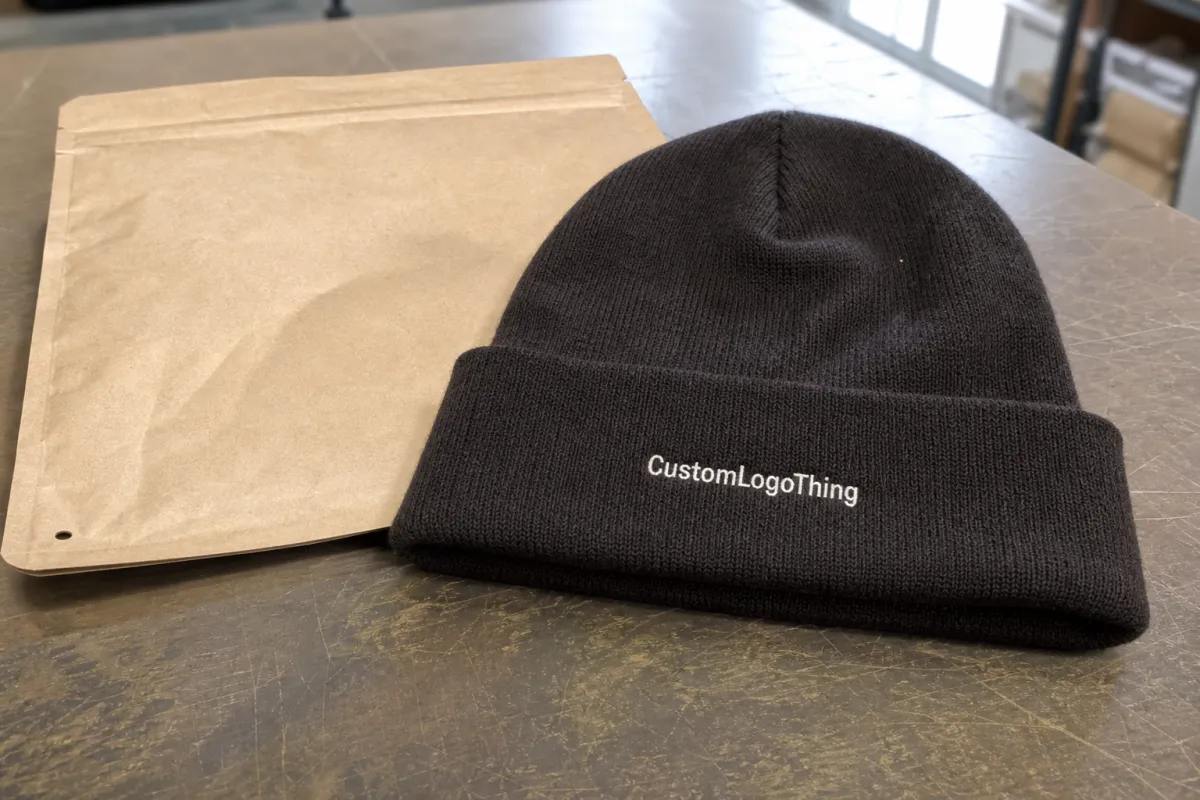
Most beanie orders do not go sideways because the product is unusually complex. They go sideways because the buyer treats a custom cuffed knit Beanies Bulk Order like a simple novelty purchase, then gets surprised when weak yarn, vague sizing, or a rushed logo choice shows up on real heads instead of on a mockup.
A cuffed knit beanie is small, but it carries a lot of visual weight. It acts like branded outerwear, packaging, and a winter utility item all at once. The color, cuff height, yarn feel, logo method, and finishing details tell people whether the brand paid attention or just needed “some hats” before a deadline. The same discipline applies to Custom Packaging Products, custom printed boxes, and other retail packaging: the specs have to be clear before production begins.
These beanies work well for employee kits, school stores, brewery merch, nonprofit campaigns, trade events, field crews, and cold-weather giveaways. They move easily in cartons of 50 or 100, they are practical enough that people keep wearing them, and they do not require the kind of logistics planning that larger apparel programs often demand.
The cuff is doing more than making the hat look neat. It gives the decoration a stable surface, adds warmth around the ears, and creates a clean billboard for embroidery, patches, or labels. That matters because knit fabric stretches and shifts; a logo on the cuff usually sits better than one floating on the body of the hat.
A good custom cuffed knit Beanies Bulk Order is not about finding the cheapest blank on the internet. It is about matching knit weight, yarn, decoration method, color, packaging, and delivery timing to the people who will actually wear the product.
Practical rule: if the beanies are meant to be worn more than once, avoid the thinnest fabric and the smallest possible decoration just to shave a few cents off the quote. That tradeoff is easy to spot in person.
Bulk ordering helps because it improves unit cost, keeps color and decoration more consistent, and reduces the odds of a painful reorder. The rest of this guide focuses on the choices that matter most: construction, decoration, pricing, proofing, lead times, and the details Custom Logo Things needs in order to quote accurately.
Beanie Construction Choices That Change the Final Product
Beanies look simple because they are compact. That simplicity is deceptive. Crown shape, cuff height, knit density, yarn blend, stretch, and seam placement all affect comfort, warmth, logo clarity, and the way the hat wears after a few washes or a season of use.
Standard rib knit is the safest starting point for a custom Cuffed Knit Beanies bulk order. It stretches well, fits most adult heads, and usually gives embroidery or patch placement a stable enough surface to work with. Fine gauge knit has a cleaner face and can help detailed logos read more clearly. Chunky knit creates a heavier, more retail feel, although the texture can make small logos less crisp.
Material choice matters too. Acrylic is still common because it is affordable, warm enough for most programs, and available in a broad stock color range. Acrylic blends can improve softness and drape. Recycled yarn can support sustainability goals, but only when the documentation is real and the claim is relevant to the program. If that part matters, ask for material details rather than relying on broad eco language.
Cuff style deserves real attention. A fixed cuff keeps placement consistent from hat to hat, which helps logo alignment. An adjustable cuff gives wearers flexibility, but it can change the visible height of the decoration depending on how the hat is folded. Double-layer cuffs feel warmer and more structured. Taller cuffs allow larger patches or embroidery, though oversized decoration can make the hat stiff if the layout is not handled carefully.
Fit is not one-size-fits-all in the literal sense, even when the size is called one-size-fits-most. Adult fits, youth fits, slouch fits, and snug workwear fits all behave differently. A slouchy profile makes sense for retail and lifestyle use. A close, practical fit is often better for crews wearing jackets, helmets, or other winter layers. A fashion-forward silhouette usually asks for better hand feel and a more deliberate color choice.
| Construction Choice | Best Use | Tradeoff |
|---|---|---|
| Standard rib knit | Corporate gifts, crews, events, broad giveaways | Reliable fit, but less distinctive than premium retail styles |
| Fine gauge knit | Cleaner embroidery and polished brand programs | May feel less heavy or winter-focused |
| Chunky knit | Merch drops and lifestyle retail looks | Texture can soften logo edges |
| Custom-dyed yarn | Strict brand color matching | Higher MOQ, longer lead time, and added cost |
For crews, schools, and broad promotions, a durable rib knit with a stable cuff usually makes the most sense. For retail or merch programs, buyers tend to care more about hand feel, color story, and label detail. Stock yarn colors are faster and usually less expensive. Custom-dyed yarn gives tighter brand matching, but it can add time and push minimums higher.
Logo Decoration Options for Cuffed Knit Beanies
Logo decoration is where a clean digital file meets fabric reality. A logo that looks simple on screen can become difficult once it is reduced to a few inches and placed on a stretch knit cuff. Thin lines, tiny text, gradients, and layered effects all become harder to manage.
The common decoration options are direct embroidery, woven patches, embroidered patches, leatherette patches, PVC patches, printed fabric labels, and woven clip labels. Each one changes the feel of the hat, the setup cost, and the level of detail the logo can carry. There is no universal winner.
Direct embroidery is the classic choice for simple logos, short names, block lettering, and straightforward uniform branding. It works well for employee gifts, field teams, schools, and low-complexity artwork. The main limitation is detail; embroidery is not forgiving when the design relies on small type or delicate linework.
Woven patches are better when the logo has fine detail or small lettering, since the artwork is built on a more controlled surface before being attached to the cuff. Embroidered patches feel thicker and more dimensional. Leatherette patches give a rugged retail look that suits outdoor, brewery, coffee, and lifestyle programs. PVC patches fit tactical or weather-resistant styling. Fabric labels and woven clip labels keep the beanie lighter and more minimal.
Placement is usually front and center on the cuff because that gives the strongest visibility and the cleanest read. Side cuff placement feels subtler. Back cuff placement works when the front needs to stay quiet. Clip labels can be a smart choice when the buyer wants retail polish without a large front mark.
- Embroidery: best for simple logos, short text, and classic uniform branding.
- Woven patch: best for detailed logos, small lettering, and cleaner edges.
- Leatherette patch: best for lifestyle, outdoor, and rugged retail presentation.
- PVC patch: best for tactical, sport, and weather-resistant styling.
- Woven label: best for minimalist merch and retail-style finishing.
Vector artwork is the cleanest starting point. High-resolution PNG or JPG files can be reviewed, but they usually slow down proofing and make line quality harder to judge. Pantone references help when thread, yarn, patch, or label colors need to stay aligned with a brand system. A stitch proof or patch proof should be approved before production starts, especially on a custom cuffed knit beanies bulk order where the artwork includes detail that could collapse on knit fabric.
The most common mistakes are familiar: too much text, thin borders, oversized patches, low-contrast thread, and trying to force a complex digital identity onto a flexible knit surface. A practical supplier should flag those issues early. Producing 1,000 hats that technically match an approved proof but still look awkward is not a win for anyone.
Specifications to Confirm Before You Request a Quote
A quote is only useful when the underlying specs are clear. A 500-piece order with direct embroidery is priced very differently from a 500-piece order with custom-dyed yarn, woven patches, individual polybags, insert cards, and retail hang tags. That difference is not subtle once labor and setup are accounted for.
Before requesting a quote, confirm quantity, color, knit type, cuff style, size range, logo method, logo size, placement, packaging, delivery date, and shipping destination. If any part of the order is flexible, say so. Flexibility can lower cost or shorten lead time.
Artwork should include a vector file if possible, approved brand colors, placement notes, and any alternate logo versions that might be used if the full mark is too detailed. If the logo is licensed, restricted, or tied to a school, franchise, sports team, or corporate brand standard, confirm approval rules before production. That step sounds administrative, but it is cheaper than correcting a mistake after the goods are already made.
Packaging changes both cost and handling. Bulk packed beanies are simplest. Individual polybags help with distribution. Insert cards, hang tags, barcode labels, size stickers, carton marks, and kitting add presentation value, but they also add labor. For retail use, that might be worth the extra effort. For a volunteer event, it usually is not.
If the beanies are part of a broader branded package, make sure the presentation feels consistent. A premium hoodie, a thin hat, and beautifully printed packaging can make the hat look out of place. The reverse can happen too. A balanced kit usually works better than one overly polished item surrounded by weaker ones.
- Target quantity and possible quantity breaks, such as 250, 500, 1,000, or 2,500 units.
- Preferred beanie color, backup color, and any strict brand color requirement.
- Logo file, decoration preference, desired size, and cuff placement.
- Packaging needs, including bags, hang tags, barcode labels, or carton labeling.
- Delivery deadline, in-hands date, and full shipping destination.
Early quality checkpoints matter more than many buyers expect. Ask for a sample or pre-production proof, confirm thread or patch colors, review the logo size on the actual cuff area, and verify carton quantities before shipment. For multi-location distribution, carton marks and assortment counts are not minor details; they are what keep receiving teams from losing time.
Share constraints up front. Budget ceiling. Hard event date. Required brand colors. Sustainability requirements. Past problems you do not want repeated. A quote based on those facts is useful. A quote based on assumptions usually is not.
Pricing, MOQ, and Unit Cost Drivers
Pricing for custom beanies depends on quantity, yarn, knit construction, decoration method, logo complexity, number of decoration locations, packaging, sampling, freight, and speed. That is why two quotes can both be accurate and still land far apart.
In broad terms, a simple stock beanie with direct embroidery can sit in a lower price band, often in the low single digits per unit at volume depending on quantity and decoration size. Once you move into patches, private labels, custom yarn colors, or retail packaging, the unit cost can climb into the mid single digits and beyond. Rush timing and air freight can move the landed total up quickly.
Small runs are useful for internal tests, pilot programs, and limited events. Mid-size runs usually improve unit economics because setup costs are spread over more pieces. Larger runs make sense for schools, franchise systems, retail channels, multiple departments, or repeat seasonal use.
MOQ depends on the build. Stock cuffed beanie blanks with standard embroidery or common patch options usually support lower minimums. Custom yarn colors, custom knit patterns, private labels, and full retail packaging often require higher quantities because material and setup costs have to be absorbed somewhere.
Direct embroidery is often efficient for simple logos. Woven patches may cost more at the start, but they solve detail problems that embroidery cannot handle well. Leatherette patches can raise perceived value without pushing the product into a luxury category. Individual packaging adds presentation, but it also adds material, handling, and time.
Setup charges deserve attention. Digitizing, patch weaving setup, mold charges for PVC, sample fees, label setup, custom dye fees, and freight should all be included in the comparison. A unit price that hides those costs is not really a lower price; it is just incomplete.
| Cost Driver | Typical Impact | Buyer Advice |
|---|---|---|
| Quantity | Higher quantities usually lower unit cost | Ask for 2-3 price breaks before choosing a quantity |
| Decoration method | Patches, labels, and complex embroidery change setup and labor | Match the method to logo detail, not to habit |
| Custom yarn color | Can increase MOQ, lead time, and material cost | Use stock colors unless exact brand matching is truly necessary |
| Packaging | Individual bags, hang tags, and barcodes add handling cost | Use retail finishing only when distribution needs it |
| Freight speed | Air freight can rescue timing and raise the budget quickly | Plan early enough for ground shipping when possible |
For practical planning, ask for quotes based on the actual build rather than on a generic blank. A move from embroidery to woven patch, from bulk packing to individual polybags, or from stock navy to custom-dyed navy can shift the total enough to matter. Not always dramatically, but often enough that it changes the decision.
If the beanies are for a one-day giveaway, a simple acceptable option may be enough. If they will be worn for months, spend enough to avoid thin fabric, crooked logos, and a finish that feels forgettable. The same logic applies to Wholesale Programs: the lowest line item is not always the lowest total cost.
Process and Timeline From Artwork to Delivery
The ordering process is straightforward when information moves cleanly. Send the specs, review the quote, confirm artwork, approve the proof, approve a sample if needed, move into production, complete QC, pack, ship, and receive the order. If any one of those steps gets rushed, the risk usually shows up later.
Lead time depends on product availability, decoration method, proof approval, sampling, production queue, quality checks, packing requirements, and freight method. Stock colors with standard embroidery are usually faster. Custom yarn, custom patches, private labels, and retail packaging take longer. Rush needs should be discussed before quoting, not after the deadline has already become urgent.
Digital proofs show logo size, placement, colors, and decoration method. They are useful, but they are still only proofs. For larger orders, retail programs, custom materials, or brands that need tighter visual control, a physical sample is often worth the extra time. It is easier to correct a sample than a full run.
Production timing begins after the required approvals are complete, not when the first inquiry is sent. Final artwork approval, deposit or purchase order, sample approval, material availability, decoration complexity, QC workload, and freight all influence the schedule. If three people need to sign off on one proof, include that delay in the timeline.
- Send quantity, artwork, beanie style, decoration preference, deadline, and ship-to location.
- Review quote options, including standard and upgraded builds if needed.
- Approve the digital proof for logo size, color, placement, and method.
- Approve a physical sample for higher-risk or retail-facing orders.
- Move into production, QC, packing, freight, and final delivery.
Freight planning should happen early. Ground shipping works for normal schedules. Air freight can rescue a short deadline, but it can also change the economics of the whole order. If part of the shipment is needed first and the rest can follow later, split shipments may solve a real scheduling problem without forcing a full rush on every unit.
Buyer responsibilities are simple and meaningful: send clean artwork, answer proof questions quickly, confirm the ship-to address, approve specs in writing, and avoid changing the logo placement after production has started. Reorders are much easier when the approved spec sheet and artwork remain on file. That is how a second run stays consistent with the first.
Quality Checks That Separate Good Beanies From Regrets
Quality control should cover knit consistency, yarn color, cuff height, logo placement, embroidery density, patch attachment, label alignment, loose threads, sizing, packaging, and carton count. None of that sounds glamorous. All of it affects whether the order feels like a real branded program or a shortcut.
Logo durability matters most when the beanies will be worn in normal daily conditions. Embroidery should not pucker the cuff. Patches should sit flat and stay secure. Labels should align neatly. Nothing should peel, curl, or fray right away. The hat does not need to survive extreme testing, but it should handle commuting, outdoor work, and repeated wear without looking tired too early.
Color matching deserves more care than many buyers expect. Thread, yarn, patch material, and label stock all behave differently under different lighting. Brand colors should be reviewed against real production materials, not just a phone screenshot or a tiny web swatch. If the color is critical, that check belongs in the approval process.
For broader shipping and distribution thinking, packaging teams sometimes look to testing frameworks from organizations like ISTA, especially when products move through parcel networks or multiple receiving points. If a program includes paper hang tags or insert cards and the sourcing requirements matter, FSC certification may also be relevant. Those choices depend on the program, the budget, and the claim requirements.
Cuff alignment deserves extra review because the cuff is the billboard. If the cuff height varies or the logo sits crooked, the whole order looks less polished even if the yarn itself is good. For a custom cuffed knit beanies bulk order, the decoration should be checked on the actual cuff area rather than on a flat art board.
Packaging QC matters too. Individual bags, hang tags, barcode labels, carton marks, and assortment counts need to match the distribution plan. A great beanie packed the wrong way still creates warehouse problems. If the order is going to 12 offices, a school store, or several retail locations, carton labeling stops being optional very quickly.
Common regrets are predictable: ordering too close to the event, choosing a logo too detailed for embroidery, picking the lightest knit possible, ignoring freight time, and skipping sample review on a high-visibility order. A good supplier acts like a practical filter and points out technical problems before production starts, not after the cartons have already left.
Next Steps to Place a Clean Bulk Beanie Order
Start with the facts. Choose a target quantity, pick a color or color range, decide whether embroidery or a patch suits the logo, send the artwork file, confirm the delivery date, and share the shipping destination. That is enough to begin a useful quote.
If you are still deciding, ask for two pricing lanes: a practical standard build and a more finished retail-style option. The standard version might use stock rib knit, direct embroidery, and bulk packing. The upgraded version might use a softer knit, a woven patch, individual bags, hang tags, and carton labels. Comparing those two makes the tradeoffs much easier to see.
Separate your requirements into hard and flexible items. Hard deadline. Required logo colors. Preferred decoration method. Packaging needs. Quantity flexibility. If moving from 400 to 500 units improves the unit cost or unlocks a better build, you should know that before the purchase order is locked.
Ask direct quote questions: What is the MOQ? What affects unit cost? Are setup charges included? Is a sample available? What is the current lead time? What shipping method is assumed? If you want more ordering basics before placing a production run, the FAQ page can help with common questions.
Custom Logo Things can help sort through beanie styles, match decoration to logo detail, review artwork, quote bulk quantities, coordinate proofing, and plan production around the delivery date. For a custom cuffed knit beanies bulk order, the clearest quotes come from clear specs. Send the facts you know, name the constraints you cannot move, and let the build follow the job instead of guesswork.
FAQ
What is the typical MOQ for custom cuffed knit beanies in bulk?
MOQ depends on the beanie style, decoration method, and whether the order uses stock colors or custom materials. Stock cuffed beanies with standard embroidery or common patches usually support lower minimums than custom-dyed yarn, private labels, or retail packaging. If budget is tight, ask for price breaks at several quantities so you can see where the unit cost improves.
How long does a bulk order of custom cuffed beanies usually take?
Lead time depends on artwork approval, product availability, decoration method, sample needs, production queue, and shipping method. Standard stock-color orders are generally faster than custom yarn, custom patches, or individually packaged retail programs. Give the real in-hands date upfront, not just the event date. The boxes need to arrive before they are needed, not on the day they are needed.
Is embroidery or a patch better for logo cuffed knit beanies?
Embroidery works well for simple logos, short text, and classic uniform-style branding. Woven or embroidered patches are better for detailed logos, small lettering, and retail-style presentation. Leatherette and PVC patches can add a stronger lifestyle or outdoor look, but they may change the feel and cost.
What artwork do I need for a custom beanie bulk quote?
Vector artwork is preferred because it gives the cleanest result for embroidery, patches, labels, and proofs. Include brand colors, preferred logo size, placement notes, and any alternate simplified logo versions. If you only have a PNG or JPG, send it anyway for review, but expect the supplier to confirm whether it is production-ready.
Can custom cuffed knit beanies be individually packaged for events or retail?
Yes. Common options include individual polybags, insert cards, hang tags, barcode labels, size stickers, and carton labeling. Packaging adds cost and production handling time, but it can save labor during distribution or make the product retail-ready. Confirm packaging requirements during quoting so they are priced correctly instead of becoming a last-minute surprise.


