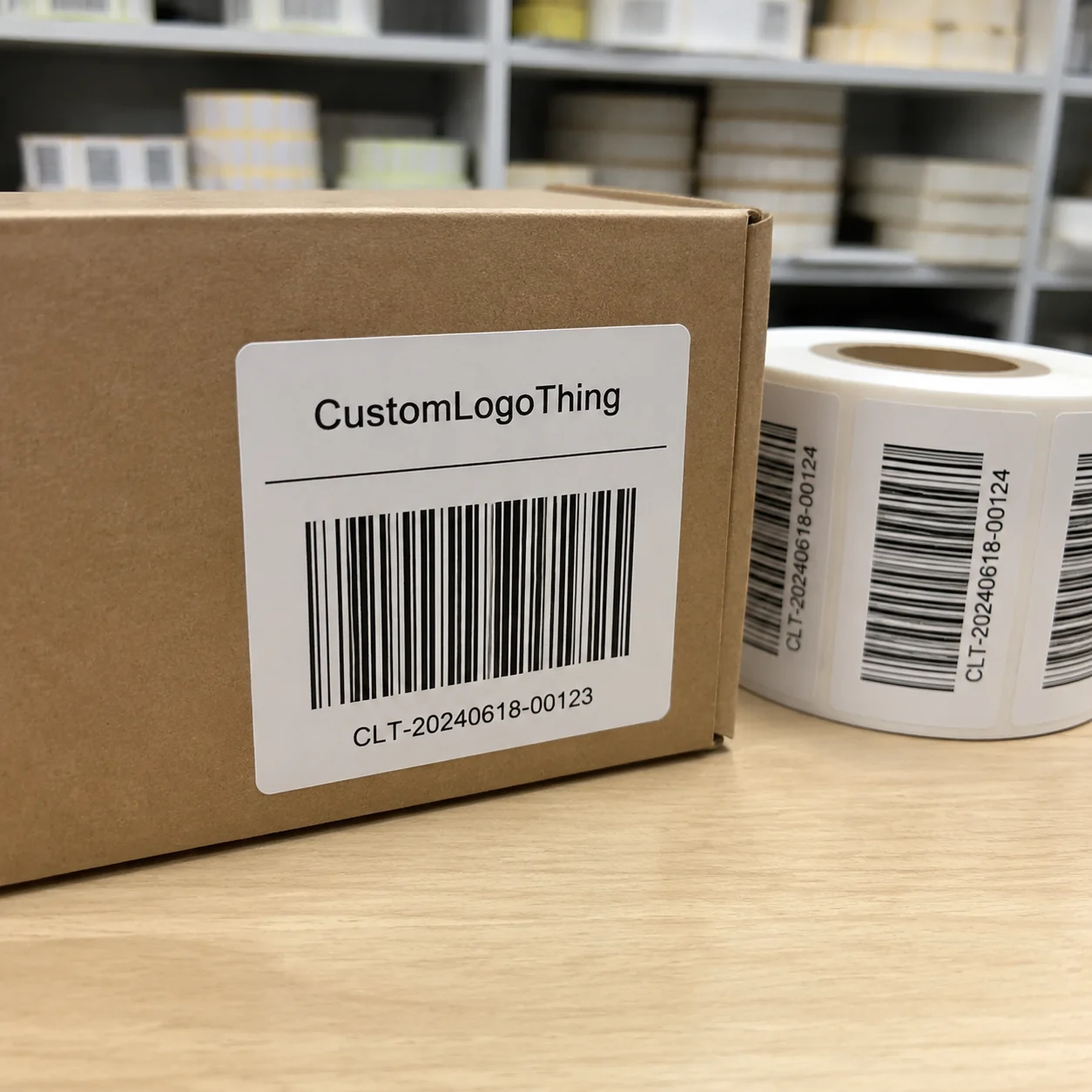
For a food brand, care labels can look minor right up until a batch of aprons, uniforms, or promo apparel starts moving through fulfillment, retail display, refrigeration, and regular washing. That is usually the point where buyers begin searching for care labels MOQ for food brands, because the real issue is not only whether the labels can be printed, but whether the order can be produced in a quantity that fits the launch, the budget, and the actual use case.
Custom logo and branded apparel orders tend to sit in a narrow middle ground: too small for a large inventory commitment, yet too important to treat like a generic stock label. The right supplier should help balance MOQ, durability, and presentation so the label remains readable and the order still makes sense for a seasonal drop, pilot run, or staff uniform program.
Food brands also tend to be more detail-sensitive than many buyers expect. A label might need to sit comfortably against the skin, stay legible after repeated laundering, and still match the look of packaging, merchandise, or hospitality goods. If the label fails in any one of those areas, the whole item feels less finished.
Why food brands need care labels that survive handling, storage, and resale
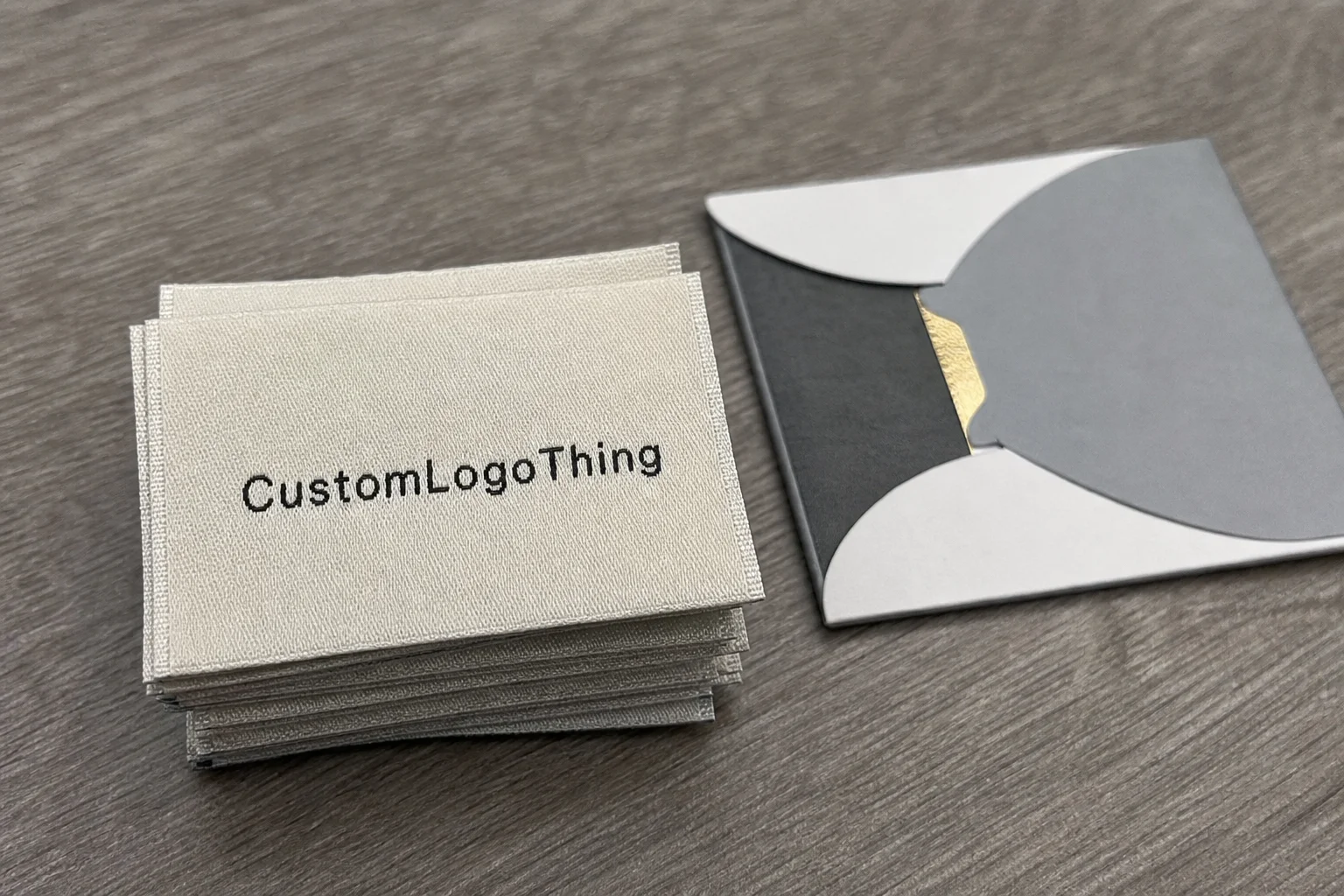
Food brands do not always order labels for garments in the traditional retail sense. Many need them for staff aprons, chef coats, tasting-event uniforms, co-branded merchandise, or hospitality items sold beside packaged goods. In those settings, a label has to survive more handling than a decorative tag ever would. It gets folded, stacked, shipped, worn, washed, and sometimes stored in humid or cold environments before it reaches the end user.
That is where material choice matters. A label that looks fine on a sample sheet can become hard to read after repeated washing, especially if the print is too fine or the material is too thin. For a food brand, that can affect brand presentation and customer trust, and it can also create problems if care instructions, fiber content, or country-of-origin information become illegible. A reliable label helps the garment feel intentional rather than unfinished.
The cost question is just as real. Buyers often want a lower MOQ because they are testing a new merch program or supplying a small team, but they still need the label to look professional. That is the tension behind care labels MOQ for food brands: finding a minimum that is low enough for a small launch and still high enough for efficient production.
“The best label order is the one that fits the actual use case, not the one with the lowest headline price.”
From a packaging buyer’s point of view, the label should support three things at once: compliance, presentation, and practical handling. If one of those breaks down, the entire program feels less polished. For buyers comparing suppliers, it helps to look beyond the quote line and ask how the label will behave in real use. If you want a broader view of related packaging support, our Custom Labels & Tags page is a useful starting point, and our Case Studies page shows how different label programs are typically structured.
There is also a production reality that gets overlooked: labels for food brands are often tied to garments that move through wash cycles more frequently than promotional apparel. That means the ink, weave, or adhesive has to be selected for the way the item will actually be used, not just how it looks on day one.
Care label formats, materials, and attachment options for food brands
Most food brands end up choosing between four common label formats: woven labels, Satin Care Labels, printed polyester labels, and heat-transfer labels. Each one has a different feel, different durability, and different production cost. The right choice depends on where the label sits, how often the item will be washed, and how much information needs to fit in the space.
Woven labels are the classic option for a premium apparel look. They are durable and tend to hold detail well over time, but they can cost more and may require a higher MOQ because the construction is tied to weaving the design into the fabric structure. They work well for branded uniforms or merchandise where the label is visible and part of the brand story.
Satin labels feel smooth against the skin, which makes them a strong choice for inner neck placement or garments worn for long shifts. They print cleanly, and the finish is usually soft enough that it does not irritate the wearer. If comfort matters as much as branding, satin is often a practical middle ground.
Printed polyester labels are a straightforward option when durability and legibility matter more than a luxury hand-feel. Polyester handles wash cycles well and keeps text readable if the artwork is prepared correctly. For many small-batch programs, this is where the best balance of unit cost and performance shows up.
Heat-transfer labels remove the sewn-in label altogether and apply the information directly to the fabric. That can be useful for lightweight apparel, performance garments, or products where a seam label would feel bulky. They are also worth considering when the brand wants a cleaner interior finish and less abrasion against the wearer.
Attachment style matters just as much as material. A sewn-in side seam label behaves differently from a center-back neck label, and a fold style can change both comfort and how much content fits on the label. Common options include:
- End fold for neat edges and easy stitching
- Center fold when information needs to sit on both sides
- Loop fold for items that need a hanging style or visible brand mark
- Flat cut for labels that are stitched into seams or applied in a simpler format
For food brands, the most common use cases are aprons, staff shirts, chef jackets, event uniforms, and co-branded retail apparel. In those cases, the label is usually expected to do more than identify care instructions. It also needs to match the rest of the product line visually, which is why material selection should be made alongside the broader packaging and merchandise strategy.
A small but useful buyer observation: the softest-looking option is not always the easiest to approve in production. Some materials photograph well and read nicely on a screen, then show surprising differences in texture, sheen, or edge finish once samples arrive. That is one reason physical swatches still matter.
Specification details that affect readability, durability, and brand consistency
Small changes in specification can have a big effect on how a care label looks and how much it costs to produce. Size is the obvious one, but fold style, text density, number of print colors, and icon use all matter. A wide label with simple black text is usually easier and cheaper to produce than a compact label packed with multiple languages, logos, and care symbols.
Readability starts with the layout. If the garment needs fiber content, washing instructions, size, country of origin, and brand name, that information has to be arranged in a way that can actually be read after stitching. Thin fonts and tiny linework can look crisp on a screen, then disappear in production. A practical type choice usually beats a decorative one, especially for low-MOQ orders where there is less room for rework.
Many food brands also need labels that stay consistent across multiple SKUs. That means a main brand identifier may stay fixed while the language block changes by item or market. Proofing becomes essential here, because one missing wash symbol or one wrong fiber percentage can turn a useful label into a reprint. Spending an extra day in proof review is usually cheaper than discovering a content error after the labels are sewn into finished goods.
When you are preparing artwork, these details help reduce friction:
- Use vector artwork when possible.
- Keep stroke lines thick enough to reproduce cleanly.
- Avoid tiny reversed text unless the supplier confirms it will hold.
- Confirm the final trim size before layout begins.
- Group compliance text and brand text logically so nothing feels crowded.
For Brands That Sell in more than one market, multilingual content can add space pressure very quickly. That does not automatically make the label expensive, but it often pushes the design toward a larger size or a simpler layout. General textile labeling standards and care-symbol conventions can help guide the structure, while packaging groups such as Packaging Alliance resources and sustainability-focused bodies like FSC can be useful reference points when the wider packaging program also carries material claims.
Another practical point: if your garment line includes multiple sizes, make sure the label content remains clear once sewn into the smallest item. A spec that looks fine on a sample in hand can crowd the seam or twist awkwardly on a smaller garment.
Care labels MOQ, cost, and quote factors for food brands
Here is the direct answer most buyers want: care labels MOQ for food brands varies by format, print method, size, and finishing. Printed polyester and satin labels usually support lower minimums than woven labels, while heat-transfer orders may also be flexible depending on the graphics and application method. The more complex the build, the more likely the MOQ rises.
Cost is driven by more than piece count. Suppliers usually look at material type, print colors, artwork complexity, trimming or folding, packaging format, and whether the order is a single design or multiple versions. Some jobs also carry tooling fees or setup charges, especially for woven construction or specialty finishes. That does not always mean the order is expensive overall; it means the front-end work has to be accounted for somewhere.
For practical comparison, buyers should look at cost per piece rather than the quote total alone. A higher MOQ can reduce the unit cost enough to justify a little extra inventory, especially if the label is tied to a stable item line. On the other hand, a smaller run may be the smarter choice if the brand is testing a new garment, new region, or new compliance text.
| Label type | Typical MOQ tendency | Typical cost drivers | Best fit |
|---|---|---|---|
| Printed polyester | Lower to moderate | Print colors, label size, folding | Small-batch apparel, inner neck labels, practical durability |
| Satin care label | Lower to moderate | Color count, text density, attachment style | Soft hand-feel, uniforms, comfort-focused garments |
| Woven label | Moderate to higher | Weave complexity, setup charges, edge finishing | Premium branding, long wear life, visible brand identity |
| Heat-transfer label | Lower to moderate | Artwork detail, application requirements, color count | Minimal interior bulk, performance wear, clean finish |
As a rule, simplicity saves money. One label size across several products usually gives better bulk pricing than multiple sizes with only minor differences. If you can combine SKUs into a single run, you may get a better quote and reduce administrative back-and-forth. That said, do not force every item into one spec if the placement or comfort would suffer. A slightly more expensive label that actually works is better than cheap inventory nobody wants to sew in.
If you want the quote to be accurate, provide the supplier with the exact dimensions, content text, fold style, and target quantity. That is the fastest path to a clean comparison, and it keeps hidden adjustments from showing up later.
For planning purposes, many buyers also ask about price bands. While exact numbers depend on construction and order size, small printed label runs are often the lowest-cost path, woven labels usually sit higher because of setup, and specialty finishes can add a noticeable premium. The biggest swings usually come from quantity breaks, not from the raw cost of the fabric itself.
Process and timeline from artwork review to delivery
The normal production path is straightforward, but delays usually appear in the same few places. First comes artwork submission, then spec confirmation, then a digital proof. Depending on the construction, you may also get a sample or a pre-production check before the order moves into manufacturing. After that, production, finishing, packing, and shipping follow in sequence.
Where do orders slow down? Usually at the proof stage. Missing content, unclear measurements, and last-minute artwork changes are the classic reasons. If the buyer has not finalized wash instructions or compliance language, the supplier may need to pause and re-quote. That can add days, sometimes more if the order has multiple versions.
For turnaround, realistic expectations are better than optimistic promises. Simple printed labels can often move faster than woven orders, and a small quantity generally leaves the line sooner than a complex multi-SKU program. Special folds, extra print colors, and custom packaging for the labels themselves can all add time. A common production window after proof approval is often around 12-15 business days, but that depends on quantity and construction.
The best way to speed things up is to send complete information in one pass:
- Final text copy
- Exact label dimensions
- Placement location on the garment
- Preferred material or a short list of acceptable options
- Target quantity and any split-SKU requirements
When buyers are organized, the whole process moves more predictably. That matters especially for food brands launching seasonal items or coordinating apparel with a product release, because the label timeline should not become the bottleneck. A complete brief also reduces the chance that a supplier has to come back with “needs clarification” questions after the order is already in motion.
Avoiding common ordering mistakes with small-batch label programs
The most expensive label mistake is usually not the label itself. It is ordering before the garment program is final. If the size range changes, the wash instructions change, or the compliance text changes, the labels may need to be reprinted. That is why it is wiser to lock the garment details first, then order the label.
Another common issue is overcomplicated artwork. A label with too many colors, tiny text blocks, and several symbols can work, but it often pushes up setup charges and makes low-MOQ orders less efficient. Clean layouts print more consistently, especially on smaller runs. If the brand mark is simple and the content is clear, the result usually looks better anyway.
Material mismatch is another quiet problem. A label that feels fine on a hang tag can feel scratchy inside a collar or side seam. For food-brand apparel, where staff may wear the item for long shifts, comfort matters. Printed polyester or satin often makes more sense for inner placement than a rougher woven structure, unless the woven hand-feel is part of the brand’s presentation.
One useful tactic is to start with a pilot quantity. That gives you a chance to check placement, readability, and durability before scaling into a larger run. A small pilot also helps uncover practical issues like label width, fold direction, or stitch placement that are hard to judge from a screen proof alone. In packaging terms, it is a low-risk way to validate the spec before committing to bulk pricing.
Another overlooked risk is inventory mismatch. If you order too many labels tied to a seasonal campaign, they may sit unused when the next garment revision arrives. For food brands with fast-moving promotions, a conservative first run often protects the budget better than chasing the lowest possible unit cost on paper.
From a buyer’s point of view, the goal is not to chase the cheapest line item. It is to get a label that works, looks right, and can be reordered without drama. That is especially true for growing food brands where the merchandise program may evolve quickly.
Next steps for ordering the right label quantity and spec
If you are ready to Request a Quote, gather the basics first: label dimensions, content copy, artwork files, preferred attachment style, and target quantity. If you already know the application method, include that too. A sewn-in side seam label, for example, may call for a different construction than a heat-transfer mark or an inner neck tag.
Then decide what matters most. Is your priority the lowest unit cost? The smallest usable MOQ? The fastest turnaround? Those three goals do not always line up perfectly, so the supplier needs to know which one matters most. Once that is clear, the quote can be shaped around the real objective instead of a generic lowest-price figure.
Ask for three things with the quote: a proof, a material recommendation, and itemized pricing. That makes it much easier to compare options and see where tooling fees or setup charges are affecting the total. It also helps you understand whether a slightly higher order quantity would improve the cost per piece enough to justify the extra inventory.
If you are unsure which label format fits your item, ask for a short recommendation based on the garment type and use case. The best suppliers will tell you when a woven label is overkill, when printed polyester is the smarter fit, and when a cleaner heat-transfer finish will reduce bulk inside the garment.
For food brands, the right order is usually the one that balances function, comfort, and repeatability. When you have the specs ready, Request a Custom Quote for care labels MOQ for food brands and compare the options with your actual production plan in mind.
FAQ
What is the typical care labels MOQ for food brands?
MOQ varies by label type, print method, and finish, but small-batch programs often start lower with printed labels than with woven or specialty construction. The exact minimum usually depends on whether the order uses one design or multiple versions.
Are printed care labels better than woven labels for food brand apparel?
Printed labels are often better when the priority is softness, small quantities, and cost control. Woven labels can be a stronger choice when the brand wants a more premium look and long-term durability.
How do I lower my unit cost without increasing risk?
Keep the artwork simple, limit color changes, and use one label size across as many products as possible. Consolidating SKUs into a single production run usually improves pricing while keeping inventory manageable.
How long does production usually take after proof approval?
Lead time depends on quantity, material, and finish, but production generally begins after artwork approval and specification confirmation. Complex designs or multiple variants can add time before the order enters manufacturing.
What information should I send to get an accurate quote?
Send the label dimensions, material preference, fold style, content text, artwork files, and target order quantity. Including application method and any compliance text helps avoid re-quoting later.